Cllr Sheahan’s response

Further to our earlier posts about Limerick Council leader John Sheahan calling for an ‘open season’ on hen harriers (see here, here and here), this is his response:

Reply to “OPEN SEASON “remark

Dear Sirs,

I wish to thank you for writing to me to express your views in relation to an article that appeared recently in the Limerick Leader newspaper.

In the article in question I made reference to “OPEN SEASON” on the hen harrier if certain changes were not made.  This remark infers that I advocate that this bird of prey be hunted similar to wild game that is hunted at certain times of the year. This inference was entirely unintended and I apologise for any upset my comment may have caused. I wish to clarify that my comment was meant in the context of my political battle with the Irish Government to seek a proper plan whereby the landowners and particularly, the farmers are not out of pocket by a designation that hamstrings them from earning their livelihood. This, unfortunately, is the case at present.  

I refer in my article to a situation whereby I believe all can co-exist. I ask would you seek to be compensated if your Government or local council made changes that devalued your property or adversely affected your ability to make a livelihood.  The records show that the overwhelming majority of landowners do not receive any compensation. When the SPA designation was introduced it was done in tandem with a compensation package to accommodate landowners. However, the scheme was axed in the very early stages leaving farmers out of pocket and their livelihoods threatened.

I hope I have provided you with some idea of the level of frustration experienced by landowners in the affected areas. I would ask you, in the best interests of the Hen Harrier, to support me and lobby the Government and the powers that be in Europe for a properly managed and adequately funded plan of conservation so we, all as creatures of this world, can live in harmony.

Yours faithfully,

John  Sheahan

Police appeal after 2 buzzards found poisoned in April

buzzardpoisonedchittlehamptonThe police are appealing for information after the discovery of two poisoned buzzards in Chittlehampton, North Devon. The birds were found in April.

More information here, but very little detail given.

Care about hen harriers? Then please sign this….

http://www.thepetitionsite.com/takeaction/358/804/673/

‘Open season’ on hen harriers: how to complain about the councillor

Limerick Leaderlow resYesterday we reported on an article in the Limerick Leader that quoted Limerick Council Chair John Sheahan calling for an ‘open season’ on the specially protected hen harrier (see here).

That blog post has attracted a great deal of attention and understandably, people are both astonished and outraged that someone in a position of such influence and responsibility should be inciting people to commit wildlife crime and encouraging the illegal killing of hen harriers.

Incredibly, it emerged later in the day that Cllr Sheahan is not only the Chair of Limerick Council, but that he also represents Ireland at the EU Committee of the Regions, helping to form EU policies on environment and biodiversity issues!!! (See here).

Yesterday was quite frustrating in that we had great difficulty trying to find out how to make a formal complaint about Cllr Sheahan’s remarks. We know through our site stats that many of you (over 100) emailed Cllr Sheahan directly and we also know that the Minister for Agriculture, Simon Coveney, also received an avalanche of emails (he is the Minister that Cllr Sheahan intends to lobby about the hen harrier), so thank you to everyone who sent emails.

Since then, we have received more advice on who to complain to (thank you to blog reader Ryan Meade for the information). We would encourage as many of you as possible to send emails to the following two people, to formally complain about Cllr Sheahan’s comments. Obviously, these people should respond to just a single complaint but they are much more likely to take this issue seriously if they are inundated with complaints.

For those of you who don’t live in Ireland, please don’t think that Cllr Sheahan’s comments don’t affect hen harriers in the UK. Movements of hen harriers between Ireland and the UK have been well documented (see here for example), so what happens to hen harriers in Ireland will also have an effect on what happens to hen harriers in the UK, and vice versa.

Here’s some background info on the hen harrier for those who want to include it to back up your complaint:

The hen harrier is a species of high conservation concern in Ireland and the UK and is protected regionally under The Wildlife Act 1976 & Amendment Act 2000 and in Northern Ireland under The Wildlife (Northern Ireland) Order 1985. Hen harriers are listed on Annex 1 of the Birds Directive (2009/147/EEC) and are currently considered an All-Ireland Species of Conservation Concern and a UK priority species.

The EU Birds Directive provides a legislative framework of measures required for assessing and ensuring the conservation of the hen harrier which includes monitoring, research and the designation of Special Protection Areas (SPAs). Six sites have been designated as SPAs for hen harriers in Ireland:

The Slieve Bloom Mountains SPA (Counties Laois & Offaly; Site Code 4160);

The Stacks to Mullaghareirk Mountains SPA, West Limerick Hills and Mount Eagle SPA (Counties Cork, Kerry & Limerick; Site Code: 4161);

The Mullaghanish to Musheramore Mountains SPA (CountyCork; Site Code: 4162);

The Slievefelim to Silvermines Mountains SPA (Counties Limerick & Tipperary; Site Code: 4165);

Slieve Beagh SPA (CountyMonaghan; Site Code 4167);

The Slieve Aughty Mountains SPA (Counties Clare & Galway; Site Code 4168).

The first person to formally complain to is Conn Murray, who is the Limerick County Council Senior Manager (see here). His email address: conn.murray@limerick.ie. Conn Murray should be called to investigate Cllr Sheahan’s comments and to assess whether he is suitable to continue holding office as the Chair of Limerick Council.

The second person to formally complain to is Jimmy Deenihan, who is the Minister for Arts, Heritage and Gaeltacht. His remit includes the protection of wildlife (see here) and he should be very interested in Cllr Sheahan’s views on hen harriers and how those views might affect his role representing Ireland at the EU on biodiversity and environmental issues. His email address: jimmy.deenihan@oir.ie

We also think that Cllr Sheahan should be the subject of a police investigation for inciting wildlife crime. However, it appears that reporting an allegation to the Garda (police) is restricted to those who can call or visit the relevant local station (see here). We hope that some locals will pursue this.

Thanks, everyone.

UPDATE: A petition has been started calling for the resignation of Cllr Sheahan: http://www.thepetitionsite.com/takeaction/358/804/673/

Council leader calls for ‘open season’ on hen harriers

A council leader has called for ‘open season’ on hen harriers, according to an article in the Limerick Leader on Saturday.

In an astonishingly ignorant and irresponsible statement, Councillor John Sheahan, Chair of Limerick County Council, has said that if restrictions in Special Protection Areas designated for Hen Harriers are not lifted, then “open season on the hen harrier should be declared”.

Here is a cutting from the newspaper (many thanks to the contributor who sent this in).

Limerick Leaderlow res

The text is probably difficult to read so here’s a transcript of part of it:

The new cathaoirleach [chair] of Limerick County Council, Cllr John Sheahan, has called for “open season” on the Hen Harrier unless there are changes to special protection areas (SPA).

Cllr Sheahan and Michael Sweeney, managing director of Select Forest Ltd, are due to meet with the Minister and Junior Minister for Agriculture, Simon Coveney and Tom Hayes ahead of the Budget.

Following the conclusion of the CAP deal, Cllr Sheahan called for a review of Natura 2000 sites, their designation and compensation for landowners adversely affected.

“Farming in the marginal lands of County Limerick is being decimated by the kosh of SPA. No proper plan is in place to assist farmers badly affected, total control is now with the National Parks and Wildlife Service – a cloak which our ministers and officials are happy to hide behind”, said Cllr Sheahan.

Large swathes of land in West Limerick and in some cases entire farms are designated to protect a predatory bird known as the Hen Harrier, he said.

“To some of us this name was an addition to our vocabulary, in days gone by it was a hawk. This protected bird has the power to stop a landowner reclaiming land, planting forestry, or constructing a windfarm.

“Following the bad weather of the last few years farmers are facing choices of how best they can manage their lands, and I stress their lands, to maximise its use and try and remain viable as part of the farming community. This is next to nigh possible with current restrictions.

“I believe now is the time to reassess all this. I believe the current CAP deal has scope within it to do so, there is no reason in my mind why this bird cannot coexist with some forestry and windfarms”, said Cllr Sheahan.

Since time began the world and all its components have evolved said the cathaoirleach.

“Charles Darwin proved this, the Hen Harrier will also evolve with changes we make. Landowners should be given the discretion they require to introduce a proper mix of activity and those who are adversely affected adequately compensated.

“Budget 2014 is coming earlier this year to suit the new fiscal treaty for Europe. I have written to the relevant ministers seeking a meeting to address this on behalf of the affected landowners of County Limerick”, said Cllr Sheahan.

“Budget 2014 should be the deadline for this and if nothing happens by then ‘open season’ should be declared on the Hen Harrier”, concluded Cllr Sheahan.

 The rest of the article refers to comments made by Michael Sweeney of Select Forest Ltd who discusses the earning capacity of the land.

The hen harrier is a species of high conservation concern in Ireland (just as it is in the UK), and is protected under regional, national and international legislation. For an excellent overview on the conservation status of hen harriers in Ireland, both past and present, this report is well worth reading.

If you think Cllr Sheahan’s threat of a declared ‘open season’ on this species is, frankly, nothing short of outrageous, then please email the Irish Agriculture Minister, Simon Coveney, and let him know what you think: simon.coveney@oir.ie

If you want to tell Councillor John Sheahan what you think, here are his contact details.

We’re trying to work out who to contact to make a formal complaint and call for Sheahan’s resignation. If anyone has any insight then please contact us. We’ll post details here when we know more.

UPDATE 9pm: Incredibly, Counciller Sheahan represents Ireland at the EU on Environment!! http://www.iro.ie/delegation.html#delegation Many thanks to @BBurke88 for the info.

We STILL haven’t found out how to make a formal complaint about Cllr Shehan’s remarks. We’ve tweeted Limerick Council Council to ask how we can make a formal complaint but had no response. We had hoped that one of the Irish conservation orgs would take a lead on this but haven’t heard anything, yet.

UPDATE 24th July: How to complain about Cllr Sheahan – see here

UPDATE 24th July: A petition has been started calling for the resignation of Cllr Sheahan: http://www.thepetitionsite.com/takeaction/358/804/673/

UPDATE 25th July: Cllr Sheahan responds to the criticism – see here.

UPDATE 28th July: Cllr Sheahan remains unrepentant in an article published by the Sunday Times – see here.

UPDATE 4th August: Cllr Sheahan in radio debate about his comments – see here.


‘One or two estates’ may be persecuting hen harriers, says Environment Minister

The Scottish Government is persisting with its ‘Heads Up For Hen Harriers’ project – an initiative aimed at getting the general public involved with reporting sightings of hen harriers so the authorities can work out where they are and why they’re in decline. This ‘initiative’ was launched in April and now it’s back in the news.

The BBC has a film report from a hen harrier nest site in Perthshire (here)  – well done Wendy Mattingley from the Tayside Raptor Study Group for telling it how it is.

In addition to the film, Environment Minister Paul Wheelhouse was interviewed on Good Morning Scotland earlier today (audio clip available for 7 days here, starts at 2.13.40).

Here is a transcript of the radio interview:

GMS: Why do you need the public’s help here considering that the hen harrier is so intensively studied already?

PW: Well it’s because the hen harrier is an extremely sort of charismatic bird, I mean it’s not one that’s maybe well known and as well publicised but it’s a particularly wonderful species. The male is grey and white and black wing tips and it’s particularly sort of striking when people do see it. Many people regard the hen harrier as their favourite bird so we’re hoping to raise the profile of the species because it is under pressure from a number of problems and we know that there are only 505 sort of territorial pairs in Scotland as of three years ago and that had been a very significant decline since about six years prior to that so it is an important bird, it’s a very important bird for the landscape that it’s living in and we want to do all we can to protect it.

GMS: And what’s the problem, why is it in particular being targeted?

PW: Well one of the difficulties we have with the hen harrier is understanding exactly what it is that’s causing the numbers to decline. There certainly is a concern about illegal persecution of the bird, but there may be other possible changes in its climate and land-use issues such as forestry and grazing which might be impacting on their numbers, but it’s widely recognised that persecution has been a major factor, particularly where there’s been conflict with grouse management in the past.

GMS: Now there has been a clampdown legally on this, but is it working? It doesn’t seem to be.

PW: Well it’s certainly something we’re keen to find out. Certainly the work we’ve done through Heads Up for Hen Harriers, announced earlier in April, has indicated that the birds are present in places we didn’t know they were previously present so there’s some indication that the range is slightly bigger than we had thought, but we’re still evaluating the kind of sightings and going back checking whether they are accurate or not, but there’s certainly been, you know, pressure on numbers, we know that they’re not protected in England in the way they are in Scotland and so we’ve lost some, we believe, that have gone over the border and been persecuted there but the majority of problems are, I think, home grown ones and we need to sort of clamp down, as you say, on illegal persecution.

GMS: And do you think there is now a case to prosecute the landowners?

PW: Well certainly we have, through the WANE Act, the Wildlife & Natural Environment Act in 2011, put in place vicarious liability provisions which mean that no landowner can escape their responsibility of those that work for them. We’ve not yet seen a prosecution under vicarious liability but, you know, I imagine at some point in the future there probably will be one which will test the legal powers that we now have. But I think it’s already having an impact, that power, on the behaviour of landowners who are doing much more to train their staff, to ensure that they do not do anything to disturb or threaten species such as the hen harrier, so I hope that work does have a long-term benefit. But we’re always looking for, you know, the potential to prosecute a vicarious liability case just to test the waters.

GMS: And these organisations representing landowners, gamekeepers and field sports enthusiasts have condemned the illegal persecution but do you think, do you feel that they are on board here, that they are doing enough?

PW: I think the overwhelming majority of landowners are absolutely on side and are doing their best to try and tackle problems of illegal persecution. There are obviously, you know, suggestions of one or two estates which have had difficulties and the police authorities are sort of following those up and the Partnership for Action Against Wildlife Crime Scotland, which I chair, is working with landowners who are members of that organisation to try and improve practices and ensure that we do everything we can to protect species like the hen harrier, but other species as well such as the golden eagle and sea eagles which have also had, unfortunately, persecution in recent years. We also announced recently a number of provisions which we’re taking to try and strengthen our action on illegal persecution of raptors and they are supported, I think, by a number of key organisations such as gamekeepers and indeed the landowners.

GMS: We’ll have to leave it there, Paul Wheelhouse, the Scottish Environment Minister.

What wasn’t said in this interview was that there is the potential for an estimated 1467-1790 pairs of hen harriers to live in Scotland, according to the Hen Harrier Conservation Framework report, published by the government in 2011. However, the latest national survey results (from 2010) only found 505 pairs. And surprise surprise, the main areas where these birds are absent is on land managed as driven grouse moor in the Eastern Highlands and Southern Uplands. Sound familiar? Yep, exactly the same places where golden eagles are in trouble. What an amazing coincidence.

So, where are the 962-1,285 missing pairs of hen harriers? Wheelhouse is suggesting that the Heads Up for Hen Harriers initiative may have found some of them (although the results are still to be analysed and verified so his statement is rather premature to say the least). It’ll be fascinating to see those results in due course – perhaps they’ve found 1,000 pairs holed up in a crack den on a Glaswegian housing estate.

It is quite astonishing that still, more than 20 years after the alarm was first raised about the connection between driven grouse moors and hen harrier persecution, the authorities continue to play down the scale of the persecution issue and say, “One of the difficulties we have with the hen harrier is understanding what it is that’s causing the numbers to decline” and then pretend that the majority of the grouse-shooting industry is supportive of hen harriers. There are some who are on board, for sure, but the weight of evidence shows that those estates are in the minority – there must be a significant number of estates still ‘at it’ to have the population-level effect that we’re seeing.

We wrote a scathing critique of the Heads Up for Hen Harrier initiative when it was first launched in April. Rather than repeat it all here, it’s easier just to provide the link for those interested in reading it: see here. Our view hasn’t changed.

Hen Harriers will feature again on Reporting Scotland this evening.

The photo below is a reminder of what happens to hen harriers on grouse moors. This one was caught in an illegally-set trap on Moy Estate – he was lucky, he was found in time by raptor workers and he survived…for that day anyway.

Picture1


Buzzards eat stuff, it has emerged

no eatingShocking new footage has emerged that shows that buzzards eat stuff.
This is outrageous“, said Don McMoron of We Own Scotland. “Not only does this prove that buzzards eat stuff, which is bad enough, but they think they’ve got the right to eat anything that takes their fancy. That’s totally unacceptable and we’re calling on the government to convene an urgent summit to decide what buzzards can and can’t eat”.

Albert Hogburn of the Modern Poisoners Society said: “Aye, I watched the video last night. Did you see that bird in the tweed hot pants with the fantastic tits? Oh…it’s not that video you’re talking about? Er, sorry, got to go, I’ve left some milk on the boil…Er, #TeamPoison all the way, lads”.

In case there’s any doubt, the above is a parody. This, however, is not.

Kestrel shot in North Yorkshire

North Yorkshire Police are appealing for information after a kestrel was found shot on Monday. The bird was found near the High Batts Nature Reserve at North Stainley, near Ripon, its wing shattered by shotgun pellets. It had to be euthanised by a vet.

North Yorkshire is one of the worst areas for raptor persecution crimes in the UK.

We’re impressed that North Yorkshire Police Wildlife Crime Officer PC Gareth Jones got the appeal for information out, in the media and on the North Yorks Police website, within 4 days of the bird being found. Really well done to him.

Anyone with information about this crime is urged to contact PC Gareth Jones – his details available in the following links:

Press release on North Yorks Police website here

Article in the Northern Echo here

Photo of kestrel hovering by davidchapman.org.uk

Two Langholm hen harriers fitted with sat tags

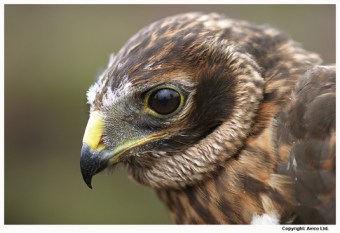
Hen-Harrier-1 avico ltdThere have been two successful hen harrier nests at Langholm this year, according to the Langholm Demonstration Project website (here). The scant information provided informs us that the nests contained healthy broods of six and four chicks.

Interestingly, the Project website doesn’t provide any information about the number of satellite tags that have been fitted to chicks this year. We find that very curious, given that two female chicks from the brood of six were fitted with tags prior to their fledging the nest last week.

What’s with the secrecy? This is an expensive project, part-funded by the taxpayer, and there’s strong public interest in what happens to these harriers when they leave Langholm. We know from previous years that the survival rate of these young birds is appalling, with many of them ‘mysteriously disappearing’ over grouse moors in Scotland and northern England. Strangely, the Project team has been reluctant to reveal these locations.

We’ll we watching with great interest to see whether the Project team releases information about the movements of these latest two young birds over the coming weeks or whether this turns into yet another cover up job.

Meanwhile, Cat Barlow who runs the related ‘Making the Most of Moorlands’ education website (here) has posted some video footage of the brood of four, as well as some merlins and other species.

To read our previous blog posts about Langholm, just type ‘Langholm’ into the search box on the right hand side of the blog. (Too many previous posts to list them here).

Another shot buzzard found in the Scottish Borders

A dead buzzard found in the Heriot area of the Scottish Borders had been shot, according to the BBC.

Police Scotland are appealing for information after the bird’s decomposed body was discovered close to Carcant Hill on 30th June. A forensic analysis revealed the bird had been shot although it’s not known whether this was the cause of death.

Well done to the new Police Scotland WCO in the Borders, PC Hannah Medley, for publicising this incident within a couple of weeks of the bird being found (her second one this year, following the discovery of a shot buzzard at St Mary’s Loch in March, which she also publicised pretty quickly – see here).

BBC article on latest shot buzzard in Heriot here.
