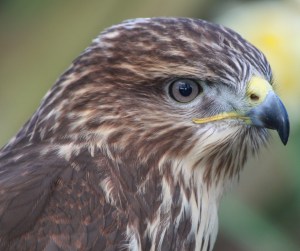
From Lauren Jean on Twitter (@lau1180) –
This peregrine was found shot dead near a pheasant pen close to Millennium Woods near Yetminster, Dorset. The discovery has been reported to the police and the RSPB.

From Lauren Jean on Twitter (@lau1180) –
This peregrine was found shot dead near a pheasant pen close to Millennium Woods near Yetminster, Dorset. The discovery has been reported to the police and the RSPB.

The case against a gamekeeper employed on Andrew Lloyd Webber’s estate in Hampshire has moved to trial.
Mark Stevens, 42, is accused of a series of trapping offences alleged to have taken place on the Sydmonton Court Estate, Hampshire, in August and September last year. He has denied the charges.
His trial will take place in July 2014.
See here for previous blog.
The case against Allen Lambert, a gamekeeper on the award-winning Stody Estate, continued in February and is now set to go to trial.
Lambert, 64, of Old Lodge House, Stody, Melton Constable in Norfolk has already pleaded guilty to storing the pesticides Mevinphos and Aldicarb, but has denied a series of further charges concerning the alleged killing and possession of 14 buzzards, 1 sparrowhawk and 1 tawny owl.
His trial will take place in May.
European vultures are under severe threat from indirect poisoning caused by a veterinary drug called Diclofenac. This particular poisoning issue is not one we would normally cover but the severity of this poisoning threat is so great that it can’t be ignored.
Diclofenac is an anti-inflammatory veterinary drug used to treat domestic livestock. In south-east Asia, Diclofenac is known to have caused the catastrophic population collapse of at least three vulture species in the last few decades (Oriental white-backed vulture, Long-billed vulture and Slender-billed vulture). These three species have been pushed to the very edge of extinction after being poisoned by eating livestock carcasses contaminated with this drug. (Diclofenac causes acute renal failure in vultures & most are dead within 48 hours of consuming a contaminated carcass).
On-going conservation efforts include a captive-breeding programme with the intention of reintroducing the vultures when it is safe to do so. In 2006, three years after scientists identified Diclofenac as the toxin responsible, the governments of India and Pakistan banned the manufacture of veterinary Diclofenac, while manufacturers in Nepal voluntarily withdrew the drug from the market. A vulture-safe alternative, Meloxicam, is widely available.
For further information about the Asian Vulture Crisis see here and here.
Incredibly then, news has emerged that two countries in Europe (Italy and Spain) have recently licensed the use of veterinary Diclofenac for livestock farming! The use of this drug poses a significant threat to populations of at least three European vulture species, particularly in Spain which holds 90% of the European griffon vulture population, 97% of the Eurasian black vulture population, and 85% of the Egyptian vulture population. Diclofenac is known to be toxic to all three species. A fourth species, the Bearded vulture (of which Spain holds 67% of the European population) is also potentially at risk – there is no direct evidence that Diclofenac is toxic to this species but given the drug’s toxicity to other Old World vulture species it would be foolish to assume it would be safe for Bearded vultures.
The threat is not limited to just Italy and Spain. It is known that the drug has also been exported to other countries including Turkey and Serbia and is becoming widely available.
It is vital that this drug is taken off the market with immediate effect. Not just to safeguard European vulture populations but also to send a clear message to other regions, particularly Africa, that this drug is unsafe. There is absolutely no reason for this veterinary drug to be licensed in Europe when safer alternatives are available. To license it with the full knowledge of its catastrophic effect on vultures is sheer lunacy.
So what is being done? Well, several high profile conservation organisations (including BirdLife International, RSPB, IUCN Vulture Specialist Group, Vulture Conservation Foundation) have sent a formal request to the EU to start what’s known as a referral procedure for a withdrawal of this drug in Europe. For more information see here.
What can you do? You can sign this petition to add your voice calling for a complete ban: please sign here.
If you want a detailed information briefing about the use of Diclofenac in Europe, including an overview of the current situation, legal aspects, potential impacts and required actions, please read this.
One year ago, almost to the day, a significant haul of pre-prepared poisoned baits (36 in total) was discovered in two game bags that were hidden in woodland next to a grouse moor on Leadhills Estate. The 36 chopped up pieces of meat had been liberally sprinkled with the deadly banned poison, Carbofuran.
We blogged about this discovery in June 2013 (see here). We were highly critical of the police, who had failed to issue any press statement whatsoever, despite the proximity of the poisoned stash to a public caravan park (see photo, which we took in Feb this year). NB: This caravan park has no connection whatsoever to the Leadhills (Hopetoun) Estate.
We were also critical of the police investigation, which included arriving on scene in marked police vehicles, thus notifying any poisoner(s) of their presence and allowing the poisoner(s) valuable time to hide any remaining evidence. We also criticised their failure to conduct a police search of the adjacent moor for any evidence of baits that had already been set out. Their failure to conduct an immediate search was particularly stupid given (a) the known history of poisoning incidents in this area and (b) the knowledge that one of the two game bags was only half full of baits.
In November 2013 we blogged about the high probability that a prosecution would not be forthcoming in this case (see here).
Today, we have just read a SASA report that confirms our suspicions. This incident is recorded as:
“No suspect identified. Case now closed“.
The Untouchables get away with committing a serious wildlife crime, again….
One of two Irish-bred white-tailed sea eagles, hatched last year for the first time in over 100 years, has been shot and killed.
The nine-month old bird was found in a remote part of Tipperary with 40-50 shot gun pellets in its body.
A post mortem revealed that the pellets had broken one of the bird’s legs and wing but the bird had survived for several weeks before succumbing to its injuries.
What an absolutely tragic and shocking outcome, highlighting once again that the disgraceful illegal persecution of raptors continues unabated in these isles.
See here for the report in the Irish Times to read the response of the Minister and the Irish White-tailed Eagle Reintroduction team.
We’re absolutely gutted for them.
The photograph shows Project Manager Allan Mee with one of the first sea eagle chicks donated to the project by Norway in 2007.
Further coverage
Golden Eagle Trust press release here
Independent Ireland article here
BBC news article here
RTE News & audio here
It has been reported that a gamekeeper is appearing in court tomorrow to face various charges of alleged wildlife crime on Andrew Lloyd Webber’s country estate.
There is no suggestion Andrew Lloyd Webber was involved.
Mark Stevens, 42, is accused of five alleged offences. Three relate to allegations that a tawny owl was caught in a spring trap set on a pole on the Sydmonton Court Estate, Hampshire in August 2013. Two relate to allegations that spring traps were not properly set on the Sydmonton Court Estate in September 2013.
Tomorrow’s hearing will be the first in this case.
Further updates later…
Remember last month when Channel 4 News did a piece on raptor persecution on grouse moors in Scotland? The one where SGA Chairman Alex Hogg was asked whether gamekeepers were poisoning, shooting and trapping birds of prey and he replied:
“No they aren’t. We would dispute that“.
Yes, THAT programme (see here and here for previous blogs).
Well according to the monthly game keeping rag Modern Gamekeeping, Hogg reckons Channel 4 News stitched him up.
According to the article, Hogg said that during a one-hour interview he was asked the question of whether gamekeepers were killing raptors at least half a dozen times. “By the time the interviewer asked it the last time, I was so annoyed I just said ‘No’ and didn’t give a reason“.
Sounds like he stitched himself up, telling a blatant lie that he must have known was going to be challenged with irrefutable evidence that gamekeepers have been convicted for illegally killing raptors, including members of his own organisation.
He also complains about being interviewed last (after Ian Thomson of RSPB Scotland, Dominic Dyer of Care for the Wild, and Logan Steele of the Scottish Raptor Study Group), and therefore having to respond to ‘claims’ [aka given facts] made by the other interviewees, and not being allowed to talk about waders [and presumably the unproven, non-evidenced claims that raptors are wiping them out and therefore keepers should be able to cull raptors].
He also says, “There were also a lot of figures used that were not official figures held by the police or the Scottish Government“. Really? The figures used were based on scientific evidence and official court records, accepted by every person and organisation in the country except for those with a vested interest in the grouse-shooting industry.
He goes on to argue that the finished programme was “extreme”, designed to provoke an emotional response from the public, and didn’t fairly represent what he was trying to say. How you can misrepresent, “No they aren’t. We would dispute that” in response to a simple question of whether gamekeepers are persecuting raptors is a mystery. Did he mean to say, ‘Yes, we are illegally killing raptors’?
All the Hogg nonsense aside, there is a particularly interesting paragraph in the article, presumably written by the rag’s editor. It reads:
“Presenter Cordelia Lynch then quoted RSPB figures to claim that hen harriers were ‘close to extinction’ on the grounds that none had bred last year in England – ignoring the fact that the bird is categorised as ‘Least Concern’ worldwide with a global population of more than 1,300,000 and its major threat is stated to be ‘habitat loss’. It is also said to be ‘highly vulnerable to the impacts of potential wind energy developments’ (source: BTO)“.
Now, this claim of the species being classified as ‘Least Concern’ is often trotted out by those trying to downplay the seriousness of the species’ conservation status in the UK. It is an accurate statement in as much as this is what is written on the species’ IUCN Red List entry (from where the quote is taken), with the addition of one important statement conveniently left out by the Modern Gamekeeping editor – under the heading ‘Major Threats’:
“Persecution is an important threat locally, notably on game preserves in Scotland (del Hoyo et al. 1994)”.
The species’ IUCN listing is fine to use if you want to stick to a species’ global conservation status and ignore its European and UK conservation status. If you look at the IUCN global status for the three wader species that Hogg and friends are up in arms about, their listings also give little cause for concern:
Lapwing – listed as Least Concern. Estimated population c. 5,200,000-10,000,000 individuals. Major threats include land use intensification, pollution and hunting. [Note, no mention of raptors being a major threat].
Curlew – listed as Near Threatened. Estimated population c. 77,000-1,065,000 individuals. Major threats include afforestation, agricultural intensification and hunting. [Note, no mention of raptors being a major threat].
Golden Plover – listed as Least Concern. No population estimate given. Major threats include cultivation and afforestation, severe weather conditions and hunting. [Note, no mention of raptors being a major threat].
So, on the basis of suggesting that the hen harrier’s conservation status is of ‘least concern’ on a global scale [and therefore why all the fuss of losing an entire breeding population in England?], the statement is equally as applicable to those three wader species, right? We shouldn’t be concerned about any of them because on a global scale they’re all doing just fine, right?
Wrong.
Fortunately, government and non-governmental organisations are a lot more clued in and understand the concept, and importance, of national, regional and local biodiversity. Indeed, the Westminster and Scottish Governments have a statutory responsibility for ensuring that national biodiversity targets are met and maintained (although you wouldn’t know it by their continuing failure to address illegal raptor persecution). Rather than use the broad-based IUCN Red List as guidance, they look to more detailed and relevant assessments such as the UK ‘Birds of Conservation Concern’ scientific review (see here). In this document, the hen harrier and lapwing are red listed, and the golden plover and curlew are amber listed.
It’s quite telling, isn’t it, that those with a vested interest in grouse-shooting should continue to not only deny their involvement in the catastrophic loss of an entire breeding population (hen harriers in England), but also continue to downplay its conservation significance.
Today is our 4th birthday!
It’s been another strong year and our audience continues to grow, as this graph showing our yearly blog hits shows:

The top ten most viewed blog posts over the last year are:
1. Natural England issues licence to destroy buzzard eggs and nests to protect pheasants (see here)
2. The life, and death, of golden eagle Fearnan (see here)
3. Council leader calls for ‘open season’ on hen harriers (see here)
4. Significant haul of poisoned baits found on Leadhills Estate (see here)
5. Police investigate alleged destruction of sea eagle nest on Scottish grouse moor (see here)
6. Golden eagle found poisoned on Angus grouse moor (see here)
7. The gruesome fate of mountain hares on Scottish grouse moors (see here)
8. Farmers taking aim at sea eagles, again (see here)
9. Buzzards trapped and beaten to death with a stick: gamekeeper convicted (see here)
10. New hen harrier ‘initiative’ is outrageous (see here)
Year 5 here we come. Thanks for your continued support.
There’s an excellent article in the Scotsman today, written by Duncan Orr-Ewing, Head of Species and Land Management at RSPB Scotland.
He discusses the failure of wildlife protection laws to aid the recovery of several raptor species, including the hen harrier, golden eagle, red kite and peregrine, on land managed for driven grouse shooting.
Read the article here.
On a related issue, Mark Avery’s blog today is all about the e-petition for the licensing of grouse moors and gamekeepers (which ends today) – and hints at the growing frustration of those who have been relying on the authorities to ‘sort out’ the illegal persecution of raptors on driven grouse moors. There’s a particularly pertinent comment from Pete Cosgrove:
“Has anyone assessed what other criminal enterprises get ignored by Government in this kind of way?“
There’s a definite ‘something’ in the air…