 Fifteen months ago in July 2013, following a spate of raptor persecution incidents in Scotland, Environment Minister Paul Wheelhouse announced a series of new measures aimed at further cracking down on the raptor-killing criminals.
One of those measures has finally been rolled out today – a restriction on the use of General Licences on land where evidence of raptor crime is apparent. News articles about this have appeared on the BBC news website (here), in the Scotsman (here) and on SNH’s website (here).
When this proposed measure was first announced last year, we blogged about our concerns (see here). Those concerns centred mostly on the practicalities of enforcing the new measure. Having read the details of the new measure, some of our earlier concerns have now been assuaged. Some, however, have not.
Before we discuss why we still have concerns, it’s important to recognise the significance of today’s announcement. This latest measure is directed specifically at landowners and gamekeepers. That’s very, very welcome and, in our opinion, highly significant. There’s no wishy-washy terminology here – it is being made absolutely clear that the Government acknowledges that raptor persecution is linked directly with the game-shooting industry and this latest measure is designed to target the criminals within that industry. And although in today’s press releases, Wheelhouse still insists on claiming that those responsible are a ‘criminal minority’, a statement we refute outright, it is all credit to him that he has understood the “wall of silence” that these criminals put up after a raptor-killing incident and he’s making steps to address that. Good for him.
However……the details of this latest measure reveal that it isn’t as strong a clampdown as it’s being portrayed in the media – mainly because there is one almighty get-out clause available (discussed below), but there are other problems too.
Here are the good points (in our opinion):
1. The restriction (on the use of General Licences) will be based on a civil burden of proof – much easier to demonstrate than a criminal burden of proof (but see flaw #1 below).
2. The application of the restriction will be back-dated to incidents that have taken place since 1st January 2014. Excellent.
3. The restriction will apply for a set period of three years and may be extended if further evidence of criminal activity is found within the initial restriction period. Excellent.
4. The decision to apply a restriction will be publicised on the SNH website. Excellent (as long as it provides geographic details of the areas of land under a restriction).
Here are the flaws (in our opinion):
1. The decision to apply the restriction will be based on evidence supplied to SNH by Police Scotland. What about information provided by SSPCA? The SSPCA is a statutory reporting authority and as such, it’s evidence is recognised as being equally valid in criminal prosecutions. Why must the evidence be provided by Police Scotland alone? Given the well-documented under-resourcing issues affecting how Police Scotland deals with reported wildlife crime incidents, there is a real danger that some raptor persecution incidents will slip through the net and will not be reported to SNH.
2. Once a restriction has been applied, who will monitor compliance? Police Scotland? SNH? Very doubtful. The restriction is likely to apply to incredibly remote areas of landscape, so the opportunity for the landowner to ignore the restriction, and get away with it, is massive.
 3. There is a get-out clause available to the landowner which effectively negates the power of these new restrictions. Basically, if an area of land is under a restriction notice, individuals working on that land can still apply for an individual licence which would allow them to continue their activities as though the restriction order doesn’t exist!! This get-out clause is similar to the one already in place for individuals who have been automatically banned from using the General Licence because they have a recent criminal conviction for wildlife crime – in those instances, the individual criminal may apply to SNH to effectively over-ride their automatic ban and carry on with their trapping activities as if they’ve done nothing wrong. Incredible.
The new restriction measure has been put into place presumably to act as a serious deterrent and also to provide a suitable punishment – what is the point of that, if someone can apply to continue their activities regardless of a restriction order?! Doesn’t that kind of defeat the object of bringing in the new measures in the first place? Why bother introducing new sanctions if the criminals can just side-step them?! SNH reckons that if an individual licence is approved, it will be subject to ‘strict conditions and compliance monitoring measures’. The details of those ‘strict conditions’ have not been specified, nor the details of ‘compliance monitoring measures’. What an absolute joke.
It’s important to look beyond the headlines and scrutinise the details. For interest, below are the specific details of the restriction measures announced today:
General Licence Restrictions
Framework for Implementing Restrictions
Application
The procedure will only apply to General Licences 1, 2 and 3 which are granted for the following purposes:
General Licence 1: To kill or take certain birds for the conservation of wild birds.
General Licence 2: To kill or take certain birds for the purpose of preventing serious damage to livestock, foodstuffs for livestock, crops, vegetables and fruit.
General Licence 3: To kill or take certain birds for the purpose of preserving public health, public safety and preventing the spread of disease.
Accordingly General Licences 1-3 now include the following wording: “SNH reserves the right to exclude the use of this General Licence by certain persons and/or on certain areas of land where we have reason to believe that wild birds have been taken or killed by such persons and/or on such land other than in accordance with this General Licence”.
While the wording provides for the exclusion of individuals, it is the intention that where SNH has robust evidence that wild birds have been killed or taken or where there is intention to do so other than in accordance with a licence, SNH will exclude the area of land on which such evidence is found from General Licences 1, 2 and/or 3.
Individual restrictions will apply for a period of 3 years, but may be extended if evidence of further offences is obtained during this period.
This document sets out how SNH intends to implement these restrictions.
Evidence
Decisions to impose a restriction will only be based on evidence received from the Police of an offence under the Wildlife and Countryside Act 1981 [“the 1981 Act”] having been committed in relation to wild birds and / or where the terms of General Licences were not being complied with. SNH has agreed an Information Sharing Protocol (ISP) with Police Scotland that allows the Police to pass on such evidence to SNH.
Examples of evidence recorded since 1st January 2014 which may be considered by SNH in any decision to impose a restriction include but are not limited to:
- Illegally killed birds being found on the land in question;
- Illegally poisoned baits being found on the land in question;
- Illegal poison and / or pesticides being found on the land in question;
- Cross-compliance decisions where the single farm payment has been withdrawn as a result of wildlife crime
- Illegal placement, design or use of traps or methods that are not in compliance with the requirements of the General Licences.
- Vicarious liability convictions relating to land on which General Licences are used.
The decision to restrict the use of a General Licence may be based on one or more pieces of evidence of this kind provided by Police Scotland to SNH and will be made on a case-by-case basis. In making a decision each piece of evidence will be assessed against criteria including:
- The strength of evidence that those activities had been carried out by owners or managers of that land
- The number or frequency of such instances
- The actual or potential conservation impact of those activities;
- The age of the evidence.
- Any history of previous, similar instances.
Recommendation to restrict
Evidence received by SNH from Police Scotland will be reviewed by SNH’s Licensing Manager. If, following that review, the Licensing Manager has reason to believe that wild birds have been killed and / or taken other than in accordance with the terms of a General Licence and considers that a restriction should be imposed, the Licensing Manager will recommend a restriction for SNH’s approval.
Notification
The Wildlife Operations Unit Manager will notify the owners and occupiers of the land in respect of which a restriction is recommended (“the Affected Parties”), in writing (“the Notification”). The notification will include a summary of the evidence on which the recommendation is based and will set out the reasons, the land to which the recommended restriction would apply and the duration of the recommended restriction (“the Decision Notice”). The possibility of a restriction being imposed will also be discussed with the Crown Office Procurator Fiscal Service to ensure there is no risk to any potential prosecutions.
Right to respond to a Notification
The Affected Parties will be entitled to submit to SNH, within 14 days of the date of the Notification, a written response to the Notification, setting out any reasons why they consider that a restriction should not be imposed.
The Wildlife Operations Unit Manager will review this in conjunction with the relevant Area Manager and the Director of Operations and where applicable will write to the Affected Parties to confirm that no restriction will be imposed.
The decision to restrict
Where no Response is received by SNH within 14 days from the date of the Notification, or where after considering any Responses that SNH continues to recommend a restriction, a restriction will be imposed. The Director of Operations will make the decision (in consultation with the Wildlife Operations Unit Manager and the relevant Area Manager) and notify the Affected Parties in writing of the decision to impose a restriction, the reasons for that decision, the land to which the restriction applies and the duration of the restriction (“the Decision Notice”).
The Decision Notice will also be published on SNH’s licensing web pages
The right to Appeal
Where a decision is made to impose a restriction, the Affected Parties will be entitled to appeal the decision within 14 days of the date of the decision. An appeal must be made in writing to SNH’s Director of Policy and Advice and must set out the grounds upon which it is proposed that the appeal be allowed.
An appeal shall have the effect of suspending the restriction from the date the appeal is received by the Director of Policy and Advice until the date of the Decision on Appeal, subject to the following exceptions:
- an appeal against the geographical extent of the restriction will only have the effect of suspending the restriction insofar as it applies to the geographical area to which the appellant contends the restriction ought not to apply;
- an appeal against the period of restriction shall not suspend the restriction unless any shorter period contended for by the appellant expires prior to the date of the Decision on Appeal
- There has been an actual breach in the conditions of the GL.
The Director of Policy and Advice must notify the appellant of the outcome of the appeal in writing, setting out the reasons for his decision (“the Decision on Appeal”) and would seek to do so within four weeks of receipt of a written appeal.
Extending a period of restriction
Where, during a period of restriction, new evidence is received by SNH which provides reason to believe that wild birds have been killed and / or taken, there is intention to do so, other than in accordance with the terms of a Licence and the Licensing manager considers that the existing restriction should be extended, the Licensing Manager will recommend to the Wildlife Operations Manager that the existing restriction be extended.
The procedure to be followed by SNH in the event that the Licensing Manager proposes recommendation to extend an existing restriction is the same as applies to a recommendation to propose a restriction, and the Affected Parties rights to respond to a Notification and to Appeal against a decision to extend an existing restriction are the same as in the event of a restriction.
Options available to landowners/managers under restriction
If an area of land is subject to a restriction on the use of a General Licence then it may be possible for persons working on that land to gain an individual licence to carry out activities that were previously permitted under General Licence. To do so they would need to apply for a licence directly to SNH licensing team. Any licence application would be judged on a case-by-case basis and would have to include the following information:
- Justification for the particular need for a licence in reference
- Justification for why there is no other satisfactory alternative to carrying out the licensed activity
- Detailed plans of the work proposed to be undertaken (e.g. what methods will be employed, and where, who would be carrying out the work etc.)
If a licence was to be subsequently granted it would be subject to strict conditions and compliance monitoring measures to ensure that those conditions are being adhered to and would place reporting requirements on the licence holder for all activities permitted.
END

 In March this year, the Scottish Government finally launched the long-awaited (and long overdue….by three years) public consultation on whether the investigatory powers of the SSPCA should be increased to allow them to formally investigate more types of wildlife crime than their current remit (see
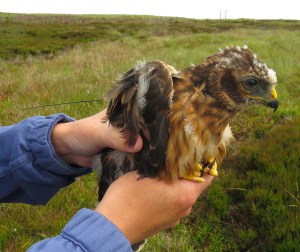 Sid was one of the successfully-fledged hen harriers at Langholm this year. He was satellite-tagged on 3rd July and his movements have been mapped and shared on the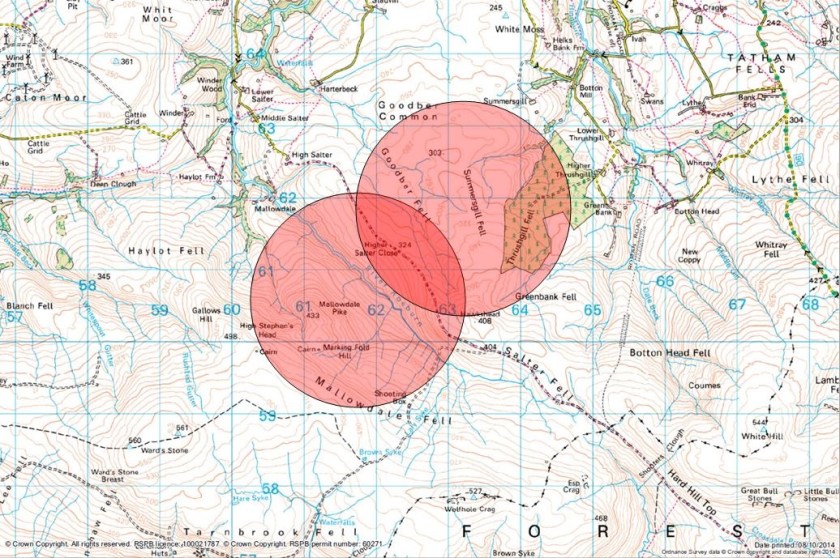
 The Convenor of the
 Raptor Persecution UK