Lush Skydancer bathbombs raise over £100K for hen harrier conservation

Henry LUSHIn August last year, Lush, the high street cosmetics store, started selling hen harrier-shaped bathbombs as part of their awareness and fundraising campaign to highlight the illegal persecution of hen harriers on driven grouse moors.

Lush is donating all the profits from the sale of these Skydancer bathbombs to the RSPB’s Hen Harrier LIFE+ Project, with the money specifically being used to buy satellite tags to fit on young hen harriers so their movements can be followed when/if they manage to fledge successfully.

A press release published this morning (here) tells us that so far over 30,000 bathbombs have been sold, raising £101,472 so far. That’s amazing!

Lush’s campaign will continue until August this year so there’s still plenty of time to go and buy a Skydancer bathbomb or two or three from your nearest Lush shop or online via their website.

Well done, Lush, for not only raising a huge amount of funds for such a vital project but also for bringing this campaign to the high street, which is exactly where it needs to be.

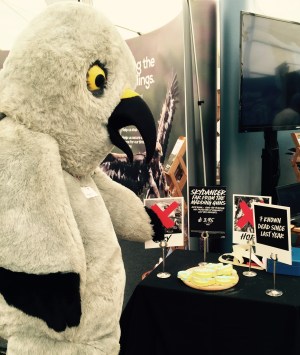
Above photo shows Henry Hen Harrier checking out the Skydancer bathbombs on the RSPB’s stand at last summer’s Birdfair.

There’s a guest blog on the RSPB website today written by Paul Morton from Lush Campaigns – see here.

lush skydancer

Vicarious liability prosecution: Andrew Duncan (Newlands Estate) part 4

Criminal proceedings continued last week against Andrew Walter Bryce Duncan, who is alleged to be vicariously liable for the crimes committed by gamekeeper William (Billy) Dick in April 2014.

Gamekeeper Dick was convicted in August 2015 of killing a buzzard on the Newlands Estate, Dumfriesshire by striking it with rocks and repeatedly stamping on it (see here). Dick was sentenced in September 2015 and was given a £2000 fine (see here), although he is appealing his conviction.

Proceedings against Andrew Duncan, 71, who is believed to be responsible for the pheasant shoot on Newlands Estate, began in August 2015 and a provisional trial date was set for 23rd November 2015 (see here). However, at an intermediate diet hearing in October, the November trial date was dumped and a notional diet hearing (where a trial date may be set) was set for 18th January 2016 (see here). At the January hearing, proceedings were adjourned again for another notional diet and a debate to take place on 11th March 2016.

At last week’s hearing the case was continued again, pending the result of William (Billy) Dick’s appeal.

The next installment of Andrew Duncan’s case will be heard on 4th April 2016.

Vicarious liability in relation to the persecution of raptors in Scotland (where one person may potentially be legally responsible for the criminal actions of another person working under their supervision) came in to force four years ago on 1st January 2012. To date there have been two successful convictions: one in December 2014 (see here) and one in December 2015 (see here).  One further case did not reach the prosecution stage due, we believe, to the difficulties associated with identifying the management structure on the estate where the crimes were committed (see here).

Previous blogs on the Andrew Duncan case here, here and here.

Cairngorms National Park Authority responds to mountain hare slaughter

Following yesterday’s blog about the recent massacre of mountain hares on grouse moors within the Cairngorms National Park (see here), and the subsequent outpouring of public anger on social media, the Cairngorms National Park Authority (CNPA) has published a statement on its website (here). We’ve reproduced it below:

Our [CNPA’s] statement in response to the mountain hare cull which was reported in the media at the weekend.

Hamish Trench, Director of Conservation and Visitor Experience said  “CNPA has previously set out concerns about the balance of moorland species and habitat management and the need for better data on mountain hare populations is part of this. Observation suggests there is a good population of mountain hares in the Cairngorms and the managed moorlands provide a good habitat for them. We back the current research project which is working with estates in the National Park to establish better counts.

In this case we understand the hare cull was part of a planned annual management cull. We recognise the public concern about the scale of culls and this emphasises the need for good information on populations and restraint in line with SNH’s advice in the meantime. In particular we expect moorland managers to ensure any culls do not threaten the conservation status of mountain hares.

END

Hares_Lecht_25Feb2016 (2) - Copy

It’s really a non-statement. They had to say something, as a lot of people have been asking questions about how such a wildlife massacre can be allowed to take place inside the National Park. We thought the CNPA would come out strongly and condemn it, especially as we know they’ve previously expressed concern about how some elements of driven grouse moor management (i.e. the illegal persecution of raptors) “threatens to undermine the reputation of the National Park as a high quality wildlife tourism destination” (see here). Indeed, some people on Twitter have been saying they won’t visit the CNP while this level of wildlife killing continues.

However, far from condemning the latest mountain hare massacre, the CNPA’s statement almost suggests that this level of killing is acceptable because it was “part of a planned annual management cull“. Eh? Planned by whom? And is the use of the words ‘planned‘ and ‘management‘ supposed to imply that this wasn’t just a gang of gamekeepers off on another unregulated killing-spree but rather was a carefully-thought out cull, with mountain hare population figures rigorously and accurately assessed to ensure the cull was sustainable? If so, where are those figures, who collected them, and can we all see them, please?

Take out the words ‘planned’ and ‘management’ and you get: “The hare cull was part of an annual cull“.

The CNPA says: “We expect moorland managers to ensure any culls do not threaten the conservation status of mountain hares“. Really? Why would anyone expect moorland managers to voluntarily act in this way? This is an industry well-known for not adhering to some statutory wildlife and environmental legislation, let alone voluntary adherence to requests, as we’ve discussed before (here). How can the CNPA be so naive? Or is it just easier to put out a bland statement that really says nothing of any use than it is to properly investigate the circumstances of these mountain hare massacres?

It’s not very impressive. In fact it’s as unimpressive as SNH’s view, as reported in Rob Edwards’ piece in the Herald (here):

SNH agreed that it was difficult to judge whether the cull was excessive or not. It was aiming to improve its population estimates of mountain hares by 2017, and reiterated its call for “restraint on large-scale culls of mountain hares“‘.

In other words, SNH doesn’t have a clue about how sustainable this cull was, has no intention of trying to find out, is asking (not telling) the landowners to show some restraint, but don’t worry folks because there’ll be a better way of assessing mountain hare numbers by 2017. So until then lads, fill your boots.

Of course, these large-scale mountain hare killing-sprees should now have ended (temporarily) as we’ve entered the closed season which is supposed to prevent the lawful killing of mountain hares during certain periods of the year (1st March – 31st July). Whether the closed season will be adhered to is another matter – who is monitoring this? The same organisations monitoring the ‘sustainability’ of mountain hare massacres (i.e. nobody)?

If you’re as unimpressed with the CNPA’s reaction as we are, you might want to send an email to Hamish Trench, Conservation Director of the CNPA, to tell him what you think: hamishtrench@cairngorms.co.uk

You might also want to have your say on the future of National Parks, as suggested by Mark Avery last week (here). If the CNPA and SNH aren’t going to speak out against mountain hare massacres, you can!

More mountain hares massacred in Cairngorms National Park

Recently we published some photographs of a load of dead mountain hares with some people lined up behind the corpses, grinning at what they’d done (see here).

These photographs caused quite a reaction, both from the general public, who were appalled at such scenes, and from the grouse-shooting industry who generally said the photographs were old and large scale hare culling no longer took place.

They were lying, of course.

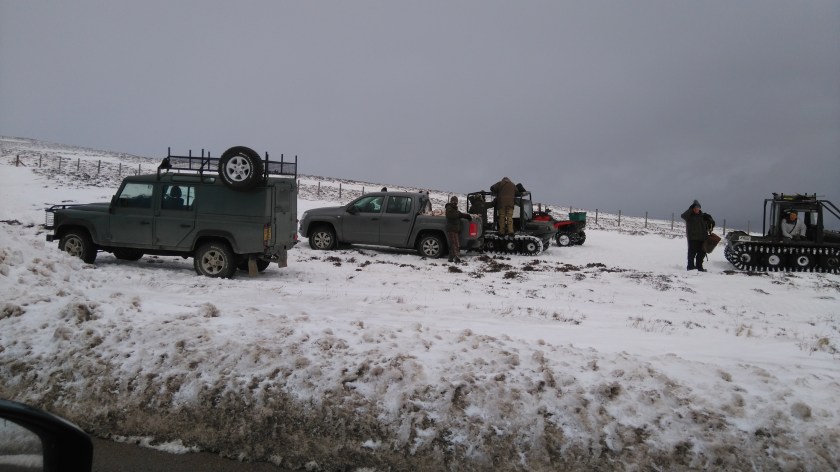
We were recently sent some photographs taken by someone who wishes to remain anonymous. The photographs were taken on 25th February 2016 in the Cairngorms National Park. On first glance, it looks like some blokes out with their vehicles in the snow:

Hares_Lecht_25Feb2016 - Copy

But when you zoom in, you see exactly what’s been going on:

Hares_Lecht_25Feb2016 (2) - Copy

That’s a truckload of dead mountain hares.

This photograph was taken from the Lecht road (the A939 Cockbridge to Tomintoul road). According to the grid reference we were given, these vehicles were parked on the Allargue Estate. Now that doesn’t mean that the hares had been massacred on the Allargue Estate or indeed that Allargue Estate staff were in any way involved. We’d be surprised if they were because the Allargue Estate was one of the first fully accredited members of the Wildlife Estates Scotland initiative and a gamekeeper here won the Purdey Gold Award in 2014 for Game & Conservation. According to the Purdey Awards website this estate “works tirelessly to uphold the Wildlife Estates Scotland high standards of wildlife management”.

Grouse-shooting estates have been slaughtering mountain hares for a long time. They do it because they believe mountain hares carry a disease (Louping Ill virus) which can affect their red grouse stocks (i.e. the number of red grouse available to be shot, for fun, during the grouse-shooting season). We, and others, have been writing about this for some time. Here are some previous blogs we’ve written about mountain hare massacres on grouse moors in the Angus Glens (here and here), Aberdeenshire (here) and the Lammermuirs (here).

Last year, SNH called on landowners to practice “voluntary restraint” and try to reign in their lust for slaying mountain hares (here). We said it was a pointless call (here) and clearly we were right judging by the photograph above. Last year, ten conservation organisations asked SNH to impose an immediate three-year ban on hare culling (here) to allow an assessment of how these large-scale and indiscriminate culls were affecting the conservation status of the mountain hare. Landowners reacted strongly against this proposal (read the link!) and SNH refused to impose the temporary ban because the evidence for action was lacking, apparently.

Marvellous. Welcome to Scotland and especially to the Cairngorms National Park.

Rob Edwards has covered this story today (here) as has Mark Avery (here).

UPDATE 11.30hrs: Scottish Land & Estates has issued a statement in response to Rob Edwards’ article in the Herald. You really have to read it. Bear in mind it’s not a spoof. See here.

UPDATE 14th March 2016: A few more blogs covering this atrocity –

The Ferret (by Rob Edwards) here

ParkWatchScotland here

Another one from Mark Avery (#HelpingItHappen) here

Scottish Greens here

UPDATE 14th March 16.00hrs: Cairngorms National Park Authority responds here

Mass raptor poisoning in Wales: police respond but questions remain

Following on from yesterday’s blog (see here) about the illegal mass poisoning of raptors in the Powys region of Wales and our question about whether Dyfed-Powys Police had covered up this atrocity…..

Poisoned RK Powys

Chief Constable Simon Prince (head of Dyfed-Powys Police, Chair of the PAW UK Steering Group and ACPO lead on wildlife crime) sent us a tweet yesterday saying he would investigate our report and provide an update. He was as good as his word as this evening he sent us another tweet directing us to a statement that has just been added to the police website. In case it disappears, we’ve reproduced it here:

In response to blog by Raptor Persecution Scotland

Dyfed Powys Police take allegations of wildlife crime very seriously and investigates all incidents reported to us. Following information received in 2012 and 2013, relating to the deaths of raptors in Powys, a full investigation was carried out in partnership with the RSPB, the National Wildlife Crime Unit and the Wildlife Management Team in the Welsh Government.   During the investigation a number of search warrants under the Wildlife and Countryside Act were executed and two people were arrested in connection with the incidents. A file of evidence was subsequently submitted to the Crown Prosecution Service who advised that there was insufficient evidence to proceed with a prosecution.

END

We’re grateful to Chief Constable Prince for replying so promptly but this police statement leaves a lot to be desired and a lot of questions still unanswered.

The statement tells us that an investigation was undertaken, and this is further verified by a detailed blog written by one of the RSPB investigations team that has just appeared on the RSPB website (here). Good, we shouldn’t expect anything less. But, as is common in so many of these raptor persecution cases, the evidence was insufficient to proceed to a prosecution. That doesn’t mean that the mass poisoning didn’t occur – it clearly did – but it was not possible to identify a named suspect to face charges. We’re not going to criticise the police for that, especially after reading how pleased the RSPB investigator was with the police’s efforts during the investigation.

However, the focus of yesterday’s blog was whether Dyfed-Powys Police had embarked on a ‘cover-up’ of this mass raptor poisoning and that question still remains open. This crime has been described by the RSPB investigator as “the most significant wildlife poisoning case ever recorded from Wales, and the second highest recovery of poisoned birds of prey in any UK investigation during the last 40 years“. So why has Dyfed-Powys Police not made any public statement about it until we started asking questions yesterday? Surely it’s in the public interest to know about this?

In the recent past it has been standard practice for this police force, and other Welsh police forces, to make public statements about other (much smaller and thus less significant) poisoning/persecution incidents – e.g. see here, here, here, here and here. These statements can include an appeal for information and/or a warning to members of the public to be aware of dangerous toxic poisons in the local vicinity.

So just what is it about this mass poisoning crime that Dyfed-Powys Police has kept quiet about it for so long, even after the investigation had concluded?

You’ll note in the above police statement that the location has not been revealed. You’ll also note in the RSPB investigations blog that the location is given as a sporting (pheasant shooting) estate in the Brecon Beacons National Park, although the estate is still not named.

We think we’ve got a pretty good idea why this mass poisoning crime has not previously been made public (we’d call that covering it up). Since we published yesterday’s blog, several people have contacted us privately and each has named the same estate as being at the centre of the investigation. We’re not yet in a position to publish that estate name because we need to verify a few things first. But OH MY GOD. If it does turn out to be this estate, you’ll not struggle to put two and two together.

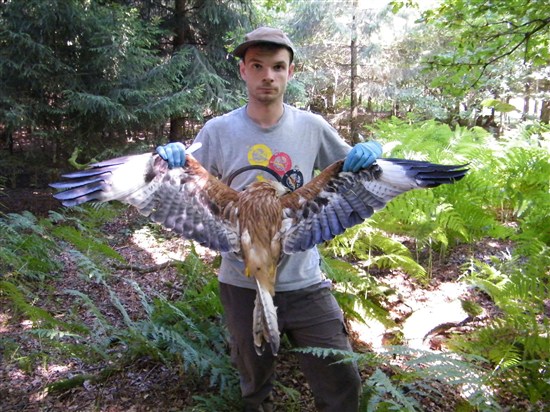
Photo of one of the poisoned red kites found on a pheasant shooting estate in the Brecon Beacons National Park, by Guy Shorrock (RSPB).

Mass raptor poisoning in Wales: police cover-up?

DyfedPowys Police logoEvidence is emerging of what looks to be a pretty comprehensive police cover-up of the mass poisoning of birds of prey in the Powys region of Wales.

According to the RSPB’s annual Birdcrime report (2012), the following incidents are listed:

Oct 2012: 1 x pheasant bait (Bendiocarb), location: Powys.

Oct 2012: 1 x pheasant bait (Bendiocarb), location: Powys.

Oct 2012: 2 x pheasant bait (Bendiocarb), location: Powys.

Oct 2012: 1 x poisoned red kite (Bendiocarb), location: Powys.

This little cluster is of interest, but becomes of even greater interest when you look at the RSPB’s annual Birdcrime report (2013), where the following incidents are listed:

Aug 2013: 1 x pheasant bait (Bendiocarb), location: Powys.

Aug 2013: 1 x pheasant bait (Bendiocarb), location: Powys.

Aug 2013: 1 x pheasant bait (Bendiocarb), location: Powys.

Aug 2013: 1 x pheasant bait (Bendiocarb), location: Powys.

Aug 2013: 1 x poisoned red kite (Bendiocarb), location: Powys.

Oct 2013: 7 x poisoned buzzards (Bendiocarb), location: Powys.

Oct 2013: 3 x poisoned red kites (Bendiocarb), location: Powys.

Oct 2013: 1 x poisoned red kite (Bendiocarb), location: Powys.

Oct 2013: 1 x poisoned raven (Bendiocarb), location: Powys.

Oct 2013: 1 x poisoned pheasant bait (Bendiocarb), location: Powys.

Oct 2013: 1 x poisoned red kite (Bendiocarb), location: Powys.

In total then, over a period of 12 months, seven poisoned red kites, seven poisoned buzzards, one poisoned raven, and nine poisoned pheasant baits were found in Powys.

Dyfed Powys Police force area mapNow, Powys is a pretty big county and unfortunately the RSPB Birdcrime reports do not specify a more precise location so you can’t tell from these reports whether these poisoning incidents are related, although the use of Bendiocarb each time is striking. We don’t recall reading anything about these crimes in the media.

To find out a bit more, an FoI was submitted to Dyfed-Powys Police. The FoI asked three questions:

  1. Were all these poisoned baits and poisoned birds all found in the same area? Or
  2. Are they from multiple locations in different parts of Powys?
  3. What is the status of any police investigation(s) into these crimes?

Here is the Dyfed-Powys Police response to the FoI:

I can confirm that Dyfed-Powys Police does hold the information requested, the details of which are as follows:

  1. Yes they were.
  2. No they do not.
  3. They have been concluded.

One thing’s for sure – you can’t accuse the FoI officer at Dyfed-Powys Police of being verbose! No matter, the information provided is still useful.

What we’re now interested in is finding out where, exactly, these poisoning offences took place, why there hasn’t been a prosecution, and why there hasn’t been any media statement from the police?

Raptor persecution is one of the UK’s six wildlife crime priorities so you might expect that the mass poisoning of 14 raptors + one raven + the discovery of nine poisoned baits in one area might have warranted some kind of public statement, right? That seems a pretty reasonable expectation, and especially when you consider that the head of the Dyfed-Powys Police force is one Chief Constable Simon Prince. Who he? Why, he’s only the Chair of the Partnership for Action Against Wildlife Crime (PAW) UK Steering Group, and he also happens to be the Association of Chief Police Officers (ACPO) lead on wildlife crime! This mass poisoning is right up there as one of the worst ever recorded in the UK – think Barns Estate, think Ross-shire Massacre, think Stody Estate – all involved the illegal mass poisoning of birds of prey and all received high profile media attention. What is it about this mass poisoning in Powys that the police decided it should be kept quiet?

We thought we’d look to the England and Wales PAW raptor subgroup (Raptor Persecution Priority Delivery Group) to see if they’d commented on it. After all, this is the group that DEFRA has identified as being integral to their highly controversial Hen Harrier Recovery Plan. Part of the RPPDG’s role is to provide publicity about raptor persecution, in order ‘to build trust and transparency’. Unsurprisingly, we couldn’t find any statement from the RPPDG about the mass poisoning of raptors in Powys. Why is it unsurprising? Well just look at the membership of the RPPDG – along with some very good organisations, it also includes DEFRA, Moorland Association, National Gamekeepers’ Organisation and the Countryside Alliance, none of whom are known for being keen to publicise illegal raptor persecution! Although membership of this group also includes the Police and the Welsh Government – both of whom should have commented on the mass raptor poisoning in Powys.

What we did find on our search was a protocol the RPPDG is using for publicity of annual raptor poisoning maps (see here). Strangely, the RPPDG has only once published a raptor poisoning map (covering the period 2007-2011). This map was published in 2013 – see here. The group hasn’t published any maps since then, although according to DEFRA’s Hen Harrier Recovery Plan, “the RPPDG have been publishing information on raptor poisoning since Feb 2013 and this is updated annually“. Really? Where is this published information?

So in summary, we know that the illegal mass poisoning of raptors took place somewhere in Powys between Oct 2012 and Oct 2013. We know it represents one of the worst raptor poisoning incidents discovered in the UK. We know that Dyfed-Powys Police have not issued a media statement about this atrocity. We know that the Raptor Persecution Priority Delivery Group has not issued a media statement. We don’t yet know where the mass poisoning took place but work is underway to find out. Watch this space.

UPDATE 11.50hrs: Please note, we have been asked to clarify that this blog post refers to the POWYS region of Wales and does not relate to the fine work of the North Wales Police Rural Crime Team.

UPDATE 13.07hrs: We’ve received a tweet from Chief Constable Simon Prince: “No cover up. I will look into reports & update on Twitter”.

That speedy and positive response sounds promising. We’ll update here in due course.

UPDATE 10 March 2016: Dyfed-Powys Police respond – see here.

UPDATE 1 July 2016: Mass poisoning of raptors in Wales: location revealed here

UPDATE 2 July 2016: Statement from Glanusk Estate here

Operation Raptor – new initiative to catch raptor killers in Northern Ireland

A new, multi-agency initiative has been launched in Northern Ireland aimed at targeting those who continue to kill birds of prey.

Operation Raptor was launched at the weekend and will run indefinitely across the country. The idea is to identify raptor persecution ‘hot spots’ and widely distribute a campaign poster throughout those areas to not only encourage the public to report suspicious incidents but also to warn offenders that their crimes will be prosecuted.

Operation Raptor poster PSNI

Operation Raptor is a partnership initiative between the Police Service of Northern Ireland (PSNI) and members of the Partnership for Action Against Wildlife Crime Northern Ireland (PAWNI) Raptor Subgroup, which includes the Northern Ireland Raptor Study Group, RSPB, Northern Ireland Environment Agency, Health & Safety Executive for Northern Ireland, Agri-food and Biosciences Institute and the National Wildlife Crime Unit.

This new campaign is a direct result of the report that the PAWNI Raptor Subgroup published last November (see here) which documented crimes against raptors in Northern Ireland between 2009-2013. The data revealed several persecution hot spots and it is these that will be targeted first. As more hot spots are identified, so the focus of attention will follow.

This campaign is a good example of real proactive partnership working and all credit to those involved.

Can we expect to see something similar being rolled out in raptor persecution hot spots across England and Scotland? It’s highly unlikely – membership of the English & Scottish PAW Raptor Groups is dominated by organisations from the game-shooting industry, some of whose members are repeatedly at the centre of raptor persecution investigations. Although interestingly, in the Operation Raptor press release there’s the following quote from Chief Inspector Martin Simms, head of the UK National Wildlife Crime Unit:

The NWCU welcomes the Operation Raptor initiative for Northern Ireland. Focused work to tackle these horrible crimes in hot-spot areas seems to be a logical step forward, as exemplified in Operation Raptor. This reflects the approach in the rest of the United Kingdom where “hot-spot Counties” have been identified so action can be targeted for a more effective use of resources. Such impactive posters as Operation Raptor will hopefully make people understand the effect of these crimes and the suffering that is caused to such beautiful animals. I hope it will encourage people to report such wildlife crime”.

Yes Martin, raptor persecution hot spots have long been identified in England and Scotland through the publication of the annual poisoning/persecution maps (e.g. see here and here), many of which just happen to be in areas where the land-use is dominated by driven grouse shooting. The question is, what tangible action has been undertaken within those hot spot areas to tackle these crimes?

Decision on SSPCA increased powers due “shortly”

sspca logoRegular blog readers will know all about the proposal to provide increased investigatory powers to the SSPCA to enable them to investigate a wider suite of wildlife crime than they already do. We’ve been blogging about it since February 2011 when it was first suggested by former MSP Peter Peacock (see here for a timeline of events since then).
The public consultation on this issue closed 18 months ago in September 2014 but still no decision has been announced.

On 3rd February 2016, the cross-party Rural Affairs, Climate Change & Environment (RACCE) Committee wrote to Environment Minister Dr Aileen McLeod to ask for an update. The Committee said:

In your response to the Committee’s letter on the Annual Report 2013, you indicated you would keep the Committee updated on developments with regard to a response to the Scottish Government’s consultation on the extension of powers in wildlife crime investigation to the Scottish Society for the Prevention of Cruelty to Animals (SSPCA). To date, the Committee has not received an update and the Scottish Government has not published its conclusions resulting from the consultation. The Committee requests details of when your analysis and conclusions from the consultation will be published, and expects this to be in good time for the Committee to include this in its legacy report to its successor committee(s)“.

We’re not sure when the Committee’s Legacy Report is due to be completed but would guess that it’s imminent as the Scottish Parliament dissolves at midnight on 23rd March in preparation for the election on 5th May 2016.

On 25th February 2016, Environment Minister Dr McLeod wrote back to the RACCE Committee and said this about the SSPCA consultation:

The analysis of the consultation results were published on 22 January 2015. I appreciate that this proposal has been under consideration for some time. It does however raise some complex issues as you will have heard from ACC Graham when he gave evidence on the matter during the Committee’s session on the 2014 Wildlife Crime Annual Report. I have some further matters to clarify with the SSPCA, however I do hope to be able to report on the Scottish Government’s position on this issue shortly“.

The issues raised really aren’t complex at all. We’ve been through them over and over again – here’s a summary. The bottom line is, does this Scottish Government want to use every available mechanism to crack down on wildlife crime, and particularly on illegal raptor persecution, as it so often claims, or not? We’re about to find out…

Our 6th birthday

Where does the time go?

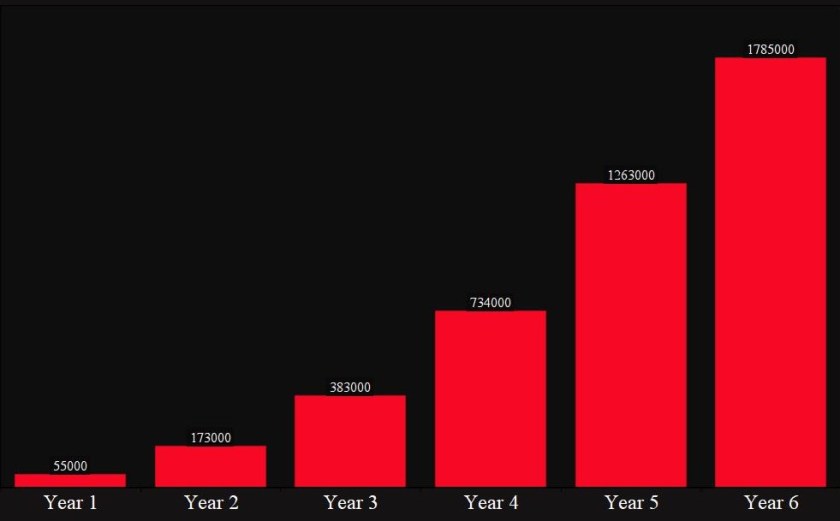
It’s been another good year for our little blog as we edge towards 1.8 million blog views. That’s amazing, and it’s thanks to you all for reading, commenting, sharing, re-tweeting etc.

20160303101541

Our readership is a diverse bunch, mostly from within the UK but with growing audiences in mainland Europe, North America and beyond. The message that illegal raptor persecution is still rampant in some parts of the UK, and particularly on driven grouse moors, is steadily spreading. A significant number of journalists now follow this blog and we’ve also seen a small increase in the number of political advisors (in both Holyrood & Westminster) who have subscribed. They’re paying attention, but whether their bosses are listening is another matter.

Here are our top ten most viewed posts during the last year:

  1. Now THAT’S a deterrent!
  2. Langholm hen harrier ‘Annie’ found shot dead on a Scottish grouse moor.
  3. George Mutch sentenced to four months in prison.
  4. Stody Estate receives £221,000 subsidy penalty for mass raptor poisoning.
  5. The red grouse and medicated grit scandal: it’s hard to swallow.
  6. Desperate days as 5th male hen harrier ‘disappears’.
  7. More mountain hares slaughtered in the Angus Glens.
  8. Scottish gamekeeper fined £2,000 for killing a buzzard.
  9. Masked gunmen caught on camera attacking goshawk nest in Cairngorms National Park.
  10. Gas-gun bird scarers deployed on Leadhills Estate grouse moor.

Thank you for your continued support. Let’s see what 2016 brings…..there may be a few surprises in store…

Environment Minister accepts recommendations by wildlife crime penalties review group

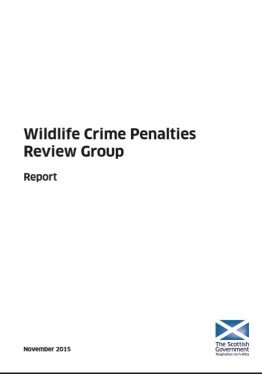
Wildlife Crime Penalties Review Group Report 2015 - CopySome good news for a change!

You may remember back in November 2015 the Wildlife Crime Penalties Review Group published its findings on how wildlife crime in Scotland is dealt with by the criminal justice system. The group concluded that the current system of wildife crime penalties in Scotland is wholly inadequate and the current penalties do not act as a deterrent to would-be offenders. The group produced ten short and medium term recommendations for the Scottish Government to consider, all of which we supported, including a call for increasing the maximum penalty from the current £5,000 to £40,000 (see here for our earlier blog on this).

This morning, Environment Minister Dr Aileen McLeod has responded to the report and has accepted the recommendations. She said:

Wildlife crime has no place in modern Scotland, this is why I have decided to increase the maximum available penalties to bring wildlife offences into line with other environmental crimes. It is important we have appropriate penalties that deter criminality but also reflect the impact these crimes can have on our environment and Scotland’s reputation as a wildlife tourism destination. Work will now begin on bringing together a list of relevant offences this change would apply to.

We already have the strongest wildlife legislation in the UK, in 2012 we implemented the vicarious liability provisions in relation to offences involving wild birds and we recently secured the second conviction under these provisions. We also funded the pesticide disposal scheme which removed over 700kg of illegally held poisons in Scotland. But I am determined to do even more to end these crimes that threaten the survival of some species and inflict cruelty on others.

I would also like to reiterate my thanks to the wildlife crime penalties review group and to Professor Poustie for their extensive work on this report.”

END

Further details of the recommendations, and the Scottish Government’s response to each one, can be found in this letter from the Environment Minister to Professor Poustie, the Chair of the Wildlife Crime Penalties Review Group: Scot Gov response Wildlife Crime Penalties Review Feb 2016

This is a good start. Of course, the devil will be in the detail as the Government considers how to incorporate the necessary legislative changes and also how much pressure it applies on Westminster to make changes for which it has jurisdiction, but at this stage we applaud the Minister’s intent and we’ll follow what we hope will be substantial progress as it’s made over the coming months/years.

But, as we said in November, the legislation alone is not enough. There’s no point having effective deterrent penalties if the enforcement isn’t there to get the wildlife criminals to court to face such penalties. This brings us neatly back to the SSPCA consultation – where are the increased investigatory powers for the SSPCA? When will the Environment Minister be making a decision on this? The consultation closed in September 2014. It’s been sitting on her desk for almost 18 months. The Rural Affairs, Climate Change and Environment (RACCE) Committee has pressed the Minister for an answer (here)…..we’re still waiting…..

UPDATE 17.30hrs:

RSPB Scotland’s response to the Minister’s announcement here

Scottish Gamekeepers’ Association response here (still pushing for licences to kill protected species, natch)

Scottish Land & Estates response here (still claiming wildlife crime ‘is in decline’, natch)