
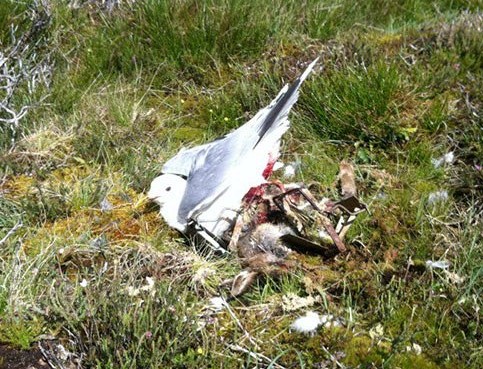
A few weeks ago we blogged about the discovery of two illegally-set spring traps and a critically injured Common gull found on a grouse moor on Invercauld Estate (Cairngorms National Park) in June 2016 (see here). We later blogged about the Estate’s subsequent denial that illegal activity had taken place and the Estate’s ‘understanding that the Police had not found evidence of illegal activity’ (see here).
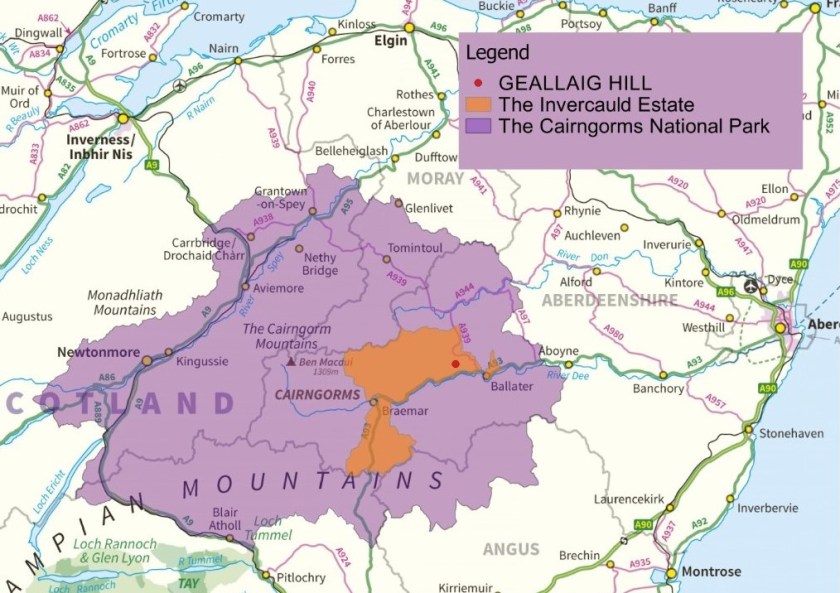
We asked Police Scotland to clarify whether evidence of illegal activity had been found on Invercauld Estate (we didn’t ask who had found such evidence, just whether any evidence had been found). Here is the response from Police Scotland:
Thank you for your email to ACC Graham and concern about wildlife crime in Scotland.
The RSPB media release refers to an incident that it reported to both Police Scotland and the SSPCA following the discovery by two members of the public of a Common Gull caught in an open spring (Fenn) trap on the Invercauld Estate. As a result of the injuries sustained in the trap the bird was euthanized by an SSPCA officer who attended and the full circumstances along with clarification of an illegally set trap were subsequently passed to Police Scotland. Once aware of the specifics and having confirmed the availability of resources from partner agencies, Police Scotland accompanied by specialist RSPB and SSPCA staff undertook a search of the area using powers available under S19 Wildlife and Countryside Act, 1981. That search was only able to identify signs of what appeared to have been trap-setting activity on the hillside i.e. holes in the ground but no actual traps. However, in light of the initial observations by the members of the public police officers spoke with representatives from Invercauld Estate. Unfortunately, the Estate was unable to shed any further light on this suspected illegal activity.
Other than the witness statements, there is no further evidence available from the initial discovery of the trapped bird and as previously highlighted the joint partner agency search failed to uncover any traps in place on the hillside. As a consequence, and despite a thorough investigation, there are at present no further investigative opportunities available to Police Scotland.
Police Scotland is committed to tackling wildlife crime and works closely with fellow members of the Partnership for Action Against Wildlife Crime (Scotland) to address wildlife crime issues across Scotland. We would encourage anybody with information about those that commit wildlife crime to contact Police Scotland by telephoning 101 or by contacting Crimestoppers anonymously on 0800 555 111.
Regards,
Andrew Mavin
Sergeant Andrew Mavin
Scottish Wildlife Crime Coordinator
Specialist Crime Division
Police Scotland
END
It’s a carefully worded statement but even so, is still quite opaque. The statement appears to confirm the discovery of an illegally-set trap (“….along with clarification of an illegally set trap….”) [actually, the gull’s legs were caught in two illegally-set traps, not just one] but then later it mentions ‘suspected illegal activity‘, although this appears to be a direct reference to other potential trap-setting activity on the hill, and not a direct reference to the two illegally-set traps that were reported by two hill walkers and then by the attending SSPCA Inspector.
Whether illegally-set traps were found on Invercauld Estate is not in question. The evidence, collected by the SSPCA Inspector, shows that two illegally-set traps had been found and that they’d caused appalling injuries to the trapped Common gull. The unanswered question, as ever, is who set those traps?
We will wait with interest to see whether SNH imposes a General Licence restriction order on this part of Invercauld Estate. Remember, even if there is insufficient evidence for a criminal prosecution, SNH may still impose this penalty if they consider the evidence is sufficient to warrant a GL restriction penalty. We may have to wait a while to find out, because SNH appears to have stopped issuing GL restrictions while it waits for a court decision on whether the process it uses to impose a GL restriction is fair. As you may remember, the Raeshaw Estate in the Scottish Borders has called for a judicial review of SNH’s decision to impose a GL restriction (see here) and we understand that the court has recently granted permission for the judicial review to take place.
While we wait for that judicial review, we will have more to write about the Invercauld Estate case…..watch this space.
In the meantime, you might want to consider signing THIS PETITION calling for the licensing of all gamebird hunting in Scotland (online petition currently at 3,089 signatures)
When you’ve done that, please consider signing THIS PETITION calling for a ban on driven grouse shooting (online petition currently at 79,404 signatures).
 Hen Harrier Day 2016 was fantastic! Now in its third year, there were more events and more people out in support than ever before.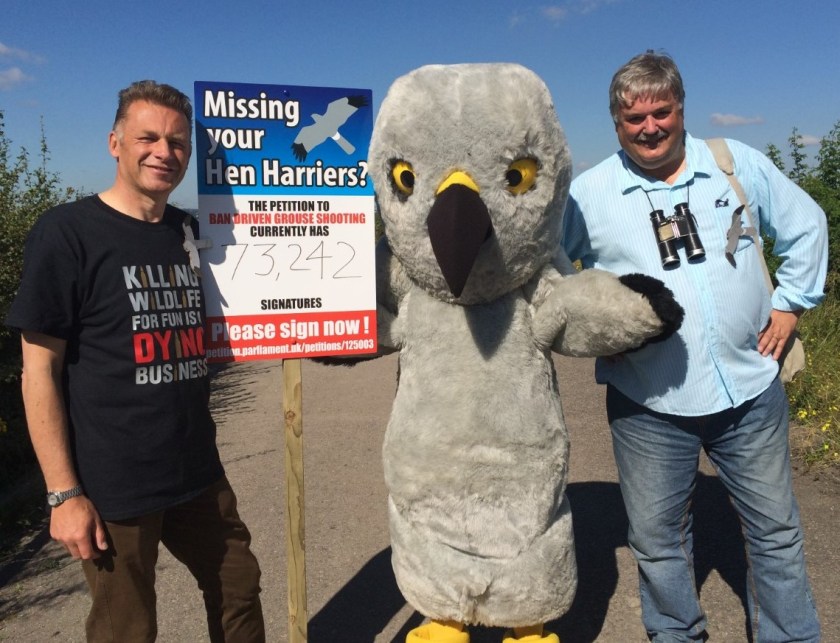


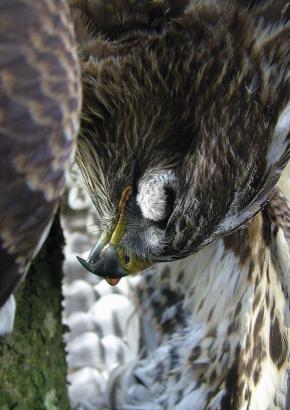 Natural England has just issued a licence for someone to kill up to ten buzzards “to prevent serious damage to young pheasants”.
 Earlier this year, the
  Recently, this photograph of Chris Packham and Mark Avery enjoying a pint of Bowland Brewery’s Hen Harrier beer, was posted on the Bowland Brewery’s social media platforms (twitter and facebook). As a result, some individuals from the grouse-shooting industry have launched a hate campaign aimed directly at the Bowland Brewery.
 Following yesterday’s news that the RSPB has walked away from the Hen Harrier Inaction Plan (see
  Raptor Persecution UK