As many of you will know, thousands of mountain hares are massacred on Scottish grouse moors every year, including inside the Cairngorms National Park. These killing sprees are unmonitored, unregulated and uncontrolled.
The grouse shooting industry justifies the slaughter on the following grounds:
Hares can affect fragile habitats through grazing pressure
Mountain hares can cause the failure of tree-planting schemes
Mountain hares can spread sheep tick which also affects red grouse
Shooting mountain hares is a legitimate sport
Conservationists have long raised concerns about the legality and sustainability of these culls, but all to no avail (see links to our earlier blogs on this issue below). Well now’s your chance to send a strong message to the Scottish Government that enough is enough.
The charity OneKind is organising a protest event at Holyrood on Thursday 17 November 2016, between 12 and 2pm.
Some background info about their mountain hare campaign can be read here.
The Panda Awards, dubbed the ‘Green Oscars’, celebrate and honour the very best in wildlife filmmaking and tv presenting. David Attenborough presented the award which Chris received to a standing ovation. His award was given in recognition of his significant contribution to wildlife filmmaking, conservation and increasing the public’s understanding of the environment.
Had we been there, we would have stood and cheered and applauded as loudly as everyone else, not just for his professional achievements, which are many, but more for the personal commitment he has given to wildlife conservation campaigns, and especially his work on raising awareness about raptor persecution.
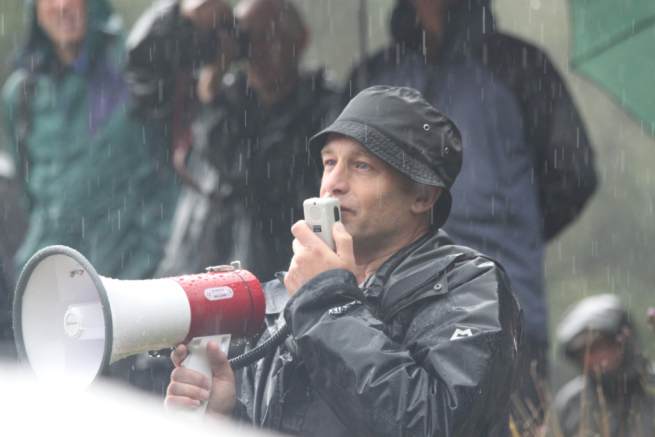
Many of us first met Chris in 2014 when he joined the #sodden570, standing all day in torrential rain in the Derbyshire Peak District at the very first Hen Harrier Day. He wasn’t paid to be there, he didn’t have to be there, but he was there, because he cared as passionately as the rest of us about hen harrier persecution. And he didn’t just flit in to say a few words and then clear off to the comfort of a warm, dry hotel room, as some ‘celebrities’ might have done. No. He stayed for the entire event and spent hours and hours and hours, soaked to the skin, talking to people, having his photograph taken, signing souvenirs, and ensuring that everyone who wanted to meet him was given that opportunity. He was one of the last to leave that day.
Since then he has been at the forefront of this campaign, on social media, at public events, and at further Hen Harrier Day rallies in 2015 and 2016. Perhaps most significantly, he also put his name to the latest petition to ban driven grouse shooting in March this year. But he didn’t just put his name to it and then forget about it, he campaigned for it, working tirelessly to promote the issue and raise awareness.
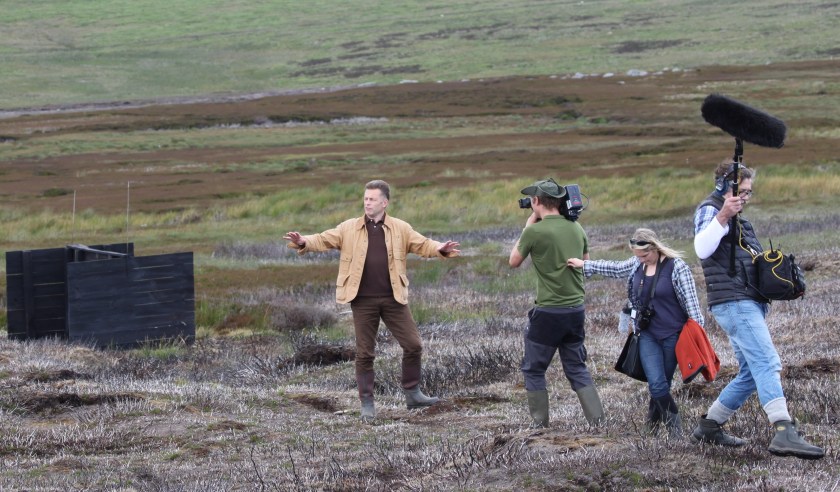
When, with Mark Avery, we told him we wanted to make some videos to help the public understand the environmental damage caused by driven grouse shooting, he jumped at the chance to help. Unbeknownst to many, he turned up the evening before we were due to start filming with a chronic back injury that rendered him virtually unable to walk. Did he cry off? Did he hell. He got himself an emergency medical appointment early the next morning, got dosed up on pain killers and joined us for two days of filming out on the moors without complaint or excuse. Again, he wasn’t paid to make those films, he didn’t have to be there, in agony, but he (and his film crew, who also volunteered their time and expertise) was there because he cared.
There is no doubt that Chris’s involvement in this campaign helped the petition to reach the required 100,000 signatures and why the issue of driven grouse shooting is heading for Westminster this month. He has an outspoken passion but it is delivered with integrity and professionalism, and the general public responds to these qualities. And that’s why the grouse shooting industry targeted him with their (unsuccessful) campaigns to get him sacked from the BBC. They could see how much the public valued his opinion and they could see how his advocacy was helping the campaign gain momentum. For all the personal abuse they’ve hurled at Chris, whether it be on social media or in the national press, his dignity and resoluteness has been astonishing.
Massive congratulations, Chris, for a well-deserved award.
Photos of Hen Harrier Day 2014 and film work on a North Yorkshire grouse moor, July 2016 (RPUK)
When a satellite-tagged hen harrier dies of natural causes, what happens next?
Answer
The satellite tag continues to transmit, leading investigators to find the dead bird and determine the cause of death. The tag doesn’t suddenly stop transmitting and the bird’s corpse doesn’t suddenly vanish in to thin air, even several days after death.
– – – – – – –
One of this year’s young satellite-tagged hen harriers, Hermione, has been found dead on the Isle of Mull. She died of natural causes in late September and her body (and sat tag) has been retrieved, just a few kilometres from where she’d fledged in August. Full story on the RSPB Skydancer blog here.
No driven grouse moors on Mull. No mysterious disappearance of Hermione. No sudden cessation of signals from her satellite tag. No suspicious circumstances. Just a straightforward natural death and a straightforward recovery of her body, aided by the signals from her still-fully-functional satellite tag. Amazing, eh?
It’s not often that we can report good news stories for raptor populations in Scotland, and it’s equally rare to find a raptor-related SNH press release that hasn’t been coated in a thick layer of varnished, propaganda-fuelled tosh. But yesterday we had both a good news story AND an accompanying unvarnished SNH press release!
SNH has published a new report: Population and future range modelling of reintroduced Scottish white-tailed eagles (Haliaeetus albicilla), authored by Sansom, A., Evans, R. and Roos, S. (2016), SNH Commissioned Report No. 898.
This is a comprehensive piece of research using predictive modelling to forecast the short and long-term population growth of re-introduced sea eagles in Scotland. In a nutshell, the population is doing very well and is predicted to continue to do well in the coming years as the population grows and re-occupies its former range. The quality of this research looks very good so all credit to the authors, including the late and much-missed Richard Evans. The full report can be read here: wte-population-modelling_snh_2016
Some new blog readers may be surprised by this raptor conservation success story, especially as the UK’s reputation for illegal raptor persecution is such a constant embarrassment, but the reason for the sea eagle’s success is pretty clear when you look at this map (copied from the report) of the eagle’s current core breeding area. These raptors are doing really really well because they’re mostly breeding far away from the intensively-managed grouse moor areas of central, eastern and southern Scotland, all well-known raptor persecution hotspots. Sure, the eagles also have their enemies in the west and there’s an on-going battle there with some sheep farmers and crofters (and this morning there’s an article in the Scotsman about the perceived threat to hill farming from an increasing sea eagle population) but clearly a lot of people in western Scotland have welcomed these eagles with open arms and many are benefiting from the millions of pounds worth of tourism money brought in by visitors who come to see these incredible birds.
Sea eagle population growth in eastern Scotland, following the more recent re-introduction there, remains to be seen. It’s still fairly early days but so far a number of young satellite-tagged sea eagles have either ‘disappeared’ or have been found poisoned on nearby driven grouse moors. And of course there was the now infamous felling of a sea eagle nest tree on a grouse moor in the Cairngorms National Park a few years ago. According to the new report, persecution (and wind-farm related mortality) shouldn’t now affect the overall stability of the Scottish sea eagle population but obviously persecution has the potential for local and perhaps regional effects, as we’ve seen with golden eagles, peregrines, hen harriers and red kites.
The publication of this latest report attracted a lot of media attention yesterday (see links below) but surprisingly we’ve yet to see the usual hysteria from certain quarters, warning people to lock up their toddlers in case a big bad sea eagle mistakes one for prey.
The gamekeepers at Moy Estate are continuing to set the moor alight as part of their grouse moor management strategy. Here’s a photo taken from a train yesterday showing a fire on the Moy grouse moors.
Take a look at the right hand side of the photo and you’ll see some wind turbines. These are part of the 20-turbine Moy wind farm, built on the moors of Moy Estate, that became operational earlier this year.
The whole purpose of installing (publicly-subsidised) wind turbines is to create renewable energy and thus reduce the carbon emissions that would otherwise be created from burning fossil fuels.
Isn’t it a bit perverse, then, that the estate has also leased the moors to a shooting tenant whose (probably publicly subsidised) management techniques include the regular burning of heather? By burning the heather, the carbon-rich peaty soil is disturbed and exposed. As the soil dries out, the stored carbon decomposes and releases carbon dioxide in to the atmosphere, contributing to climate change.
The message is definitely getting out there! A new YouGov poll, commissioned by Animal Aid, shows that 48% of those polled (2033 people) last month would support a ban on driven grouse shooting, compared to 28% who would oppose a ban.
When counting only those who expressed a view, those in support of a ban rose to 63%, with 37% opposed to a ban.
Some quotes in response to these results:
Mark Avery:
“We’re leaving the EU on 52% of the vote – we should ban driven grouse shooting on 63% of views. Intensive grouse shooting damages our environment, depends on killing our protected species, and benefits from our taxes. We want it to end.
MPs will debate this issue later this autumn. They must rise to the challenge of ending wildlife crime and ending unsustainable moorland management”.
Mark McCormick, Head of Campaigns for the League Against Cruel Sports:
“The momentum to ban driven grouse shooting is growing and this polling is a clear indicator of this trajectory. The public are clearly becoming wise to the devastating impacts of this brutal industry. When you consider the potential benefits of wildlife and eco-tourism in contrast to the dubious and overstated economic benefits of driven grouse shooting it is absolutely clear that this is an industry only interested in protecting its own profits at the expense of wildlife and the environment. The uplands should be a place whereby nature and wildlife thrive free from persecution and destruction and can be of joy and benefit to everyone rather than just a few”.
Animal Aid Director, Isobel Hutchinson:
“These latest poll results reflect the rising tide of opposition to grouse shooting. The public is becoming increasingly aware that this is a sport which inflicts appalling suffering on animals, and can have devastating consequences for the environment. It is high time that the barbaric bloodsport of grouse shooting was consigned to the history books”.
Raptor Persecution UK:
“It’s good to see an increased public awareness and condemnation of driven grouse shooting. Those who want it banned understand the immense environmental damage it causes and know that this industry has refused, point blank, to voluntarily put its house in order. Those who continue to support driven grouse shooting either have a vested interest or are yet to be made aware of its devastating impact on our upland habitat and wildlife”.
Raptors have long been accused of ‘eating too many’ red grouse, and none more so than at Langholm.
Sure, we all know that some raptors can eat a lot of grouse – during the Langholm 1 study it was shown that raptor predation reduced the autumn grouse abundance by 50%, leading to the cessation of driven grouse shooting (here). In other words, the ‘surplus’ birds from an artificially-high red grouse population were no longer available to be shot and the red grouse population dropped back to normal (natural) density. But we also know, through the work completed during the recent Langholm 2 study, that diversionary feeding of hen harriers has shown that the proportion of red grouse in the diet of diversionary-fed hen harriers was a negligible 0-4% (see here).
Seeing as (diversionary-fed) hen harriers could no longer be blamed, attention switched to blaming the buzzards. Simon Lester, the now former Head Keeper at Langholm is quoted in a 2014 book A Sparrowhawk’s Lament as follows:
“I can put my hand on my heart and say that harriers aren’t a problem. Harriers aren’t limiting grouse at Langholm because diversionary feeding works. What’s stopping us shooting grouse is Buzzard predation“.
Unfortunately (for Simon), this claim of buzzard predation causing problems at Langholm is wholly unsupported by the scientific evidence. Research undertaken during three breeding seasons at Langholm 2 (2011-2013) showed the proportion of red grouse in the diet of buzzards was just 1-6% (see here and here).
‘Ah, but what about buzzard predation during the winter?’, cried the grouse shooting community. Well, that question has just been answered by the latest study, published last week. It turns out that not only aren’t Langholm buzzards taking many grouse during the breeding season, they’re also taking bugger all during the winter. Over a period of two years, red grouse formed 1.1% and 0.6% of prey items, and occurred in 3% and 2% of pellets from each winter, respectively. Small mammals were the main prey in both years, comprising 60–67% of items and occurring in 88–92% of pellets.
Despite such robust and compelling evidence, there are some who still want to pin the blame on the buzzards. Last November, Mark Oddy (Buccleuch Estates – one of the Langholm 2 project partners) suggested, “We now have to grasp the nettle and try and put forward a case, which probably in the first instance under licence, will allow some type of lethal control, ‘cos I don’t see what the future alternative is” (see here).
And in July this year, Tim (Kim) Baynes of Scottish Land & Estates wrote: “The confounding factor seems to have been the overall impact of buzzards, ravens and other raptor species predating adult grouse all year round, with harriers starting to overwinter on the moor, too“. He went on: “There were 80 pairs of raptors from seven species nesting on and around the moor at the last count, excluding ravens. Everyone involved now agrees that this level of multi-species raptor predation makes grouse-shooting unviable. Demonstrating this is a vital step in making the case for action to resolveit“.
Eh? Can these people not understand simple scientific data? Or are they just choosing to ignore the evidence?
Give it up guys, Langholm buzzard dietary studies have been done to death: they’re not really in to eating red grouse.
The muirburn season has re-opened (1 Oct – 15 Apr) and it hasn’t taken long for the grouse moor hairdressers to splash around the fire accelerant and bring out the blow torches.
This is a photo of a fire on the Moy Estate grouse moor at 21.43hr on Wednesday night (5th October 2016). For perspective, the photo was taken from 5km away in Daviot. A pretty big fire then.
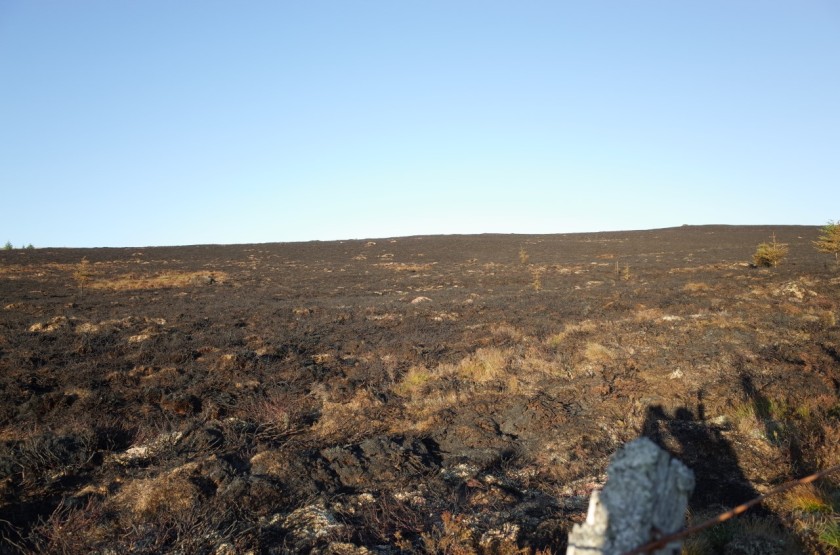
And here’s a photo taken the following day showing the extent of this fire. The area burned was huge and this image only shows part of it as the damage extends over the hill. Doesn’t look much like small ‘patch’ or ‘strip’ burning, does it? Perhaps it wasn’t muirburn after all?
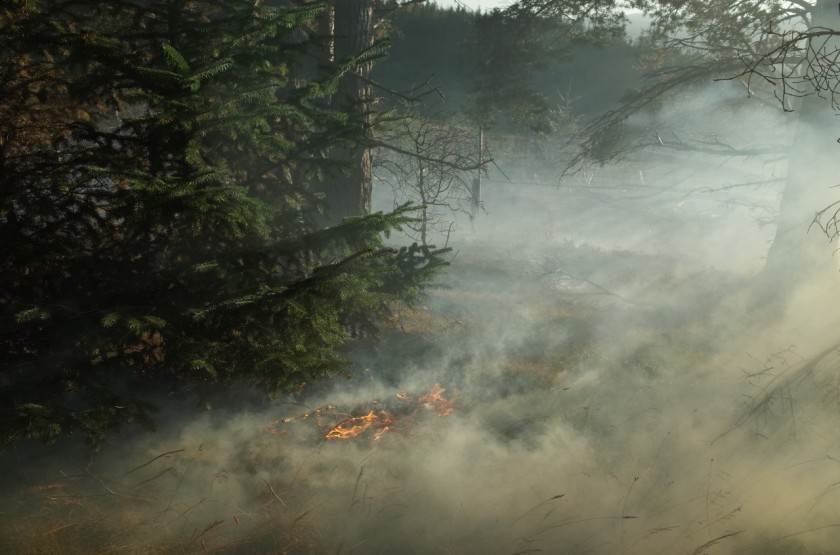
The fire wasn’t properly extinguished and was left unattended. Isn’t that against the muirburn code? This photo was taken on the afternoon of Thursday 6th Oct at 17.10hr. Here the fire has engulfed one of the estate’s middens (stink pits) where the rotting carcasses of dead wildlife are dumped and the area ring-fenced with snares to catch any animal that comes along to investigate the putrid remains.
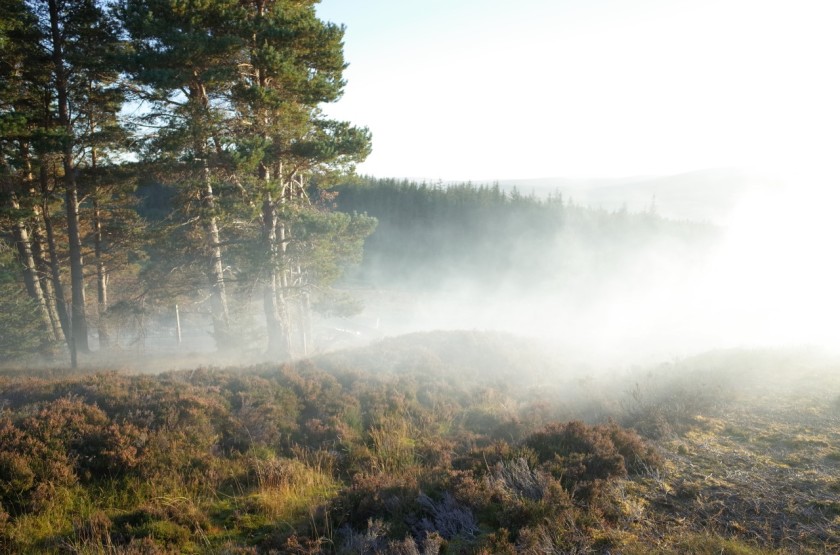
This photo was taken at 17.35hr on Thursday 6 Oct. The fire was still unattended and creeping towards the FCS forestry block, 200m away.
Last week we blogged (here) about the results from this year’s Heads up for Hen Harriers project, a so-called ‘partnership-working’ initiative aimed at better understanding the threats faced by hen harriers in Scotland.
We were pretty scathing about this project. Everyone knows, thanks to years, in fact decades, of scientific evidence, that the main threat comes from illegal persecution on driven grouse moors so let’s not pretend this is still a big mystery needing to be solved. But we want to re-visit the project again just to drive home some salient points.
Have another look at the press release put out by SNH (here). We learned that this year the number of ‘participating’ estates had risen from five to 13.
Now, according to the SNH press release, “The thirteen estates participating in the project have cameras installed on their land to monitor hen harrier nests“.
This same claim was made in a press release from the Scottish Countryside Alliance (here). They said:
“Thirteen participating estates, many of them managed for grouse shooting, installed cameras to capture what exactly was happening on and around hen harrier nests to improve our understanding of why nests fail“.
So, from these two claims, you could be forgiven for thinking that all 13 ‘participating’ estates had hen harrier breeding attempts this year, and that each of the 13 estates had nest cameras installed. That’s what these propagandists would like you to believe, but it isn’t actually what happened.
The term ‘participating’ needs some clarification. Yes, 13 estates had agreed to ‘participate’ in the project – that just means that 13 estates (8 of which were managed as driven grouse moors) had agreed to host a project nest camera should there be a hen harrier breeding attempt on that estate this year.
What it doesn’t mean is that those 13 estates (including those eight driven grouse moors) all had hen harrier breeding attempts and all had nest cameras installed. They didn’t. Hen harriers attempted to breed on three of the 13 estates, and guess what? None of those breeding attempts was on a driven grouse moor.
So what the SNH press release should have said is something like: ‘Three of the thirteen participating estates had hen harrier breeding attempts this year, and those three estates each hosted a nest camera. None of these three estates is managed as a driven grouse moor‘.
By putting out misleading information suggesting that all 13 estates had hen harrier breeding attempts and that each estate hosted a nest camera, SNH is able to repeat the myth that ‘landowners and conservationists are working together to help the hen harrier’, and this allows other organisations like Scottish Countryside Alliance and Scottish Land & Estates to repeat the same myth and present a wholly inaccurate picture of ‘partnership working’. This perpetual myth then allows the Scottish Government to also pretend that progress is being made and therefore further measures to stamp down on the raptor killers isn’t deemed to be necessary.
It’s a total sham, facilitated by SNH, the Government’s statutory conservation agency, no less.
We also wanted to revisit the BBC’s Landward programme that covered this year’s Heads up for Hen Harriers project. The programme is still available on iPlayer for a limited period but to avoid losing it, we’ve uploaded a clip to YouTube. (NB: the visual quality of the clip is quite poor, thanks to rural broadband, and isn’t a reflection on the BBC, but the sound quality is good, and it’s what was said on that programme that is of interest here).
First to be interviewed was Brian Etheridge of the RSPB who stated that the relationship between failing hen harrier nests and land managed as a driven grouse moor was ‘striking’.
Next came Tim (Kim) Baynes, speaking on behalf of Scottish Land & Estates. The first question he was asked by the presenter was: “How frustrating is it for you that you always seem to be painted as the bad guys?“.
Ah yes, the poor, victimised grouse moor owners, it must be soooooo frustrating for them to be portrayed in such bad light. Let’s just ignore all the wildlife crime statistics from grouse moors, all the poisoned baits that have been found, all the poisoned raptors, all the illegal traps, all the shot raptors, all the burnt out raptor nests, all the trampled chicks, all the disappearing satellite-tagged raptors, all the consistently vacant raptor breeding territories, all the gas guns, all the banger ropes, all the inflating screeching scarecrows….those poor, poor victimised grouse moor owners.
Tim (Kim) played the victim card with the usual aplomb, agreeing that it was “really, really frustrating‘ to be portrayed in such poor light, especially when “one estate has got 81 bird species, you know, including birds of prey“.
Ah yes, of course, the old 81 species claim again. We’ve blogged about this before (here) but it’s worth reiterating. This is the ‘study’ that was undertaken on Invermark Estate (Angus Glens) in 2015 that claimed there were 81 species of birds ‘either breeding or feeding‘ on the grouse moor. The findings of this ‘study’ were used at a parliamentary reception at Holyrood (see here) to celebrate the so-called conservation value of driven grouse moors. Unfortunately, the study report has never been made public, despite repeated requests to see it, which is a shame because we’d really like to know how a study undertaken at Invermark between June and August could possibly measure the breeding status of many bird species when the usual (proper scientific) survey technique is to conduct a study from March to June…you know, during the actual breeding season. Perhaps the surveyors saw some random birds flying overhead and decided to include them on the list of ‘breeding’ or ‘feeding’ species to boost the numbers. That would be a bit like Bristol claiming that the management of the Severn Bridge was so good it supports Bearded Vultures (here), or the ground keepers at Regent’s Park claiming that their management was so good that the Park supports Cory’s Shearwaters (here).
It’s amazing, isn’t it, how so-called ‘studies’ that apparently show driven grouse moors in a positive light are allowed to be kept secret so nobody can scrutinise the methods or results but can be celebrated by MSPs at a parliamentary reception, and yet studies that are commissioned to assess the illegal persecution of raptors on driven grouse moors are required to include a “robust statistical analysis of all the data to support any conclusion” (see here).
Devon & Cornwall Police are appealing for information after a peregrine was found shot in Ipplepen, south Devon, in August.
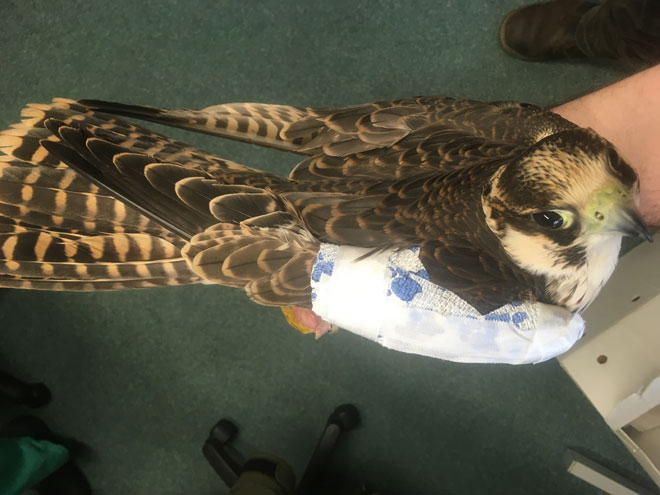
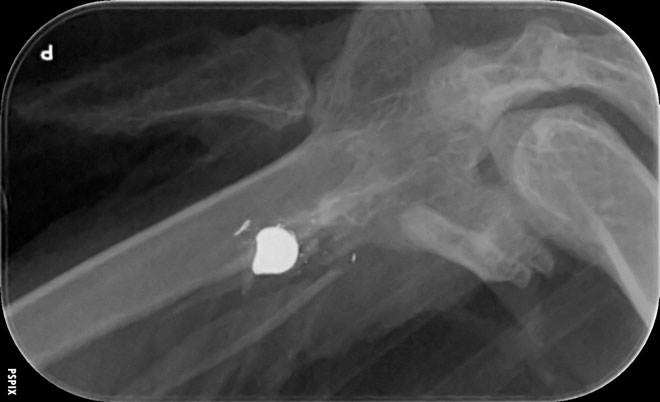
The young bird (hatched this year from a coastal site in Devon) was found with an injured wing on 23 August 2016. An x-ray revealed an air rifle pellet had caused fractures and the bird is currently in the care of a wildlife rehabilitator. Whether it recovers sufficiently to be released back to the wild remains to be seen.
This incident is now subject to a police investigation and Devon and Cornwall’s Police Wildlife Crime Officer Josh Marshall is appealing to anyone who can help to contact them with information that will assist in locating the offenders.
He said: ‘These types of investigation are incredibly hard to investigate as very often there are no witnesses or lines of enquiry. It is clear that someone in the local community will hold the key to what has taken place.
This Peregrine Falcon will have been shot by someone having a clear motive to destroy this rare bird of prey. The community in this area need to be aware of this incident and every effort should be made to bring the offender to justice.
Within the community of Ipplepen are extremely privileged to have such magnificent birds on doorstep. I am calling on those residents to stand up, come forward and report to me any concerns or suspicions they have around those that may be responsible for such an act.”
The RSPB is offering a reward of £1000 for information leading to a conviction.
Tony Whitehead, speaking for the RSPB in the south west said: “We know that Devon has long been a bird of prey persecution black spot and the area where these birds were found has seen five such incidents over the past 25 years alone. We need to stop this.
Whatever drives a person to do this, it’s important to understand that killing birds of prey is not only barbaric, it is also against the law. This makes the perpetrators, however they seek to justify their behaviour, no more than common criminals and we’d expect them to be treated as such.
The incident at Ipplepen follows a long history of persecution within the local area. Nowhere else in Devon do birds of prey suffer as they do in the Teignbridge area”.
Confirmed poisoning incidents within the Teignbridge area over the last 25 years
1992 Two Peregrine Falcons located dead along with poisoned bait
2000 Peregrine Falcon located dead, poisoned
2005 Peregrine Falcon and poisoned bait found
2005 Live pigeon covered in poison left as bait for Peregrine Falcons
2011 Peregrine Falcon – poisoned
If you have any information that can help the police with their investigations of this crime, please contact 101@dc.police.uk or call 101, quoting reference CR/069253/16
Information can also be passed on anonymously via Crimestoppers on 0800 555 111.





 Some new blog readers may be surprised by this raptor conservation success story, especially as the UK’s reputation for illegal raptor persecution is such a constant embarrassment, but the reason for the sea eagle’s success is pretty clear when you look at this map (copied from the report) of the eagle’s current core breeding area. These raptors are doing really really well because they’re mostly breeding far away from the intensively-managed grouse moor areas of central, eastern and southern Scotland, all well-known raptor persecution hotspots. Sure, the eagles also have their enemies in the west and there’s

 Raptors have long been accused of ‘eating too many’ red grouse, and none more so than at Langholm.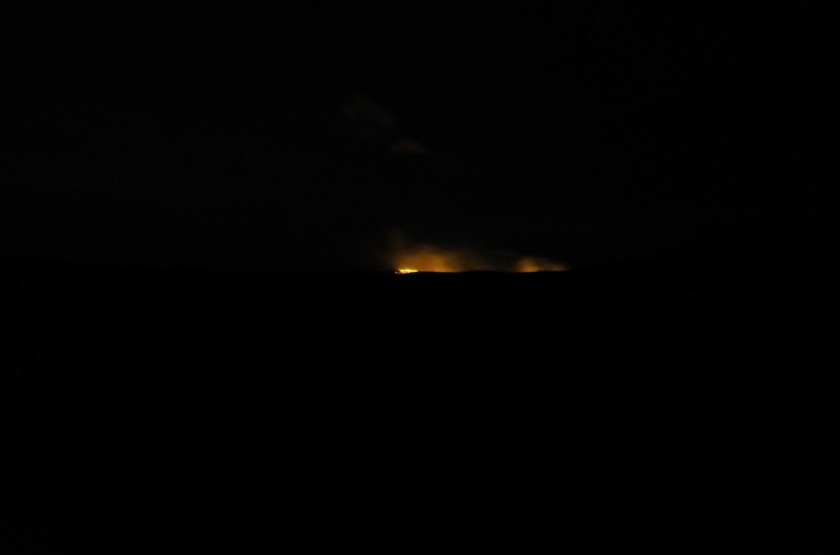

 Raptor Persecution UK