BURNING BANNED ON ENGLAND’S DEEP PEAT TO PROTECT WILDLIFE
Ban on burning heather and grass on deep peat extended to improve air quality for local communities, reduce flood risk and protect wildlife.
Local communities are set to benefit from improved air quality, following an announcement that the government will extend the ban on burning vegetation on deep peat as part of new plans to protect both the environment and public health.
The burning ban will protect our globally unique network of peatlands which are commonly referred to as the Earth’s lungs.
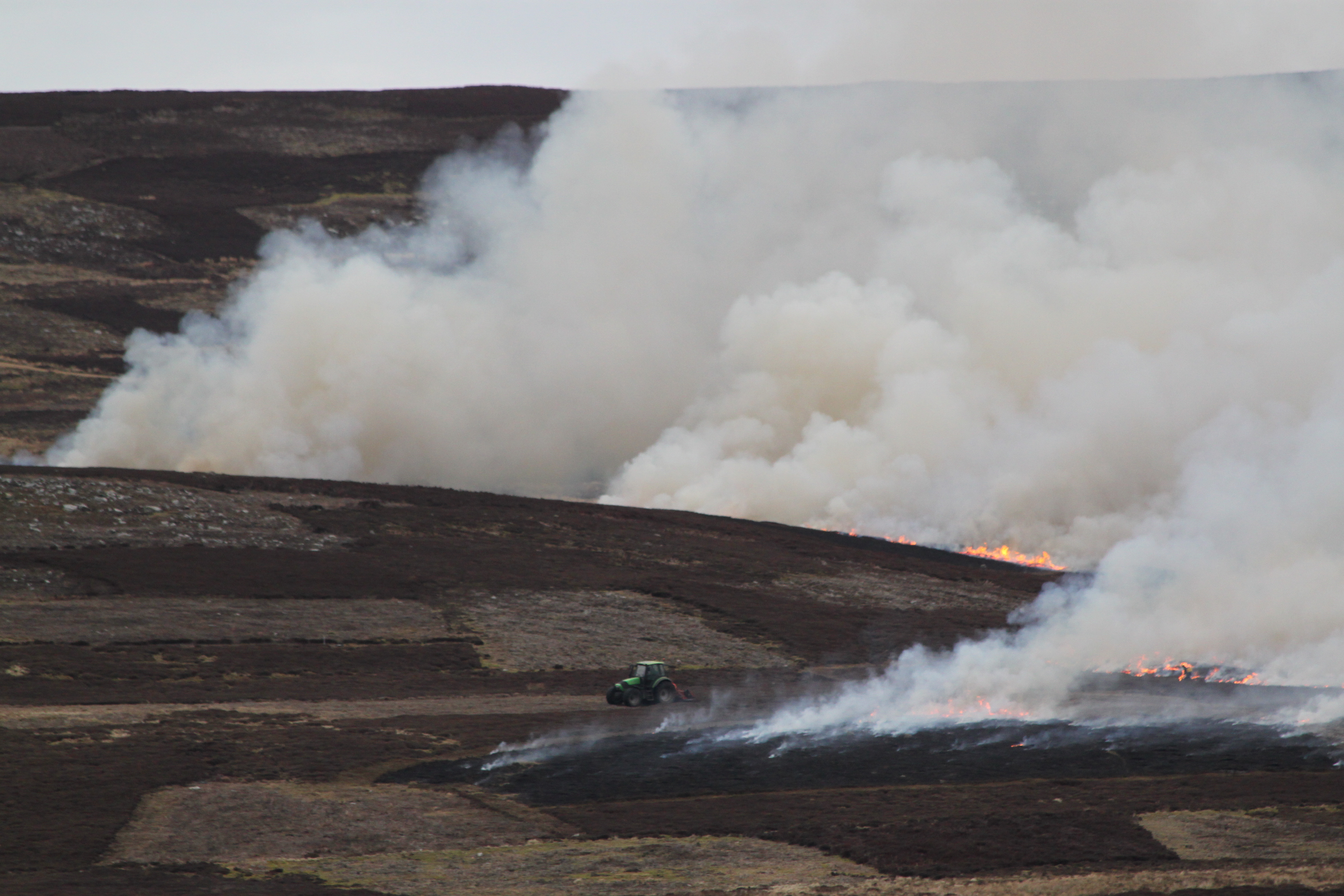
Burning on grouse moors in England will be severely restricted. Photo: Ruth Tingay
Peatlands improve water and air quality, create habitats for wildlife, absorb carbon and help protect communities from flooding. To deliver these benefits, they must be in a healthy condition but 80% of peatlands across England are dried out and deteriorating and actually emit carbon dioxide contributing to global warming.
Burning vegetation on deep peat causes the release of harmful smoke into the air, impacting air quality across communities. This includes harmful air pollutants for human health, including ones strongly associated with strokes, cardiovascular disease, asthma and some lung cancers.
The move as part of the government’s Plan for Change sees the burning ban extended to cover 676,628 hectares of deep peat up from the current 222,000 hectares – meaning an area equivalent to the size of Devon will now be better protected. The extension comes into force from 30 September.
Environment Minister Mary Creagh said:
“Our peatlands are England’s Amazon Rainforest – home to our most precious wildlife, storing carbon and reducing flooding downstream.
“Burning on peatland releases harmful smoke ruining local air quality and damaging the precious ecosystems found in these iconic landscapes.
“Restricting burning will help us restore and rewet peatlands. These new measures will create resilient peatlands that are naturally protected from wildfires“.
The extension comes following a consultation on measures announced earlier this year, and expands protections to all deep peat in the uplands, and redefines deep peat from the current 40cm to 30cm depth.
A refined licencing system which allows prescribed burning in exceptional circumstances will also be introduced. Any licences for prescribed burning will only be issued where there is a clear need, for example, to reduce wildfire risk. This will help balance environmental protection with practical land management.
The government is expected to publish its new Environmental Improvement Plan this Autumn, setting out its ambitions to halt the decline of nature. This will build on existing work to protect and restore nature, clean up our rivers and seas, boost tree planting and reduce waste.
This government has already licensed the first wild beaver release since they were hunted to extinction around 400 years ago, announced the creation of a new national forest stretching from the Cotswolds to the Mendips, started cleaning up our rivers, lakes and seas by introducing tough new powers through a new Act of Parliament, initiated waste reforms which will see £10 billion invested in new recycling facilities, and will invest up to £400 million in tree planting and peatland restoration over the next two years.
Additional information:
You can find out more about when you need to apply for a licence to burn heather and grass via this link.
More information about the consultation is available via this link
This is excellent news! Defra has clearly responded to the science, rather than the hysteria and rhetoric of the grouse shooting industry.
Importantly, the ban comes into force in a few week’s time on 30 September 2025, the day before the opening of the burning season.
I’ll write a commentary about the Government’s decision in the coming days.
In haste…
UPDATE 27 January 2026: Moorland Association at the High Court challenging Defra’s new regs on peatland burning (here)
UPDATE 28 January 2026: High Court throws out Moorland Association’s legal challenge against burning regulations (here)
UPDATE 8 February 2026: Moorland Association lodges appeal against recent High Court decision to refuse judicial review of Defra’s peatland regulations (here)
The District Judge presiding at York Magistrates Court has today ruled that the RSPB’s covert video and audio surveillance is to be considered admissible evidence in relation to the prosecution of gamekeeper Racster Dingwall.
He did not accept the defence’s argument that inclusion of the covert surveillance would have an adverse effect on the fairness of proceedings.
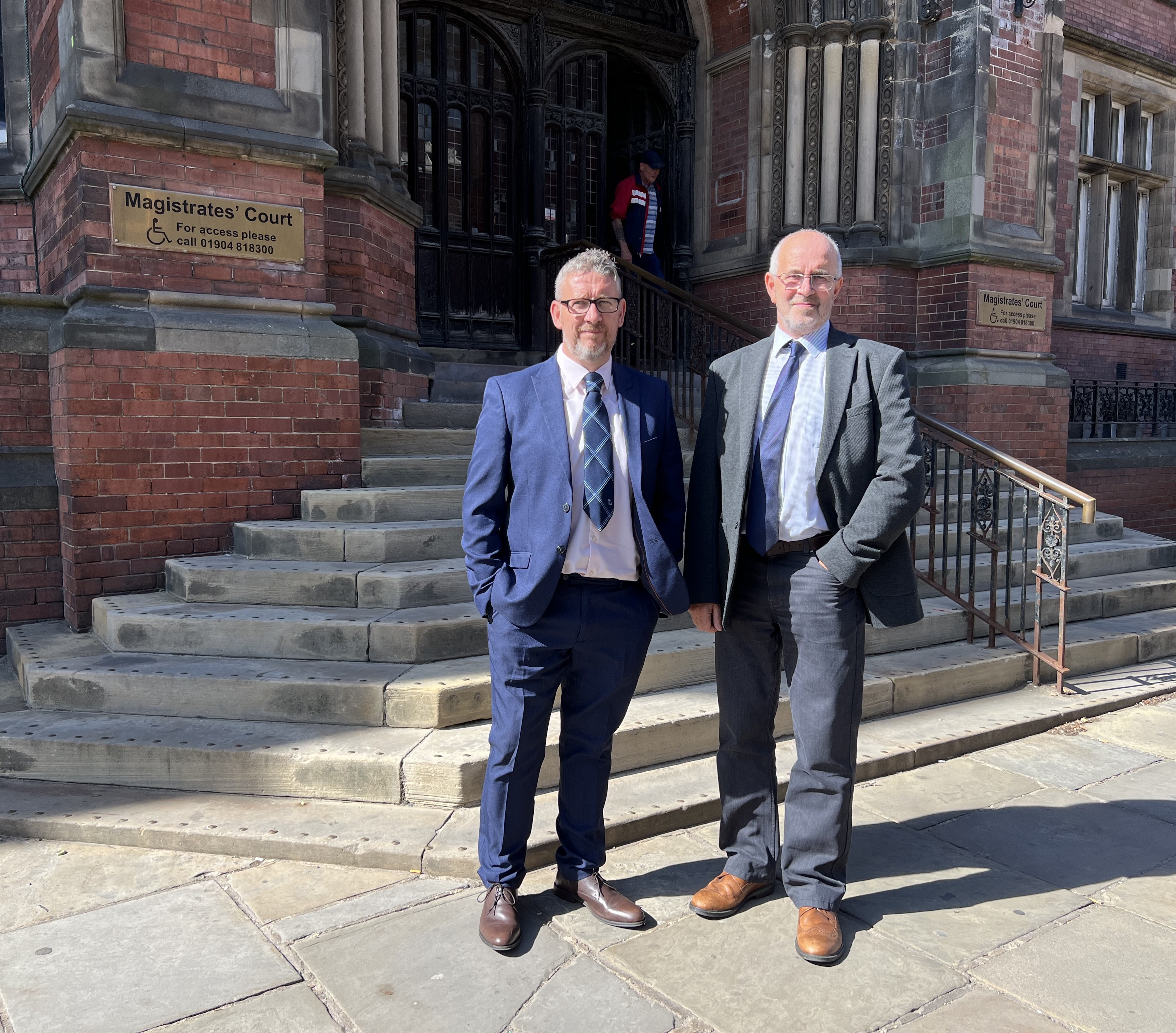
Mark Thomas and Ian Thomson from the RSPB’s Investigation Team attended York Magistrates Court today. Photo: Ruth Tingay
The case now moves to trial in January 2026 unless Mr Dingwall changes his not guilty plea in light of today’s ruling.
I’ll write a longer blog in the coming days, setting out the arguments and the Judge’s explanation for his decision.
In haste…
NB: Comments turned off as criminal proceedings are still live.
UPDATE 25 September 2025: More detail on court ruling accepting admissibility of RSPB’s covert surveillance in prosecution of gamekeeper accused of conspiracy to kill a Hen Harrier (here)
Gamekeeper Racster Dingwall, 34, will appear at York Magistrates Court today for a hearing linked to his alleged involvement with the shooting of a Hen Harrier on a grouse moor (Coniston & Grassington Estate) in the Yorkshire Dales National Park on 2nd October 2024. He has pleaded not guilty.
This prosecution relies on the covert footage filmed by the RSPB’s Investigations team last autumn and later shown on Channel 4 News (here).
York Magistrates Court. Photo by Ruth Tingay
Dingwall faces two charges, according to the court notice:
Possession of an article capable of being used to commit and summary offence under Section 1 to 13 or 15 to 17 of the Wildlife & Countryside Act;
Encourage/assist in the commission of a summary offence believing it will be committed.
Today’s pre-trial hearing is expected to focus on legal arguments about the admissibility of the RSPB’s covert footage.
This was entirely to be expected. The defence team will be doing its best to have the evidence ruled inadmissible because without it, the prosecution will collapse.
We’ve been here many times before in similar cases. The last one I watched where the judge ruled the RSPB’s footage to be inadmissible was back in 2018, in relation to the illegal and brutal killing of two Peregrines on a grouse moor in Bowland. The legal arguments barely got going because the CPS lawyer was monumentally under-prepared, he hadn’t even watched the video footage in question, and was unable to answer the judge’s questions about it. The judge was really left with no other option than to rule the footage inadmissible and the case collapsed as a result (see here for more detailed blogs about that fiasco).
NB: Comments are closed until criminal proceedings have concluded.
Over the last few months you’ve probably noticed that the grouse-shooting industry has been ramping up its rhetoric about the so-called virtues of what it calls ‘managed burning’ on peatland/grouse moors as a way of preventing and curtailing devastating wildfires.
This onslaught in the media has been helped along by the large number of wildfires that have been reported from across the UK this year, allowing the industry to exploit public concern and persistently present its practice of torching the uplands as being the best solution to preventing wildfires.
The industry rarely, if ever, mentions that its interest in heather burning on peatland has nothing whatsoever to do with wildfire management but everything to do with providing a mosaic of vegetation (heather) structure suitable to facilitate an artificially-high number of Red Grouse that can then be shot for ‘sport’. It’s textbook gaslighting.
Gamekeepers torching an already fire-ravaged grouse moor in the North Pennines. Photo by Ruth Tingay
The only reason the grouse-shooting industry (and its supporters in the Westminster Parliament) are banging on about this issue so much at the moment is because earlier this year, the UK Government announced proposals to ban heather burning on deep peat in England & Wales to protect carbon storage, improve water quality, provide valuable habitat for wildlife, help protect communities from flooding, improve air quality in villages, towns and cities, and help deliver manifesto commitments to reach Net Zero by 2050.
The grouse-shooting industry is terrified of these new proposals – as demonstrated by the speeches of some Conservative MPs in the recent Westminster Hall debate on driven grouse shooting – because they see it as a back-door way to a ban on driven grouse shooting. The excessive number of Red Grouse needed to sustain driven grouse shooting would be impossible to maintain if grouse moor managers were no longer able to set the moors ablaze each year, and the Government’s proposals would effectively put a stop to most burning on most grouse moors in England. But rather than admit to that, the industry has instead framed its scorched earth policy as being in the public interest to prevent wildfires.
In Scotland the issue has also been in the news after the grouse shooting industry successfully lobbied the Scottish Government to delay the introduction of a licensing scheme for burning on peatland, which was due to start this month under the Wildlife Managament & Muirburn (Scotland) Act 2024 but has now been set back until January 2026. The grouse shooting industry claimed it needed more time to prepare (see here) but in reality it looks more like a stalling tactic by the industry to try and persuade the Government to drop it altogether.
The UK Government’s proposals to extend the Heather and Grass etc. Burning (England) Regulations 2021, including a change to the definition of deep peat from 40cm depth to 30cm depth, were informed by a recent scientific report entitled, ‘An Evidence Review of the Effects of Managed Burning on Upland Peatland Biodiversity, Carbon and Water‘, published by Natural England in March 2025. [A copy of the report is available to download at the end of this blog].
This really is an exceptionally comprehensive and robust piece of work. I’d recommend it to anyone who wants to be better informed about the specific effects, be they positive, negative or neutral, of ‘managed burning’ in the UK uplands, rather than rely upon the cherry-picked studies used by the grouse shooting industry to support its particular narrative. Rather tellingly, I haven’t seen any of the grouse shooting organisations promoting this wide-ranging review that’s directly applicable to the UK uplands – they seem to be more interested in highlighting obscure reports from far-flung countries that have little if any relevance here. How odd.
What I particularly liked about this report is that it goes as far as to categorise the ‘quality’ of the evidence reviewed using a transparent and systematic approach. There’s none of this, ‘We asked 50 gamekeepers what they thought and we present their responses as unbiased fact‘ that I’ve seen in a number of reports produced recently by the grouse shooting industry (I’ll blog about a few of those if I can find the time because they’re really quite hilarious).
The Natural England review also doesn’t make any recommendations – it simply summarises the evidence, tells you exactly which study is being referenced along with a ‘quality’ assessment of the research, and presents the findings in a way that anyone can see exactly which study says what and whether it’s applicable to the UK uplands. That’s really impressive.
Here is the review’s Executive Summary:
Peatland ecosystems make important contributions to biodiversity, carbon storage and water provision in the UK and globally. Many UK upland peatlands have been subject to burning for land management purposes, particularly grouse moor management, with the practice increasing over the 20th and early 21st century. Concerns about harmful impacts have led to recent changes in regulation aimed at reducing burning on peatland habitats.
The use of burning on peatlands has remained a source of debate and hence an up-to-date overview of new relevant evidence was necessary to inform future policy and practice.
This evidence review updates a review by Glaves and others (2013, NEER004). It considers evidence from 102 studies published since NEER004 relating to the effects of managed burning on upland peatland biodiversity, carbon balance, water quality and hydrology, which were selected following a comprehensive search. Findings have been compared with those from 123 studies in NEER004 to give an updated overview of the whole evidence base. Combined findings of the two reviews have been synthesised into evidence statements, with high-level highlights of key evidence statements given below.
Taken as a whole, the available evidence shows that burning alters the species composition of blanket bog and upland wet heath vegetation in at least the short to medium term. This includes a tendency for initial grass and/or sedge dominance, typically followed by an increase in heather Calluna vulgaris. This, along with changes in other species (including bryophytes) and vegetation structure can result in a move away from the characteristic vegetation of these peatland habitats. The creation of bare ground following burning has also been observed and this may persist for several years.
Many studies relating to peatland fauna focused on breeding birds, and reported various effects of burning depending on species, though it can be difficult to separate the influence of burning from that of predator control carried out as part of grouse moor management. There is also evidence of effects on other faunal groups including invertebrate communities, which are influenced by changes in vegetation and soil characteristics –caused by burning. As with vegetation, these changes may result in a move away from characteristic peatland faunal communities.
Managed burning also affects various aspects of the carbon cycle of upland peatlands, with studies showing a large proportion (76–80%) of aboveground carbon stock lost via combustion, followed by gradual re-accumulation over several decades. There is also evidence that the export of dissolved and particulate organic carbon increase after burning, but inconsistent evidence of effects on some other carbon cycle pathways including CO2 fluxes and on overall carbon balance. For water, there is evidence that burning influences various aspects of chemistry and flow, including fluvial carbon export as mentioned above. There is also evidence of increased flow in watercourses draining burned catchments, potentially impacting downstream river levels.
The severity and frequency of burning appear to affect outcomes related to vegetation, carbon and water. Meanwhile, relatively few studies investigated interactions between burning and grazing, though there was some evidence of effects on vegetation.
Regarding the relationship between burning and wildfire, there is evidence that out-of-control burns are a cause of wildfire in the UK, particularly in the uplands. There is evidence from other countries and habitats on biomass management by managed burning to reduce wildfire hazard, but limited evidence from the UK peatland context. Variation in burning extent and frequency by UK region and year was apparent, with a long-term increase followed by an indication of a recent decrease since 2016. There was also evidence that designated sites and areas of deep peat have been burned at a similar frequency as other areas.
The evidence from 102 recent studies in addition to 123 reviewed in NEER004 gives a significant volume of evidence on which to draw conclusions on the impacts of burning, and many of the evidence gaps identified in NEER004 have been filled. Though there remain some areas where evidence appears inconsistent, this may often be explained by differences in the scale, location or timing of studies.
In conclusion, the evidence base suggests that burning impacts peatlands, and the ecosystem services they provide, via multiple mechanisms, and though recovery is often observed in the short to medium term, repeated burning risks a sustained departure from the characteristic structure and function of these habitats. Overall, this is consistent with the summary and conclusions of NEER004.
ENDS
We’re still waiting for Defra to announce its decision on whether it will implement its proposals to further limit burning on peatland; its public consultation closed at the end of May 2025. The new burning season is almost upon us (1st October) so there’ll be nothing in place to stop the grouse moor pyromania again this year.
It’ll be interesting to see whether the new Defra Environment Secretary Emma Reynolds (replacing Steve Reed) and new junior Minister Dame Angela Eagle (replacing Daniel Zeichner) push this forward or kick it into the long grass.
The Natural England review can be read / downloaded here:
UPDATE 9 September 2025: More excellent news: UK government bans burning on deep peat in England (here)
UPDATE 27 January 2026: Moorland Association at the High Court challenging Defra’s new regs on peatland burning (here)
UPDATE 28 January 2026: High Court throws out Moorland Association’s legal challenge against new burning regulations (here)
UPDATE 8 February 2026: Moorland Association lodges appeal against recent High Court decision to refuse judicial review of Defra’s peatland regulations (here)
ANOTHER RECORD YEAR FOR HEN HARRIERS IN THE FOREST OF BOWLAND
Hen Harriers are one of the most charismatic yet also most threatened bird species nesting in our uplands. The Forest of Bowland has long served as their most important breeding stronghold in England thanks to collaborative conservation efforts centred on the United Utilities Bowland Estate, where the RSPB is working in partnership with United Utilities and their tenants to monitor and protect these amazing birds.
During the 2025 breeding season, RSPB staff and volunteers recorded 14 Hen Harrier nests on the United Utilities Estate, of which 12 were successful and fledged an outstanding 40 young. This represents the highest number of fledglings recorded in over 40 years.
However, as reported last month there was also a disappointing setback in the form of two adult males disappearing from neighbouring nests within a few days of each other, something not seen on the United Utilities Estate in years.
At one affected nest, the chicks had already begun hatching and, with the help of some supplementary food provided by RSPB staff under licence from Natural England, the female was able to fledge two chicks on her own. At the other nest, the female was still incubating and deserted her clutch after the male disappeared.
One additional nest failed as the female was not provisioned sufficiently by her polygamous male and was forced to hunt herself, leaving her young chick unattended and exposed to the elements. Male Hen Harriers often mate with more than one female (known as polygamy), however, when prey availability is low, they may struggle to provide sufficient food for both broods.
Overall, it was a very good breeding season for Hen Harriers in Bowland. Together with an additional nest recorded by Natural England on a private estate, which fledged 2 chicks, a total of 15 Hen Harrier females bred within the Bowland Fells Special Protection Area (SPA). This meant the SPA again exceeded the threshold of 12 breeding pairs for the second time since 2022.
This sustained recovery over the last eight years reflects highly successful partnership working in Bowland and the commitment of landowners and tenants. However, the species’ overall recovery in England still faces ongoing threats such as illegal persecution, changes in land use and habitat loss.
ENDS
Fantastic work by all those involved – well done.
We still haven’t seen the overall results of the 2025 Hen Harrier breeding season in England but the word on the ground is that it’s been another poor year for Hen Harriers on private estates managed for driven grouse shooting and a good year for those nesting elsewhere. Quelle surprise.
Last year the grouse shooting industry blamed bad weather for the sudden drop in the number of breeding Hen Harriers on private grouse moors, although bad weather didn’t stop Hen Harriers breeding on United Utilities land in Bowland, the RSPB’s Geltsdale Reserve in Cumbria or Forestry England land at Kielder.
Last year there were just five successful nests on privately-owned grouse moors in England and I’m not expecting much to have changed this year. We’ll have to wait for Natural England to publish the 2025 breeding season numbers to find out if this is accurate, and who knows when NE will get its act together to do that.
This is the statutory agency that is STILL suppressing details about the death of at least seven satellite-tagged Hen Harriers, most of whom were found dead over a year ago and yet are still listed on Natural England’s tag database, implausibly, as ‘awaiting post mortem’ (see here for a previous blog about these birds).
They’re not ‘awaiting post mortem’ at all. The post mortems were all completed months ago (and in one case, over 18 months ago). Those post mortems have provided evidence (that I’m aware of) that at least some of these seven dead Hen Harriers were killed illegally.
The longer this information is suppressed, the further public confidence drops in any agency’s ability or desire to tackle these crimes.
Last month I welcomed the decision by the Yorkshire Dales National Park Authority to terminate the so-called ‘Bird of Prey Partnership’, after its abject failure over five years to tackle the ongoing illegal killing of birds of prey on grouse moors within the National Park and neighbouring Nidderdale (see here).
A view of a distant grouse moor in the Yorkshire Dales National Park. Photo: Ruth Tingay
One of the original ‘partners’, the Northern England Raptor Forum (NERF), which represents raptor fieldworkers who monitor bird of prey populations and are often in the frontline of discovering persecution crimes, has published a statement also welcoming the end of the ‘partnership’.
It’s well worth a read if you want an insight into why these so-called ‘partnerships’ repeatedly fail.
One of London’s resident breeding Peregrines, Tom, from Charing Cross Hospital in Hammersmith, is receiving veterinary care after an x-ray revealed a shotgun pellet lodged in his leg.
According to reports on social media, Tom was found grounded at the weekend and was taken for assessment at the South Essex Wildlife Hospital. It’s not clear from the information published whether the shotgun pellet was the cause of his grounding or whether it is an old injury that he’d survived.
All photos from South Essex Wildlife Hospital
Hopefully Tom will make a speedy recovery and can be returned to his territory ASAP.
The South Essex Wildlife Hospital has featured a few times on this blog, involved in the treatment and often successful rehabilitation of shot raptors from the south-east. It’s a registered charity – if you’d like to make a donation to support its work, please click here.
Organised by Wildlife Countryside LINK, the inaugural Wild Summit takes place at the Bristol Beacon on Thursday 11 September 2025.
From the Wild Summit website:
‘Nature brings immense value to our lives, to the economy and to communities. Whether it’s protecting communities from flooding and extreme weather, supporting rural areas and food production, helping tackle climate change, or improving our mental health, nature underpins it all.
At our first Wild Summit, we’ll bring together nature lovers, community campaigners, businesses, politicians, officials and policy experts for a day of presentations, panel discussions, workshops, and conversations focused on the critical importance of investing in nature. We’ll celebrate the incredible work being done by charities, community groups, innovators, and land managers, as well as explore the vital roles of tourism, research, upskilling, and corporate and government projects in restoring our natural world.
The goal? To help the UK meet its target of protecting 30% of land and sea by 2030‘.
Why are 50 million non-native chickens released into our countryside every year?
Pheasants are a familiar feathered face of the countryside; plastered all over tea-towels, cushion covers, and our roads. But how did they get here? What impact are they having on our environment? And why are there so many?!
Join Wild Justice for an interactive and visual dive into the past, present and future of what George Monbiot describes as the ‘bronze plague’.
The British Farmland Bird of Prey Initiative is a new project set up by Nigel Middleton and Twiggy Bigwood, offering expert support for landowners and conservation groups across England who want to host raptors on their land.
Services include site visits and consultation, habitat surveys, the provision, installation and monitoring of nest boxes, and planning mitigation for Barn Owls.
The British Farmland Bird of Prey Initiative website is HERE.
For those of you interested in the uplands, UKEconet and the South Yorkshire Biodiversity Research Group are co-hosting a three-day conference in Sheffield in October.
The conference includes two days of presentations and discussion and a field trip to the Peak District on day three.
Key themes include the management and protection of important temperate rainforests such as Borrowdale in Cumbria, natural regeneration, Curlews, peat cutting, grouse moors and rewilding.
Desolate uplands in the North Pennines. Photo by Ruth Tingay
A Wilder Future for the Uplands: Unleashing the Power of Nature to Recover and Restore the Countryside
1-3 October 2025
Speakers include Kate Hanley (RSPB Dove Stone), Sara King (Rewilding Britain), Ian Rotherham (Sheffield Hallam University), Andrew Weatherall (RSPB), Danny Udall (Eastern Moors Partnership), Jade Allen (National Trust), Mary Colwell (Curlew Action), Daniel Cameron (National Trust), Luke Steer (Treescapes Consultancy), Mark Avery, James Fenton and others.



 Raptor Persecution UK