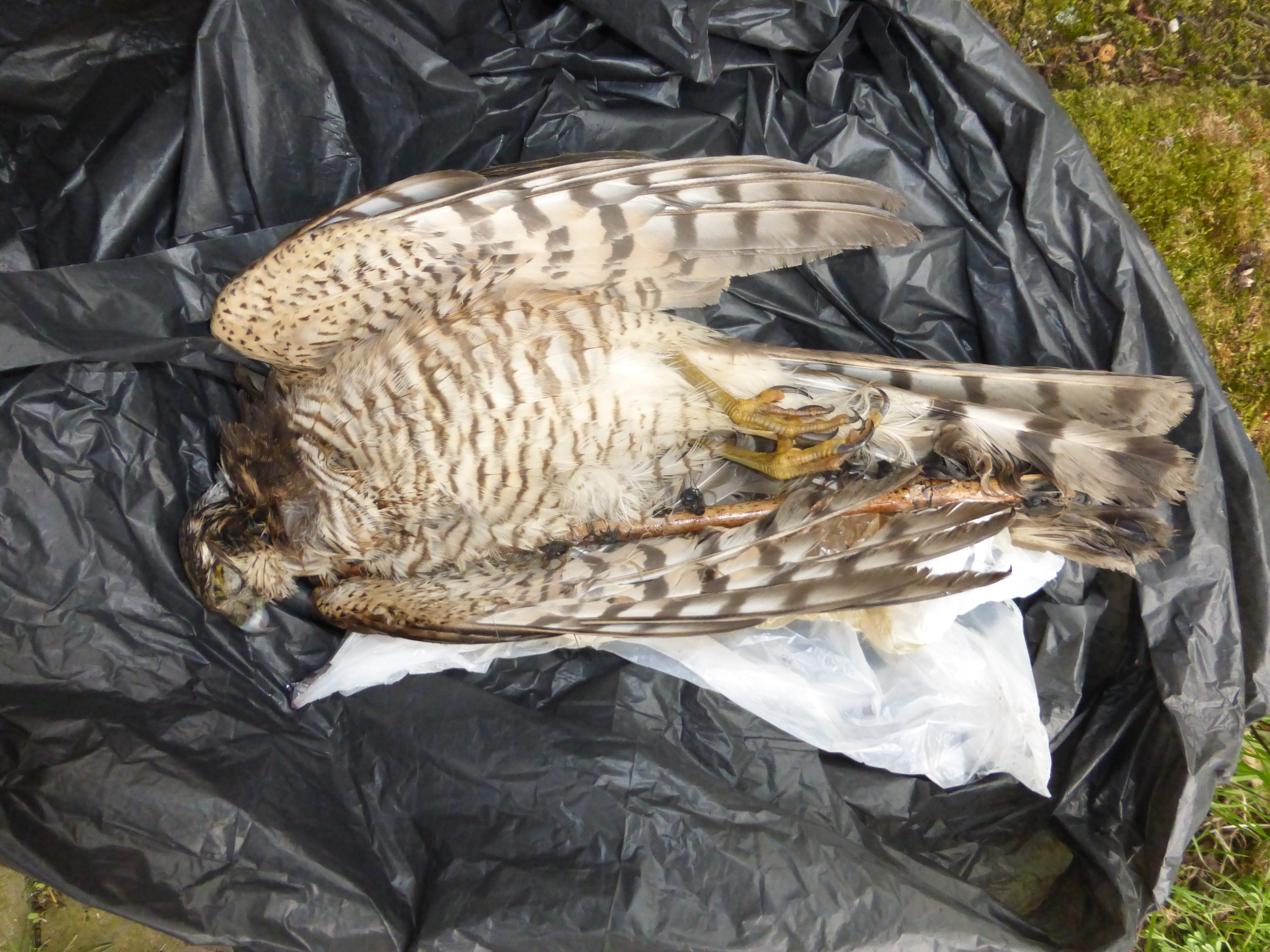
Three days ago, South Yorkshire Police appealed for information after a sparrowhawk was shot dead, glued to a stick, wrapped inside a plastic bag and dumped in a drainage ditch (here).
The grisly discovery was made by a member of the public in the Thorne area of Doncaster, close to the canal, on Sunday 10th April.
Photos have now been released, including an x-ray showing the pellet embedded in the bird’s body:
Investigating officer PC Sarah Barrowcliffe of South Yorkshire Police said:
“Sparrowhawks are a protected species and it is an offence to harm them. This was a shocking act of violence against a beautiful and defenceless bird, and officers are working hard to identify those responsible.
South Yorkshire Police is committed to the investigation of serious wildlife offences, including the killing of birds of prey.”
Anyone with information please call South Yorkshire Police on Tel 101, quoting incident number #918 of April 11th 2022.
Earlier this month the Peak District Raptor Monitoring Group (PDMG) announced the suspicious disappearance of two male hen harriers, and the subsequent failure of two hen harrier nests each containing five eggs (see here).
[One of the abandoned hen harrier nests. Photo by PDRMG]
Both nests were situated on a grouse moor owned by the National Trust and leased to a tenant. The grouse moor isn’t currently being used for driven grouse shooting (the tenant is believed to be focusing his energy on another moor that he owns) but the nests were close to the National Trust’s boundary and the moor is adjacent to other, privately-owned and intensively managed driven grouse moors, many that have been at the centre of other raptor persecution investigations for a number of years in what is a well-known raptor persecution hotspot (e.g. see here).
The Peak District National Park Authority has issued a statement in response to this latest incident:
‘Responding to reports of the failure of two hen harrier nests following the disappearance of male hen harriers thought to be supporting the nests in the area, the Peak District National Park Authority said:
“We share the immense frustration and disappointment of the National Trust and all those involved in monitoring our birds of prey, that the opportunity for not one, but two potentially viable nests for the iconic hen harrier has been lost again in the Peak District this year. This is a species which is emblematic of our uplands and where their haunting and often enigmatic presence should be welcomed.
“The fact that successful nesting attempts for the hen harrier in the Peak District remains firmly in single figures across almost two decades, demonstrates the significant challenge that remains for all those working to see their return in a long-term and sustainable way – addressing both conservation needs and the potential impact of wildlife crime.
“We understand a police investigation is ongoing into the matter and stand ready to provide any support to this”‘.
The National Trust has a new General Manager in the Peak District, Craig Best, and his reaction to the suspicious disappearances of the two harriers was as follows:
“It’s deeply concerning to learn of the disappearance of two male hen harriers from the High Peak and subsequent abandoning of nests by the females. While the circumstances around this incident are not yet clear, it is indefensible that these beautiful birds still face persecution. The incident has been reported to the police and we’re working closely with statutory agencies and the RSPB to find out what happened.
We want to see a landscape that is full of wildlife, including birds of prey, and we work hard with a range of expert partners to create the right conditions for these species to thrive. Over the past few years we have seen several instances of successful hen harrier breeding in the Peak District“.
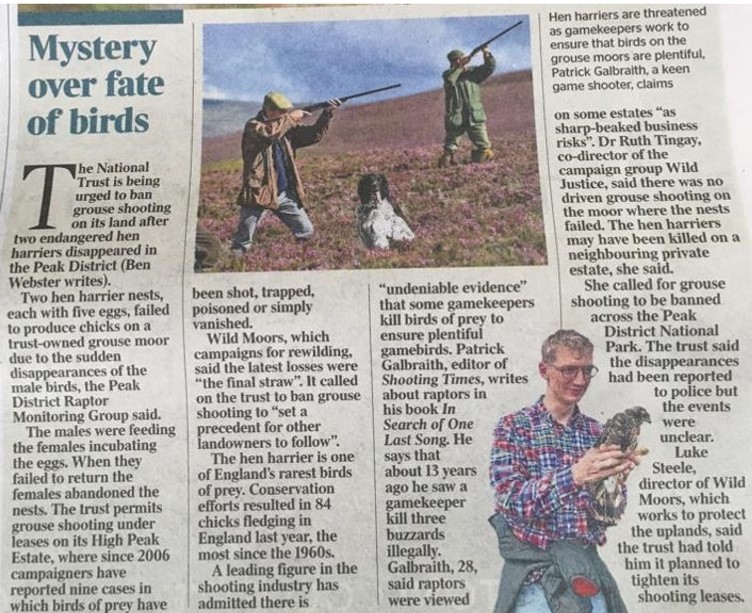
The disappearances attracted a lot of media attention, some of it accurate, some of it not so much, but it made local and national news and I was pleased to see that a couple of them had picked up on the fact that now 70 hen harriers are confirmed missing or illegally killed in the UK since 2018. Here’s some of the coverage in Sheffield Star, BBC News, and The Times, reproduced below:
There was also a feature on the BBC’s East Midlands Regional News, where BBC journalist Simon Hare interviewed Mike Price from the PDRMG – you can watch the video here:
Sneak preview of my @bbcemt piece due to run later today on two male hen harriers going "missing" in the Peak District. The police are investigating. Many thanks to contributor @M1kePrice (plus nest images) & to @Natures_Voice for use of their stunning hen harrier stock images.🦅 pic.twitter.com/wer5aMQdTW
The loss of two more hen harriers and their nests sparked a number of calls for the National Trust to ban driven grouse shooting on its land. I think that’s because many people assumed the harriers had been killed on the grouse moor where they were attempting to breed. The NT faced similar calls for a ban in 2016 when I posted footage of an armed gamekeeper who had been filmed crouching in the heather next to a decoy hen harrier on another NT-owned grouse moor in the Peak District National Park, presumably trying to entice a harrier to come in close so he could shoot it (see here).
That footage was so disturbing and the public reaction to it so strong, it prompted the National Trust to pull the shooting lease early and replace the shooting tenant with someone more conservation-focused, in what was a significant response at that time although some campaigners saw it as a lost opportunity to remove driven grouse shooting altogether (see here).
Since then, the NT has modified its tenancy agreements (e.g. see here), at least one new tenant has been and gone, and at least one current tenant is hosting a number of successfully breeding raptor species whilst moderately managing a driven grouse shoot (far less grouse shot last year compared to the thousands shot on some of the more intensively-managed moors). It has been reported recently that the NT has agreed to introduce even more modifications on its moors such as the removal of medicated grit, burning restrictions and the removal of traps and snares, although I haven’t yet seen a formal statement on this from the National Trust.
Some may argue that banning driven grouse shooting entirely from National Trust land is the only way forward, but some local raptor workers suggest the situation is a bit more nuanced than that and that just banning it on NT moors could actually lead to an increase in raptor persecution. They argue that as long as the NT has raptor-friendly shooting tenants, those tenants’ gamekeepers are acting as a sort of shield against gamekeepers from neighbouring, privately-owned estates from entering NT land and killing whatever they want. Of course, that doesn’t stop the raptors being killed if they fly from NT land on to neighbouring private estates to hunt, which is what many suspect has happened with these latest two ‘disappearances’.
It seems to me that the Peak District National Park Authority should be the organisation banning driven grouse shooting across the entire National Park. That would seem to be a far more effective prospect than a piecemeal approach by the National Trust, at least in terms of tackling the rampant raptor persecution taking place inside this National Park.
That’s not to say that the National Trust shouldn’t be banning driven grouse shooting, though. As we know, raptor persecution is only one of many environmentally-damaging issues associated with driven grouse shooting – burning, widespread and unregulated use of an environmentally toxic veterinary drug (medicated grit), and the lawful killing of thousands of native animals (e.g. foxes, stoats, weasels, corvids etc) to name just a few, all to create an artificial environment to maximise the production of red grouse for paying guests to shoot in the face for a bit of a laugh. That the NT still supports this management in what are supposed to be enlightened times, is quite remarkable.
However, if the National Trust has recently changed its policy, as has been reported, this could effectively lead to an end of driven grouse shooting on NT land without a formal ‘ban’ having to be introduced. But where will that leave the raptors trying to nest on NT land, still surrounded by privately-owned intensively-managed driven grouse moors?
Interesting times ahead in the Peak District National Park.
South Yorkshire Police is appealing for information after a sparrowhawk was shot dead, glued to a stick, wrapped inside a plastic bag and dumped in a drainage ditch.
The grisly discovery was made by a member of the public in the Thorne area of Doncaster, close to the canal, on Sunday 10th April. The bird is believed to have been shot with a pellet gun.
Investigating officer PC Sarah Barrowcliffe of South Yorkshire Police said:
“Sparrowhawks are a protected species and it is an offence to harm them. This was a shocking act of violence against a beautiful and defenceless bird, and officers are working hard to identify those responsible.
South Yorkshire Police is committed to the investigation of serious wildlife offences, including the killing of birds of prey.”
Anyone with information please call South Yorkshire Police on Tel 101, quoting incident number #918 of April 11th 2022.
UPDATE 30th May 2022: Photos released of shot sparrowhawk found glued to a stick and dumped in a ditch in Doncaster (here)
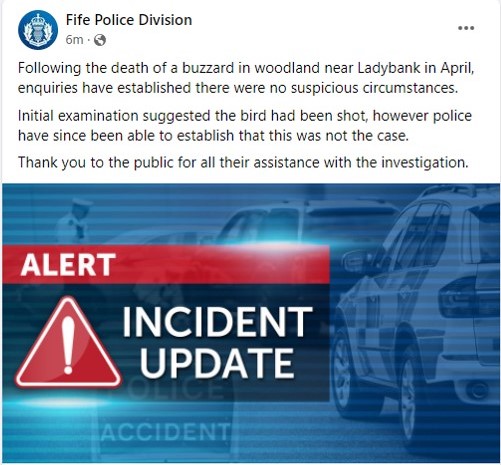
Last month, Police Scotland issued a press statement and an appeal for information after what was described as a ‘deliberately shot buzzard’ was found in woodland at Monimail, near Ladybank, Fife (see here for original police appeal).
Today, Police Scotland has issued another statement, this time on the Fife Police Division’s Facebook page, stating that the buzzard hadn’t been shot at all.
Sometimes I despair. This isn’t rocket science. Why on earth did Police Scotland put out an appeal for information about a ‘deliberately shot buzzard’ without actually confirming that it had been shot?!
It’s good that they’ve now updated the information and clarified that it wasn’t actually shot at all, but the consequence of making the basic error in the first place is that it’ll be used by the raptor persecution deniers and apologists within the game-shooting industry to cast doubt on the veracity of other, genuine, raptor persecution incidents.
Another consequence is that these examples of ineptitude (and see yesterday’s report about Derbyshire Police’s basic procedural errors, here) don’t inspire public confidence in the police’s general ability to investigate these crimes properly, and that’s damaging when the police are often reliant on reports from members of the public about suspected raptor persecution and other wildlife crime offences.
Thankfully, these examples of ineptitude are relatively rare and certainly not the norm in the field of raptor persecution investigations, where there are many excellent, motivated and skilled officers leading on investigations.
Nevertheless, these mistakes simply shouldn’t be happening.
The trial of a man accused of stealing peregrine eggs from a nest site in the Peak District National Park in Derbyshire has collapsed after elements of the police investigation were ruled unlawful.
This case relates to the alleged theft of peregrine eggs in 2020, where video footage filmed by the RSPB showed an individual climbing to a peregrine nest and removing the eggs (see here, here, here and here for previous blogs).
The trial began at Chesterfield Magistrates this week but collapsed yesterday as the defence lawyer challenged certain procedural aspects of the police’s investigation, namely the arrest and the subsequent search of the man’s property.
The judge considered the evidence and ruled in the defendant’s favour, i.e. that certain aspects of the police investigation were indeed unlawful. The defendant left court with a not guilty verdict.
I am awaiting the full details of this judgement before commenting on Derbyshire Police’s failure to follow police procedural rules but this does seem pretty basic stuff. And surely the lawyers from the Crown Prosecution Service should have picked up these errors before the case even reached court? Hopefully the court will publish the judgement so we can see the extent of the police’s apparent ineptitude in this case.
A BBC reporter, Simon Hare, tweeted this yesterday from the court:
This evening, the RSPB has published its video footage of a man stealing the eggs from the peregrine’s nest site.
In 2020 #RSPB Investigations filmed a man stealing peregrine eggs from a nest in the @peakdistrict National Park. Watch below 👇 Yesterday's trial resulted in a not guilty verdict. We want tougher action to stop peregrine eggs and chicks being taken from the wild for falconry. pic.twitter.com/bHuLBPKkmr
It’s such a disappointing result. With excellent footage from the RSPB that will have taken a great deal of time and skill to procure, this is a case that should have been straightforward. It’s doubly frustrating because as you’ll all know, it’s so rare that good quality evidence is available in so many raptor persecution cases, so when it is available we all hope it will lead to justice being served.
Understanding what went wrong in this case will be important and lessons need to be learned, not least by Derbyshire Police’s Rural Crime Team.
Yesterday I blogged about how Dorset Police and the Dorset Police & Crime Commissioner, David Sidwick, were both in breach of the Freedom of Information Act by failing to respond to Chris Packham’s FoI requests about the poisoned eagle incident within the statutory period of 20 working days (see here).
Today I can report a further breach of the Freedom of Information Act by Dorset Police in relation to my FoI requests, also relating to the poisoned eagle incident.
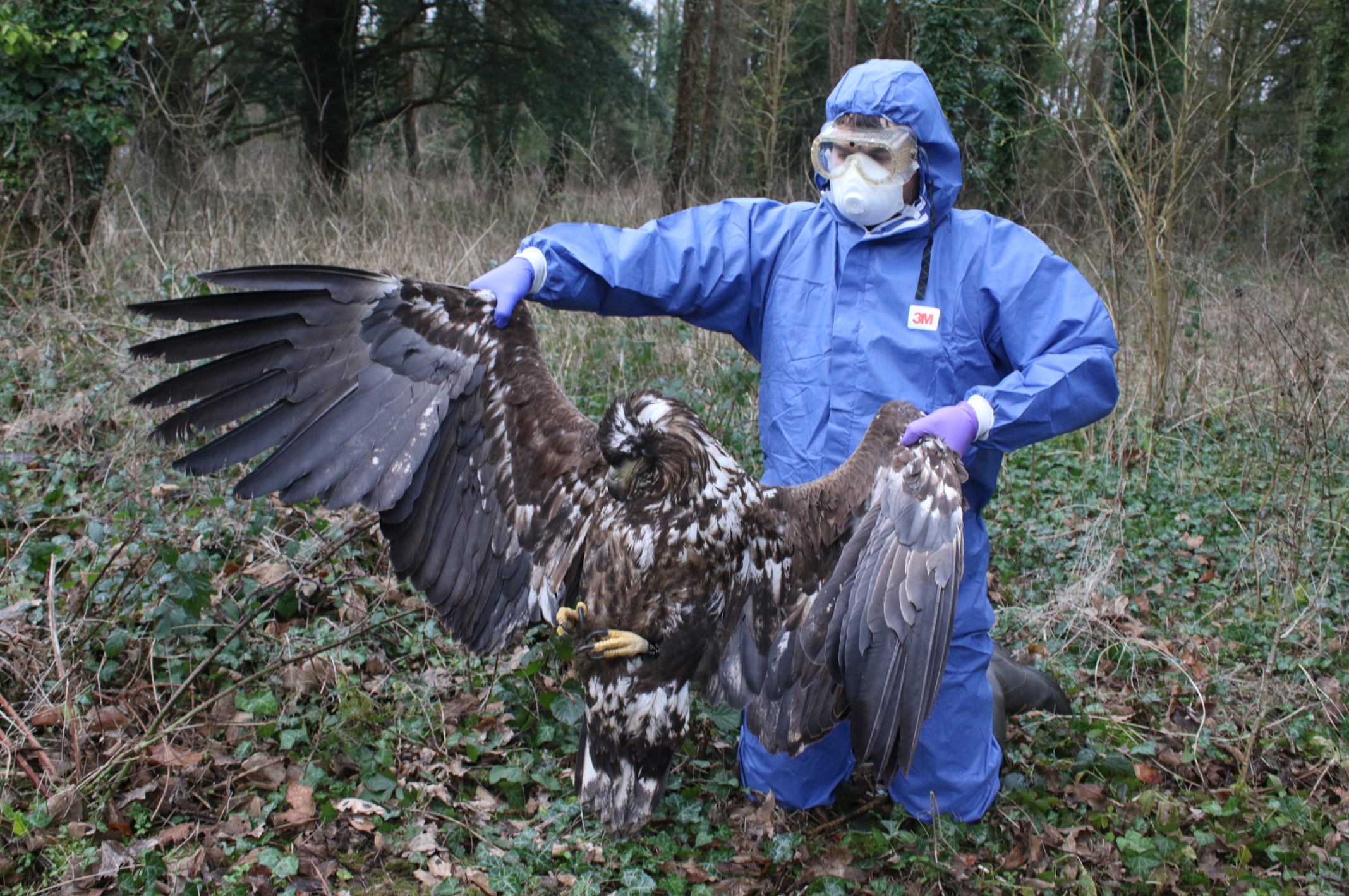
[The poisoned white-tailed eagle found dead on an unnamed shooting estate in North Dorset in January 2022. Photo by Dorset Police]
Regular blog readers may recall I submitted an FoI request to Dorset Police on 4th March 2022, asking for copies of all correspondence between Dorset Police and local Conservative MP Chris ‘eagles aren’t welcome in Dorset‘ Loder on the subjects of wildlife crime, police wildlife crime officers, and eagle reintroductions, from 1 January 2022 to date.
On 17th March 2022 Dorset Police tried to fob me off with a refusal notice with what is perhaps the most ludicrous excuse I’ve ever seen (see here to read it in full).
I appealed that decision and requested a review of it on 14th April 2022. According to the FoI Act, the public authority has another 20 working days in which to respond to that review request. Taking into account all the public bank holidays in April and May, Dorset Police should have responded no later than 17th May 2022.
It’s now 26th May 2022 and Dorset Police hasn’t responded. I have written to them, again, to remind them of their legal obligations. If their silence continues I will escalate my complaint.
Meanwhile, you may also recall that I’d sent a similar FoI request to the Dorset Police & Crime Commissioner (PCC) (David Sidwick) in early March. After a series of reminders to the PCC’s office (see here), I did finally get a response in late April 2022.
However, under scrutiny it became apparent that some of the correspondence I’d requested to see between Chris Loder MP and the PCC, David Sidwick, was missing from the bundle of information I received (see here).
So I wrote back to the PCC and asked them to forward ALL the correspondence, not just the bits they were happy for me to see.
That response was due back next Monday (30th May 2022) but I’m pleased to say it has arrived early and is now sitting in my inbox.
I’ve had a quick skim-read and it’s immediately obvious why ‘someone’ might not have wanted me to see it. I don’t have time to blog about that right now but will come back to it shortly…
UPDATE 16.00hrs: There’s quite a lot going on behind the scenes. For strategic reasons, I won’t be blogging further on this FoI response from the PCC until later next week. I’m sorry I can’t explain why right now but it will hopefully become apparent (and in a good way) next week. Thanks for your patience.
Derbyshire Constabulary’s Rural Crime Team has appealed for information following the discovery of a shot & injured buzzard and a magpie.
[Photo of the shot buzzard via Derbyshire Constabulary]
Both birds were found by a member of the public on 24th March 2022 at the cemetery, Newhall, Swadlincote. Both birds were alive and were taken for veterinary attention, where they were confirmed to have been shot.
Derbyshire Police published an appeal for information on 30th March 2022 which said, ‘Local enquiries are being made however should anybody have knowledge or information regarding who is responsible for shooting the birds please contact us quoting crime reference 22000171170‘.
In April 2022, Chris Packham submitted two separate Freedom of Information requests to Dorset Police and to the Dorset Police & Crime Commissioner (PCC) David Sidwick, asking for copies of all correspondence between Dorset Conservative MP Chris ‘Eagles are not welcome in Dorset‘ Loder and various named senior police officers and the Dorset Police & Crime Commissioner, relating to the poisoned eagle incident and wildlife crime in general (Chris’s two FoI requests can be read here).
Chris submitted his Freedom of Information requests on 18th April 2022, which were acknowledged by both Dorset Police and the Dorset PCC within a couple of days.
Dorset Police and the PCC, as public authorities, ‘must respond to requests promptly, and by the twentieth working day following date of receipt of the request‘, according to Section 10 of the FoI Act.
Taking in to account a number of public Bank Holidays in April and May, the latest date by which Dorset Police and the PCC needed to respond was 17th May 2022. If Dorset Police and/or the PCC needed more time to fulfil the request (they are permitted a further 20 working days in exceptional circumstances), they should have told Chris that within the first 20 working days.
Chris has written again to Dorset Police and to the PCC to ask them to comply with the FoI Act and respond by return. So far, they have remained silent. If this continues, Chris will escalate his complaint through the relevant authorities.
More on this shortly.
UPDATE 26th May 2022: Further breach of Freedom of Information Act by Dorset Police re: poisoned eagle (here)
In February this year, I blogged about the suspicious deaths of two white-tailed eagles on two separate game-shooting estates – one in Dorset and the other one rumoured to be in West Sussex (see here).
Both eagles were from the Isle of Wight Reintroduction Project – a privately-funded but Government-backed five-year project bringing young sea eagles from Scotland and releasing them on the Isle of Wight to re-establish this species in part of its former range.
The dead eagle found poisoned on an unnamed shooting estate in Dorset remains an ongoing issue of concern, not least because Dorset Police chose to close the investigation prematurely without a proper explanation (see here, and more on that case shortly).
The dead eagle found poisoned on an unnamed shooting estate in West Sussex has received less attention, although in April I revealed this eagle had been poisoned with Bendiocarb and that toxicology results from a dead dog found on the same shooting estate were pending (see here).
The reason this eagle poisoning case has received less attention is simply down to the fact that Sussex Police has failed to publicise the crime, even though it took place seven months ago (Oct 2021)! However, I was pleased to see The Independent picked up the story from this blog, as did The Telegraph, so it did make the national news but we’ve heard nothing more from Sussex Police.
To ensure that Sussex Police doesn’t ‘do a Dorset Police’ and drop this investigation without an explanation, Wildlife & Countryside LINK’s Wildlife Crime Working Group, England’s largest coalition of organisations working to tackle wildlife crime, has written to the Chief Constable of Sussex Police seeking assurance to that effect.
Here’s the letter that was sent last week:
To her absolute credit, Chief Constable Jo Shiner phoned LINK that afternoon to reassure the Wildlife Crime Working Group that the Sussex investigation is very much ongoing and that she understands the need for possible raptor persecution crimes to be looked at closely. I’m told, by people who know these things, that a fast and personal response like this is unheard of.
Compare and contrast Jo Shiner’s response to that of the Chief Constable of Dorset Police, who had also received a letter from LINK (see here) seeking an explanation about the Force’s failure to investigate the poisoned eagle found dead in Dorset. He has yet to reply.
I’m really pleased to see LINK’s Wildlife Crime Working Group applying pressure in these cases to ensure they’re taken seriously by the respective police forces (not that that should even be needed), but should it really be down to wildlife and conservation NGOs to do this? Surely this is what our statutory agencies should be doing? Wilful blindness, writ large, again.
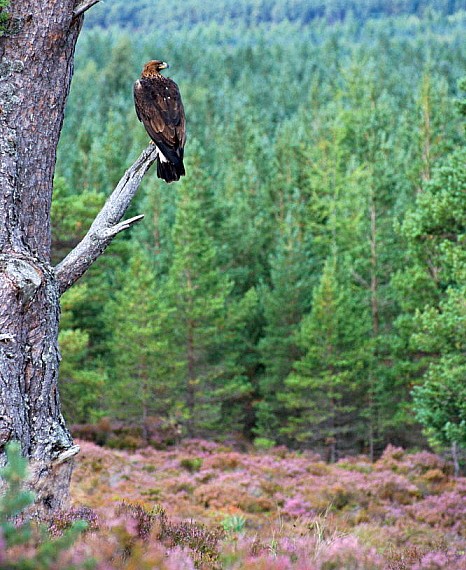
The University of Chester, in collaboration with Scottish group Natural Research Ltd, is offering a fully-funded PhD for a student to investigate the impact of forestry on golden eagles in Scotland.
This is a rare and pretty special opportunity, working with internationally-recognised experts in golden eagle ecology and biology and with access to an incredible satellite tag data set, comprising over 10 million records amassed over 15 years from more than 200 golden eagles.
[Photo by Peter Cairns]
Here is the project description:
Golden Eagles in Scotland have largely recovered from historically low levels over the past two centuries but their distribution is still constrained by persecution and habitat loss across parts of their former range. Afforestation represents a potential source of habitat loss for Golden Eagles as closed canopy conifer afforestation can result in a loss of open ground used by Golden Eagles. However, the effects of afforestation on Golden Eagles are currently unclear with some research indicating a marked reduction in breeding productivity or loss of territories and others demonstrating less dramatic effects. As part of their response to the climate crisis the Scottish Government aims 21% forest cover for Scotland by 2034. This increase in woodland cover, along with the maturation, and felling, of previously planted commercial forestry represents a significant land-use change for Golden Eagles.
This project aims to assess the response of individual Golden Eagle to forestry and their use, or avoidance, of woodland habitats within their home ranges. The project will use data from satellite tracking of a large number of individual territory holders and dispersing, young birds to investigate landscape-scale use of and reaction to afforested and woodland habitats. It will also focus on individual territories in order to create fine-scaled maps of forest habitats which can be used to investigate behaviour related to the spatial structure of forest patches as well behavioural changes associated with forest maturation. The project will also examine the use of forests as roost sites and investigate the characteristics of individual roost locations and their use both temporally and spatially by single and multiple individuals. The successful student will engage in several desk-based analytical processes and also be expected to undertake some field work in the main study areas.
Improving our understanding of the reaction to, and use of, forested woodland habitats by Golden Eagles in Scotland should lead to recommendations that can inform the future planting and management of forests by statutory bodies and foresters working in Scotland with the aim of contributing to the continued recovery and maintenance of the Golden Eagle population.
Project supervisors
Dr Matt Geary, Biological Sciences
Dr Lottie Hosie, Biological Sciences
Dr Alan Fielding, Natural Research Ltd.
Dr Phil Whitfield, Natural Research Ltd.
Qualifications and eligibility
The candidate should have an undergraduate degree (minimum 2.i) in a relevant subject area and, ideally a qualification at Masters level or relevant professional experience related to the project. Some experience with statistical modelling, particularly mixed effects models, and spatial analysis would be useful along with familiarity with statistical and GIS software.
Funding
University fees will be covered for up to three years full time or six years part-time. In addition, the student will receive an annual stipend, currently £16,602.
Application deadline: 16th June 2022
Interview date: TBA
Anticipated start date: 1st October 2022
For further details including how to apply, please see here.