Henry’s Tour: Day 22 – occupy the butts

Wednesday 29 April  Copy

Henry made it up on to the Snilesworth Estate – miles and miles of open moorland ‘managed’ for driven grouse shooting.

Amazingly, he didn’t find any female hen harriers.

In fact he didn’t see a single raptor during his visit.

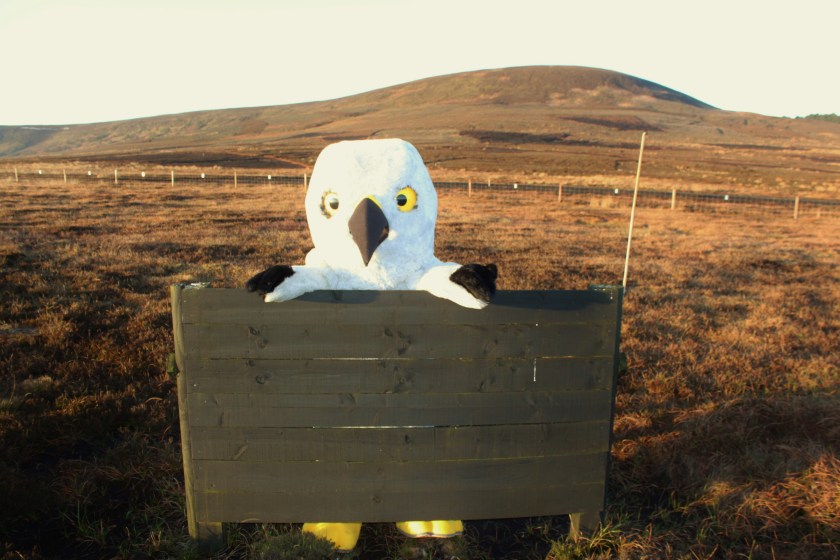
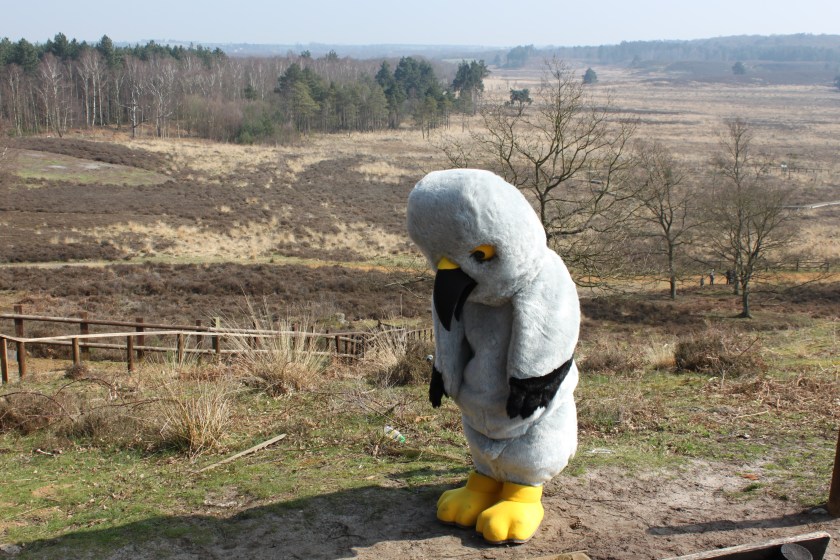
He did see a lot of grouse shooting butts though so he went over for a closer look:

Thursday 30 April  Copy

He staged a mini ‘occupy the butts’ protest and wondered if this idea might take off – lots of people visiting grouse butts to have their photo taken. Perhaps a webpage will appear in the run up to this year’s Hen Harrier Day (Sunday 9th August) where all the photos could be displayed.

Before he left the moor, Henry and his minder left a present on top of the grouse butt for the local gamekeepers:

Friday 1 May Copy

Wonder where he’ll be next week.

#HaveYouSeenHenry

Henry’s Tour: Day 21

Tuesday 28 April Copy

Hmm, Snilesworth, that rings a bell.

A long time ago, there was some trouble at Snilesworth.

It’s been described as a ‘fantastic moor‘ and if Mr Osborne is still involved it should be amazing for hen harriers because apparently he wants to see more of them ‘on or near grouse moors’.

Henry headed up to the moor expecting a warm welcome from the gamekeepers and a bevy of potential mates who might be impressed with his skydancing moves….

Henry’s Tour: Day 20

Monday 27 April  Copy

Henry’s arrived in Yorkshire in his quest to find a mate. This should be interesting.

North Yorkshire (includes North York Moors National Park & Yorkshire Dales NP) is the worst county in England for recorded incidents of bird of prey persecution.

Between 2004-2013 there were 70 confirmed raptor persecution incidents. (2014 data not yet published).

These 70 incidents included:

  • At least 26 confirmed incidents involving the illegal use of pesticides – these include the illegal poisoning of 14 red kites, six buzzards, one goshawk, one peregrine plus the finding of a number of poisoned baits; several domestic pets were also poisoned.
  • The confirmed shooting of 25 birds of prey – consisting of 10 buzzards, three red kites, three kestrels, two goshawks, two peregrines plus singles of hen harrier, sparrowhawk, short-eared owl and eagle owl.
  • The illegal trapping of seven birds of prey plus another 11 illegally set traps for raptors.

In connection with these incidents six individuals, all gamekeepers, were prosecuted.

Hen harrier last bred successfully in North Yorkshire in 2007, despite huge areas of suitable habitat.

A Natural England study between 2002 and 2008 showed that of 11 HH breeding attempts recorded in North Yorkshire, only five sites reared any young and most of the sites that failed were believed to be due to human persecution.

#HaveYouSeenHenry

Henry’s Tour: Day 19

Fri 24 April Copy

Henry went for a skydance across the lawns of Holkham Hall in north Norfolk.

This place is home to Viscount Coke, Vice Chairman of the Board of Trustees of that well-known raptor-loving organisation Songbird Survival.

In 2000, a Holkham Estate gamekeeper was prosecuted for 17 offences including the shooting of two kestrels and the poisoning of a third. He kept his job on the estate. Case write-up here.

In 2009, a dead buzzard was found at Holkham. It had been shot. The Holkham Estate put up a £500 reward for information leading to a conviction, as did the RSPB. Nobody was ever prosecuted.

Henry didn’t see any female hen harriers during his visit but he did watch a buzzard and three red kites. One kite had what some would call the ‘Malta Moult’ – a large hole blown through the feathers of one wing.

Henry thought it was time to get out of Norfolk but not before he called in for tea and cake with the legendary Richard Porter, author of the 1974 classic Flight Identification of European Raptors. More recently, Richard’s studies on the local buzzard population helped to convict Stody Estate gamekeeper Allen Lambert. Lambert had claimed that the ten poisoned buzzards found on the Stody Estate had been killed elsewhere and then ‘dumped’ on his estate in an attempt to set him up. His defence was to claim that they couldn’t possibly have been poisoned at Stody because there weren’t that many local buzzards to start with. He hadn’t banked on the evidence of one of the world’s leading raptor ID experts, who had recorded 233 buzzard sightings and had counted 73 pairs. Oops.

Thurs 23 April  Copy


Henry’s Tour: Day 18

Tues 21 April Copy

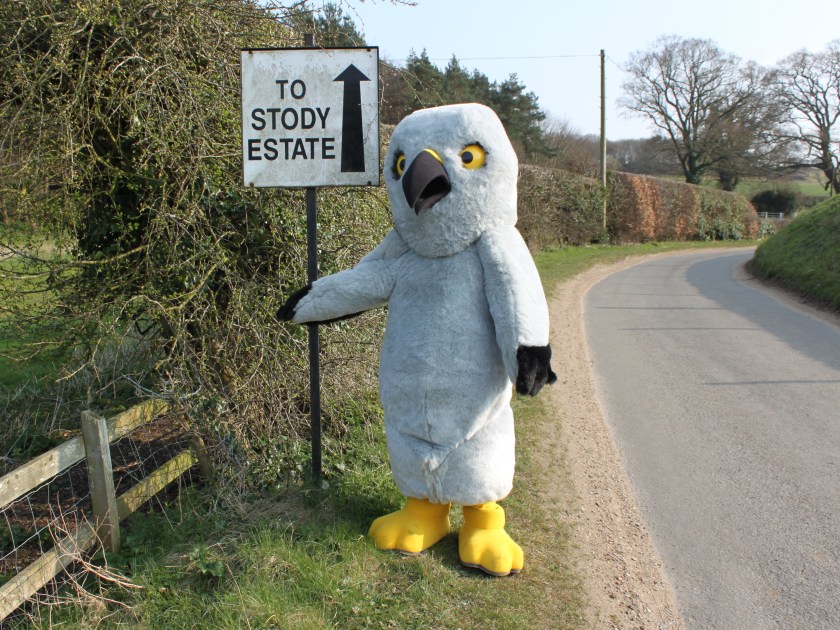
Henry’s back in Norfolk. If he follows that sign to its destination he may never get out of Norfolk alive.

Wonder whether, six months after the conviction of gamekeeper Allen Lambert, the Rural Payments Agency has made a decision yet on whether the illegal poisoning of 11 raptors merits a subsidy withdrawal for the minted Stody Estate?

Henry’s Tour: Day 17

IMG_4813 (2) - Copy

Henry’s been in the NW of England where he went to visit young Findlay Wilde, a seasoned Hen Harrier campaigner even though he’s only just turned 13.

Read about the trip on Fin’s excellent blog here

#HaveYouSeenHenry

Henry’s Tour: Day 16

Thurs 16 April Copy

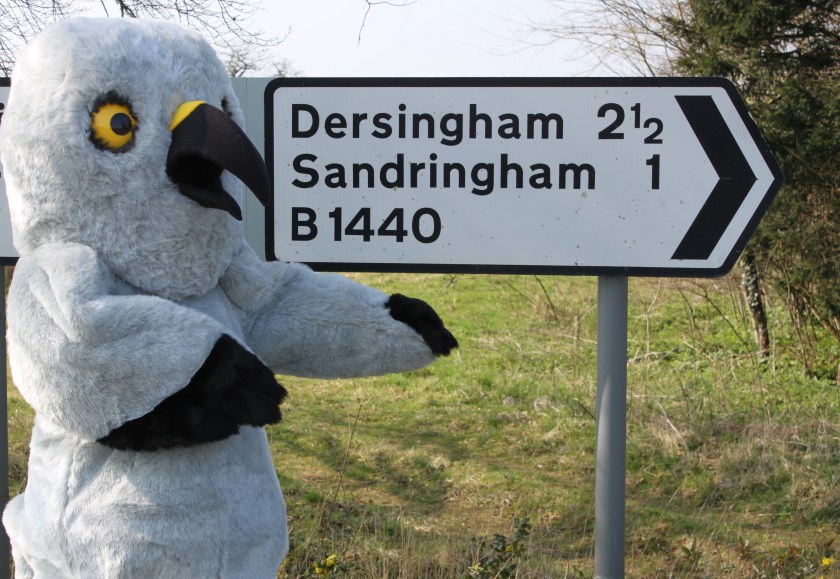
Henry’s re-enacting a scene at Dersingham Bog, a National Nature Reserve situated on the Queen’s Sandringham Estate in Norfolk.

On the evening of 24 October 2007, two hen harriers were allegedly shot at this site, according to an eye-witness account. The police were informed and they visited the site the following morning, after seeking access permission from the estate(!). No bodies were found. The police interviewed Prince Harry, one of his mates, and a Sandringham gamekeeper, who were known to be shooting ducks on the estate that evening, but they said they knew nothing about the incident. The CPS couldn’t progress the case based on such limited evidence (see here).

Sandringham Estate was reported to have undertaken its own investigation and, according to the Telegraph, declared ‘that there was probably no such shooting and that the supposed eye witnesses were, at best, mistaken over their claims’. Friends of the royal prince also claimed that it had all been a set-up (see here).

It’s all very familiar, isn’t it?

Eight years on, things have not improved for hen harriers. There was an estimated 20 pairs of breeding hen harriers in England in 2007; last year there were just four, and all needed around-the-clock protection. Scientists have estimated that more than 300 pairs could breed in England if they weren’t being shot, trapped, stamped on or poisoned.

It’s often inaccurately reported that hen harriers are doing okay in Scotland. In relation to the dire situation in England, they are. However, the story in some areas of Scotland is identical to the story in England; hen harriers are being systematically killed on many moors that are managed for driven grouse shooting (see here).

And just as in England, prosecutions for killing hen harriers in Scotland are virtually unheard of.

Whatever happened to the case we blogged about 15 months ago (see here)? It related to the illegal killing of a hen harrier in Aberdeenshire in June 2013 (almost two years ago now!) – a 58-year-old man had been reported by Police Scotland to the Procurator Fiscal in January 2014. It’s all been strangely (or perhaps un-strangely) quiet since then….

Henry’s Tour: Day 13

Mon 13 April Copy

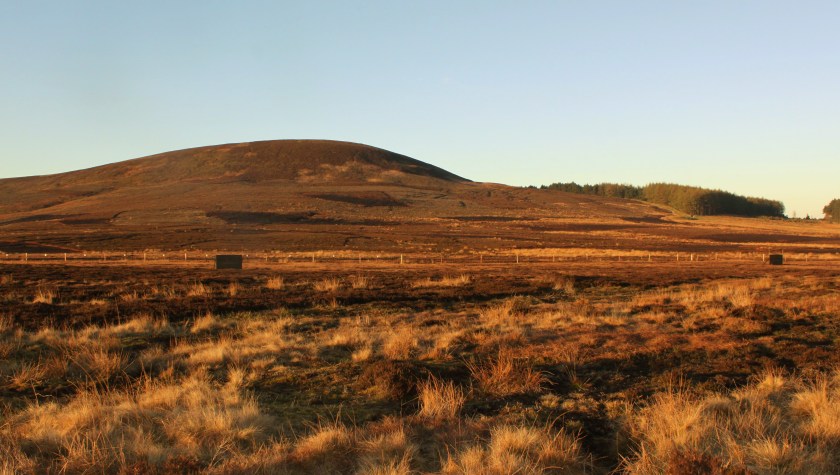
Today Henry visited a National Nature Reserve.

It’s part of a very well-known estate.

This site should be perfect for Hen Harriers.

But it isn’t.

Find out why later this week….