Henry’s Tour day 42: Leadhills

Thurs 11th June Copy

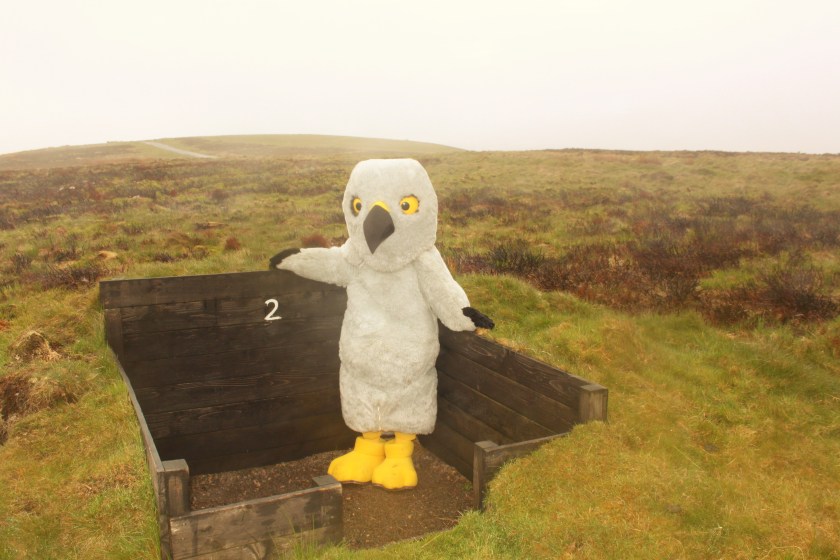
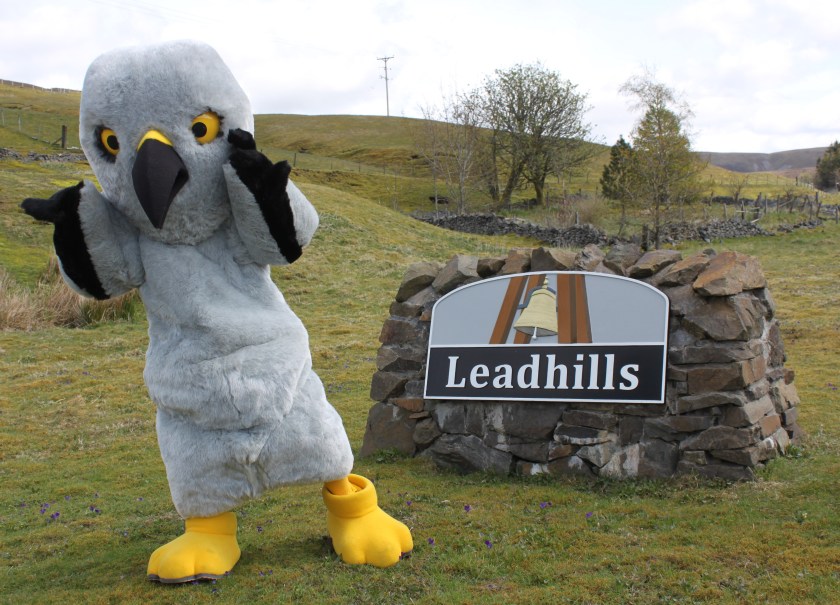
Henry went with an armed escort to visit Leadhills in South Lanarkshire.

He looks a bit distressed. Perhaps he was being deafened by the booming gas guns that have recently been deployed on the grouse moors of the Leadhills (Hopetoun) Estate.

Or perhaps he’d just been told about the long list of wildlife crimes that have been discovered in this corner of South Lanarkshire; 46 confirmed since 2003, but only two resulting in successful convictions (2004 – Leadhills Estate gamekeeper convicted of shooting a short-eared owl; 2009 – Leadhills Estate gamekeeper convicted of placing out a poisoned rabbit bait).

Here’s the list, all from Leadhills unless otherwise stated:

2003 April: hen harrier shot [prosecution failed – inadmissible evidence]

2003 April: hen harrier eggs destroyed [prosecution failed – inadmissible evidence]

2004 May: buzzard shot [no prosecution]

2004 May: short-eared owl shot [gamekeeper convicted]

2004 June: buzzard poisoned (Carbofuran) [no prosecution]

2004 June: 4 x poisoned rabbit baits (Carbofuran) [no prosecution]

2004 June: crow poisoned (Carbofuran) [no prosecution]

2004 July: poisoned rabbit bait (Carbofuran) [no prosecution]

2004 July: poisoned rabbit bait (Carbofuran) [no prosecution]

2005 February: poisoned rabbit bait (Carbofuran) [no prosecution]

2005 April: poisoned buzzard (Carbofuran) [no prosecution]

2005 June: poisoned rabbit bait (Carbofuran) [no prosecution]

2005 June: poisoned rabbit bait (Carbofuran) [no prosecution]

2006 February: poisoned buzzard (Carbofuran) [no prosecution]

2006 March: poisoned buzzard (Carbofuran) [no prosecution]

2006 March: poisoned pigeon bait (Carbofuran) [no prosecution]

2006 April: dead buzzard (persecution method unknown) [no prosecution]

2006 May: poisoned rabbit bait (Carbofuran) [no prosecution]

2006 May: poisoned rabbit bait (Carbofuran) [no prosecution]

2006 May: poisoned egg baits (Carbofuran) [no prosecution]

2006 June: poisoned buzzard (Carbofuran) [no prosecution]

2006 June: poisoned raven (Carbofuran) [no prosecution]

2006 June: 6 x poisoned rabbit baits (Carbofuran) [no prosecution]

2006 June: poisoned egg bait (Carbofuran) [no prosecution]

2006 September: 5 x poisoned buzzards (Carbofuran) [no prosecution]

2006 September: poisoned rabbit bait (Carbofuran) [no prosecution]

2006 September: poisoned rabbit bait (Carbofuran) [no prosecution]

2007 March: poisoned buzzard (Carbofuran) [no prosecution]

2007 April: poisoned red kite (Carbofuran) [no prosecution]

2007 May: poisoned buzzard (Carbofuran) [no prosecution]

2008 October: poisoned buzzard (Carbofuran) [listed as ‘Nr Leadhills’] [no prosecution]

2008 October: poisoned rabbit bait (Carbofuran) [listed as ‘Nr Leadhills’] [no prosecution]

2008 November: 3 x poisoned ravens (Carbofuran) [listed as ‘Nr Leadhills’] [no prosecution]

2009 March: poisoned rabbit bait (Carbofuran) [no prosecution]

2009 March: poisoned raven (Carbofuran) [no prosecution]

2009 April: poisoned rabbit bait (Carbofuran) [gamekeeper convicted]

2009 April: poisoned magpie (Carbofuran) [no prosecution]

2009 April: poisoned raven (Carbofuran) [no prosecution]

2010 October: short-eared owl shot [no prosecution]

2011 March: illegally-set clam trap [no prosecution]

2011 December: buzzard shot [no prosecution]

2012 October: golden eagle shot (just over boundary with Buccleuch Estate) [no prosecution]

2013 May: shot otter found on estate [no prosecution]

2013 June: significant cache of pre-prepared poisoned baits found on estate [no prosecution]

2013 August: red kite found shot and critically-injured in Leadhills village [no prosecution]

2014 February: poisoned peregrine (Carbofuran) [‘Nr Leadhills’] [no prosecution]

Word has it from a local informant that a suspected shot raven was found on Leadhills Estate in May 2015. Post-mortem results are awaited.

Just a few weeks ago, we were sent footage of a young man dressed in camouflage who was lying on the moor holding a firearm, looking over at a plastic decoy peregrine which had been placed on top of a small mound. When he realised he’d been spotted, he removed the decoy and took off back down the hill on a quad bike. Can’t imagine who that was or what his intentions might have been.
Henry’s Tour day 41: South Lanarkshire

Weds 10th June Copy (2)

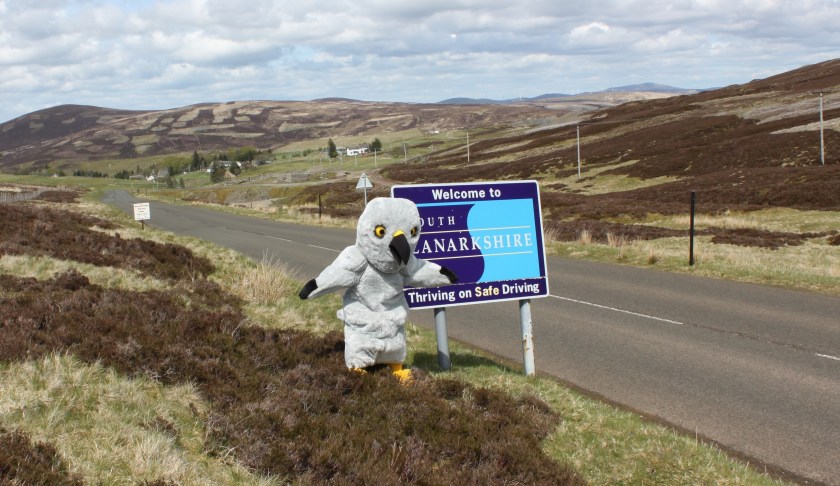
Henry’s entering South Lanarkshire. You might know it from the annual raptor persecution maps – there’s usually a dirty great big red spot indicating that this is a raptor persecution hotspot.

You don’t need a map to tell you that, though. Just look at the landscape and the tell-tale muirburn strips of burnt heather on the hills will tell you all you need to know. This is driven grouse moor country.

Henry’s tour day 40: Geltsdale

Tues 9 June Copy

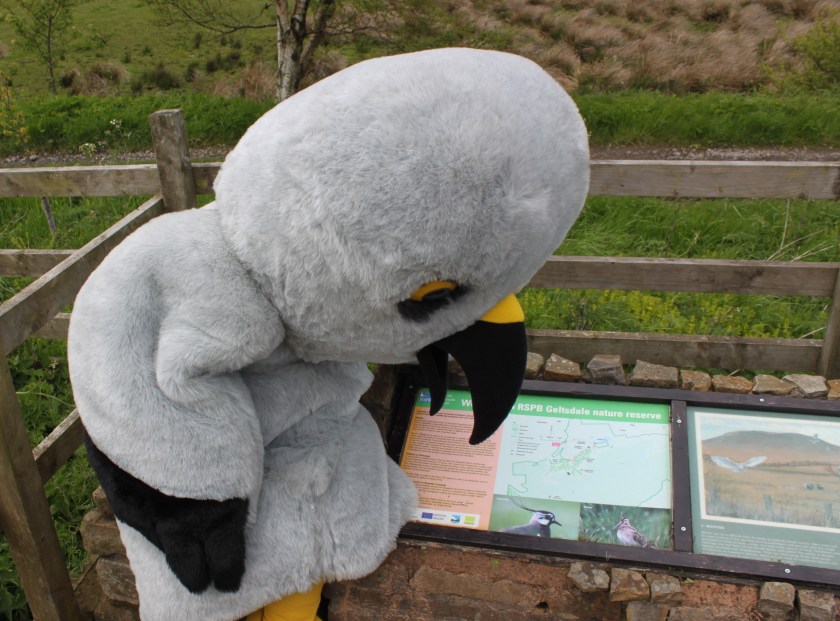
Henry paid a visit (under heavily armed guard) to the RSPB’s Geltsdale reserve in Cumbria, scene of the latest hen harrier ‘disappearance’.

A team from Channel 4 News was also at Geltsdale to talk about ‘disappearing’ hen harriers – that programme aired on Tues evening (9th June). If you missed it, it’ll appear on Channel 4 Catch Up in the next few days.

It was good to see the issue of hen harrier persecution featuring on a national news programme and it was even better to see who the grouse-shooting industry had put forward as their spokesman – one Duncan Thomas, ex-Police Wildlife Crime Officer (Bowland) and currently working for BASC. Some of you may remember him from last year’s Countryfile – we blogged about his performance here.

Here’s what he had to say on last night’s programme:

There is no evidence whatsoever to suggest that these birds have been persecuted. They could merely have moved on or died from natural predation. We’ve had a horrendous spring up here, many many species have suffered as a result, as a direct result of that, and in all the time that I was [Police] Wildlife Crime Officer and doing this job [BASC], I’ve not seen direct evidence of human persecution. I’m confident that everybody up here is doing their bit to make this work. What we need is the Hen Harrier Recovery Plan to be able to reintroduce and to spread this species in to suitable habitat and to get the population back to a level where everybody’s comfortable with“.

‘No direct evidence’ is probably the line used by those defending Jimmy Savile for all those years. Truth will out in the end – it always does, and we are all well on the way to exposing that truth to a much wider audience than ever before.

What Mr Thomas forgot to mention is the management of the grouse moors adjacent to the Geltsdale reserve. Wonder who owns those and perhaps more interestingly, who the sporting agent is?

The presenter, Tom Clarke (Science editor, C4 News) chose his words carefully and did a reasonably good job, although he needs to check his research when he claims that ‘hen harriers are doing quite well in Scotland’ – they’re actually not – see here.

Henry’s tour day 39: Moy Estate

Mon 8 June 2015 - Copy

Henry paid a visit to Moy Estate in the Monadliaths.

Regular blog readers will probably remember what was found on Moy Estate in 2010:

  • A dead red kite in the back of a gamekeeper’s vehicle. It had two broken legs and had died as a result of a blow to the head.
  • The remains of a further two dead red kites.
  • A red kite’s severed leg, along with wing tags that had been fitted to a sateliite-tracked red kite, hidden in holes covered with moss.
  • Six illegal baited spring traps set in the open.
  • A trapped hen harrier (still alive) caught in an illegally set spring trap.
  • A poisoned bait.
  • Four leg rings previously fitted to golden eagle chicks found in the possession of a gamekeeper.

A 20-year-old gamekeeper (James Rolfe – straight out of game-keeping college) was charged with possession of the dead red kite and was fined £1,500. No charges were ever brought against anyone for any of the other offences.

Previous blogs on Moy: see here, herehere and here. It’s particularly worth having a look at this, especially in light of recent hen harrier ‘disappearances’ in England. They weren’t necessarily shot (as the grouse-shooting industry keeps telling us) – they could just as easily have been trapped like this (as the grouse-shooting industry keeps forgetting to mention).

The gamekeeper on Moy was convicted four years ago in 2011. Since then, several more satellite-tracked red kites have ‘disappeared’ since their last signals emitted from Moy, and several buzzard and goshawk nests seem to fail each year. It’s quite windy at Moy. It was probably the wind that blew off those rings from the young golden eagles’ legs and blew them straight in to a jar inside the gamekeeper’s house. It was probably the wind that severed the leg of the red kite and then blew it in to a hole on the moor and then blew moss over the hole to cover it. It was probably the wind that blew away the more recent ‘missing’ red kites. It was probably the same wind that blew holes in those buzzard and goshawk nests, too. Still no breeding hen harriers on this estate – yep, must have been blown away.

Word has it that the game management on Moy Estate is being taken over by a sporting agent with whom we’re very familiar. Cue hundreds of thousands of pounds worth of night vision equipment to carry out his particular style of grouse moor management.

Henry left the estate before darkness fell. He lives another day, although he’s still single.

Henry’s tour day 38: occupying another grouse butt

Last day of the week June don't know the date - Copy

Henry’s been occupying another grouse-shooting butt.

This one was in the Lammermuirs on the Mayshiel Estate. The management of this grouse moor is reportedly undertaken by one Nick Baikie. Now why does that name sound familiar…..?

No hen harriers seen.

Henry’s Tour day 37: meeting a revolutionist

Weds 3rd June Copy

Andy Wightman is a class act. He’s an agitator, a truth-seeker and a fearless revolutionist, but achieves this with a charm and courteousness not often associated with anarchists. Combine that with his capacity for meticulous research and analysis and the result is devastating.

If you want to broaden your understanding of the framework within which illegal raptor persecution takes place in Scotland, reading Andy’s blog is the obvious starting point. If you want to know who owns Scotland you should subscribe to this. If you want to know how they got Scotland, you should read this.

Henry’s tour day 36: visiting his friends at the SOC

Thurs 4th June Copy

Henry called in to the Scottish Ornithologists’ Club HQ to talk about their efforts in the fight against illegal raptor persecution in Scotland.

Last year, the SOC joined the other increasing number of voices who are standing up to say enough is enough (see here and here).

This year they will play a prominent role in the support and planning of Hen Harrier Day events in Scotland. More news about those plans soon……save the date (Sunday 9th August 2015).

Henry’s tour day 35: visiting SLE

2nd June 2015 Copy

Henry paid a visit to the HQ of Scottish Land & Estates.

The lights weren’t on and nobody was in.

SLE is a representative body of 1,351 landowners who own 2.27 million hectares of Scotland (figures from Andy Wightman).

Here’s what SLE’s CEO, Doug McAdam, tweeted when he learned Henry had called by:

‘Over 500 pairs of hen harriers on Scottish moorland at last count’.

Here’s what he didn’t mention (see here for source) –

  • The potential national hen harrier population in Scotland is estimated (conservatively) to be within the range 1467-1790 pairs.
  • The current national hen harrier population in Scotland as recorded during the most recent (2010) national survey is 505 pairs, more than a 20% decline from the numbers recorded during the 2004 national survey.
  • In Scotland, the hen harrier has a favourable conservation status in only five of 20 regions.
  • Two main constraints on population growth have been identified: illegal persecution, and in one region, prey shortages.
  • The species is particularly unsuccessful in the Central Highlands, Cairngorm Massif, Northeast Glens, Western Southern Uplands and the Border Hills. There is strong evidence in these grouse moor regions that illegal persecution is causing the failure of a majority of breeding attempts.

Has Doug McAdam been taking spinning lessons from an ex-England cricketer?

Henry’s tour day 32: back in the badlands

Weds 27th May Copy

Henry’s gone north again, back to the badlands of North Yorkshire.

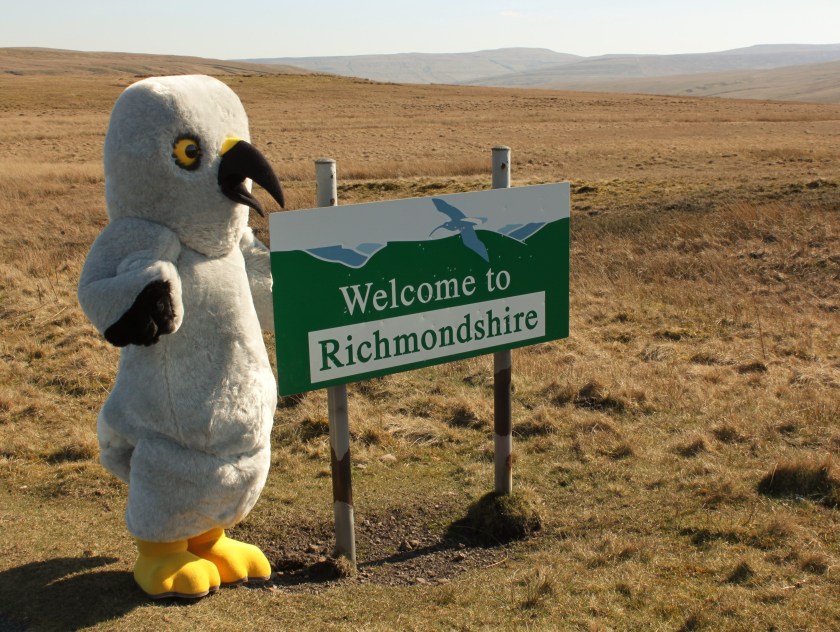
“Welcome to Richmondshire” (where, if you’ve got talons and a hooked beak, you can expect your body to be peppered with shotgun pellets, just like this sign).