
For anyone who still wants to pretend that the grouse shooting industry isn’t responsible for the systematic extermination of hen harriers on grouse moors across the UK, here’s the latest catalogue of crime that suggests otherwise.

This is the blog I now publish after every reported killing or suspicious disappearance.
“They disappear in the same way political dissidents in authoritarian dictatorships have disappeared” (Stephen Barlow, 22 January 2021).
Today the list has been updated to include the most recently reported victims, three more satellite-tagged hen harriers that ‘disappeared’ in Lanarkshire and Northumberland during October 2024 (here).
I’ve been compiling this list only since 2018 because that is the year that the grouse shooting industry ‘leaders’ would have us believe that the criminal persecution of hen harriers had stopped and that these birds were being welcomed back on to the UK’s grouse moors (see here).
This assertion was made shortly before the publication of a devastating new scientific paper that demonstrated that 72% of satellite-tagged hen harriers were confirmed or considered likely to have been illegally killed, and this was ten times more likely to occur over areas of land managed for grouse shooting relative to other land uses (see here). A further scientific paper published in 2023 by scientists at the RSPB, utilising even more recent data, echoed these results – see here.
2018 was also the year that Natural England issued a licence to begin a hen harrier brood meddling trial on grouse moors in northern England. For new blog readers, hen harrier brood meddling was a conservation sham sanctioned by DEFRA as part of its ludicrous ‘Hen Harrier Action Plan‘ and carried out by Natural England (NE), in cahoots with the very industry responsible for the species’ catastrophic decline in England. For more background see here and for a critical evaluation of the trial after 5 years see this report by Wild Justice. In 2024 the brood meddling trial appeared to collapse for reasons which are not yet clear (see here) and the licence for the so-called ‘scientific trial’ expired. Natural England is currently undertaking a review of the ‘trial’ and a report is expected soon.
Brood meddling has been described as a sort of ‘gentleman’s agreement’ by commentator Stephen Welch:
“I don’t get it, I thought the idea of that scheme was some kind of trade off – a gentleman’s agreement that the birds would be left in peace if they were moved from grouse moors at a certain density. It seems that one party is not keeping their side of the bargain“.
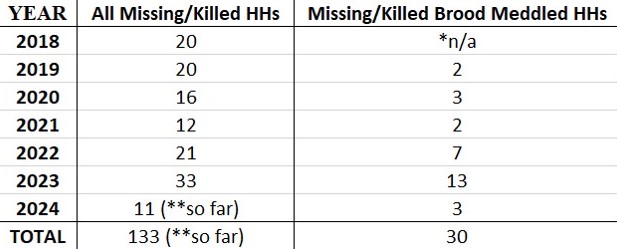
With at least 133 hen harriers gone since 2018, and 30 of those being brood meddled birds, there is no question that the grouse shooting industry is simply taking the piss. Meanwhile, Natural England pretends that ‘partnership working’ is the way to go and consecutive DEFRA Ministers have remained silent.
‘Partnership working’ according to Natural England appears to include authorising the removal of hen harrier chicks from a grouse moor already under investigation by the police for suspected raptor persecution (here) and accepting a £75k ‘donation’ from representatives of the grouse shooting industry that prevents Natural England from criticising them or the sham brood meddling trial (see here). This is in addition to a £10k ‘donation’ that Natural England accepted, under the same terms, in 2021 (here).
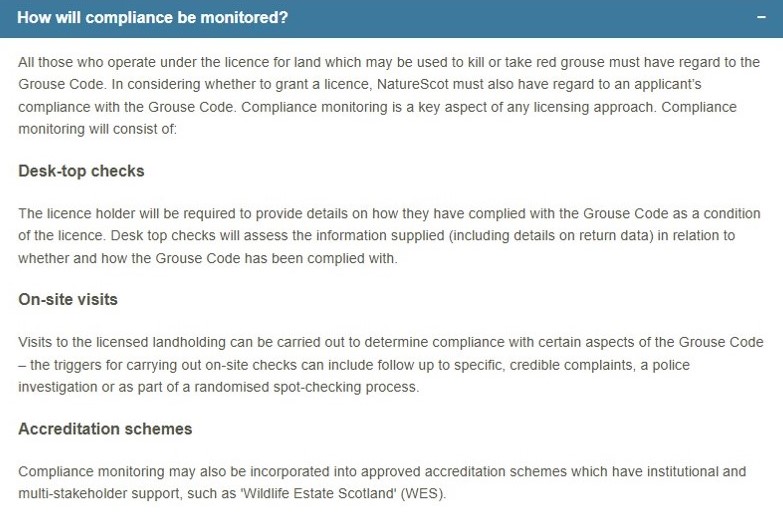
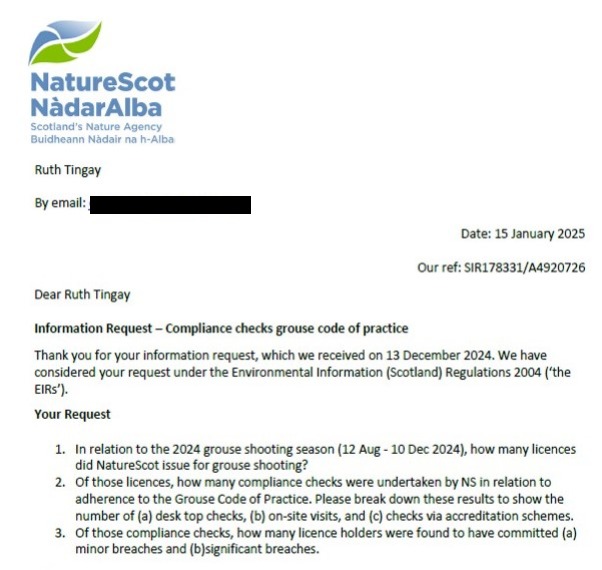
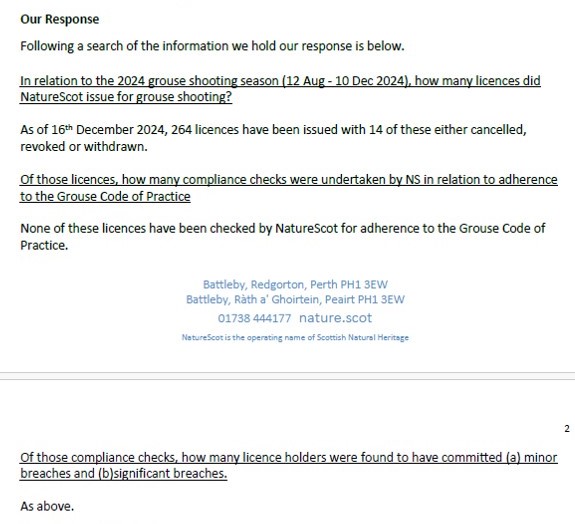
Thankfully, the Scottish Government finally decided to act by introducing a grouse moor licensing scheme under the Wildlife Management & Muirburn (Scotland) Act 2024. The intention behind this new legislation is that grouse shooting estates could have their licences suspended/revoked if, on the balance of probability, it is shown that any raptor persecution crimes (& some other associated offences) are linked with grouse moor management on that estate. There, are, however, ongoing issues with the licence as it’s been significantly watered-down after an intervention from the grouse shooting industry (see here). Work is underway to address this.
In England a new Hen Harrier Taskforce was established in 2024, led by the National Wildlife Crime Unit, to use innovative techniques to target hen harrier persecution hotspots (locations where hen harriers repeatedly ‘disappear’ or are found illegally killed). It’s too early to judge the Taskforce’s success and it’s been met with resistance from the Moorland Association, the grouse moor owners’ lobby group (here) and so far, illegal persecution continues.
So here’s the latest gruesome list of ‘missing’/illegally killed hen harriers since 2018. Note that the majority of these birds (but not all) were fitted with satellite tags. How many more [untagged] harriers have been killed? We now have evidence that gamekeepers are specifically targeting untagged hen harriers, precisely to avoid detection (see here).
February 2018: Hen harrier Saorsa ‘disappeared’ in the Angus Glens in Scotland (here). The Scottish Gamekeepers Association later published wholly inaccurate information claiming the bird had been re-sighted. The RSPB dismissed this as “completely false” (here).
5 February 2018: Hen harrier Marc ‘disappeared’ on a grouse moor in Durham (here).
9 February 2018: Hen harrier Aalin ‘disappeared’ on a grouse moor in Wales (here).
March 2018: Hen harrier Blue ‘disappeared’ in the Lake District National Park (here).
March 2018: Hen harrier Finn ‘disappeared’ near Moffat in Scotland (here).
18 April 2018: Hen harrier Lia ‘disappeared’ in Wales and her corpse was retrieved in a field in May 2018. Cause of death was unconfirmed but police treating death as suspicious (here).
8 August 2018: Hen harrier Hilma ‘disappeared’ on a grouse moor in Northumberland (here).
16 August 2018: Hen harrier Athena ‘disappeared’ on a grouse moor in Scotland (here).
26 August 2018: Hen Harrier Octavia ‘disappeared’ on a grouse moor in the Peak District National Park (here).
29 August 2018: Hen harrier Margot ‘disappeared’ on a grouse moor in Scotland (here).
29 August 2018: Hen Harrier Heulwen ‘disappeared’ on a grouse moor in Wales (here).
3 September 2018: Hen harrier Stelmaria ‘disappeared’ on a grouse moor in Scotland (here).
24 September 2018: Hen harrier Heather ‘disappeared’ on a grouse moor in Scotland (here).
2 October 2018: Hen harrier Mabel ‘disappeared’ on a grouse moor on the edge of the Yorkshire Dales National Park (here).
3 October 2018: Hen Harrier Thor ‘disappeared’ next to a grouse moor in Bowland, Lanacashire (here).
23 October 2018: Hen harrier Tom ‘disappeared’ in South Wales (here).
26 October 2018: Hen harrier Arthur ‘disappeared’ on a grouse moor in the North York Moors National Park (here).
1 November 2018: Hen harrier Barney ‘disappeared’ on Bodmin Moor (here).
10 November 2018: Hen harrier Rannoch ‘disappeared’ on a grouse moor in Scotland (here). Her corpse was found nearby in May 2019 – she’d been killed in an illegally-set spring trap (here).
14 November 2018: Hen harrier River ‘disappeared’ on a grouse moor in the Nidderdale AONB (here). Her corpse was found nearby in April 2019 – she’d been illegally shot (here).
16 January 2019: Hen harrier Vulcan ‘disappeared’ in Wiltshire close to Natural England’s proposed reintroduction site (here).
28 January 2019: Hen harrier DeeCee ‘disappeared’ in Glen Esk, a grouse moor area of the Angus Glens (see here).
7 February 2019: Hen harrier Skylar ‘disappeared’ next to a grouse moor in South Lanarkshire (here).
22 April 2019: Hen harrier Marci ‘disappeared’ on a grouse moor in the Cairngorms National Park (here).
26 April 2019: Hen harrier Rain ‘disappeared’ on a grouse moor in Nairnshire (here).
11 May 2019: An untagged male hen harrier was caught in an illegally-set trap next to his nest on a grouse moor in South Lanarkshire. He didn’t survive (here).
7 June 2019: An untagged hen harrier was found dead on a grouse moor in Scotland. A post mortem stated the bird had died as a result of ‘penetrating trauma’ injuries and that this bird had previously been shot (here).
5 September 2019: Wildland Hen Harrier 1 ‘disappeared’ on a grouse moor nr Dalnaspidal on the edge of the Cairngorms National Park (here).
11 September 2019: Hen harrier Romario ‘disappeared’ on a grouse moor in the Cairngorms National Park (here).
14 September 2019: Hen harrier (Brood meddled in 2019, #183704) ‘disappeared’ in the North Pennines (here).
23 September 2019: Hen harrier (Brood meddled in 2019, #55149) ‘disappeared’ in North Pennines (here).
24 September 2019: Wildland Hen Harrier 2 ‘disappeared’ on a grouse moor at Invercauld in the Cairngorms National Park (here).
24 September 2019: Hen harrier Bronwyn ‘disappeared’ near a grouse moor in North Wales (here).
10 October 2019: Hen harrier Ada ‘disappeared’ on a grouse moor in the North Pennines AONB (here).
12 October 2019: Hen harrier Thistle ‘disappeared’ on a grouse moor in Sutherland (here).
18 October 2019: Member of the public reports the witnessed shooting of an untagged male hen harrier on White Syke Hill in North Yorkshire (here).
November 2019: Hen harrier Mary found illegally poisoned on a pheasant shoot in Ireland (here).
November 2019: Hen harrier Artemis ‘disappeared’ near Long Formacus in south Scotland (RSPB pers comm).
14 December 2019: Hen harrier Oscar ‘disappeared’ in Eskdalemuir, south Scotland (here).
December 2019: Hen harrier Ingmar ‘disappeared’ in the Strathbraan grouse moor area of Perthshire (RSPB pers comm).
27 January 2020: Members of the public report the witnessed shooting of a male hen harrier on Threshfield Moor in the Yorkshire Dales National Park (here).
23 March 2020: Hen harrier Rosie ‘disappeared’ at an undisclosed roost site in Northumberland (here).
1 April 2020: Hen harrier (Brood meddled in 2019, #183703) ‘disappeared’ in unnamed location, tag intermittent (here).
5 April 2020: Hen harrier Hoolie ‘disappeared’ on a grouse moor in the Cairngorms National Park (here)
8 April 2020: Hen harrier Marlin ‘disappeared’ on a grouse moor in the Cairngorms National Park (here).
19 May 2020: Hen harrier Fingal ‘disappeared’ on a grouse moor in the Lowther Hills, Scotland (here).
21 May 2020: Hen harrier (Brood meddled in 2019, #183701) ‘disappeared’ on a grouse moor in Cumbria shortly after returning from wintering in France (here).
27 May 2020: Hen harrier Silver ‘disappeared’ on a grouse moor on Leadhills Estate, Scotland (here).
2020: day/month unknown: Unnamed male hen harrier breeding on RSPB Geltsdale Reserve, Cumbria ‘disappeared’ while away hunting (here).
9 July 2020: Unnamed female hen harrier (#201118) ‘disappeared’ from an undisclosed site in Northumberland (here).
25 July 2020: Hen harrier Harriet ‘disappeared’ on a grouse moor in the Yorkshire Dales National Park (here).
14 August 2020: Hen harrier Solo ‘disappeared’ in confidential nest area in Lancashire (here).
7 September 2020: Hen harrier Dryad ‘disappeared’ on a grouse moor in the Yorkshire Dales National Park (here).
16 September 2020: Hen harrier Fortune ‘disappeared’ from an undisclosed roost site in Northumberland (here).
19 September 2020: Hen harrier Harold ‘disappeared’ on a grouse moor in the Yorkshire Dales National Park (here).
20 September 2020: Hen harrier (Brood meddled in 2020, #55152) ‘disappeared’ next to a grouse moor in North Yorkshire (here).
24 February 2021: Hen harrier Tarras ‘disappeared’ next to a grouse moor in Northumberland (here)
12th April 2021: Hen harrier Yarrow ‘disappeared’ near Stockton, County Durham (here).
18 May 2021: Adult male hen harrier ‘disappeared’ from its breeding attempt on RSPB Geltsdale Reserve, Cumbria whilst away hunting (here).
18 May 2021: Another adult male hen harrier ‘disappeared’ from its breeding attempt on RSPB Geltsdale Reserve, Cumbria whilst away hunting (here).
24 July 2021: Hen harrier Asta ‘disappeared’ at a ‘confidential site’ in the North Pennines (here). We learned 18 months later that her wings had been ripped off so her tag could be fitted to a crow in an attempt to cover up her death (here).
14th August 2021: Hen harrier Josephine ‘disappeared’ at a ‘confidential site’ in Northumberland (here).
17 September 2021: Hen harrier Reiver ‘disappeared’ in a grouse moor dominated region of Northumberland (here)
24 September 2021: Hen harrier (Brood meddled in 2021, R2-F-1-21) ‘disappeared’ in Northumberland (here).
15 November 2021: Hen harrier (brood meddled in 2020, #R2-F1-20) ‘disappeared’ at the edge of a grouse moor on Arkengarthdale Estate in the Yorkshire Dales National Park (here).
19 November 2021: Hen harrier Val ‘disappeared’ in the Lake District National Park in Cumbria (here).
19 November 2021: Hen harrier Percy ‘disappeared’ in Lothian, Scotland (here).
12 December 2021: Hen harrier Jasmine ‘disappeared’ on a grouse moor (High Rigg Moor on the Middlesmoor Estate) in the Nidderdale AONB in North Yorkshire (here).
9 January 2022: Hen harrier Ethel ‘disappeared’ in Northumberland (here).
26 January 2022: Hen harrier Amelia ‘disappeared’ in Bowland (here).
10 February 2022: An unnamed satellite-tagged hen harrier ‘disappeared’ in a grouse moor dominated area of the Peak District National Park (here). One year later it was revealed that the satellite tag/harness of this young male called ‘Anu’ had been deliberately cut off (see here).
12 April 2022: Hen harrier ‘Free’ (Tag ID 201121) ‘disappeared’ at a ‘confidential site’ in Cumbria (here). It later emerged he hadn’t disappeared, but his mutilated corpse was found on moorland in the Yorkshire Dales National Park. A post mortem revealed the cause of death was having his head twisted and pulled off. One leg had also been torn off whilst he was still alive (here).
April 2022: Hen harrier ‘Pegasus’ (tagged by the RSPB) ‘disappeared’ on a grouse moor at Birkdale in the Yorkshire Dales National Park (here).
May 2022: A male breeding hen harrier ‘disappeared’ from a National Trust-owned grouse moor in the Peak District National Park (here).
May 2022: Another breeding male hen harrier ‘disappeared’ from a National Trust-owned grouse moor in the Peak District National Park (here).
14 May 2022: Hen harrier ‘Harvey’ (Tag ID 213844) ‘disappeared’ from a ‘confidential site’ in the North Pennines (here).
20 June 2022: Hen harrier chick #1 stamped to death in nest on a grouse moor in the Yorkshire Dales National Park (here).
20 June 2022: Hen harrier chick #2 stamped to death in nest on a grouse moor in the Yorkshire Dales National Park (here).
20 June 2022: Hen harrier chick #3 stamped to death in nest on a grouse moor in the Yorkshire Dales National Park (here).
20 June 2022: Hen harrier chick #4 stamped to death in nest on a grouse moor in the Yorkshire Dales National Park (here).
17 August 2022: Hen harrier (brood meddled in 2022, #R1-M1-22) ‘disappeared’ on moorland in the Yorkshire Dales National Park (here).
September 2022: Hen harrier ‘Sullis’ (tagged by the RSPB) ‘disappeared’ on a grouse moor in Cumbria (here).
5 October 2022: Hen harrier (brood meddled in 2022, #R3-M2-22) ‘disappeared’ on moorland in the Yorkshire Dales National Park (here).
10 October 2022: Hen harrier ‘Sia’ ‘disappeared’ near Hamsterley Forest in the North Pennines (here).
October 2022: Hen harrier (brood meddled in 2021, #R1-F1-21) ‘disappeared’ in the North Sea off the North York Moors National Park (here).
1 December 2022: Hen harrier male (brood meddled in 2021, #R1-M1-21) ‘disappeared’ on moorland in the Yorkshire Dales National Park (here).
7 December 2022: Hen harrier female (brood meddled in 2020, #R2-F2-20) ‘disappeared’ from winter roost (same as #R3-F1-22) on moorland in North Pennines AONB (here). Later found dead with 3 shotgun pellets in corpse.
14 December 2022: Hen harrier female (brood meddled in 2022, #R3-F1-22) ‘disappeared’ from winter roost (same as #R2-F2-20) on moorland in the North Pennines AONB (here). Later found dead with two shotgun pellets in corpse.
15 December 2022: Hen harrier female (brood meddled in 2022, #R2-F1-22) ‘disappeared’ on moorland in the Yorkshire Dales National Park (here).
30 March 2023: Hen harrier female (brood meddled in 2022, #R1-F3-22) ‘disappeared’ in Yorkshire (here). Notes from NE Sept 2023 spreadsheet update: “Final transmission location temporarily withheld at police request“.
1 April 2023: Hen harrier male (brood meddled in 2022, #R2-M1-22) ‘disappeared’ in Yorkshire (here). Notes from NE Sept 2023 spreadsheet update: “Final transmission location temporarily withheld at police request“.
April 2023: Hen harrier ‘Lagertha’ (tagged by RSPB) ‘disappeared’ in North Yorkshire (here).
April 2023: Hen harrier ‘Nicola’ (Tag ID 234078) ”disappeared’ in North Yorkshire (here).
April 2023: Untagged male hen harrier ‘disappeared’ from an active nest on RSPB Geltsdale Reserve in Cumbria (here).
April 2023: Another untagged male hen harrier ‘disappeared’ from an active nest on RSPB Geltsdale Reserve in Cumbria (here).
April 2023: Untagged male hen harrier ‘disappeared’ from an active nest in Durham (here).
4/5 May 2023: Satellite-tagged male hen harrier called ‘Rush’ ‘disappeared’ from a grouse moor in Bowland AONB in Lancashire (here).
9/10 May 2023: Hen harrier male called ‘Dagda’, tagged by the RSPB in Lancashire in June 2022 and who was breeding on the RSPB’s Geltsdale Reserve in 2023 until he ‘vanished’, only to be found dead on the neighbouring Knarsdale grouse moor in May 2023 – a post mortem revealed he had been shot (here).
17 May 2023: Satellite-tagged hen harrier called ‘Wayland’ ‘disappeared’ in the Clapham area of North Yorkshire, just north of the Bowland AONB (here).
31 May 2023: Hen harrier male (brood meddled in 2022, tag #213932, name: R2-M3-22) ‘disappeared’ in Northumberland (grid ref: NY765687) (here).
11 June 2023: Hen harrier male (brood meddled in 2021, tag #213922, name: R2-M1-21) ‘disappeared’ at a confidential site in the Yorkshire Dales National Park. Notes from the NE spreadsheet: “Final transmission location temporarily withheld at police request“ (here).
12 June 2023: Hen harrier male (brood meddled in 2020, tag #203004, name: R1-M2-20) ‘disappeared’ on a grouse moor in Co. Durham (grid ref: NY976322) (here).
6 July 2023: Satellite-tagged female hen harrier named ‘Rubi’ (tag #201124a) ‘disappeared’ on a grouse moor in Co. Durham (grid ref: NY911151) (here).
23 July 2023: Hen harrier female (brood meddled in 2023, tag #55154a, name: R1-F1-23) ‘disappeared’ on a grouse moor in Co. Durham (close to where ‘Rubi’ vanished), grid ref: NY910126 (here).
29 July 2023: Hen harrier female (brood meddled in 2020, tag #55144, name: R2-F2-20) ‘disappeared’ at a confidential site in the North Pennines. Notes from the NE spreadsheet: “Dead. Recovered – awaiting PM results. Final transmission location temporarily withheld at police request“ (here).
9 August 2023: Satellite-tagged hen harrier called ‘Martha’ ‘disappeared’ on a grouse moor (Westburnhope Moor) near Hexham in the North Pennines (here).
11 August 2023: Satellite-tagged hen harrier called ‘Selena’ ‘disappeared’ on a grouse moor (Mossdale Moor) in the Yorkshire Dales National Park (here).
11 August 2023: Hen harrier female (brood meddled in 2023, tag #201118a, name: R3-F1-23) ‘disappeared’ in Co. Durham (grid ref: NZ072136) (here).
15 August 2023: Satellite-tagged hen harrier called ‘Hepit’ ‘disappeared’ on a grouse moor (Birkdale Common) near Kirkby Stephen in the Yorkshire Dales National Park (here).
24 August 2023: Hen harrier female (brood meddled in 2023, tag #55155a, name: R1-F2-23) ‘disappeared’ at a confidential site in Northumberland. Notes from the NE spreadsheet: “Final transmission location temporarily withheld at police request“ (here).
August-Sept 2023: Satellite-tagged hen harrier called ‘Harmonia’ ‘disappeared’ in the Yorkshire Dales National Park (here).
September 2023: Hen harrier female ‘Saranyu’, tagged by the RSPB in Cumbria in June 2023, ‘disappeared’ in Durham in September 2023 (no further details available yet – just outline info provided in 2022 Birdcrime report) (here).
September 2023: Hen harrier female ‘Inger’, a female tagged by the RSPB in Perthshire in July 2022, ‘disappeared’ on a grouse moor in the Angus Glens in September 2023 (here).
15 September 2023: Hen harrier male called ‘Rhys’, tagged in Cumbria on 1st August 2023, ‘disappeared’ on a grouse moor in the Yorkshire Dales National Park. Grid ref: SD798896 (here).
24 September 2023: Hen harrier female (brood meddled in 2023, name: ‘R2-F2-23’) ‘disappeared’ in the North Pennines, grid ref: NY888062 (here).
25 September 2023: Hen harrier female (brood meddled in 2022, name: ‘R1-F4-22’) ‘disappeared’ on a grouse moor in the Yorkshire Dales National Park, grid ref: SE077699 (here).
26 September 2023: Hen harrier female called ‘Hope’, tagged in Cumbria on 21 July 2023, ‘disappeared’ next to a grouse moor in the Yorkshire Dales National Park, grid ref: SD801926 (here).
4 October 2023: Hen harrier male (brood meddled in 2020, name: ‘R1-M3-20’) ‘disappeared’ in Co Durham, grid ref: NY935192 (here).
4 October 2023: Hen harrier female (brood meddled in 2023, name: ‘R4-F1-23’) ‘disappeared’ on a grouse moor in the Yorkshire Dales National Park, grid ref: SE003981 (here).
14 October 2023: Hen harrier male called ‘Cillian’, tagged in Cumbria on 1 August 2023, ‘disappeared’ in south west Scotland, grid ref: NY051946 (here).
15 November 2023: Hen harrier female called ‘Hazel’, tagged in Cumbria on 21 July 2023, ‘disappeared’ on the Isle of Man, grid ref: SC251803 (here).
27 November 2023: Hen harrier female called ‘Gill’, tagged in Northumberland on 10 July 2023, ‘disappeared’ at a confidential location in Teeside (here).
12 February 2024: Hen harrier female called ‘Susie’, Tag ID 201122, found dead at a confidential location in Northumberland and the subject of an ongoing police investigation (here).
15 February 2024: Hen harrier female called ‘Shalimar’, tagged on the National Trust for Scotland’s Mar Lodge estate in 2023, ‘disappeared’ in suspicious circumstances on a grouse moor in the notorious Angus Glens (here).
7 March 2024: Hen harrier male (brood meddled in 2023, name R2-M1-23) found dead in Devon. According to an FoI response from Natural England in June 2024 this death is the subject of an ongoing police investigation (here).
24 April 2024: Hen harrier male called ‘Ken’, Tag ID 213849a, ‘disappeared’ in suspicious circumstances close to a grouse moor in Bowland, grid ref SD 684601 (here).
17 May 2024: Hen harrier male (brood meddled in 2023, name R2-M2-23) ‘disappeared’ in suspicious circumstances next to Middlesmoor grouse moor in Nidderdale, grid ref SE043754 (here).
25 June 2024: Hen harrier female (brood meddled in 2023, name R2-F1-23) ‘disappeared’ in suspicious circumstances on a grouse moor in Yorkshire Dales National Park, grid ref NY985082 (here).
July 2024: Hen harrier female named ‘Helius’ satellite tagged by the RSPB ‘disappeared’ in suspicious circumstances in Bowland (here).
October 2024: An un-tagged hen harrier was shot on a grouse moor by one of three gamekeepers being secretly filmed by the RSPB (here).
1 October 2024: Hen harrier female named ‘Dreich’, Tag ID: 254842, ‘disappeared’ in Lanarkshire. Listed by NE as ‘Missing Fate Unknown, site confidential – ongoing investigation‘ (here).
15 October 2024: Hen harrier male named ‘Baldur’, Tag ID: 240291, ‘disappeared’ in Northumberland. Listed by NE as ‘Missing Fate Unknown, site confidential – ongoing investigation‘ (here).
19 October 2024: Hen harrier female named ‘Margaret’, Tag ID: 254844, ‘disappeared’ in Northumberland. Listed by NE as ‘Missing Fate Unknown, site confidential – ongoing investigation‘ (here).
To be continued…….
Not one of these 133 incidents has resulted in an arrest, let alone a prosecution. I had thought that when we reached 30 dead/missing hen harriers then the authorities might pretend to be interested and at least say a few words about this national scandal. We’ve now reached ONE HUNDRED AND THIRTY THREE hen harriers, and still Govt ministers remain silent on the illegal persecution issue. They appear not to give a monkey’s. And yes, there are other things going on in the world, as always. That is not reason enough to ignore this blatant, brazen and systematic destruction of a supposedly protected species, being undertaken to satisfy the greed and bloodlust of a minority of society.
And let’s not forget the response from the (now former) Moorland Association Chair (and owner of Swinton Estate) Mark Cunliffe-Lister, who told BBC Radio 4 in August 2023 that, “Clearly any illegal [hen harrier] persecution is not happening” (here), in the year when a record 33 hen harriers had been confirmed ‘missing’ and/or illegally killed.
Nor should we forget the response from the Game and Wildlife Conservation Trust’s (GWCT) Director of Policy Dr Alistair Leake who wrote a letter to the Guardian newspaper in November 2023 stating that the hen harrier brood management [meddling] scheme “is surely a shining example of human / wildlife conflict resolution that would be the envy of other countries trying to find similar solutions“ (I kid you not – here).
Wild Justice has launched another petition calling for a ban on driven grouse shooting. This latest petition is intended to gauge the view of the new Labour Government, as previous petitions were all lodged under the Conservative Government with its well-documented vested interests. Labour issued an appalling pathetic interim response to the petition in January 2025, via DEFRA, which indicated it had no intention of banning driven grouse shooting (see here).
The petition is live until 22 May 2025 and needs 100,000 signatures to qualify for a debate in Westminster Hall. It’s currently on 53,000 signatures. If you haven’t yet signed it, it’s here.





 Raptor Persecution UK