North Yorkshire Police is appealing for witnesses after the discovery of an injured red kite found ‘in suspicious circumstances’ in the Whitby area on Tuesday morning (13 June 2023).
The kite was later euthanised by vets due to the severity of its injuries.
Unfortunately no other details are available.
If you have any information in relation to this incident please contact PC 774 Jack Donaldson: jack.donaldson@northyorkshire.police.uk
UPDATE 17th June 2023: Red kite found shot in North York Moors National Park: police appeal for information (here).
Police Scotland and the Scottish SPCA have appealed for information in relation to the discovery of a critically-injured red kite in Dumfries & Galloway.
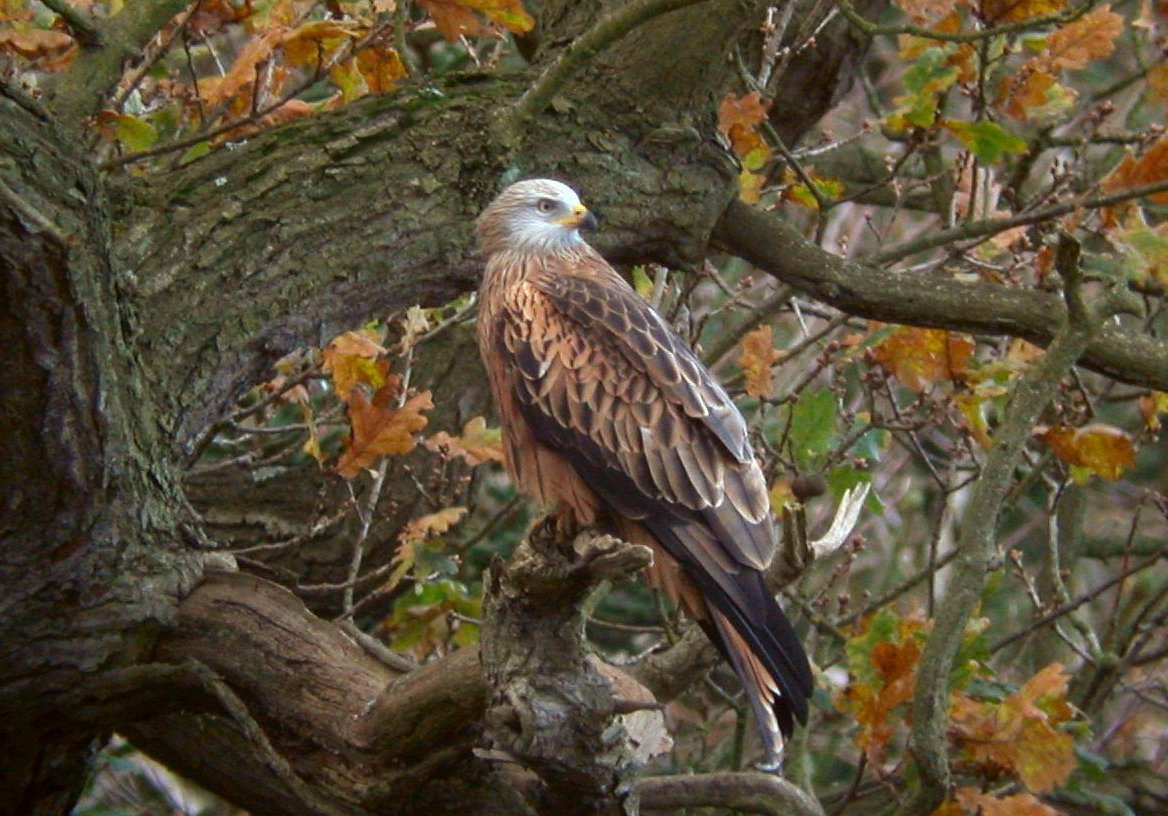
A red kite. Photo: Doug Simpson
According to the BBC News website (here), the authorities are keen to trace the man who found the injured kite near Closeburn at around midday on 5th June 2023. It’s reported that the kite’s injuries were so severe the bird had to be euthanised.
The man is described white, 50 to 60 years old, about 5ft 10in tall, of medium build with short white hair.
The Police and SSPCA want to speak to him and have appealed for witnesses.
No further details are available at the moment.
UPDATE 4th July 2023: Red kite found injured in Dumfries & Galloway had gunshot wounds (see here)
An Osprey has been euthanised after being found with shotgun injuries in Washington, Tyne & Wear on 26th May 2023.
The shot Osprey. Photo: RSPCA
An article on the Planet Radio Metro website (here) states the Osprey ‘was spotted bleeding and lying on his back by a worker at the Crowther Industrial Estate in Washington, Tyne and Wear, after he was thought to have crash landed at the location‘.
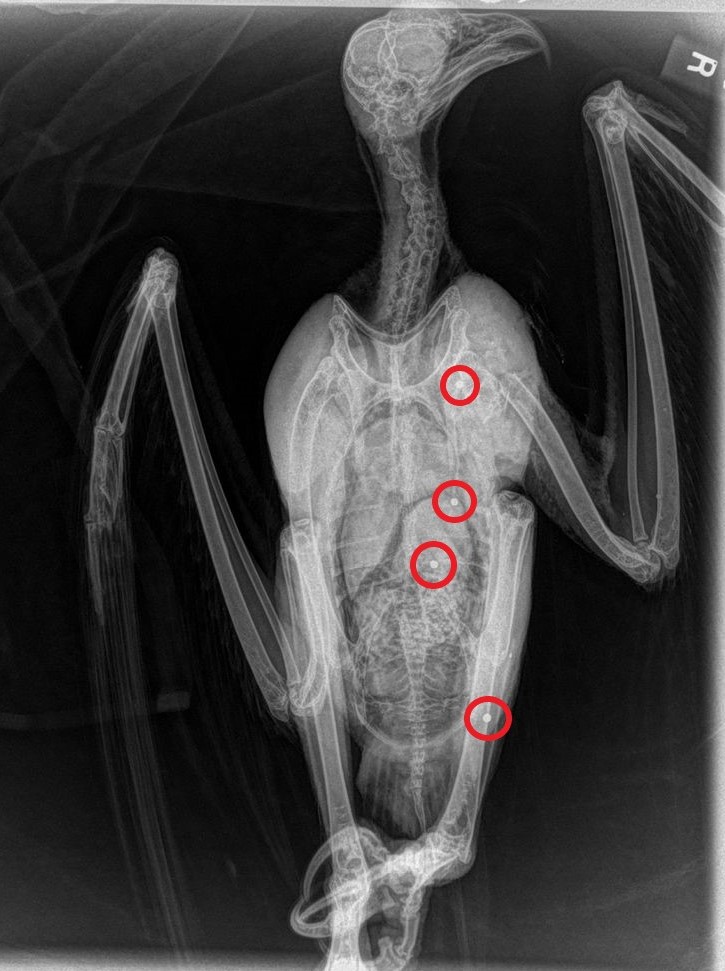
However, the article goes on to claim that the Osprey was ‘shot three times with an airgun‘, but if you look at the x-ray it’s pretty clear that the Osprey has been hit by shotgun pellets (at least four of them – I’ve circled them on the x-ray image below), and not by airgun pellets, which have a distinctively different shape.
The article also claims the Osprey had ‘a ruptured right eye, grazes to its body and a fractured left wing‘. I can’t see the left wing fracture on this particular x-ray but the image of the bird’s left ‘wrist’ area is quite distorted so it’s difficult to tell.
It’s reported that the vets who assessed the injured Osprey considered the best course of action was to euthanise it to prevent further suffering.
The RSPCA is apparently investigating and is ‘asking businesses on the estate to check their CCTV for potential information about the person responsible‘, although obviously the shooting could have taken place elsewhere and the bird could have flown some distance before crash-landing on the estate. However, if it did have a fractured wing then it’s unlikely to have been able to fly very far from the location where it was shot. But perhaps the fracture occurred when it crash landed.
This case was also covered by the BBC News website (here) but that seems to be just a condensed version of the Mercury article and repeats the claim that an airgun was used in the shooting.
The shooting of Ospreys in the UK is relatively rare these days – unlike the targeted shooting of Buzzards, Red Kites, Hen Harriers, Goshawks etc which is still so routine, especially on land managed for gamebird shooting. The last Osprey shooting that I recall in the UK was in 2010 (here).
That’s not to say that Ospreys aren’t still the victims of illegal persecution, but mostly it’s now related to nest disturbance and egg collecting (e.g. see here and here), although there was a case in Derbyshire a few years ago where an Osprey was found with two broken legs and injuries consistent with having been caught in an illegally-set spring trap (here), and an Osprey’s nest was felled with a chainsaw in North Wales two years ago just after the first egg had been laid (here).
Thankfully, these days Ospreys are usually in the headlines for all the right reasons following a series of conservation translocation projects in England (e.g. here), with nest cameras providing an opportunity for the public to follow breeding attempts online (here), Osprey visitor centres attracting thousands of visitors each year (e.g. here) and now even ‘Osprey Cruises’ to watch foraging Ospreys from boats, which sell out so quickly that more trips have now been scheduled (e.g. here). It’s clear that this particular bird of prey seems to attract a great deal of public affection.
If anyone has any information about the shot Osprey found in Tyne & Wear please contact the RSPCA but I’d also encourage you to contact the RSPB’s Investigations Team who can provide specialist and expert assistance to the investigation.
UPDATE 09.30hrs: A vet has been in touch (thank you!) with the following comment: ‘My very rusty veterinary eyes (20 years out of practice!) can see a fracture on the R proximal humerus – also the head of the humerus appears not to be in the shallow socket. Maybe the vet got the L and R markers the wrong way around. Shame there is not a better x-ray after euthanasia. I might be wrong’.
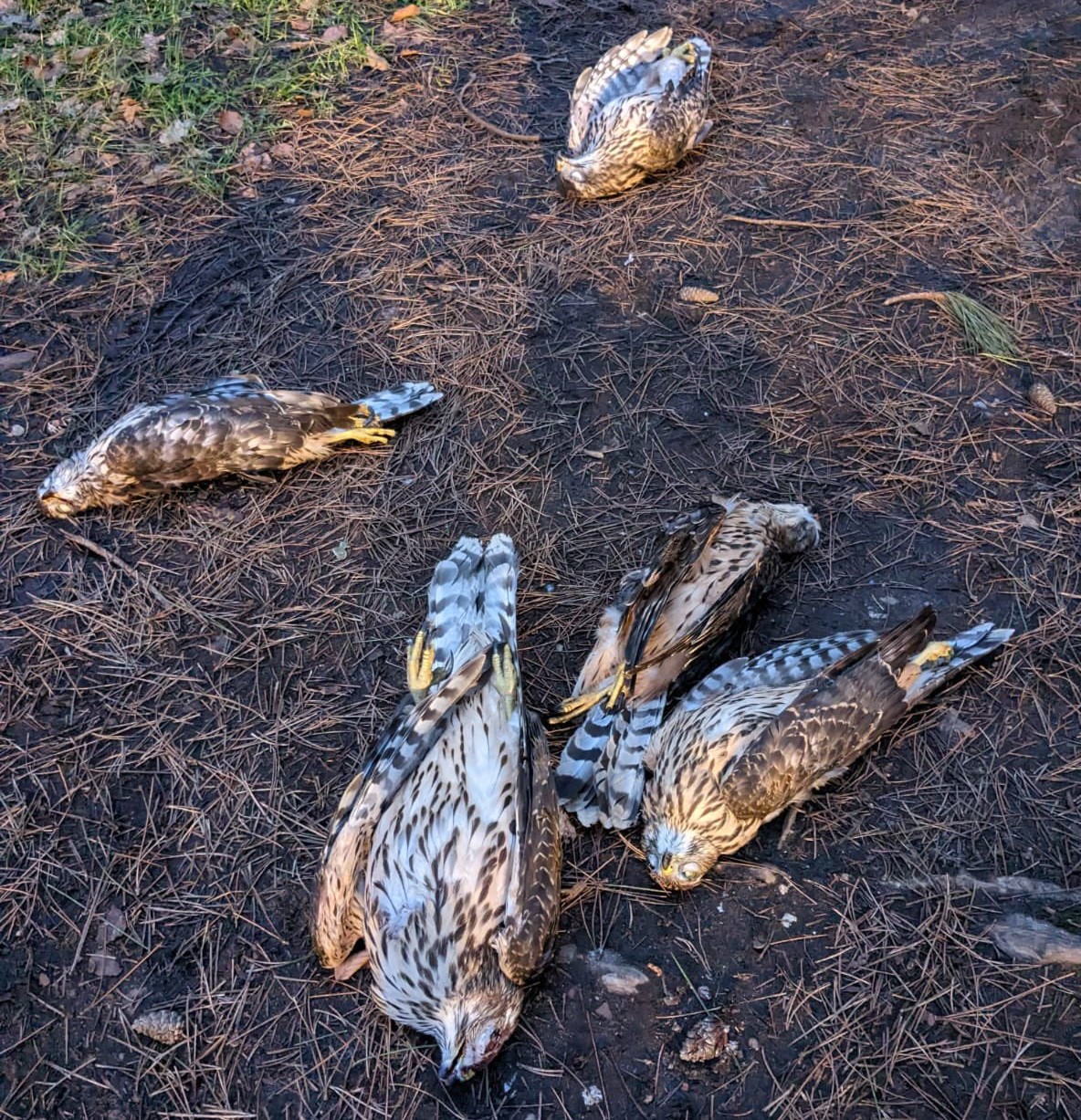
In January this year, Suffolk Police’s Rural, Wildlife & Heritage Unit appealed for information in relation to the discovery of five juvenile goshawks that had been shot and dumped in a car park at the King’s Forest, near Thetford (see here).
The five shot goshawks. Photo: Suffolk Police
This is the investigation that attracted a large reward for information (reward put up by RSPB, Wild Justice, and a crowd funder by Rare Bird Alert, see here).
This is also the investigation about which the shooting industry was ‘offended’ at being asked by the police to help identify the perpetrator (here).
In late March 2023, the police announced that a man had been arrested in relation to this investigation (see here).
A man has now been charged and the police have issued the following statement:
MAN CHARGED WITH OFFENCES IN RELATION TO BIRDS OF PREY FOUND DEAD IN WEST SUFFOLK
A man has been charged with offences in relation to the discovery of five goshawks that were found dead in the west of the county, as well as a number of other offences.
The five birds of prey were found on Monday 16 January, having been left in a parking area just off from the B1106 in Kings Forest, near Wordwell.
X-rays were undertaken which showed all five birds had suffered injuries from multiple pieces of shot.
Officers arrested a 72-year-old man on 27 March in relation to the discovery of the goshawks and on suspicion of breaching firearms license conditions. He was taken to Bury St Edmunds Police Investigation Centre for questioning, before being released under investigation.
Francis Addison, 72, from South Park, Weeting, was subsequently charged with five counts of possession of a dead schedule 1 wild bird (goshawk); one count of killing a non-schedule 1 wild bird (wood pigeon); one count of use of an animal trap in circumstance for which it is not approved; two counts of possession of an article capable of being used to commit a summary offence, namely two air rifles and six animal traps; six counts of failing to comply with the conditions of a firearm certificate; and four counts of failing to comply with the condition of a shotgun certificate.
Addison is due to appear at Norwich Magistrates’ Court on Thursday 29 June.
ENDS
Well done to Suffolk Police’s Rural, Wildlife & Heritage Unit for what has obviously been a detailed investigation, and also for keeping the public informed.
As Mr Addison has now been charged and criminal proceedings are live, I won’t be accepting any comments on this case until proceedings have concluded.
For anyone who still wants to pretend that the grouse shooting industry isn’t responsible for the systematic extermination of hen harriers on grouse moors across the UK, here’s the latest catalogue of crime that suggests otherwise.
[This male hen harrier died in 2019 after his leg was almost severed in an illegally set trap that had been placed next to his nest on a Scottish grouse moor (see here). Photo by Ruth Tingay]
This is the blog I now publish after every reported killing or suspicious disappearance.
“They disappear in the same way political dissidents in authoritarian dictatorships have disappeared” (Stephen Barlow, 22 January 2021).
Today the list has been updated to include the most recently reported victim, a hen harrier named ‘Wayland’ who vanished on 17th May 2023 in the Clapham area of North Yorkshire, just north of the Bowland AONB, where the land is a mix of farmland with gamebird shooting. Its tag had also been functioning normally until that point (see here).
I’ve been compiling this list only since 2018 because that is the year that the grouse shooting industry ‘leaders’ would have us believe that the criminal persecution of hen harriers had stopped and that these birds were being welcomed back on to the UK’s grouse moors (see here).
This assertion was made shortly before the publication of a devastating new scientific paper that demonstrated that 72% of satellite-tagged hen harriers were confirmed or considered likely to have been illegally killed, and this was ten times more likely to occur over areas of land managed for grouse shooting relative to other land uses (see here). Incidentally, a further scientific paper published in 2023 by scientists at the RSPB, utilising even more recent data, echoed these results – see here).
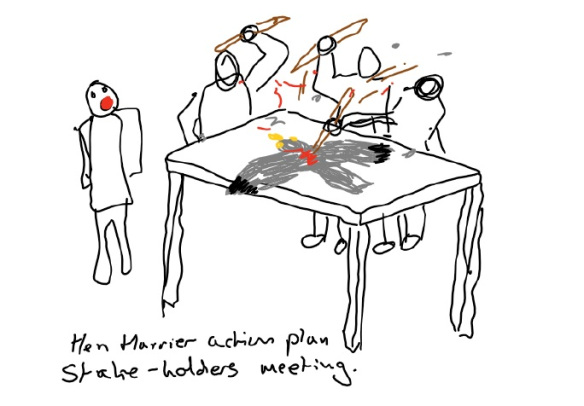
2018 was also the year that Natural England issued a licence to begin a hen harrier brood meddling trial on grouse moors in northern England. For new blog readers, hen harrier brood meddling is a conservation sham sanctioned by DEFRA as part of its ludicrous ‘Hen Harrier Action Plan‘ and carried out by Natural England (NE), in cahoots with the very industry responsible for the species’ catastrophic decline in England. For more background see here.
Brood meddling has been described as a sort of ‘gentleman’s agreement’ by commentator Stephen Welch:
“I don’t get it, I thought the idea of that scheme was some kind of trade off – a gentleman’s agreement that the birds would be left in peace if they were moved from grouse moors at a certain density. It seems that one party is not keeping their side of the bargain“.
With at least 95 hen harriers gone since 2018, there is no question that the grouse shooting industry is simply taking the piss. Meanwhile, Natural England pretends that ‘partnership working’ is the way to go and DEFRA Ministers remain silent.
‘Partnership working’ according to Natural England appears to include authorising the removal of hen harrier chicks from a grouse moor already under investigation by the police for suspected raptor persecution (here) and accepting a £75k ‘donation’ from representatives of the grouse shooting industry that prevents Natural England from criticising them or the sham brood meddling trial (see here). This is in addition to a £10k ‘donation’ that Natural England accepted, under the same terms, in 2021 (here).
Cartoon by Gerard Hobley
So here’s the latest gruesome list. Note that the majority of these birds (but not all) were fitted with satellite tags. How many more [untagged] harriers have been killed?
February 2018: Hen harrier Saorsa ‘disappeared’ in the Angus Glens in Scotland (here). The Scottish Gamekeepers Association later published wholly inaccurate information claiming the bird had been re-sighted. The RSPB dismissed this as “completely false” (here).
5 February 2018: Hen harrier Marc ‘disappeared’ on a grouse moor in Durham (here).
9 February 2018: Hen harrier Aalin ‘disappeared’ on a grouse moor in Wales (here).
March 2018: Hen harrier Blue ‘disappeared’ in the Lake District National Park (here).
March 2018: Hen harrier Finn ‘disappeared’ near Moffat in Scotland (here).
18 April 2018: Hen harrier Lia ‘disappeared’ in Wales and her corpse was retrieved in a field in May 2018. Cause of death was unconfirmed but police treating death as suspicious (here).
8 August 2018: Hen harrier Hilma ‘disappeared’ on a grouse moor in Northumberland (here).
16 August 2018: Hen harrier Athena ‘disappeared’ on a grouse moor in Scotland (here).
26 August 2018: Hen Harrier Octavia ‘disappeared’ on a grouse moor in the Peak District National Park (here).
29 August 2018: Hen harrier Margot ‘disappeared’ on a grouse moor in Scotland (here).
29 August 2018: Hen Harrier Heulwen ‘disappeared’ on a grouse moor in Wales (here).
3 September 2018: Hen harrier Stelmaria ‘disappeared’ on a grouse moor in Scotland (here).
24 September 2018: Hen harrier Heather ‘disappeared’ on a grouse moor in Scotland (here).
2 October 2018: Hen harrier Mabel ‘disappeared’ on a grouse moor on the edge of the Yorkshire Dales National Park (here).
3 October 2018: Hen Harrier Thor ‘disappeared’ next to a grouse moor in Bowland, Lanacashire (here).
23 October 2018: Hen harrier Tom ‘disappeared’ in South Wales (here).
26 October 2018: Hen harrier Arthur ‘disappeared’ on a grouse moor in the North York Moors National Park (here).
1 November 2018: Hen harrier Barney ‘disappeared’ on Bodmin Moor (here).
10 November 2018: Hen harrier Rannoch ‘disappeared’ on a grouse moor in Scotland (here). Her corpse was found nearby in May 2019 – she’d been killed in an illegally-set spring trap (here).
14 November 2018: Hen harrier River ‘disappeared’ on a grouse moor in the Nidderdale AONB (here). Her corpse was found nearby in April 2019 – she’d been illegally shot (here).
16 January 2019: Hen harrier Vulcan ‘disappeared’ in Wiltshire close to Natural England’s proposed reintroduction site (here).
7 February 2019: Hen harrier Skylar ‘disappeared’ next to a grouse moor in South Lanarkshire (here).
22 April 2019: Hen harrier Marci ‘disappeared’ on a grouse moor in the Cairngorms National Park (here).
26 April 2019: Hen harrier Rain ‘disappeared’ on a grouse moor in Nairnshire (here).
11 May 2019: An untagged male hen harrier was caught in an illegally-set trap next to his nest on a grouse moor in South Lanarkshire. He didn’t survive (here).
7 June 2019: An untagged hen harrier was found dead on a grouse moor in Scotland. A post mortem stated the bird had died as a result of ‘penetrating trauma’ injuries and that this bird had previously been shot (here).
5 September 2019: Wildland Hen Harrier 1 ‘disappeared’ on a grouse moor nr Dalnaspidal on the edge of the Cairngorms National Park (here).
11 September 2019: Hen harrier Romario ‘disappeared’ on a grouse moor in the Cairngorms National Park (here).
14 September 2019: Hen harrier (Brood meddled in 2019, #183704) ‘disappeared’ in the North Pennines (here).
23 September 2019: Hen harrier (Brood meddled in 2019, #55149) ‘disappeared’ in North Pennines (here).
24 September 2019: Wildland Hen Harrier 2 ‘disappeared’ on a grouse moor at Invercauld in the Cairngorms National Park (here).
24 September 2019: Hen harrier Bronwyn ‘disappeared’ near a grouse moor in North Wales (here).
10 October 2019: Hen harrier Ada ‘disappeared’ on a grouse moor in the North Pennines AONB (here).
12 October 2019: Hen harrier Thistle ‘disappeared’ on a grouse moor in Sutherland (here).
18 October 2019: Member of the public reports the witnessed shooting of an untagged male hen harrier on White Syke Hill in North Yorkshire (here).
November 2019: Hen harrier Mary found illegally poisoned on a pheasant shoot in Ireland (here).
14 December 2019: Hen harrier Oscar ‘disappeared’ in Eskdalemuir, south Scotland (here).
January 2020: Members of the public report the witnessed shooting of a male hen harrier on Threshfield Moor in the Yorkshire Dales National Park (here).
23 March 2020: Hen harrier Rosie ‘disappeared’ at an undisclosed roost site in Northumberland (here).
1 April 2020: Hen harrier (Brood meddled in 2019, #183703) ‘disappeared’ in unnamed location, tag intermittent (here).
5 April 2020: Hen harrier Hoolie ‘disappeared’ on a grouse moor in the Cairngorms National Park (here)
8 April 2020: Hen harrier Marlin ‘disappeared’ on a grouse moor in the Cairngorms National Park (here).
19 May 2020: Hen harrier Fingal ‘disappeared’ on a grouse moor in the Lowther Hills, Scotland (here).
21 May 2020: Hen harrier (Brood meddled in 2019, #183701) ‘disappeared’ on a grouse moor in Cumbria shortly after returning from wintering in France (here).
27 May 2020: Hen harrier Silver ‘disappeared’ on a grouse moor on Leadhills Estate, Scotland (here).
2020: day/month unknown: Unnamed male hen harrier breeding on RSPB Geltsdale Reserve, Cumbria ‘disappeared’ while away hunting (here).
9 July 2020: Unnamed female hen harrier (#201118) ‘disappeared’ from an undisclosed site in Northumberland (here).
25 July 2020: Hen harrier Harriet ‘disappeared’ on a grouse moor in the Yorkshire Dales National Park (here).
14 August 2020: Hen harrier Solo ‘disappeared’ in confidential nest area in Lancashire (here).
7 September 2020: Hen harrier Dryad ‘disappeared’ on a grouse moor in the Yorkshire Dales National Park (here).
16 September 2020: Hen harrier Fortune ‘disappeared’ from an undisclosed roost site in Northumberland (here).
19 September 2020: Hen harrier Harold ‘disappeared’ on a grouse moor in the Yorkshire Dales National Park (here).
20 September 2020: Hen harrier (Brood meddled in 2020, #55152) ‘disappeared’ next to a grouse moor in North Yorkshire (here).
24 February 2021: Hen harrier Tarras ‘disappeared’ next to a grouse moor in Northumberland (here)
12th April 2021: Hen harrier Yarrow ‘disappeared’ near Stockton, County Durham (here).
18 May 2021: Adult male hen harrier ‘disappeared’ from its breeding attempt on RSPB Geltsdale Reserve, Cumbria whilst away hunting (here).
18 May 2021: Another adult male hen harrier ‘disappeared’ from its breeding attempt on RSPB Geltsdale Reserve, Cumbria whilst away hunting (here).
24 July 2021: Hen harrier Asta ‘disappeared’ at a ‘confidential site’ in the North Pennines (here). We learned 18 months later that her wings had been ripped off so her tag could be fitted to a crow in an attempt to cover up her death (here).
14th August 2021: Hen harrier Josephine ‘disappeared’ at a ‘confidential site’ in Northumberland (here).
17 September 2021: Hen harrier Reiver ‘disappeared’ in a grouse moor dominated region of Northumberland (here)
24 September 2021: Hen harrier (Brood meddled in 2021, R2-F-1-21) ‘disappeared’ in Northumberland (here).
15 November 2021: Hen harrier (brood meddled in 2020, #R2-F1-20) ‘disappeared’ at the edge of a grouse moor on Arkengarthdale Estate in the Yorkshire Dales National Park (here).
19 November 2021: Hen harrier Val ‘disappeared’ in the Lake District National Park in Cumbria (here).
19 November 2021: Hen harrier Percy ‘disappeared’ in Lothian, Scotland (here).
12 December 2021: Hen harrier Jasmine ‘disappeared’ on a grouse moor (High Rigg Moor on the Middlesmoor Estate) in the Nidderdale AONB in North Yorkshire (here).
9 January 2022: Hen harrier Ethel ‘disappeared’ in Northumberland (here).
26 January 2022: Hen harrier Amelia ‘disappeared’ in Bowland (here).
10 February 2022: An unnamed satellite-tagged hen harrier ‘disappeared’ in a grouse moor dominated area of the Peak District National Park (here). One year later it was revealed that the satellite tag/harness of this young male called ‘Anu’ had been deliberately cut off (see here).
12 April 2022: Hen harrier ‘Free’ (Tag ID 201121) ‘disappeared’ at a ‘confidential site’ in Cumbria (here). It later emerged he hadn’t disappeared, but his mutilated corpse was found on moorland in the Yorkshire Dales National Park. A post mortem revealed the cause of death was having his head twisted and pulled off. One leg had also been torn off whilst he was still alive (here).
April 2022: Hen harrier ‘Pegasus’ (tagged by the RSPB) ‘disappeared’ on a grouse moor at Birkdale in the Yorkshire Dales National Park (here).
May 2022: A male breeding hen harrier ‘disappeared’ from a National Trust-owned grouse moor in the Peak District National Park (here).
May 2022: Another breeding male hen harrier ‘disappeared’ from a National Trust-owned grouse moor in the Peak District National Park (here).
14 May 2022: Hen harrier ‘Harvey’ (Tag ID 213844) ‘disappeared’ from a ‘confidential site’ in the North Pennines (here).
20 June 2022: Hen harrier chick #1 stamped to death in nest on a grouse moor in the Yorkshire Dales National Park (here).
20 June 2022: Hen harrier chick #2 stamped to death in nest on a grouse moor in the Yorkshire Dales National Park (here).
20 June 2022: Hen harrier chick #3 stamped to death in nest on a grouse moor in the Yorkshire Dales National Park (here).
20 June 2022: Hen harrier chick #4 stamped to death in nest on a grouse moor in the Yorkshire Dales National Park (here).
17 August 2022: Hen harrier (brood meddled in 2022, #R1-M1-22) ‘disappeared’ on moorland in the Yorkshire Dales National Park (here).
September 2022: Hen harrier ‘Sullis’ (tagged by the RSPB) ‘disappeared’ on a grouse moor in Cumbria (here).
5 October 2022: Hen harrier (brood meddled in 2022, #R3-M2-22) ‘disappeared’ on moorland in the Yorkshire Dales National Park (here).
10 October 2022: Hen harrier ‘Sia’ ‘disappeared’ near Hamsterley Forest in the North Pennines (here).
October 2022: Hen harrier (brood meddled in 2021, #R1-F1-21) ‘disappeared’ in the North Sea off the North York Moors National Park (here).
December 2022: Hen harrier female (brood meddled in 2020, #R2-F2-20) ‘disappeared’ on moorland in Cumbria (here).
1 December 2022: Hen harrier male (brood meddled in 2021, #R1-M1-21) ‘disappeared’ on moorland in the Yorkshire Dales National Park (here).
14 December 2022: Hen harrier female (brood meddled in 2022, #R3-F1-22) ‘disappeared’ on moorland in the North Pennines AONB (here).
15 December 2022: Hen harrier female (brood meddled in 2022, #R2-F1-22) ‘disappeared’ on moorland in the Yorkshire Dales National Park (here).
March 2023: Unnamed male hen harrier (tagged by Natural England – details not yet released) ‘disappeared’ in North Yorkshire (here).
April 2023: Unnamed female hen harrier (tagged by Natural England – details not yet released) ‘disappeared’ in North Yorkshire (here).
April 2023: Hen harrier ‘Lagertha’ (tagged by RSPB) ‘disappeared’ in North Yorkshire (here).
April 2023: Hen harrier ‘Nicola’ (Tag ID 234078) ”disappeared’ in North Yorkshire (here).
April 2023: Untagged male hen harrier ‘disappeared’ from an active nest on RSPB Geltsdale Reserve in Cumbria (here).
April 2023: Another untagged male hen harrier ‘disappeared’ from an active nest on RSPB Geltsdale Reserve in Cumbria (here).
April 2023: Untagged male hen harrier ‘disappeared’ from an active nest in Durham (here).
4/5 May 2023: Satellite-tagged male hen harrier called ‘Rush’ ‘disappeared’ from a grouse moor in Bowland AONB in Lancashire (here).
17 May 2023: Satellite-tagged hen harrier called ‘Wayland’ ‘disappeared’ in the Clapham area of North Yorkshire, just north of the Bowland AONB (here).
To be continued…….
Not one of these 95 incidents has resulted in an arrest, let alone a prosecution. I had thought that when we reached 30 dead/missing hen harriers then the authorities might pretend to be interested and at least say a few words about this national scandal. We’ve now reached NINETY FIVE hen harriers, and still Govt ministers remain silent. They appear not to give a monkey’s. And yes, there are other things going on in the world, as always. That is not reason enough to ignore this blatant, brazen and systematic destruction of a supposedly protected species, being undertaken to satisfy the greed and bloodlust of a minority of society.
The RSPB has issued a press release this morning announcing the suspicious disappearance of two more satellite-tagged hen harriers over a two week period in May.
One of them, called ‘Rush’, is the harrier whose suspicious disappearance Lancashire Police mentioned on their Facebook page a couple of weeks ago (here).
The suspicious disappearance of a second harrier, called ‘Wayland’, has not previously been reported.
Here is the RSPB’s press release:
MORE HEN HARRIERS DISAPPEAR IN SUSPICIOUS CIRCUMSTANCES
*Two satellite tagged birds disappeared over two weeks in May, in Lancashire and North Yorkshire: the latest in a succession of similar incidents.
*The RSPB recently reported that 21 Hen Harriers had been either killed or disappeared in the North of England in the past year.
*Hen Harriers are rare birds on the red list of conservation concern, with illegal killing the key factor limiting their recovery.
Two Hen Harriers have vanished in suspicious circumstances in just two weeks within the Bowland Area of Outstanding Natural Beauty (AONB) and nearby North Yorkshire.
The birds were fitted with satellite tags, which are fitted to gather information about this rare and persecuted species.
Rush, an adult male bird, had been spending time in Mallowdale, in the Forest of Bowland, throughout the spring until his tag unexpectedly stopped transmitting on 4 May. The tag’s last fix put him over a grouse moor. Lancashire Police and the National Wildlife Crime Unit carried out a search of the area but found no sign of the bird or its tag.
Hen harrier ‘Rush’. Photo: RSPB
On 17 May, another tagged bird, Wayland, vanished in the Clapham area of North Yorkshire, just north of the Bowland AONB, where the land is a mix of farmland with gamebird shooting. Its tag had also been functioning normally until that point.
Hen harrier ‘Wayland’. Photo: RSPB
These two birds are in addition to the 21 Hen Harriers that were reported as either killed or missing across Northern England in the last year, including one found dead in the Yorkshire Dales National Park with its head pulled off.
Hen Harriers are rare breeding birds in the UK, known for their acrobatic ‘skydancing’ courtship display which they perform above upland moors in spring. In England there were 34 successful nests in 2022, despite a previous independent government report finding that there is enough habitat and food to support over 300 pairs. Illegal killing continues to be the main factor limiting the recovery of the UK Hen Harrier population.
A scientific study published in the journal Biological Conservation found that survival rates of Hen Harriers were ‘unusually low’, and illegal killing was identified as a major cause. Using data from the largest GPS tracking programme for Hen Harriers globally, the authors discovered that individuals tracked by the project were typically living just 121 days after fledging. The risk of dying as a result of illegal killing increased significantly as Hen Harriers spent more time on areas managed for grouse shooting. Previously, a 2019 Government study concluded that Hen Harriers suffer elevated levels of mortality on grouse moors, most likely as a result of illegal killing.
The RSPB’s Birdcrime report found that, of the 108 confirmed incidents of bird of prey persecution in 2021, 71% were in connection with gamebird shooting and, since 1990, 67% of those convicted of raptor persecution offences were gamekeepers.
Howard Jones, RSPB Senior Investigations Officer, said:
“To have two more Hen Harriers disappear this spring is a huge blow for a struggling species where every nest counts. These latest disappearances are being treated as suspicious by the police. From Wayland’s tag data, it appears that the tag stopped mid-transmission – cutting out abruptly as it was sending data through to us – which strongly suggests human interference.
“We hope the otherwise tragic news of these birds sends a clear message that licensing of driven grouse shooting estates must be implemented to ensure all are operating within the law, and to protect birds like Hen Harriers from persistent persecution. Clearly self-regulation has failed, as evidenced by this spate of disappearances. How many more birds must vanish from the breeding population before action is taken?”
ENDS
Hen harrier ‘Wayland’ is the 9th hen harrier to ‘vanish’ this year and the 95th hen harrier to have been either illegally killed or gone ‘missing’ in suspicious circumstances since Natural England’s insane brood meddling trial began in 2018. I understand there are more, still to be publicised.
I’ll be updating and publishing the running tally of illegally killed / ‘missing’ hen harriers shortly…
Keep an eye out for BBC’s Springwatch programme this week.
Starting this evening, there’ll be a feature film from the RSPB’s Geltsdale Reserve in Cumbria introduced by the BBC’s Frank Gardner, who takes a closer look at hen harrier persecution on driven grouse moors.
You’ll recall that last month, the RSPB reported that two hen harrier nests on Geltsdale had yet again been abandoned after the breeding males ‘vanished’ whilst away hunting on nearby moors (see here).
Then on Tuesday evening Frank will introduce another film, this time from the RSPB’s Lakenheath Fen Reserve, where he’ll chat with Mark Thomas from the RSPB’s Investigations Team about the wider issue of raptor persecution.
Well done to the producers at Springwatch who made the decision to make these films. After years of carefully avoiding the raptor persecution scandal, it’ll be great to finally see it featured and discussed on the country’s premier TV nature programme, reaching millions of new viewers.
BBC 2, 8pm and available on iPlayer afterwards.
UPDATE: The episode is now available on iPlayer – well worth a watch here
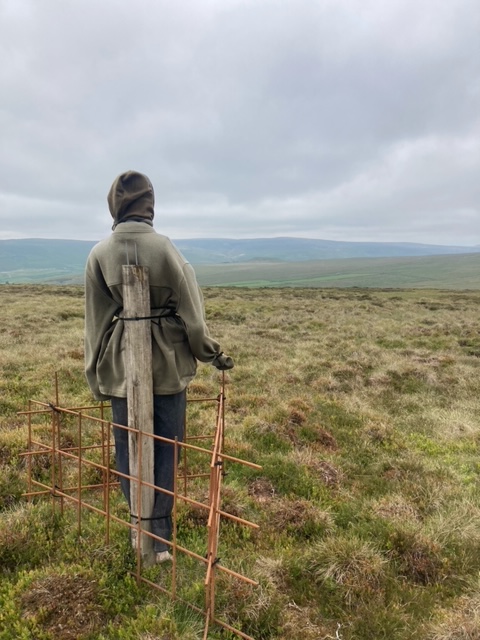
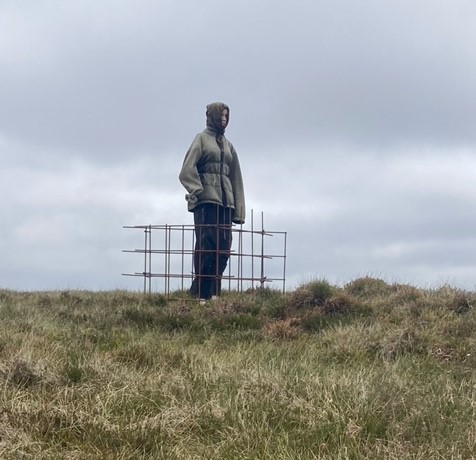
Yesterday I blogged about the recent appearance of a mannequin (a sort of scarecrow) that had been placed on a grouse moor in the Yorkshire Dales National Park where a pair of hen harriers had been seen nest prospecting in April (see here).
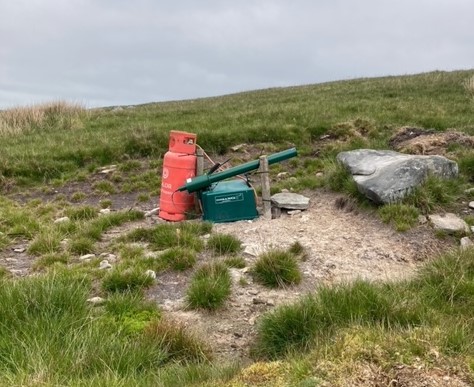
Today, another blog reader has provided information about another eight mannequins (at least), and an active gas gun (a bird-scaring device designed to ‘boom’ intermittently), that have been placed out on another grouse moor in the Yorkshire Dales National Park.
These photographs of one of those prominently-placed mannequins and the gas gun were taken this morning:
The blog reader will be reporting these to Natural England; it’s believed the same estate was reported for using a gas gun last year and was forced to remove it.
The presence of at least eight mannequins (the fieldworker believes there may be more over the hill) will, in my view, obviously deter hen harriers from settling to breed on this grouse moor, although it’d be difficult to prove the landowner/gamekeeper’s intent. There was another case of this happening at a peregrine nest site on a Northumberland grouse moor a few years ago (see here) but the gamekeeper in that case claimed he’d installed scarecrows to try to reduce predation of red grouse chicks by large gulls. His story wasn’t believed but the CPS decided there was insufficient evidence to secure a conviction so the landowner was just issued with a warning by Natural England and the scarecrows were removed.
If the use of these ‘scarecrows’ is as common as it seems, it’s no wonder that so few grouse-shooting estates have so far actively participated in the hen harrier brood meddling trial. Natural England hasn’t yet released the actual number of estates involved, they’ve just provided an overview of the number of brood meddled nests in each year of the trial. However, the most number of nests brood meddled in one year was four (in 2022), so assuming each brood was on a separate estate, that’s a grand total of four estates involved, out of a total of approximately 150 grouse moors in England. After five years, it’s hardly a resounding success, is it?
Data provided by Natural England in March 2023: Hen Harrier brood meddling ‘overview’
Potential criminality aside, the presence of these additional eight mannequins and the gas gun on another grouse moor in the Yorkshire Dales National Park is, in my view, a 16-fingered salute to Natural England’s ludicrous hen harrier brood meddling trial.
With these mannequins, in addition to the 94 hen harriers confirmed illegally killed or ‘missing’ on or close to grouse moors since the trial began, how on earth can Natural England still claim to have ‘insufficient evidence’ to ‘test attitudes’ towards hen harriers amongst members of the grouse shooting industry that aren’t yet participating in the trial (i.e. most of them)?
It’s blatantly obvious to everyone and Natural England just looks more ridiculous by the day.
UPDATE 19th June 2013: Another mannequin (hen harrier scarer), this time on a grouse moor in Peak District National Park (here)
UPDATE 19th June 2013: More gas guns positioned on another grouse moor in Yorkshire Dales National Park (here)
In April this year, a blog reader (who wishes to remain anonymous) was watching a pair of hen harriers showing great interest in a moorland hillside in the Yorkshire Dales National Park. The harriers’ behaviour, as well as the time of year, was indicative that this pair was nest prospecting. Our harrier-watcher also noted that someone else was watching the hillside from inside a white pick-up truck.
The blog reader returned to the moorland a few days ago to check on the status of the harriers and found that ‘somebody’ has installed a mannequin on the same hillside:
It’s not even subtle.
Stand by for claims from the grouse shooting industry that this is a welcoming committee, rather than yet another tactic for deliberately disturbing hen harriers and preventing them from breeding, in a so-called National Park.
Meanwhile, Natural England has extended the insane hen harrier brood meddling trial while it pretends it doesn’t have sufficient evidence to ‘test attitudes’ towards hen harriers amongst members of the grouse shooting industry that aren’t yet participating in the trial (i.e. most of them).
Police Scotland has issued the following press statement:
RAVEN FOUND DEAD IN ABERDEENSHIRE
An investigation is under way after a raven was found dead in an area of the Invercauld Estate in Aberdeenshire.
On Friday, 12 May 2023, game keepers at the Estate contacted police after they found a dead raven next to a number of broken eggs. Officers attended and removed the bird and the egg shells.
The egg shell and matter has been analysed and has tested positive for pesticide. Officers are awaiting toxicology results for the raven.
Constable Hannah Corbett said: “We take wildlife crime extremely seriously and a number of lines of inquiry are being followed up. However, I would like to appeal to the local community for any information they may have about this matter. Did you see anything suspicious, have you overheard anyone talking about this? Any small piece of information could prove significant in investigating the cruel and callous death of the raven. Please do contact us.”
Anyone with information is asked to call Police Scotland via 101, quoting incident number 1307 of 12 May 2023. Alternatively, you can contact Crimestoppers on 0800 555 111 where information can be given anonymously.
ENDS
Many of you will know that one part of Invercauld Estate is currently serving a three-year General Licence restriction, imposed by NatureScot after the discovery of an illegally poisoned golden eagle and illegal poisoned baits on an estate grouse moor in March 2021 (see here).
It’s not yet clear on which area of Invercauld Estate the latest poisoned baits were discovered – it’s a massive grouse-shooting estate that covers a large area of the Cairngorms National Park. It’ll be interesting to find out if these baits were found on the same shooting ‘beat’ as before or on another shooting ‘beat’ managed by a different party on a different part of the estate.
I applaud Police Scotland’s decision to publicise the discovery of the poisoned baits – not least to warn members of the public who might venture into the National Park and on to the estate with children and dogs, putting them at potential risk of great harm.
The early publicity is a welcome change to what had become a standard practice of complete silence from Police Scotland on raptor poisoning crimes (e.g. here, here, here).









 Raptor Persecution UK