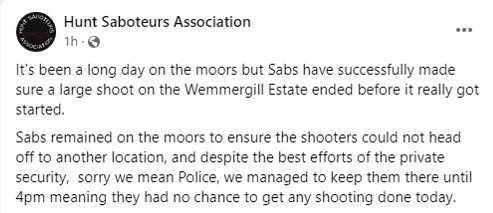
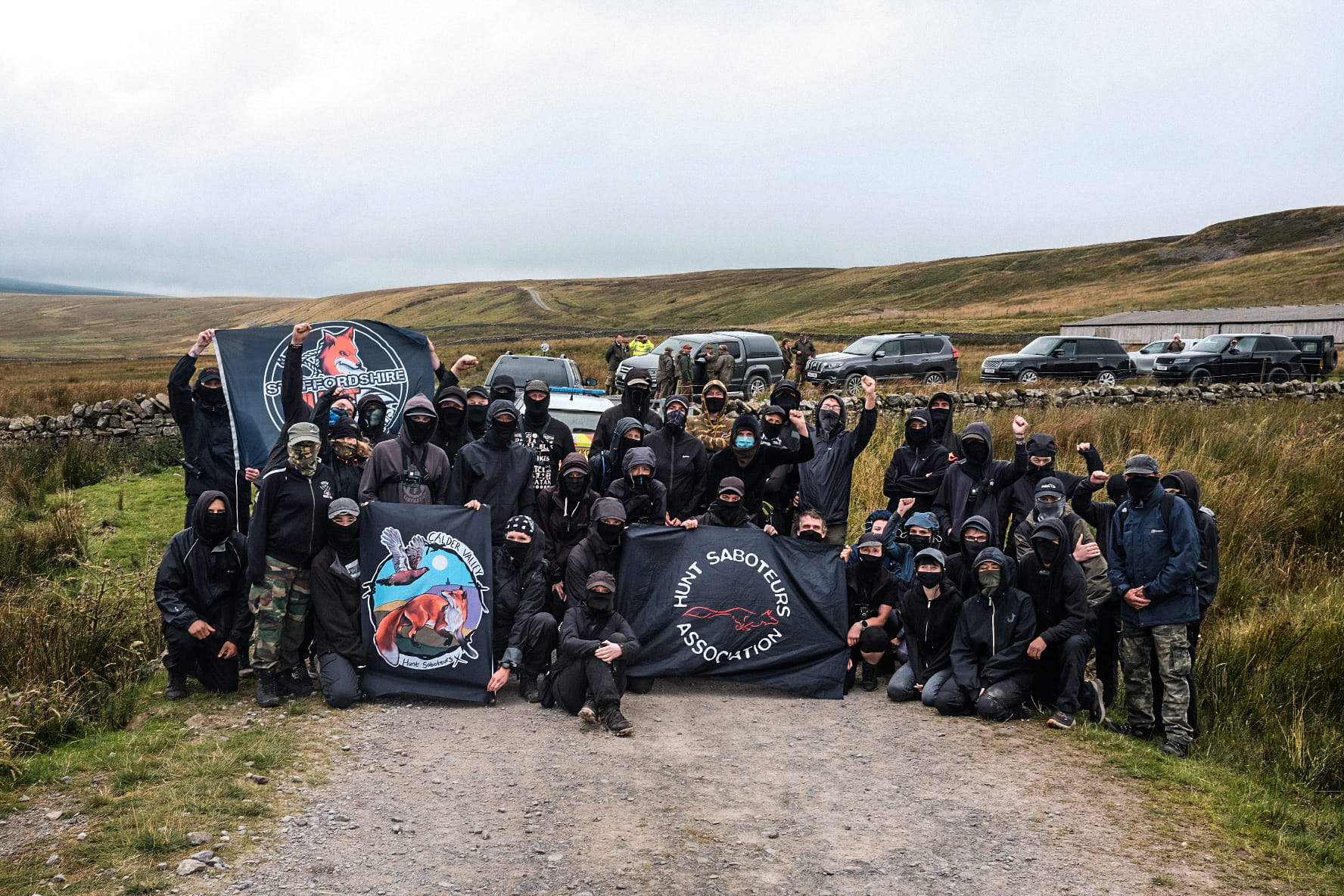
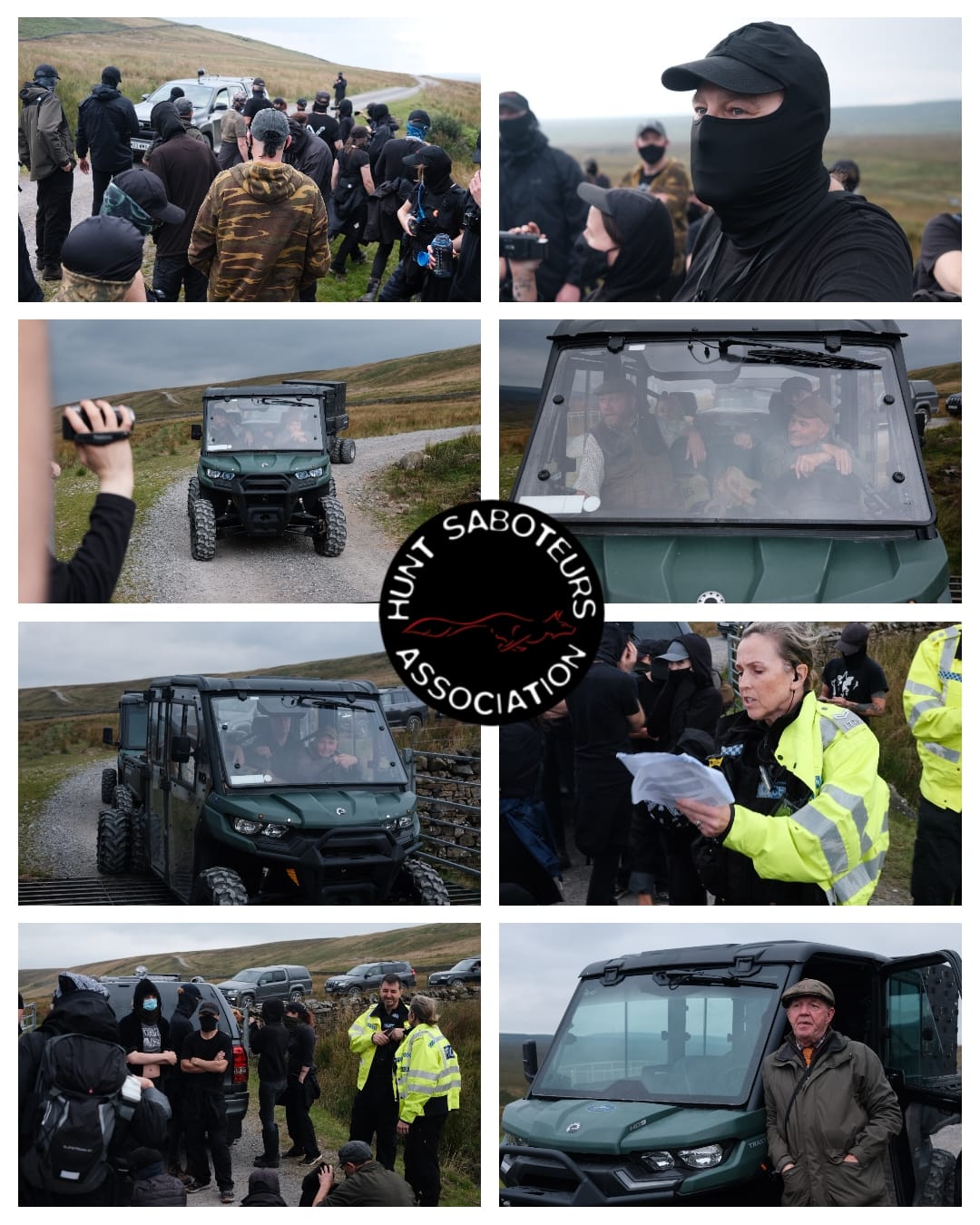
As they’ve done in previous years (e.g. see here), members of the Hunt Saboteurs Association were out in force today in northern England to disrupt grouse shooting on the Inglorious 12th.
Today they were on the Wemmergill Estate in County Durham. If Wemmergill sounds familiar it’s because it’s previously featured on this blog (here, here and here) and on Mark Avery’s blog (here).
POISONED BUZZARD LEADS TO ASHLEY GAME FARM & THE COMPANY’S DIRECTOR PAYING OVER £40,000 IN FINES
The discovery of a poisoned Buzzard next to a poisoned bait led to the search of a gamebird breeding farm in Chulmleigh, Devon conducted by Devon and Cornwall Police in March 2021.
A number of pesticides offences were discovered including the presence of Carbofuran, the same highly toxic chemical found on the poison bait that had killed the Buzzard.
On 18 July 2024 after pleading guilty to multiple pesticide offences Ashley Game Farm Ltd was ordered to pay £40,000 in fines and the company’s Director, Christopher Hodgson, was fined £1,500.
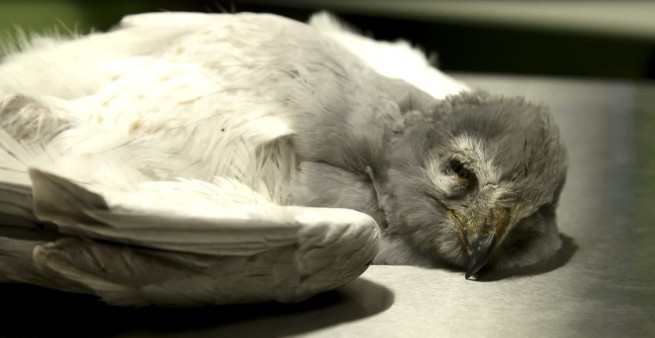
In October 2020, a member of the public discovered a dead Buzzard– a protected species under the Wildlife and Countryside Act 1981 – lying on top of a pheasant carcass by a pheasant release pen, near Hollocombe in Devon, and promptly reported it to Devon and Cornwall Police.
The two birds and a second dead pheasant found nearby were submitted by the police to the Government’s Wildlife Incident Investigation Scheme (WIIS) for examination and toxicology testing. Meat found in the Buzzard’s beak and both pheasant carcasses tested positive for Carbofuran. This evidence confirmed that the Buzzard had died as a result of feeding on the illegally placed poison baits.
In March 2021, following the toxicology results, a search of land, buildings and vehicles led by Devon and Cornwall police, supported by the National Wildlife Crime Unit, Natural England and the RSPB, took place at Ashley Game Farm in Chulmleigh, Devon. During the search significant amounts of prohibited and unauthorised pesticides and veterinary medicines were found stored around the property. A forensic search of two vehicles detected positive traces of the banned pesticide Carbofuran – the same banned pesticide which had been found on the pheasant carcasses and which had caused the Buzzard’s death.
Photo by RSPB Investigations
Ashley Game Farm is a member of the Game Farmers Association and a leading UK supplier of game birds including (Pheasant and Red-legged Partridge) which are sold as young birds to shooting estates across the UK and Europe, where in many cases they are reared and released to be commercially shot.
The insecticide Carbofuran has been banned in the UK since 2001 because of its high toxicity and associated risks. Although the storage and use of any product containing Carbofuran is an offence, it is one of the most commonly abused substances associated with the illegal poisoning of birds of prey, accounting for almost one third of all bird of prey persecution poisoning incidents in England between 2018 and 2022.
The practice of laying poisoned baits to persecute protected birds of prey is often associated with areas managed for gamebird shooting where these birds are perceived by some as a threat to gamebird stocks. Deliberate poisoning has resulted in the death of many species of protected birds of prey over decades. Historic incidents have shown this indiscriminate illegal practice has also resulted in the death of domestic animals and poses significant risks to humans, wildlife and the environment.
On 18 July 2024 at Exeter Magistrates Court, Ashley Game Farm and the Director of the company were charged with the following offences:
Ashley Game Farm:
On or before 26/03/2021 at Ashley Game Farm Limited, namely stored a plant protection product, namely Rivett MAPP 11300, without a valid authorisation or permission granted in accordance with Retained EU Regulation 1107/2009. Contrary to section 24 and 27 of the Plant Protection Products (Sustainable Use) Regulations 2012.
Between 01/10/2020 and 27/03/2021 at Ashley Game Farm Limited, used a plant protection product, namely Carbofuran, in contravention of Article 28 (1) of Retained EU Regs 1107/2009. Contrary to section 24 and 27 of the Plant Protection Products (Sustainable Use) Regulations 2012.
On or before 26/03/2021 at Ashley Game Farm Limited, used a Biocidal product, namely Lodi’s Sapphire Grain otherwise in accordance with the terms and conditions of its authorisation under Article 22 (1) and the labelling and packaging requirements of Article 69. Contrary to section 24 and 27 of the Plant Protection Products (Sustainable Use) Regulations 2012.
On or before 26/03/2021 at Chulmleigh contravened a requirement imposed by a prohibition notice served under section 22 of the Health and Safety at Work etc Act 1974 in that used a Biocidal product, namely Mole Valley Farmers Difenacoum Cut Wheat Rat Bait without authorisation being in force allowing for its use. Contrary to sections 22 and 33(1)(g) of the Health and Safety at Work etc Act 1974.
On or before 26/03/2021 at Chulmleigh in the county of Devon possessed an unauthorised veterinary medicinal product, namely possessed an unauthorised veterinary medical product, namely Dimetridazole (DMZ). Contrary to regulations 26(1), 43(r) and 44(1) of the Veterinary Medicines Regulations 2013.
Christopher Hodgson, Director of Ashley Game Farm:
On or before 26/03/2021 at being a Director of Ashley Game Farm Limited, a body corporate who had committed an offence, stored a plant protection product, namely Rivett MAPP 11300, without a valid authorisation or permission granted in accordance with Retained EU Regulation 1107/2009 and the offence was committed with the consent or connivance, or attributable to the neglect of Christopher Hodgson. Contrary to section 24 and 27 of the Plant Protection Products (Sustainable Use) Regulations 2012.
The company Ashley Game Farm Ltd pleaded guilty to all five charges and was ordered to pay £40,000 in fines and £590 in costs. Christopher Hodgson pleaded guilty to the one offence and was ordered to pay £1,500 in fines and £150 in costs.
Mark Thomas, RSPB Head of Investigations UK: “Yet again the discovery a dead bird of prey and poisoned baits leads to the detection of lethal banned poisons. This is the latest example of highly toxic pesticides being stored and used illegally in connection with the gamebird industry. As past cases have demonstrated these chemicals are extremely hazardous to our wildlife and environment, but also pose a considerable risk to members of the public and domestic animals. In this case, we welcome the significant fines despite not knowing who exactly killed the protected bird of prey.”
Howard Jones, RSPB Senior Investigations Officer: We would like to thank Devon and Cornwall Police, Natural England, NWCU, CPS and Defra. This successful outcome was the result of some incredibly effective partnership working. The fact that Carbofuran is still being found 20 years after it was banned shows the lack of reform, as the law stipulates, being shown by some within the gamebird industry. As this case has shown, individuals and businesses that chose to store and use these types of highly toxic pesticides are taking significant risks and committing serious criminal offences.
Jenny Mashford, Devon and Cornwall Police: “This incident was brought to the police’s attention thanks to a member of the public who identified the poisoned raptor. We carried out a warrant at the defendant’s premises with the assistance of several other agencies including Natural England, the National Wildlife Crime Unit, the RSPB and Defra. It is a very positive outcome in our fight against wildlife crime, of which bird of prey crime is a national wildlife crime priority. We would like to thank all those involved for their hard work and assistance with this case.”
If you notice a dead or injured bird of prey in suspicious circumstances, call the police on 101 and fill in the RSPB’s online reporting form HERE.
If you have information about anyone killing birds of prey which you wish to report anonymously, call the RSPB’s confidential Raptor Crime Hotline on 0300 999 0101.
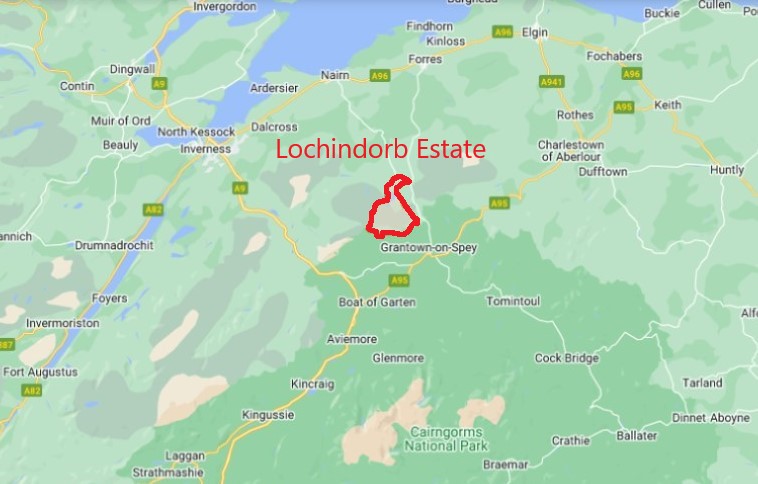
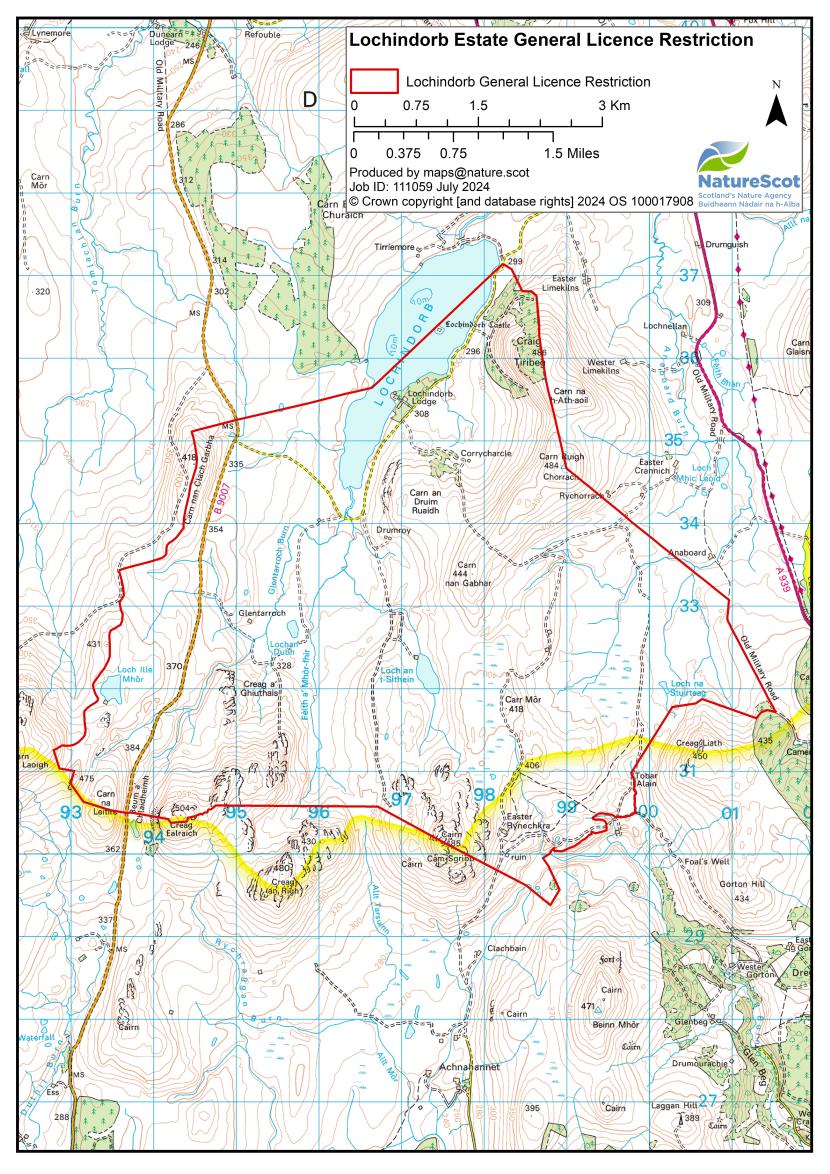
NatureScot has restricted the use of general licences on Lochindorb Estate, near Grantown-on-Spey, for three years.
An RPUK map showing the general boundary of Lochindorb Estate – details provided by Andy Wightman’s Who Owns Scotland website
The decision was made on the basis of evidence provided by Police Scotland of wildlife crime against birds.
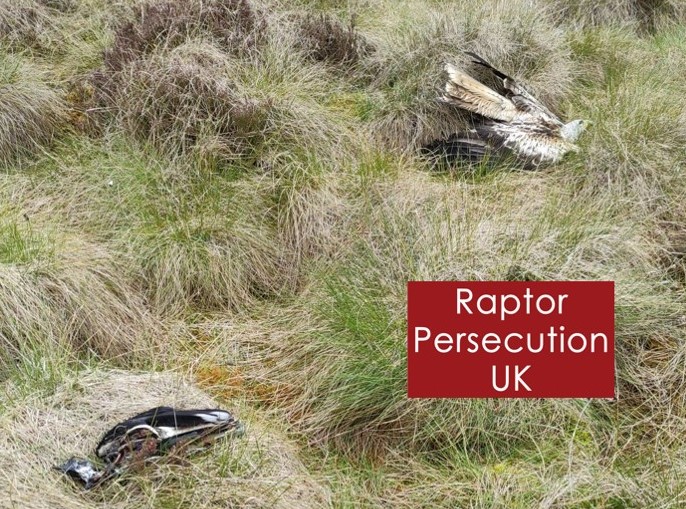
This evidence included a red kite found poisoned with an insecticide in 2021 near to a lapwing bait on land managed at the time by the estate [Ed: here], and a red kite shot on Lochindorb estate in 2023 [Ed: here].
The poisoned red kite and the lapwing used as poisoned bait. Photo by RPUK blog reader
Donald Fraser, NatureScot’s Head of Wildlife Management, said: “We have decided, in discussion with Police Scotland, to suspend the use of general licences on this property for three years until March 2027, given the persecution of red kites which has taken place on Lochindorb Estate and on neighbouring land managed by them at the time of the incident.
“NatureScot is committed to using all the tools we have available to tackle wildlife crime. This measure will help to protect wild birds in the area, while still allowing necessary land management activities to take place.
“We believe this is a proportionate response to protect wild birds in the area and prevent further wildlife crime. We will continue to work closely with Police Scotland and consider information they provide on cases which may warrant restricting general licences.
“The estate may still apply for individual licences; however, these will be subject to enhanced record-keeping and reporting requirements and will be closely monitored to ensure adherence with licence conditions.”
General licences allow landowners or land managers to carry out control of common species of wild birds, such as crows and magpies, to protect crops or livestock, without the need to apply for an individual licence.
In addition to this restriction, there are currently four other restrictions in place in Scotland: on Moy Estate in Highland, Invercauld Estate in the Cairngorms National Park, Lochan Estate in Perthshire and Millden Estate in Angus.
ENDS
Here is a map from NatureScot showing the area of Lochindorb Estate where the General Licence restriction applies. This restriction prohibits the use of General Licences 01, 02 and 03 on that land from 16th July 2024 up to and including 15th July 2027.
I presume then, that the 56 year old gamekeeper arrested last year as part of the investigation into the shooting of the red kite on Lochindorb Estate has not been charged. If he had, this General Licence restriction would have been delayed until court proceedings had finished.
It’ll also be interesting to see whether this General Licence restriction affects Lochindorb Estate’s ability to apply for a section 16AA grouse shooting licence under the new Wildlife Management & Muirburn Act 2024.
For new readers, this Act was introduced as the Scottish Government’s response to the continued widespread illegal killing of birds of prey on grouse moors. It will work on the basis that all red grouse shooting must now be licensed in Scotland under a section 16AA licence and if, on the civil burden of proof (i.e. the balance of probability) sufficient evidence is found that the licence has been breached (including evidence of illegal raptor persecution), the licence can be withdrawn as a sanction, preventing the shooting of red grouse on a particular estate for a given period.
My guess is that Lochindorb will still be able to apply for a section 16AA grouse shooting licence, even though the estate is now under a 3-year General Licence restriction, because these offences were committed before the new legislation was enacted, so it will be deemed ‘unfair’ to apply the legislation retrospectively.
That will also mean that the other four grouse-shooting estates currently serving a general Licence restriction after evidence of raptor persecution was uncovered on their land (Moy Estate in the Monadhliaths, Invercauld Estate in the Cairngorms National Park, Lochan Estate in Strathbraan and Millden Estate in the Angus Glens) will also be able to apply for a section 16AA licence to shoot red grouse this year.
Blog readers may recall a press release in April 2024 from North Yorkshire Police detailing the execution of a search warrant on an unnamed grouse moor in the Yorkshire Dales National Park, in relation to the illegal persecution of hen harriers (see here).
This hen harrier was euthanised after suffering catastrophic injuries in an illegal trap set next to its nest on a grouse moor in Scotland in 2019. Photo by Ruth Tingay
The very first line of that press release said this:
“On Wednesday, (17 April 2024), a National Harrier Task Force operation was held at an undisclosed location in the Yorkshire Dales“.
That was the first time I’d heard of the ‘National Harrier Task Force’ but I’ve since learned much more about it.
I’ll begin this blog with the reproduction of a press article about the new Taskforce that appeared on a relatively obscure website (CandoFM) in May 2024, then I’ll provide some of my own commentary on this new initiative.
Here’s the press article:
Hen Harrier Task Force Launched To Tackle Illegal Persecution
A new task force has been launched to tackle the illegal persecution of hen harriers, one of the rarest bird of prey species in the UK.
The National Wildlife Crime Unit (NWCU) will use innovative technology and strategic partnerships to detect, deter and disrupt offenders.
Given the rarity of hen harriers, significant resource is invested in their conservation. Satellite tags are fitted to the birds to research their ecology, but these tags have also revealed a concerning amount of illegal killing.
Criminals are intent on targeting this vulnerable species and operate with impunity. There have been no successful prosecutions in recent years despite the efforts of the police and partners.
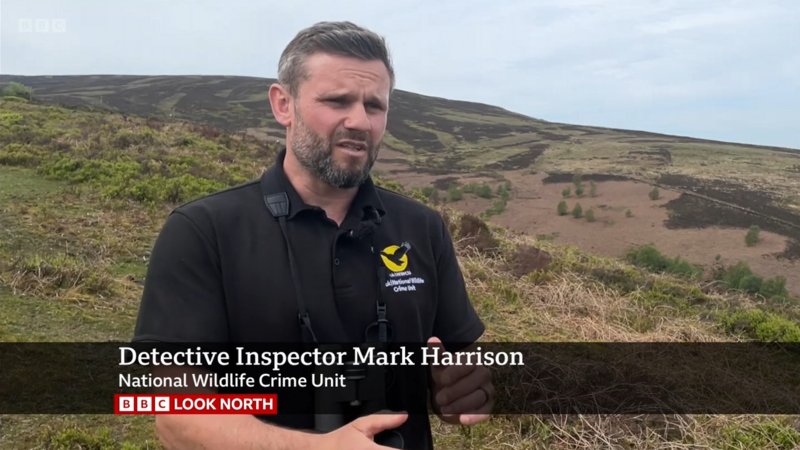
In response, the launch of the Hen Harrier Task Force, led by Detective Inspector Mark Harrison of the NWCU, represents a pivotal shift in combating wildlife crime.
“The persecution of birds of prey is not just a wildlife issue; it’s serious crime blighting our countryside,” said DI Harrison. “With the launch of the Hen Harrier Task Force, we are determined to disrupt illegal activity and protect this vulnerable species.”
Central to the bird of prey task force’s approach is standardising reporting practices and improving the police response to incidents. Police and partners will work together to ensure resources are deployed swiftly and investigative opportunities are maximised. The task force will also bring together partners to engage with local communities and raise the profile of hen harrier persecution in a unified effort against wildlife crime.
“We cannot tackle this problem alone,” emphasised DI Harrison. “Through proactive partnerships and community engagement, we can strengthen our response and hold perpetrators to account.”
The task force will tackle crimes involving satellite tagged birds of prey. It is data-led, relying on analysis of police data and hotspot mapping. The NWCU has identified crime hot spots where they can focus enforcement efforts, as well as other areas of historic vulnerabilities where they will be seeking to revisit and raise their presence with landowners and land users. These meetings are an opportunity to highlight the issues/risks and identify ways to prevent further incidents from occurring.
Rather than purely focusing on the wildlife aspect of the crime, DI Harrison has tasked his team with taking a holistic view of the criminality and considering all types of offences. Criminals will often steal and destroy the satellite tags to conceal their offending. This could constitute criminal damage, theft and fraud. In the last few years alone, £100,000 worth of satellite tags have been lost in circumstances suspected to be criminal. The apparent use of firearms adds a further level of seriousness to these cases.
Recent examples of this include Anu, a hen harrier in South Yorkshire, which had its satellite tag deliberately cut off by someone possibly using scissors or a knife. Asta, a hen harrier in North Yorkshire, is another example. Although the dead bird was not found, its tag was recovered from a dead crow. The NWCU suspect that fitting the tag to a crow was an attempt to make it look like the hen harrier was still alive and hide the fact that it had been illegally killed. Unfortunately, the crow also died from unknown causes.
The task force’s multifaceted approach includes:
Improved incident response: Standardised reporting processes enable rapid response to suspicious incidents, ensuring investigative opportunities are maximised.
Innovative technology: From tracking drones to specialised detection dogs, the task force uses innovative tools to overcome logistical challenges and enhance evidence collection in remote areas.
Strategic partnerships: The taskforce brings together law enforcement, government agencies, non-governmental organisations, landowners and communities to tackle crime in hotspot areas.
Community awareness Initiatives: Building on successful models like Operation Owl, the task force seeks to boost public support and encourage vigilance against wildlife crime.
As the task force gains momentum, the team will be dedicated to protecting the UK’s hen harriers. Through collaboration and innovation, it is set to make a lasting impact in the fight against wildlife crime.
About the Hen Harrier Task Force
The Hen Harrier Task Force is an initiative led by the UK National Wildlife Crime Unit and supported by seven police forces (Cumbria, Derbyshire, Durham, Northumbria, North Yorkshire, South Yorkshire and West Yorkshire), DEFRA, the RSPB, National Gamekeepers’ Organisation, British Association for Shooting and Conservation (BASC), The Wildlife Trusts, GWCT, national parks, Country Land and Business Association (CLA), Natural England and The Moorland Association to combat the persecution of hen harriers in the UK. The taskforce aims to detect, deter, and disrupt offenders involved in wildlife crime by using technology and improving partnership working.
ENDS
My initial reaction to this new Taskforce was one of deep cynicism. Given some of the organisations involved, it just looks like yet another pseudo-‘partnership’ that will achieve nothing other than providing a convenient vehicle for DEFRA and its raptor-killing mates within the grouse shooting industry to be able to pretend that they have a zero tolerance approach to the illegal killing of hen harriers because they are all ‘cooperating’ on this Taskforce.
It’s a ploy that’s been utilised many times before and has simply facilitated the continued illegal killing of hen harriers (and other raptor species) without anyone being held to account. The RPPDG (Raptor Persecution Priority Delivery Group) is a prime example – established thirteen years ago in 2011 and has served no useful purpose in terms of tackling raptor persecution, but has provided numerous Government Ministers with an opportunity to appear to be dealing with it. Utter greenwashing.
Those of you with long memories will remember Operation Artemis, another police-led initiative launched twenty years ago in 2004 designed to work in ‘partnership’ with grouse moor owners to tackle the illegal killing of hen harriers. Here’s some info about it from the RSPB’s 2004 Birdcrime Report:
As described by the RSPB, Op Artemis was not well-received by the shooting industry, even resulting in an article published in The Times where the then Chief Executive of the Countryside Alliance, Simon Hart (who later became Chief Whip for the Conservatives) said the police operation was “part of a wider witch-hunt against gamekeepers“.
Operation Artemis stumbled along until 2007 when it was closed down after achieving nothing at all. Here are two more write-ups about it from the RSPB’s Birdcrime Reports in 2006 and 2007 respectively:
Given the complete failure of Operation Artemis to effectively tackle the illegal killing of hen harriers on driven grouse moors, how will this latest initiative, the National Hen Harrier Taskforce, rolled out some 20 years later, be any different?
Well, there are some positive differences.
This time around, the police have the benefit of access to hen harrier satellite-tracking data (provided by Natural England and the RSPB) which has allowed the National Wildlife Crime Unit (NWCU) to identify clear persecution hotspots, i.e. the estates where a disproportionate number of hen harriers are killed / ‘go missing’ in comparison to the rest of the species’ range.
These wildlife crime hotspots have been known for years but this time the NWCU has done its own analysis on the tag data and, even though it has drawn the same conclusions as the RSPB previously, because the hotspots have been identified by the Police it cuts off any opportunity for estate owners to claim that the data are ‘biased’ or ‘fabricated’ simply because the data belonged to the RSPB. In other words, the estate owners/managers can’t so easily dismiss the data as not being credible.
Another major difference this time around is that the police officer leading the Taskforce, Detective Inspector Mark Harrison, is taking a much more strategic approach. He’s not only looking at the offence of killing a hen harrier – he’s looking at the wider, associated offences such as theft (of very expensive satellite tags) and firearms offences. In combination, these crimes amount to a considerable and serious level of offending and can open the door to the police receiving permission to undertake covert tactics, including surveillance and communications monitoring.
To reach that stage, certain steps have be taken first as part of a longer-term strategy. These include police visits to the known hotspot estates (and I understand that there have now been several of these visits in addition to the one in the Yorkshire Dales National Park that was reported in April). If, after these visits, hen harrier persecution continues to be suspected at those hotspots, the police will then be in a position to demonstrate to senior officers that the ‘nicely nicely’ approach has been tried but hasn’t worked and so permission to begin more covert tactics is more likely to be granted.
Permission should be granted just on the basis of suspected firearms offences taking place. If the estate owners / managers / gamekeepers are denying any knowledge of the offences (which is what they’ve been doing for 30+ years) then the police can legitimately conclude that ‘someone’ [apparently unidentified] is running around an estate committing firearms offences and is clearly a threat to the public. As the fundamental role of the police is a duty to protect the public then I can’t see how permission to deploy more covert tactics can legitimately be withheld under these circumstances.
Of course none of these ideas are anything new – we’ve all been saying for years that if estate owners / managers / gamekeepers claim not to know who’s committing firearms offences on their land then there’s a serious concern that armed individuals are running amok and those estate owners / managers / gamekeepers should be fully supportive of the police doing everything they can to find them, just as any of us would if armed criminals were operating on our property.
However, the difference this time is that here we have a senior police officer, with a background specialism in covert surveillance (and thus a deep understanding of what hoops need to be jumped through to get permission for covert ops), prepared to push the envelope and take a more radical approach and actually implement this strategy instead of just talking about it, and I applaud him for that. Whether he’ll be allowed to stay in post for long enough to carry through with this strategy remains to be seen.
Another new initiative with this Hen Harrier Taskforce is a ‘mutual aid agreement’ between a number of police forces. One of the big issues in tackling wildlife crime, and particularly raptor persecution, has always been the availability of a wildlife crime officer to attend the scene promptly to secure evidence. We all know that the police are stretched, budgets are stretched, and it’s not always possible to get an officer on scene quickly – sometimes delays run into days and weeks, which is ridiculous. The mutual aid agreement means that a number of regional police forces have committed to making officers available at short notice for cross-border searches if the local officers can’t attend in time. If that works in practice, it should be good.
Once on scene, the Taskforce is also utilising a wide array of new techniques and equipment to aid any searches. These include the use of drones working within the range of satellite tag signals and the use of specialised detection dogs trained to search for bird corpses, amongst other things.
This all sounds very promising, on paper. Although to be fair, the Taskforce has already started the strategic plan by paying visits to those known persecution hotspots and has given fair warning to the estates about what they can expect if the persecution continues.
The only issue I have with that approach at the moment is that those crime hotspot estates have not been publicly named. The police say this is because they’re trying to build relationships of trust. I say they’re shielding the criminals. I have been told that the decision not to name hotspot estates is ‘not set in stone’ and may be revisited.
Let’s see.
I wish the Taskforce well and, given the current rate of ongoing hen harrier persecution on grouse moors, I’ll expect to see results in the not-too distant future.
UPDATE 17 July 2024: Is the Moorland Association already trying to sabotage the police’s new National Hen Harrier Taskforce? (here)
Two mainstream BBC TV programmes, Landward and Countryfile, last week included features on raptor conservation projects in south Scotland – both worth watching on BBC iPlayer if you missed them.
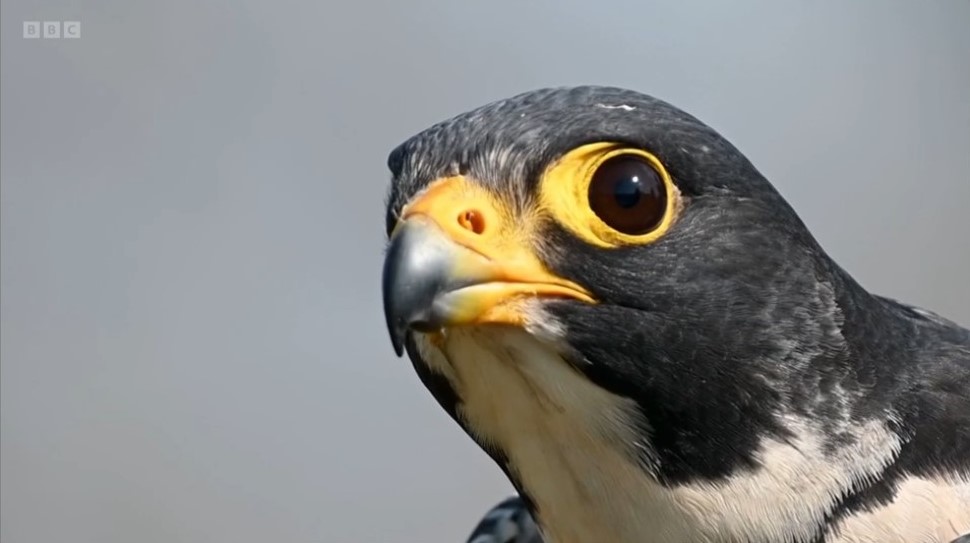
Landward featured the brilliant George Smith, a volunteer from the Scottish Raptor Study Group, who has been monitoring peregrines across south Scotland for almost 40 years. He’s filmed visiting peregrine nest sites to ring chicks (under licence) and to collect DNA samples (also under licence).
It was a direct result of George’s dedicated and meticulous research that led to the recent conviction of part-time gamekeeper Timothy Hall and his son, Lewis Hall, for the illegal laundering of wild peregrines that were stolen from nests in south Scotland and then sold on to falconers in the Middle East, allegedly for enormous profit according to the Crown.
Worryingly, some more peregrine nests that George is monitoring this year have failed in suspicious circumstances and Police Scotland are currently investigating.
This episode of Landward is available on BBC iPlayer here (peregrine segment starts at 7 min 48 sec) and is available for the next 11 months.
Countryfile had two features of interest to readers of this blog. First was an overview of the conservation restoration work going on at the Tarras Valley Nature Reserve, the former Langholm grouse moor that was bought out from Buccleuch Estates by the Langholm community in 2022. Tarras Valley NR Estate Manager Jenny Barlow provides a commentary on the significance of the reserve and describes some of the projects underway.
Then Dr Cat Barlow from the South Scotland Golden Eagle Project took a presenter out into the hills in search of one of the satellite-tagged golden eagles that had previously been translocated to south Scotland to boost the formerly tiny remnant population. Cat discusses the project’s successes as well as the ongoing threat of illegal persecution, highlighted by what Police believe was the illegal shooting and killing of golden eagle ‘Merrick‘ last October, very close to the boundary of the Raeshaw Estate in south Scotland. Unfortunately Cat didn’t discuss the suspicious disappearances of a number of the translocated sub-adult eagles from the Western Isles that are rumoured to have ‘vanished’ when they dispersed north from southern Scotland. The piece also includes some of the important educational work the project is undertaking with local school children in south Scotland in an attempt to improve the future protection of eagles in this region.
This episode of Countryfile is available on BBC iPlayer here (Tarras Valley segment starts at 39 min 10 sec and South Scotland Golden Eagle Project segment starts at 46 min 30 sec). This episode is only available for another 26 days.
In February this year, part-time gamekeeper Timothy Hall, 48, and his son Lewis Hall, 23, were sentenced after they’d pleaded guilty to the illegal laundering of wild peregrines that had been stolen from sites across southern Scotland and were sold on to falconers in the Middle East (see here).
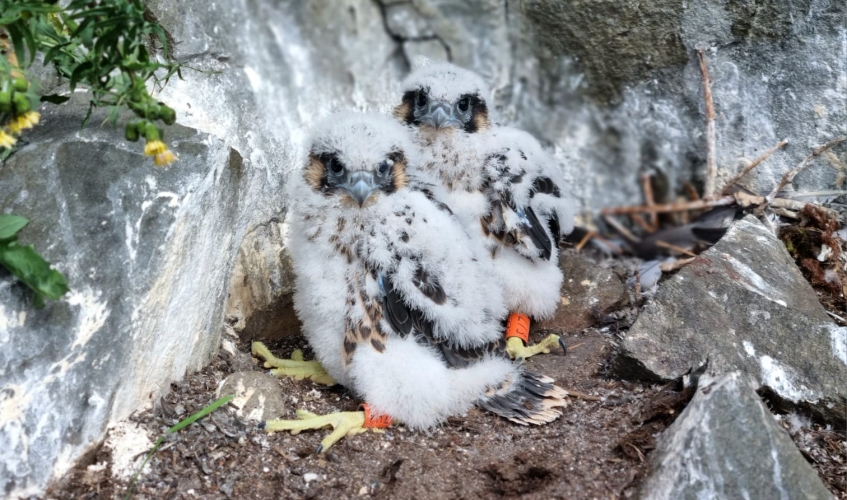
Young peregrines at a nest site in Scotland. Photo (taken under licence) by Ruth Tingay
Not guilty pleas were accepted by the court in December 2023 from wife and mother Suzanne Hall, a serving officer with Police Scotland, but she had a reserved fraud charge against her and was at the time reportedly suspended from Police Scotland on full pay (see here). I don’t know whether that situation has changed.
Despite their offences passing the threshold for a custodial sentence, Timothy Hall was ordered to complete 220 hours of unpaid work and Lewis Hall was ordered to complete 150 hours. These sentences were considered to be staggeringly inadequate given the extent of the Halls’ offending (see here).
However, the Crown Office reported that Lewis Hall would also be subject to action under the Proceeds of Crime Act, where profits from criminal activity can be confiscated.
Last week a hearing took place at Jedburgh Sheriff Court where it was revealed the Crown is seeking to recover £164,028.80 from Lewis Hall.
Hall’s defence lawyer, Liam Alexander, requested a further hearing to allow his client to pass on documentation to a forensic accountant to support Hall’s defence.
Sheriff Peter Anderson allowed the continuation but said as there had already been several of these, he set a proof hearing date of 4th September 2024, where all the available evidence will be heard and the sheriff will decide the outcome.
UPDATE 10 October 2024: Scottish court orders convicted peregrine launderer Lewis Hall to pay back thousands under Proceeds of Crime Act (here)
Prominent gamebird breeder Christopher Hodgson, Director of Ashley Game Farm Ltd in Wembworthy, Chulmleigh, Devon appears to have pleaded guilty to multiple offences including the use of the banned pesticide Carbofuran.
Ashley Game Farm Ltd is an exceptionally large breeding facility that, according to its website, ‘specialises in supplying pheasants and partridges to shoots in the west country and all areas of the UK and Europe‘. It claims to have ‘a hatching capacityfor 410,000 eggs per week along with further investment in a second location atTarrington, Hereford‘ and ‘retains around 80,000 chicks at Ashley Game Farm every week‘.
A multi-agency raid was carried out at Ashley Game Farm in March 2021 (here) following the discovery of a poisoned buzzard and poisoned baits in 2020.
Officers from Devon & Cornwall Police, Natural England, National Wildlife Crime Unit and the RSPB recovered a number of substances during the raid that were then sent for expert analysis.
Multi-agency raid in 2021. Photo by RSPB Investigations
This led to charges being laid against Christopher Hodgson as well as Ashley Game Farm Ltd in relation to the alleged use of Carbofuran and the alleged possession, storage and use of various plant protection, veterinary medicine and rodenticide products without authorisation at the game farm (see here).
Despite being banned for use in the EU for over 20 years, Carbofuran remained the ‘gamekeepers poison of choice’ for the illegal killing of raptors in the UK for many years, although in the last few years it has been overtaken by Bendiocarb.
Hodgson was due to appear in court today but information provided by the North and East Devon Magistrates Court indicates he and Ashley Game Farm Ltd have already pleaded guilty and will be sentenced in July.
Here are the details of the offences provided by the court:
Ashely Game Farm:
On or before 26/03/2021 at Ashley Game Farm Limited, namely stored a plant protection product, namely Rivett MAPP 11300, without a valid authorisation or permission granted in accordance with Retained EU Regulation 1107/2009. Contrary to section 24 and 27 of the Plant Protection Products (Sustainable Use) Regulations 2012.
Between 01/10/2020 and 27/03/2021 at Ashley Game Farm Limited, used a plant protection product, namely Carbofuran, in contravention of Article 28 (1) of Retained EU Regs 1107/2009. Contrary to section 24 and 27 of the Plant Protection Products (Sustainable Use) Regulations 2012.
On or before 26/03/2021 at Ashley Game Farm Limited, used a Biocidal product, namely Lodi’s Sapphire Grain otherwise in accordance with the terms and conditions of its authorisation under Article 22 (1) and the labelling and packaging requirements of Article 69. Contrary to section 24 and 27 of the Plant Protection Products (Sustainable Use) Regulations 2012.
On or before 26/03/2021 at Chulmleigh contravened a requirement imposed by a prohibition notice served under section 22 of the Health and Safety at Work etc Act 1974 in that used a Biocidal product, namely Mole Valley Farmers Difenacoum Cut Wheat Rat Bait without authorisation being in force allowing for its use. Contrary to sections 22 and 33(1)(g) of the Health and Safety at Work etc Act 1974.
On or before 26/03/2021 at Chulmleigh in the county of Devon possessed an unauthorised veterinary medicinal product, namely possessed an unauthorised veterinary medical product, namely Dimetridazole (DMZ). Contrary to regulations 26(1), 43(r) and 44(1) of the Veterinary Medicines Regulations 2013.
Christopher Hodgson:
On or before 26/03/2021 being a Director of Ashley Game Farm Limited, a body corporate who had committed an offence, stored a plant protection product, namely Rivett MAPP 11300, without a valid authorisation or permission granted in accordance with Retained EU Regulation 1107/2009 and the offence was committed with the consent or connivance, or attributable to the neglect of Christopher Hodgson. Contrary to section 24 and 27 of the Plant Protection Products (Sustainable Use) Regulations 2012.
Between 01/10/2020 and 27/03/2021 being a Director of Ashley Game Farm Limited, a body corporate who had committed an offence, namely used a plant protection product, namely Carbofuran, in contravention of Article 28 (1) of Retained EU Regulation 1107/2009 and the offence was committed with the consent or connivance, or attributable to the neglect of Christopher Hodgson. Contrary to section 24 and 27 of the Plant Protection Products (Sustainable Use) Regulations 2012.
Ashley Game Farm Ltd displays the logo of the Game Farmers’ Association on its website:
The Game Farmers’ Association (strapline: ‘representing the UK’s game farmers & promoting high standards‘) is one of the eight organisations in the shooting industry’s umbrella partnership, ‘Aim to Sustain‘, a lobbying campaign group aimed at promoting ‘sustainable and responsible’ game shooting. Presumably Christopher Hodgson and Ashley Game Farm Ltd will be expelled as a result of this criminal conviction.
Hodgson will appear in court in Exeter on 18 July 2024 for sentencing.
Well done to Devon & Cornwall Police, National Wildlife Crime Unit, Natural England and the RSPB’s Investigations Team for excellent partnership-working.
UPDATE 20 July 2024: Poisoned buzzard leads to discovery of multiple pesticide offences – Ashley Game Farm & Director Christopher Hodgson fined £40,000+ (here)
For anyone who still wants to pretend that the grouse shooting industry isn’t responsible for the systematic extermination of hen harriers on grouse moors across the UK, here’s the latest catalogue of crime that suggests otherwise.
[This male hen harrier died in 2019 after his leg was almost severed in an illegally set trap that had been placed next to his nest on a Scottish grouse moor (see here). Photo by Ruth Tingay]
This is the blog I now publish after every reported killing or suspicious disappearance.
“They disappear in the same way political dissidents in authoritarian dictatorships have disappeared” (Stephen Barlow, 22 January 2021).
Today the list has been updated to include the most recently reported victim, a satellite-tagged hen harrier called ‘Shalimar’ that disappeared in suspicious circumstances on a grouse moor in the Angus Glens on 15 February 2024 (here).
I’ve been compiling this list only since 2018 because that is the year that the grouse shooting industry ‘leaders’ would have us believe that the criminal persecution of hen harriers had stopped and that these birds were being welcomed back on to the UK’s grouse moors (see here).
This assertion was made shortly before the publication of a devastating new scientific paper that demonstrated that 72% of satellite-tagged hen harriers were confirmed or considered likely to have been illegally killed, and this was ten times more likely to occur over areas of land managed for grouse shooting relative to other land uses (see here). Incidentally, a further scientific paper published in 2023 by scientists at the RSPB, utilising even more recent data, echoed these results – see here).
2018 was also the year that Natural England issued a licence to begin a hen harrier brood meddling trial on grouse moors in northern England. For new blog readers, hen harrier brood meddling is a conservation sham sanctioned by DEFRA as part of its ludicrous ‘Hen Harrier Action Plan‘ and carried out by Natural England (NE), in cahoots with the very industry responsible for the species’ catastrophic decline in England. For more background see here and for a critical evaluation of the trial after 5 years see this report by Wild Justice.
Brood meddling has been described as a sort of ‘gentleman’s agreement’ by commentator Stephen Welch:
“I don’t get it, I thought the idea of that scheme was some kind of trade off – a gentleman’s agreement that the birds would be left in peace if they were moved from grouse moors at a certain density. It seems that one party is not keeping their side of the bargain“.
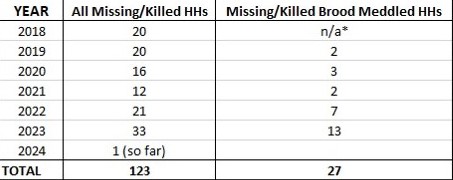
With at least 123 hen harriers gone since 2018, and 27 of those being brood meddled birds, there is no question that the grouse shooting industry is simply taking the piss. Meanwhile, Natural England pretends that ‘partnership working’ is the way to go and DEFRA Ministers remain silent.
*n/a – no hen harriers were brood meddled in 2018
‘Partnership working’ according to Natural England appears to include authorising the removal of hen harrier chicks from a grouse moor already under investigation by the police for suspected raptor persecution (here) and accepting a £75k ‘donation’ from representatives of the grouse shooting industry that prevents Natural England from criticising them or the sham brood meddling trial (see here). This is in addition to a £10k ‘donation’ that Natural England accepted, under the same terms, in 2021 (here).
Thankfully, the Scottish Government has finally decided to act by introducing a grouse moor licensing scheme under the Wildlife Management & Muirburn (Scotland) Bill. This new legislation, due to be voted on by the Scottish Parliament today, will mean that grouse shooting estates will have their licences suspended/revoked if, on the balance of probability, it is shown that any new raptor persecution crimes are linked with grouse moor management on that estate.
So here’s the latest gruesome list. Note that the majority of these birds (but not all) were fitted with satellite tags. How many more [untagged] harriers have been killed?
February 2018: Hen harrier Saorsa ‘disappeared’ in the Angus Glens in Scotland (here). The Scottish Gamekeepers Association later published wholly inaccurate information claiming the bird had been re-sighted. The RSPB dismissed this as “completely false” (here).
5 February 2018: Hen harrier Marc ‘disappeared’ on a grouse moor in Durham (here).
9 February 2018: Hen harrier Aalin ‘disappeared’ on a grouse moor in Wales (here).
March 2018: Hen harrier Blue ‘disappeared’ in the Lake District National Park (here).
March 2018: Hen harrier Finn ‘disappeared’ near Moffat in Scotland (here).
18 April 2018: Hen harrier Lia ‘disappeared’ in Wales and her corpse was retrieved in a field in May 2018. Cause of death was unconfirmed but police treating death as suspicious (here).
8 August 2018: Hen harrier Hilma ‘disappeared’ on a grouse moor in Northumberland (here).
16 August 2018: Hen harrier Athena ‘disappeared’ on a grouse moor in Scotland (here).
26 August 2018: Hen Harrier Octavia ‘disappeared’ on a grouse moor in the Peak District National Park (here).
29 August 2018: Hen harrier Margot ‘disappeared’ on a grouse moor in Scotland (here).
29 August 2018: Hen Harrier Heulwen ‘disappeared’ on a grouse moor in Wales (here).
3 September 2018: Hen harrier Stelmaria ‘disappeared’ on a grouse moor in Scotland (here).
24 September 2018: Hen harrier Heather ‘disappeared’ on a grouse moor in Scotland (here).
2 October 2018: Hen harrier Mabel ‘disappeared’ on a grouse moor on the edge of the Yorkshire Dales National Park (here).
3 October 2018: Hen Harrier Thor ‘disappeared’ next to a grouse moor in Bowland, Lanacashire (here).
23 October 2018: Hen harrier Tom ‘disappeared’ in South Wales (here).
26 October 2018: Hen harrier Arthur ‘disappeared’ on a grouse moor in the North York Moors National Park (here).
1 November 2018: Hen harrier Barney ‘disappeared’ on Bodmin Moor (here).
10 November 2018: Hen harrier Rannoch ‘disappeared’ on a grouse moor in Scotland (here). Her corpse was found nearby in May 2019 – she’d been killed in an illegally-set spring trap (here).
14 November 2018: Hen harrier River ‘disappeared’ on a grouse moor in the Nidderdale AONB (here). Her corpse was found nearby in April 2019 – she’d been illegally shot (here).
16 January 2019: Hen harrier Vulcan ‘disappeared’ in Wiltshire close to Natural England’s proposed reintroduction site (here).
28 January 2019: Hen harrier DeeCee ‘disappeared’ in Glen Esk, a grouse moor area of the Angus Glens (see here).
7 February 2019: Hen harrier Skylar ‘disappeared’ next to a grouse moor in South Lanarkshire (here).
22 April 2019: Hen harrier Marci ‘disappeared’ on a grouse moor in the Cairngorms National Park (here).
26 April 2019: Hen harrier Rain ‘disappeared’ on a grouse moor in Nairnshire (here).
11 May 2019: An untagged male hen harrier was caught in an illegally-set trap next to his nest on a grouse moor in South Lanarkshire. He didn’t survive (here).
7 June 2019: An untagged hen harrier was found dead on a grouse moor in Scotland. A post mortem stated the bird had died as a result of ‘penetrating trauma’ injuries and that this bird had previously been shot (here).
5 September 2019: Wildland Hen Harrier 1 ‘disappeared’ on a grouse moor nr Dalnaspidal on the edge of the Cairngorms National Park (here).
11 September 2019: Hen harrier Romario ‘disappeared’ on a grouse moor in the Cairngorms National Park (here).
14 September 2019: Hen harrier (Brood meddled in 2019, #183704) ‘disappeared’ in the North Pennines (here).
23 September 2019: Hen harrier (Brood meddled in 2019, #55149) ‘disappeared’ in North Pennines (here).
24 September 2019: Wildland Hen Harrier 2 ‘disappeared’ on a grouse moor at Invercauld in the Cairngorms National Park (here).
24 September 2019: Hen harrier Bronwyn ‘disappeared’ near a grouse moor in North Wales (here).
10 October 2019: Hen harrier Ada ‘disappeared’ on a grouse moor in the North Pennines AONB (here).
12 October 2019: Hen harrier Thistle ‘disappeared’ on a grouse moor in Sutherland (here).
18 October 2019: Member of the public reports the witnessed shooting of an untagged male hen harrier on White Syke Hill in North Yorkshire (here).
November 2019: Hen harrier Mary found illegally poisoned on a pheasant shoot in Ireland (here).
November 2019: Hen harrier Artemis ‘disappeared’ near Long Formacus in south Scotland (RSPB pers comm).
14 December 2019: Hen harrier Oscar ‘disappeared’ in Eskdalemuir, south Scotland (here).
December 2019: Hen harrier Ingmar ‘disappeared’ in the Strathbraan grouse moor area of Perthshire (RSPB pers comm).
January 2020: Members of the public report the witnessed shooting of a male hen harrier on Threshfield Moor in the Yorkshire Dales National Park (here).
23 March 2020: Hen harrier Rosie ‘disappeared’ at an undisclosed roost site in Northumberland (here).
1 April 2020: Hen harrier (Brood meddled in 2019, #183703) ‘disappeared’ in unnamed location, tag intermittent (here).
5 April 2020: Hen harrier Hoolie ‘disappeared’ on a grouse moor in the Cairngorms National Park (here)
8 April 2020: Hen harrier Marlin ‘disappeared’ on a grouse moor in the Cairngorms National Park (here).
19 May 2020: Hen harrier Fingal ‘disappeared’ on a grouse moor in the Lowther Hills, Scotland (here).
21 May 2020: Hen harrier (Brood meddled in 2019, #183701) ‘disappeared’ on a grouse moor in Cumbria shortly after returning from wintering in France (here).
27 May 2020: Hen harrier Silver ‘disappeared’ on a grouse moor on Leadhills Estate, Scotland (here).
2020: day/month unknown: Unnamed male hen harrier breeding on RSPB Geltsdale Reserve, Cumbria ‘disappeared’ while away hunting (here).
9 July 2020: Unnamed female hen harrier (#201118) ‘disappeared’ from an undisclosed site in Northumberland (here).
25 July 2020: Hen harrier Harriet ‘disappeared’ on a grouse moor in the Yorkshire Dales National Park (here).
14 August 2020: Hen harrier Solo ‘disappeared’ in confidential nest area in Lancashire (here).
7 September 2020: Hen harrier Dryad ‘disappeared’ on a grouse moor in the Yorkshire Dales National Park (here).
16 September 2020: Hen harrier Fortune ‘disappeared’ from an undisclosed roost site in Northumberland (here).
19 September 2020: Hen harrier Harold ‘disappeared’ on a grouse moor in the Yorkshire Dales National Park (here).
20 September 2020: Hen harrier (Brood meddled in 2020, #55152) ‘disappeared’ next to a grouse moor in North Yorkshire (here).
24 February 2021: Hen harrier Tarras ‘disappeared’ next to a grouse moor in Northumberland (here)
12th April 2021: Hen harrier Yarrow ‘disappeared’ near Stockton, County Durham (here).
18 May 2021: Adult male hen harrier ‘disappeared’ from its breeding attempt on RSPB Geltsdale Reserve, Cumbria whilst away hunting (here).
18 May 2021: Another adult male hen harrier ‘disappeared’ from its breeding attempt on RSPB Geltsdale Reserve, Cumbria whilst away hunting (here).
24 July 2021: Hen harrier Asta ‘disappeared’ at a ‘confidential site’ in the North Pennines (here). We learned 18 months later that her wings had been ripped off so her tag could be fitted to a crow in an attempt to cover up her death (here).
14th August 2021: Hen harrier Josephine ‘disappeared’ at a ‘confidential site’ in Northumberland (here).
17 September 2021: Hen harrier Reiver ‘disappeared’ in a grouse moor dominated region of Northumberland (here)
24 September 2021: Hen harrier (Brood meddled in 2021, R2-F-1-21) ‘disappeared’ in Northumberland (here).
15 November 2021: Hen harrier (brood meddled in 2020, #R2-F1-20) ‘disappeared’ at the edge of a grouse moor on Arkengarthdale Estate in the Yorkshire Dales National Park (here).
19 November 2021: Hen harrier Val ‘disappeared’ in the Lake District National Park in Cumbria (here).
19 November 2021: Hen harrier Percy ‘disappeared’ in Lothian, Scotland (here).
12 December 2021: Hen harrier Jasmine ‘disappeared’ on a grouse moor (High Rigg Moor on the Middlesmoor Estate) in the Nidderdale AONB in North Yorkshire (here).
9 January 2022: Hen harrier Ethel ‘disappeared’ in Northumberland (here).
26 January 2022: Hen harrier Amelia ‘disappeared’ in Bowland (here).
10 February 2022: An unnamed satellite-tagged hen harrier ‘disappeared’ in a grouse moor dominated area of the Peak District National Park (here). One year later it was revealed that the satellite tag/harness of this young male called ‘Anu’ had been deliberately cut off (see here).
12 April 2022: Hen harrier ‘Free’ (Tag ID 201121) ‘disappeared’ at a ‘confidential site’ in Cumbria (here). It later emerged he hadn’t disappeared, but his mutilated corpse was found on moorland in the Yorkshire Dales National Park. A post mortem revealed the cause of death was having his head twisted and pulled off. One leg had also been torn off whilst he was still alive (here).
April 2022: Hen harrier ‘Pegasus’ (tagged by the RSPB) ‘disappeared’ on a grouse moor at Birkdale in the Yorkshire Dales National Park (here).
May 2022: A male breeding hen harrier ‘disappeared’ from a National Trust-owned grouse moor in the Peak District National Park (here).
May 2022: Another breeding male hen harrier ‘disappeared’ from a National Trust-owned grouse moor in the Peak District National Park (here).
14 May 2022: Hen harrier ‘Harvey’ (Tag ID 213844) ‘disappeared’ from a ‘confidential site’ in the North Pennines (here).
20 June 2022: Hen harrier chick #1 stamped to death in nest on a grouse moor in the Yorkshire Dales National Park (here).
20 June 2022: Hen harrier chick #2 stamped to death in nest on a grouse moor in the Yorkshire Dales National Park (here).
20 June 2022: Hen harrier chick #3 stamped to death in nest on a grouse moor in the Yorkshire Dales National Park (here).
20 June 2022: Hen harrier chick #4 stamped to death in nest on a grouse moor in the Yorkshire Dales National Park (here).
17 August 2022: Hen harrier (brood meddled in 2022, #R1-M1-22) ‘disappeared’ on moorland in the Yorkshire Dales National Park (here).
September 2022: Hen harrier ‘Sullis’ (tagged by the RSPB) ‘disappeared’ on a grouse moor in Cumbria (here).
5 October 2022: Hen harrier (brood meddled in 2022, #R3-M2-22) ‘disappeared’ on moorland in the Yorkshire Dales National Park (here).
10 October 2022: Hen harrier ‘Sia’ ‘disappeared’ near Hamsterley Forest in the North Pennines (here).
October 2022: Hen harrier (brood meddled in 2021, #R1-F1-21) ‘disappeared’ in the North Sea off the North York Moors National Park (here).
December 2022: Hen harrier female (brood meddled in 2020, #R2-F2-20) ‘disappeared’ on moorland in Cumbria (here).
1 December 2022: Hen harrier male (brood meddled in 2021, #R1-M1-21) ‘disappeared’ on moorland in the Yorkshire Dales National Park (here).
14 December 2022: Hen harrier female (brood meddled in 2022, #R3-F1-22) ‘disappeared’ on moorland in the North Pennines AONB (here).
15 December 2022: Hen harrier female (brood meddled in 2022, #R2-F1-22) ‘disappeared’ on moorland in the Yorkshire Dales National Park (here).
30 March 2023: Hen harrier female (brood meddled in 2022, #R1-F3-22) ‘disappeared’ in Yorkshire (here). Notes from NE Sept 2023 spreadsheet update: “Final transmission location temporarily withheld at police request“.
1 April 2023: Hen harrier male (brood meddled in 2022, #R2-M1-22) ‘disappeared’ in Yorkshire (here). Notes from NE Sept 2023 spreadsheet update: “Final transmission location temporarily withheld at police request“.
April 2023: Hen harrier ‘Lagertha’ (tagged by RSPB) ‘disappeared’ in North Yorkshire (here).
April 2023: Hen harrier ‘Nicola’ (Tag ID 234078) ”disappeared’ in North Yorkshire (here).
April 2023: Untagged male hen harrier ‘disappeared’ from an active nest on RSPB Geltsdale Reserve in Cumbria (here).
April 2023: Another untagged male hen harrier ‘disappeared’ from an active nest on RSPB Geltsdale Reserve in Cumbria (here).
April 2023: Untagged male hen harrier ‘disappeared’ from an active nest in Durham (here).
4/5 May 2023: Satellite-tagged male hen harrier called ‘Rush’ ‘disappeared’ from a grouse moor in Bowland AONB in Lancashire (here).
9/10 May 2023: Hen harrier male called ‘Dagda’, tagged by the RSPB in Lancashire in June 2022 and who was breeding on the RSPB’s Geltsdale Reserve in 2023 until he ‘vanished’, only to be found dead on the neighbouring Knarsdale grouse moor in May 2023 – a post mortem revealed he had been shot (here).
17 May 2023: Satellite-tagged hen harrier called ‘Wayland’ ‘disappeared’ in the Clapham area of North Yorkshire, just north of the Bowland AONB (here).
31 May 2023: Hen harrier male (brood meddled in 2022, tag #213932, name: R2-M3-22) ‘disappeared’ in Northumberland (grid ref: NY765687) (here).
11 June 2023: Hen harrier male (brood meddled in 2021, tag #213922, name: R2-M1-21) ‘disappeared’ at a confidential site in the Yorkshire Dales National Park. Notes from the NE spreadsheet: “Final transmission location temporarily withheld at police request“ (here).
12 June 2023: Hen harrier male (brood meddled in 2020, tag #203004, name: R1-M2-20) ‘disappeared’ on a grouse moor in Co. Durham (grid ref: NY976322) (here).
6 July 2023: Satellite-tagged female hen harrier named ‘Rubi’ (tag #201124a) ‘disappeared’ on a grouse moor in Co. Durham (grid ref: NY911151) (here).
23 July 2023: Hen harrier female (brood meddled in 2023, tag #55154a, name: R1-F1-23) ‘disappeared’ on a grouse moor in Co. Durham (close to where ‘Rubi’ vanished), grid ref: NY910126 (here).
29 July 2023: Hen harrier female (brood meddled in 2020, tag #55144, name: R2-F2-20) ‘disappeared’ at a confidential site in the North Pennines. Notes from the NE spreadsheet: “Dead. Recovered – awaiting PM results. Final transmission location temporarily withheld at police request“ (here).
9 August 2023: Satellite-tagged hen harrier called ‘Martha’ ‘disappeared’ on a grouse moor (Westburnhope Moor) near Hexham in the North Pennines (here).
11 August 2023: Satellite-tagged hen harrier called ‘Selena’ ‘disappeared’ on a grouse moor (Mossdale Moor) in the Yorkshire Dales National Park (here).
11 August 2023: Hen harrier female (brood meddled in 2023, tag #201118a, name: R3-F1-23) ‘disappeared’ in Co. Durham (grid ref: NZ072136) (here).
15 August 2023: Satellite-tagged hen harrier called ‘Hepit’ ‘disappeared’ on a grouse moor (Birkdale Common) near Kirkby Stephen in the Yorkshire Dales National Park (here).
24 August 2023: Hen harrier female (brood meddled in 2023, tag #55155a, name: R1-F2-23) ‘disappeared’ at a confidential site in Northumberland. Notes from the NE spreadsheet: “Final transmission location temporarily withheld at police request“ (here).
August-Sept 2023: Satellite-tagged hen harrier called ‘Harmonia’ ‘disappeared’ in the Yorkshire Dales National Park (here).
September 2023: Hen harrier female ‘Saranyu’, tagged by the RSPB in Cumbria in June 2023, ‘disappeared’ in Durham in September 2023 (no further details available yet – just outline info provided in 2022 Birdcrime report) (here).
September 2023: Hen harrier female ‘Inger’, a female tagged by the RSPB in Perthshire in July 2022, ‘disappeared’ on a grouse moor in the Angus Glens in September 2023 (here).
15 September 2023: Hen harrier male called ‘Rhys’, tagged in Cumbria on 1st August 2023, ‘disappeared’ on a grouse moor in the Yorkshire Dales National Park. Grid ref: SD798896 (here).
24 September 2023: Hen harrier female (brood meddled in 2023, name: ‘R2-F2-23’) ‘disappeared’ in the North Pennines, grid ref: NY888062 (here).
25 September 2023: Hen harrier female (brood meddled in 2022, name: ‘R1-F4-22’) ‘disappeared’ on a grouse moor in the Yorkshire Dales National Park, grid ref: SE077699 (here).
26 September 2023: Hen harrier female called ‘Hope’, tagged in Cumbria on 21 July 2023, ‘disappeared’ next to a grouse moor in the Yorkshire Dales National Park, grid ref: SD801926 (here).
4 October 2023: Hen harrier male (brood meddled in 2020, name: ‘R1-M3-20’) ‘disappeared’ in Co Durham, grid ref: NY935192 (here).
4 October 2023: Hen harrier female (brood meddled in 2023, name: ‘R4-F1-23’) ‘disappeared’ on a grouse moor in the Yorkshire Dales National Park, grid ref: SE003981 (here).
14 October 2023: Hen harrier male called ‘Cillian’, tagged in Cumbria on 1 August 2023, ‘disappeared’ in south west Scotland, grid ref: NY051946 (here).
15 November 2023: Hen harrier female called ‘Hazel’, tagged in Cumbria on 21 July 2023, ‘disappeared’ on the Isle of Man, grid ref: SC251803 (here).
27 November 2023: Hen harrier female called ‘Gill’, tagged in Northumberland on 10 July 2023, ‘disappeared’ at a confidential location in Teeside (here).
15 February 2024: Hen harrier female called ‘Shalimar’, tagged on the National Trust for Scotland’s Mar Lodge estate in 2023, ‘disappeared’ in suspicious circumstances on a grouse moor in the notorious Angus Glens (here).
To be continued…….
Not one of these 123 incidents has resulted in an arrest, let alone a prosecution. I had thought that when we reached 30 dead/missing hen harriers then the authorities might pretend to be interested and at least say a few words about this national scandal. We’ve now reached ONE HUNDRED AND TWENTY THREE hen harriers, and still Govt ministers remain silent. They appear not to give a monkey’s. And yes, there are other things going on in the world, as always. That is not reason enough to ignore this blatant, brazen and systematic destruction of a supposedly protected species, being undertaken to satisfy the greed and bloodlust of a minority of society.
And let’s not forget the response from the Moorland Association Chair (and owner of Swinton Estate) Mark Cunliffe-Lister, who told BBC Radio 4 in August 2023 that, “Clearly any illegal [hen harrier] persecution is not happening” (here).
Nor should we forget the response from the Game and Wildlife Conservation Trust’s (GWCT) Director of Policy Dr Alistair Leake who wrote a letter to the Guardian newspaper in November 2023 stating that the hen harrier brood management [meddling] scheme “is surely a shining example of human / wildlife conflict resolution that would be the envy of other countries trying to find similar solutions“ (I kid you not – here).
33 hen harriers are known to have gone ‘missing’/been deliberately killed in 2023, making it the worst year for hen harrier persecution since brood meddling began in 2018.
The SSPCA has issued the following press release in response to the recent conviction and sentencing of part-time gamekeeper Timothy Hall and his son, Lewis Hall, for the illegal laundering of Scottish peregrines which they were selling for high prices to buyers in the Middle East.
This press release contains details about the poor conditions provided by Timothy Hall for the raptors found at his address, and the subsequent return to the wild of the stolen peregrine chicks.
Young peregrines returned to the wild. Photo via SSPCA
Berwick men receive ban for illegally selling peregrine falcons
Timothy Hall previously pled guilty to the charges and was sentenced to a five-year ban from possessing or breeding birds of prey and 220 hours of community service at Jedburgh Sheriff Court today.
His son Lewis Hall was sentenced to 150 hours community service.
48-year-old Timothy Hall of Lamberton, Berwick Upon Tweed pled guilty in December to being responsible for nine birds of prey of various breeds. Failing to ensure a suitable environment, allowing a build-up of faeces and urates, and not providing an appropriate supply of water for bathing or drinking and did thereby expose the birds to disease or injury.
Lewis Hall, 23, of Fordyce Cottage, Duns, pled guilty to acquiring for commercial purposes, keeping for sale, and selling wild peregrine falcon chicks between 2020 and 2021.
Scottish SPCA specialist investigator, Mark Rafferty, said, “These birds are a protected species and it is illegal to disturb their nests or illegally breed them.
“During April 2021, information came to light that several Peregrine Falcon nesting sites around the Scottish Borders and East Lothian had seen thefts of eggs and chicks over a prolonged period of time.
“We carried out a raid, alongside the Police National Wildlife Crime Unit (WECU), where we found a number of peregrine falcon chicks and a number of adult birds at Hall’s address in Berwick.
“The entire housing/aviary situation was completely unsuitable in terms of size and design for the species being held in each unit. The lack of clean water, and failure to remove the excessive accumulation of faecal and animal tissue waste posed unacceptable health risks to the birds housed within.
“None of the birds were presented with an environment where breeding was likely either naturally or artificial insemination.
“Our team were able to take the peregrine falcon chicks to surrogate nests and monitor them from a distance. Once they had developed fully they were able to return to the wild safely.
“We are extremely disappointed at the sentencing result today. This was a specialised case which has taken years to appear in court. Our team, along with the Police Wildlife Crime Unit and David Anderson, Raptor ecologist from the Scottish Raptor Study Group , worked hard to provide sufficient evidence and DNA testing to get a better result.”
“If anyone is concerned about an animal, they can contact our confidential animal helpline on 03000 999 999.”
There’s been a good deal of media interest and coverage about the recent prosecution, conviction and sentencing of part-time gamekeeper Timothy Hall and his son, Lewis Hall, for their role in the illegal laundering of wild Scottish peregrines which they sold for high prices to buyers in the Middle East (see here and here).
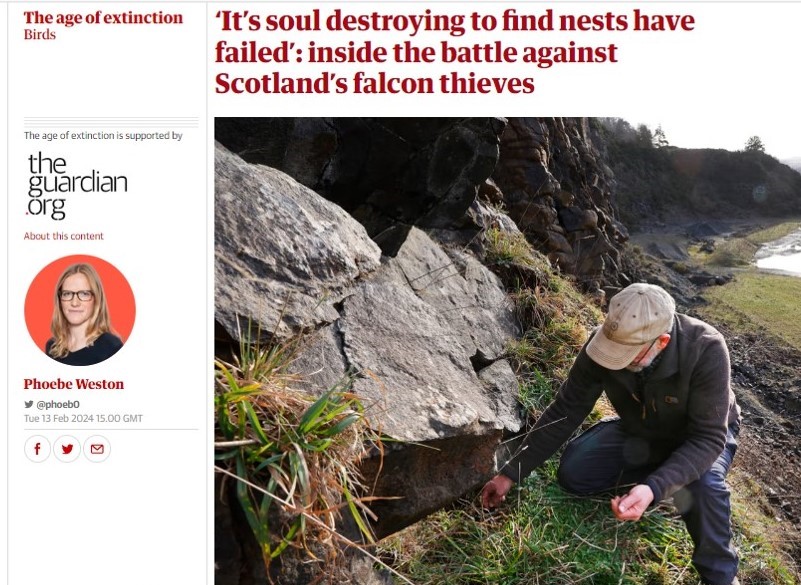
Most media outlets have simply summarised the press releases about Operation Tantallon issued by Police Scotland and the Crown Office, but the Guardian newspaper has published from a different angle, focusing on the work of Scottish Raptor Study Group (SRSG) member George Smith, whose 40 years of dedicated and detailed monitoring of peregrines in south Scotland helped bring the successful prosecution against Timothy and Lewis Hall.
Written by journalist Phoebe Weston, who is developing a reputation for in-depth coverage of raptor persecution crimes – e.g. her earlier three-part podcast on the illegal persecution of hen harriers on grouse moors (‘Killing the Skydancer‘) was excellent, her latest piece on the Hall peregrine case is well worth a read – see here.
It’s good to see George’s significant, long-term fieldwork receiving national attention – like so many other SRSG members, George undertakes this skilled (and licenced) work on an entirely voluntary basis but his hard-won data provide the Scottish Government and its agencies with vital detail about the distribution and abundance of raptors (in George’s case, peregrines) and help to inform long-term conservation policies.
I’m particularly pleased to see George’s work highlighted because he is one of a number of SRSG members who are repeatedly targeted online by a malicious group of individuals, some of them prominent members of the Scottish Gamekeepers Association, who deliberately and falsely accuse George and his colleagues of unlawful and negligent practices, all in a desperate bid to discredit the good name of the SRSG.
They base these vicious (and libellous) accusations on what they claim to be their concern for the raptor species being monitored/tagged.
I haven’t seen any of them comment on the successful prosecution of part-time gamekeeper Timothy Hall and his son, Lewis Hall, for their crimes against the same peregrines that George has dedicated 40 years of his life to protect.







 Raptor Persecution UK