OneKind launches new petition: End the killing of wildlife on grouse moors & elsewhere in Scotland

A new petition has been lodged at the Scottish Parliament calling for ‘an end to the killing of wildlife on grouse moors and elsewhere in Scotland’.

Petition # PE01762 is the work of animal welfare charity OneKind and runs from now until 13 November 2019. Petitions to the Scottish Parliament are different to those lodged at Westminster because (a) there is no requirement to reach a signature threshold (e.g. 10,000 or 100,000) before the Petitions Committee will consider the petition, and (b) anybody anywhere in the world can sign this petition.

Here is some background information from OneKind on why they’re calling for the Scottish Parliament to conduct a full review of the animal welfare impacts of the use of traps and snares on grouse moors and elsewhere in Scotland:

The focus of the review called for in this petition should be:

• The ethics and sustainability of the routine and repeated killing of the same species in the same location;
• The case for banning snares, Larsen traps and certain other types of live traps outright, on animal welfare grounds;
• The animal welfare issues surrounding lethal traps such as spring traps, both approved and non-approved categories;
• Mechanisms to ensure proper scrutiny of all practices undertaken by hunters, shooters and trappers and only to permit the use of traps under exceptional circumstances; and
• Whether activities closely associated with causing unnecessary suffering by means of trapping and snaring, such as driven grouse shooting, should be banned.

OneKind has created this public petition to the Scottish Parliament following the publication on 13 August 2019 of a photograph of a golden eagle – Scotland’s national bird – flying near Crathie in the Cairngorms National Park, with its leg apparently caught in a spring trap.  At the time of writing the fate of the eagle is unknown, but it is thought likely to have suffered considerably and probably to have died.

OneKind is a member of the Revive coalition, along with Common Weal, Friends of the Earth Scotland, the League Against Cruel Sports Scotland and Raptor Persecution UK.  Revive campaigns for significant reform of Scotland’s grouse moors and is working to propose an alternative vision for the estimated 12 – 18% of Scotland’s land currently used for grouse shooting. Such reform will not be achieved overnight and in view of the widespread public outrage provoked by this incident the petitioners see it as urgent to institute a Scottish Parliament review of wildlife persecution with the aim of eradicating inhumane practices associated with driven grouse shooting as soon as possible.

The petitioners are aware that the Grouse Moor Management Group (the Werritty Review), is likely to report shortly.  The terms of reference for the Werritty review group are to: “look at the environmental impact of grouse moor management practices such as muirburn, the use of medicated grit and mountain hare culls and advise on the option of licensing grouse shooting businesses.”  These do not allow for full consideration of the severe animal welfare consequences of continued trapping and snaring practices on grouse moors.

The Crathie incident has caused a public outcry and a petition by Wild Justice to the UK Parliament calling for an outright ban on driven grouse shooting attracted tens of thousands of signatures within a few days of its launch.  OneKind supports that petition, as driven grouse shooting is intimately connected both with so many wildlife offences across the UK, as well as the legal infliction of suffering on animals, including by trapping and snaring.

Given that animal welfare and wildlife protection are devolved issues, the scale of wildlife killing in Scotland and the suffering caused, we believe that action is urgently required in the Scottish Parliament.

ENDS

PLEASE SIGN THIS PETITION HERE

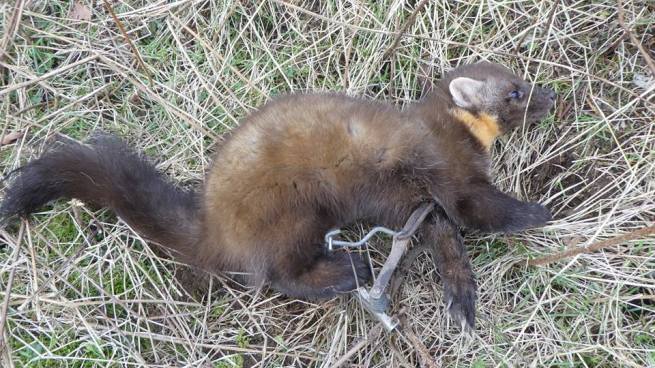
This pine marten (a so-called protected species) was caught in a spring trap on a Highland shooting estate in 2017. It didn’t survive these injuries.
Brood meddled hen harrier chick vanished from grouse moor on Bowes Estate, County Durham

Durham Constabulary has issued a press statement about one of the two brood meddled hen harrier chicks that vanished off the face of the earth in September, which the Moorland Association was so keen to play down.

From it we learn that this young male hen harrier ‘disappeared’ on 9th September 2019 (what’s that, just over a month from being released from captivity?) and its last satellite tag signal came from a grouse moor on the Bowes Estate in County Durham.

[Bowes Moor, photo from Natural England]

It’s good that the police have managed to put together a press release about this missing hen harrier but the content is quite extraordinary. As you’d expect it includes statements from ‘partner’ organisations such as Natural England and the North Pennines AONB Partnership, but it also includes what almost amounts to a testimonial from the Bowes Estate, including the line:

The police have stressed that there is no suspicion of any wrongdoing by Bowes Estate or its staff…...”

Really? That would be an astonishing statement from the police. A police spokesman said that the possibility of a crime being committed had not been ruled out, so presumably everybody is still under suspicion, whether connected to the estate or not? And no, that doesn’t mean we’re accusing the estate staff of anything.

Here’s the press release in full:

Concerns over welfare of missing hen harrier

4 October 2019

Concerns have been raised about the welfare of a satellite tagged hen harrier which has dropped off the radar in County Durham.
The signal from a young male hen harrier was lost while it was flying over the Bowes area on September 9. It is one of two which have gone missing recently in northern England.
Hen harriers are one of the UK’s rarest birds of prey. Like all wild birds, they are protected by law under the Wildlife and Countryside Act 1981.
Inspector Ed Turner, from Durham Constabulary, said: “The fate of these birds is not yet clear. Until we can rule out the possibility that a crime has been committed, we will be taking this matter seriously and bringing our increased knowledge and awareness to bear on it wherever possible.
Natural England Director, Rob Cooke, said: “We are extremely concerned by the unexplained disappearance of this young hen harrier.
Restoring the hen harrier population to favourable conservation status across their entire range is one of Natural England’s key objectives, so any loss from such a small population is significant.”
A spokesman for Bowes Estate said: “We have been informed by Natural England that a satellite tagged hen harrier ceased transmitting on Monday, September 9 and the last known signal came from our moorland.
Staff have been collaborating with Natural England on the ground to ensure the increase in hen harrier population as part of the Defra Hen Harrier Action Plan.
We have a good relationship with Natural England fieldworkers and harriers, along with other birds of prey, are regular visitors hunting over the moor and frequently use roost sites on the estate.
We have been proactively scouring the large area on our land looking for any sign of the bird but have so far had no luck.
Satellite tags are not infallible and we very much hope that the harrier will start re-transmitting soon meaning the bird is safe and well.
We want to stress that the estate and its management oppose all forms of wildlife crimes and are fully supportive of all efforts to restore the UK’s hen harrier population.
The police have stressed that there is no suspicion of any wrongdoing by Bowes Estate or its staff and the estate is fully cooperating with the police. We join the police in appealing for information.”
The North Pennines AONB Partnership said it would be supporting the police in the search for evidence and would encourage the public to share information or any sightings.
Director Chris Woodley-Stewart said: “Juvenile mortality in raptors is common, but the trackers on birds that have been killed by predators or died from other natural causes/accidents usually continue to give out a signal, facilitating their recovery.
Though rushing to judgement isn’t wise, and for now we still hope they turn up safe and well, as the police have said, there is also a possibility that crimes have been committed in relation to the missing bird.
In mid-September we hosted a full day raptor crime training session with four police forces, aided by the RSPB, the North East Raptor Forum and a local estate that is also committed to ending raptor persecution.
Should the birds be re-found alive, this would be great news. If they have died a natural or accidental death, this is sad but not uncommon. But if a crime has been committed, police are now better informed than ever and are eager to stamp it out.
We urge people to keep a keen eye out for hen harriers in the North Pennines and report any sightings to the RSPB. If you have evidence of any illegal activity in this matter, we urge you to contact Durham Constabulary.”
Anyone with any information about the hen harrier’s disappearance should contact Durham Constabulary on 101, quoting incident number 87 of September 17.
Alternatively call Crimestoppers anonymously on 0800 555 111.
ENDS

Bowes Moor is managed for grouse shooting and Natural England has a restoration plan in place for the SSSI. It makes for a very interesting read (increased frequency of burning, burning in designated ‘no burn’ areas, active draining, vehicle damage on blanket bog…….):

Bowes Moor SSSI Restoration Plan 2018_2028

A ‘seriously injured’ Marsh harrier was found in the Bowes area in 2011 with gunshot injuries to both wings and a leg (see here) leading to an offer of a reward for information. We’re not aware of any subsequent prosecutions (thanks Guy Shorrock for the info).

We’re still waiting for further details of the second brood meddled hen harrier that vanished. We know it disappeared in September, in North Yorkshire, on a grouse moor, but no further information has been revealed yet.

When will Natural England pull the plug on hen harrier brood meddling?

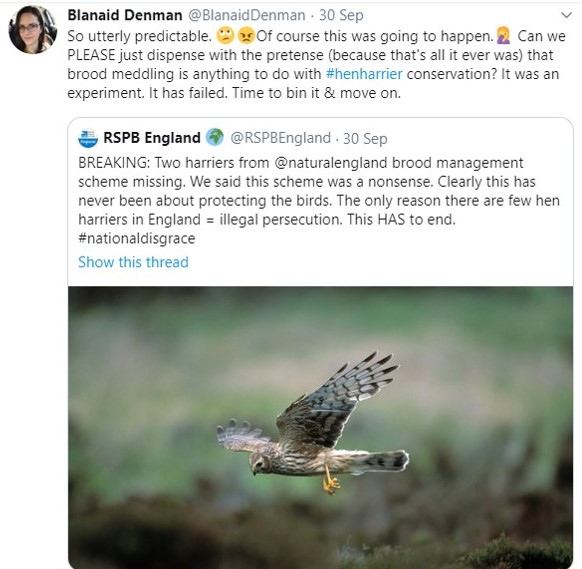
Following on from the news earlier this week that two of this year’s five brood meddled hen harrier chicks have ‘disappeared’ in suspicious circumstances (both on grouse moors, we’ve been told unofficially), questions have been asked about when Natural England will pull the plug on this outrageous five year ‘trial’.

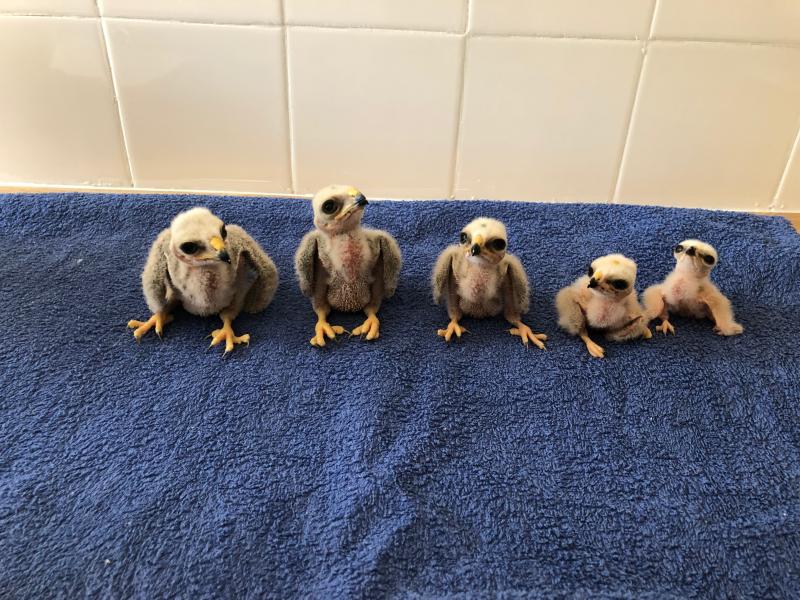
[The most pitiful photograph of the year: the five brood meddled hen harrier chicks, removed from their nest and parents to appease the grouse shooting industry. After being released again in August, two have since vanished in suspicious circumstances]

Although the corpses of the two ‘missing’ hen harriers haven’t been found (hardly a surprise, those people killing these birds have learned to cover their tracks and destroy the evidence thus preventing any prospect of being prosecuted), expert opinion from both within and outwith the shooting industry is pretty clear about what’s likely to have happened to them:

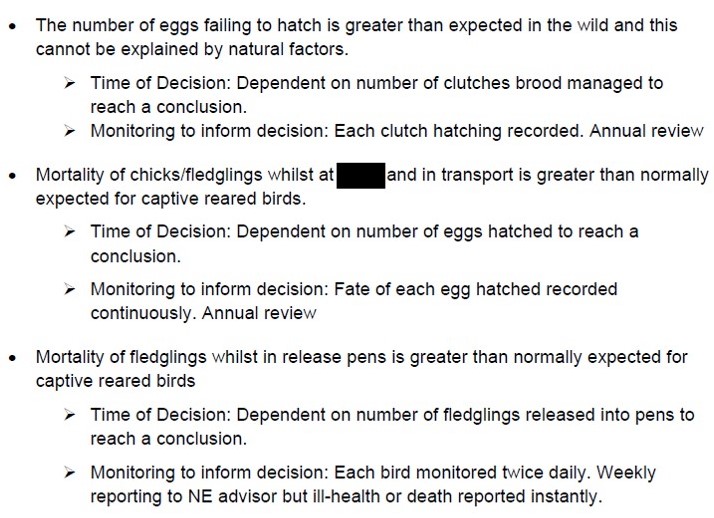
Natural England does have an exit strategy for the hen harrier brood meddling trial, as laid out in the Project Plan, although the terms of reference are a bit vague, perhaps deliberately so:

So there is scope in this exit strategy to stop the trial at any time rather than having to endure a full five years of this pantomime – that’s good – but look at the section highlighted in red above: it is not clear how many brood meddled hen harriers have to ‘disappear’ or be found and confirmed to have been illegally killed before a decision is made to pull the plug.

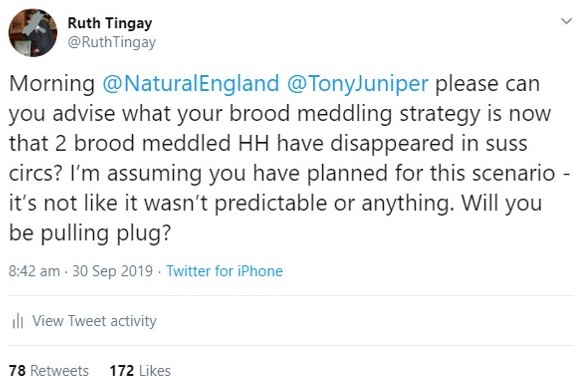
We’ve been seeking clarity on this but so far Natural England has dodged the question:

This question was also put directly to Natural England during a meeting with Wild Justice in August. The interim CEO and one of her Directors said they didn’t know off the top of their heads but would find out and get back to us. So far, nothing.

The licence to brood meddle hen harriers in England expires in January 2020 (it was only issued on a two-year basis, for legal reasons) so it’ll be interesting to see whether Natural England issues it again and if so, how it deals with the knowledge that two of the five (and possibly more by then) have most likely been killed on grouse moors.

We’re also still waiting to hear from the court to find out whether Mark Avery and the RSPB can appeal an earlier decision and have the brood meddling ‘trial’ declared unlawful.

Two of the five brood meddled hen harrier chicks have ‘disappeared’

Well, well, well.

As predicted by absolutely everybody with half a brain, some of this year’s brood meddled hen harrier chicks have ‘disappeared’ and it’s not even the end of September. Quelle surprise!

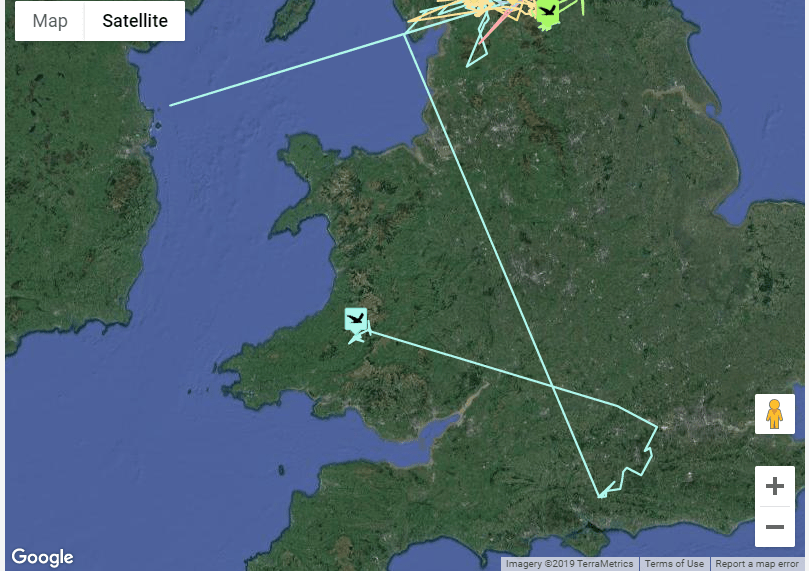
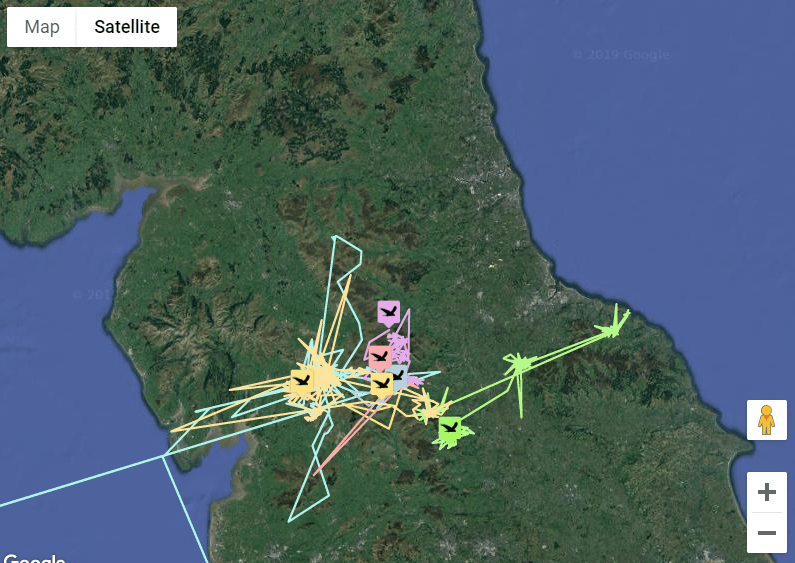
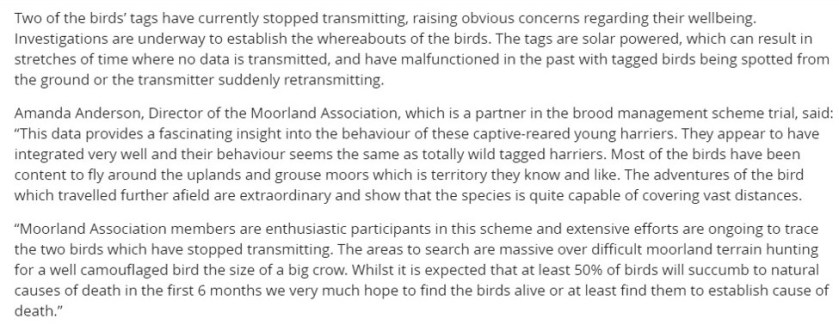
However, if you’d just seen the Moorland Association’s headline and first few paragraphs of their press release you’d never know that two of the five have disappeared in suspicious circumstances. This latest media output is perhaps the most disingenuous we’ve ever seen from the Moorland Association, and that’s saying something from an organisation notorious for distorting the facts!

In fact you have to get down as far as paragraph six before you’re told that two have disappeared, although the text doesn’t actually tell you that they’ve disappeared. Here’s the full press release, just for the record:

It’s quite the masterclass in distraction techniques, isn’t it?!

Mark Avery has already pulled apart some of this press release (see here) including comments about the maps not matching the text.

What we’re interested in is this:

  1. When did these two birds disappear? No dates are provided in the press release.
  2. In which county or counties did these two birds disappear? There is no geographic location provided in the press release. [See update at foot of blog]
  3. On what type of habitat did the last known fix come from for each tag? Was it a grouse moor in one or both cases?
  4. Were the last two locations on land owned/managed by Moorland Association members?
  5. What sort of tags were the two birds carrying and what were the details of each tag’s transmission cycle? (i.e. how many data transfer cycles have now passed without data being transmitted)?
  6. Who is monitoring the tag data?
  7. Have the police been informed? If so, who informed them? Was it the Moorland Association or was it somebody else?
  8. Are these two disappearances the subject of a live police investigation? [See update at foot of blog]
  9. Have the police been given access to the tag data?
  10. Have any police searches been carried out? If yes, were these searches undertaken without giving the landowner prior notification?
  11. Why hasn’t Natural England made a statement?
  12. What is Natural England’s policy for declaring the brood meddling trial a failure? i.e. How many satellite tagged brood meddled chicks have to ‘disappear’ before Natural England makes that declaration? One? Two? Three? Four? Five? This question was actually put to Natural England during a recent meeting between Wild Justice & Natural England’s interim CEO and one of its Directors. Natural England said they didn’t know but would find out. So far they haven’t come back with an answer.
  13. When will DEFRA acknowledge that the grouse shooting industry is completely out of control and unable to self-regulate?
  14. And when will DEFRA do something about it?

For those who might have missed it, here’s what the Government-commissioned science says about satellite-tagged hen harriers in northern England – 72% of those tagged so far [by Natural England] have been done in on grouse moors (see here). We await the results of the RSPB’s five-year tagging data with interest.

And for those who might have missed it, here’s the Moorland Association practically begging its members not to kill any hen harriers this year (see here).

UPDATE midnight:

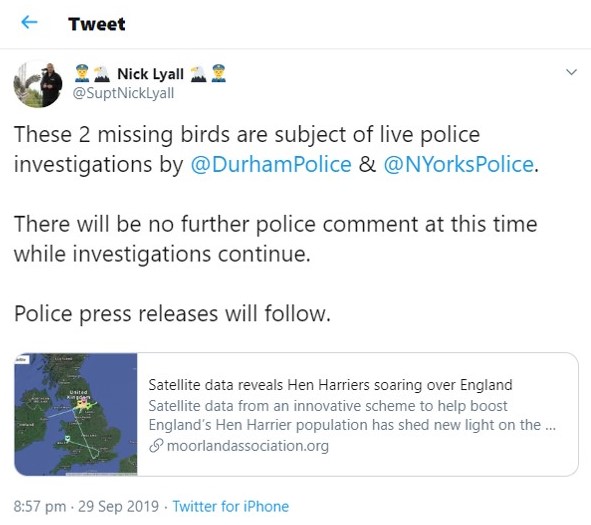
Police Supt Nick Lyall has tweeted the following this evening:

UPDATE 1 October 2019: Moorland Association’s brood meddling press release amounts to abuse of process (here)

UPDATE 3 October 2019: When will Natural England pull the plug on hen harrier brood meddling? (here)

UPDATE 4 October 2019: Brood meddled hen harrier chick vanished from grouse moor on Bowes Estate, County Durham (here)

UPDATE 8 October 2019: 2nd brood meddled hen harrier chick vanished from grouse moor in Yorkshire Dales National Park (here)

UPDATE 15 October 2019: 3rd brood meddled hen harrier ‘disappears’ in suspicious circumstances (here)

Red kite illegally poisoned in North Yorkshire

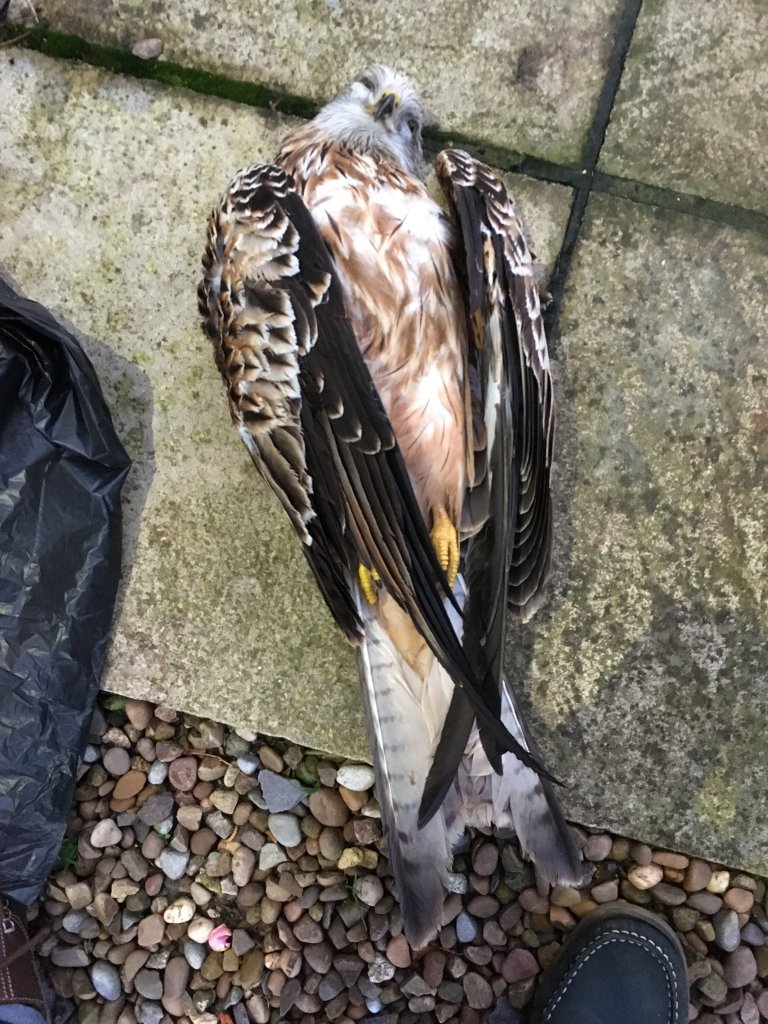
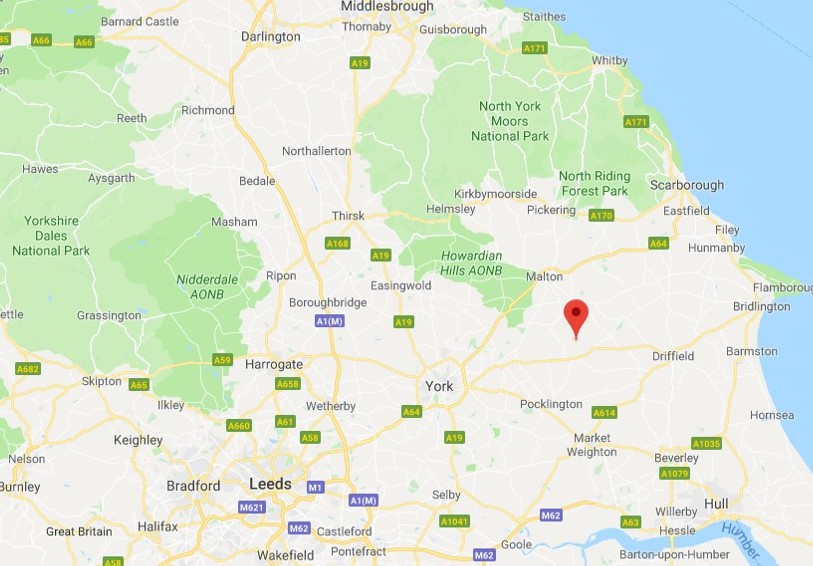
Toxicology testing (by WIIS – Wildlife Incident Investigation Scheme) has confirmed that a dead red kite that was found ‘recently’ near Thixendale, North Yorkshire was illegally poisoned with the banned pesticide Carbofuran, according to local raptor rehabilitator Jean Thorpe.

We haven’t been able to find any further information about this crime.

[The poisoned red kite. Photo from Jean Thorpe]


Marsh harrier shot, rescued, rehabbed & released in Yorkshire

There was some brilliant video footage posted on Twitter yesterday showing a rehabilitated Marsh harrier being released back in to the wild by the indefatigable Jean Thorpe (@jeanthorpeRR).

[Photo by Lower Derwent Valley National Nature Reserve]

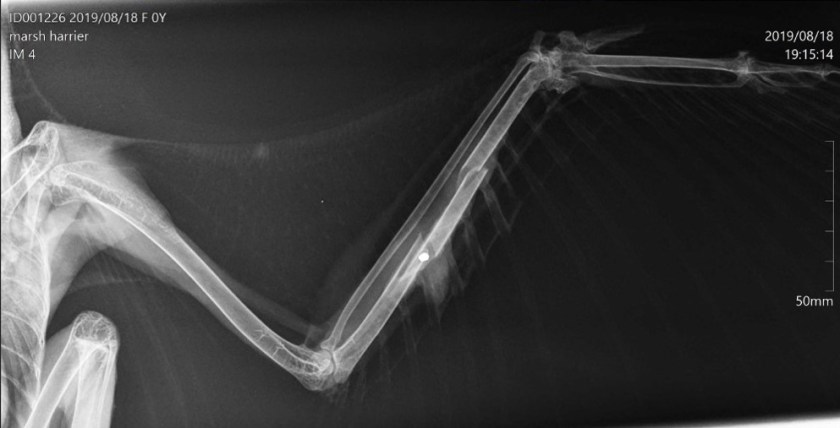
From the information provided, it was reported that the Marsh harrier had suffered a broken wing caused by a shotgun pellet and was found injured next to a game-shooting estate near Scarborough.

The x-ray details suggest this was on 18th August 2019.

Expert veterinary care and rehabilitation by Mark Naguib of Battle Flatts Veterinary Clinic and Jean and this harrier was able to be released.

We haven’t seen any previous reports about the illegal shooting of this Marsh harrier, nor any police appeals for information.

[Jean releasing the harrier, photos by Lower Derwent Valley National Nature Reserve]

UPDATE 9 October 2019: North Yorkshire Police appeal for info after Marsh Harrier found shot near Scarborough (here)

Golden eagle with trap dangling from its leg: statement from Environment Cabinet Secretary

In August Police Scotland published a photograph of a young golden eagle that had been seen flying in the Cairngorms National Park with an illegally-set trap clamped to one of its legs.

This photograph, along with the Police’s appeal for information, went viral and was reported on news channels around the world (e.g. here), highlighting Scotland’s shameful record of illegal raptor persecution.

There’s been no further update on the fate of this eagle. Undoubtedly it’ll be dead and if it had been found by anyone associated with the criminal element of the game-shooting industry the corpse and trap will be long gone….nothing to see, deny, deny, deny, it was all a set up, fake news, it never happened, etc etc.

Meanwhile, those who aren’t fooled by the propaganda and know exactly what goes on on game shooting estates have been asking pertinent questions.

Step up Colin Beattie MSP (SNP: Midlothian North & Musselburgh) who lodged the following written question on 2 September 2019:

Question S5W-25069 – 

To ask the Scottish Government, in light of reports of a golden eagle found with an illegal trap on its legs, what action it is taking to protect wild birds as a matter of urgency ahead of the publication of the findings of the Grouse Moor Management Group (the Werritty report).

A brilliant question. Forget ‘waiting for Werritty‘ which has been the Scottish Government’s default response to every single raptor persecution crime since May 2017, Colin wants to know what action is being taken NOW.

The Government’s response came from Environment Cabinet Secretary Roseanna Cunningham on 12 Sept, as follows:

The Scottish Government is strongly committed to safeguarding the welfare of all animals, including wild birds such as raptors.

The illegal persecution of our birds of prey is an extremely serious issue and, as we announced in our Programme for Government for 2019-2020, we will bring forward a Bill increasing the maximum penalties for certain wildlife offences, including those associated with illegal killing or injuring of wild birds. This will deliver a commitment to implement the recommendation to increase wildlife crime penalties in the review undertaken by Professor Poustie.

We also committed in the Programme for Government that we will respond to the independent review on grouse moor management. The review is examining how we can ensure that grouse moor management is sustainable and complies with the law and it would not be appropriate to make decisions in advance of its report. We will carefully consider the recommendations in the report and other relevant evidence when deciding our response.

The measures on wildlife crime penalties build upon a range of other work we have undertaken to tackle this issue, including: supporting the use of satellite tags to monitor birds of prey; introducing new offences for harassing birds of prey or damaging their nesting places; setting up a poisons disposal scheme to remove poisons used to kill wild birds; strengthening Police Scotland wildlife crime resources, including in the Cairngorms; and introducing vicarious liability so that landowners can be held responsible for crimes against wild birds committed by their employees.

Roseanna’s response carefully avoids answering Colin’s question directly. Colin asked what Scot Gov was doing ‘as a matter of urgency ahead of the publication of the Werritty report’. Roseanna’s response confirms, in effect, that Scot Gov is doing absolutely nothing at all in advance of the Werritty report.

Splendid.

And guess what? We’re still waiting for Werritty, despite being told by Scot Gov at the end of July that the report was due ‘in the next few weeks’. What an embarrassing fiasco it has become.

Whoever wrote Roseanna’s response was surely having a laugh, judging by the last paragraph. Yes, Scot Gov has introduced new offences for harassing birds of prey or damaging their nesting places but as far as we’re aware, there have been no prosecutions for these offences even though there have been a number of reports of raptor nests being deliberately burned out on grouse moors.

And yes, Scot Gov set up a poisons disposal scheme (two, in fact) to remove poisons used to kill wild birds and yet still we’re seeing raptors being illegally poisoned and still gamekeepers are being found guilty of possessing these illegal poisons.

And yes, Scot Gov did support a pilot scheme for a number of police special constables (essentially volunteers working in their own time) in the Cairngorms National Park but there has been no (public) assessment of the scheme’s impact and raptor persecution crimes were still reported in the National Park during the scheme’s duration.

And yes, Scot Gov did introduce vicarious liability so that landowners could be held responsible for crimes against wild birds committed by their employees but so far this has only resulted in two successful convictions in 7.5 years and only last month yet another landowner avoided any charges of alleged vicarious liability and the Crown Office chose not to explain this decision to the public.


Buzzard shot & injured: Humberside Police appeal for info

Humberside Police press release (12 September 2019)

WILDLIFE CRIME: BUZZARD SHOT AND INJURED – APPEAL FOR INFORMATION

East Riding of Yorkshire

We are appealing for information in relation to the shooting of a female buzzard.

On the 16 August the bird was found injured on the B1246 between Kilnwick Percy Hill top and Warter village near Pocklington in the East Riding of Yorkshire.

The bird was still alive and when x-rayed was found to have two shotgun pellets within its body. The injuries were fresh indicating that the bird had been recently shot.

Fortunately the injuries were such that the bird has been nursed back to good health and has now been released. The exact location of where the shooting of this bird took place is not confirmed. What is known is that the bird had been shot on or close to the date it was found (16 August).

Buzzards and other birds of prey are protected from persecution by Section One of the Wildlife & Countryside Act 1981 which makes it an offence to intentionally kill, injure such a bird. The penalty for these offences are a term of six months imprisonment and or an unlimited fine.

Chief Inspector Paul Butler the wildlife & rural crime lead for Humberside Police said, “This type of criminal behaviour towards our birds of prey sadly continues. This is now the sixth confirmed persecution incident involving seven birds of prey in the last two years across our force area.

The persecution of birds of prey is a national wildlife crime priority and Humberside Police takes this issue very seriously.

We have now adopted Operation Owl which is a national initiative to raise awareness of the problem and to tackle and prevent this type of criminality.

A large number of our wildlife crime officers have also received specific training in identifying and dealing with these offences.

I would encourage anyone with information about anyone involved in this type of offence in our area to come forward with this information which will be treated in confidence

If you have any information which could assist the investigation of the above incident please contact PC 1708 Ward on 101 quoting investigation number 16/100243/19.

ENDS

What happened to this buzzard, caught in a trap on Leadhills Estate?

This buzzard was caught inside a crow cage trap on the Leadhills Estate in January 2019. It isn’t illegal to catch a buzzard in this sort of trap – it’s seen as accidental by-catch – but it is illegal for the trap operator not to release it immediately upon discovery and it’s also illegal to not check the trap at least once within every 24 hour period.

The trap, which was padlocked so was inaccessible to anyone without a key, was being filmed covertly by RSPB Scotland and their camera captured some interesting goings on in the night, with ‘somebody’ (unidentified, natch) rocking up on a quad bike, entering the padlocked trap, appearing to strike at something on the ground, removing something from the trap, and then driving off. As the cameras continued to roll, at dawn it became apparent that the buzzard was no longer in the trap.

Watch the video here:

According to a detailed blog (here) written by RSPB Scotland Head of Investigations Ian Thomson, there were at least two 24 hour periods where the trap was not checked by the trap operator, but despite a Police Scotland investigation, the trap operator could not be identified (presumably because the estate refused to divulge that information).

Nobody has been charged with anything relating to the operation of this trap.

Just as nobody has been charged for the witnessed shooting of a hen harrier on this estate in 2017 (here), or for the witnessed shooting of a short-eared owl on this estate in 2017 (here), or for the shooting of a buzzard found on this estate in 2018 (here), or for the savagely barbaric trapping of a hen harrier on this estate a couple of months ago (here). In fact, according to the RSPB, there have been a total of 72 confirmed raptor persecution incidents recorded on this estate since 2003 and only two of them have resulted in a successful prosecution.

Not only have there been no charges brought, but no civil sanctions either, such as a restriction on the use of the General Licence, which SNH has had the authority to impose since 1 January 2014 if there is sufficient evidence (from Police Scotland) that wildlife crimes have taken place but insufficient evidence to secure a criminal prosecution.

Great, isn’t it?

Sparrowhawk shot on Isle of Man: Local bird charity & police appeal for info

Joint press release from Manx Wild Bird Aid, police & local Government (20 Aug 2019)

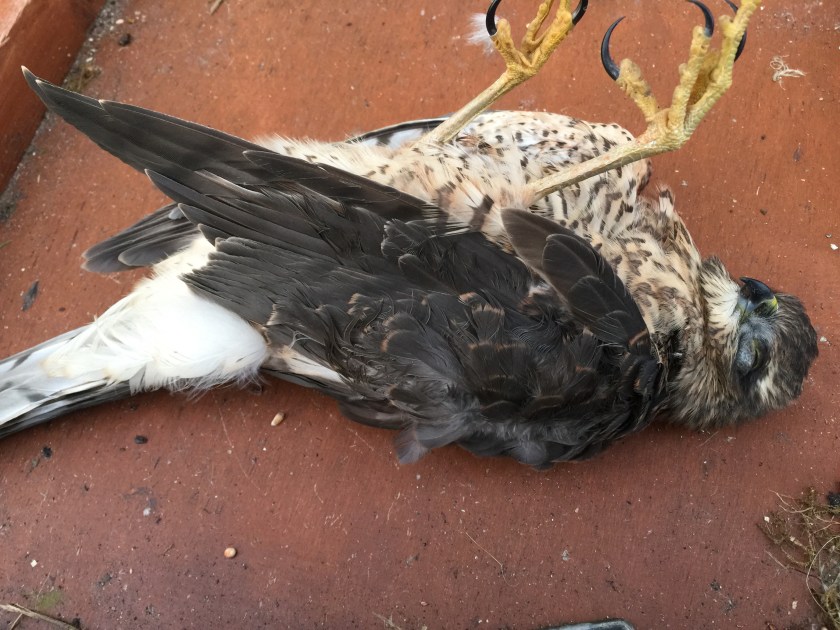
Manx Wild Bird Aid, Police Wildlife Crime Officers and the Isle of Man Government are seeking information in relation to a juvenile female sparrowhawk that was found injured at Ballure, Ramsey on the 13th August 2019.
The sparrowhawk was discovered with a single gunshot wound and was recovered alive by a member of the public who passed it over to the charity Manx Wild Bird Aid, who care for sick and injured wild birds.
Unfortunately the bird died of its injuries soon after.
Manx Wild Bird Aid informed the Police Wildlife Crime Officers and Department of Environment, Food and Agriculture (DEFA) Biodiversity Officers. Analysis of the bird’s injuries by a vet showed that the bird had an entry and exit wound consistent with being shot. The bird also sustained broken bones when it fell to the ground and would not have been able to move far from the location where it was found.
Geoffrey Boot MHK, Minister for Environment, Food and Agriculture, said: “I would urge anyone with any information about this incident to get in touch with the Biodiversity Officers at DEFA. It is illegal to kill or injure sparrowhawks on the Isle of Man. Protecting our wildlife is immensely important and our department and local charities work hard to ensure these animals are protected“.
A spokesperson for Manx Wild Bird Aid, said: “Not only has this wild bird been shot illegally, it is particularly upsetting that it has been injured in such a way to cause a lengthy period of unnecessary suffering prior to dying“.
Wild birds are legally protected under the Wildlife Act 1990 and it is an offence to kill or injure wild birds with the exception of game species. Penalties of up to £10,000 can be imposed.
Anyone with information relating to this case is being asked to contact Louise Samson, Biodiversity Officer DEFA 685835 or Crime Stoppers 0800 555 111.
ENDS