Buzzard shot in Barnsley: South Yorks Police abandons case, RSPB appeals for info

RSPB press statement:

Buzzard shot in Barnsley sparks investigation

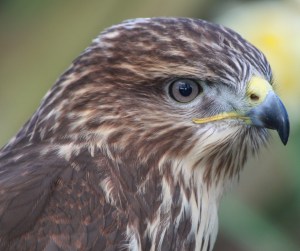
A buzzard found illegally shot in a wood near Barnsley has prompted concern by the RSPB and police.

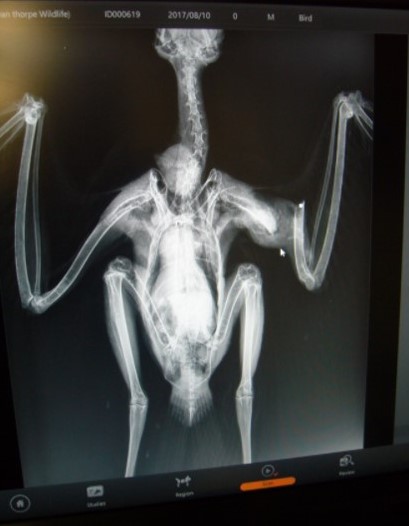
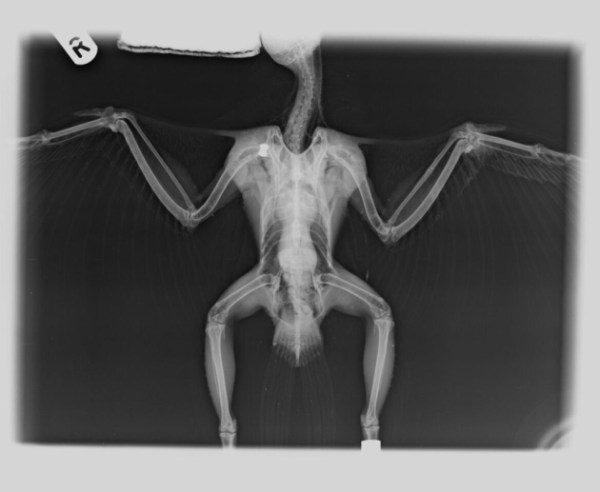
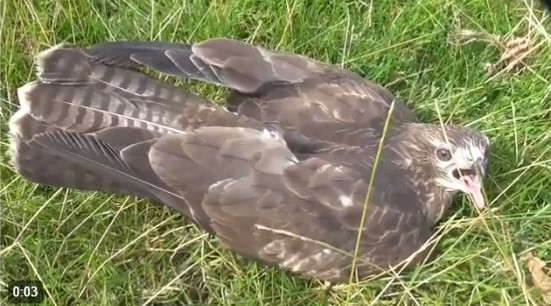
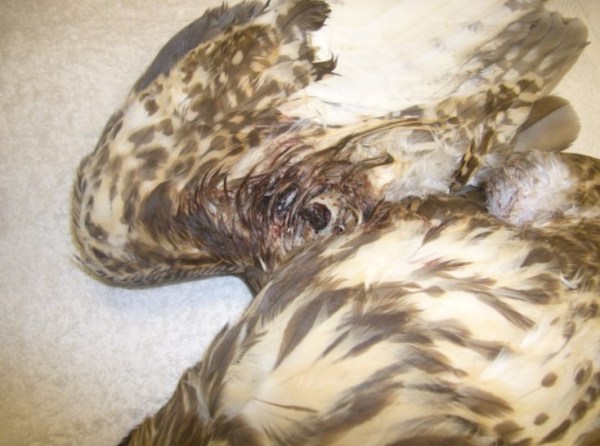
A local birder saw the bird fall out of a tree in Warren Wood, Stainborough on 9 August and reported it to the RSPB’s Investigations unit (crime@rspb.org.uk). An RSPB investigator recovered the bird and it was taken for an X-ray. The X-ray identified a broken wing and a shotgun pellet lodged in the wing, which was deemed to have caused the break.

The wound was thought to be several days old and had become infected, so sadly the bird had to be euthanized.
It is illegal to intentionally kill or harm any bird of prey, which are protected under the Wildlife and Countryside Act 1981. To kill or injure one is a criminal offence and could result in an unlimited fine or up to six months in jail.

The incident was reported to police immediately, and last week the RSPB was informed that the enquiry had concluded with no prosecution. The RSPB is now appealing to the public for information.

The RSPB’s recent Birdcrime report, published on 1 November 2017, revealed that the illegal shooting, trapping and poisoning of birds of prey is a big problem in Yorkshire. Last year the RSPB received reports of 153 incidents of wild bird crime in the North England Region: this was 33% of the total incidents for the UK and the highest number for any region. 10 of these occurred in South Yorkshire, and many more are suspected to have taken place unseen and undetected. The report also revealed that there were no prosecutions for bird of prey persecution in the whole of 2016.

David Hunt, RSPB Investigations Officer, recovered the body.

David said: “It is sickening to think that this bird was deliberately shot. Seeing a buzzard soaring high in the sky or picking up worms from a freshly-turned field is part of the joy of a walk in the countryside. However majestic birds like these are, more often than people realise, being intentionally and brutally killed in Yorkshire, and is a cause for local concern. This is not the first time I have been called out to a case like this and unfortunately it is often very hard to find out who is responsible. If you do have information, please come forward.”

The RSPB is offering a £1,000 reward for information that leads to a successful conviction. If you have any information relating to this incident, call South Yorkshire Police on 101 quoting reference number 617 10082017.

ENDS

Warren Wood, where the injured buzzard was found is within the grounds of Stainborough Park and Wentworth Castle. Warren Wood forms part of Broom Royd Wood (see point 8 on this map) where visitors are encouraged to “visit in spring for a beautiful display of bluebells“.
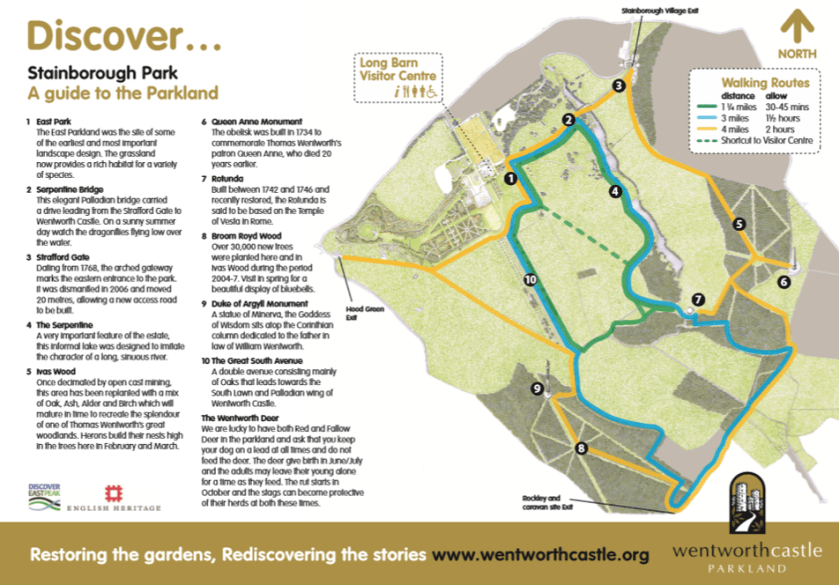
Wentworth Castle and its parkland was open to the public but now appears to have closed to visitors, according to the website.

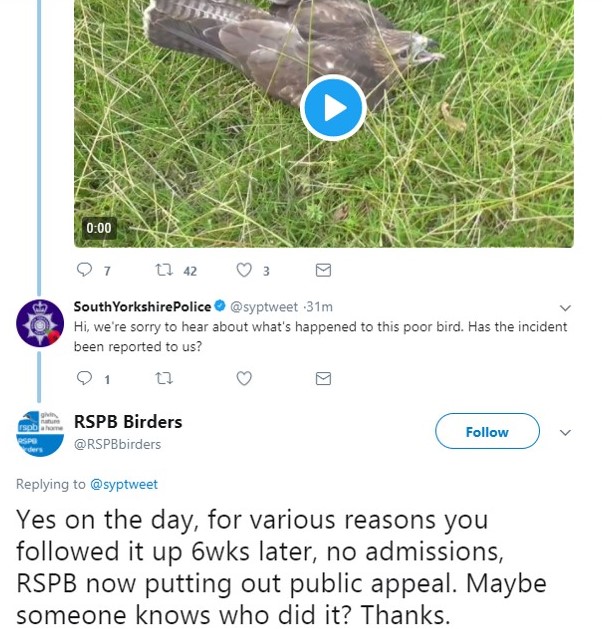
What’s really interesting about this case though is how South Yorkshire Police have responded to it. The RSPB press statement says the “incident was reported to the police immediately“, which presumably means on 9th August 2017 when the bird was found. And yet now South Yorkshire Police have told the RSPB that the enquiry has concluded and there’ll be no prosecution.

So how come South Yorkshire Police didn’t launch a public appeal for information back in August? How come the Police enquiry ‘has concluded’ without asking for the public’s help to identify a suspect? That’s pathetic, and only serves to highlight the importance of reporting suspected raptor persecution crimes to the RSPB as well as to the Police. Had the RSPB not been informed about this particular crime, we’d all be none the wiser and the crime probably wouldn’t have made it on to the ‘official’ list of reported wildlife crimes.

Well done RSPB for keeping the public informed.

UPDATE 14.50hrs:

South Yorkshire Police haven’t got a clue. This has just appeared on Twitter:
Chair of Nidderdale AONB condemns illegal raptor persecution

Don’t ever underestimate the power of public pressure.

You know that big solid wall of silence we’re all so used to looking at every time a raptor crime is discovered and reported? It looks like it’s finally beginning to crumble.

The latest to speak out, spontaneously (i.e. without prompting), about the continued illegal killing of birds of prey is the Chair of the Nidderdale Area of Outstanding Natural Beauty’s Joint Advisory Committee, Councillor Nigel Simms:

He’s obviously taken a lead from the spontaneous statement made by the neighbouring Yorkshire Dales National Park Authority yesterday.

The publication of this statement from the Nidderdale AONB is really, really welcome. The Nidderdale AONB in North Yorkshire is notorious as a raptor persecution hotspot and has been for many years. We’ve lost count of the number of red kites that never make it out of this particular hell hole, although the RSPB has been keeping track – 22 poisoned or shot in the last ten years, and that’s only the ones that were found.

Nidderdale red kite persecution incidents 2007-2017, map by RSPB:

Illegally-killed red kite (photo Marc Ruddock):

We also know that hen harriers rarely get out of Nidderdale alive – unfortunately we can’t show you a detailed map because Natural England wants to keep the details a secret. Natural England is supposed to protect hen harriers but it’s clearly more interested in protecting the reputations of criminal landowners and gamekeepers. Anyway, here’s a photo of an illegally-killed satellite-tagged hen harrier – something you might see if you visit Nidderdale AONB, assuming you get to it before the gamekeeper who shot it:

It’s interesting to see that these crimes are “starting to have a damaging effect on tourism businesses“, according to Cllr Simms. Good, not for the businesses affected, obviously, but good that it will drive increased local pressure to bring these crimes to an end.

Cllr Simms’ comment that illegal raptor persecution “undermines the work of law-abiding landowners and gamekeepers who are actively working alongside us to improve prospects for all forms of wildlife in the AONB” is slightly odd. Which law-abiding landowners and gamekeepers are those? Presumably not anyone involved with any of the aforementioned red kite killings or hen harrier disappearances, nor, presumably, anybody involved with the attempted shooting of a nesting marsh harrier and the removal of its eggs, as filmed on a Nidderdale AONB grouse moor by the RSPB earlier this year?

There’s much work to do in this AONB but this very public condemnation of illegal raptor persecution from the Chair of the AONB Advisory Committee is encouraging. Well done, Cllr Nigel Simms.

Now, who’s next to speak out and bring that wall of silence crashing down?

SNH says ‘no General Licence restrictions currently under consideration’ but what about these 9 cases?

The ability for Scottish Natural Heritage (SNH) to impose a General Licence (GL) restriction order on land where there is evidence of raptor persecution taking place came in to force on 1 January 2014. This measure, based on a civil burden of proof, was introduced by then Environment Minister Paul Wheelhouse in response to the continuing difficulties of meeting a criminal burden of proof to facilitate a criminal prosecution.

Whilst these GL restrictions are not without their limitations (because estates can simply apply for an individual licence instead –  see here, but also see here where SNH recently revoked an individual licence for alleged non compliance), Wheelhouse argued that as the restriction notices will be made public, they should act as a ‘reputational driver‘.

Since 1 January 2014, SNH has only imposed four GL restrictions. The first two were imposed in November 2015 (one for Raeshaw & Corsehope Estates in the Borders and one for Burnfoot & Wester Cringate Estates in Stirlingshire). Then there was a temporary halt for almost two years as Raeshaw & Corsehope Estates made a legal challenge which ended up with a judicial review in January 2017. The court’s decision was announced in March 2017 and SNH was found to have acted properly and lawfully. Since that decision was announced in March 2017, SNH has imposed two more GL restrictions: one for Edradynate Estate in Perthshire in September 2017 and one for an unnamed mystery gamekeeper in Aberdeenshire in September 2017.

Whilst we were pleased to see SNH impose these latest GL restrictions last month, we were also aware of a number of other raptor persecution incidents that have been recorded since 1 Jan 2014 that would potentially meet the criteria required for a GL restriction so we wanted to find out whether SNH was getting on with these.

Photo: an illegal pole trap filmed by RSPB Scotland on the Brewlands Estate in the Angus Glens, July 2015. These traps have been outlawed for over 100 years.

In early October we submitted an FoI to ask SNH how many cases were currently under consideration for a GL restriction. We are pretty shocked by the response received last week:

At the time of your request, no General Licence restrictions were under consideration“.

Really? Why the hell not? We know of at least nine cases that should be being considered, and these are just off the top of our heads – there will be others, as we know Police Scotland is still withholding information about a number of other raptor persecution incidents.

Here are the nine incidents we know about that have all occured since 1 January 2014 when SNH was given the power to impose a GL restriction:

Newlands Estate, Dumfriesshire. Gamekeeper William (Billy) Dick was convicted in 2015 for killing a buzzard on the estate in April 2014. He threw rocks at it and then stamped on it. The estate owner was prosecuted for alleged vicarious liability but then the Crown Office dropped the prosecution in April 2017, saying it wasn’t in the public interest to proceed (see here).

Brewlands Estate, Angus Glens. A gamekeeper was prosecuted for the alleged repeated setting of a pole trap on this estate between 9-17 July 2015. The Crown Office dropped the prosecution case in April 2017 because the video evidence was deemed inadmissible (see here). Another gamekeeper on this estate thought this result was hilarious.

Unnamed pheasant-shooting estate, Lanarkshire. In September 2015 a set pole trap was discovered on a bench directly outside a pheasant-rearing pen on an unnamed estate. Police Scotland apparently dropped the case, for unknown reasons.

Gamekeeper in Ayrshire. In May 2016 a named gamekeeper was charged after allegedly being caught using gin traps on a neighbouring farm of the estate on which he was employed. The Crown Office dropped the prosecution in March 2017 after reportedly ‘getting the dates wrong on its paperwork’ (see here).

Invercauld Estate, Aberdeenshire. In June 2016, walkers discovered a number of illegally-set spring traps staked out on a grouse moor. Two of the traps had caught a Common Gull by the legs. The bird had to be euthanised. There was no prosecution. ‘Some action’ was taken by the estate but whatever this action was it has remained a closely-guarded secret between the estate, the Cairngorms National Park Authority and the Scottish Government (see here).

Glendye Estate, Aberdeenshire. In January 2017 a number of illegally-set spring traps were discovered on a grouse moors on this estate. The Estate Factor and gamekeeper reportedly removed the traps and denied all knowledge of who had set them (see here). There was no prosecution.

Leadhills Estate, South Lanarkshire. On 4th May 2017, witnesses observed the shooting and killing of a hen harrier on this estate. Police Scotland appealed for information (see here & here). As far as we’re aware, there are no impending prosecutions.

Leadhills Estate, South Lanarkshire. On 31 May 2017, witnesses observed the shooting and killing of a short-eared owl on this estate. The corpse was retrieved and sent for a post-mortem. Police Scotland appealed for information. As far as we’re aware, there are no impending prosecutions.

Unnamed grouse shooting estate, Monadhliaths. On 7 June 2017, a member of the public found a buzzard caught in an illegally-set spring trap that had been staked out on an unnamed grouse moor in the Monadliaths. The buzzard was released. Police Scotland appealed for information. Inspector Mike Middlehurst of Police Scotland commented, “Unfortunately, there are some who continue to deliberately target birds of prey; there is nothing accidental in the setup of these traps“. As far as we’re aware, there are no impending prosecutions.

So why haven’t any of these cases been considered for a GL restriction? Is it because SNH is still waiting for Police Scotland to provide ‘formal information packages’ on these cases? (Remember, SNH can only consider potential GL restrictions based on evidence provided to them by Police Scotland). We know that Police Scotland has been slow in delivering this info to SNH in the past (e.g. see here) – are they still dragging their feet?

Or, is it the case that Police Scotland has already provided information to SNH about each of these nine cases and SNH has, for whatever reason, decided not to impose a GL restriction?

Isn’t it in the public interest to know, and importantly to understand, what is happening with these cases? We think so. And that’s why we’ve submitted an FoI to find out.

Police appeal for info after sparrowhawk found shot dead in East Yorkshire

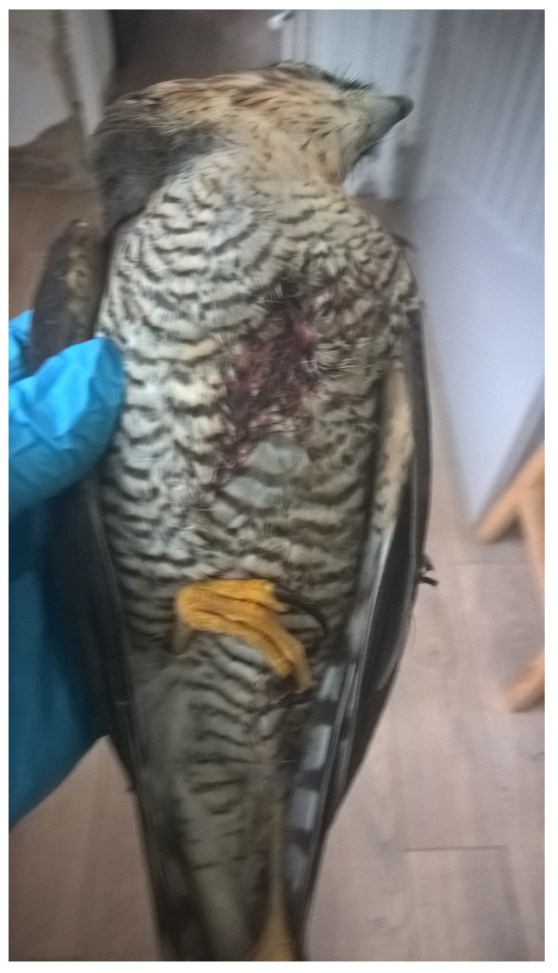
Humberside Police are appealing for information after the discovery of a dead sparrowhawk ‘with injuries consistent with being shot with a shotgun’.

It is suspected to have been killed on or around 16th October 2017 near to the quarry and Boyes Lane in Keyingham, East Yorkshire.

Anyone with information is asked to contact Humberside Police on 101, quoting ref # 175 17/10/17.

‘No further comment’ from Natural England on latest missing hen harrier

Last week we blogged about a North Yorkshire Police search for a satellite-tagged hen harrier that had ‘disappeared’ on a grouse moor in the Yorkshire Dales National Park (see here).

We asked Natural England, on Twitter, when they would be making a statement about this. They didn’t respond.

So we emailed them. Here’s the response:

All we can tell you at this stage is that this situation is the subject of a police investigation. We are assisting North Yorkshire Police and cannot comment further“.

Bizarrely, Natural England then sent another response a short time later:

We have notified the police and other key stakeholders about a Hen Harrier that has stopped transmitting as we always do. We do not release proactive press statements unless we have evidence of a persecution [sic] and this is currently still an on-going investigation. Due to the transmission cycle of the tag we cannot be sure that the location of the last fix was where the tag actually stopped working. The tags only transmit for 10 hours in 58“.

Marvellous. So, no information about which hen harrier this is, where and when it was satellite-tagged, whether public funds had been used to pay for the tag, the date of the tag’s last transmission, and the name of the grouse moor where it ‘disappeared’.

It’s not clear why this information is being withheld. Understandably, if there was an impending police search, the information should not be made public so as not to jeopardise that search. But in this case, the police search had already taken place, which incidentally would have been a complete waste of time had the harrier been illegally killed on that grouse moor because, as per the NE protocol, Natural England had already sought the landowner’s permission for a police search to take place!

Photo of a police search on an unnamed grouse moor in the Yorkshire Dales National Park. Posted by North Yorks Police on Twitter, 15 Oct 2017.

Is there any other area of crime where the permission of a potential suspect is sought prior to a police search? “Oh, hi John, it’s the Police here. We have reason to believe your property is being used as a dealer’s crack den, mind if we pop round later this afternoon for a look? Would 2pm be convenient? Give you time to clear up and remove any potentially incriminating evidence before we get there”.

And what’s this about Natural England not releasing press statements “unless there’s evidence of a persecution” [sic]? That’s simply not true. Earlier this year Natural England issued a press statement about hen harrier Mick, another satellite-tagged hen harrier that ‘disappeared’ on a grouse moor in the Yorkshire Dales National Park (see here). There was no direct evidence of persecution in that case either, as Natural England lists Mick as ‘Missing, fate unknown’ in the long list of ‘missing’ sat-tagged hen harriers (44 of 59 now listed as ‘Missing, fate unknown’: that’s a massive 74.5%). It looks like Natural England is just making up its media protocol as it goes along.

Now, compare and contrast Natural England’s current attitude to releasing information about ‘missing’ hen harriers with the RSPB’s approach. Here’s what the RSPB published when one of its satellite-tagged hen harriers, Calluna, ‘disappeared’ on a grouse moor in the Cairngorms National Park on 12th August this year.

Why isn’t Natural England being this transparent? Who is Natural England shielding? How is Natural England’s silence helping hen harrier conservation?

UPDATE:

16 November 2017: Hen harrier ‘missing’ on grouse moor in Yorkshire Dales National Park is ‘John’ – see here

Yet another buzzard found shot in North Yorkshire

The reputation of North Yorkshire as a raptor persecution hotspot is well known. Here’s yet another victim to add to the long, long list….

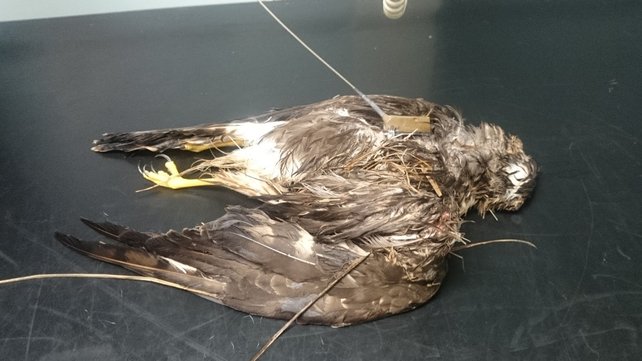
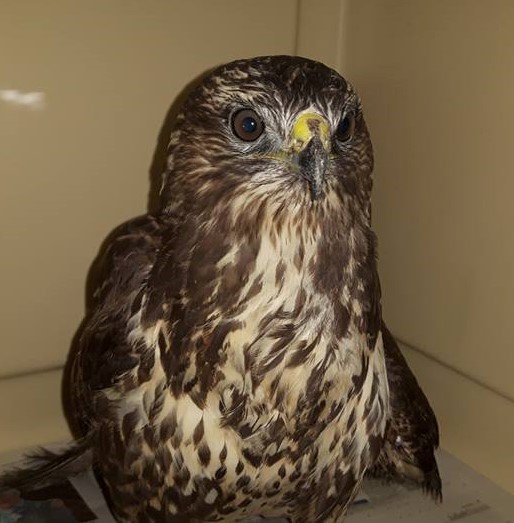
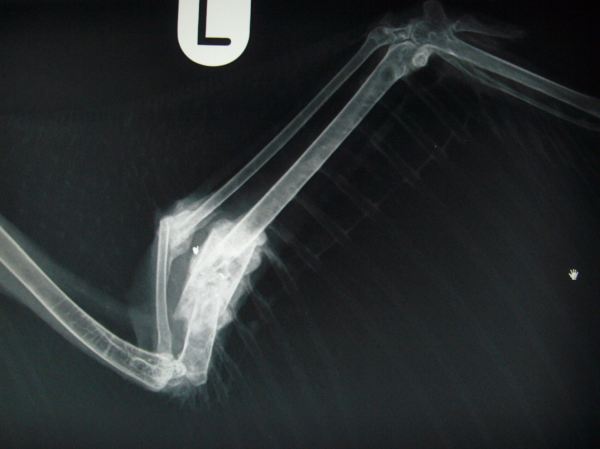
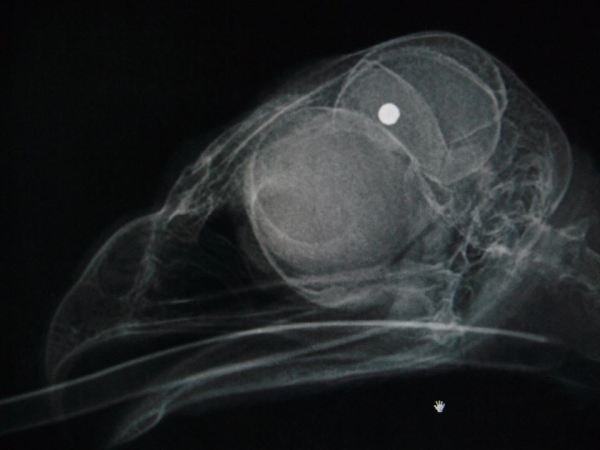
This buzzard was found injured at Dunnington (a village to the east of York) on 29 September 2017. It was taken to the vets where an x-ray revealed shotgun pellets lodged in the bird’s head and wing. Based on the extent of its injuries, the bird was euthanised.

Anybody with information about this crime, please contact PC Jez Walmsley at Malton Police Station (Tel. 101).

Images courtesy of Jean Thorpe.

Peregrine found shot in Cambridge

Police are appealing for information after the discovery of a shot peregrine on the outskirts of Cambridge.

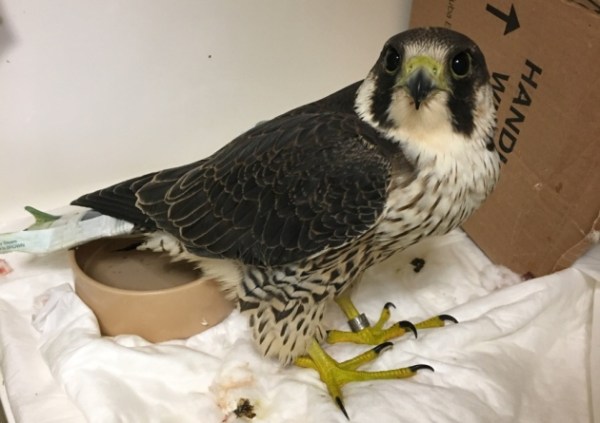
The young bird was discovered injured on 18 September 2017 and was reported to the Raptor Foundation. A veterinary x-ray revealed a pellet from an air rifle lodged in its shoulder and a metal fragment also lodged in its wing, preventing the bird from flying. Vets believe the bird could have been shot up to 10-14 days earlier based on its low weight.

Information from the peregrine’s leg ring revealed this bird fledged from a nest on the outskirts of Cambridge earlier this year.

The peregrine is currently receiving expert care at the Raptor Foundation but it’s not yet known whether it will recover sufficiently to be released back to the wild.

PC Alun Bradshaw of Cambridgeshire Police is urging anyone with information to come forward. Tel 101 and use incident reference number CF0539270917.

Media coverage:

Cambridge Independent News here

BBC News here

RSPB Investigations blog here

ITV news here

Buzzard shot in Hertfordshire

Press release from Hertfordshire Police, 26 September 2017:
Officers from Hertfordshire Constabulary’s Rural Operational Support Team (ROST) are appealing for witnesses and information after a buzzard was found seriously injured.

The bird was found by a member of the public on a track leading off Ledgemore Lane, Great Gaddesden, Hemel Hemstead on Wednesday September 6th 2017.

The bird was recovered and examined by a veterinaty surgeon. It was concluded that the bird had been shot and sadly, due to the severity of its injuries, the animal had to be put to sleep.

PC Simon Tibbett, from ROST, said: “All British wild birds, their nests and their eggs are protected under the Wildlife & Countryside Act 1981. Therefore it is an offence to shoot a buzzard or interfere with their nests in any way and punishable by a fine or up to six months in jail.

As a bird of prey, buzzard persecution is monitored by DEFRA and the National Wildlife Crime Unit as raptor persecution is a national wildlife crime priority.

We take wildlife crime very seriously in Hertfordshire and we are keen to trace those responsible for this offence. I would urge anyone with information to please get in touch“.

Jenny Shelton, Investigations Liaisons Officer at the RSPB said, “I think we speak for most people when we say we are angry and saddened to hear that someone has shot this bird. 

Our UK population of buzzards dropped during the 20th century due to unlawful killing, and sadly persecution is still a problem today. If you know anything about this incident, please contact police on 101 or the RSPB Investigations team on 01767-680551“.

Anyone who has witnessed people shooting or carrying hunting rifles in the area, or has any further information, should contact PC Simon Tibbett on Hertfordshire Constabulary’s non-emergency number 101, quoting reference D1/17/7143.

ENDS

Two more buzzard shootings were reported from nearby London Colney in April 2017, both believed to have been shot with an air rifle – see here.

Buzzard photo by RPUK

Raptor shot in North York Moors National Park

North Yorkshire Police have tweeted about the shooting of a raptor two days ago in the North York Moors National Park:

At the moment there is no further information about the circumstances of this reported incident, the species, the extent of its injuries, and whether it’s alive or dead.

Hopefully the police will issue a detailed appeal for information.

[UPDATE 18.20hrs: Further tweets from the police – the shooting was witnessed by a walker, the bird was thought to be a marsh harrier or a buzzard, the body was not found].

The North York Moors National Park is a well known raptor persecution hotspot, which is no surprise given the extent of driven grouse moors within the Park’s boundary. Earlier this year a buzzard was found in the Park with shotgun injuries (here) and last year another buzzard was found in the Park with horrific injuries caused from being shot and caught in a leg trap (see here).

GWCT twisting the truth about hen harrier persecution, again

A few days ago we blogged about a series of letters published in The Times (Scotland) relating to the disappearance of a young satellite-tagged hen harrier Calluna, who recently vanished after visiting a Deeside grouse moor.

Scottish Land & Estates used the incident as an opportunity to falsely accuse the RSPB of not following agreed protocols, presumably in a pathetic attempt to detract attention from the ongoing criminality associated with the driven grouse shooting industry. We’ve come to expect no better from this organisation.

As a follow on from those letters, another industry figure, Andrew Gilruth from the Game & Wildlife Conservation Trust (GWCT), decided to join in and spew out some more fakery, this time in The Times (London edition). Here’s what he wrote, published 7 Sept 2017:

HEN HARRIER HABITAT

Sir,

The RSPB are right to say an organisation must not “ignore facts to suit its narrow agenda” (letter, Sep 5). The most productive location for hen harrier nests, 47 fledged young from 12 nests, was achieved by gamekeepers on Langholm Moor just three years ago. However, their improvement of the moorland habitat and protection of these ground nesting birds from foxes has now ended, because conservationists could not agree on how to also recover grouse numbers. Should hen harrier numbers drop to the two pairs there were before these gamekeepers arrived in 2008, the birds might ask who has the narrowest agenda.

Andrew Gilruth
Director of Communications
Game & Wildlife Conservation Trust

You’ll notice how Andrew’s distraction technique has cleverly moved the story away from the news of Calluna’s suspicious disappearance from a grouse moor and has instead tried to re-focus the story on to how great grouse moors are for hen harriers. Unfortunately for Andrew, choosing the Langholm Moor study as an example to support this theory was not the brightest idea.

Here’s why, succinctly explained in a letter published in The Times (London) today:

ABSENCE OF HARRIERS

Sir,

Andrew Gilruth’s letter (September 7) brings to mind Kipling’s poem ‘If’ for the manner in which it twists the truth to make a trap for fools.

The single and only reason Langholm Moor supported 12 harrier nests that fledged 47 young was that the gamekeepers working on this collaborative demonstration project were under strict instructions not to kill them and operate within the law. It is very telling that no other driven grouse moors in Scotland (or the rest of the UK) can equal this hen harrier population or productivity. What this statistic actually suggests, therefore, is the rampant scale of illegal killing of this majestic bird, given its landscape-wide absence and the lack of breeding success on all other driven grouse moors and which our members, (who are licenced by Scottish Natural Heritage), monitor across Scotland every year.

Logan Steele

Scottish Raptor Study Group (SRSG)

Logan hits the nail on the head. If driven grouse moors are so great for breeding hen harriers, why are we seeing an almost total absence of breeding hen harriers on these moors, year after year after year? Of course, the disgusting truth is already well known.

Andrew Gilruth’s letter has been widely shared on social media by the criminal apologists and has been followed up with other examples of supposedly typical driven grouse moors that have good hen harrier breeding figures this year. Unfortunately, these people are as scientifically illiterate as Andrew Gilruth and have used wholly inappropriate examples to illustrate their (fake) claims, e.g. Leadhills Estate, which had nine hen harrier nests this year, but this estate hasn’t seen any driven grouse shooting for a number of years (see here). There are other claims of “an estate in Perthshire” with 12-15 hen harrier nests this year – the estate hasn’t been named (natch) but they might be referring to Atholl Estate, which these days is a pretty good estate with a sympathetic management approach to breeding raptors, but only offers walked-up grouse shooting, not driven grouse shooting, so any successfull hen harrier nests there this year cannot be attributed to driven grouse moor management. Sorry, trolls, you must try harder.

Anyway, getting back to the actual news, that hen harrier Calluna is the latest in a long, long, long, long line of satellite-tagged raptors that ‘disappear’ after visiting certain driven grouse moors, it’s been a week since the RSPB appealed for information.

We’ve been looking at the social media accounts of various shooting industry organisations to see how much effort these ‘leaders’ have put in to encouraging their members to pass on information to the police. You can probably guess what we found (or didn’t find). That tells its own story about the sincerity and commitment of the industry to rid itself of its dirty criminals. Mark Avery has a pretty good explanation about the industry’s refusal to reform (see here) and Andrew Gilruth’s chronic propaganda patter gives Mark’s theory much credence.