Satellite-tagged hen harrier ‘Bonny’ is missing, presumed dead

Another one of the preciously small group of hen harriers that managed to fledge in England last year has been reported as missing, presumed dead.

Read the news on the RSPB’s Skydancer blog here.

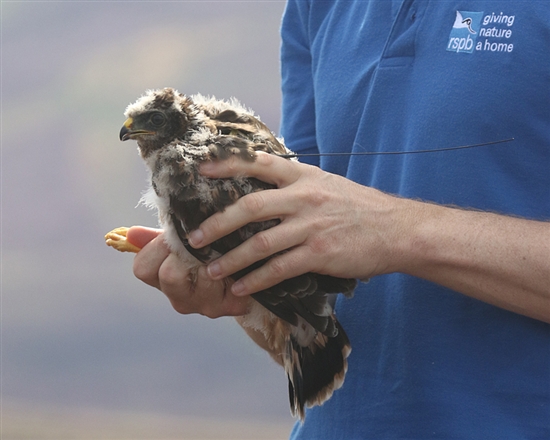
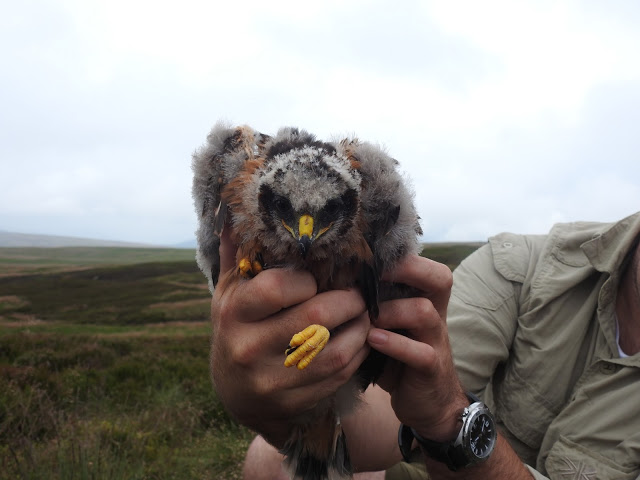
This time it’s Bonny. Bonny was particularly special. He was the first hen harrier to successfully fledge on the RSPB’s Geltsdale Reserve in ten years. He was mischievously named after Tim Bonner, head of the Countryside Alliance (watch the video here) by Chris Packham, as part of the Lush Skydancer Bathbomb campaign. Bonny was featured on the BBC’s Autumnwatch programme, which was a major coup because usually the BBC shies away from the ‘controversy’ of hen harrier persecution but by filming Bonny being fitted with his satellite tag, this allowed a ‘non-controversial’ way of introducing a massive BBC audience to the plight of hen harriers – hopefully his story will be covered in the BBC’s forthcoming Winterwatch, which airs next week, thus providing an opportunity to discuss what might have happened to this young harrier.

As the RSPB’s Skydancer project manager Blanaid Denman says on the Skydancer blog, we don’t know what happened to Bonny. His signal went dead on 14 December 2016 on a moor a few kilometres to the east of Geltsdale. It’s possible it’s a tag failure, but the probability of something more sinister is far greater, especially when you consider the history of raptor persecution in the Geltsdale area.

Over the years, the bodies of five shot hen harriers have been found (the killing of one of these was witnessed by RSPB investigators – see pages 38-40 in Mark Avery’s book Inglorious for a detailed description), there have been at least four attempted shootings of hen harriers, and another hen harrier was found poisoned. In addition, there have been poisoned ravens, poisoned buzzards and some shot peregrines.

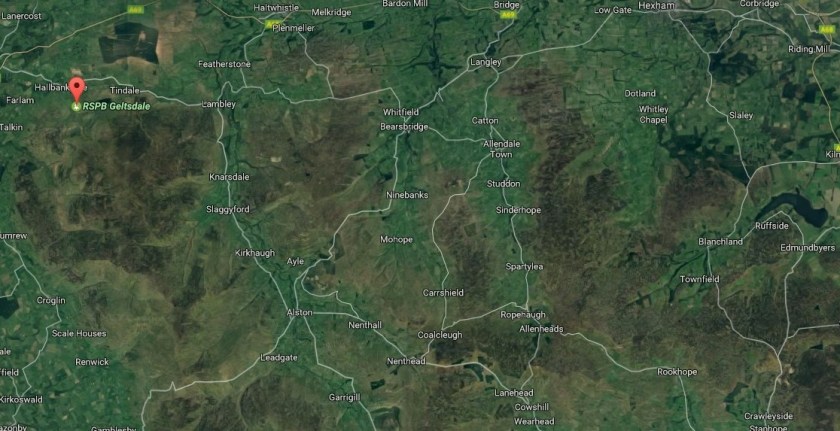
Some of these crimes happened on the Geltsdale Reserve (safe to assume this wasn’t the handiwork of the RSPB wardens) and some of the crimes happened on nearby grouse moors. Take a look at the map and note those big brown smudges. When you look at the extent of the driven grouse moors here, and the long, long history of raptor persecution, it’s a miracle that Bonny even fledged in the first place.

The class of 2016 are not doing very well. In addition to Bonny, here are some of the others that didn’t make it to Xmas:

Hen harrier Elwood – ‘disappeared’ in the Monadhliaths just a few weeks after fledging.

Hen harrier Brian – ‘disappeared’ in the Cairngorms National Park just a few weeks after fledging.

Hen harrier Donald – missing in northern France, presumed dead.

Hen harrier Hermione – found dead on Mull, believed to have died from natural causes.

Hen harrier Rowan – found dead in Yorkshire Dales National Park. Cumbria Police said ‘likely to have been shot’. There is no ambiguity – this bird was shot (more on this soon).

Hen harrier Tarras – ‘disappeared’ in the Peak District National Park.

Hen harrier Beater – missing in Scottish Borders, presumed dead.

Eight down, seven to go (Aalin, Carroll, DeeCee, Finn, Harriet, Wendy, Sorrel).

Photograph of hen harrier Bonny by Mark Thomas

Public funds being used to promote Glendye grouse moor

Yesterday we blogged about the illegally-set traps that had been photographed on a grouse moor at Glendye Estate in Aberdeenshire (here). We await the result of a police investigation to determine who was responsible for setting those traps (but we’re not holding our breath).

Meanwhile, as taxpayers, you’ll all be thrilled to learn that your money is being used to promote grouse shooting on Glendye Estate. This estate is listed on the Scottish Country Sports Tourism Group’s website, which is part-funded with a grant from VisitScotland.

We already knew that the Scottish Country Sports Tourism Group is promoting a sporting agent with a criminal conviction for raptor persecution (see here), so it shouldn’t really come as a surprise to find them also promoting a grouse moor where illegally-set traps have been discovered. In fact the SCSTG was already doing this because Invercauld Estate is also being promoted as a ‘sporting provider’ on the SCSTG website – you’ll recall that illegally-set traps were discovered on an Invercauld Estate grouse moor last summer and this resulted in what we believe to be a ‘cover-up’ by the authorities (see here).

Why is public funding being used to promote a ‘sport’ that is mired in illegal activity? It’s bad enough that public funds are being used to promote such an environmentally damaging ‘sport’ but to promote estates where criminal activities have been uncovered is scandalous. Why is the Scottish Government still turning a blind eye to what’s going on on some of these estates, despite incident after incident after incident after incident after incident after incident being uncovered? Scottish Ministers are being made to look like fools.

Our year in review: July – December 2016

Our Year in Review: January – June 2016 can be found here.

Here’s part two.

JULY

An horrifically injured buzzard was found on a grouse moor in North Yorkshire (here). Illegally set traps were found on a grouse moor in the Cairngorms National Park, with a critically injured common gull found caught by its legs in two of them. We were able to establish that the grouse moor was part of the Invercauld Estate (see here and here). Invercauld Estate issued a bizarre statement, via GWCT, denying that any crime had taken place or if it had, it was probably the work of someone trying to discredit the grouse shooting industry (here). The Scottish Gamekeepers’ Association issued a statement saying they would launch their own investigation (here).

In the courts the vicarious liability prosecution against Andrew Duncan (Newlands Estate) was adjourned, again (here), as was the case against Scottish gamekeeper Stanley Gordon, accused of the alleged shooting of a hen harrier on Cabrach Estate in 2013 (here). Scottish gamekeeper Billy Dick’s appeal against his 2015 conviction for killing a buzzard was dismissed and his conviction upheld (here).

Hen harriers bred successfully on the Mar Lodge Estate in the Cairngorms National Park for the first time in decades (here) and some MSPs were taken for a ride up the Angus Glens (here) where presumably they weren’t shown how to light exploding banger ropes (here).

Glanusk Estate issued two statements (here and here) trying to downplay the mass poisoning of raptors that had taken place there in 2012/2013, and after a series of FoIs we learned that there would be no subsidy withdrawal by Rural Payments Wales as a result of this crime, the most significant wildlife poisoning incident ever recorded in Wales and the 2nd biggest recorded in the UK for 40 years (here).

Working with Chris Packham, Mark Avery and a crack film crew, we began to publish a series of videos aimed at educating the general public about driven grouse shooting. In the first video, Chris had a message for retailer Marks and Spencer about the unsustainability and toxicity of red grouse (here). The grouse-shooting industry reacted to this video with furious outrage (here, here) and accused Chris of ‘celebrity bullying’ and then set about on (another) campaign to have him removed from the BBC.

In Scotland the Scottish Raptor Study Group launched a petition calling for the Government to introduce a licensing scheme for all gamebird hunting (see here) and in England, the Government’s conservation agency Natural England issued a licence to a gamekeeper allowing him to kill buzzards to protect pheasants (here).

The RSPB grew a pair and announced the very welcome news that they were withdrawing their support for DEFRA’s Hen Harrier Inaction Plan due to the ongoing incidents of raptor persecution (see here). The grouse shooting industry reacted with comical aplomb (here).

North Yorkshire Police did the decent thing and admitted they’d made a mistake by not charging the pole-trapping gamekeeper from Mossdale Estate (see here). They said they’d used the wrong guidelines but had now revised their procedures.

We blogged about the Bowland Brewery in Lancashire, who were supporting the RSPB’s Hen Harrier conservation efforts but as a result had become the victims of a vile and vicious online hate campaign by some within the grouse shooting industry (see here). This backfired spectacularly when the general public, in support of the brewery, bought up ‘hen harrier’ beer by the caseload.

AUGUST

A buzzard was shot dead in Richmondshire, North Yorkshire (here), a buzzard was poisoned in Ayrshire (here), and satellite-tagged hen harrier ‘Elwood’ ‘disappeared’ on a grouse moor in the Monadhliaths just a few weeks after fledging (here).

The RSPB reported that 8 young satellite-tagged golden eagles had ‘disappeared’ in the Monadhliaths in the last five years, including three this year (see here). We updated our ongoing eagle death blog to: 40 eagles, 10 years, 0 prosecutions. In response to the news of these latest eight ‘missing’ golden eagles, Environment Cabinet Secretary Roseanna Cunningham ordered a review of all golden eagle satellite tag data to ‘look for patterns of suspicious activity’ (see here). This review was later upgraded to include data from hen harriers and red kites (here) following the ‘disappearance’ of hen harrier Elwood.

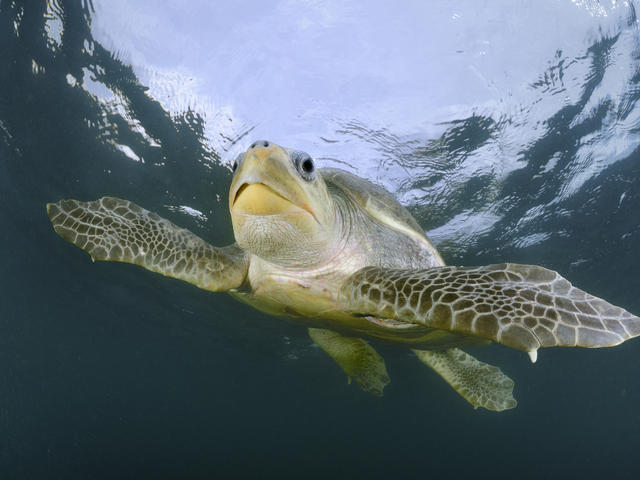
The grouse shooting industry tried to explain away these ‘disappearances’ with a number of desperately implausible excuses. First it was non-existent windfarms (here), then it was claimed ‘bird activists’ were responsible as part of a smear campaign against driven grouse shooting (here, here). But best of all was the claim by the Scottish Countryside Alliance of ‘faulty tags’. The SCA published a statement that claimed scientific research had shown that ‘tag failure rates could be as high as 49%’. We managed to track down this scientific research and discovered it referred to satellite tags that had been fitted to Olive Ridley turtles off the coast of India, where a saltwater switch was a known problem (see here).
In the courts a December trial date was eventually set (here) in the vicarious liability prosecution of Andrew Duncan (Newlands Estate). The case was continued against Scottish gamekeeper Stanley Gordon, accused of the alleged shooting of a hen harrier on Cabrach Estate in 2013 (here).

We were able to reveal the location of a coordinated hunt and shooting of a hen harrier in 2013 – turns out to have taken place in Glen Gairn, on the border between Invercauld and Dinnet Estates in the Cairngorms National Park (here), not a million miles away from where the illegal traps had been discovered at Invercauld earlier this summer. And on that subject, Police Scotland issued a vague statement about what had been found at Invercauld (here).

Hen Harrier Day took place for the third year running with events across the UK (here) and the following week, Mark Avery’s e-petition to ban driven grouse shooting passed 100,000 signatures (here), the amount needed to trigger a parliamentary debate at Westminster.

The harassment and intimidation campaign against one of our bloggers continued when her mobile number was published by someone in the grouse shooting industry, resulting in threatening text messages being sent in the middle of the night (here).

The Scottish petition calling on the Government to introduce a licensing scheme for gamebird hunting came to a close and was submitted to the Public Petitions Committee (here), and Marks and Spencer announced that they had abandoned grouse sales again (here).

After a series of FoIs, more detail emerged about the individual licences that SNH had issued to Raeshaw Estate to allow the estate gamekeepers to continue their trapping/killing activities as though the General Licence restriction order didn’t even exist (see here), and Natural England revealed that their licensing policies relied on a flawed assumption that gamekeepers don’t illegally kill raptors (here).

We lost a good friend, Richard Evans (here).

SEPTEMBER

A young peregrine was shot in Devon (here), 3 poisoned buzzards were found in Ireland (here), a peregrine was found shot shot next to a grouse moor in the Peak District National Park (here) and a shot marsh harrier was found next to a pheasant pen on the Sledmere Estate in East Yorkshire (here).

Young satellite-tagged hen harrier ‘Brian’ ‘disappeared’ in the Cairngorms National Park (here). The Environment Cabinet Secretary Roseanna Cunningham issued a bland holding statement in response, and the Cairngorms National Park Authority published a non-statement that wasn’t worth the paper it was written on (here).

We blogged about the long-term persecution of raptors in the Cairngorms National Park (here) and suggested ways of how to bring it to an end (here). The CNPA convener issued a statement of the bleedin’ obvious when he said ‘raptor persecution in the Cairngorms National Park was a PR disaster’ (here).

In the courts a December trial date was set for Scottish gamekeeper Stanley Gordon, accused of the alleged shooting of a hen harrier on Cabrach Estate in 2013 (here) and a November hearing date was set for Raeshaw Estate’s ongoing judicial review of SNH’s decision to impose a General Licence restriction (here).

A raptor conference took place in Sheffield with Angela Smith MP saying that illegal raptor persecution has to stop (here) and Philip Merricks of the Hawk & Owl Trust saying…..well, we’re not sure what he said (here).

Sticking with Philip Merricks, we had asked whether the HoT would remove itself from the hen harrier brood meddling plan in light of the pole-trapping crimes uncovered on Mossdale Estate – it turned out that the Hawk & Owl Trust’s ‘immoveable provisos’ were actually moveable after all (here). Rod Leslie, a prominent member of the HoT sent an open letter to Philip Merricks advising him to get his act together if he wanted to save the Trust’s reputation (here).

The Heads up for Hen Harriers charade continued (here) and we learned that tackling raptor persecution featured in the Scottish Government’s 2016-2017 work plan (here).

Compelling evidence on the reliability of satellite tags (94%!) was provided by a researcher involved with the long-term sat tagging of Montagu’s harriers (here).

The BBC stuck two fingers up to the nasty brigade when they ruled that Chris Packham’s involvement in the ban driven grouse shooting campaign had not breached any BBC regulations (here).

It emerged that the Royal family was using soldiers to work as private beaters on a driven grouse moor in the Cairngorms National Park (here) and after a series of FoIs, we discovered that Invercauld Estate had taken ‘action’ in relation to the illegally set traps that had been discovered on their grouse moor in the summer. However, the details of that ‘action’ were not made public – it was a closely guarded secret between Invercauld Estate, the Cairngorms National Park Authority and the Scottish Government (here).

We reached the two year anniversary of the Scottish Government’s consultation on increased powers for the SSPCA and still a decision hadn’t been made (here).

OCTOBER

Satellite-tagged hen harrier ‘Rowan’ was found dead in suspicious circumstances in the Yorkshire Dales National Park (here), a buzzard was found with shotgun injuries near Thirsk, North Yorkshire (here), a peregrine was found shot dead in the Yorkshire Dales National Park (here) and a baited pole trap was found set next to a pheasant pen in Devon (here).

Satellite-tagged hen harrier ‘Hermione’ was found on Mull but the death was not thought to be suspicious (here).

There was extensive fire damage at Moy Estate after the heather had been treated to a ‘hair cut’ (here, here) and an investigation by Friends of the Earth revealed that driven grouse shooting was costing the taxpayer millions of pounds (here).

RSPB Scotland denounced SNH’s General Licence restriction on Raeshaw Estate as ‘farcical’ (here) and we exposed the partnership-working sham of SNH’s Heads up for Hen Harriers scheme (here).

Mossdale Estate in the Yorkshire Dales National Park came under fire from local residents (here).

A new report showed that the illegal persecution of red kites in northern Scotland was at the same level as it was 25 years ago (here) but another report suggested a bright future for white-tailed eagles in western Scotland (here).

Members of the Scottish Raptor Study Group gave compelling evidence on raptor persecution to the Public Petitions Committee at Holyrood (here) and we wrote a review blog about mountain hare massacres on Scottish grouse moors as charity OneKind announced a public protest would take place at Holyrood in November against mountain hare culling (here).

An evidence session on the issue of driven grouse shooting took place at Westminster (here, here) in preparation for the debate at the end of the month, and we also reviewed the written evidence that had been published in advance on the Parliamentary website (here).

Chris Packham received an Outstanding Achievement Award (a ‘Green Oscar’) at the 2016 Wildscreen Festival (here) and we paid tribute to Mark Avery on the eve of the Westminster debate on driven grouse shooting (here).

NOVEMBER

Satellite-tagged hen harrier ‘Tarras’ ‘disappeared’ in the Peak District National Park (here), Cumbria Police issued a vague statement saying that satellite-tagged hen harrier ‘Rowan’, whose body had been found in the Yorkshire Dales National Park last month, was ‘likely to have been shot’ (here). This is yet another cover up and we’ll be blogging about it in the New Year.

The shot marsh harrier that had been found next to a pheasant pen on the Sledmere Estate, East Yorkshire in September was successfully rehabbed and released back to the wild by Jean Thorpe (here).

In court the vicarious liability prosecution against Andrew Duncan (Newlands Estate) continued to drag on, with the December trial date now dumped and the case was continued (see here, here). The case was also continued against Scottish gamekeeper Stanley Gordon, accused of the alleged shooting of a hen harrier on Cabrach Estate in 2013 (here).

We blogged about the Westminster debate on grouse shooting which had descended in to a pantomime with more than its fair share of comedy villains (here) and contrasted the performance with a debate in Holyrood where a series of MSPs stood up to speak with sincerity about being Species Champions (here).

The results of the 2015 national golden eagle survey showed an increase in the overall population but it was revealed that the species is still ‘missing’ from many driven grouse moors in the Eastern Highlands (here).

The 2014 annual report on wildlife crime in Northern Ireland was published (here), as was an annual report on wildlife crime in Scotland, although raptor persecution data was deliberately withheld from the Scottish report, for unknown reasons (here).

Mull Eagle Watch won another award (here) and we were told that the Scottish Government’s commissioned review on gamebird hunting licensing systems in Europe would be published shortly (here).

More Parliamentary Questions on mountain hare culling were posed by another MSP from the Scottish Greens (Alison Johnstone), and the Cabinet Secretary responded by saying that ‘more evidence’ was required before mountain hare culls would be regulated (here).

Meanwhile, OneKind held a successful protest rally at Holyrood against mountain hare culling and we revealed that a Cairngorms National Park board member had told Scottish gamekeepers to literally ‘cover up’ dead mountain hares so that embarrassing photographs couldn’t find their way on to social media (here). This cover up was later denied, rather unconvincingly (here).

A series of FoIs revealed what DEFRA’s hen harrier brood meddling team had got planned (here, here, here, here) as well as a little bit about the proposed ‘reintroduction’ of hen harriers to southern England (here). We’ve since got some more FoI responses on this that we’ll blog about in the New Year.

DECEMBER

Satellite-tagged hen harrier ‘Beater’ was ‘lost, presumed dead (here).

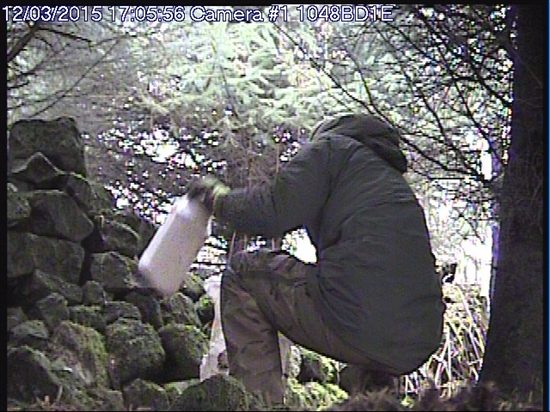
An RSPB Investigations blog revealed that in 2015 a gamekeeper had been filmed with a poisons cache on the East Arkengarthdale Estate, next to the Yorkshire Dales National Park. The CPS had decided not to prosecute but North Yorkshire Police revoked his firearms certificates. The gamekeeper appealed this decision and the judge reinstated this man’s firearms, even though it was accepted in court that he had indeed been involved with the illegal poisons cache (here). We asked some questions of the grouse shooting community about this case (here) – yet to receive a response. We also asked some questions about a potential subsidy penalty for this estate (see here) – we’ll be following up on this in the New Year.
arken

Also in the courts this month, yet another trial date was set for Andrew Duncan (vicarious liability prosecution) – the third time a trial date has been set for this case. It is now due to take place in April 2017 (see here). Stanley Gordon’s trial date was also dumped – the case has been continued until Feb 2017 (here). And yet another trial date was set in the case against Angus Glens gamekeeper Craig Graham – now scheduled to take place in May 2017 (here).

The buzzard that had been found in October with shotgun injuries near Thirsk, North Yorkshire, was successfully rehabbed and returned to the wild by Jean Thorpe (here).

We raised more questions about the Invercauld Estate illegal traps fiasco (here) – there appears to be something dodgy going on here and we intend to revisit this in the New Year.

RSPB Scotland denounced SNH’s general Licence system as a cover for the illegal destruction of birds of prey (here) and we learned that Scottish gamekeepers want to see white-tailed eagles, red kites, buzzards, sparrowhawks and ravens added to the list of species that can be killed under the remit of a General Licence (see here).

The Scottish Moorland Group and BASC ducked and dodged some awkward questions when they appeared in front of the Public Petitions Committee who are considering a petition to introduce licensing for gamebird hunting in Scotland (here).

We were told that giant buzzards are eating dogs in Tipperary (here) but even this unbelievable nonsense was eclipsed by the Gift of Grouse who claimed that ‘raptors are thriving on driven grouse moors (here). RSPB Scotland responded by dismissing it as ‘risible, make-believe tosh’ (here).

The Gift of Grouse propaganda machine was further exposed when a report was finally published about the breeding status of birds on Invermark Estate – it turned out that that the claims made by the Gift of Grouse weren’t true after all (see here) – who’d have guessed?

We published (much to the SGA’s annoyance) the minutes of a meeting between the Cairngorms National Park Authority and the Scottish Gamekeepers’ Association, which provide an endless source of entertainment (here).

The Scottish Justice Committee is examining the performance of the Crown Office & Procurator Fiscal Service and heard damning evidence from Scottish Environment LINK about questionable procedures (here).

Mark Avery won Birdwatch magazine’s Conservation Hero of the Year Award (here).

The Scottish Greens continued to ask excellent Parliamentary Questions when it was discovered that VisitScotland would be match funding a marketing campaign for Scottish country sports. Andy Wightman MSP asked whether public money would be given to landowners or managers where wildlife crime had been uncovered (here). We also raised the point that the partner agency in this scheme (Scottish Country Sports Tourism Group) was actively promoting a convicted wildlife criminal on its website and questioned why this group was afforded a Parliamentary reception (here).

It’s been an eventful year. Thanks for all your support!

Our year in review: January – June 2016

This year has been the busiest ever for this blog with over 870,000 views, up from 556,000 views in 2015.

Here are some of the year’s highlights from January – June, with part two coming shortly.

JANUARY

We started the year analysing some data. We looked at RSPB Scotland’s recently published 20 year review of crimes against raptors and discovered a load of crimes in the Scottish Borders that had previously gone unreported (see here). We also looked at data published by the Scottish Raptor Monitoring Scheme and realised that there had been no breeding hen harriers recorded in the Angus Glens since 2006 (see here).

DEFRA published its Hen Harrier (In)Action Plan, which included its intention to begin brood meddling (see here). We weren’t too concerned about the onset of brood meddling because we believed (erroneously, as it turned out) that there would need to be a minimum of 70 breeding pairs before brood meddling would begin. How wrong we were. Disappointingly, Martin Harper of the RSPB said he welcomed the InAction Plan.

The Countryside Alliance kicked off another year of fantastical denial with an article in Countryfile magazine claiming that hen harriers were on the increase thanks to grouse moor management (see here). The fairy tales continued with more shameless spin-doctoring north of the border from the Gift of Grouse, who tried to portray raptor workers as the main stumbling block to tackling raptor persecution (see here).

Police Scotland came in for criticism over their responses to two suspected persecution incidents (see here) while a reward was doubled for information about a peregrine poisoning case in Shropshire (see here).

In the courts, proceedings continued in the vicarious liability prosecution against Andrew Duncan of the Newlands Estate in Dumfriesshire (see here) and in the case against a Glenogil Estate gamekeeper accused of alleged snaring offences in the Angus Glens (see here).

Mark Avery’s second e-petition to ban driven grouse shooting closed with just over 33,000 signatures (see here).

FEBRUARY

A new peer-reviewed scientific paper was published documenting the ‘catastrophic decline’ of hen harriers on the grouse moors of North East Scotland (see here). The paper was swiftly denounced by the Scottish Moorland Group as ‘deeply flawed’ with ‘a lamentable lack of evidence’, which was actually a very good description of the Scottish Moorland Group’s interpretation of the science (see here).

The General Licence restrictions on Raeshaw and Burnfoot Estates were reinstated in the latest on/off fiasco (see here) and it was confirmed that Raeshaw Estate was going for a Judicial Review of SNH’s decision to enact such restrictions (see here).

We blogged about the Scottish Parliament’s Rural Affairs, Climate Change & Environment Committee hearing that had taken place in January. Scotland’s chief wildlife crime cop, Assistant Chief Constable Malcolm Graham had once again used guesswork to assess the extent of wildlife crime in Scotland (see here) and members of Scottish Environment LINK later wrote to the RACCE committee to express ‘disquiet’ over other parts of Police Scotland’s evidence (see here). The Ross-shire Massacre was also discussed at the RACCE meeting with more questions asked about Police Scotland’s handling of the investigation (see here). The Committee also wrote to the Environment Minister Dr Aileen McLeod, urging her to get off the fence re: the decision to give increased investigatory powers to the SSPCA and pressed her for a decision on the recommendations of the Wildlife Crime Penalties Review (see here).

Derbyshire Constabulary launched an appeal for information five months after the discovery of a spring-trapped Osprey and a shot buzzard in the Peak District National Park (see here). The RSPCA launched an appeal for information after a pigeon was found in Lichfield with sharp hooks attached to its legs, believed to be used as a method of causing serious injury to any sparrowhawk or peregrine that might attack the pigeon (see here).

More photographs emerged of slaughtered mountain hares in the Angus Glens (see here). Head gamekeeper Simon Lester announced his resignation from the Langholm Moor Demonstration Project (here) and Environment Minister Dr Aileen McLeod announced her acceptance of the recommendations made in the Wildlife Crime Penalties Review (see here).

The (Mis)understanding Predation report was published, leading to the Scottish Gamekeepers’ Association inevitably suggesting a pilot study of removing buzzards ravens and badgers to ‘save curlews’ (see here).

MARCH

Environment Minister Dr Aileen McLeod said she hoped to announce the Government’s position on increased powers for the SSPCA “shortly” (see here).

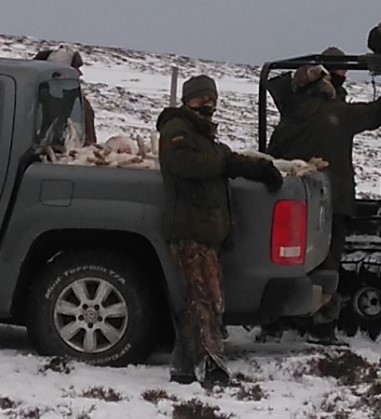
We published a shocking photograph taken in the Cairngorms National Park of a truck-load of slaughtered mountain hares (see here), which led to widespread public revulsion. Balmoral Estate was also accused of participating in mountain hare massacres (see here). After complaints from the public about mountain hare culls in the National Park, the Cairngorms National Park Authority published a non-statement in response (see here) and the Scottish Moorland Group also tried (and failed) to defend this barbaric behaviour (see here).

There was further embarrassment for the Cairngorms National Park Authority when hen harrier ‘Lad’ was found dead, suspected shot (see here). The CNPA issued a lame statement in response (see here).

In other hen harrier news, it was announced that the Lush Skydancer bath bomb campaign had raised over £100K for more satellite tagging (see here), and the RSPB confused everyone with what looked like a statement saying there would be a ‘news black out’ on the 2016 hen harrier breeding season (see here), but clarifed shortly afterwards that there wouldn’t be a news black out (see here).

The two year-anniversary of the Ross-shire Massacre passed with no progress in the Police investigation (see here) and the Scottish Government published the ‘official’ persecution figures from 2015, showing a slight increase in reported crimes but with details of several crimes ‘withheld’ for unknown reasons (see here).

In the courts the Crown Office dropped the prosecution against a gamekeeper from Glenogil Estate for alleged snaring offences (see here) and the vicarious liability prosecution against Andrew Duncan (Newlands Estate) was continued, again (see here).

It was announced that the Langholm Moor Demonstration Project was winding down prematurely (see here), a new peer-reviewed scientific paper was published on the damning environmental impacts of driven grouse shooting (see here), and Mark Avery launched his third e-petition to ban driven grouse shooting (see here).

A new initiative to tackle illegal raptor persecution was launched in Northern Ireland (see here) and more horrific raptor persecution was uncovered in North Yorkshire (see here).

A review of some RSPB annual persecution reports revealed there had been a mass poisoning of raptors (red kites & buzzards) on an unnamed estate in Wales a couple of years ago and we suggested there had been a police cover up (see here) – an accusation that Powys Police denied (see here).

APRIL

The shot red kite reported in March was successfully rehabbed and released back to the wild in North Yorkshire by the remarkable Jean Thorpe (see here). However, raptor persecution crimes continued with a buzzard shot in East Yorkshire (here), a dead peregrine found in suspicious circumstances at a raptor persecution hotspot in Northern Ireland (here), a red kite shot dead in NE England (here), a red kite shot in Harrogate, North Yorkshire (here), a goshawk shot in the head in Gloucestershire (here), and two red kites shot in the Thames Valley (here).

There were calls in Scotland to have ravens added to the General Licence to allow the indiscriminate killing of this species, with some hilarious justification from Bert Burnett of the Scottish Gamekeepers’ Association (here).

In the courts, four pigeon men were convicted of poisoning sparrowhawks and peregrines in a landmark case in Ireland (here), we learned that Scottish gamekeeper Billy Dick was appealing his 2015 conviction for killing a buzzard (here), Angus Glens gamekeeper Craig Graham was charged with alleged pole-trapping offences (here), and the vicarious liability prosecution against Andrew Duncan (Newlands Estate) was continued, again (here). SNH suspended the General Licence restriction on Raeshaw Estate (again) while the Judicial Review got underway (here).

‘Respected’ journalist Magnus Linklater made up some rubbish about the Langholm Project (here) and the Scottish Moorland Group made up some rubbish about heather burning, claiming it was ‘the same as getting your hair cut’ (here). Ian Botham came back out of the woodwork to entertain us with another cock and bull diatribe against the RSPB (here).

Banning driven grouse shooting made it on to the political agenda in Scotland at a national hustings event in the run up to the May election (here) and an RSPB complaint about heather burning on an English grouse moor sparked the beginnings of European legal action (here).

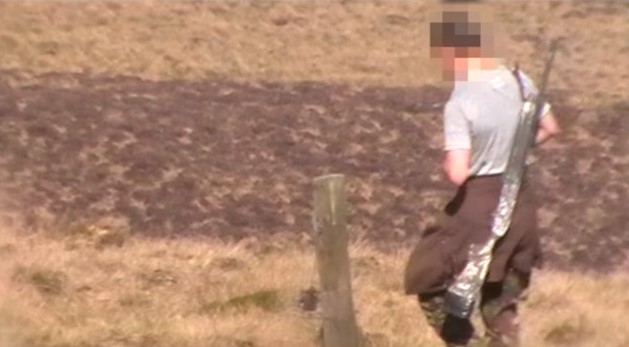
We published a video, recorded by one of our blog readers in the Peak District National Park, showing an armed man on a grouse moor owned by the National Trust, sitting close to a decoy hen harrier (see here). The National Trust responded by launching a ‘full investigation’ (here), the Peak District National Park Authority responded by saying the content of the video was ‘alarming and suspicious’ (here) while the Moorland Association responded by denying there was anything to see in the video (here).

MAY

The buzzard that had been shot in East Yorkshire last month was successfully rehabbed and released back to the wild by Jean Thorpe (see here). A red kite was found shot and critically injured next to a grouse moor in North Yorkshire (here), two buzzards were found poisoned in two separate incidents in Northern Ireland (see here), a goshawk was found shot on an unnamed shooting estate in the Cairngorms National Park (here), a red kite was shot dead on its nest in West Yorkshire (here) and Police Scotland investigated the disappearance of two breeding peregrines from nest sites in Dumfries & Galloway (here).

In the courts a Scottish gamekeeper was fined for leaving a loaded gun out on a hillside (here), the Judicial Review of SNH’s decision to restrict the use of General Licences on Raeshaw Estate got underway (here), judgement was reserved in Scottish gamekeeper Billy Dick’s appeal against his 2015 conviction for killing a buzzard (here), a September trial date was set for Angus Glens gamekeeper Craig Graham accused of alleged pole-trapping offences (see here), a pigeon man in Cumbria was convicted of illegally storing Carbofuran (here), and Scottish gamekeeper Stanley Gordon was charged with the alleged shooting of a hen harrier on Cabrach Estate in 2013 (here).

Environment Minister Dr Aileen McLeod failed to secure re-election while land reform campaigner Andy Wightman joined the Scottish Parliament as an MSP for the Scottish Greens (here). The role of Environment Minister was given to Roseanna Cunningham MSP (again), although the position was now elevated to Cabinet Secretary status (see here).

There were parliamentary questions from Mark Ruskell MSP (Scottish Greens) on mountain hare slaughter (here) and wildlife crime (here). The new Cabinet Secretary was also asked about increased powers for the SSPCA, especially as a local council had just approved increased SSPCA powers for dealing with the illegal puppy trade (here). But to everyone’s frustration the Cab Sec gave a fairly non-committal response saying a ‘decision will be announced in due course’, whenever that might be (here).

Gas guns were photographed on a grouse moor in the Peak District National Park (here) and SNH gave some contradictory advice about the use of gas guns on grouse moors in Scotland (here).

The hysteria about about ravens grew in Scotland, aided by an astonishingly dodgy article published by the BBC (here), and talking of dodgy articles, Scottish Land & Estates were still in denial about raptor persecution (here).

We reported on the use of pesticide leg bands being attached to the legs of red grouse on the Cabrach Estate (here), a claim later denied (here).

A very funny video was published giving us all some much needed light relief (here).

JUNE

Police opened an investigation in to the suspicious death of a 10th red kite in North Yorkshire (here). Suspected persecution was reported from Moy Estate in the Monadhliaths (see here), a goshawk was suspected to have been shot in the Peak District National Park (here) and satellite-tagged hen harrier ‘Chance’ ‘disappeared’ on a South Lanarkshire grouse moor (here).

An RSPB Investigations team filmed a man setting pole traps on a grouse moor on Mossdale Estate in the Yorkshire Dales National Park (see here). It was later revealed the man was employed as a gamekeeper on the estate (see here). Instead of charging the gamekeeper for these offences, North Yorkshire Police decided let him off with a caution.  The Police tried to justify that decision but we challenged it after reviewing the guidelines that the Police are supposed to use (see here). A senior police officer agreed to investigate our complaint. Mossdale Estate ‘resigned’ from the Moorland Association (here), and it was clear from a leaked document that the Moorland Association was feeling the pressure of increased public scrutiny (here). We wondered whether the Hawk & Owl Trust would now pull out of the hen harrier brood meddling scheme seeing as one of their ‘immoveable provisos’ had now been breached (here).

In the courts, the vicarious liability prosecution against Andrew Duncan (Newlands Estate) was adjourned, again, twice (here, here) as was the case against Scottish gamekeeper Stanley Gordon, accused of the alleged shooting of a hen harrier on Cabrach Estate in 2013 (see here).

Natural England produced some pisspoor ‘guidance’ on the use of gas guns (here), while in the Angus Glens other disturbance techniques in use on grouse moors were revealed: inflatable scary man (here) and exploding banger ropes (here).

SNH reinstated the General Licence restriction on Raeshaw Estate (here, are you keeping up with this?) which was pretty pointless as they’d also issued individual licences that would allow the gamekeepers to carry on killing anyway (see here) and we learned that the Scottish Government had no plans to monitor mountain hare culling on grouse moors (here).

Martin Harper of the RSPB gave everyone a pathetically vague update on the status of this year’s breeding hen harriers in England, telling us there was ‘only a tiny handful’ (here).

After a few months of submitting FoIs to various agencies, we were able to reveal the location of the mass raptor poisoning in Wales as Glanusk Estate in the Brecon Beacons National Park (here).

The National Trust finally grew a pair and announced some very welcome news: they were pulling the lease on the grouse moor in the Peak District National Park where the armed man had been filmed sitting next to a hen harrier decoy (see here).

Part two of our year in review (July – December 2016) can be read here

Satellite-tagged hen harrier ‘Beater’ is lost, presumed dead

Another of the 2016 cohort of satellite-tagged hen harriers has been reported as ‘lost’, presumed dead.

This time it’s a bird called ‘Beater’, a young male who hatched on the admirable Glen Feshie Estate in the Cairngorms National Park. According to the most recent blog update from Blanaid Denman (Project Manager, RSPB Hen Harrier Life Project):

Sadly, no data has been received from Beater since his tag last transmitted on 14th November. His last known location was on an area upland pasture in the central Scottish Borders. We have no information to suggest anything illegal has happened, the transmissions did not stop abruptly as in other recent cases, but we do now think it most likely that he has died” (read the full Skydancer blog here).

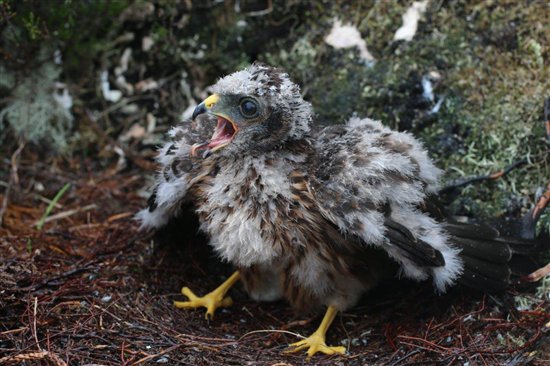
Photo of Beater shortly before fledging (photo by Ewan Weston)

The class of 2016 are not doing very well. In addition to Beater, here are some of the others that haven’t survived past November:

Hen harrier Elwood – ‘disappeared’ in the Monadhliaths just a few weeks after fledging.

Hen harrier Brian – ‘disappeared’ in the Cairngorms National Park just a few weeks after fledging.

Hen harrier Donald – missing in northern France, presumed dead.

Hen harrier Hermione – found dead on Mull, believed to have died from natural causes.

Hen harrier Rowan – found dead in Yorkshire Dales National Park. Cumbria Police said ‘likely to have been shot’. There is no ambiguity – this bird was shot (more on this soon).

Hen harrier Tarras – ‘disappeared’ in the Peak District National Park.

Also ‘lost’ this year were two birds from the 2014 cohort: Hen harrier Highlander ‘disappeared’ in Co Durham in April and Hen harrier Chance ‘disappeared’ in South Lanarkshire in May.

At least eight of the 2016 cohort are still alive (Aalin, Bonny, Carroll, DeeCee, Finn, Harriet, Wendy and Sorrel). Thanks to regular updates from Blanaid and her colleagues (thank you – much appreciated), these birds’ movements can be followed on the project website (here) with the exception of Sorrel, whose movements are being monitored on the Hawk & Owl Trust website (here). How many will make it to Xmas?

Shot buzzard rehabilitated & returned to the wild in North Yorkshire

At the end of October we blogged about a buzzard that had been found with shotgun injuries in Thirsk, North Yorkshire (see here).

The bird’s broken femur was expertly pinned by Mark Naguib of Battle Flatts Veterinary Clinic and the buzzard then underwent a period of care and rehabilitation with the wonderful Jean Thorpe of Ryedale Wildlife Rehabilitation.

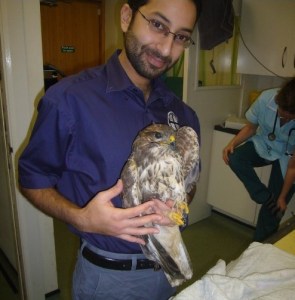
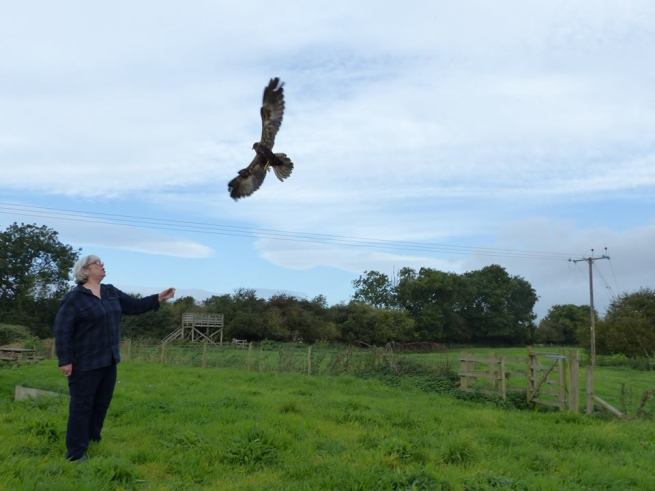
Yesterday this buzzard was released back to the wild (pictured here with vet Mark Maguib – photo by Jean Thorpe)

We’ve said this before but we’ll say it again – Jean’s work is entirely voluntary. If you want to support her efforts, please consider making a donation here.

Illegally-set traps on Invercauld Estate: not another cover up?

Cairngorms Invercauld - CopyIn July we blogged about the discovery in June of a critically-injured Common gull that had been found caught in two illegally-set spring traps on Invercauld Estate in the Cairngorms National Park (see here).
We also blogged about a bizarre press statement from Invercauld Estate (issued via the GWCT’s twitter feed) in which they denied any illegal activity had taken place or if it had, it was perhaps a set-up ‘intended to discredit the grouse industry‘ (see here).

We also blogged about the Scottish Gamekeepers’ Association’s response, which was an announcement that they would conduct their own enquiry before commenting further (see here).

We also blogged about Police Scotland’s view that a Common gull had been found caught in an illegally-set trap but ‘despite a thorough investigation‘, Police enquiries had failed to find further evidence to proceed with a potential prosecution and ‘there are at present no further investigative opportunities available‘ (see here).

In September, through a series of FoIs, we uncovered a very interesting letter, dated 27 July 2016 and written by Angus McNicol, who identified himself as the Estate Manager for Invercauld Estate. The letter was addressed to the Cabinet Secretary for the Environment, Roseanna Cunningham. A copy of the letter was also sent to the Cairngorms National Park Authority (CNPA). It was written, in our view, to reassure the Cabinet Secretary and the CNPA that Invercauld Estate takes wildlife crime very seriously and that they’d ‘taken action’ in this case. The specific action taken was unknown (to us) because that part of the letter had been redacted. We’ll come back to this.

Since then, it all went quiet, apart from a persistent rumour (we’ve been told this by five separate, well-informed sources) that a gamekeeper had been sacked as a result of this incident. This claim has also been made on the ParksWatchScotland blog (here), which says: ‘Unusually, the gamekeeper in this case has been dismissed, although he apparently has not been charged‘.

Hmm. Naturally, we wanted to find out if this rumour had any basis.

We knew that Grant Moir (CNPA Chief Executive) had asked for a meeting with Invercauld Estate and the sporting partner ‘to discuss the issue’ of the illegally-set traps – he had said so in a press statement in July (here). Perhaps the minutes from that meeting would reveal whether a gamekeeper had been sacked, so we asked, via FoI, for a copy of those minutes.

We received a response from the CNPA in mid-November which confirmed that two meetings had indeed taken place:

Meeting 1 (22 August 2016) with the following people present: Peter Argyle (CNPA Convener), Grant Moir (CNPA Chief Executive), Hamish Trench (CNPA Director of Conservation & Visitor Experience) and Invercauld Estate’s sporting partner from the Micras beat (his name was not given).

Meeting 2 (25 August 2016) with the following people present: Peter Argyle (CNPA Convener), Grant Moir (CNPA Chief Executive), Hamish Trench (CNPA Director of Conservation & Visitor Experience), the Chair of Trustees for Invercauld Estate (name not given) and the Manager for Invercauld Estate (name not given but presumably this was Angus McNicol, the author of the letter from Invercauld Estate to the Environment Cabinet Secretary).

According to the CNPA’s response to our FoI, ‘The purpose of both meetings was to discuss the recent incident and understand the actions taken by the estate and sporting partner. As a result of the meetings we will now be meeting with the other sporting partners on Invercauld Estate‘.

Interestingly, according to the CNPA, there isn’t a record of the minutes from either of these meetings.

So, we’re still none the wiser about whether a gamekeeper was sacked by Invercauld Estate, which brings us back to that redacted letter from Invercauld Estate to the Cabinet Secretary. Was the readacted part of that letter a statement from Invercauld Estate, saying that they’d sacked a gamekeeper as a result of this incident?

If so, that’s incredible. A wildlife crime took place on Invercauld Estate in June 2016 (that’s undeniable). Has Invercauld Estate identified a suspect and sacked him/her? And if so, does the Scottish Government know about it, does the Cairngorms National Park Authority know about it, and does the Scottish Gamekeepers’ Association know about it (given they were conducting their ‘own enquiry’ in to this incident back in July)?

The question then becomes, does Police Scotland know about it, and if so, will they be prosecuting? If not, why not?

Some transparency about this case wouldn’t go amiss.

Satellite-tagged hen harrier Tarras ‘disappears’ in Peak District National Park

‘Tarras’, a young hen harrier from this year’s Langholm cohort, has ‘disappeared’ in the Peak District National Park.

tarras

The following statement has been issued on the Langholm blog:

We have concerns for ‘Tarras’ a young female Hen Harrier tagged by Stephen Murphy (Natural England) at Langholm this summer.

The transmitter on the juvenile Hen Harrier Tarras has not transmitted since the 23rd October. The area has been searched and nothing was found and no hen harriers were seen in the area.

The last known fix area is on land owned by United Utilities in the north Peak District.

Tarras flew south from Scotland in the last weeks of September, arriving in the Nottingham area on the 11th October. She then headed north through Staffordshire and was roosting in the Peak District, near to the last known fix area on 13th October.

Tarras’ transmission period (duty cycle) was regular until 23rd October; on 23rd October it ran a complete transmission period (e.g. no sudden cessation of data within the 10hr transmission period). The local weather in the days immediately after 23rd were damp and overcast so this can delay the recharge time. However, by 26th concerns were raised. We have some evidence that suggest this may be a tag failure and we are currently trying to gather more information to help us resolve this.

END

That final sentence is a bit strange, and is at odds with what has been reported about the tag’s last smooth-running duty cycle. It’s worth revisiting a comment about tag reliability made recently by experienced researcher Dr Raymond Klaassen, who has been using satellite tags to track the movements of Montagu’s Harriers:

Technical failures generally are rare. We have recorded a few throughout the years (6% of all cases), however failures have always been preceded by irregular transmission periods and, most importantly, a drop in battery voltage (another parameter monitored by the transmitter). This makes it relatively straightforward to distinguish between a likely mortality event and a likely transmitter failure“.

So, given Tarras’ tag was not transmitting irregularly prior to her disappearance, what ‘evidence’ does Natural England have to ‘suggest this may have been a tag failure’?

It’s all a bit vague, isn’t it? A bit like the information put out about hen harrier Rowan who, according to Cumbria Police, was “likely to have been shot” in the Yorkshire Dales National Park.

We look forward to a timely update from Natural England about Tarras’ disappearance in the Peak District National Park.

UPDATE 16 March 2021: Interestingly, ‘Tarras’ is not listed on Natural England’s database of satellite-tagged hen harriers – why is that? See: https://www.gov.uk/government/publications/hen-harriers-tracking-programme-update/hen-harrier-annual-tracking-update

Hen Harrier Rowan ‘likely to have been shot’ in Yorkshire Dales National Park

On 28 October 2016 we learned that one of this year’s young hen harriers had been found dead in Cumbria in suspicious circumstances (see blog here).

This was a hen harrier called Rowan, who had hatched at Langholm this summer and was one of two hen harriers being satellite-tracked by the Hawk & Owl Trust.

rowanhh

The press release from the Hawk & Owl Trust and Natural England had just said Rowan’s body had been found in Cumbria on 22 October 2016, and following a post mortem, details had been passed to the police.

Today, Cumbria Police have issued a press statement as follows:

Cumbria Police have opened an investigation into the death of a hen harrier.

The body of a male Hen Harrier was found in the Ravenstonedale area of the county on 22nd October 2016. A post-mortem examination funded by Natural England and carried out by the Zoological Society of London has established that the bird was likely to have been shot.

The hen harrier, called Rowan, was satellite tagged at the Langholm Project as part of a joint venture between Natural England and the Hawk and Owl Trust. The bird had recently flown in the Cumbria and North Yorkshire Dales area before being found at Ravenstonedale.

Hen Harriers are specially protected under the Wildlife and Countryside Act, and the Government has set raptor persecution as one of their wildlife crime action priorities.

There is huge pressure on the survival of the hen harrier in England particularly and projects such as this are working hard to assist with the bird’s survival. Cumbria Police are working alongside such organisations to progress this investigation.

Anyone with information is asked to contact police on 101 and ask to speak to PC 2059 Helen Branthwaite.

END

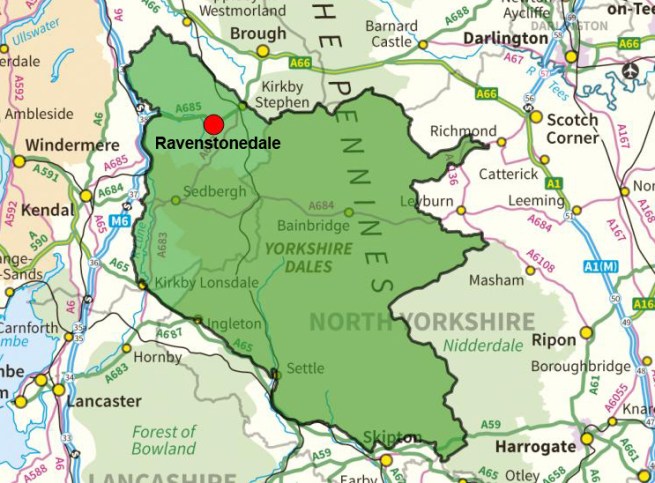
Ravenstonedale lies within the Yorkshire Dales National Park (the bit that was recently added in August 2016).

ravenstonedale

The statement that Rowan “was likely to have been shot” is a bit odd. It would have been useful for Cumbria Police to release a copy of the x-ray, as other police forces often do when appealing for information about shot birds. Perhaps there is justification for the vague statement about the cause of death, but then again, perhaps there isn’t. Did the post mortem report use the words ‘likely shot’? That would be an unusual phrase. Usually they say something like ‘injuries consistent with’ (being shot). There’s a big difference in interpretation. There’s a faint whiff of a cover up here. Not an overpowering stench, but definitely an aroma of something….

The reputation of the Yorkshire Dales National Park as a hell hole for hen harriers (and most other raptors) continues to grow. Hen harriers haven’t bred in this National Park since 2007 and young birds that visit don’t last very long either. Here are some YDNP hen harrier data (2007-2014) from Natural England we’ve blogged about before:

Female, tagged N England 26/6/07: last known location YDNP 5/10/07. Status: missing.

Female, tagged N England 16/7/09: last known location YDNP 27/9/09. Status: missing.

Male, tagged Bowland 29/6/09: last known location YDNP 17/8/09. Status: missing.

Female, tagged N England 29/6/10: last known location YDNP 25/11/10. Status: missing.

Female (Bowland Betty), tagged Bowland 22/6/11: last known location YDNP 5/7/12. Status: shot dead.

Female (Kristina), tagged N England 25/6/12: last known location YDNP 9/10/12. Status: missing.

Male (Thomas), tagged N England 4/9/12: last known location YDNP 4/9/12. Status: missing.

Male (Sid), tagged Langholm 21/9/14: last known location YDNP 21/9/14. Status: missing.

Female (Imogen), tagged N England 26/6/14: last known location YDNP 1/9/14. Status: missing.

Marsh harrier found shot on East Yorkshire sporting estate

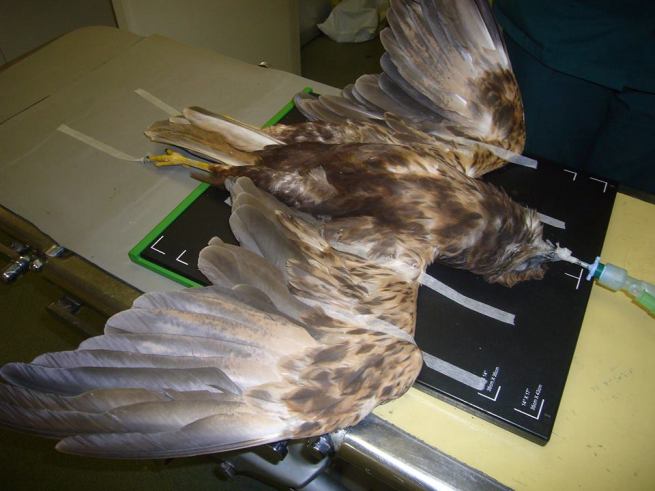
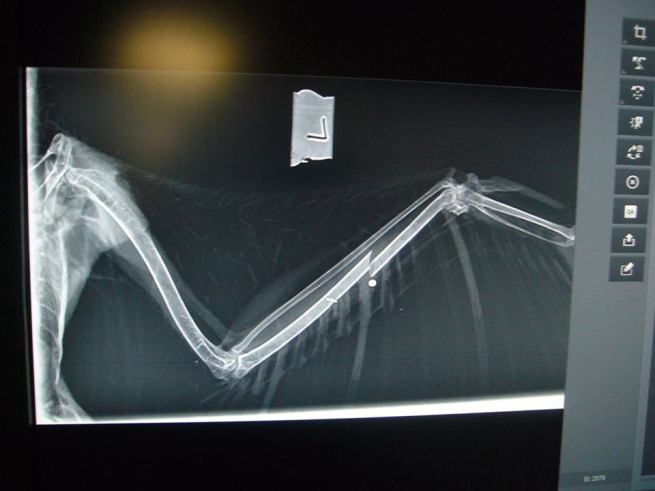
On 7th September 2016 an adult female Marsh harrier was found with shotgun injuries next to a partridge release pen on an East Yorkshire sporting estate.

The bird was rescued and underwent surgery at Battle Flatts vets in North Yorkshire.

mh-theatre

mh-xray

After surgery the bird was sent to Jean Thorpe in Ryedale for a period of rehabilitation.

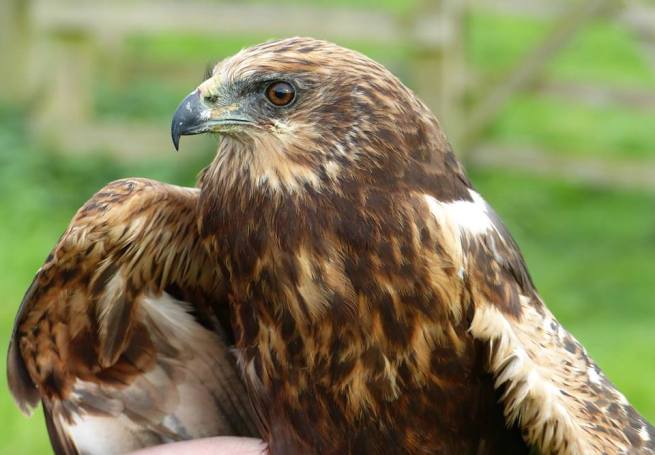
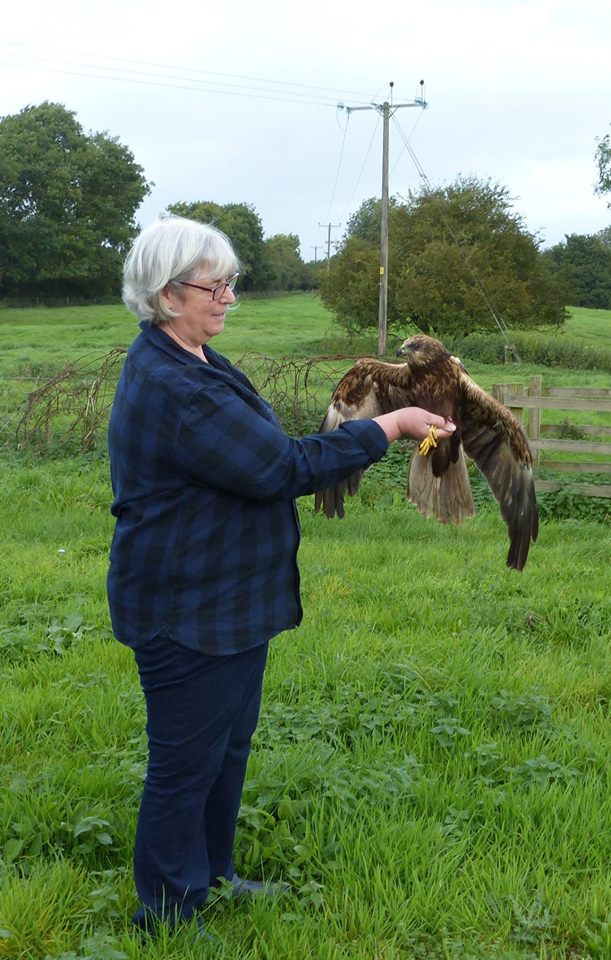
On 31 October 2016, Jean was able to release this bird back to the wild.

mh-release

mh-jean-1

mh-jean-2

A couple of things to mention here. This wildlife crime was uncovered nearly two months ago. We don’t know the circumstances of the bird’s discovery (e.g. Who found it? Who reported it?). We don’t know where or when it was shot, although looking at that x-ray it would be fair to assume the bird wouldn’t have been able to fly far from the location it was shot. We haven’t seen a Police press statement about this crime. Have they charged a suspect? If not, where’s the Police appeal for information? Are they still investigating? Isn’t wildlife crime supposed to be a police national priority? Pathetic.

On a more positive note, the work of Jean Thorpe at Ryedale Wildlife Rehabilitation continues to amaze us (and not forgetting the skill of vet Mark Naguib at Battle Flatts Veterinary Clinic). Jean’s efforts are the perfect antidote to watching those disgraceful braying Tory MPs on Monday evening. They’d do well to visit her for an hour and learn about decency and compassion. Of course, Jean is not the only raptor rehabber in the UK but, living in North Yorkshire, she sees more than her fair share of raptor persecution victims. We’ve said this before but we’ll say it again – Jean’s work is entirely voluntary. If you want to support her work, please consider making a donation here.

UPDATE 4 Nov 2016: North Yorkshire Police have finally issued an appeal for information here. They’ve carefully avoided naming the estate where this bird was found.