Police launch raptor crime awareness campaigns in Scotland, England & Wales

Police forces in England, Wales and Scotland have recently launched poster campaigns to raise awareness of crimes against birds of prey.

A couple of days ago, North Yorkshire Police announced their campaign against the illegal poisoning of raptors. They’ve produced a poster that will be distributed in rural areas including the Yorkshire Dales and the North York Moors; both of these areas are dominated by driven grouse moors and both areas are well known as raptor persecution hotspots. The posters will be displayed in National Park Centres and on parish council notice boards.

North York Police poisoning poster May 2015

Earlier this month, North Wales Police launched a campaign called Operation Raptor, aimed at targeting raptor poisoners in their region. This follows the poisoning of five peregrines last year and a suspected buzzard poisoning incident this year. The main peregrine poisoning suspects in the region are usually pigeon fanciers/racers.

Police Scotland launched their wildlife crime campaign in March (in collaboration with PAW Scotland), which involves raising awareness of all six national wildlife crime priorities, including raptor persecution.

These publicity campaigns are good to see. Excellent, in fact. However, the most important facet of tackling wildlife crime is not raising awareness (as important as that is), but what the police actually do in response to a reported wildlife crime. A recently published report on wildlife crime enforcement in Scotland revealed a catalogue of failures, including poor follow-up investigations and sometimes no follow-up at all (see here).

We’re watching with interest to see just how long it takes Police Scotland to publicise a number of raptor persecution crimes that have taken place within the last 12 months, especially those involving the use of banned poisons that have killed raptors on or very close to sporting estates with long histories of such crimes.

Eggs stolen from Marsh Harrier nest in Norfolk

Norfolk Constabulary is appealing for information following the theft of eggs from a Marsh Harrier nest in Guist, near Fakenham, Norfolk.

The theft is believed to have taken place on Sunday 10th May.

Norfolk Constabulary press release here

Nigel Pickover, editor of the Eastern Daily Press, says the newspaper is offering a £1K reward for information leading to a conviction (see here).

Marsh Harrier photo by Robert Pickett

Henry’s Tour Day 25: Deadly silence

Fri 8 May  - Copy

Today Henry went to visit the Hawk & Owl Trust.

He wanted to hear their view on the ‘disappearance‘ of three adult male hen harriers from active nests in Lancashire’s Forest of Bowland.

What does the Hawk & Owl Trust think might have happened to those three breeding birds?

Does the Hawk & Owl Trust think their ‘disappearance’ has anything to do with the grouse-shooting community in Bowland?

How will the ‘disappearance’ of those three breeding birds affect the Hawk & Owl Trust’s proposed brood-meddling trial?

48 hours after the news broke, the Hawk & Owl Trust has yet to publish a formal statement on their website or even casually mention it on their Twitter account.

Perhaps they’re still in talks with other pro-brood meddlers as to how to play this one, because the GWCT, Moorland Association and National Gamekeepers’ Organisation are all still to make formal statements.

Meanwhile, the RSPB has issued a second statement and has offered a £10,000 reward for any information which leads to a conviction. They clearly think crimes have been committed, as does Lancashire Constabulary (who are investigating) and as does anybody with a passing knowledge of the history of hen harrier persecution on driven grouse moors.

Even Natural England, the Government’s statutory conservation agency tasked with protecting hen harriers has managed to make a statement (here), for what it’s worth. Although they still haven’t managed to release the full results of their hen harrier satellite tagging study which began 8 years ago (see here).

Buzzard shot and killed in North York Moors National Park

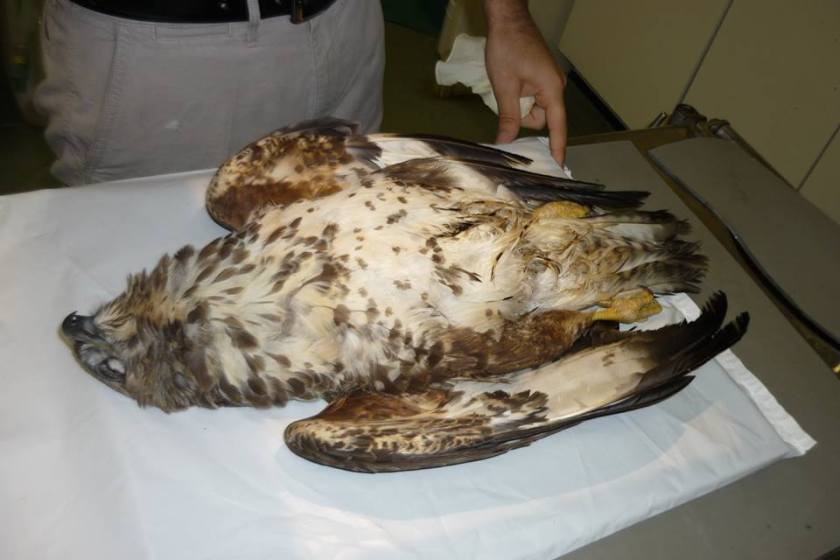
A breeding female buzzard has died from shotgun injuries in the North York Moors National Park. She was discovered near Old Byland.

Police Wildlife Crime Officer Jez Walmsley is investigating.

Photo via Jean Thorpe, Ryedale Wildlife Rehabilitation Centre, North Yorkshire.

BZ shot Malton April 2015

‘Wildlife crime cannot be tolerated in modern day Scotland’, says Environment Minister

Environment Minister Dr Aileen McLeod has written an article on wildlife crime that has been published in the Holyrood magazine:

WILDLIFE CRIME CANNOT BE TOLERATED IN MODERN DAY SCOTLAND

In the past year, between April 2014 and February 2015, almost 250 wildlife crimes were recorded by Police Scotland.

That’s 250 too many.

The crimes included persecuting badgers, poisoning birds of prey and trading in some of the world’s most endangered species.

There is no room for complacency – last year saw one of the worst ever bird of prey poisoning cases, with the discovery of 12 dead red kites and four buzzards in Ross-shire, which were confirmed by SASA as having been poisoned.

I want to make it abundantly clear that the illegal poisoning of wildlife cannot – and will not – be tolerated in a modern Scotland.

This is one of our priorities which the Scottish Government is continuing to tackle head-on. I recently launched a scheme, with the support of PAW Scotland partners, to get rid of illegal pesticides which could be used to poison wildlife.

The scheme allows those who know, or suspect, they are in possession of certain pesticides which are illegal, to dispose of them safely and confidentially. Arrangements are also in place for SNH to restrict the use of general licences where there is evidence of wildlife crime.

Here in Scotland we have the strongest wildlife legislation in the UK, and in the last few months we have seen the first ever custodial sentence for the killing of birds of prey and the first conviction of a land owner under the vicarious liability provisions, for crimes committed in 2012.

I believe this sends out a clear message to those who continue to illegally target Scotland’s wildlife that their actions will not be tolerated.

Recently I helped Police Scotland launch its new awareness campaign to tackle wildlife crime in Scottish cities, towns and rural areas.

Figures reported by Police Scotland indicated that the detection rate for wildlife crime has increased from the previous year by almost 13 per cent to a 77 per cent detection rate and I’m pleased to see that more is being done to catch those offenders.

As the Chair of the Partnership for Action Against Wildlife Crime in Scotland I am delighted to support this campaign. In Scotland we have long recognised the value of our wildlife and the importance of protecting it.

Police Scotland’s campaign will play a key role in raising awareness about wildlife crime and what people should do if they encounter it.

Investigations into wildlife crime can be difficult so it is essential that we work closely with our partners to get the message out there and raise public awareness to help us prevent it from happening in the first place.

Last year, the Scottish Government’s second annual wildlife crime report was published in a bid to develop the bigger picture of what offences are occurring in Scotland. Figures in the report showed that the largest volume of wildlife crime in Scotland is poaching related – fish, deer and coursing offences.

While poaching is the most commonly recorded offence, crimes against our rare birds of prey and vulnerable freshwater pearl mussel populations are of most serious concern in terms of damage to Scotland’s ecosystems and our reputation.

We must continue to work with stakeholders to raise awareness and therefore ensure prevention, so that these crimes decrease and stop. We are not there yet but with the help of the PAW Scotland partners and the actions of the public I am confident that we are moving in the right direction.

Dr Aileen McLeod, Minister for the Environment, Climate Change and Land Reform

END

It’s good to hear from the Environment Minister on this issue. Five months in to her tenure as Environment Minister, she’s been relatively quiet. Perhaps that’s a bit unfair, as we’re comparing her perceived (public) involvement on this issue with that of her predecessor, Paul Wheelhouse, who clearly was very engaged with the subject. She also has a wider portfolio of responsibilities than Wheelhouse had, so of course her time is going to be squeezed. Nevertheless, we haven’t yet seen much evidence that Dr McLeod is coming in with all guns blazing.

Whilst the above article, and sentiment, is to be welcomed, what does it actually amount to? Not very much, to be honest. It’s the same old rhetoric that we’ve been fed for years: ‘it’s a priority’; ‘it won’t be tolerated’; ‘there’s no room for complacency’, yada yada.

Meanwhile, raptor persecution continues and Police Scotland are doing their level best to keep the details from the public domain. We’re aware of several crimes against raptors that have taken place within the last 12 months that still have not been publicised – and we probably don’t know the half of it. It’s interesting to compare this policy of secrecy with the policy of openness being displayed by North Wales Police. One of their wildlife crime officers, Sgt. Rob Taylor, is frequently telling his Twitter followers what wildlife crimes he’s currently investigating. More power to him. His openness doesn’t seem to be affecting the investigation of those offences so what’s the real reason for Police Scotland hiding the facts about the crimes they’re supposedly investigating?

There have been a couple of big success stories in Scotland – the first vicarious liability conviction of a landowner and the first custodial sentence for a raptor-killing gamekeeper. These were both excellent results, there’s no doubt about that, but they were both a long, long time coming and, so far, have proved the exception rather than the rule.

How about the Environment Minister telling us whether the SSPCA will be granted increased investigatory powers? The public consultation closed almost 8 months ago! What’s the decision?

How about the Environment Minister giving us an update on the Govt-commissioned report from Professor Poustie on his review of wildlife crime penalties? That was due ‘early in the New Year’. Where is it?

How about the Environment Minister telling us why SNH haven’t yet publicised any General Licence Restriction Orders for estates where raptor persecution is believed to be taking place? They’ve had the power to enforce such restriction orders since September 2014, for incidents that have taken place since 1st January 2014. What have they been doing for the last seven months? Have they imposed any restriction orders or not? If not, why not?

And please, Minister, will you stop implying that the Ross-shire Massacre only claimed 16 victims. Twenty two raptors were found dead in that one incident. Sure, only 16 have been confirmed as victims of poisoning but the remaining six birds did not all just die of natural causes at the same time, in the same fields where the confirmed poisoned corpses were found. And by the way, can you tell us why Police Scotland has not yet released the name of the poison(s) used to kill those protected species?

White-tailed eagle found poisoned on nest

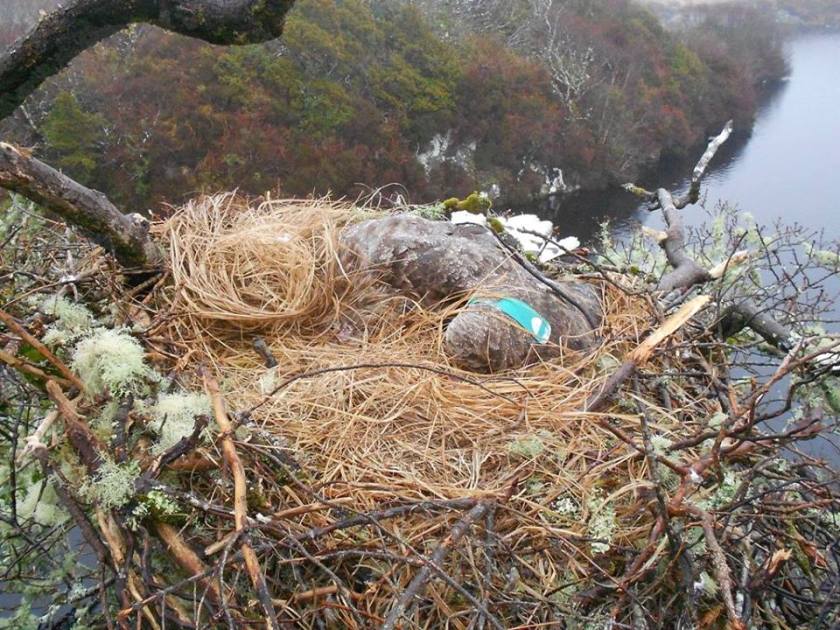
WTEpoisoned Connemara April 2015

Press release from Golden Eagle Trust:

A White-tailed Eagle has been found dead in its nest at Connemara in south-west Ireland. The six year old female eagle was discovered on 1st April by Conservation Ranger Dermot Breen and recovered by a team from the National Parks & Wildlife Service on 2nd April. Subsequent post-mortem at the Regional Veterinary Laboratory in Athlone and toxicology analysis at the State Laboratory, Celbridge revealed the bird had been poisoned.

The female White-tailed Eagle was released in Killarney National Park in 2009 as part of a reintroduction programme for the species managed by the Golden Eagle Trust in partnership with the National Parks & Wildlife Service. The female eagle settled in the Roundstone area of Connemara in 2012 where she paired up with a male. In 2014 the pair laid eggs at a nest in a remote site but the eggs failed to hatch chicks successfully. Both birds were on the point of nesting again this year at the same nest when tragedy struck. Indeed the post-mortem found the female to contain two developing eggs, so this female was within a few days of laying eggs.

The loss of this breeding female comes as a serious blow to the reintroduction project. White-tailed Eagles reach maturity and begin breeding at about 5 years of age. Seven pairs laid eggs in nests in the wild in 2014, with one nest near Mountshannon, Co. Clare, successfully fledging chicks in 2013 and 2014. It was hoped that the Connemara pair would be one of a number of successful nests in Ireland in 2015. The loss of a breeding adult has been found to lead to the desertion of breeding sites with potentially serious implications for the long-term viability of the reintroduced population.

This is the 13th confirmed poisoning of a White-tailed Eagle in Ireland since the reintroduction project began in 2007. The use of poisons to control foxes and crows has been banned since 2010 but the illegal use of such substances remains a huge threat to wildlife including birds of prey which consume carrion. Over the five years of the release phase of the project 100 young eagles were collected from nests in Norway and released in Killarney National Park, Co. Kerry. Thirty one of the released eagles have since been recovered dead with illegal poisoning by far and away the greatest threat to the recovery of this once native eagle to Ireland. Despite these losses the number of pairs in the wild rose to 14 in 2014 with most birds now mature enough to breed.

This is a very disheartening incident as the killing of this breeding female has effectively put an end to any breeding attempt of this incredible species in West Galway for at least another five years” said NPWS Conservation ranger Dermot Breen. “To see the female lying dead on her nest was a very sad and sickening sight especially with the knowledge that she would have been due to lay two eggs. Historically up to 14 pairs were known to have bred in the Connemara region up 1838. Connemara lost its White-tailed Eagles shortly after this with the introduction of poison. It’s deeply frustrating to see history repeating itself. I’ve encountered no negative feedback from any local farmers with regard to the presence of the eagles over the last three years. Many landowners would ask how the eagles were doing and would tell me if they had been lucky enough to see them in the locality. The loss of this female is also a great loss to tourism in the area. Connemara is world renowned for being an area of unspoilt beauty. Unfortunately this illegal and irresponsible action is likely to tarnish Connemara’s green image, an area that relies heavily on tourism”.

Although all losses impact the project, the loss of this female is very difficult to take”, said Dr Allan Mee, Project Manager with the Golden Eagle Trust. “She and her mate had been resident in Connemara for the last four years and it was only a matter of time before they produced chicks. It is likely the nest site they chose had been used by White-tailed Eagles in historical times, so losing this pair is devastating. Although the male may remain on his territory for some time, to date we have found that the loss of a breeding adult results in birds deserting the area and remaining some years before they find a mate again. The female’s mate is one of our satellite tagged eagles (male Star) who has travelled the length and breadth of Ireland several times before settling in Connemara. It’s tragic to see him lose his mate just on the point of nesting”.

Over the years we have endured too many losses to illegal and indiscriminate poisoning. We have tried to address this by raising awareness both of the law and the threat posed by poisons to wildlife and farm dogs. While we believe our awareness efforts have been productive it is clear that some individuals are still resorting to using poisons on meat baits such as dead livestock. While their target may be foxes and crows we know to our cost the devastation this causes to our rare and protected birds of prey. We have to continue to get the word out there that this practice is no longer acceptable. We hope that all farmers and farming organisations will rightly condemn this practice which has no place in today’s supposedly more enlightened environment”.

IMAGE COPYRIGHT: DERMOT BREEN, NPWS

Man charged with attempting to kill sparrowhawk

A man has been charged with attempting to kill a sparrowhawk after he was allegedly seen throwing stones at the bird in Ravenscraig Park, Kirkaldy.

Full story in Fife Today here

Great to see a swift response from Police Scotland and also good to see media coverage. Excellent.

Now, how about some press coverage from Police Scotland regarding the two ‘live, on-going’ poisoning cases that took place at least seven months ago? So far, the police have refused to release details on (a) the crime locations; (b) the victims of the poisonings; (c) the poisons used; and (d) whether they’ve carried out a search (we’re told by a local that at least one of these crimes has not, so far, resulted in a search, seven months on). These two ‘live, on-going’ cases were listed in the Government’s recent raptor crime map data but specific details were not provided.

It’s all well and good to release information about ‘random’ individual persecution incidents, such as the alleged attempt to kill a sparrowhawk in a local park, but what about reporting on the wildlife crimes that regularly take place on some game-shooting estates and arguably are the biggest threat to local populations of some raptor species? Why is information about these crimes still being deliberately withheld, seven months after the offences were committed?

Sparrowhawk photo: photographer unknown.

Langholm hen harrier ‘Annie’ is down

One of last year’s young hen harriers from Langholm is missing in action.

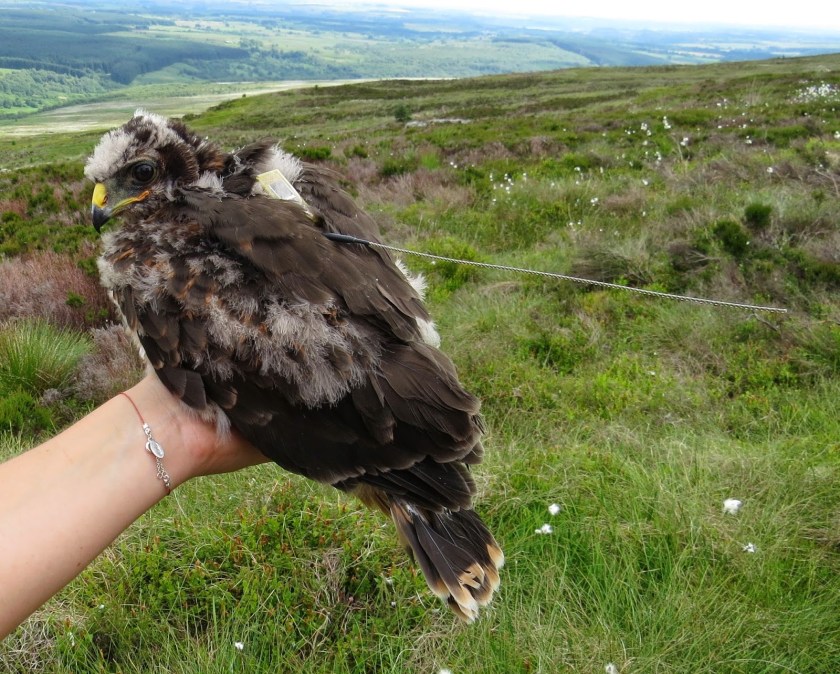
‘Annie’ was satellite-tagged on Langholm Moor last summer, along with a young male called Sid.

Sid ‘disappeared’ a few months later in North Yorkshire in September 2014 (see here).

Annie ‘disappeared’ a few weeks ago in March. The last signal from her sat tag showed she was in an area of South Lanarkshire. Hmm.

Photo of Annie from the Making the Most of Moorlands Project.

Annie with her sat tag

Shot kestrel successfully rehabbed and released

kestrel shot Ryedale 2015 2 - CopySome good news for a change….

In February we blogged about a kestrel with a shotgun injury that was being cared for by the amazing Jean Thorpe of the Ryedale Wildlife Rehabilitation Centre in North Yorkshire (see here).

What sort of moron shoots a kestrel?

Jean had posted a pitiful photo of the victim with its leg bandaged – a photo that led to a fundraising campaign to help Jean buy material for a new rehab aviary (see here).

Yesterday, Jean posted the following update on this kestrel’s progress:

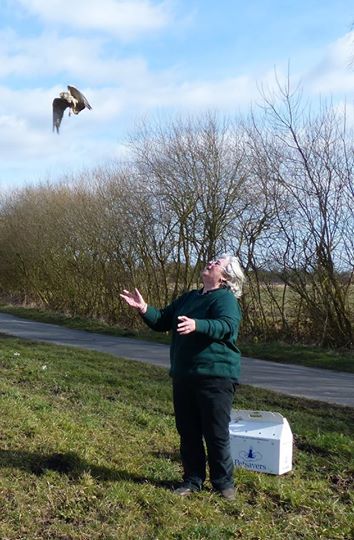
The shotgun shot kestrel was successfully released back to Storwood. He went spectacularly well, hovering over farmland and looking wonderful. My thanks to Mark Naguib of Battlefatts Vets, Stamford Bridge, York for amazing veterinary work and Craig Ralston of NE for support and wonderful pictures. It’s so uplifting when it works out!

kestrel shot Ryedale 2015 released - Copy

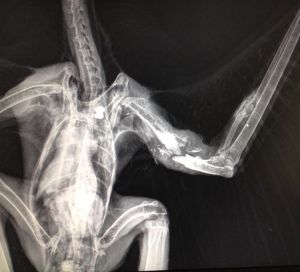
Shot buzzard has to be euthanised

BZ shot west tilbury essex March 4th 2015 - CopyFrom the South Essex Wildlife Hospital, 4th March 2015:

We had to euthanise a beautiful buzzard today, found in West Tilbury it had been shot at least 3 times, twice through the wing, it still has an air gun pellet lodged in its chest. We have of course notified this crime to the police“.

Thanks to Neil Phillips (@UK_Wildlife) for the notification.