Vicarious liability prosecution: Andrew Duncan (Newlands Estate) part 7

Criminal proceedings continued on 17th June against landowner Andrew Walter Bryce Duncan, who is alleged to be vicariously liable for the crimes committed by gamekeeper William (Billy) Dick in April 2014.

Gamekeeper Dick was convicted in August 2015 of killing a buzzard on the Newlands Estate, Dumfriesshire by striking it with rocks and repeatedly stamping on it (see here). Dick was sentenced in September 2015 and was given a £2000 fine (see here), although he is appealing his conviction.

Here’s a quick review of the proceedings against Andrew Duncan so far:

Hearing #1 (18th August 2015): Trial date set for 23rd Nov 2015, with an intermediate diet scheduled for 20th Oct 2015.

Hearing #2 (20th October 2015): Case adjourned. November trial date dumped. Notional diet hearing (where a trial date may be set) scheduled for 18th January 2016.

Hearing #3 (18th January 2016): Case adjourned. Another notional diet & debate scheduled for 11th March 2016.

Hearing #4 (11th March 2016): Case adjourned, pending the result of gamekeeper Billy Dick’s appeal. Another notional diet scheduled for 4th April 2016.

Hearing #5 (4th April 2016): Case adjourned, pending the result of gamekeeper Billy Dick’s appeal. Another notional diet scheduled for 3rd June 2016.

Hearing #6 (3rd June 2016): Case adjourned, pending the result of gamekeeper Billy Dick’s appeal. Another notional diet scheduled for 17th June 2016.

Hearing #7 (17th June 2016): Case adjourned, pending the result of gamekeeper Billy Dick’s appeal. Another notional diet scheduled for 15th July 2016.

For those interested in gamekeeper Billy Dick’s appeal, we blogged about it here.

Vicarious liability in relation to the persecution of raptors in Scotland (where one person may potentially be legally responsible for the criminal actions of another person working under their supervision) came in to force four and a half years ago on 1st January 2012. To date there have been two successful convictions: one in December 2014 (see here) and one in December 2015 (see here).  One further case did not reach the prosecution stage due, we believe, to the difficulties associated with identifying the management structure on the estate where the crimes were committed (see here).

Vicarious liability prosecution: Andrew Duncan (Newlands Estate) part 6

Criminal proceedings continued on 3rd June against landowner Andrew Walter Bryce Duncan, who is alleged to be vicariously liable for the crimes committed by gamekeeper William (Billy) Dick in April 2014.

Gamekeeper Dick was convicted in August 2015 of killing a buzzard on the Newlands Estate, Dumfriesshire by striking it with rocks and repeatedly stamping on it (see here). Dick was sentenced in September 2015 and was given a £2000 fine (see here), although he is appealing his conviction.

Here’s a quick review of the proceedings against Andrew Duncan so far:

Hearing #1 (18th August 2015): Trial date set for 23rd Nov 2015, with an intermediate diet scheduled for 20th Oct 2015.

Hearing #2 (20th October 2015): Case adjourned. Nov trial date dumped. Notional diet hearing (where a trial date may be set) scheduled for 18th January 2016.

Hearing #3 (18th January 2016): Case adjourned. Another notional diet & debate scheduled for 11th March 2016.

Hearing #4 (11th March 2016): Case adjourned, pending the result of gamekeeper Billy Dick’s appeal. Another notional diet scheduled for 4th April 2016.

Hearing #5 (4th April 2016): Case adjourned, pending the result of gamekeeper Billy Dick’s appeal. Another notional diet scheduled for 3rd June 2016.

Hearing #6 (3rd June 2016): Case adjourned, pending the result of gamekeeper Billy Dick’s appeal. Another notional diet scheduled for 17th June 2016.

For those interested in gamekeeper Billy Dick’s appeal, we blogged about it here.

Vicarious liability in relation to the persecution of raptors in Scotland (where one person may potentially be legally responsible for the criminal actions of another person working under their supervision) came in to force four and a half years ago on 1st January 2012. To date there have been two successful convictions: one in December 2014 (see here) and one in December 2015 (see here).  One further case did not reach the prosecution stage due, we believe, to the difficulties associated with identifying the management structure on the estate where the crimes were committed (see here).

Decision pending in Scottish gamekeeper’s conviction appeal

Last month we blogged about how a Scottish gamekeeper, William (Billy) Dick, was appealing against his conviction for killing a buzzard (see here).

A quick recap:

In August 2015, gamekeeper William (Billy) Dick, now 26, was found guilty of killing a buzzard on the Newlands Estate, Dumfriesshire, in April 2014. Two witnesses had observed him striking the buzzard with rocks and then repeatedly stamping on it (see here). In September 2015 he was sentenced: £1,500 fine for killing the buzzard and £500 for possession of the dead buzzard (see here).

Dick had maintained his innocence throughout the trial and had claimed he was elsewhere when the offence took place (see here).

His appeal was due to be heard in April but was then delayed. His appeal was heard at the High Court on 13th May 2016:

Billy Dick high court appeal May 2016 - Copy

The three presiding judges have reserved judgement. This means they’ll consider the appeal and produce a written judgement in due course.

How long before we can expect to hear their decision? We have no idea. Apparently there’s no time limit and much will depend on the quantity and complexity of the evidence heard, and how busy the three judges are! See here for an enlightening blog about waiting for a reserved judgement.

The decision will impact on the current prosecution against Newlands Estate landowner Andrew Duncan, charged with being vicariously liable for gamekeeper Dick’s crimes. The case against Andrew Duncan has encountered frequent delays while Dick’s appeal was underway. The next court hearing in the vicarious liability case is scheduled for 3rd June 2016 (see here). We can expect further delays if the judgement on Dick’s appeal has not been delivered by then.

Statement from Cairngorms National Park Authority re: shot goshawk

mon-15-june-copyGrant Moir, Chief Executive of the Cairngorms National Park Authority, has today issued a statement about the recent shooting of a goshawk (here) on land within the National Park:

We are incredibly frustrated to again be putting out a statement condemning the shooting of a raptor in the National Park. We must ensure such crimes become a thing of the past. We will be working with the new Minister for Environment to consider what else we can do in the National Park, building on public support for our wildlife and finding ways of getting more eyes and ears on the ground. We encourage anyone with information relating to this incident to contact the police by calling 101”.

The condemnation is good and is the least we should expect. However, the bit about “We will be working with the new Minister for Environment to consider what else we can do….” shows good intent, but in reality amounts to little more than a PR soundbite.

Remember the Cairngorms Nature action plan, aimed at restoring raptor populations & managing mountain hares for the benefit of golden eagles within the Cairngorms National Park (CNP), launched with great fanfare in May 2013 (see here)?

A resounding failure, as evidenced in May 2013 by the mysterious ‘disappearance’ of a young sat-tagged golden eagle on a CNP grouse moor (here); in May 2013 by the alleged ‘coordinated hunting’ and subsequent shooting of a hen harrier on a CNP grouse moor (here); in April 2014 by the mysterious ‘disappearance’ on a CNP grouse moor of East Scotland’s first fledged white-tailed eagle in ~200 years (here); in May 2014 by this video of masked armed gunmen attacking a goshawk nest within the CNP (here); in October 2015 by the publication of a scientific study documenting the long term decline of breeding peregrines on grouse moors in the eastern portion of the CNP (see here); in February 2016 by the publication of a scientific study documenting the catastrophic decline of breeding hen harriers in the eastern portion of the CNP (here); in March 2016 by the discovery of a dead hen harrier ‘Lad’, suspected shot, found on a grouse moor within the CNP (here); in March 2016 by the news that mountain hares were being massacred on grouse moors within the CNP (here); and again in March 2016 by news that further mountain hare massacres were taking place on grouse moors within the CNP (here); and now in May 2016 by the news that a goshawk was shot on an estate within the CNP (here).

And also remember, the CNPA has already met with the (now former) Environment Minister in January 2015 to discuss the issue of raptor persecution and moorland management within the NP – we blogged about that meeting here. The Environment Minister said afterwards that she ‘welcomed the positive collaboration shown between the CNPA and landowners and looked forward to seeing a real difference on the ground‘.

What is the point of the CNPA having further discussions with another naive Environment Minister? It’s utterly pointless. The grouse moor managers within the Cairngorms National Park are running rings around the Park Authority, and have been doing so for years: Golden eagles poisoned, golden eagles ‘disappearing’, white-tailed eagles ‘disappearing’, hen harriers being shot, breeding hen harriers in catastrophic decline, goshawks being shot, goshawk nests being attacked, breeding peregrines in long-term decline, mountain hares massacred. All within the Cairngorms National Park, the so-called ‘jewel’ of Scottish wildlife. It’s scandalous.

What we need, urgently, from the CNPA is action, not more hand-wringing and platitudes. For a start, the CNPA could be looking at the Sandford Principle (see here and here). There’s an excellent blog called Parks Watch Scotland that has also suggested some courses of action the CNPA could take: see here and here.

The CNPA CEO said today he was ‘incredibly frustrated’. We all are, but the difference is the CNPA has the power to do something about it.

Actually, we do have some power, albeit more indirect than the powers of the CNPA. We have the power to blog about the rampant and persistent persecution of wildlife within the National Park and by doing so, raise awareness amongst an unsuspecting general public of just what is happening to THEIR wildlife within the boundary of THEIR National Park. We’re pretty sure that as more people get to hear about it, the vast majority will be outraged and will join the call for further action to be taken against those grouse moor estates.

Please sign the petition and join 35,000+ calling for a parliamentary debate on the banning of driven grouse shooting: HERE

Scottish gamekeeper appeals conviction for killing buzzard

A Scottish gamekeeper is appealing his conviction for killing a buzzard.

In August 2015, gamekeeper William (Billy) Dick, now 26, was found guilty of killing a buzzard on the Newlands Estate, Dumfriesshire, in April 2014. Two witnesses had observed him striking the buzzard with rocks and then repeatedly stamping on it (see here). In September 2015 he was sentenced: £1,500 fine for killing the buzzard and £500 for possession of the dead buzzard (see here).

Dick had maintained his innocence throughout the trial and had claimed he was elsewhere when the offence took place (see here).

His appeal was due to be heard this week but has now been delayed until 13th May 2016:

Dick appeal April 2016 postponed - Copy

The outcome of this appeal will be interesting on several levels, not just whether the evidence accepted in the original trial was good enough. The case is tied in with the prosecution of Newlands Estate landowner Andrew Duncan, who is charged with being vicariously liable for the criminal actions of gamekeeper Dick. Andrew Duncan’s case has been repeatedly adjourned while Dick’s appeal is heard (see here).

If Dick’s appeal is upheld, we might expect the allegations against Andrew Duncan to be dropped. If the case against the landowner is dropped, we might expect landowners’ lobby group Scottish Land & Estates (SLE) to reinstate the membership of Newlands Estate, and also reinstate the Newlands Estate accreditation to SLE’s Wildlife Estates Scotland initiative, which, you’ll recall, has been “voluntarily suspended” pending legal proceedings (see here).

Interesting times ahead.

Pigeon racing men convicted of poisoning peregrines & sparrowhawks

Four men associated with a pigeon racing club in County Waterford, Ireland, have been convicted of illegally poisoning peregrines and sparrowhawks, and other associated wildlife crimes.

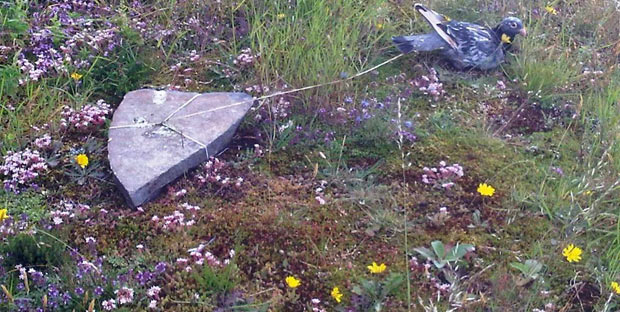
The convictions are the result of surveillance and investigation by conservation rangers from the Irish Republic’s National Parks & Wildlife Service at three quarries in March and April 2014: Cappagh Quarry, Keereen Quarry and Carroll’s Cross Quarry. Live pigeon baits, smeared with poison and tied to stones or stakes had been found on a number of occasions at the top of the quarry cliffs, designed to lure in raptors. Four poisoned peregrines and two poisoned sparrowhawks had also been found.

pigeon poison wales 2012

On March 9th 2016 at Dungarvan District Court, the following individuals were convicted:

Stephen O’Brien, of 58 Congress Villas, Dungarvan, was convicted of 20 offences, including the use of a live decoy on five separate dates. He was fined 1500 Euros for each of the five dates (7,500 Euros in total) and the other 15 charges were recorded as ‘proven’.

Kevin Crotty (Chairman of Dungarvan Premier Pigeon Club) of 16 Lismore Avenue, Dungarvan, was convicted of 10 offences on five separate dates. He was fined 600 Euros for two offences and the remaining eight charges were recorded as ‘proven’.

John Crotty, of 23 Congress Villas, Dungarvan, was convicted of four offences. He was fined 700 Euros for one offence and the remaining three charges were recorded as ‘proven’.

Christopher O’Brien, of 79 Congress Villas, Dungarvan, was convicted of obstructing an Authorised Person during a search of his premises and with the illegal possession of protected wild finches. He was convicted of 16 offences. He was fined 700 Euros for one offence and the remaining 15 charges were recorded as ‘proven’. He was also ordered to forfeit a stuffed peregrine that had been found at his house.

The National Parks & Wildlife Service believes raptor persecution is a significant problem in Co Waterford and said peregrines had been a particular target, resulting in reduced breeding success. They encourage farmers and members of the public to report suspicious incidents, in confidence, to: Tel (01) 888 3242 or email nature.conservation@ahg.gov.ie

The photo shows a live pigeon decoy, smeared in poison and tied to a rock in a similar poisoning case in Wales in 2012 (photographer unknown).

Vicarious liability prosecution: Andrew Duncan (Newlands Estate) part 5

Criminal proceedings continued yesterday  against landowner Andrew Walter Bryce Duncan, who is alleged to be vicariously liable for the crimes committed by gamekeeper William (Billy) Dick in April 2014.

Gamekeeper Dick was convicted in August 2015 of killing a buzzard on the Newlands Estate, Dumfriesshire by striking it with rocks and repeatedly stamping on it (see here). Dick was sentenced in September 2015 and was given a £2000 fine (see here), although he is appealing his conviction.

Here’s a quick review of the proceedings against Andrew Duncan so far:

Hearing #1 (18th August 2015): Trial date set for 23rd Nov 2015, with an intermediate diet scheduled for 20th Oct 2015.

Hearing #2 (20th October 2015): Case adjourned. Nov trial date dumped. Notional diet hearing (where a trial date may be set) scheduled for 18th January 2016.

Hearing #3 (18th January 2016): Case adjourned. Another notional diet & debate scheduled for 11th March 2016.

Hearing #4 (11th March 2016): Case adjourned, pending the result of gamekeeper Billy Dick’s appeal. Another notional diet scheduled for 4th April 2016.

Hearing #5 (4th April 2016): Case adjourned, pending the result of gamekeeper Billy Dick’s appeal. Another notional diet scheduled for 3rd June 2016.

Vicarious liability in relation to the persecution of raptors in Scotland (where one person may potentially be legally responsible for the criminal actions of another person working under their supervision) came in to force four years ago on 1st January 2012. To date there have been two successful convictions: one in December 2014 (see here) and one in December 2015 (see here).  One further case did not reach the prosecution stage due, we believe, to the difficulties associated with identifying the management structure on the estate where the crimes were committed (see here).

Ross-shire Massacre: two years on

nothingSo, it’s been two years since 22 dead birds of prey were discovered in a small area around Conon Bridge in the Highlands. It was one of the most significant illegal raptor persecution crimes ever uncovered in the UK.

Are we any closer to finding the culprit(s)? Of course not. Here’s what we do know:

  1. 22 dead raptors (16 red kites + 6 buzzards) were found in the same small area over a period of weeks in March/April 2014.
  2. Sixteen of those raptors were later confirmed poisoned: 12 red kites + 4 buzzards.
  3. No cause of death has been given for the other six victims.
  4. The poison used was a banned substance.
  5. Nobody has been arrested.
  6. Nobody has been charged.
  7. Nobody has been convicted.

According to a ridiculous Police Scotland press statement, these birds “were most likely not targeted deliberately but instead were the victims of pest control measures“. Quite how they’d know this without having spoken to a known culprit is anybody’s guess (see here) and until they do, that’s all their conclusion can be, a guess.

The police are still withholding the name of the poison used – we’re told this is ‘for operational purposes’. We’re also told that this is still ‘a live investigation’.

What it actually is is a shambles and it has been from the start.

The first six dead birds were discovered between 18-24 March 2014 and poisoning was immediately suspected. The police put out a press statement on 25th March (here) but at that stage they hadn’t conducted a proper search, so by telling the world about this suspected crime they gave the culprit(s) every opportunity to hide any remaining evidence. A thorough police search didn’t take place until 9th April (see here) – three weeks after the discovery of the first dead birds. Unsurprisingly, no evidence to link the crime to a suspect was found.

Two years on and we’re no closer to seeing justice prevail. It’s just another unsolved raptor-killing crime amongst hundreds of others.

Previous blogs on the Ross-shire Massacre here

Crown Office drops prosecution against Glenogil Estate gamekeeper

Snared fox dead alt, Glenogil Estate, Credit OneKindRegular blog readers will know we’ve been following the case of Scottish gamekeeper William Curr, who had been charged last year with alleged snaring offences on Glenogil Estate in the Angus Glens, said to have occurred in September 2014 (see here, here, here and here).

The charges related to allegations that several snares had not been checked (as they are required to be) within a 24-hour period of being set, after a field officer from the charity OneKind had discovered a dead snared deer, a dead snared fox and another snared fox that was still alive but had to be euthanised at the scene due to the extent of its horrific injuries (see OneKind photo).

For a harrowing description of what was found on Glenogil Estate, including a confrontation with the Head Gamekeeper, read this blog on the OneKind website.

Curr’s trial was due to start on 9th May but last week (10 March) the Crown Office informed the court that it was not going to proceed. OneKind has not yet been able to ascertain the reason for this decision, and in fact may never find out because the Crown Office is under no obligation to explain.

Accountability and transparency, anybody?

To quote from the OneKind blog:

OneKind is mystified by the dropping of this case, given the eye witness evidence, the horrific video footage and the detailed follow-up investigation carried out by the Scottish SPCA. This was a shocking incident where at least six people, including gamekeepers, witnessed the terror and pain of a live fox as the wire noose of a snare sliced into its abdomen. Had our research officer not been on the estate on that particular day, who knows how much longer the fox would have continued to suffer?

To put this dreadful story in the wider context: snares are still legal in Scotland and the rest of the UK. It is simply intolerable that the suffering this fox endured should be considered legally acceptable. The video footage is utterly harrowing and illustrates an animal which is clearly distressed, both physically and mentally. OneKind has long called for an outright ban on all snares and sadly we feel these calls have been justified by this case.

OneKind will seek an explanation for the failure of the Scottish justice system to bring this animal welfare case to court“.

The reason we’ve been so interested in this case is because the alleged offences occurred on the Glenogil Estate, one of several grouse shooting estates in the Angus Glens where wildlife crime incidents keep cropping up but have never resulted in a successful prosecution. For example, here are some incidents reported from in and around Glenogil over the last ten years:

2006 March: poisoned rabbit bait (Carbofuran). Listed as ‘Glenogil’ in RSPB annual report. No prosecution.

2006 April: poisoned buzzard (Alphachloralose). Listed as ‘Glenogil’ in RSPB annual report. No prosecution.

2006 April: poisoned tawny owl (Alphachloralose). Listed as ‘Glenogil’ in RSPB annual report. No prosecution.

2006 May: poisoned rabbit bait (Carbofuran). Listed as ‘Glenogil’ in RSPB annual report. No prosecution.

2006 June: poisoned woodpigeon bait (Carbofuran). Listed as ‘Glenogil’ in RSPB annual report. No prosecution.

2006 June: Traces of Carbofuran found in estate vehicles & on equipment during police search. Not listed in 2006 RSPB annual report but reported here. (Now former) estate owner John Dodd had £107k withdrawn from his farm subsidy payments as a result. This was being appealed but it is not known how this was resolved. Also a write up in RSPB 2007 annual report. No prosecution.

2007 November, Glenogil Estate: Disappearance of radio-tagged white-tailed eagle ‘Bird N’ coincides with tip off to police that bird been shot. No further transmissions or sightings of the bird. Not listed in RSPB annual report but reported here. No prosecution.

2008 May: poisoned white-tailed eagle ‘White G’ (Carbofuran, Isophenfos, Bendiocarb). Listed as ‘Nr Noranside’ in RSPB annual report. No prosecution.

2008 May: poisoned buzzard (Bendiocarb). Listed as ‘Nr Noranside’ in RSPB annual report. No prosecution.

2008 May: poisoned mountain hare bait (Carbofuran, Isophenfos, Bendiocarb). Listed as ‘Nr Noranside’ in RSPB annual report. No prosecution.

2008 May: 32 x poisoned meat baits on fenceposts (Carbofuran, Isophenfos, Bendiocarb). Listed as ‘Nr Noranside’ in RSPB annual report. No prosecution.

2008 October: poisoned meat bait on fencepost (Carbofuran). Listed as ‘Nr Noranside’ in RSPB annual report. No prosecution.

2009 March: poisoned buzzard (Carbofuran). Listed as ‘Glenogil’ in RSPB annual report. No prosecution.

2009 March: poisoned buzzard (Carbofuran). Listed as ‘Glenogil’ in RSPB annual report. No prosecution.

2009 August: poisoned white-tailed eagle “89” (Carbofuran). Listed as ‘Glenogil’ in RSPB annual report. No prosecution.

2010 May: poisoned red kite (Carbofuran). Listed as ‘Nr Noranside’ in RSPB annual report. No prosecution.

2010 September: poisoned buzzard (Chloralose). Listed as ‘Glenogil’ in RSPB annual report. No prosecution.

2010 October: poisoned buzzard (Carbofuran). Listed as ‘Glenogil’ in RSPB annual report. No prosecution.

2010 October: poisoned pigeon bait (Carbofuran). Listed as ‘Glenogil’ in RSPB annual report. No prosecution.

2010 October: poisoned pigeon bait (Carbofuran). Listed as ‘Glenogil’ in RSPB annual report. No prosecution.

2012 April: Remains of buzzard found beside pheasant pen. Listed as ‘Nr Noranside’ in RSPB annual report. No prosecution.

2014 June: shot buzzard. Listed as ‘Glenogil’ in RSPB annual report. No prosecution.

Vicarious liability prosecution: Andrew Duncan (Newlands Estate) part 4

Criminal proceedings continued last week against Andrew Walter Bryce Duncan, who is alleged to be vicariously liable for the crimes committed by gamekeeper William (Billy) Dick in April 2014.

Gamekeeper Dick was convicted in August 2015 of killing a buzzard on the Newlands Estate, Dumfriesshire by striking it with rocks and repeatedly stamping on it (see here). Dick was sentenced in September 2015 and was given a £2000 fine (see here), although he is appealing his conviction.

Proceedings against Andrew Duncan, 71, who is believed to be responsible for the pheasant shoot on Newlands Estate, began in August 2015 and a provisional trial date was set for 23rd November 2015 (see here). However, at an intermediate diet hearing in October, the November trial date was dumped and a notional diet hearing (where a trial date may be set) was set for 18th January 2016 (see here). At the January hearing, proceedings were adjourned again for another notional diet and a debate to take place on 11th March 2016.

At last week’s hearing the case was continued again, pending the result of William (Billy) Dick’s appeal.

The next installment of Andrew Duncan’s case will be heard on 4th April 2016.

Vicarious liability in relation to the persecution of raptors in Scotland (where one person may potentially be legally responsible for the criminal actions of another person working under their supervision) came in to force four years ago on 1st January 2012. To date there have been two successful convictions: one in December 2014 (see here) and one in December 2015 (see here).  One further case did not reach the prosecution stage due, we believe, to the difficulties associated with identifying the management structure on the estate where the crimes were committed (see here).

Previous blogs on the Andrew Duncan case here, here and here.