Dog dies after consuming poisoned bait

dyfed_powysA dog has died after consuming a bait that had been laced with the banned pesticide, Aldicarb.

The dog was being exercised in a popular dog-walking area in the Tanat Valley in Powys, mid-Wales, in May. It suddenly became ill and died within minutes.

Toxicology results have now confirmed the dog had been killed from ingesting Aldicarb on the body of a black-winged bird believed to have been used as a poisoned bait, probably for targeting birds of prey. A red kite was found poisoned with Aldicarb less than a mile away in March 2013 and the police believe the two incidents are connected.

Police are appealing for information and warning dog-walkers in the area to be extra vigilant.

Article in the Shropshire Star here.

Wheelhouse responds to latest raptor killings….by doing nothing

Paul-Wheelhouse-MSP Earlier today we blogged about the latest poisoning victim to have been uncovered in Scotland….a dead buzzard that was found in Fife in April (see here).

This evening, Environment Minister Paul Wheelhouse has issued the following statement:

I have been hugely angered to learn about another case of a poisoned buzzard following on from a separate incident involving the illegal death of a hen harrier in Ayrshire. I have made it very clear that I will not tolerate these criminal and selfish acts and this form of criminality has also been roundly condemned by parliament in a recent debate.

These crimes are not the actions of people who value Scotland’s wildlife and natural environment and I encourage anyone with any information on these despicable crimes to contact Police Scotland on 101.

My officials are working on a pesticide disposal scheme to rid illegal substances from our countryside and I hope to see this up and running very soon while the implementation of changes to the General Licences is in the process of implementation.

Our ongoing review of wildlife crime penalties is due by December and these latest incidents only add to the evidence supporting a toughening of sanctions and penalties on perpetrators.

We don’t doubt that he’s “hugely angered” – we all are – but we most certainly do question his commitment to taking meaningful action against the raptor killers.

A year ago, give or take a few days, the Minister introduced a series of what he described as ‘further measures’ to combat raptor persecution (see here). Since then, not one of these measures has yet been fully implemented. Also since then, we’ve seen examples, over and over again, of how these crimes are still taking place right across Scotland. Here are some of them:

June 2013: Shot buzzard in the Borders (see here), later revealed to also have been poisoned (see here)

July 2013:  Buzzard shot in the throat in North Ayrshire (see here)

August 2013: Red kite found shot at Leadhills (see here)

September 2013: Poisoned buzzard found in Stirlingshire (see here)

October 2013: Langholm hen harrier ‘Blue’ disappears (see here)

October 2013: Half-made raptor trap discovered in Angus (see here)

December 2013: Buzzard died of ‘unnatural causes’ near Tomatin (see here) [we now know it had been shot]

December 2013: Golden eagle ‘Fearnan’ found poisoned on Angus grouse moor (see here)

January 2014: Man reported for hen harrier death in Aberdeenshire (see here)

January 2014: Dead bird (species unknown) & suspected poisoned bait found in South Lanarkshire (see here)

February 2014: Poisoned peregrine found near Leadhills (see here)

March 2014: 22 poisoned raptors (16 red kites + 6 buzzards) found in Ross-shire (see here)

April 2014: Man arrested for alleged attempted raptor trapping in Aberdeenshire (see here)

April 2014: ‘Illegally-killed’ peregrine found near Stirling (see here) [we now know it had been shot]

April 2014: East Scotland sea eagle chick ‘disappears’ on Aberdeenshire grouse moor (see here)

April 2014: Gamekeeper charged for allegedly shooting, bludgeoning & stamping on buzzard in Dumfries (see here)

April 2014: Poisoned buzzard found in Fife (see here)

June 2014: Allegations emerge of ‘coordinated hunt & shooting’ of a hen harrier in Aberdeenshire last year (see here)

June 2014: Hen harrier died “as result of criminal act” near Muirkirk (see here)

These are just the ones that have been made public – we expect there to be a number of others that have not yet been revealed to the public.

Each time, we’ve asked Wheelhouse to act. Each time, he’s told us we need to ‘wait’ for the new measures to take effect but he has adamantly refused to give a time-frame of how long that wait should be. It’s crystal clear, even to a child, that The Untouchables are out of control and waiting for them to stop of their own accord is ridiculous.

The Minister’s response this evening is simply not good enough. A ‘poisoning amnesty’? It sounds good, but the truth is it’s been done before and with no effect. Carbofuran has been banned since 2001 – that’s 13 years ago! Does he really think that these disgusting poisoners are going to hand over their private stashes of poison when they know full well they can continue to use them without fear of consequence? The whole industry denies that poisoning is even happening!

We think the amnesty is being implemented so the Government can be seen to be doing ‘something’ but actually it’s just a bit of cynical window dressing in an attempt to delay taking the proper action that is needed. It’s just another excuse to do nothing.

And actually, this amnesty hasn’t been announced as a reaction to the recently-reported killing of the buzzard and the hen harrier. He announced his intention to launch an amnesty in his speech at the Police Wildlife Crime Conference several months ago. So what has he actually announced in response to the poisoned buzzard and the illegally-killed (probably shot) hen harrier? Absolutely nothing.

The Minister says he “won’t tolerate these criminal and selfish acts“. Sorry, Minister, but that is exactly what you’re doing.

If you feel strongly about this and agree that this government is still failing to address the widespread persecution of protected raptor species, we’d encourage you to email Mr Wheelhouse, cite the list of crimes (above) and demand he takes meaningful action or resign his position as Environment Minister. Email: ministerforenvironment@scotland.gsi.gov.uk

Another poisoned buzzard in Scotland

buzzard 3Scotland’s shameful catalogue of illegally-killed raptors continues to rise, with news today of yet another poisoned bird – this time a buzzard in Fife.

Here’s a press release from Police Scotland:

Police in Fife are conducting investigations after a dead buzzard was found in woods to the north of Ballingry in late April.

Enquiries at that time suggested the bird had died of natural causes but this was further explored by means of toxicology tests carried out by a Scottish Government laboratory.

This week it has been confirmed the bird died from ingesting a banned pesticide, and the matter has now been referred to the Police.

Detective Inspector Colin Robson, who is leading the inquiry, said: “The bird was found on land in an area commonly used by dog walkers. From the toxicology results, I believe it is probable that the bird has fed on an animal carcass deliberately laced with this poison. Such an act is both illegal and highly irresponsible in an area regularly used by members of the public, and the placing out of poison baits like this is indiscriminate in its victims. This illegal chemical is highly toxic, and the ingestion of even minute quantities by a wild animal or a pet is likely to have fatal consequences. Although relatively remote, I would urge anyone who frequents this area to contact the Police if they saw anyone or anything suspicious around this time or have knowledge of this or similar incidents. Since the discovery there have been no reported linked incidents locally and the area where the bird was found has been searched and there has no trace of the poison or other carcasses. Police Scotland are committed to tackling wildlife crime and this matter is being robustly investigated in close collaboration with partner agencies.”

Ian Thomson, Head of Investigations at RSPB Scotland said: “The recent incident on the Black Isle, where 22 birds of prey were killed, showed very clearly the horrendous impact that the illegal use of poisons can have on wildlife. It is of great concern that someone has placed a bait laced with this illegal chemical out in the countryside in an area well-used by the public and close to our own nature reserve at Loch Leven. I urge anyone who has information about this incident to contact the police as soon as possible.”

Brent Meakin, Forestry Commission Scotland’s district manager for the Lowlands said: “It is appalling that individuals are carrying out this illegal and barbaric practice. The persecution of raptors must stop. Any poisoning of these birds is one too many, no matter the species. We will continue to work with the Police and other agencies to stamp out this activity. The Commission would also like to ask the public for their help as they too can be our eyes and ears and report any suspicious activity.”

Ends

So, once again the name of the banned poison has not been made public, although from the comments made by Det Insp Robson, it sounds suspiciously like it was Carbofuran.

Shall we ask Environment Minister Paul Wheelhouse what he intends to do in response to this, and the other recently-reported raptor crimes from Scotland? It’s yet another illegally-killed raptor on his watch. Shall we ask him when he intends to actually address this issue, instead of making trite old threats that he’ll ‘deal with it if things don’t improve’? Things are not improving, despite the introduction of his ‘new measures’ a year ago, so it’s not unreasonable for us to ask our elected representative whether he’s as good as his word. Emails to: ministerforenvironment@scotland.gsi.gov.uk

UPDATE 15.00hrs: The specific location where the poisoned bait is suspected to have been laid out has been named as Benarty Wood, managed by Forestry Commission Scotland. Dog-walkers beware – see here for site info.

The Untouchables strike again: yet another illegally-killed hen harrier

HH Laurie CampbellHere we go again….a female hen harrier has been found dead on moorland near Muirkirk in south west Scotland.

The body was found on Tuesday evening close to a nest containing two live chicks. The cause of death? Police Scotland aren’t saying, surprise surprise.

Det Inspector Graham Duncan of Kilmarnock CID said: “Whilst at this time we cannot divulge how the bird was killed, we do believe it was the result of a criminal act and we need to establish why this has happened“.

For god’s sake, why can’t they say how it was killed? It was probably shot – what’s the point of hiding it, other than to appease an influential landowner? They’ll probably tell us it’s for ‘tactical’ purposes, but they know fine well, as we all do, that the chance of anyone being brought to justice for this crime is zero.

It’s just another example of what appears to be one massive cover-up job.

And what’s that about needing to establish why it’s happened? Is he for real? Perhaps he’d like to read the following article, published in the Herald in 2008(!!) about the illegal killing of hen harriers in the Muirkirk area:

Saturday 22 November 2008

‘Pathetic’ response to disappearing hen harriers: Government failing to stop landowners’ illegal killings.

By Rob Edwards, Environment Editor, Herald Scotland

One of Scotland’s premier birds of prey is facing almost terminal decline because government measures meant to protect it from persecution are failing.

The hen harrier, which used to be a familiar feature of the moorlands, is disappearing so fast that experts fear for its future, and have castigated the government’s wildlife agency, Scottish Natural Heritage (SNH), for its “pathetic” response.

Scottish environment minister Michael Russell has said he is “horrified” by the decline. SNH has defended itself by promising renewed action to crack down on wildlife crime and encourage better behaviour by landowners.

The plight of the hen harrier is nowhere better illustrated than across a vast swathe of southwest Scotland between Kilmarnock, New Cumnock and the M74. The area, known as Muirkirk and North Lowther Uplands, was declared a Special Protection Area in 2003 because of the richness of its hen harrier population.

In the 1990s the area supported 29 breeding females as part of one of the largest populations in Britain. By 2004, however, the number of breeding pairs had dropped to 21. The latest counts have found no more than 14 pairs.

Worse are the statistics for the number of young that the birds have successfully managed to fledge. The figure has plummeted from 44 in 2004 to just five in 2008.

Across Scotland, the number of home ranges occupied by hen harriers has fallen from 417 in 2004 to 264 in 2007, and the number of successfully fledged young from 630 to 383.

The figures were provided to the Sunday Herald by Scottish Raptor Study Groups, a network of dedicated experts who regularly monitors birds of prey across the country. They have few doubts over who is to blame.

Kenneth Sludden, secretary of the South Strathclyde Raptor Study Group, ascribes the “alarming” and “almost terminal” decline in Muirkirk and North Lowther mainly to “a concerted cull of raptors by gamekeepers, condoned by factors and landowners”.

He pointed out that SNH had a statutory duty to protect the birds in the area, and accused it of abjectly failing to do so. “The response from SNH management is cosmetic, condescending and pathetically inadequate,” he said.

According to Sludden, landowners were paid £100,000 or more of taxpayers’ money to help conserve hen harrier habitat. But he said the payments were having little effect, and that the monitoring of the work they were meant to fund was “haphazard, and at worse non-existent”.

Meetings with landowners had “descended into farce” after one apologised for arriving late because he had been “shooting a couple of hen harriers”, Sludden said. A gamekeeper also allegedly expressed hatred for the birds, describing them as “rats with wings”.

SNH’s local area manager, Ross Johnston, said he shared Sludden’s concern about the drop in the number of hen harriers. He promised to work with all those involved to develop a “local action plan” for Muirkirk and North Lowther.

“This will focus on raising awareness of the issues, funding positive action to help the hen harriers, carrying out surveillance, and conducting crime-analysis work and enforcement,” he said.

Environment minister Michael Russell said: “I was horrified to hear about the apparent decline in hen harrier numbers at Muirkirk and would be interested to hear more details about potential reasons as to why this has happened.”

The Royal Society for the Protection of Birds (RSPB) pointed out that across Scotland the hen harrier population was significantly lower than habitat and food supply suggested it ought be. “Human interference, especially illegal killing, is known to be the main factor causing this,” said RSPB Scotland’s Duncan Orr-Ewing.

“The Scottish government, SNH, the police and other agencies must redouble their efforts to identify and prosecute the culprits – while encouraging good land management practice.”

So there we have it. Six years on, it’s the same old story, in the same old area, and absolutely NOTHING has changed. The current Environment Minister, Paul Wheelhouse, is just as appalled as Mike Russell was, and yet…..and yet…and yet…it’s the same old platitudes, same old promises, and the killing goes on and The Untouchables are still evading justice.

Great, isn’t it?

Article about the latest killing can be read on the BBC here.

If you want to make a stand against the illegal killing of hen harriers, please consider signing this e-petition to get driven grouse shooting banned (sign here) and make plans to attend one of the public protests against hen harrier persecution taking place on 10th August (see here).

Photo of the hen harrier by Laurie Campbell.

Members of public foil attempt to poison peregrine family

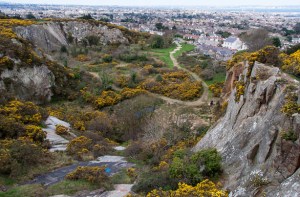
dalkey_quarryAn attempt to poison a family of peregrines (two adults and four youngsters) at Dalkey Quarry, part of the Killiney Hill Park in Co. Dublin, has been foiled thanks to three observant members of the public.

On the evening of 11th June, three walkers noticed two pigeons in distress at the quarry, close to the well-known peregrine’s nest ledge. On closer inspection, the pigeons were found to be tethered with fishing line and had had their wings clipped to prevent them from flying. While rescuing the pigeons, a wet substance was noticed on the back of their necks. It is suspected that this was poison, placed there in a deliberate attempt to kill the peregrines. The substance is being tested at a specialist lab.

If it was poison, those members of the public are lucky not to have been affected.

Full details of the story can be found on the BirdWatch Ireland website here.

It wouldn’t be the first time this barbaric method has been used to kill raptors. In 2011, two buzzards and a sparrowhawk were killed in Ireland after being attracted to live tethered pigeons that had been smeared with the banned poison Carbofuran (see here).

Scottish gamekeeper accused of bludgeoning then stamping on buzzard that had been shot

A Scottish gamekeeper is facing trial over allegations that he bludgeoned and then repeatedly stamped on a buzzard.

William Dick, 24, of Whitehill Cottages, Kirkmahoe, Dumfries, denied the charges at Dumfries Sheriff Court last week. The alleged offences reportedly took place in Sunnybrae, Dumfries in April this year.

Dick also denies two charges of breaching firearms regulations by leaving a bolt-action rifle and a Beretta self-loading shotgun loaded with five shells out-with a secure cabinet in his kitchen.

The case has been continued for one month to fix a trial date.

Thanks to the blog reader who sent us a local newspaper report about this hearing.

We’ll be following this case with interest.

UPDATE: 15th October 2014 here

UPDATE: 22nd October 2014 here

Another suspected red kite poisoning incident in Northern Ireland

There’s more grim news from Northern Ireland this week with the discovery of a dead adult red kite on her nest, along with two chicks. Poisoning is strongly suspected.

RKBLUE13_NIJune2014

The authorities were alerted to a potential problem at the Katesbridge nest in Co. Down by a sharp-eyed local resident who had been watching the nest from her house and was worried something had happened to the female.

The site was subsequently visited by members of the Northern Ireland Raptor Study Group, RSPB and the Police Service of Northern Ireland where they found the adult (wingtagged ‘Blue 13’) slumped on the nest, along with the two chicks. Their bodies have been sent for toxicology tests.

These birds were part of the small breeding population in Northern Ireland, reintroduced (with donor birds from Wales) between 2008-2010. The population is still tiny and is extremely vulnerable to illegal poisoning.

In 2013 alone, six dead red kites were recovered. Tests revealed that two had been poisoned with Carbofuran, three with Alphachloralose, and one was too decomposed for analysis but was found in the same (very small) geographical area as three of the others.

At least this time the police have issued a very quick alert (within 24 hours of the discovery), in sharp contrast to the 13-month delayed announcement about a poisoned white-tailed eagle that we blogged about a couple of days ago (see here).

As a side issue, this is our 1,000th blog entry. It’s a milestone, but unfortunately not one to celebrate.


Ross-shire Massacre: police confirm banned poison involved

RK7The following statement has just been released by Police Scotland:

Police Scotland Highland and Islands Division are seeking to reassure the public that enquiries are still ongoing into a wildlife crime investigation regarding the death of birds of prey in the Ross-shire area.

The 22 birds (sixteen red kites and six buzzards) were located in the Conon Bridge area and following analysis of the birds’ remains, fifteen have been confirmed as having digested an illegally-held poisonous substance (twelve red kites and three buzzards). Post mortem examinations and toxicology work continues into all the birds seized.

Police Scotland is continuing to work in close collaboration with partner agencies. Landowners and farmers in the local area are also continuing to assist police with their ongoing enquiries.

Police are keen to speak to anyone who has any information about the incident and would encourage them to contact Police on 101 or Crimestoppers anonymously on 0800 555 111 or online at http://www.crimestoppers-uk.org/. No personal details are taken, information is not traced or recorded and you will not go to court.

ends

So, finally, they’ve managed to confirm that a banned poison was involved. About time, too. They still haven’t named it, but the “illegally-held poisonous substance” will be one (or more) of those named on the Possession of Pesticides (Scotland) Order 2005. These are:

Aldicarb, Alphachloralose, Aluminium Phosphide, Bendiocarb, Carbofuran, Mevinphos, Sodium Cyanide, and Strychnine.

Now, which industry hates raptors and is known to have a close association with these banned poisons…let’s think hard….erm….

It actually doesn’t matter that the police haven’t named the poison(s). Just knowing it’s a banned poison and not a ‘mystery virus’ or an ‘accidental poisoning’ is enough to put a halt to what has recently looked increasingly like a coordinated campaign to associate the deaths with the feeding regime at the RSPB’s Tollie Kite Feeding Station rather than focus attention on the specific area where the poisoned victims, along with poisoned bait, had been found.

It’s funny, isn’t it, that of all the speculation that’s been aired, nobody seems to have wondered about whether there’s any (legal) ‘vermin control’ being done on those farms around Conon Bridge. Perhaps done on a casual basis in return for access for a spot of pheasant shooting by a small shooting syndicate? But then that’s such an obvious angle of inquiry, the police must have covered it months ago…..right?

The number of confirmed poison victims has reached 15 (it really is like pulling teeth trying to get information about this incident) and the police ‘investigation’ continues…..

Previous blog posts on the Ross-shire Massacre here

Ross-shire Massacre: RSPB denies ‘accidental poisoning’ claims

The Ross-shire Massacre fiasco continues, with yet another claim that the 22 dead red kites and buzzards were ‘accidentally poisoned’ by contaminated meat put out at the Tollie Red Kite Feeding Station.

This latest claim was made by a local farmer (who wishes to remain anonymous) who believes the birds were fed sheep carcasses containing legal treatments used to prevent fluke, which can be toxic to birds.

The claim has been strongly denied by RSPB Scotland (see here).

It’s not the first time this claim has been made. Jamie McGrigor MSP gave credence to it when he mentioned it during a parliamentary debate last month (see here), although he did admit it was based purely on rumour.

We think the claim is as plausible as the ‘mystery virus spoof‘ we wrote in response to Conon Bridge farmer Ewan MacDonald’s suggestion that the birds had been killed by a ‘mystery virus’. Incredibly, there were some people who actually believed the spoof, and thus it follows that there will be some who are gullible enough to believe the ‘accidental poisoning’ claim, just as there are those who believe the ridiculous claims that gamekeepers don’t put out poison baits – they’re just the victims of an elaborate set-up designed to blacken their reputations; set-ups that apparently include planting poisoned carcasses as well as planting jars of poison in gamekeepers’ vehicles, game bags, out-buildings and even in their homes.

Far more plausible is the suggestion put forward by the RSPB’s Red Kite Officer, Brian Etheridge, that the Ross-shire Massacre was caused by “somebody who knew what they were doing” when they placed small poisoned baits in various locations around Conon Bridge (see here). It has previously been reported that poisoned bait had been found at the crime scene, and, given the small area of farmland in which the majority of the birds were discovered, the poison was obviously fast-acting and highly toxic. Hmm, whatever could it be?

Meanwhile, as speculation rages, Police Scotland remain tight-lipped about their ‘investigation’. Two weeks ago they managed to say that 14 of the 22 dead raptors were now confirmed to have been “illegally poisoned” (11 red kites and three buzzards) but they were still apparently waiting for post mortem results on the remaining eight victims – see here. They are still refusing to name the poisons discovered by SASA scientists during their toxicology analyses, because the investigation is apparently ‘ongoing’.

Two and a half months down the line, nobody has been charged.

Previous blogs on the Ross-shire Massacre here.

Ross-shire Massacre: RSPB considers alternative use of reward fund

A couple of weeks ago we blogged about the Ross-shire Massacre, two months on from the initial discovery of poisoned red kites and buzzards in the Conon Bridge area.

We suggested that it was now highly unlikely that anyone would be prosecuted for this disgraceful crime and we encouraged blog readers to contact RSPB Scotland Director Stuart Housden, to ask whether the reward fund, to which many of us contributed, could now be put to better use by their Investigations team rather than having it festering in some dusty account for years with virtually no prospect of ever being claimed (see here).

Thanks to those of you who did contact Stuart. It’s pleasing to see that he has taken note – the following statement has appeared on the RSPB’s reward fund website:

Update – 23rd May 2014:

We are extremely grateful for the huge public support and demonstration of outrage following the illegal killing of a large number of red kites and buzzards in Ross-shire just over two months ago. Your support via this Just Giving appeal has been incredible, and we have taken on all of your comments left on this page. The collective reward for information leading to a conviction over this atrocity has now grown to £27,000 (including pledges from Scottish Land and Estates and others) – demonstrating how strong the public feeling is for tackling wildlife crime in Scotland. In our appeal, we stated that if this money was not claimed as part of the Ross-shire reward fund, it would be channelled to RSPB Scotland Investigations team to help with their work supporting the police to tackle raptor crime in Scotland. Further to a number of enquiries from supporters over progress with this case, we will now be speaking to Police Scotland to seek their advice over use of your donations to this reward fund. If agreed by the police, we will use this money shortly to fund satellite tags for hen harriers and golden eagles, to be fitted by experienced and qualified RSPB Scotland staff, as well as other high technology equipment for RSPB Scotland Investigations. Thank you for all your support in helping combat crimes against birds of prey in Scotland, from all of us at RSPB.

That’s excellent news! The reward fund stands at £27,423 and of that, £10, 423 was donated by ordinary members of the public wanting to help. It’s this £10, 423 that could be released, if Police Scotland agree.

It’ll be interesting to see the police response to the RSPB’s question. If they agree (and we hope they do), they will be admitting that their investigation has failed, which will probably be quite embarrassing given the enormous public and political interest in this case. It would be the right thing to do though, and they’d deserve some credit for being honest about it. They won’t get any credit at all if they insist on claiming this is still an on-going investigation with a good chance of a prosecution, because we, and they, know it definitely isn’t that.

Previous blogs on the Ross-shire Massacre here.

Red kite photo by Claire Marshall