Highland red kite shot in the head

According to a local journalist, a dead red kite was found on a railway line in Inverness-shire in early July.

It was collected and sent for a post-mortem, which revealed it had been shot in the head.

We don’t know whether the kite was shot at another location and then dumped on a railway line to disguise its cause of death as an accidental collision with a train, or whether it was actually shot on or close to the railway line. Either way, it was illegally killed.

Needless to say, more than three months later and it would appear that Police Scotland haven’t issued any press statement or appealed for information.

Why not?

Hen harrier Sid ‘disappears’ in North Yorkshire

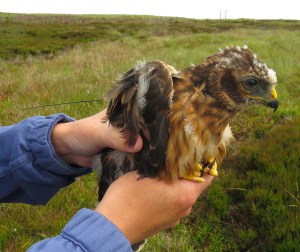
sidSid was one of the successfully-fledged hen harriers at Langholm this year. He was satellite-tagged on 3rd July and his movements have been mapped and shared on the Making the Most of Moorlands blog all summer.

In late September Sid flew to North Yorkshire. His satellite tag stopped transmitting from an area of moorland near Hawes. The location has apparently been searched but there’s no sign of Sid or of his sat tag.

Nobody will be surprised by this news, nor the proximity of his last signal to driven grouse moors. Cue outpourings of ‘sadness’ from the usual suspects and the long list of possible explanations for his ‘disappearance’ apart from the most probable one.

The petition to ban driven grouse shooting has reached 18,000 signatures. It’s time it had some more – sign here, for Sid.

Photo of Sid, from the Making the Most of Moorlands blog.

RSPB publish last known positions of hen harriers Sky & Hope

Last month, we learned that two of this year’s English hen harrier chicks, Sky & Hope, had ‘disappeared’ in suspicious circumstances, just a few weeks after fledging (see here).

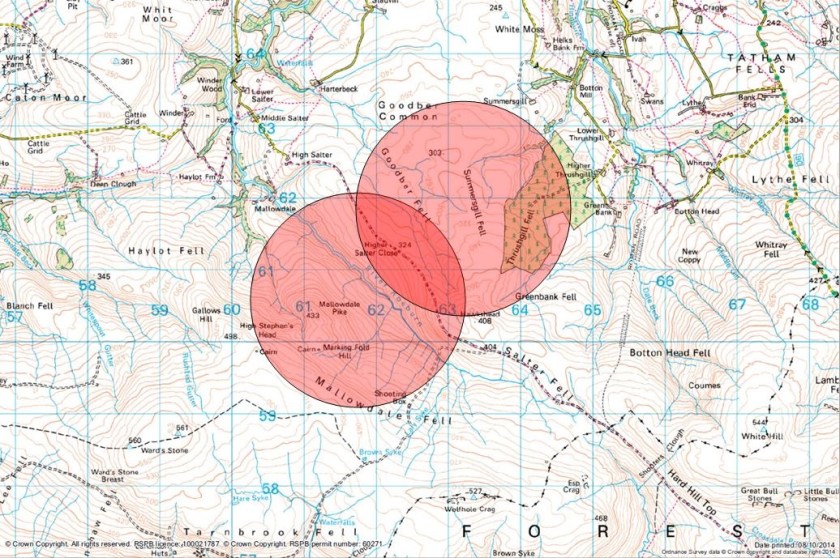
The RSPB has now published their last known locations in Bowland, Lancashire, accompanied by a plea for information about what happened to these two young harriers.

How refreshing to see the actual locations mapped out and made available in the public domain – Natural England, take note!

Here is the map.  The final satellite tag transmissions of Hope and Sky are somewhere inside these red circles. For further details of these sites and the dates of the last tag transmissions, please read the RSPB’s Skydancer blog here.

Sky & Hope buffer


Cairngorms National Park Authority wants ‘action’ against raptor persecution

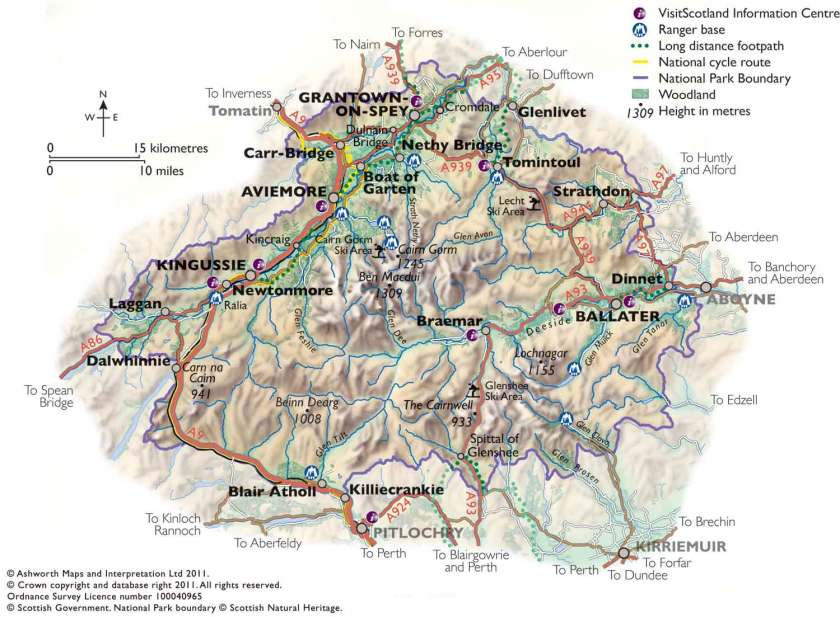
Duncan BrydenThe Convenor of the Cairngorms National Park Authority (CPNA), Duncan Bryden, has written to the Environment Minister to tell him that continued incidents of raptor persecution and ‘disappearing birds’ in the eastern side of the Cairngorms National Park “threatens to undermine the reputation of the National Park as a high quality wildlife tourism destination“.

He has asked for the Minister to attend a meeting of stakeholders in the Eastern Cairngorms (including RSPB Scotland and, er, Scottish Land & Estates) to discuss ways to address this on-going issue.

That’ll be interesting, seeing as though SLE continue to deny the extent of the problem (e.g. see here) and only last year gave membership to the ranks of SLE to the North Glenbuchat Estate – a grouse moor in the National Park that has been at the centre of wildlife crime investigations for years, most recently following the ‘disappearance’ in April of the first fledged white-tailed eagle in eastern Scotland for 200 years – it’s final signal reportedly came from North Glenbuchat estate (see here). The eagle is presumed dead but it’s body has not been recovered, just like the bodies of three other young satellite tagged eagles that ‘disappeared’ in the area in recent years. The body of a fifth eagle was found on North Glenbuchat Estate in 2011 – it had been poisoned with Carbofuran. As had a poisoned buzzard, also found in 2011, as well as a poisoned bait. A dead short-eared owl was also found in 2011 – it had been shot and stuffed under a rock.

Good luck to the CNPA in trying to oust the raptor-killing criminals from the National Park and well done Duncan Bryden for taking a stand.

Download: CNPA letter to Paul Wheelhouse May2014

Download: Paul Wheelhouse response to CNPA

CNP map


Police investigate death of six buzzards in Aberdeenshire

Breaking news….

Police are investigating the death of six buzzards found in a field near Fordoun, Aberdeenshire, yesterday afternoon.

No other details available.

We’ll have to await the cause of death but this does look v suspicious.

News article here

UPDATE: 9 October 2014: It turns out the police can’t tell the difference between raptors & chickens. Seriously, we’re not making this up – see here.

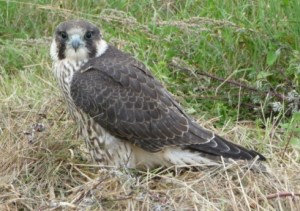
Famous Derry peregrine found dead: poisoning suspected

A well-known peregrine has been found dead in the grounds of St Columb’s Cathedral in Derry and is suspected to have been poisoned.

The bird was found on Saturday and the carcass has been sent for toxicology tests.

BBC news story here

Bastards

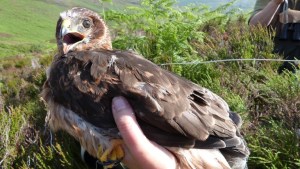
tagged_hen_harrier_bowland_2014_Jude LaneTwo of this year’s hen harrier chicks from Lancashire have ‘disappeared’.

Both were sat-tagged and both suffered ‘catastrophic tag failure’, according to the RSPB’s press release (here).

Dress it up all you like, as technological breakdown, possible predation or even starvation. We’ve heard it all before – every possible explanation except for the bleedin’ obvious – these birds have probably been illegally killed by those with a vested interest in driven grouse shooting, just like the hundreds, no thousands, of other ‘missing’ harriers in our uplands.

There will be some who’ll still say we need to give them the benefit of the doubt, we need to try and work with them, let’s all sit around the table and talk this through and find a way.

That’s laughable. The only way to deal with these bastards is to ban driven grouse shooting. Here’s the petition – please sign it.

Photo of one of the young Bowland hen harriers by Jude Lane.

Ross-shire Massacre: six months on

rk5It’s been (just over) six months since 22 raptors were poisoned in a single incident at Conon Bridge in Ross-shire.

So far, we know that 16 of those birds (12 red kites + 4 buzzards) were killed by ingesting “an illegally-held poisonous substance”. We know that the name of the poison has been redacted from official government documents in the public domain. We know that nobody has been arrested.

That, in a nutshell, is about the sum total of the ‘official’ information that is available about one of the most high-profile wildlife crimes in recent years.

Isn’t that amazing? Six months on and that’s all there is?

However, if you’d been sitting in Lecture Marquee #3 at the Rutland Birdfair on Saturday 16th August, you’d have heard that the poison used to kill all those birds was Carbofuran, and that the perpetrator is known. Indeed, the (alleged) perpetrator was virtually named and anyone sitting in that marquee who had any local knowledge of Conon Bridge would know exactly who was being implicated.

It was an astonishing talk delivered by Sir John Lister-Kaye, who introduced himself as a Vice-president of RSPB. It was astonishing both in the level of detail about the case that was delivered, but also in the level of inaccuracy about raptor persecution in general. For someone with Lister-Kaye’s credentials, the content of that talk left our jaws hanging open.

Given the wholly inaccurate statements he made about raptor persecution in general (including a claim that Carbofuran could be used under licence to treat seed crops (!!) and that raptor killing in Scotland has never really been widespread until very recently and then only as the landowners’ angry backlash following the introduction of vicarious liability), his statements about the Ross-shire Massacre need to be treated with caution.

Nevertheless, whilst he deserves to be pulled up on his shoddy research skills, he deserves credit for standing up in that marquee and giving more information in 20 minutes than Police Scotland has managed in six months.

Previous blogs about the Ross-shire Massacre here

Sat-tagged Montagu’s harrier ‘disappears’ in Norfolk

A three-year-old satellite-tagged Montagu’s harrier called ‘Mo’ has ‘disappeared’ in Norfolk.

The bird was one of three sat-tagged adults being monitored as part of an RSPB study on migration routes. The project featured on The One Show last night. The two other tagged harriers have already left the UK and are in Africa.

Mo was known to have left a roost site close to Great Bircham in Norfolk on 8th August. There have been no further signals and it is suspected she has been killed and her sat tag destroyed.

Tellingly, one of the Dutch researchers who had fitted the three tags said: “Since 2005 we have tagged 58 Montagu’s harriers [in mainland Europe], and a sudden loss of signal is exceedingly rare“.

Unfortunately, a sudden loss of signal from a sat-tagged raptor in the UK is anything but rare.

Norfolk Constabulary has launched an investigation and a £5,000 reward has been put up by the project sponsor, Mark Constantine (the man behind Lush, the cosmetic company that has helped promote the plight of another harrier species in the UK, the hen harrier).

News article here.

Norfolk Constabulary press release here

RSPB project on tracking Montagu’s harriers here.

Photo of a Montagu’s harrier by William J S White

Police investigate shooting of young peregrine in Suffolk

shot perg suffolk aug 2014Suffolk police and the RSPB are appealing for information after the discovery of a young, injured peregrine near the village of Long Melford in Suffolk on 20th August. The bird had been shot.

The peregrine has survived and is currently being rehabilitated at a nearby falconry centre in the hope it can make a full recovery and be released back to the wild.

The RSPB is offering a £1,000 reward for information leading to a conviction.

Full news article here.

This is the 17th peregrine known to have been targeted in these isles this year. And these are only the ones that have reported – how many more have been killed?

In February, a poisoned peregrine was found dead in South Lanarkshire, Scotland (here). In March, a shot peregrine was found dead in Dorset, England (here). In April, a shot peregrine was found dead near Stirling, Scotland (here). In May, a shot peregrine was found critically injured in Devon, England (here). In June, the public foiled an attempted poisoning of six peregrines in Co. Dublin, Ireland (here). In June, a poisoned peregrine was found dead in North Wales (here). In July, four dead peregrines suspected to have been poisoned were found in Gwynedd, NW Wales (here). In August a shot peregrine was found critically injured in Co. Wexford, Ireland (here).