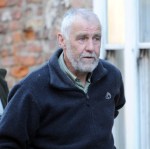
Following the conviction yesterday of Stody Estate’s former gamekeeper, Allen Lambert (see here), more details are emerging about this case.
Lambert had pleaded guilty to five other charges at an earlier hearing (three offences of illegal storage and use of pesticides and unlawful possession of nine buzzards – see here). However, he had denied charges relating to the illegal killing of 11 raptors (10 buzzards & 1 sparrowhawk) and possession of pesticides and other items capable of being used to prepare poisoned baits. It was these denials that triggered yesterday’s trial at Norwich Magistrates Court.
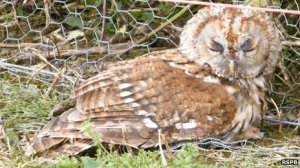
Investigators had found a sack of nine poisoned buzzards on a quad bike, the banned pesticide Mevinphos in Lambert’s Land Rover, and another banned pesticide, Aldicarb, in his garage. One of the containers was a bucket with a syringe and a number of needles – the classic ‘poisoner’s kit’ used to inject poison into baits. More dead birds (including a tawny owl and five buzzards) were also found on the estate close to pheasant feeding bins but were too decomposed for analysis.
The prosecution argued that Lambert had poisoned the birds on the estate and the reason they were in a sack on a quad bike in an outbuilding at his house was because he was in the process of removing the evidence. Lambert claimed he hadn’t poisoned the birds at all – he said they’d been dumped on the estate by a dog-walker with a vendetta against him (yes, that old chestnut). He said the ‘poisoner’s kit’ had been left in his garage by a now-deceased friend (yes, another old chestnut). Lambert claimed he’d only once used the poison found in his vehicle, and that was seven years ago to kill a “tricky fox”.
Fortunately, District Judge Peter Veits said he found Lambert a non-credible witness. He said: “In short, I find his explanation of a vendetta against him implausible“. He went on to say that the only other explanation was that Lambert had indeed poisoned the birds and all the evidence pointed to that.
He adjourned sentencing until 6th November so background reports could be prepared. However, don’t hold your breath for a custodial sentence……the judge told Lambert that although the offences crossed the custody threshold, this would not necessarily mean he would be jailed as he would take in to account “the total lack of supervision” and training he’d received from his employer. Judge Veits said: “There would appear to be a complete lack of control over poisons on the estate” and “In many other ways your employers might have been in the dock themselves for some of these offences involving poison on their property“.
This “total lack of supervision” is an interesting suggestion. Several years ago (2008), the Field Sports Magazine published an article on Stody Estate in their ‘shoot review‘ section. Interestingly, since proceedings began against Lambert, this particular review has ‘disappeared’ from the Field Sports Magazine’s website. Luckily, we had already saved a copy and we reproduce it here. It provides a telling insight in to the relationship Lambert had with his employer, and the level of involvement that Lambert’s employer had with the game-shooting on the estate:
Fieldsports Magazine Shoot Review
Stody Estate, Norfolk
A few years ago, Mike Barnes was invited to shoot in North Norfolk. The shoot was new to him and as such the day carried the added element of surprise. And what surprise it turned out to be!
In January last year I was invited to shoot in North Norfolk. The shoot was new to me and as such the day carried the added element of surprise. And what surprise! While I have never paid any attention to those who dismiss Norfolk as boringly flat – they clearly don’t know the county – I was in awe on the third drive of the morning. Admittedly it was a breezy January day, but the pheasants which flew from Arabella’s were little short of spectacular. The Guns were lined out across a dip in front of the tiny village of Stody. A wood to one side, and another wood in front.
The first couple of cock pheasants to appear made an impressive entrance. More followed in equally majestic style. I was the end Gun on the right, and had four or five shots – all good sporting birds. But looking down the line towards the centre pegs at the base of the dip, the Guns were faced with the finest classically presented high pheasants you could ever wish to see. And yes, this was Norfolk. The Stody estate to be precise, home of the MacNicol family.
Ian MacNicol died suddenly two years ago at the age of 62. A legendary figure in farming and country circles, he left many legacies not least the impact he had not only on Stody but in many aspects of rural life in Britain. He enjoyed 25 years of active involvement with the CLA, and was president from 1997 to 1999 during which time he made light of the task of enlightening the New Labour government. He pioneered access. He led by example in so many areas and Stody gave him the platform to do it.
He inherited the estate from his stepfather when he was just 19 while at Cirencester and following a couple of years’ qualifying as a chartered surveyor with John D. Wood in London, he took over the running of the estate in 1963. In 1974 he married Adel. They made a great couple, and it was Adel who was hosting on the day of my visit.
Situated near Melton Constable, Stody comprises 4,000 acres of the Glaven Valley, a small chalk stream that cuts through the Cromer-Holt ridge, surely one of the prettiest and least spoilt areas of rural England. A glacial freak of nature, of wooded hills and arable land, small villages, delightful churches and wild brown trout.
It is tailor made for shooting, but the nature of the sport has changed considerably over the years. Adel explained: “There are 700 acres of mixed woodland. Sadly a lot of the hardwoods were cut down during the war and softwoods were planted for their quick growth. However since the late 1960s, as part of a woodland management scheme, we have planted a lot of mixed woodland with a high ratio of broadleaf trees.
“When Ian took over from the syndicate which previously shot here, he let the two outside beats and kept the central part for the family. Much of the shooting was in woodland rides, using undulations and contours to best effect.”
“The arrival of new gamekeeper Allan Lambert in 1990 prompted a rethink. “Both Ian and Allan concluded that they would help the wild population and release cocks only. Ian could see longer term that the writing was on the wall – there would be pressure on the rearing of game.” Certain areas were shot lightly. The grey partridge population had also collapsed after the good times of the Seventies, just like everywhere else.
Son Charlie, 27, who works in London in corporate finance, is now shoot captain and picks up the story: “Dad persevered with not rearing partridges, which after the first two or three years must have been a bit of a test, and then he had the pressure of two boys who were mustard keen – brother George and myself – so in 2002 we started to rear and release some French partridges. It has undoubtedly been a great success. We present them in very much the traditional Norfolk way, with Guns pegged out 15-20 yards back from a tall hedgerow (preferably a double hedgerow), and the game cover sited 50 yards back the other side. The picker-ups are a long way back, so that we can shoot behind. Allan and his team drive them superbly, and two of the drives in particular, Pynkney and The Wongs, give spectacular shooting all along the line.”
On the subject of hedgerows, Stody has 90 kilometres of them and 100 kilometres of grass margins. Ian was one of the first to sign up ten years ago for entry level stewardship and the estate has recently entered into the higher level scheme.
They have taken part in the GWCT partridge count scheme for several years. Charlie adds: “As of three years ago we now put down around 100 English partridges each year. They are reared under bantams from day-olds, and we put them out in batches of 20-30 in areas well away from the redlegs. “We always see some on shoot days, but we don’t shoot them – other than by mistake. But if this does happen it is not a hanging offence! Very few get shot and we feel that by doing this we can only help build a stock.”
As for pheasants, Charlie explains that they have tried them all, or nearly! “Michigan, Traditional, Scandinavian, Chinese, and for the last two years Bizantes – the Bizantes fly very well, and are reasonable to hold. We used to buy them in as day-olds but as this takes Allan away from vermin control (one of his key strengths) at an important time, we now go for poults.” Most covers are a mixture of maize, with surrounding wild bird strips. The aim is to provide both food and cover. And they always leave stubbles, with mustard, for the partridges.
Adel adds: “Ian was always a keen shooting man, but most of all he saw shooting fitting in as integral to conservation and wildlife. He was passionate about the rural way of life and all it entailed.”
He planted and named woods after each of their four children – Arabella’s was the wood to which I referred earlier, while there are further woods for Charlie, George and Katie. “I will look to continue to run the shoot in the same way as my father” said Charlie. “It is a family shoot in which we have ten main days, a keeper’s day and an estate day. We have a tremendously loyal team of beaters and pickers-up, many of whom have been with us for years, and all are an integral part of both the day and the wider shoot.” The shot game goes to the local butcher.
“As for the sport, we will always look to present the best birds possible, favouring bags of around 200. We don’t start with the partridges until late October, then one more partridge day before pheasants in mid-November. And we try to introduce at least one new drive every year. This year we have trebled the size of a wood planted in 1996 when my father was High Sheriff of Norfolk. We call it Sheriff’s Wood.” A passion for shooting runs in the family. The two brothers are very keen, and both had a traditional introduction. “I carried an empty .410 for a full season” explained Charlie. “I had shot woodpigeons and flighted duck but then at the age of 14 before a shooting day I stood in front of the whole party at breakfast and by heart recited Mark Beaufoy’s If A Sportsman True You’d Be. Then went into the field and stood in front of my father. Never to be forgotten. Friends were subsequently incredibly kind with invitations.”
Adel enjoys the shoot days with her labrador, Lochie, but doesn’t carry a gun. “I stalk in Scotland, but I had three brothers who were also keen on shooting.” Her grandfather was Richmond Watson, founder of West London Shooting School. All in all a rich sporting pedigree which sons Charlie and George have fully embraced and look set to enjoy many happy seasons in the years to come at Stody.
Ian MacNicol and the CLA
Ian MacNicol was the CLA’s representative at the CLA Game Fair and contributed much towards the success it has become. He was CLA President from 1997-1999, and deputy president during the preceding two years. He saw what an important role the fair could play in bringing the countryside and rural businesses to the attention of the decision makers. He also helped advise the government on the removal of lots of red tape and was also a spokesman on foot and mouth.
One of the things he promoted amongst estate owners was a greater degree of access. Adel explains: “He was very keen on voluntary access, something which he pioneered here at Stody, with 13 miles of permissive paths and two designated areas of three acres where dogs can be walked off the lead. The response was good and others followed suit.” In fact with the right to roam debate he secured many practical concessions.
He was awarded OBE for services to agriculture in 2001. “Ian was always fairly forward thinking, and very conscious of a need to farm with a conservation bent. But never forgetting that farming was a business – we have never farmed around the shooting. We have an excellent farm manager in Ross Haddow who as a shooting man understands both sides. Whilst we do all we can to help game, without farming we wouldn’t have a shoot.” Following his presidency of the CLA he was chairman of the Royal Agricultural Society, where he began the revitalisation of the Royal Show and National Agriculture Centre at Stoneleigh. He had a long established interest in west country livestock markets and pioneered electrical marketing to minimise animal movements. He was a former Game Conservancy trustee and founding chairman of the Norfolk branch, a founder chairman of North Norfolk Radio and director of East Port Great Yarmouth. A great supporter of the National Garden Scheme, he was also involved in any number of local charities and organisations.
He somehow managed to fit it all in and also be great fun and find precious time for his family – a one-off, just like Stody itself.
The keeper
Gamekeeper Allan Lambert (59) joined Stody from nearby Foxley in 1990, and quickly developed a good understanding with his new boss. They made the decision to release cocks only in that first year. “It was a slow start as there was so much vermin. We shot 12,000 rabbits which must have accounted for 300 acres of unharvestable crop. We also took 75 foxes in the first three months, and we still account for 130-180 per year. There is a lot of unkeepered ground in the area.
Consequently there were only three days pheasant shooting in that first year. But they persevered. “People try releasing cocks only but it takes time. They get despondent with early results and pack up after three or four years, but it can take seven or eight years before you start to see results.
“Now we are seeing a lot of hens, which are of course all wild. In a really good season we will get a return of 80%, but generally we look for 70%.” Wild stock is therefore very significant on shoot days. They are also good fliers. Many of the young wild are now of Michigan Blue strain, from previous generations of cocks released four or five years ago.
“We are now releasing Bizantes, which we have been very happy with. They are big birds, so the butcher likes them – but they also fly well.” He told me that there are higher drives than Arabella’s, particularly when the wind isn’t so strong. “With the small valleys a very strong wind has a detrimental effect – anything over 15mph is too much.”
They are trying to boost grey partridge stocks and are enjoying some success. “Obviously it depends on the weather, and modern farming is challenging them, but we have a nice sprinkling of greys. We rear 100 under bantams and release them in coveys. I would think that in a normal year we will see 150-200 young English.”
His wife Jackie cooks the shoot meals, while he relies on a regular team of helpers on shoot days. “I have a really good team of beaters, some of them have been with me for nearly 30 years. John Kingsley, a retired estate employee takes charge of the beaters wagon while Simon Rouse drives the Guns’ vintage lorry.
Allan is a man dedicated to his job, having never taken a day off with illness in 30 years. Stody is at his heart and he clearly enjoys working here. “They are a very good family to work for” he adds, and you know he means it.
His passion is wild game. With foxes, crows, magpies, rooks and squirrels, he is kept busy. “But there are many people who don’t realise that unless we controlled vermin, never mind pheasants, there would be no other wildlife to speak of.”
END
It should be noted that Ian MacNicol, a former CLA President and a former GWCT Trustee, died in 2006 and Stody Estate is now in the hands of his family. The Farm Manager, Ross Haddow, has been at Stody since 1992 (two years after Lambert was hired) and has won awards for his work (see here). Frighteningly, ‘around 900 primary school youngsters visit the farm each year to see a variety of farm enterprises’.
It’s also interesting to note that Lambert was not suspended or sacked after his arrest – it’s been reported that he actually retired ‘some months after his arrest’. Fascinating.
The National Gamekeepers’ Organisation has published a statement about Lambert’s conviction, stating that he isn’t, and never was, a member of their outfit. They also claim that Lambert is one of the “very, very few” gamekeepers who break the law. Hmm, according to our reckoning, Lambert is actually the 27th gamekeeper to be convicted of wildlife crime offences in the last 3.5 years (see here) – that seems more than a “very, very few” and remember these are only the ones who’ve been caught! According to the RSPB, since 1990, over 100 gamekeepers have been convicted for crimes against birds of prey.
Full credit to the RSPB Investigations Team, Norfolk Constabulary, Natural England and the Crown Prosecution Service in this case. It’s exceptionally rare that a conviction is gained for actually poisoning raptors – usually it’s just a conviction for possession or storage of a banned pesticide. Now we have to wait to see whether their hard work results in a meaningful sentence…..
Here are some media reports about Lambert’s conviction:
RSPB news here
BBC news here
Guardian here
Dereham Times here
National Gamekeepers’ Organisation here
Telegraph here
Mark Avery’s blog here
Blog by RSPB Investigator Guy Shorrock here
UPDATE 6/11/14: Lambert’s sentencing here


 Breaking news from @RSPBBirders….
 Mark Stevens, a self-employed gamekeeper who worked on Andrew Lloyd Webber’s Sydmonton Court Estate in Hampshire, has been convicted of setting two illegal traps and has been fined £700 with £650 court costs and a £50 victim surcharge.
 A dog has died after consuming a bait that had been laced with the banned pesticide, Aldicarb.
 Earlier today we blogged about the latest poisoning victim to have been uncovered in Scotland….a dead buzzard that was found in Fife in April (see
  Raptor Persecution UK