Poisoned buzzard found dead in Stirlingshire

Here we go again…

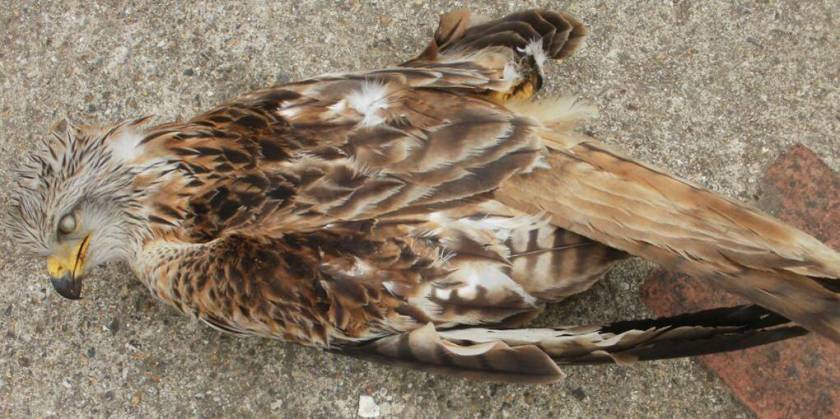
A dead buzzard found in Stirlingshire in September had been illegally poisoned, according to Police Scotland. Three months on, they are now appealing for information.

The buzzard was found by a member of the public in the Sheriffmuir area, north of Bridge of Allan. The name of the poison used has not been revealed.

Adding this incident to the already swollen tally of illegally-killed birds found in 2013, it is abundantly clear that illegal poisoning is most definitely not decreasing, despite what the game-shooting industry would have you believe. We have calculated a 66% increase in poisoning crimes this year, and there are still a couple of weeks to go.

You might want to email the Environment Minister, Paul Wheelhouse, and ask him (a) why the police appeal for information is three months late, and (b) what else he proposes to do about this disgraceful situation seeing as  illegal raptor poisoning in Scotland is back on the increase and current government measures to stop it are clearly not working.

Emails to: ministerforenvironment@scotland.gsi.gov.uk

News article here

Norfolk gamekeeper faces series of raptor persecution charges

A Norfolk gamekeeper is facing seven charges of alleged wildlife crime.

Allen Lambert, 64, of Stody, near Melton Constable, has been charged with killing 16 wild birds (14 buzzards, 1 sparrowhawk and 1 tawny owl), possession of nine birds (buzzards), failure to comply with a firearms certificate, and four counts of possession and storage of banned poisons (Aldicarb and Mevinphos).

The alleged offences took place between January and April 2013.

Lambert is currently on bail and will appear before King’s Lynn Magistrates court on Thursday (19th Dec).

News articles here and here

Two marsh harriers and a red kite poisoned: late appeal for info

The RSPB and two county police forces have put out an appeal for information following the discovery of a poisoned pair of Marsh Harriers and a Red Kite.

According to the press release (see here), the two breeding Marsh Harriers were discovered in April on land adjacent to the RSPB’s Nene Washes Nature Reserve in Cambridgeshire. The Red Kite was discovered in Old Leake, Boston, Lincolnshire in May. Toxicology analyses showed that all three birds had been poisoned with the banned pesticide Aldicarb.

So here we are again, a ridiculously late appeal for information, seven and six months respectively after the birds had been found. Further more, according to the press release, the Chemicals Regulation Directorate (CRD) who funds the toxicology testing programme has already declared the two cases closed!

It seems there is more to these cases than meets the eye. Rumour has it that these cases have not been thoroughly investigated due to a lack of police resources. If that’s true, then why weren’t other agencies drafted in to help? Where’s all the much-heralded ‘partnership working’?

And why the bloody hell are appeals for information still coming so late? Every single bloody time it’s the same old story. What’s the point? Why is it so difficult to get these investigations right? That will be a question we’ll be posing in due course (and you can, too) to the newly-appointed ACPO (Association of Chief Police Officers) lead on Wildlife and Rural Crime, Chief Constable Simon Prince (from Wales). Watch this space.

In the meantime, we had a look at the quarterly poisoning results published by the CRD’s Wildlife Incident Investigation Scheme (see here). Have a look and see how many confirmed poisoning cases you can spot in England and Wales between Jan – June 2013 that have not been publicised in the media.

It seems the influence of The Untouchables spreads far and wide throughout these isles.

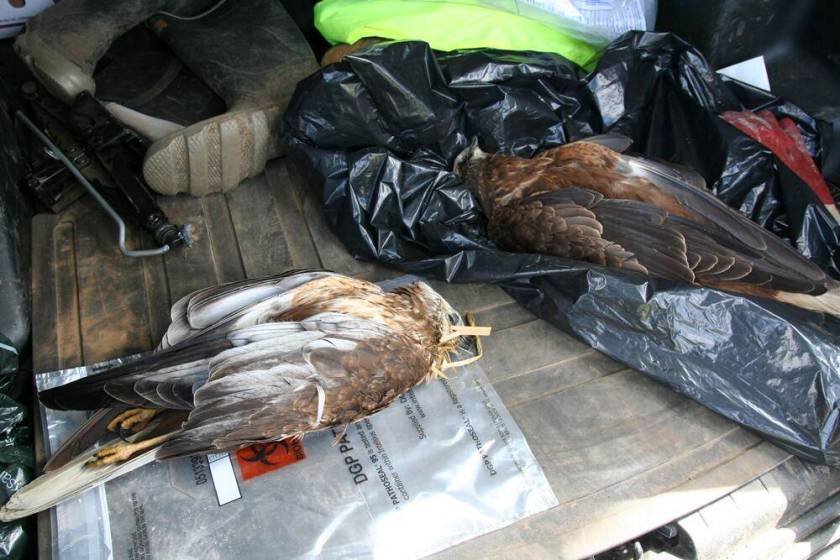
Here are the two poisoned Marsh Harriers

Marsh Harriers poisoned Nene 2013

And here is the poisoned Red Kite

RK poisoned Lincoln 2013

Poison awareness posters appear in Leadhills village

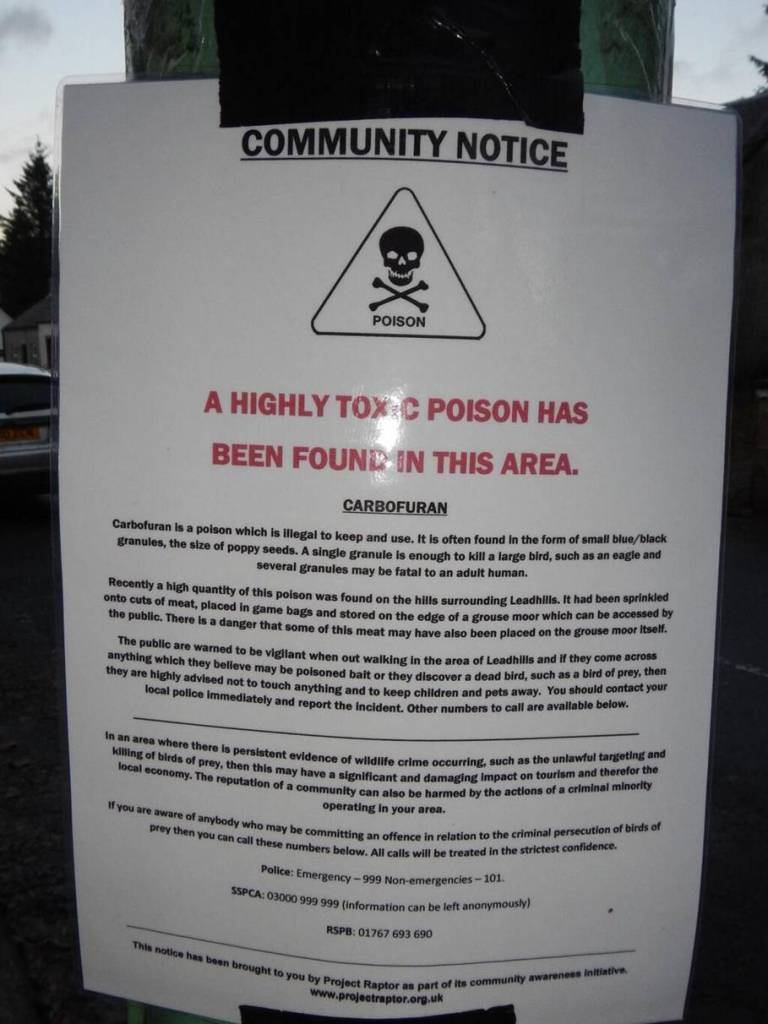
Leadhills village in South Lanarkshire has been saturated with a series of ‘poison awareness’ leaflets and posters, alerting the local community to the discovery of highly toxic (and illegal) poison on the surrounding hills earlier this year (see here). The poster warns the public of the dangers of coming in to contact with this poison (Carbofuran) and also provides contact telephone numbers (police, SSPCA and RSPB) if anyone finds any more or has information about who might be putting out the poison.

Is this community initiative the work of a local estate? Or the local police? Or the local council? Or PAW Scotland? Nope, none of the above. It’s the handiwork of Project Raptor.

It’ll be interesting to see how long the posters and leaflets remain on display. Last year we blogged about the mysterious disappearance of another sign at Leadhills (see here).

PR Leadhills flyer


No prosecution for poisoned baits found on Leadhills Estate?

leadhills estateEight months ago (March), a significant haul of pre-prepared poisoned baits was discovered on Leadhills Estate in South Lanarkshire. The baits comprised chopped up pieces of rabbit, liberally sprinkled with the banned poison Carbofuran, that had been placed inside two gamebags that had been hidden inside a wood next to a grouse moor.

The discovery was made by fieldworkers from Project Raptor and they duly reported their finding to the police. We waited for a press release and an appeal for information from the police but nothing came, so three months later (June) we blogged about it (here) because, unlike the police, we considered it a newsworthy item in the public interest, as apparently did BBC Scotland (here).

Recently, an update on the police investigation appeared on Project Raptor’s website:

24th October 2013. Project Raptor have contacted South Lanarkshire police and they have now informed us that evidence gathered from the two game bags has come back negative. This means that unless further evidence comes their way then this case is just another in a long line of wildlife crimes that have taken place within the Leadhills area over the years that will never be solved”.  See here for full update.

When Project Raptor says that ‘evidence gathered from the two gamebags has come back negative‘ they do not mean that the analysis of the poison came back negative – SASA has already confirmed the poison found on those baits was Carbofuran and they included the incident in their quarterly report on poisoning incidents. Rather, what we think Project Raptor is referring to is that any fingerprint or DNA testing that might have been done on the two gamebags has come back negative.

This means that there is no evidential link between the two gamebags and any individual person and therefore it is not possible to charge anyone for committing an offence in relation to these items.

This case is an excellent example of just how difficult it is to bring illegal poisoners to justice. It’s not the fault of the police that there isn’t enough evidence, although to be frank they are not blameless in this particular situation – had they had the foresight and interest to install a covert camera overlooking the site where the poisoned baits had been found they may well have caught the criminal(s) in the act of retrieving the bait or even adding more bait to the secret stash. They could (should) also have conducted a thorough search of the surrounding area, particularly the adjacent grouse moor, to see whether any of the baits had already been placed out on the hill. Given that one of the bags was full (of bait) and the other bag was only half-full, this would have been a reasonable assumption, especially given the reported history of poisoned baits being found on this estate (see here). Instead, the police decided to arrive on site in two marked police vehicles (thus alerting everybody to their presence and allowing any nearby criminal to hide any other incriminating evidence) and they quickly removed the gamebags and left the site without conducting a wider search. On top of all that, they still have not issued a press release about this case, giving us the impression that they’re just not all that bothered. At the very least they should be alerting the general public to the potential threat of people and their pets stumbling across what is a fatally toxic poison in a publicly-accessible area.

So is that it, then? Will the discovery of these baits (which we believe to be the biggest stash of pre-pared baits found since 32 poisoned baits were found on Glenogil Estate in 2008) just be conveniently ignored and everyone carries on as usual? For certain, these baits will not feature in any ‘official’ raptor persecution statistics because, as we were recently told by the Environment Minister’s office, where poisoned baits have been discovered but ‘no raptors were involved’ they cannot be listed as a raptor persecution incident. We don’t actually know whether ‘no raptors were involved’ at Leadhills because the police didn’t conduct a search to look for poisoned carcasses!

It looks certain that no action will be / can be brought in the criminal courts. But what about other types of action?

There’s the possibility of civil action – we will wait to see whether any single farm payments are withdrawn from Leadhills Estate by the Scottish Executive (as they were from Glenogil Estate in 2008 – see here) although we suspect any such action would be strongly challenged by the estate precisely because there is no evidential link between the baits and any employee of Leadhills Estate.

Great, isn’t it?

Is there any other type of action? Well, yes, there is. What we would really like to see is action taken by Scottish Land and Estates, the representative body of Scottish landowners. The only response we saw from SLE about the discovery of the poisoned baits on Leadhills Estate was a false accusation levelled at this blog for reporting the incident! (see here).

Interestingly, in a comment made on Mark Avery’s blog today, SLE Chief Executive Doug McAdam claims, “…..a range of partners, Scottish Land and Estates included, invest a significant amount of time and resource into working with and through PAW Scotland to help achieve this [eradication of golden eagle persecution], not just for golden eagles though, but all wildlife crime” (see here for his full comment).

So what, exactly, has SLE done about the continuing issue of alleged and confirmed illegal raptor persecution on Leadhills Estate? We’ve asked this time and time again but the question is just met with silence every time.

We’re not sure that Leadhills Estate is a member of SLE, although given that the owner of Leadhills Estate (Lord Hopetoun) also just happens to be a Board member of SLE, it would be quite strange if Leadhills Estate wasn’t an SLE member. Why doesn’t SLE publicly condemn the crimes that are alleged and confirmed at Leadhills Estate? If Leadhills Estate is an SLE member, why hasn’t SLE kicked them out, just as they did with Glasserton Estate earlier this year following the conviction of their gamekeeper (see here). McAdam may argue that nothing has been proven at Leadhills in relation to the latest discovery (in terms of a legal evidential link) and that would be accurate, but there is a long, long, long, long list of alleged and confirmed incidents from this estate, dating back decades (see here), several of which have resulted in criminal convictions.

It seems to us that SLE is repeatedly turning a blind eye to reported activities on this estate that the rest of us can see very clearly. Why would they do that if they’re so keen to eradicate raptor persecution?

Persecution case dropped as alleged raptor killer dies

Last month we blogged about Robert Simpson, a 66-year-old from Cleghorn in South Lanarkshire who was facing three charges of alleged wildlife crime, including the illegal trapping and killing of a barn owl. His case was continued without plea for four weeks as he was considered too unwell to attend court (see here).

His case was due to re-start at Lanark Sheriff Court yesterday (31st Oct). However, a local reporter has informed us the Fiscal did not call the case yesterday as Mr Simpson has died.

Langholm harrier ‘Blue’ drops off the radar

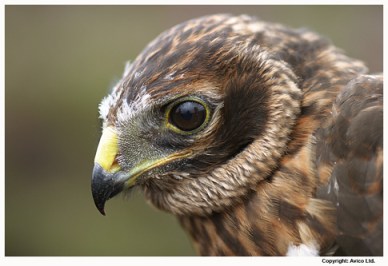
Hen-Harrier-1 avico ltdAs predicted, at least one of the young hen harriers satellite-tagged at Langholm this year has not survived long enough to see out the end of October.

Blue’s sat tag signal has ‘ceased to transmit’, which we all know translates as ‘this bird has probably been illegally killed’.

Is anyone surprised? No.

Will we ever learn where, exactly, this tag stopped transmitting? No.

Will anyone ever be brought to justice for killing him? No.

Will the game-shooting industry continue to deny any involvement? Yes.

Well done Cat Barlow for putting the information out in the public domain. Here’s what she wrote on her Making the Most of Moorlands blog:

Tuesday 22nd October 2013 – 

Sad, sad news .. we have serious concerns about Blue (the young male Hen Harrier satellite tagged at Langholm this summer). Blue’s satellite tag signal has ceased to transmit. The signal ended suddenly, without indication in the data of why it should do so. The most likely explanation is illegal persecution. There are other possible explanations, such as a natural death or some kind of tag failure but they are considerably less likely. The matter is now in the hands of the police.  

Alleged raptor killer too ill for court

Thanks to the reader who sent us a copy of this article from the Lanark Gazette.

Barn Owl press cutting

Man arrested after owls found inside a freezer

_70396978_owl5_editA man has been arrested and bailed following the discovery of “a number of” dead owls in a freezer, as well as 25 stuffed birds, according to the BBC.

The 49 -year -old was detained on suspicion of trading in endangered species following a search of his property in Stanford-le-Hope in Essex. The arrest came as part of a wider joint enquiry involving the newly-formed National Crime Agency, the Border Force and the National Wildlife Crime Unit; an enquiry which apparently has so far identified around 150 endangered birds that are suspected to have been sold without the correct permits and certificates.

It’s great to see the new National Crime Agency getting involved with wildlife crime investigations….let’s hope that continues and that they turn their attention to the poisoning, shooting and trapping of UK raptors.

BBC article here.

Scottish govt and police are concealing poisoning incidents

The fiasco that is wildlife crime reporting in Scotland continues today with the release of the Scottish Government’s poisoning stats for the second quarter of this year (i.e. incidents from April, May and June).

These stats are published by SASA (Science and Advice for Scottish Agriculture), a division of the Scottish Government. A few years ago they used to publish the figures in a timely way – these days they’ve introduced a delay of approximately six months.  Here they are.

The stats are quite interesting. Take note of the number of buzzard deaths attributed to ‘probable starving’. These are the buzzards that are supposedly devouring gamebirds quicker than you can say, “Quick, pass the Carbofuran”. But, there’s something far more interesting in the report than that….or rather it’s not in the report…

For some reason, several known poisoning incidents are ‘missing’ from the data. We know that these incidents took place in March, April and May in Highland and Tayside. For one of them (a poisoned buzzard in March), this incident should have been reported in the stats for Q1 (Jan, Feb, March), but it wasn’t. We didn’t challenge that because it was reasonable to assume that a police investigation/raid may still be on-going and any publicity about the poisoning might have compromised a police operation.

But, now it’s October. These poisonings took place 7, 6 and 5 months ago, respectively. There hasn’t been a whisper of a police press statement about any of them. Why not?

And now the Scottish Government’s quarterly poisoning report has been sanitised to remove any mention of these incidents. Why is that?

Who stands to benefit from the concealment of these incidents? Certainly some organisations with a vested interest in wanting the public to believe that poisoning incidents are still on a downward trend, when actually they are not – they are on the increase from last year’s figures but of course nobody wants to admit that and if the figures aren’t in the public domain then they don’t have to admit to it!

Who told SASA to remove the data on these incidents? Was it Police Scotland?

Why don’t we ask them. Let’s ask Sgt Andrew Mavin, who is the Police Scotland Wildlife Crime Coordinator and who is quoted as saying, “Tackling crime, keeping people safe and building confidence is at the centre of everything the new service in Scotland stands for and this is exactly the approach we take to wildlife crime” (see here).

Is it really, Sgt Mavin? Then how do you justify the concealment of these poisoning incidents from public scrutiny? Why didn’t Police Scotland issue a press statement about them? Why didn’t Police Scotland shout it from the rooftops that highly toxic and illegal poisons are being left out in the countryside putting peoples’ lives at risk? Did Police Scotland ask SASA to remove these incidents from their public report? How can we have any confidence in Police Scotland when we find out that serious crimes are being kept hidden from the general public?

Here is his email address: andrew.mavin@scotland.pnn.police.uk

And while we’re on the subject of official cover-ups….we’ve been having a closer look at the Scottish Government’s Wildlife Crime Annual Report (2012) that was published last week (see here). We’re still not ready to write a detailed review on that report but we did notice something that’s relevant to today’s blog – the 2012 poisoning figures given in that report number three incidents. Conveniently, at least one other poisoning incident is ‘missing’. It involved the death of a raven and a crow and the discovery of poisoned meat bait and 2 rabbit baits, and it happened in the ‘Borders’ in May 2012. We blogged about it (here).

Why was this incident excluded from the Scottish Government’s so-called ‘official report’ on wildlife crime in 2012? Was it because no raptor species was reported as being poisoned? In which case, in the 2013 report are we going to see the exclusion of the 35+ poisoned meat baits found in gamebags on Leadhills Estate this year, because no poisoned raptor was actually found?

Let’s ask Environment Minister Paul Wheelhouse: ministerforenvironment@scotland.gsi.gov.uk

Dear Environment Minister,

Please can you explain why confirmed wildlife poisoning incidents are being concealed from the public and excluded from official government reports?

Thanks.