
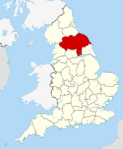
North Yorkshire worst place for raptor persecution in UK, says RSPB

A report out today in the Independent on Sunday says that birds of prey are being poisoned or shot in the North York Moors and Yorkshire Dales at a rate unknown in any other region in the UK, according to the latest RSPB figures.

The headline is actually quite a misleading statement. Perhaps what it should say is that reports of raptor persecution are highest in North Yorkshire than any other region. We know only too well that reporting and recording is done very differently between regions, and these differences do not neccessarily reflect what is actually happening on the ground.
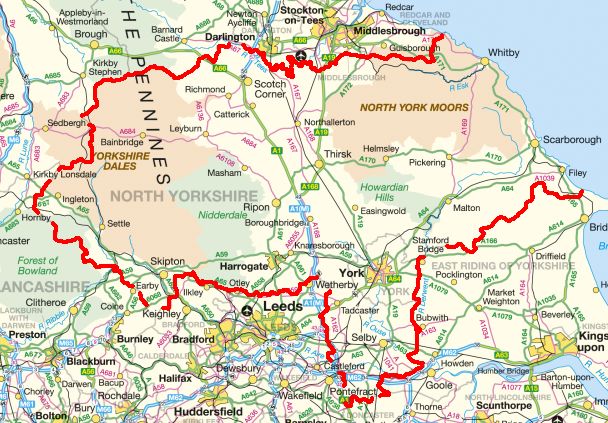
The latest figures come from the RSPB’s annual Birdcrime report, Birdcrime 2010, which is due to be published on Thursday, so it’s difficult to assess the findings until the report has been released. However, according to the IoS article, “Almost 10 per cent of the 117 incidents against 11 species last year took place in the county, which has consistently recorded high rates of such crime, according to the RSPB“.

The article continues: “The number of reported incidents in North Yorkshire doubled between 2009 and 2010, from 27 to 54, with 10 confirmed cases of bird of prey persecutions. These include the poisoning of four red kites and three buzzards and the shooting of a goshawk. Two-week old chicks [of what species?] were also found laced with a banned pesticide and left as bait in the Yorkshire Dales.”

An RSPB spokesman lays the blame firmly at the feet of intensive upland grouse moors; a BASC spokesman denied the extent of the problem and said “the gamekeeper is a convenient scapegoat.”

All depressingly familiar. The bottom line is, despite the overwhelming evidence of widespread criminal raptor persecution, it is still not possible to get a meaningful prosecution. Until this happens, we will continue to read these appalling statistics.

More on this once the Birdcrime 2010 report has been published.

Article in the Independent on Sunday here

Inverinate Estate gamekeeper’s trial – more delay

The case against gamekeeper Andrew Malcolm Slaughter, which opened at Inverness Sheriff Court in March 2011, has been delayed once again.

The case opened in mid-March (see here for details) and was continued until 7th April.

On 7th April, it was adjourned until 28th April (see here).

On 28th April the case continued without plea until 19th May (see here).

On 19th May the case was put back until 12th October (see here).

The case has now been postponed until 17th November, eight months after the trial first started.

Here come the soundbites…

They’ve started already. Landowner and game-shooting representatives are responding to yesterday’s publication of the RSPB’s 2010 persecution report. We’ll add to this page throughout the day as the predictable denials and counter claims emerge…
Here is the reported response from Douglas McAdam, chief executive of Scottish Land and Estates (formerly known as SRPBA), which represents about 2,500 landowners in Scotland:

Landowners are working hard in partnership with police and other organisations to help eradicate this. This requires a sustained approach over time and there is evidence these joint efforts are beginning to pay off. There has been a significant decrease in illegal poisoning incidents in the first half of this year at a time when some species are increasing rapidly and now number tens of thousands, the highest overall for nearly a hundred years. It is regrettable that RSPB, who are part of that collaborative effort, continue to point fingers at a time when real progress is being made. Many more birds were killed accidentally by agricultural rodenticides than by deliberate poisoning“. (See BBC News for quote here).

Some readers might get a sense of deja vu when reading that. If the words sound vaguely familiar its because you’ve heard them before, almost verbatim, last month from Luke Borwick, Chairman of Scottish Land and Estates, who was responding to the SASA 2010 poisoning report:

Landowners are working hard in partnership with police and other organisations to help eradicate poisoning. This requires a sustained approach over time and there is evidence these joint efforts are beginning to pay off. Early indications for the first half of 2011 show there has been a significant decrease in illegal poisoning incidents at a time when some species are increasing rapidly and now number tens of thousands, the highest overall for nearly a hundred years. This decrease is welcome, reflects serious partnership working in this area and needs to be sustained“. (See quote on Scottish Government website here, and this is what we had to say about his quote here).

Come on Scottish Land and Estates – less of the soundbites and a bit more spontaneous sincerity wouldn’t go amiss.

RSPB publishes 2010 raptor persecution report

The RSPB has just published its annual report on raptor persecution in Scotland. The report, ‘The Illegal Killing of Birds of Prey in Scotland 2010‘ is the only known published record of all known persecution incidents including poisoning, shooting and trapping, in contrast to the PAW Scotland annual report which only details poisoning incidents. As well as the confirmed incidents of persecution, the report also provides information about ‘probable’ incidents (those where the available evidence points to illegality as by far the most likely explanation but where the proof of an offence is not categorical) and ‘possible’ incidents (where an illegal act is a possible explanation but where another explanation would also fit the known facts).
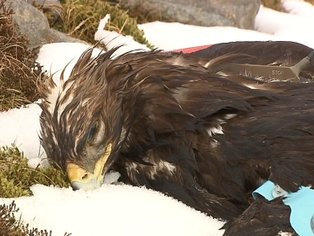
The report provides details of several confirmed and probable persecution incidents that didn’t make it into the public domain at the time they occurred, including two shot sparrowhawks (Dingwall, Inverness-shire & nr Dolphinton, South Lanarkshire), a goshawk killed in a pole trap (nr Dalwhinnie, Inverness-shire), a shot short-eared owl (Leadhills, South Lanarkshire), 5 separate incidents involving peregrines (Stirlingshire, South Lanarkshire and Dumfries-shire), ‘disappearing’ hen harrier chicks (nr Knockando, Moray), a member of the public witnessing the shooting of a buzzard (nr Leadhills, South Lanarkshire), the discovery of a heavily decomposed buzzard carcass found in a stink pit (nr Dornie, Inverness-shire) and the discovery of a suspected pole-trapping site (nr Dornie, Inverness-shire).

Interestingly, although the report doesn’t go as far as naming estates in most incidents (apart from the reports of successful prosecutions), it does go further than the vague information provided in the annual PAW statistics. For example, in the PAW Scotland ‘Bird of Prey Poisoning Incidents 2006-2010 – Incident Details’ report (that we discussed here in March 2011), there are several cases of buzzard poisoning that were just listed as ‘Tayside’. The RSPB report clarifies this a little bit, and lists the locations as ‘Glenogil’ and ‘nr Kinross’.

This annual report makes for grisly reading, but as the report says, these incidents no longer shock or surprise us. The evidence yet again points to the involvement of people within the game-shooting industry; the latest statistics show that of all those convicted for illegal raptor persecution in Scotland between 2003-2010, 88% were involved with gamekeeping (the rest involved pest controllers, farmers and pigeon racers at 4% each).

The RSPB makes several recommendations in the report that would considerably reduce the difficulty of bringing these criminals to justice. They include recommended action for the police, the crown office & procurator fiscal service, the Scottish government, and representatives from the game-shooting industry. Some of these recommendations have been made before but have apparently remained unheeded.

Well done to the RSPB for publishing this report and for keeping the issue high on the political and public agenda.

The report can be downloaded here

Peregrine poisoning incidents not made public until 15 months later

An article published in the Scotsman last week reports on two peregrine poisoning incidents that took place in April and May 2010, that have only just been made public.

The birds were found dead at a quarry in the West Lothian town of Kirknewton, and both had been poisoned by the banned pesticide Aldicarb. The head of one of the peregrines had been severed and removed – possibly as a trophy.

The two incidents only came to light after the publication last week of the government’s 2010 poisoning report. Lothian & Borders police have not identified any suspects. Perhaps if they’d publicised the incidents at the time they occurred they may have got some leads.

Full story in the Scotsman here

Scotland’s shame: 2010 poisoning figures published

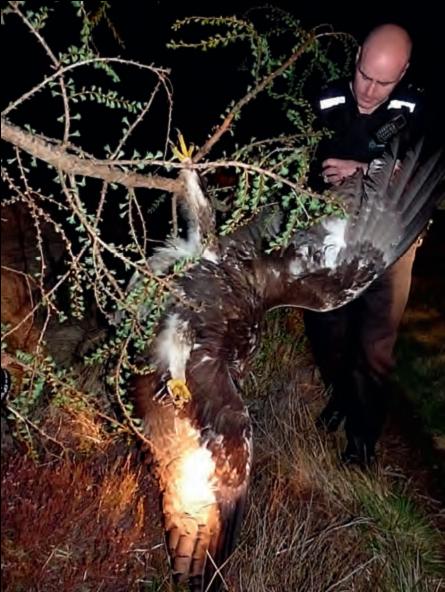
Today the Scottish government has published its latest report on animal poisoning in Scotland. The figures relate to recorded incidents in 2010 and demonstrate a sharp rise in the number of wildlife poisonings, including the widespread illegal poisoning of raptors. The report shows that 69% of all ‘abuse’ cases involved the poisoning of birds of prey, covering a wide area including Borders, Dumfries & Galloway, Highland, Lothian, Strathclyde and Tayside. The illegal pesticide Carbofuran was detected in half of these incidents. The raptors that tested positive for poisons included 40 buzzards, 4 golden eagles, 1 sea eagle, 1 kestrel, 5 barn owls, 2 tawny owls, 2 peregrines, 21 red kites and 11 sparrowhawks.

Unsurprisingly, some are trying to play down the appalling statistics. The Scottish Land and Estates Chairman, Luke Borwick, is reported to have said that the organisation is working hard to reduce such incidents “…and there is evidence these joint efforts are beginning to pay off“. He was referring to what he called a “significant decrease” (in illegal raptor poisonings) in the first half of 2011. The Environment Minister Stewart Stevenson also made the same comment. Unfortunately, we are not able to make the assessment for ourselves because the published government figures for 2011 only cover the period January to March 2011. However, the figures for this three-month period tell a very different story to the one that Luke and Stewart are pushing: they include 3 buzzards, 1 golden eagle, 1 red kite and 2 peregrines all illegally poisoned in the first three months of 2011 (see here for earlier report). Hmmm.

There are other reactions from various bodies, including the RSPB, the Police and the Scottish Environment Minister – these can be read on the BBC website here and the Scottish government website here.

To read the depressing SASA government report with all the gory details, click here.

National UK poisoning statistics show steady rise

The UK’s national statistics documenting animals poisoned by pesticides have been released by the Wildlife Incident Investigation Scheme. The scheme covers Scotland, England, Wales and Northern Ireland. The spreadsheet provides poisoning data from 2008 up to the end of the first quarter of 2011 (Jan – March). The figures clearly show an increase in the number of deliberate poisoning incidents recorded (classed as ‘abuse’ in the spreadsheet) nationwide:

2008 – total confirmed abuse incidents = 66.

2009 – total confirmed abuse incidents = 71.

2010 – total confirmed abuse incidents = 80.

Whether this increase is due to a rise in illegal poisoning activities or a better detection rate is unclear. What is clear is that illegal poisoning continues across our landscapes. The figures for the first quarter of 2011 show 17 confirmed abuse incidents.

It’s notable that many of the individually-confirmed abuse incidents have not appeared in the press. It’s also worth reading how many cases are now considered ‘closed’ because the source of the poison hasn’t been established. It would have been interesting to have seen the different locations involved (eg how many were discovered on land managed for game-rearing and shooting?) but once again this level of detail has not been provided.

Spreadsheet available here

More on the Moy case

According to an article published in The Scotsman (view here), a post mortem carried out on the dead red kite discovered in the vehicle used by gamekeeper James Rolfe on Moy Estate last June, revealed it had broken legs and had died as a result of a blow to the head. Rolfe was convicted for being in possession of the dead kite. Why weren’t charges brought against anyone for the unlawful killing of this bird?

In the same article, it is reported that over a five-week period, the remains of a further two dead red kites, six illegal baited spring traps, a trapped hen harrier, and a poison bait laced with a banned agricultural pesticide (poison) were also recovered from the estate. No arrests or charges have been made in connection with these incidents.

Why not?

In an article in Birdwatch Magazine, further gruesome details are revealed about the discovery of a severed red kite leg and wing tags belonging to a red kite that was being followed by satellite tracking, all hidden in holes covered by moss. The article also reports that four golden eagle leg rings were discovered in Rolfe’s possession. No arrests or charges have been made in connection with these incidents.

Why not?

You may wish to ask the following people:

Crown Office and Procurator Fiscal Service: pn_copfs@scotland.gsi.gov.uk

Northern Constabulary Force Wildlife Crime Co-ordinator, Chief Inspector Matthew Reiss: matthew.reiss@northern.pnn.police.uk

Environment Minister for Scotland, Stewart Stevenson MSP: msp@stewartstevenson.net

Moy Estate results

Today at Inverness Sheriff Court, gamekeeper James Roderick Rolfe, 20, was convicted of being in possession of a dead red kite which was found in his vehicle during a police raid on the Moy Estate in June last year. Rolfe said he had found the kite caught in a trap set for stoats. It had not been poisoned. Rolfe was fined £1,500 for possession of the dead bird.

The images here show the dead kite in the back of his vehicle. No explanation has been given to account for the obvious injury this bird suffered to its head area. According to the Inverness Courier, Rolfe claimed the bird was already dead when he found it.
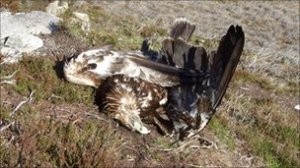
Another gamekeeper working on Moy Estate was accused of being in possession of 56 gull eggs. The court accepted his plea of not guilty.

Northern Constabulary press statement

Inverness Courier news report

Skibo Estate results

Dean Barr, a gamekeeper (and reported elsewhere as being the sporting manager) on the Skibo Castle Estate, has been convicted of having enough illegal poison “to wipe out the entire Scottish golden eagle and red kite populations several times over”. Barr, 44, of East Lodge, Clashmore, Dornoch, admitted possessing 10kg of the banned pesticide Carbofuran. He admitted carrying the poison from his previous job as head gamekeeper on the Raeshaw Estate to Skibo Castle Estate in 2008, because he had ‘not known how to safely dispose of it’.

The Carbofuran haul was discovered in a locked store on the Skibo Castle Estate, for which Barr had the keys. According to the Northern Times and Northern Constabulary, the poison was discovered within premises operated and solely accessed by Barr on Skibo Estate land.

Today he was fined £3,300 “to mark the court’s disapproval”. This was apparently reduced from a £5,000 fine for his early plea.

Despite this conviction, the Crown accepted he had ‘no part’ in the deaths of two poisoned golden eagles and a sparrowhawk (killed with Carbofuran) found on the estate in May 2010 (along with a dead buzzard and a third poisoned golden eagle killed by Aldicarb).

Barr’s defence lawyer said Barr was well regarded personally and professionally by his current and previous employers. “If it was thought that he was involved in the use of this material, they would not be so supportive”.

This is not the last we will write on this case.

The Scotsman news story

BBC news story

STV news story