Estate probed in eagle poisoning investigation now up for sale

Millden Estate near Brechin, Angus has been put up for sale with a whopping £17.5 million price tag. If the estate is sold as a whole (as opposed to up to 13 Lots), it will become the most expensive Scottish country estate ever sold on the open market, according to Scotland on Sunday.

Millden Estate is well known for its grouse moors – according to the sales documents there are over 70 different lines of butts and 8 different beats to shoot on just under 20,000 acres. Tim Baynes, described as a consultant to Scottish Land and Estates and the Scottish Countryside Alliance, said Millden was a “wonderful” property, and urged the new owners to continue the “incredible” work done by its current proprietor.

Here’s what Baynes is reported to have said in the Scotland on Sunday article: “Good grouse moors don’t grow on trees, only a handful come on the market each year in the UK, and this is one of the top ones, and one of the best estates. The new owner will have to keep up their investment as moors require a lot of effort to make them productive. Well-run moors do an awful lot of good for wildlife and the community“.

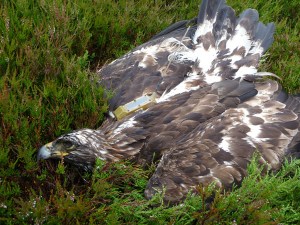
Millden Estate was the place where a young golden eagle was found poisoned in July 2009. The eagle, two year old ‘Alma’ who was being satellite-tracked from her birthplace on Glenfeshie Estate, had been killed by the banned poison Carbofuran. A police search of Millden Estate failed to find any evidence and to date, nobody has been charged with any related offences (see here). The local community was outraged at the death of Alma and wrote to local estate owners, the Environment Minister and the Chairman of SNH to express their concern about the alleged use of poisoned baits in the area (see here).

Scotland on Sunday article here

Millden Estate sales brochure: Millden sales brochure 2011
Inverness man accused of buying & selling raptor eggs

According to the BBC, a 51-year-old man accused of buying and selling hundreds of eggs of rare birds is to face trial.

Keith Liddell is alleged to have bought or offered for sale 202 eggs, including those of Egyptian vultures and tawny owls from August 2004 to June 2009. He has also been accused of having 136 wild birds’ eggs at his Inverness property on 24 June 2009. He denies the charges.

At Inverness Sheriff Court, Sheriff Ian Abercrombie set four days for the trial in December. There will be a preliminary hearing to be called on 8 November.

Mr Liddell has been accused of purchasing, offering to purchase, keep for sale or transport for sale, all for commercial gain, eggs from a number of endangered species. He also faces a further charge of being in possession of wild birds’ eggs at his home.

How unusual to see so much detail of alleged wildlife crimes in Scotland being provided in the public domain.

BBC news story here

Poisoned golden eagle at Glen Orchy – two years on…

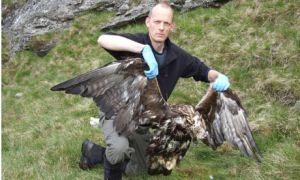
Two years ago today, this dead golden eagle was discovered by hill walkers in Glen Orchy, Argyll. Government tests later showed it had been poisoned by the illegal pesticide Carbofuran. This poisoning incident made the national press (e.g. here).
Several days later, a multi-agency search was conducted in and around Glen Orchy. The police-led operation included the Oban Community Policing Team, specialist wildlife crime officers from three police forces (Strathclyde, Lothian & Borders and Central), experts from the National Wildlife Crime Unit, pesticide experts from the Scottish Government and representatives from the RSPB and Scottish SPCA. The police said afterwards that they were following a positive line of inquiry.

Meanwhile, during the police search two handguns were found in gamekeeper Tom McKellar’s loft. Eighteen months later in December 2010, McKellar was convicted at the High Court in Glasgow for having prohibited weapons. However, he avoided the usual mandatory five year custodial sentence and instead received 300 hours community service. Story here

So what happened to that ‘positive line of inquiry’ in the eagle poisoning investigation? Good question.

gamekeeper convicted for poisoning offences on Leadhills Estate

A 20 yr old gamekeeper formerly employed on the Leadhills Estate in Lanarkshire was today convicted for laying poisoned baits, contrary to the Wildlife & Countryside Act. In April 2009, underkeeper Lewis H. Whitham was observed by a research officer from the charity OneKind (formerly called Advocates for Animals) staking out a dead rabbit, whose stomach had been split open and sprinkled with the deadly pesticide Carbofuran.

Whitham pleaded guilty at Lanark Sheriff Court and he was fined £800. This had been reduced from £1000 because of his guilty plea. The maximum penalty that can be imposed for this wildlife offence is a fine of up to £5000 and/or six months imprisonment. It is understood that Whitham is no longer employed at Leadhills and has since moved to North Yorkshire.

The Leadhills Estate has a shocking record of alleged wildlife crime incidents in recent years. See blog posts on 4 March, 6 March, 11 March and 14 March for a taster. In addition, OneKind claims that over a period of several months, numerous apparently illegal snares have been discovered on Leadhills, 3 badgers were caught in snares and 2 of these had to be put down due to their injuries, and also dead buzzards have been found in shallow graves.

If this most recent conviction isn’t justification for Roseanna Cunningham’s proposed vicarious liability ammendment to the WANE bill to be accepted, then I don’t know what is. Persistent wildlife crime exposed, yet again, on a so-called sporting estate. It’s disgusting.

Congratulations to OneKind for their dedicated research, and to the SSPCA who took the lead in securing this conviction.

For more details on the Leadhills conviction, see OneKind link here: http://www.onekind.org/onekind/blog_article/leadhills_conviction_strengthens_case_for_liability

Case details from PAW Scotland: http://www.scotland.gov.uk/Topics/Environment/Wildlife-Habitats/paw-scotland/Resources/Newsletters/Issue2/Inthecourts/LewisWhitham2010

SSPCA press release here: http://www.scottishspca.org/news/511_man-convicted-for-poisonings

Crown Office and National Wildlife Crime Unit press releases here: http://www.scotland.gov.uk/Topics/Environment/Wildlife-Habitats/paw-scotland/news/Gamekeeperfined171110

We wait with bated breath (not baited rabbit) for the SGA and SRPBA press releases.

RSPB Birdcrime 2009 Report Shows Continuing Raptor Persecution

The RSPB’s annual Birdcrime 2009 report was published today and shows that 2009 was the second worst year for raptor persecution in the last decade.

This depressing report shows that there were 384 reported persecution incidents against birds of prey in the UK  during 2009, 123 in Scotland, 224 in England, 17 in Wales and 11 in Northern Ireland, 9 incidents could not be allocated to a single country and were recorded at a UK level. Incidents include trapping, shooting, poisoning and nest destruction.

Again the trend showed that most incidents involved game shooting interests with a bias towards the upland grouse moors in Scotland and Northern England where the main victims of persecution are: golden eagle, white-tailed eagle, hen harrier, goshawk, peregrine and red kite.

In the report, the RSPB has made 11 recommendations for government action, so that these appalling crimes can be eradicated. These include the introduction of a “vicarious liability” offence which would make land managers and owners responsible for the actions of their employees.

Despite several successful prosecutions the conviction rate and subsequent sentencing appears pitifully poor and ineffective.

Full RSPB Report – http://www.rspb.org.uk/Images/birdcrime_tcm9-260567.pdf


The illegal poisoning of Scottish raptors continues

The government-funded organisation Science and Advice for Scottish Agriculture (SASA) has just published its latest report on the illegal poisoning of wildlife, including raptors, in Scotland during 2009.
Of 166 reported incidents of suspected poisoning, 36 were categorised as ‘abuse’ of pesticide use. As in previous years, a high proportion (61%) of abuse incidents involved birds of prey. Carbofuran was once again the most common pesticide detected, even though the UK approval for use of products containing this chemical expired in 2001 and it is a criminal offence to own it.

22 abuse incidents involving 30 raptors were confirmed:

Buzzard = 22; Golden eagle = 2; White-tailed eagle = 1; Tawny owl = 1; Red kite = 4.

The regional breakdown of abuse incidents demonstrates once more the widespread nature of these crimes:

Borders = 5 incidents; Dumfries & Galloway = 1; Grampian = 1; Highland = 2; Strathclyde = 3; Tayside = 10.

The report does not include other incidents of illegal raptor persecution such as shooting, trapping and nest destruction.

In an article published in the Press & Journal, Chairman of the North-East Raptor Study Group, Rab Rae, stated the obvious: “Pesticides are used regularly by the farming community but they are now being used by the shooting fraternity. It is not an accident, it is deliberate to enhance grouse moors“.

In a rebuttal, Chairman of the Scottish Gamekeepers Association, Alex Hogg, said: “The RSG and all their members are well aware that we condemn any poisoning of wildlife. Our organisations are working towards finding solutions to the problem so it’s hardly helpful or constructive to point accusatory fingers while that process continues“.

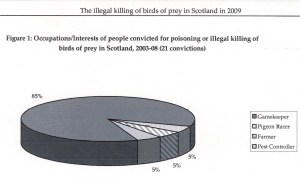
So tell us Alex, what exactly has the SGA done in its efforts to “work towards finding solutions” to the continuing illegal killing of Scottish raptors? It could legitimately be argued that sitting on the largely ineffective Partnership for Action Against Wildlife Crime (PAW) committee is a good cover for paying lip-service to raptor conservation. Talk is cheap – what ACTIONS has the SGA taken to stop criminal activities? And no, trying to legalize the killing of protected species by asking the Scottish government to provide licences to kill raptors doesnt count! According to the latest figures from the RSPB (in their report The Illegal Killing of Birds of Prey in Scotland in 2009), 85% of people convicted for illegally killing birds of prey between 2003-2008 were gamekeepers! Like I said, talk is cheap.

Download the SASA report here: SASA poisoning report 2009

Read the Press & Journal article here: http://www.pressandjournal.co.uk/Article.aspx/1856188?UserKey&UserKey=

Download the RSPB report here: Persecution Scotland 2009

During 2009, SASA reports that 19 cats and 19 dogs were also killed by poisoning. To report an incident of suspected illegal poisoning, call the SASA confidential hotline on Freephone 0800-321600.

red kite blasted with shotgun finally released

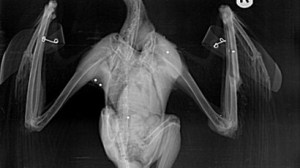
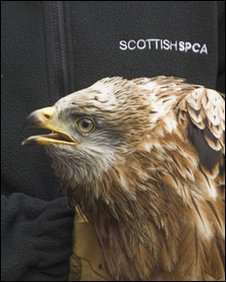
In December 2009, a walker found an injured red kite in Braco, Perthshire. X-rays revealed it had been blasted with a shotgun, five times,  from close range. The kite’s injuries were horrific and it was feared the bird would not survive (see the post on this blog from 3 March 2010). No arrests were made.

The kite ready for release

Six months later, after extensive treatment and care provided by the SSPCA, the rehabilitated kite was released back to the wild yesterday. Congratulations to all involved with this bird’s recovery.

News story: http://news.bbc.co.uk/1/hi/scotland/tayside_and_central/10215466.stm

Gamekeeper sentenced for wildlife crimes on Redmyre Estate, Abernyte, Perthshire

Further to the blog entry of 3 March 2010……

Gamekeeper Graham Barclay Kerr (53) of Mary Findlay Drive, Dundee, who had earlier pleaded guilty to shooting a buzzard and being in possession of illegal and deadly poisons on the Redmyre Estate, Abernyte, Perthshire on 9 September 2009, has now been sentenced.

His punishment? A pathetic £400 fine for shooting the buzzard with a .243 rifle, and an even more pathetic ‘admonishment’ (which means a telling off) for being in possession of Carbofuran and Alphacloralose. Sentencing him at Perth Sheriff Court on 24 March 2010, Sheriff Robert McCreadie told Kerr, “You may not have appreciated how serious the courts take the illegal destruction of wildlife. I think you will be aware of that now”.

Really? A £400 fine for deliberately shooting a protected species is not what I would call a deterrent for other gamekeepers or their employers. And an admonishment for the possession of illegal and highly toxic poisons is nothing but lamentable. When oh when will the public see the full force of the law being handed down to convicted wildlife criminals? The Scottish judiciary has been given the powers to impose large fines or custodial sentences for convicted wildlife criminals, because that is the punishment that society deems fitting for these crimes. The Scottish government claims to be ‘stamping out’ wildlife crime. Perhaps the government and the judiciary need to get together and make sure they are reading from the same book, let alone the same page, because so far their actions speak louder than their words. This case speaks volumes.

Full story: http://www.perthshireadvertiser.co.uk/perthshire-news/local-news-perthshire/perthshire/2010/03/26/buzzard-killed-my-former-perthshire-gamekeeper-73103-26110898/

Inside case details from Tayside Police: http://www.scotland.gov.uk/Topics/Environment/Wildlife-Habitats/paw-scotland/Resources/Newsletters/Issue2/Inthecourts/GrahamKerr2010

two peregrines poisoned on nature reserve, Aberdeenshire

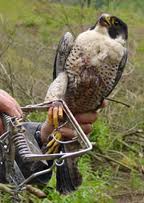
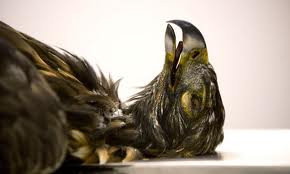
dead peregrine

Two recently-fledged peregrines were found poisoned on the Scottish Wildlife Trust’s Longhaven Reserve, Aberdeenshire, in July 2004. They were found by two climbers and tests proved they had been poisoned by eating from a pesticide-laced bait.

Police wildlife crime officer, George Sangster, said peregrines had been the victims of illegal persecution for many years, and he and his colleagues had seen “a worrying trend in the last few years in the north east of Scotland, with an increase in the persecution of peregrines”. Full story: http://news.bbc.co.uk/1/hi/scotland/3896793.stm

Six years later, not much has changed. According to a 2009 RSPB report, recent estimates suggest that 27% of nests in southeast Scotland, 24% of nests in northeast Scotland and over 10% of examined sites in Cumbria were subject to interference or killing. More info: http://www.birdguides.com/webzine/article.asp?a=1674

Community action after golden eagle ‘Alma’ found poisoned on Millden Estate, Perthshire

Local residents are outraged at the poisoning of golden eagle ‘Alma’, who was found dead on the Millden Estate in Glen Esk in July 2009.

Members of Inveresk Community Council are now writing to the three Estates in Glenesk (Millden Estate, Gannochy Estate and Invermark Estate), as well as the Scottish Environment Minister, Roseanna Cunningham and the Chair of Scottish Natural Heritage, Andrew Thin, to express their concern about the alleged use of lethal illegal poisonous baits in the area.

Brechin Community Council vice-convenor, David Adam, who was at the meeting and raised the issue, said: “I think we are all quite shocked about this. I think it is fairly conclusive that the bird was poisoned and that the bird was poisoned in Glen Esk. These birds are an extremely important part of our heritage”.

Inveresk Community Council chairperson, Charlie Simpson, commented: “To poison such creatures goes totally against the nature of Scotland”.

http://www.brechinadvertiser.co.uk/top/Community-action-follows-death-of.5558572.jp

At the time of the discovery of the dead eagle, police conducted searches, under warrant, of gamekeepers’ cottages and vehicles on the Millden Estate. No arrests have been made. Tayside Police claim this is an on-going investigation, which probably means this crime will remain unsolved and the criminal(s) unpunished, like so many other reported poisoning incidents in this region and elsewhere in Scotland.

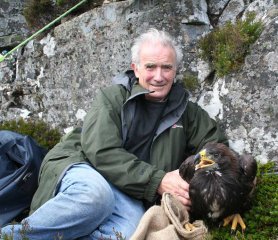
This is Alma as a chick, at her nest on the Glenfeshie Estate in 2007, being tagged by Roy Dennis
   
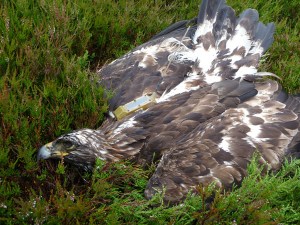
Two years later, Alma is dead after visiting grouse moors in Glen Esk