This article follows on from Crow traps: what you should know part 1 (here) and part 2 (here). We haven’t been able to find a detailed, up to date article on this subject so we’ve taken information from a variety of sources including the police, Paw Scotland, SNH, RSPB, OneKind, SSPCA and the Raptor Study Groups. This is just our interpretation of the available information and doesn’t constitute an official, legal interpretation. Who knows, maybe PAW Scotland will produce something more definitive in the near future…
How to tell the difference between a legally-operated and an illegally-operated crow cage trap.
As we discussed in part 2, it is not always easy to determine whether a trap is being legally-operated because some of the conditions that the trap operator must comply with under the terms of the general licence can be quite ambiguous. Quite often the distinction between a legally and an illegally-operated trap is blurred. It helps if you are already aware of the conditions of the general licence (see here for licences 1-3 used by crow trap operators) as although there is ambiguity on some issues, there are other things that are easier to recognise as an indication of almost certain illegal use.
Almost certainly illegal
1. An operational trap must display a tag or a sign with the telephone number of the local police station or Police Wildlife Crime Officer as well as a police-issued trap code number that allows the police to identify the trap owner. If you find a crow cage trap that’s being used without one of these signs it is being illegally-operated. Don’t be fooled by a sign that doesn’t contain these numbers but says something like, ‘RSPB bird conservation project”. We are aware that some trap operators have tried to trick the general public with misleading and sometimes fraudulent signs.
2. The type of bird used as a decoy inside the trap is restricted to certain species of corvids (check the specific general licences for current lists). If the decoy bird is anything other than a permitted decoy species, the trap is being illegally-operated. Particular attention should be paid if the decoy is a raven or a pigeon/dove. These are definitely NOT permitted decoy species and are an indication that the trap is probably being used illegally to attract non-target species (ravens and raptors).
3. The decoy bird(s) must not be tethered, blinded or maimed. If it is, the trap is being illegally-operated.
4. The decoy bird(s) must have ‘adequate’ food and water. The term ‘adequate’ is ambiguous and will be discussed in the ‘possibly illegal’ category below. However, if food and water is not present at all, the trap is being illegally-operated.
5. The decoy bird(s) must be provided with a ‘suitable’ perch that does not cause discomfort to the bird’s feet. The term ‘suitable’ is ambiguous and will be discussed in the ‘possibly illegal’ category below. However, if no perch is provided at all, the trap is being illegally-operated.
6. The decoy bird(s) must be provided with ‘adequate’ shelter with ‘adequate’ protection from the prevailing wind and rain. As before, the term ‘adequate’ is ambiguous and will be discussed in the ‘possibly illegal’ category below. However, if no shelter has been provided at all, the trap is being illegally-operated.
7. If there are dead birds inside the trap (either target or non-target species) that have been there for longer than 24 hours (i.e. they are decomposed or skeletal) then the trap is being illegally-operated. Trap operators are required to inspect each operational trap at least once every day at intervals of no more than 24 hours, except where severe weather prohibits. Dead or sickly birds must be immediately removed from the trap.
8. If the trap is not in use (no decoy bird(s)) but the trap door or a panel has not been either removed from the site completely or taken off the trap and secured with a locked padlock, then the trap is being illegally-operated. Wedging the door open with a boulder or a log is not enough – the door or a panel must be removed completely.
Possibly illegal
1. If a decoy bird has not been provided with ‘adequate’ food and water. ‘Adequate’ is open to interpretation and is highly subjective. If the water is filthy and covered in algae, is it considered ‘adequate’? What constitutes ‘adequate’ food for a carrion crow? Usually they are given dead rabbits or hares inside these traps but we’ve also seen dog biscuits and grain!
2. If a decoy bird has not been provided with an ‘adequate’ perch that does not cause discomfort to the bird’s feet. Again, this is ambiguous and depends on the decoy species. The perch should be thick enough for the bird to perch without its toes curling around and digging into its foot, which could cause injury and pain. So a strand of wire stretched across the inside of the trap is unlikely to be considered an ‘adequate’ perch.
3. If a decoy bird has not been provided with ‘adequate’ shelter with ‘adequate’ protection from the prevailing wind and rain. According to a OneKind report, some cage traps have been seen with a piece of plastic less than the size of an A4 sheet of paper serving as a shelter. Is this ‘adequate’? Probably not because it won’t offer shelter from the prevailing wind and rain. Other traps have been seen with the soggy pulp of a former cardboard box stuck in the corner – clearly inadequate!
4. If a decoy bird looks sickly or injured. The bird may have become sick or injured itself since the trap operator’s last visit, so the trap operator hasn’t committed an offence (unless he fails to remove the bird at his next visit). However, the bird could have a long-term sickness or injury (e.g. feathers worn down to stumps and bleeding carpals: injuries consistent with long-term attempts to escape by flying at the side of the cage) in which case the bird should have been removed and it’s highly probable an offence has been committed.
5. If there are multiple birds inside the trap. Crow cage trap operators are permitted to use more than one decoy bird as long as it is one of the permitted corvid decoy species (as opposed to a Larsen trap where only a single decoy is permitted). However, these decoy birds are not marked in any way as to distinguish them from any other trapped bird. This makes it difficult to determine whether the trap has been left un-inspected for longer than 24 hours (because the trap operator can claim all the birds inside the trap are being used as decoys).
6. If there is a raptor (or another non-target species) caught inside the trap. It’s important to know that it is not illegal to accidentally catch a raptor or other non-target species inside a crow cage trap. It is illegal, however, for the trap operator not to release the bird, unharmed, immediately on discovery. How do you tell whether the raptor has been inside the trap for longer than 24 hours? It’s very difficult, unless you saw it inside the trap more than 24 hours previously, and even then this would be difficult to prove because (a) unless it is uniquely marked how do you know it’s the same bird?, and (b) the trap operator could claim the bird was released and has since re-entered the trap since the last inspection! If the raptor is dead and decomposed it is highly probable an offence has been committed.
What should you do if you suspect a trap is being illegally-operated?
1. Be suspicious.
2. Take photographs and/or video.
3. Record your location (either GPS or map reference if possible).
4. Record the date and time.
5. If you are with anyone, make sure they’ve seen what you’ve seen (corroborative evidence).
6. Don’t be fooled by anything written on the trap sign, even if it says ‘This is a legal trap’. It may well be a legal trap but it might be being illegally-operated.
7. Don’t interfere with the trap (but see point 5 below) or you could be prosecuted for criminal damage.
8. Beware of hidden cameras pointing at the trap and also be aware that some of these cameras can also record your voice!
9. As soon as possible after discovery, report your concerns to the authorities (see section below).
10. If the trap contains a raptor that looks in good health, you need to report it IMMEDIATELY (see below for your choice of reporting agencies). You shouldn’t be tempted to release the bird yourself (unless there is a genuine welfare concern, see below). If none of the reporting agencies can respond in good time, you should call the police again and request permission to release the bird yourself, as long as you are certain it is uninjured. Make sure you get the name or number of the police officer you speak to!
What should you do if you are concerned about the welfare of a trapped bird?
If you discover a trap that contains any bird that is in distress or is injured, you have a decision to make about what to do.
1. The recommended advice from the police is to call them (using the telephone number on the trap sign, assuming there is one). However, calling the police can be very hit and miss, depending on your location. Some police forces will send someone out straight away. Sometimes there may be a considerable delay if the police are busy with other call-outs. Sometimes you won’t be able to get a police response because the WCO is off-duty or just not answering the phone! Sometimes the police may call the trap operator and ask him to attend – this could be dangerous as the trap operator may take the injured bird (let’s say it’s a protected raptor species) and pretend to be conveying it to a vet when his real intention (when out of sight) may be much more sinister.
3. Apart from the police, the only other agency that has the statutory authority to investigate a potential animal welfare incident is the SSPCA. The benefit to calling the SSPCA first is that they have a 24 hour animal helpline (enter this into your phone now! – 03000 999 999). This phone number is specifically for calls about animal welfare incidents and SSPCA officers are trained to handle distressed animals. The SSPCA can attend an incident and remove an animal for veterinary care without needing permission from the police. They are also trained to recognise whether an offence has been committed and can prosecute without any help from the police. The SSPCA would be our first port of call every time.
4. Many people would think of the RSPB as an obvious first call but the RSPB has no more authority than you. They would have to involve one of the official reporting agencies (police or SSPCA) for anything to happen so it could be argued that you are wasting time by calling the RSPB first, although they would be a good source of advice and if the other two agencies can’t respond in good time the RSPB would be your next best bet. Tel: 0131 317 4100.
5. If none of the above agencies can respond in good time, which is rare but sometimes does happen, and you genuinely believe that the injured/distressed bird requires immediate help, any decent person would remove it and get it to a vet as fast as possible (as seen in the recent incident at Lindertis Estate here). This may involve damage to the trap (e.g. if the padlock has to be broken to open the door). Would this result in a criminal prosecution against the person trying to rescue a distressed or injured bird? It might seem unlikely but see here for a recent warning written by Scottish Land and Estates and published on the PAW Scotland website!! Would a prosecution against the rescuer depend on whether the trap was being legally or illegally-operated? It’s well documented that it may be an offence to interfere with a legally set trap, but we are often advised that if we find what we think is an illegally set trap (e.g. a pole trap) then we should disable it. Now we’ve all seen some of the strange decisions made by COPFS in the recent past but to criminalise the action of someone who is genuinely trying to help an injured/distressed animal and who has tried to involve the reporting agencies but without success, would doubtless result in public uproar. We’re not aware of any prosecutions of this type and we might expect COPFS to be able to tell the difference between someone who had a malicious intent to release a bird because they didn’t agree with it’s confinement and someone wanting to help a distressed animal. It will probably help if there is photographic and/or video evidence of the distressed/injured bird inside the trap and if the actions have been reported to the SSPCA or the local police.
Please note: this advice goes against that given by PAW Scotland (see here) who say don’t attempt to remove a bird (although they don’t specify whether they’re talking about an injured/distressed bird, or just a trapped but healthy bird) but then they don’t offer any other advice if the reporting agencies fail to attend! It seems that this is a subject that requires greater clarity for all concerned. And of course, let’s not forget that if all trap operators were responsible individuals who could be trusted to operate within the law then a lot of the issues raised here would be redundant.

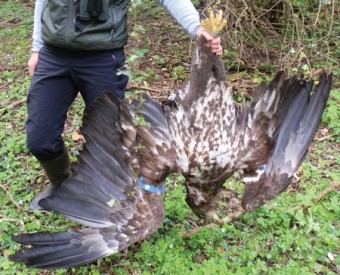 And so it continues….
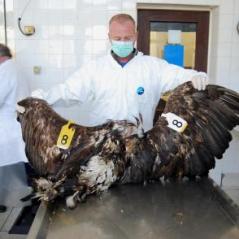 Some sad news from the Irish Republic – the white-tailed eagle pair who were the first sea eagles to attempt to breed in Ireland for over 100 years (see
  There’s another blogger in town. Stuart Housden is the Director of RSPB Scotland and has kicked off his own [RSPB] blog this month. It was pleasing to see that his third post was about wildlife crime sentencing in Scotland (see
 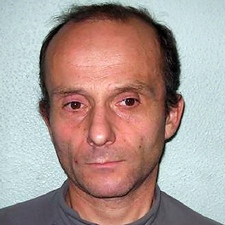 Top, top, top news! Serial egg collector, Matthew Simon Gonshaw, has today been jailed for his latest egg-theft crimes but more importantly, he has been banned from entering Scotland during the bird breeding season, FOR LIFE!
