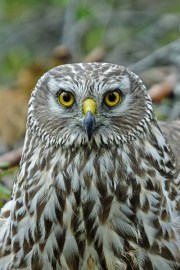
 Here’s an interesting one. Glen Tanar Estate in the Cairngorms National Park is offering an opportunity for photographers to spend time in a specially-built observation hide to photograph hen harriers at a supplementary feeding station.
We have previously blogged about Glen Tanar Estate’s outstanding efforts to protect the breeding hen harriers on their grouse moor (see here and here) – an unprecedented effort that has drawn widespread praise from the conservation community. Now the estate has teamed up with a specialist wildlife photography company (Northshots) to allow wildlife photographers a rare opportunity to photograph the estate’s harriers during the sensitive breeding period (see here).
What’s interesting about this is the whole idea of a private estate charging money to photograph a species that essentially belongs to all of us. Is it ethical for Glen Tanar Estate to profit from this? Some might argue that yes, it is entirely ethical, and this behaviour should be encouraged in order to persuade other shooting estates that there is a (financial) incentive for them to protect breeding hen harriers on their land. If more estates took this proactive approach, then perhaps we’d have more than just a single pair of hen harriers breeding in the district around Glen Tanar. Which is better – having harriers that are seen as a financial commodity or having no harriers at all? That’s a fairly easy choice. The Glen Tanar/Northshots approach looks to have been well thought through – the hide will apparently not be available until after any eggs hatch, thus minimising disturbance during the critical incubation period, and once the hide is opened, the number of photographers is severely restricted to a maximum of two people per day.
On the other hand, some might argue that the public shouldn’t have to pay a private estate for access to view a breeding pair of hen harriers. Assuming they already had a Schedule 1 disturbance licence that covered them for hen harriers, why should they have to pay ££ to a landowner when they have free access rights to the land anyway? What’s interesting about this particular opportunity is that it appears that any old photographer can pay for the privilege of spending time in the hide, whereas normally this kind of opportunity is restricted to photographers (and/or fieldworkers) who have a proven record of knowing how to behave when close to a Schedule 1 protected bird. Perhaps the photographers in this case are actually paying for the privilege of piggybacking onto someone else’s Schedule 1 licence? These licences are not (normally) easy to get! According to the Northshots website, “This opportunity is only possible due to the issue of a Schedule 1 [disturbance] Licence by Scottish Natural Heritage“. What isn’t clear is whether this licence has been/will be issued to a named person at Northshots, or whether each individual photographer will have to apply for their own. The website indicates that the photographer will be accompanied into and out of the hide by a ranger, but essentially will be left to their own devices for a minimum of six hours. So if the licence is given to an inexperienced individual, who will supervise that individual’s behaviour during this period to ensure they aren’t causing any unneccessary disturbance to the harriers? Or will a named individual from Northshots be present in the hide for the entire period? How will SNH assess whether the legal obligations of the licence have been met? If the harriers successfully fledge then obviously it could be argued that any disturbance wasn’t ‘significant’. But what if the harriers fail, for whatever reason, whether disturbance-related or just a natural cause? How will SNH determine the cause? Or would they even bother to try?
It’ll be an interesting experiment to see how things go (assuming the harriers cooperate and decide to nest on Glen Tanar again – highly likely, given the zero tolerance policy towards hen harriers on certain nearby estates). If the scheme is successful for both the estate and the harriers, could this prove to be a small step forward towards, dare I say it, the beginning of a recovery for our diminishing hen harrier population?

 The Scottish Gamekeepers’ Association has just issued a statement about convicted Aswanley Estate gamekeeper, Craig Barrie, following our earlier blog post today (
 The Environmental Audit Committee (EAC) has launched a new inquiry into the scale of wildlife crime in the UK. The EAC, appointed by the House of Commons, is the select committee responsible for, amongst other things, monitoring environmental protection.
 For those who have been following the story about the recent conviction (see
  Further to the blog post of 29 November 2011 (
 An article on the STV website reports that a gamekeeper on the Aswanley Estate has lost his court appeal against his sentence for illegal possession and control of a wild bird.
 Raptor Persecution UK