Blog

New independent report reveals locations of poisoned raptors in northern England, 2015-2023 – information that has been suppressed by government

Press release from independent group, Wildlife Poisoning Research UK, 15th November 2025.

WHERE THE POISONED BODIES WERE FOUND!

Many people probably imagine that the use of poisons to kill protected wildlife is something out of the pre-Victorian era, like cock fighting and bull baiting.  However, this senseless and cruel slaughter is still happening in Britain, with many mammals and birds of prey suffering horrific and agonising deaths, even though this practice has been banned since 1911.

It is a crime which not only kills wildlife, but also kills much loved family pets and can even kill people.  This is a wildlife crime that frequently occurs on remote and private land where the chance of detection is very low and most victims are never found.  Those cases which are reported and then investigated must be considered to be a very small tip of a very large ‘iceberg’ of sickening rural felonies.

An illegally poisoned Red Kite (photo via WPRUK)

In 2017, in an attempt to combat this wildlife crime, the UK Government initiated a project to map incidents of illegal bird poisonings.  This provided information to the public and other interested parties as to where these crimes were taking place and it was intended that these maps would be updated annually to “provide an invaluable intelligence tool to help fight crimes against birds of prey” (Defra press release 2017).

It now appears that these wildlife poison crime maps have not been updated and there is very little governmental action informing the public that these crimes are still occurring and wildlife is still being deliberately poisoned.

Wildlife Poisoning Research UK (WPRUK) works to place information about the environmental impact of pesticides, biocides and other toxic chemicals into the public domain so that the general public and the media have a better understanding of this situation.  Data on cases of deliberate poisoning of birds has been obtained using Freedom of Information requests.  This has enabled WPRUK to produce maps showing where these poisoned birds have been found.  This is information which the Government, for whatever reason, has now apparently declined to put into the public domain.

WPRUK has now released a report pinpointing where the poisoned birds have been found in Northern England.  Future maps will cover other parts of the UK.

Between 2015 to 2023, the bodies of 73 legally protected birds, mostly birds of prey, were found in Northern England.  These birds had been illegally and deliberately killed using poisons; 31 birds being Schedule 1 Wildlife and Countryside Act (1981) species, which have the highest level of protection.  Due to the very small chance of poisoned birds being found, the real numbers of birds being killed by this criminal activity is likely to be far higher.  To date, no one has been convicted for killing any of these 73 birds.

There were two areas in Northern England where particularly high numbers of poisoned birds were found.  These were Nidderdale in North Yorkshire and the Glapwell area in Derbyshire.

Releasing the report, Dr Ed Blane from WPRUK said: “The fact that 114 years after this sickening practice was banned, individuals are still poisoning our wildlife is deeply disturbing.  People visit the countryside to enjoy nature and they will be truly alarmed to learn that poison is still being used to kill wildlife.”

If this continues it might severely impact on plans to re-introduce white tailed eagles to Northern England.  In the Southern England eagle project, at least 2 birds have been killed by poison.

A comment from Steve Downing Chairman Northern England Raptor Forum:

We proudly, and rightly, identify ourselves as a nation of nature lovers.  Every year tens of thousands of tourists, both domestic and foreign, visit the historic and beautiful countryside throughout the North of England to enjoy the scenery and stunning birds of prey that it supports.  Collectively they spend £millions supporting our rural communities.  What the visitors don’t see is the underbelly of criminality in the countryside where the barbaric practice of deliberately poisoning raptors persists today, as highlighted by the bodies found in Nidderdale, North Yorkshire and around Glapwell in Derbyshire.  Thanks to Ed, a spotlight is being shone on this shocking pernicious activity raising public awareness of the danger presented by these lethal poisons, both to themselves and local birds of prey.

Bob Elliot CEO of Wild Justice said:

Illegal wildlife poisoning hasn’t faded into history; it’s still being carried out in the shadows with very little oversight.  These findings show that wildlife species are still being killed with impunity, and the public is being kept in the dark about the scale of it.  Without transparency, enforcement and the political will to confront those responsible, this criminal abuse of our countryside will continue unchecked.

ENDS

The report can be read / downloaded here:

Worcestershire man faces 21 charges in relation to possessing & trading wild Peregrines

A 57-year old man appeared at Worcester Magistrates’ Court on 11 November 2025 accused of 21 offences relating to the keeping and trading of wild Peregrines, alleged to have taken place between 2018 and 2022.

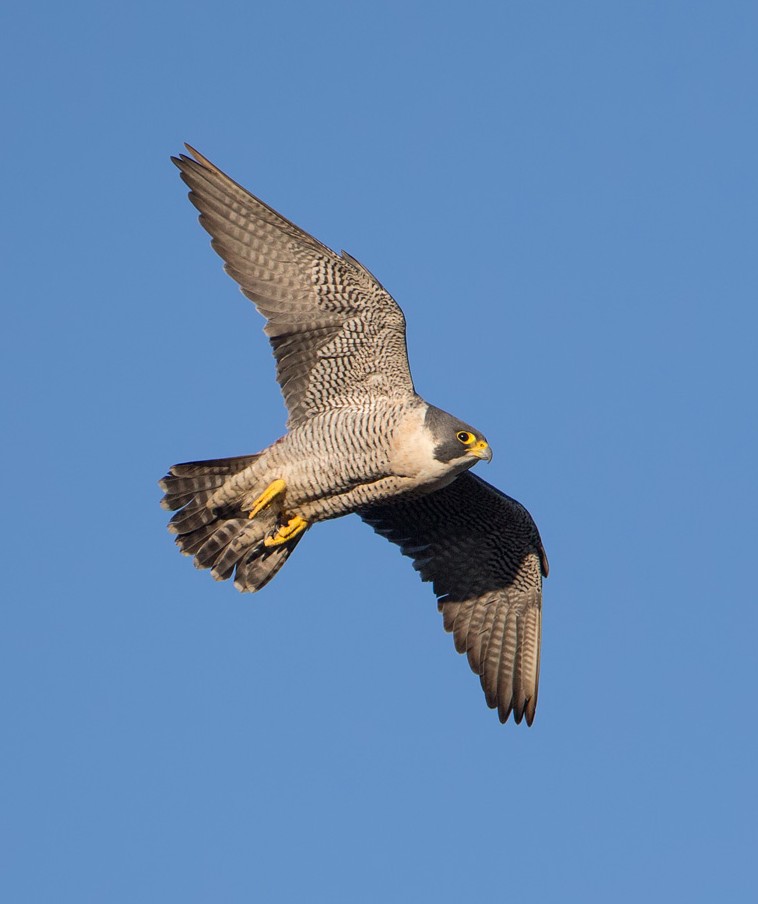
Young Peregrines in the wild, not related to this case (Photo by Ruth Tingay, taken under licence)

Ross Loader, of California Lane, Welland, Malvern is accused of 11 counts of having in his possession or control live wild birds (Peregrines) and eight charges of keeping / possessing / controlling unregistered Schedule 4 birds (Peregrines) contrary to the Wildlife and Countryside Act 1981.

It is further alleged that Loader sold a Peregrine and also knowingly or recklessly made a false declaration, namely claiming the Peregrines were captive bred birds, in order to obtain a certificate.

Loader has not entered a plea to any of the 21 charges. He is expected to do so at the next court appearance on 9 December 2025.

Court details from Worcester News.

NB: Comments are turned off as criminal proceedings are live.

Sparrowhawk shot in Towcester – Northants Police appeals for information

Press release from Northants Police (14 November 2025)

BIRD OF PREY KILLED IN TOWCESTER

Police officers from the Rural Crime Team are appealing for witnesses after a bird of prey was found dead in Towcester.

The Force were contacted by the RSPB following a report from a member of the public that a Sparrowhawk had been found dead in Redcar Road.

Following enquiries, it is believed the protected bird had been shot by a type of rifle sometime between 8am on Thursday, November 6 and 11.30am on Friday, November 7.

Sparrowhawk (photo by Ronnie Gilbert)

PC Emerson Knights of the Rural Crime Team said: “Sparrowhawks are protected under the Wildlife and Countryside Act 1981, and it is an offence to intentionally or recklessly kill or injure them.

We believe this Sparrowhawk was fatally injured after being shot with either a high-powered air rifle or small calibre rifle and would like to hear from anyone who may be able to identify the person responsible for the bird’s death.”

Witnesses or anyone with information are asked to call Northamptonshire Police on 101 or alternatively contact Crimestoppers on 0800 555 111.

ENDS

Scottish Minister Jim Fairlie provides rationale behind proposed amendment to close loophole on grouse shoot licence

Earlier this month, the Scottish Government announced its commitment to closing the loophole on the grouse moor licences that were sabotaged last year by the powerful grouse shooting lobby.

If you recall, grouse moor licensing was introduced as part of the Wildlife Management & Muirburn (Scotland) Act 2024, as a result of the continued illegal killing of birds of prey on grouse moors and the associated difficulties of identifying an individual suspect and prosecuting them.

The idea was that a licence to shoot Red Grouse could be amended / withdrawn / revoked by NatureScot if evidence showed that illegal raptor persecution had taken place (importantly, based on the civil burden of proof, i.e. balance of probability, rather than the criminal burden of proof, i.e. beyond reasonable doubt). It was expected that the licence would cover an estate’s entire landholding, not just the areas where Red Grouse are shot, because raptor persecution crimes often take place beyond the boundary of the moor (e.g. in woodland).

However, in November last year, the licences were significantly weakened after legal threats from the grouse shooting industry. Instead of now covering an entire estate, it was announced that the licence holder could decide on the extent of the area the licence covered, specifically the area where Red Grouse are ‘taken or killed’.

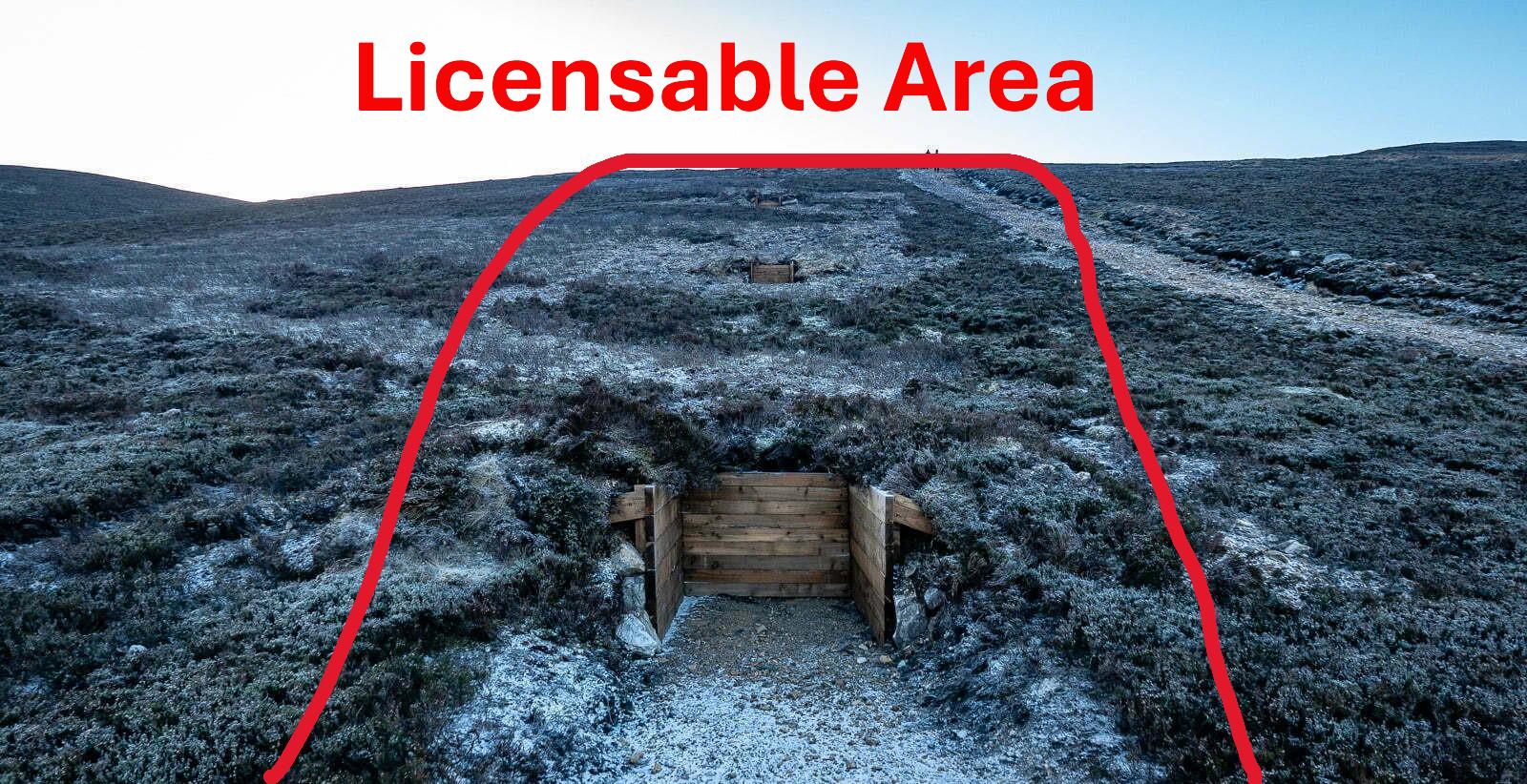
Effectively, this could mean simply drawing an arbitrary line around their grouse butts, denoting the reach of a shotgun pellet, and argue that THAT is the area where they take/kill grouse and thus that should be the extent of the licensable area:

Photo of a line of grouse-shooting butts by Richard Cross, annotated by RPUK

There has been a year of prolonged campaigning to get this loophole closed, mostly behind-the-scenes and led by Green MSP Mark Ruskell and RSPB Scotland – they deserve our gratitude because without their efforts, this loophole would have been left wide open.

When Minister Fairlie announced his intention to close the loophole, by introducing a proposed amendment to the Natural Environmental (Scotland) Bill which is currently making its way through Parliament, the precise details of his amendment were not known so although his announcement was welcomed, there was still some skepticism about whether the amendment would be fit for purpose.

The proposed amendment has now been published and Minister Fairlie has written a detailed explanation.

First, here’s the proposed amendment, which was lodged on 7 November 2025:

On first appearances, this looks to be pretty robust. Although it still offers room for ‘negotiation’ between the licensing authority (NatureScot) and the licence applicant about the extent of the licensable area, it is clear that if agreement is not reached, then NatureScot has the authority to refuse the licence application altogether.

That’s good, assuming that NatureScot will stand up to the powerful land-owning lobby. That’s by no means assured though, so we might expect that NatureScot’s decision-making process is laid out in writing so it is transparent for all those interested and fair to all licence applicants, in the same way that NatureScot has published the decision-making process it uses when assessing whether to impose a General Licence restriction on estates where there is evidence to support a suspicion of wildlife crime taking place.

Minister Fairlie’s amendment also removes the controversial issue of a reduced licensed area, rather than the licence applying to an estate’s entire landholding, as believed to be intended by Parliament when the Wildlife Management & Muirburn Act was passed. So instead of limiting the licensable area to only being applicable “on the land” [where Red Grouse are taken or killed], the amendment suggests that the licence could be withdrawn/revoked if a relevant offence takes place anywhere on the landholding “that supports or benefits the activities permitted by the licence“, i.e. grouse shooting.

It looks like this amendment will also bring back all the relevant offences that could result in a licence suspension/revocation, which were removed when NatureScot made changes to the licence in November last year (see here). This means that offences under the Protection of Badgers Act 1992, Wild Mammals (Protection) Act 1996, Conservation (Natural Habitats etc) Regulations 1994, Animal Health & Welfare (Scotland) Act 2006, Hunting with Dogs (Scotland) Act 2023), would all come back in to play. Excellent.

After notifying the Scottish Parliament’s Rural Affairs & Islands Committee (the committee scrutinising the Natural Environment Bill) of his intention to bring an amendment to close the grouse shoot licence loophole, Minister Fairlie was asked by the Committee Convenor to explain his rationale for his proposed amendment.

Minister Fairlie’s explanation is clear and well worth a read:

Amendments to the Natural Environment Bill stage 2 will be debated in Parliament next Wednesday (19 November 2025).

Hen Harrier ‘Susie’, whose chicks were stamped to death in 2022, has been found dead on a North Pennines grouse moor with gunshot injuries

If ever there was an example demonstrating the high level of persecution faced by Hen Harriers on UK grouse moors, the lack of consequences for the offenders, and the lack of justice for the victims, the short life of a Hen Harrier called ‘Susie’ illustrates it all.

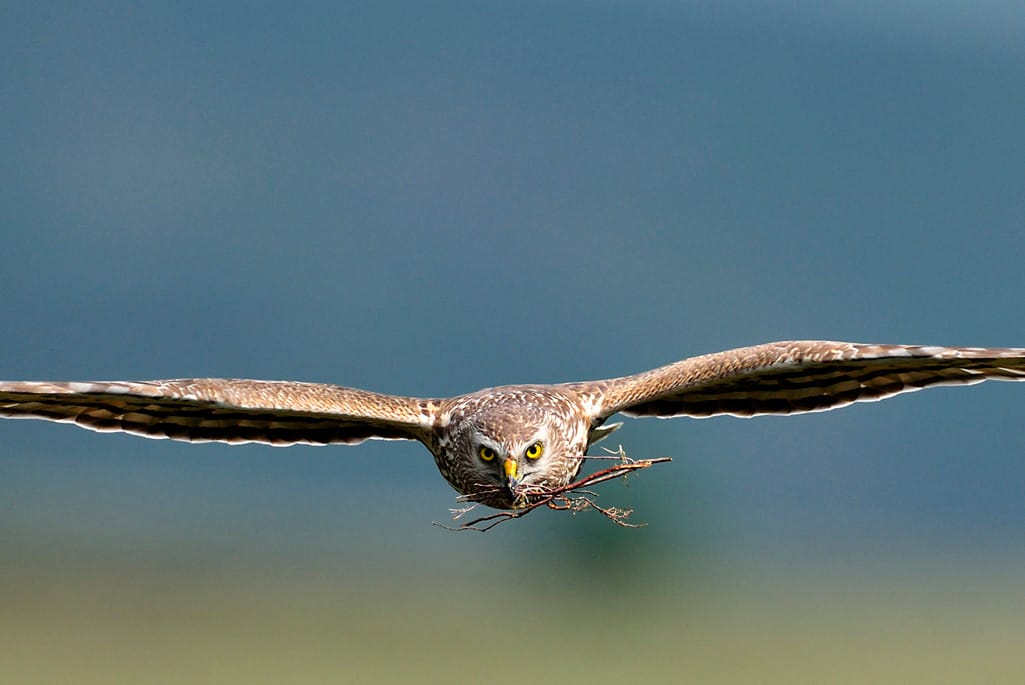
Hen Harrier (photo by Pete Walkden)

Susie hatched in Cumbria in 2020 and was satellite-tagged by Natural England on 21 July 2020. She first bred in Bowland in 2021, and the following year she moved up to a grouse moor near Whernside in the Yorkshire Dales National Park where she produced four chicks.

The Whernside nest was being monitored (nest camera) by Natural England as part of the ludicrous Hen Harrier Brood Meddling Trial. On 20 June 2022, NE researchers noticed that Susie’s satellite tag was unexpectedly and abruptly shown tracking approximately 35km away from her nest. An adult female should be attentive and close to her nest during this period. Her sudden exit from the nest area was worrying.

The following day, Natural England field staff visited the nest and made the grim discovery of three dead Hen Harrier chicks.

Reviewing the nest camera footage, they saw that after dark, at 9.54pm on 15 June 2022, the camera showed the nest site appeared normal with Susie settled in the nest with her chicks. However, at 9.59pm a sudden irregular ‘whiteout’ of the camera occurred, blinding the camera.

The camera used was movement-activated, and it was not triggered again until the following morning when footage captured apparently dead chicks in the nest and Susie attempting to feed them.

She could be seen removing her dead chicks from the nest. Three of these were found just outside the nest, and it is not known where she deposited the fourth.

Post-mortem examinations of the three chicks were subsequently conducted and showed that each suffered with multiple fractured bones including the humerus in one chick, both femurs in the second chick, and in the third chick, the humerus and a crushed skull. The fractures were complete and showed a considerable trauma had taken place for each chick.

It’s quite clear that ‘someone’ had visited the nest, disabled the camera, and stamped the chicks to death.

Six months later (!), in December 2022, North Yorkshire Police laid out the evidence and issued an appeal for information (see here).

Representatives from the grouse shooting industry responded by trying to manipulate the narrative of this brutal and sadistic crime (see here) and of course, nobody came forward with any information that could identify the person / people responsible.

The following year, in 2023, the story featured in a three-episode podcast by The Guardian, called ‘Killing the Skydancer’ (here, here and here). Meanwhile, Susie bred successfully (unknown location) and fledged five chicks. It was to be her last breeding season.

In April 2024, Natural England published its latest update on the fate of its satellite-tagged Hen Harriers. It did so quietly, without any publicity whatsoever. Susie’s entry on that spreadsheet read,

Last known transmission 12 February 2024, Northumberland. Found dead. Site confidential. Recovered, awaiting post mortem’.

Nothing more was heard about Susie’s fate until a year later, in another spreadsheet update in April 2025. Susie’s entry now read:

Ongoing police investigation, final transmission location temporarily withheld at police request‘. 

Again, there was no publicity about Susie, or about any of the other Natural England-tagged Hen Harriers that had either ‘vanished’ or had been found dead in suspicious circumstances.

Over one and a half year’s after Susie was found dead, the details have finally emerged, and once again Natural England has slipped them out quietly, without fanfare or commentary, in its October 2025 spreadsheet update. Susie’s entry now reads:

Found dead 12 February 2024, Northumberland, Grid reference NY759585. Confirmed dead, had been victim of shooting. When found dead remains would not allow determination of whether the bird died as a result of being shot. Bird died between 25 November 2023 and 12 February 2024‘.

Susie’s corpse was found on a grouse moor in the North Pennines National Landscape (a so-called protected landscape, formerly known as the North Pennines Area of Outstanding Natural Beauty, AONB), and the grid reference places her on what I believe to be the Whitfield Estate:

Susie had been shot at some point, but where, and when, is not known.

There is no suggestion that she was shot and killed on the Whitfield Estate – she could have been shot many months earlier and survived for a while before succumbing to her injuries. Without seeing the post mortem and x-ray results (which have not been published), it’s impossible to know whether her gunshot injuries caused any broken bones that could have impeded her ability to fly any distance.

That Susie was the victim of at least two separate persecution incidents (that we know about) during her three-and-a-half-year life, illustrates the severity of threat this species still faces in the UK. This should come as no surprise to anybody who has been following this blog for any length of time, nor to those who may have read the RSPB’s damning 2025 report, Hen Harriers in the Firing Line.

These appalling crimes continue because hardly anyone is ever brought to justice. There is rarely any consequence for the offenders, which gives them the green light to carry on.

There has been a change in tactics by the raptor killers in recent years, as we saw in the RSPB’s covert footage in Oct 2024 where three individuals were caught plotting, and then apparently shooting, a Hen Harrier on a grouse moor in Grassington in the Yorkshire Dales National Park. They specifically targeted the Hen Harrier that was not carrying a ‘box’ (a satellite tag) because they thought that by doing so their crime would be undetected. A gamekeeper is standing trial in January 2026 for his alleged involvement – he denies it – it will be up to the court to decide whether he was involved or not.

That case is a very uncommon prosecution, reliant on evidence provided by the RSPB’s excellent Investigations Team.

There won’t be a prosecution for the shooting of Hen Harrier Susie because there’s no evidence (that I’m aware of) that links an identified individual to that crime. Just as there was no prosecution of the person(s) responsible for stamping her chicks to death in their nest in 2022.

We all get it – finding sufficient evidence to prosecute those responsible for committing crimes in remote landscapes is incredibly difficult, but the investigating authorities could, and should, be doing much more to publicise these offences to raise awareness and help the general public spot suspicious activity.

The police’s appeal for information about the chick-stamping crime in the Yorkshire Dales National Park came six months after the event – that’s pathetic.

I haven’t seen ANY police appeal or press release about the shooting of Susie or the discovery of her corpse in Northumberland in February 2024. Not a single word.

Where is the publicity from the National Wildlife Crime Unit-led Hen Harrier Taskforce? The specialist group set up explicitly to tackle the ongoing illegal killing of Hen Harriers. Not a single word.

Where is the publicity from the police-led Raptor Persecution Priority Delivery Group (RPPDG), one of whose functions is apparently ‘awareness raising‘ and ‘raising the profile [of illegal raptor persecution] via media exposure‘? Not a single word.

Natural England has remained tight-lipped, as it always does, claiming that it requires the go-ahead from the police to issue any media. Why? Sure, in the early stages of a police investigation keeping quiet is often necessary to avoid alerting the perpetrator who may take the opportunity to remove/hide evidence before the police turn up. But 18+ months of silence, about a crime that relates to a publicly-funded project, and then to quietly slip out the information buried deep inside a spreadsheet?

Honestly, this needn’t be so bloody difficult.

X-ray reveals shotgun pellets embedded in ‘grounded’ Buzzard, Nottinghamshire

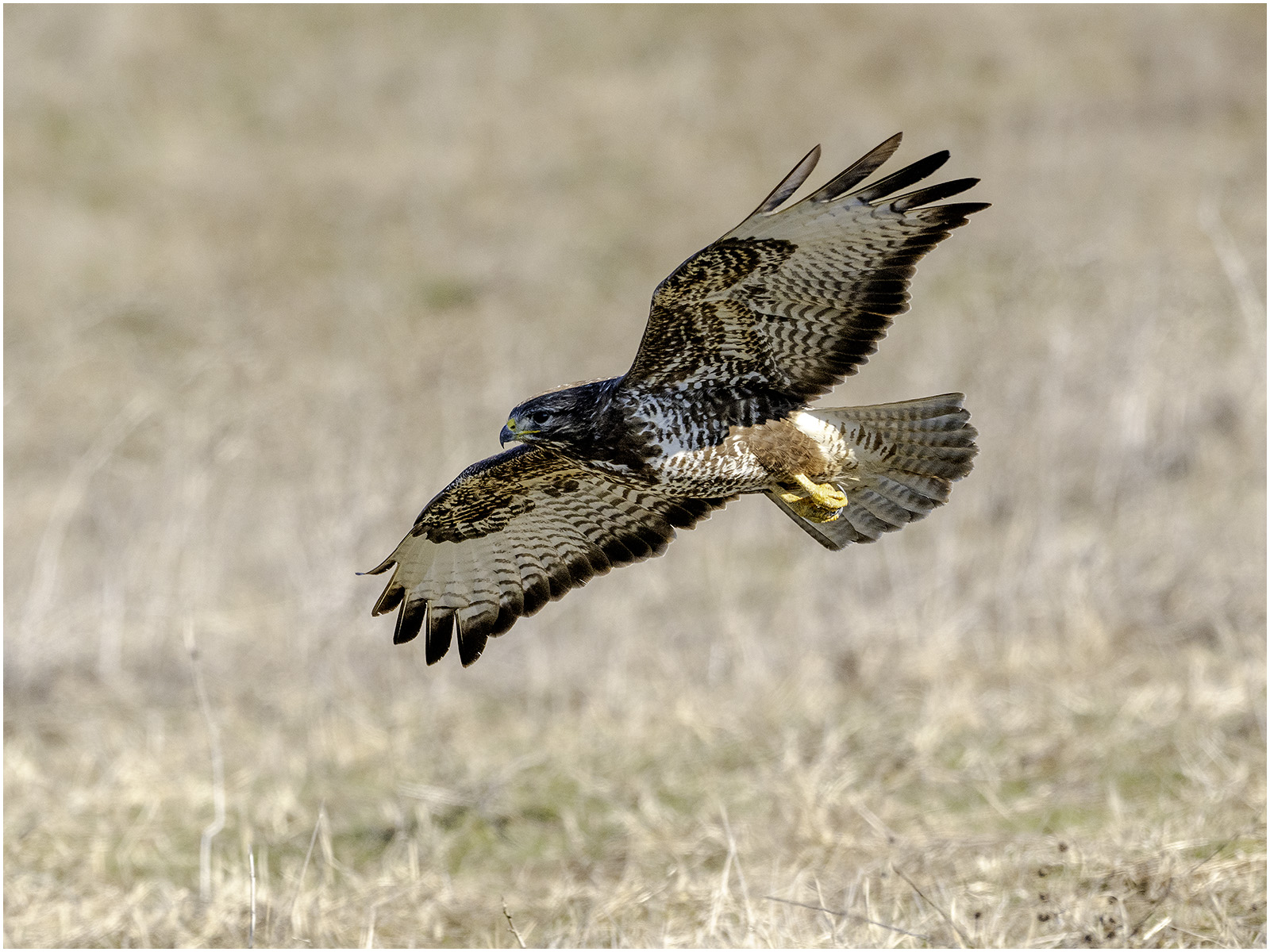
An x-ray of a grounded Buzzard has revealed two embedded shotgun pellets and a broken tail, according to Brinsley Animal Rescue in Nottinghamshire.

A statement published by the charity yesterday reads as follows:

Last Sunday we admitted a buzzard that had been found grounded, the caller had been struggling to find a rescue who were able to help and had them for several days before we took the call, thankfully they had been feeding the buzzard and keeping them safe.

On examination it was clear there they weren’t the best of condition not least the tail position, which was to the side and the bird wasn’t able to move it. X-rays have confirmed that not only was the tail broken, but there are several shot gun pellets lodged in the bird. It is probable that they have been shot and the broken tail is a result of the bird crash landing.

We have successfully treated and released birds with broken tails, but not a bird of prey, whilst the bones will eventually fuse, its vital that they have full mobility before they can be released and only time will tell if this ends well‘.

Photo and x-rays from Brinsley Animal Rescue

Shot Pheasants found dumped in Dorset

Another week and another pile of shot and dumped gamebirds.

Thanks to the blog reader who sent in this photo of a pile of dead, shot Pheasants he found yesterday, dumped on the road (B3081) running north of Wimbourne St Giles in Dorset.

If you look closely you’ll see what looks like green baler twine, indicative that these birds were probably shot on an organised shoot day, hung up (with the twine) and then distributed to shoot participants to take home, presumably to cook. But whoever was given these birds wasn’t interested in eating them – the ‘fun’ was all in the shooting.

Although given how many blood feathers are present in some of these young birds, their ability to fly would probably have been compromised before being blasted with a shotgun. It’s a strange idea of ‘fun’.

Regular blog readers will know that the dumping of shot gamebirds is a common and widespread illegal practice that has been going on for years, despite the repeated denials by the shooting industry. The disposal of animal by-products (including shot gamebirds) is supposedly regulated and the dumping of these carcasses is an offence.

Previous reports include dumped birds found in Cheshire (here), Scottish borders (here), Norfolk (here), Perthshire (here), Berkshire (here), North York Moors National Park (here) and some more in North York Moors National Park (here) and even more in North Yorkshire (here), Co. Derry (here), West Yorkshire (here), and again in West Yorkshire (here), N Wales (here), mid-Wales (here), Leicestershire (here), Lincolnshire (here), Somerset (here), Derbyshire’s Peak District National Park (here), Suffolk (here), Leicestershire again (here), Somerset again (here), Liverpool (here), even more in North Wales (here) even more in Wales, again (here), in Wiltshire (here) in Angus (here), in Somerset again (here), once again in North Yorkshire (here), yet again in West Yorkshire (here), yet again in mid-Wales (here), even more in mid-Wales (here), more in Derbyshire (here), Gloucestershire (here) more in Cheshire (here), some in Cumbria (here), some more in the Scottish Borders (here) and again in Lincolnshire (here), in Nottinghamshire (here), even more in Lincolnshire (here) and even more in the Scottish Borders (here).

Unless someone was seen dumping these shot gamebirds there’s no way of knowing who did it or from which gamebird shoot they originated, and therefore there’ll be no consequences for the person responsible. There’s no requirement for shoot managers to fit identifying markers to their livestock, which would make them traceable, because gamebird ‘livestock’ absurdly changes legal status to ‘wildlife’ as soon as the birds are released from the rearing pens for shooting (see Wild Justice’s blog on Schrodinger’s Pheasant for details).

Earlier today I blogged about the ‘significantly elevated threat‘ of Highly Pathogenic Avian Influenza (Bird Flu) and the compulsory housing orders now in place in England, Wales and Northern Ireland, in addition to increased biosecurity measures that everyone, including those who run gamebird shoots, are supposed to be undertaking to lessen the risk.

What’s the point, when irresponsible gamebird shooters keep dumping shot birds and leaving them to rot by the side of the road, putting wildlife at risk, especially birds of prey?

Compulsory housing orders across England, Wales & Northern Ireland to combat ‘significantly elevated threat’ of Highly Pathogenic Avian Influenza (Bird Flu)

Compulsory housing orders have been introduced across all of England, Wales and Northern Ireland in a bid to combat the ‘significantly elevated threat’ of Highly Pathogenic Avian Influenza (HPAI, Bird Flu).

It was only a couple of weeks ago that a mandatory housing order was announced in a number of specified counties in England that were considered to be at high risk (see here) but this has now been extended to all counties in England, Wales and Northern Ireland as the number of outbreaks has increased.

Avian Influenza is a global public health concern, with high risk to humans, wildlife and domestic animals. Some scientists predict the virus will mutate to cause the next pandemic. Avian faecal samples being collected by the Wildlife Conservation Society in Mongolia for testing (Photo by Ruth Tingay)

The compulsory housing order in England came in to force on 6 November 2025 (see press release from Defra here), on 6 November 2025 in Northern Ireland (see press release from DAERA here), and will begin across Wales from 13 November 2025 (see press release from Welsh Government here).

In the last two weeks, outbreaks of Highly Pathogenic Avian Influenza have been declared as follows:

ENGLAND

Nr Brandon, West Suffolk (AIV2025/72), 29 October 2025. Centred around grid ref TL8255580834.

Nr Silloth, Cumbria (AIV2025/73), 30 October 2025. Centred around grid ref NY1547552282.

Ormesby St Margaret, Great Yarmouth, Norfolk (AIV2025/76), 31 October 2025. Centred around grid ref TG4779815037.

Nr Uckfield, East Sussex (AIV2025/77), 31 October 2025. Centred around grid ref TQ4618819591.

Nr Swineshead, Boston, Lincolnshire (AIV2025/78), 31 October 2025. Centred around grid ref TF2346644599.

Nr Honington, West Suffolk (AIV2025/79), 1 November 2025. Centred around grid ref TL8733176223.

Nr Donington, South Holland, Lincolnshire (AIV2025/80), 1 November 2025. Centred around grid ref TF1806934759.

Nr Easingwold, Wetherby, North Yorkshire (AIV2025/81), 2 November 2025. Centred around grid ref SE4688267829.

Nr Thirsk, Malton, North Yorkshire (AIV2025/82), 3 November 2025. Centred around grid ref SE4264286835.

Nr Danehill, Wealdon, East Sussex (AIV2025/83), 3 November 2025. Centred around grid ref TQ4017627749.

Nr Crediton, Devon (AIV2025/84), 3 November 2025. Centred around grid ref SS8488401552.

Nr Wells-Next-The-Sea, Norfolk (AIV2025/85), 4 November 2025. Centred around grid ref TF9251339872.

Nr PreeSall, Wyre, Lancashire (AIV2025/86), 5 November 2025. Centred around grid ref SD3750947393.

Nr Corby Glen, South Kesteven, Lincolnshire (AIV2025/87), 5 November 2025. Centred around grid ref SK9989228984.

Nr Kirkham, Fylde, Lancashire (AIV2025/89), 6 November 2025. Centred around grid ref SD4231130456.

Nr Feltwell, Kings Lynn, Norfolk (AIV2025/90), 7 November 2025. Centred around grid ref TL6882188273.

Nr Attleborough, Breckland, Norfolk (AIV2025/91), 7 November 2025. Centred around grid ref TL9706396683.

Nr Alford, East Lindsey, Lincolnshire (AIV2025/92), 7 November 2025. Centred around grid ref TF5111273185.

Another outbreak nr Thirsk, Malton, North Yorkshire (AIV2025/93), 7 November 2025. Centred around grid ref SE3734980599.

Nr Hallow, Malvern Hills, Worcestershire (AIV2025/94), 8 November 2025. Centred around grid ref SO8170562012.

WALES

Milford Haven, Pembrokeshire, declared 30 October 2025. Centred around grid ref SM8974508587.

Second case at Milford Haven, Pembrokeshire, declared 31 October 2025. Centred around grid ref SM8949908967.

Third case at Milford Haven, Pembrokeshire, declared 6 November 2025. Centred around grid ref SM8924307999.

Nr Welshpool, Powys (AIV2025/95), declared 9 November 2025. Centred around grid ref SJ2348703135.

NORTHERN IRELAND

Nr Pomeroy, County Tyrone, declared 7 November 2025. Grid ref not available.

Lisnaskea, County Fermanagh, declared 7 November 2025. Grid ref not available.

County Armagh, declared 10 November 2025 after outbreak in Monaghan, Irish Republic, just across the border.

SCOTLAND

There are currently no confirmed outbreaks in Scotland

Many of the reported incidents have resulted in the declaration of a 3km protection zone and a 10km surveillance zone around the infected premises, with flocks culled and strict biosecurity measures in place.

The former Director of Science at the Government’s Animal & Plant Health Agency (APHA), Professor Ian Brown, has warned that the current H5N1 virus is “as super-infectious as any high pathogenicity avian influenza we’ve ever seen” and has warned farmers to “prepare for the worst” (see here).

Amidst all this, conservationists have argued that the release of ~60 million non-native gamebirds for shooting created more risk for the spread of this highly contagious disease, especially when research revealed that a large number of shooting estates were not even declaring they had birds, making it impossible for Defra and APHA (Animal & Plant Health Agency) to monitor and manage the risk.

Defra and Natural England responded by withdrawing General Licence 45 (the licence permitting the release of gamebirds on or within 500m of a Special Protected Area (SPA)) and heavily reducing the number of individual licences for the same purpose (see here). In August, enhanced mandatory biosecurity measures were also introduced, including for game bird shoots, and these remain in place, although not all game shoots are complying….more on this shortly.

Trial of Scottish gamekeeper accused of killing Goshawk now delayed until March 2026

The trial that was due to start at Perth Sheriff Court yesterday, relating to a Scottish gamekeeper accused of killing a Goshawk, has been delayed.

The case didn’t call yesterday due to another trial over-running. The next available court date is not until March 2026.

Perth Sheriff Court (photo by Ruth Tingay)

This case relates to the alleged killing of a Goshawk on a shooting estate near Blairgowrie on 12 February 2024.

For background details, see here.

NB: As this case is live, comments are turned off until legal proceedings have ended.

Trial begins today for Scottish gamekeeper accused of killing a Goshawk on a Perthshire shooting estate

A trial begins today at Perth Sheriff Court for a Scottish gamekeeper accused of killing a Goshawk on a Perthshire shooting estate.

The alleged incident took place on 12 February 2024 on a shooting estate near Blairgowrie.

Goshawk with a Pheasant. Photo by Ronnie Gilbert.

Police Scotland, with the assistance of partners from the RSPB and Scottish SPCA, executed a search warrant on the estate on 29 February 2024, leading to the arrest of a 47-year-old gamekeeper and subsequent charge (see here).

He has pleaded not guilty.

NB: As this case is live, comments are turned off until legal proceedings have ended.

UPDATE 12 November 2025: Trial of Scottish gamekeeper accused of killing Goshawk now delayed until March 2026 (here)