Blog

‘One or two estates’ may be persecuting hen harriers, says Environment Minister

The Scottish Government is persisting with its ‘Heads Up For Hen Harriers’ project – an initiative aimed at getting the general public involved with reporting sightings of hen harriers so the authorities can work out where they are and why they’re in decline. This ‘initiative’ was launched in April and now it’s back in the news.

The BBC has a film report from a hen harrier nest site in Perthshire (here)  – well done Wendy Mattingley from the Tayside Raptor Study Group for telling it how it is.

In addition to the film, Environment Minister Paul Wheelhouse was interviewed on Good Morning Scotland earlier today (audio clip available for 7 days here, starts at 2.13.40).

Here is a transcript of the radio interview:

GMS: Why do you need the public’s help here considering that the hen harrier is so intensively studied already?

PW: Well it’s because the hen harrier is an extremely sort of charismatic bird, I mean it’s not one that’s maybe well known and as well publicised but it’s a particularly wonderful species. The male is grey and white and black wing tips and it’s particularly sort of striking when people do see it. Many people regard the hen harrier as their favourite bird so we’re hoping to raise the profile of the species because it is under pressure from a number of problems and we know that there are only 505 sort of territorial pairs in Scotland as of three years ago and that had been a very significant decline since about six years prior to that so it is an important bird, it’s a very important bird for the landscape that it’s living in and we want to do all we can to protect it.

GMS: And what’s the problem, why is it in particular being targeted?

PW: Well one of the difficulties we have with the hen harrier is understanding exactly what it is that’s causing the numbers to decline. There certainly is a concern about illegal persecution of the bird, but there may be other possible changes in its climate and land-use issues such as forestry and grazing which might be impacting on their numbers, but it’s widely recognised that persecution has been a major factor, particularly where there’s been conflict with grouse management in the past.

GMS: Now there has been a clampdown legally on this, but is it working? It doesn’t seem to be.

PW: Well it’s certainly something we’re keen to find out. Certainly the work we’ve done through Heads Up for Hen Harriers, announced earlier in April, has indicated that the birds are present in places we didn’t know they were previously present so there’s some indication that the range is slightly bigger than we had thought, but we’re still evaluating the kind of sightings and going back checking whether they are accurate or not, but there’s certainly been, you know, pressure on numbers, we know that they’re not protected in England in the way they are in Scotland and so we’ve lost some, we believe, that have gone over the border and been persecuted there but the majority of problems are, I think, home grown ones and we need to sort of clamp down, as you say, on illegal persecution.

GMS: And do you think there is now a case to prosecute the landowners?

PW: Well certainly we have, through the WANE Act, the Wildlife & Natural Environment Act in 2011, put in place vicarious liability provisions which mean that no landowner can escape their responsibility of those that work for them. We’ve not yet seen a prosecution under vicarious liability but, you know, I imagine at some point in the future there probably will be one which will test the legal powers that we now have. But I think it’s already having an impact, that power, on the behaviour of landowners who are doing much more to train their staff, to ensure that they do not do anything to disturb or threaten species such as the hen harrier, so I hope that work does have a long-term benefit. But we’re always looking for, you know, the potential to prosecute a vicarious liability case just to test the waters.

GMS: And these organisations representing landowners, gamekeepers and field sports enthusiasts have condemned the illegal persecution but do you think, do you feel that they are on board here, that they are doing enough?

PW: I think the overwhelming majority of landowners are absolutely on side and are doing their best to try and tackle problems of illegal persecution. There are obviously, you know, suggestions of one or two estates which have had difficulties and the police authorities are sort of following those up and the Partnership for Action Against Wildlife Crime Scotland, which I chair, is working with landowners who are members of that organisation to try and improve practices and ensure that we do everything we can to protect species like the hen harrier, but other species as well such as the golden eagle and sea eagles which have also had, unfortunately, persecution in recent years. We also announced recently a number of provisions which we’re taking to try and strengthen our action on illegal persecution of raptors and they are supported, I think, by a number of key organisations such as gamekeepers and indeed the landowners.

GMS: We’ll have to leave it there, Paul Wheelhouse, the Scottish Environment Minister.

What wasn’t said in this interview was that there is the potential for an estimated 1467-1790 pairs of hen harriers to live in Scotland, according to the Hen Harrier Conservation Framework report, published by the government in 2011. However, the latest national survey results (from 2010) only found 505 pairs. And surprise surprise, the main areas where these birds are absent is on land managed as driven grouse moor in the Eastern Highlands and Southern Uplands. Sound familiar? Yep, exactly the same places where golden eagles are in trouble. What an amazing coincidence.

So, where are the 962-1,285 missing pairs of hen harriers? Wheelhouse is suggesting that the Heads Up for Hen Harriers initiative may have found some of them (although the results are still to be analysed and verified so his statement is rather premature to say the least). It’ll be fascinating to see those results in due course – perhaps they’ve found 1,000 pairs holed up in a crack den on a Glaswegian housing estate.

It is quite astonishing that still, more than 20 years after the alarm was first raised about the connection between driven grouse moors and hen harrier persecution, the authorities continue to play down the scale of the persecution issue and say, “One of the difficulties we have with the hen harrier is understanding what it is that’s causing the numbers to decline” and then pretend that the majority of the grouse-shooting industry is supportive of hen harriers. There are some who are on board, for sure, but the weight of evidence shows that those estates are in the minority – there must be a significant number of estates still ‘at it’ to have the population-level effect that we’re seeing.

We wrote a scathing critique of the Heads Up for Hen Harrier initiative when it was first launched in April. Rather than repeat it all here, it’s easier just to provide the link for those interested in reading it: see here. Our view hasn’t changed.

Hen Harriers will feature again on Reporting Scotland this evening.

The photo below is a reminder of what happens to hen harriers on grouse moors. This one was caught in an illegally-set trap on Moy Estate – he was lucky, he was found in time by raptor workers and he survived…for that day anyway.

Picture1


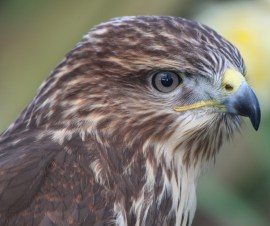
Buzzards eat stuff, it has emerged

no eatingShocking new footage has emerged that shows that buzzards eat stuff.
This is outrageous“, said Don McMoron of We Own Scotland. “Not only does this prove that buzzards eat stuff, which is bad enough, but they think they’ve got the right to eat anything that takes their fancy. That’s totally unacceptable and we’re calling on the government to convene an urgent summit to decide what buzzards can and can’t eat”.

Albert Hogburn of the Modern Poisoners Society said: “Aye, I watched the video last night. Did you see that bird in the tweed hot pants with the fantastic tits? Oh…it’s not that video you’re talking about? Er, sorry, got to go, I’ve left some milk on the boil…Er, #TeamPoison all the way, lads”.

In case there’s any doubt, the above is a parody. This, however, is not.

Kestrel shot in North Yorkshire

North Yorkshire Police are appealing for information after a kestrel was found shot on Monday. The bird was found near the High Batts Nature Reserve at North Stainley, near Ripon, its wing shattered by shotgun pellets. It had to be euthanised by a vet.

North Yorkshire is one of the worst areas for raptor persecution crimes in the UK.

We’re impressed that North Yorkshire Police Wildlife Crime Officer PC Gareth Jones got the appeal for information out, in the media and on the North Yorks Police website, within 4 days of the bird being found. Really well done to him.

Anyone with information about this crime is urged to contact PC Gareth Jones – his details available in the following links:

Press release on North Yorks Police website here

Article in the Northern Echo here

Photo of kestrel hovering by davidchapman.org.uk

Two Langholm hen harriers fitted with sat tags

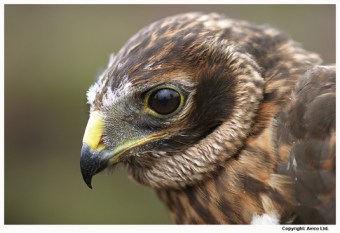
Hen-Harrier-1 avico ltdThere have been two successful hen harrier nests at Langholm this year, according to the Langholm Demonstration Project website (here). The scant information provided informs us that the nests contained healthy broods of six and four chicks.
Interestingly, the Project website doesn’t provide any information about the number of satellite tags that have been fitted to chicks this year. We find that very curious, given that two female chicks from the brood of six were fitted with tags prior to their fledging the nest last week.

What’s with the secrecy? This is an expensive project, part-funded by the taxpayer, and there’s strong public interest in what happens to these harriers when they leave Langholm. We know from previous years that the survival rate of these young birds is appalling, with many of them ‘mysteriously disappearing’ over grouse moors in Scotland and northern England. Strangely, the Project team has been reluctant to reveal these locations.

We’ll we watching with great interest to see whether the Project team releases information about the movements of these latest two young birds over the coming weeks or whether this turns into yet another cover up job.

Meanwhile, Cat Barlow who runs the related ‘Making the Most of Moorlands’ education website (here) has posted some video footage of the brood of four, as well as some merlins and other species.

To read our previous blog posts about Langholm, just type ‘Langholm’ into the search box on the right hand side of the blog. (Too many previous posts to list them here).

Another shot buzzard found in the Scottish Borders

A dead buzzard found in the Heriot area of the Scottish Borders had been shot, according to the BBC.

Police Scotland are appealing for information after the bird’s decomposed body was discovered close to Carcant Hill on 30th June. A forensic analysis revealed the bird had been shot although it’s not known whether this was the cause of death.

Well done to the new Police Scotland WCO in the Borders, PC Hannah Medley, for publicising this incident within a couple of weeks of the bird being found (her second one this year, following the discovery of a shot buzzard at St Mary’s Loch in March, which she also publicised pretty quickly – see here).

BBC article on latest shot buzzard in Heriot here.

“Raptors are thriving on gamekeepered ground”, claims the SGA

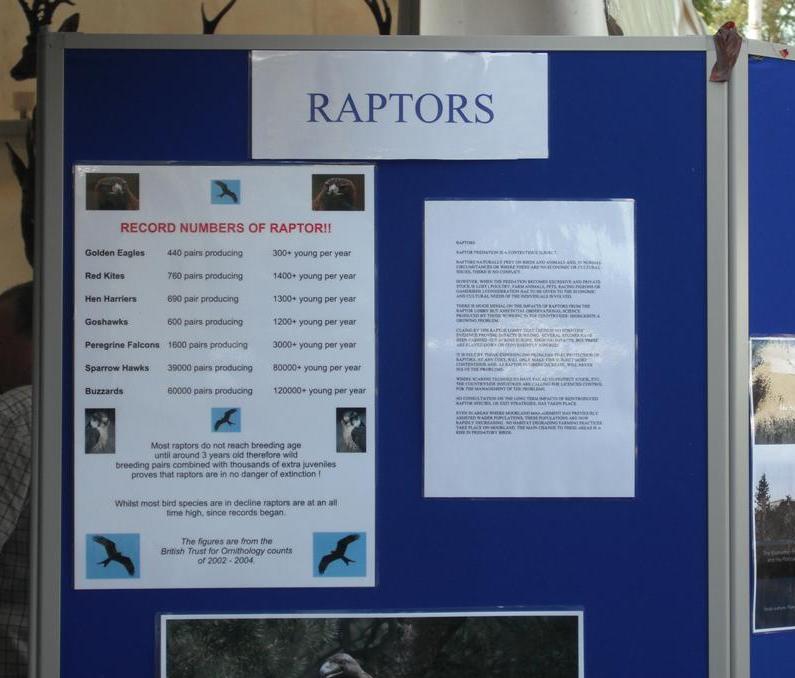
There were some interesting sights at the 2013 Scottish Game Fair in early July, including this poster on the Scottish Gamekeepers’ Association stand, entitled “Record Numbers of Raptor!!”[sic].

SGA Gamefair 005a

Any casual visitors to the SGA stand could be forgiven for thinking that raptors are doing just fine and there’s no cause for concern; that’s the message the SGA clearly wanted to portray. But let’s just look a bit more closely at their ‘information’, shall we?

You might think, given that this was the Scottish Gamekeepers’ Association at the Scottish Game Fair, their raptor figures would just relate to raptors in Scotland. You’d be wrong. Rather disingenuously, they used data relating to raptor figures in the UK as a whole, not just Scottish data, thereby potentially misleading the public to believe that Scotland holds a significantly higher number of breeding raptors than it actually does.

For example, the SGA claims there are 760 pairs of red kites producing 1400+ young per year. Actually, the number of breeding pairs monitored in Scotland in 2012 was 214, with 314 fledged. This is thought to be ‘close to an accurate population estimate’ according to the Scottish Raptor Study Group.

Another example: the SGA claims there are 600 pairs of goshawks producing 1200+ young per year. Actually, the number of breeding pairs in Scotland is more like 150, with an estimated 200 occupied territories in total.

And another example: the SGA claims there are 1600 pairs of peregrines producing 3000+ young per year. Actually, the last national survey of peregrines in Scotland showed 542 breeding pairs, an 8% decline from the previous national survey.

And here’s yet another example: the SGA claims there are 690 pairs of hen harriers producing 1300+ young per year. Actually, the last national survey of hen harriers in Scotland showed 505 pairs, a 20% decline from the previous national survey.

In fact, the data they’ve provided for every species on this list, with the exception of the golden eagle, are a gross exaggeration of the respective Scottish populations of these birds. Did they choose these figures to deliberately mislead the public? Surely not.

In addition to using potentially misleading population figures, the SGA also chose to use data from 2002-2004. That’s a bit odd given that far more up to date data for many species (i.e. from as recently as 2011) are freely available in the public domain (see here). Now, what possible reason could they have for ignoring the more recent facts and figures? Surely nothing to do with the fact that these more recent data directly contradict the following SGA statement:

That whilst most bird species are in decline raptors are at an all time high, since records began”.

Conveniently, this statement fails to mention the 20% decline in the Scottish hen harrier population, and the 8% decline in the Scottish peregrine population, not to mention the severely constrained Scottish populations of red kites, golden eagles and goshawks, all linked to the effects of illegal persecution taking place on gamekeepered land across Scotland. Funny that, isn’t it?

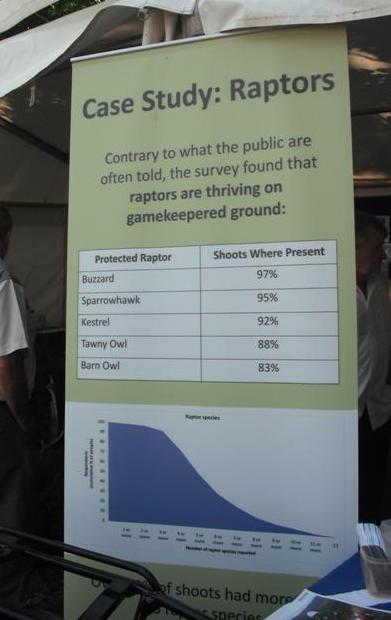
Even funnier is this photo (below), also pictured at the SGA stand. According to this, ‘Raptors are thriving on gamekeepered ground’. Conveniently (again), the list of raptor species they chose to illustrate this lie statement does not include hen harriers, peregrines, red kites, golden eagles or goshawks. Their statement is right up there with another SGA classic: “Professional gamekeepers do not poison raptors” (see here).

SGA Gamefair 006a


RSPB Investigations Team features in New Yorker magazine

A fascinating article in the New Yorker magazine, featuring two members of the RSPB Investigations Team and their work to catch illegal egg-collectors.

New Yorker article here

Half a million blog hits

Our blog has reached another milestone today – half a million views!

A big thanks to everyone who has viewed, contributed, commented, shared on Facebook, tweeted on Twitter, linked us to their own website etc.

Here are some stats:

763 posts written

Currently averaging ~26,000 views per month

Most views in one day: 5,815 views on 23rd May 2013 – ‘Natural England issues licence to destroy buzzard eggs and nests to protect pheasants’.

Top Ten Posts (most viewed) –

1. Natural England issues licence to destroy buzzard eggs and nests to protect pheasants.

2. Buzzard ‘management’ trial gets govt approval and £375k funding.

3. 27 eagles, 7 years, 0 prosecutions.

4. Significant haul of poisoned baits found on Leadhills Estate.

5. Police investigate alleged destruction of sea eagle nest on a Scottish grouse moor.

6. RSPB response to DEFRA’s proposed (illegal) buzzard trial.

7. Buzzards trapped and beaten to death with a stick: gamekeeper convicted.

8. The curious incident of the eagle in the night-time.

9. Golden eagle found shot and critically injured on Scottish grouse moor.

10. Update on the curious incident of the eagle in the night-time.

single

Buzzard shot in the head: police appeal for info

buzzard 3Police in Greater Manchester are appealing for information after a dead buzzard was found in a field in Bolton. X-rays revealed the bird had been shot in the head.
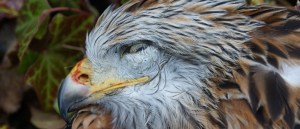
The bird was found by a dog walker on 25th June in a field close to Salford Road and St. Helens Road.

PC Randolph Lyle makes some frankly bizarre statements in the police appeal, e.g. “shooting and killing one [buzzard] can have a devastating impact on their habitat and biodiversity“. Eh? He also seems quite keen to put across an argument that this buzzard wasn’t killed by someone from the game-shooting industry…

Nevertheless, Greater Manchester Police should be credited for at least putting out a press statement, so well done to them for that.

Anyone with information can call GMP on 0161-856-5578 or can make an anonymous call to Crimestoppers on 0800-555-111.

Greater Manchester Police press release here.

Red kite poisoned in Scotland

rk5And so it continues….

Today, the Scottish Government agency responsible for reporting on poisoned animals released the stats for the first quarter of this year (i.e. Jan-March 2013).

You will not be surprised to learn that, yet again, poisoning incidents have taken place and Police Scotland have chosen to suppress the information.

The data confirm that a poisoned red kite was discovered in March in ‘Central Scotland’ – no detailed location information given, naturally. Lab tests show it had been poisoned with Mevinphos. Four months for that information to slip out in a largely un-read government report. The level of secrecy involved in these cases is quite remarkable.

The data also show the poisoned baits that were uncovered at Leadhills in March – interestingly, they confirm the presence of Carbofuran but don’t comment on the number of baits found (which we know was a considerable number – see here) but they do say the baits were found inside gamebags. Four months on from the discovery and we’re still waiting for Police Scotland to make a public statement, not least to warn residents and visitors about the discovery of potentially fatal poison in a publicly-accessible location.

Also included in the data is the discovery of a Carbofuran-laced pigeon bait in Tayside in February 2013. Again, where was/is the public warning from Police Scotland?

It’s just bloody pathetic. Don’t tell us that the information has been suppressed for ‘operational’ reasons – that’s totally ridiculous and isn’t fooling anyone. The suppression of information benefits the landowners and gamekeepers – nobody else.

Compare this suppression of information with the work of Police Wildlife Crime Officers in Devon & Cornwall. Two of their WCOs – PC Josh Marshall and PC Paul Freestone – are so amazingly proactive that as well as having their own personal wildlife crime blogs (here and here), they’ve even set up a Wildlife Crime Group blog for their area (see here). On this blog, you’ll find information providing tips and advice about different types of wildlife crime, as well as information about specific alleged offences. For example, here they report on the recent suspected poisoning of two buzzards, and even provide photographs – all within a few days of the alleged crime being reported. Hats off to those two guys – committed, proactive, helpful and informative (although if you’re reading this Josh & Paul, you might want to revise your information about potential threats to harriers!!).

Back to Scotland….we would like to know why Police Scotland consistently fails to inform the public about alleged raptor persecution incidents, especially those involving the discovery of highly dangerous banned poisons in public areas. The public has a right to be kept informed. Sure, the Police may need a few weeks to conduct their initial investigations without letting on what they’re up to – as we’ve said over and over and over again, nobody in their right mind would want to interfere with that process and jeopardise a potential prosecution – but when it gets to three, four, five months after the incident and its bloody obvious that the investigation is dead in the water, then what possible reason is there for withholding the information, putting the lives of people and animals at risk? Here are some reasons: wanting to appease the landowners and gamekeepers on whose land the poison had been found, and wanting to appease the wider gameshooting industry who just hate to have the truth exposed about poisoning and the other methods of persecution that are being used against raptors on a regular basis.

If you’re also curious about the blanket suppression of information, you could always email the new Police Scotland Wildlife Crime Portfolio Leader, Detective Superintendent Cameron Cavin, and ask him to explain. One question to ask, as a friendly opener, nothing more, might be whether he has ever held membership in a game-shooting organisation, like, ooh, er, let’s say BASC for example, and if so, whether that membership is still held?…. Coincidentally, Det. Super. Cavin also just happens to have strong connections with central Scotland so he might also have information about the progress of the case concerning the poisoned red kite found there in March, or perhaps about the buzzard found there in March that had been caught in an illegal trap and had to be euthanised as a result of its injuries (see here). Bear in mind if you do email him, he’s obliged to reply within 20 working days so he can’t just ignore you, although obviously he can choose to fob you off without providing a satisfactory answer.

Email: Cameron.Cavin@centralscotland.pnn.police.uk