Blog

Natural England claims release of buzzard licence info ‘not in public interest’

buzzard 3Today, Natural England announced that they’d won a ‘Customer Service Excellence Standard Accreditation’ (see here). The independent assessors apparently spoke with NE staff as well as ‘a range of Natural England’s key customers and stakeholders’ and decided that NE was ‘excellent’ at providing ‘delivery’ and ‘information’ to their customers, amongst other things.

That’s not been our experience.

On 23rd May, an article in the Guardian revealed that Natural England had licensed the secret destruction of buzzard nests and eggs in order to protect a pheasant shoot. The licences in question had been issued to an un-named gamekeeper, whose licence application had been supported by the National Gamekeepers Organisation. We blogged about it here. There was widespread public condemnation, as expected.

On 30th May, we blogged about whether the licence applicant had a previous criminal conviction for wildlife crime (because we had good reason to ask – see here) and we wrote to Natural England to ask them about it (see here). Incidentally, we also asked the National Gamekeepers Organisation whether the gamekeeper they were supporting had a criminal conviction for wildlife crime and if so, had he ever been expelled from their membership, as per their club rules about not tolerating wildlife crime – they still haven’t answered!

On June 3rd, Natural England responded to our request for information (a very quick response, to give them due credit) by issuing a refusal notice. In other words, they refused to either confirm or deny that they held any details about previous convictions because, they claimed, this was ‘personal information’ as defined in the Data Protection Act. We strongly disagreed and wrote a second letter to NE (see here), asking for an internal review of their decision. We argued that the information requested could not be defined as ‘personal information’ because the information would not lead to the identification of the buzzard licence applicant; what we were asking was whether the applicant had a wildlife crime conviction, which could have been answered with a simple ‘yes’ or ‘no’.

On 29th July, Natural England responded to our request for an internal review by issuing a second refusal notice. Once again, they claimed the information we had asked for was ‘personal information’ and they also claimed the release of that information was ‘not in the public interest’. Here is a copy of the generic letter they sent out to quite a number of blog readers: RFI 2020 Int_Review Response_RD

Next stop? The Information Commissioner, to ask for a review of Natural England’s decisions. Watch this space…

On a related subject, Alan Tilmouth has written a(nother) good blog this evening, this time about the GWCT’s position on buzzard licensing – see here.

Peregrine shot, barn owl chick stolen, hen harriers remembered

It’s been quite a day. The so-called ‘Glorious 12th’ has been taken back by the conservationists and re-named Hen Harrier Day, in an inspired move by Alan Tilmouth (read his blog entry here).

Although he only came up with the idea yesterday, Twitter has been alive today with hundreds of people using the #henharrier tag to celebrate these spectacular birds and to express their anger at the virtual extermination of the species on grouse moors across England. Unsurprisingly, the game-shooting organisations were conspicuously absent.

Mark Avery also came up with a plan to help hen harriers. He’s called it BanGS – see here.

Meanwhile, news came through that police in Bolton are appealing for information after an injured and distressed peregrine was found by the side of a road. It had been shot. Full details here.

Elsewhere, the Suffolk Wildlife Trust is appealing for information after a barn owl chick was stolen from the Carlton Marshes Nature Reserve last night. Information here.

In other news, we’ve been having a look at some VERY interesting literature – a copy of the Leadhills Estate gamebook (don’t ask how we got hold of it!!) – which very helpfully documents annual counts of killed ‘vermin’ over a considerable number of decades. ‘Vermin’ in Leadhills-speak includes hawks, badgers, otters, cats and ravens amongst others. It’s fascinating. We’ll be writing more on this in due course…

Leadhills game book vermin lists

‘Project Raptor’ – new website launched

PR2-new-cmykA new website focusing on the illegal persecution of raptors in Scotland has just been launched by the ‘Project Raptor’ team – see here.

Definitely one to watch!

Hen harriers in England are fucked

RSPB press release here

If you’re offended by the title of this post then you really shouldn’t be here. Try getting offended by the news that there wasn’t one single successful hen harrier nest in England this year. Now THAT’s worthy of your outrage.

Here is some more media coverage from this morning:

BBC News here and good interview with RSPB’s Jeff Knott on BBC here.

The Guardian here, where the Moorland Association blames ‘the long cold winter’ for breeding failure!

The RSPB’s Skydancer blog here, where a fieldworker tells the story of one of the failed nests.

And then there’s a classic statement from the National Gamekeepers’ Organisation here, who accuse the RSPB of timing their press release to coincide with the start of the grouse-shooting season. Er, did they miss all the propaganda put out by the game-shooting industry this week about how good grouse-shooting is for conservation?? See here. They also suggest that hen harriers are doing well in the grouse moor stronghold [stranglehold] of Scotland! 505 territorial pairs in a country that has the capacity to support 1467-1790 pairs isn’t a very good example to show how great grouse moors are for hen harriers, especially when HHs are absent from large swathes of grouse moor in the Eastern Highlands and Southern Uplands!

Grouse-shooting propaganda rises as the 12th approaches

You don’t need to look at your calendar to know that the 12th August is approaching; the rise in grouse-shooting propaganda tells you that the opening of the grouse-shooting season is almost here.

There have been several comical articles in recent days, including this one (titled ‘Grouse shooting praised for environmental work’), this one (titled ‘Benefits of managing Scotland’s natural assets’) and this one (titled ‘Grouse shooting season to be the most glorious for years’).

Each of these articles talks about how great grouse moors are for ‘rare wildlife’ and uses waders as the reference point. This isn’t rocket science – of course ground-nesting birds will benefit if their predators are systematically eradicated. Unsurprisingly, none of the articles mention the other ‘rare wildlife’ that certainly doesn’t thrive on intensively driven grouse moors – birds of prey.

There is though, one exception. A press release put out by the GWCT yesterday (see here) actually acknowledges that illegal persecution on grouse moors has had an impact on the hen harrier. They’re not kidding! Breeding hen harriers have been virtually driven to extinction in England. Last year there was one solitary breeding pair. This year….well, we don’t know yet. We haven’t heard of any breeding pairs in England although that’s not to say there haven’t been any – it’s possible that there may have been one or two and the nests have been kept top secret to protect them. No doubt we’ll hear more later in the year. But one thing’s for sure – there certainly haven’t been 300+ breeding pairs – this is the estimated population size that could be supported in England if the illegal persecution on grouse moors was stopped.

As for Scotland, well, hen harriers are doing better here than they are in England, but then that’s not difficult. A total of 505 territorial pairs were recorded during the last census (2010), more than a 20% decline from the previous survey done in 2004. Scientific studies suggest there is the potential for between 1467 – 1790 pairs if they were just left alone. They are absent from large swathes of, er, grouse moors, in eastern and southern Scotland.

It’s good to see GWCT publicly acknowledge the occurrence and extent of illegal persecution on grouse moors – it’s the first step in addressing the issue. Incredibly, a lot of their mates in the grouse-shooting world still refuse to admit it. As long as that denial continues, there is no hope for turning around the fortunes of this severely threatened bird.

Environment Minister responds to our questions about his ‘further measures’ to tackle raptor persecution

On July 1st, Environment Minister Paul Wheelhouse laid out his ‘further measures’ to tackle the on-going problem of raptor persecution (here).

Whilst we welcomed his intentions, we wanted further clarification about these ‘further measures’ as well as some updates on previously-promised measures, so on July 2nd we posed five clear questions to him (see here).

This week, one of our blog readers received the following response from Wheelhouse’s wildlife crime policy officer:

Question 1:

Please can you clarify whether the Lord Advocate has instructed COPFS to accept covert video footage as admissible evidence in prosecutions for alleged raptor persecution incidents?

Answer:

The Lord Advocate has instructed the specialist prosecutors in the Wildlife and Environmental Crime Unit to work with Police Scotland to ensure that law enforcement utilises all investigative tools at their disposal in the fight against wildlife crime including tools such as video surveillance equipment where justified and appropriate.

Before instituting any prosecution, the Procurator Fiscal must be satisfied that there is sufficient admissible evidence to justify doing so. Established rules of evidence determine whether a court can take into account certain types of evidence including third party video evidence. If evidence does not comply with these rules, it is inadmissible and the court may not take it into account. In considering any case for prosecution, the Procurator Fiscal will assess, having regard to the particular facts and circumstances of any evidence and the manner in which it was obtained, whether the court will allow it to be considered. For example, the court may refuse to take account of evidence that has been obtained improperly, irregularly or unlawfully.

Our assessment:

It’s hard to know if the Lord Advocate’s instruction will make a blind bit of difference. Covert video evidence is routinely accepted as admissible evidence in England. It has, also, been previously accepted in Scotland, albeit rarely. More often than not, COPFS rejects it and we’re never provided with a transparent answer about why it was rejected. We’ve struggled to understand the legal reasoning behind these repeat rejections, especially when, as we understand it, the decision to accept or reject evidence should be made by the court (the Sheriff), not COPFS. We’ll just have to wait and see how covert video surveillance is treated in any future cases….and it’s quite likely we won’t have long to wait.

Question 2:

Please can you clarify the timescale for SNH’s review for introducing potential restrictions on the use of General Licences in areas where they have good reason to believe crimes against wild birds have been committed? In other words, when can we expect the review to be completed? Also, will their review be made publicly available?

Answer:

Officials are currently discussing with Scottish Natural Heritage how they will carry out the work to examine how and in what circumstances they can restrict the use of General Licences to trap and shoot wild birds on land where they have good reason to believe that crimes against wild birds have taken place. Timescales for completing the work are still to be concluded, but we would expect any new arrangements to be in place for next year and will ensure that we keep stakeholders in PAW Scotland informed of progress. SNH will be clear to all users of General Licences when and in what circumstances their use will be restricted or prohibited.

Our assessment:

This seems a perfectly reasonable explanation. We look forward to watching the developments.

Question 3:

Please can you advise whether there will be a prosecution under the new vicarious liability legislation following the recent conviction of gamekeeper Peter Bell, found guilty of poisoning offences on the Glasserton and Physgill Estates? If you don’t know the answer (which would be surprising, given that you said in March 2013 that you would be “keeping an eye on this particular area [i.e. vicarious liability] with interest”, please can you provide the contact details of someone who can answer the question?

Answer:

It would be inappropriate to comment further on this case as police enquiries have not yet concluded.

Our assessment:

Not very impressed, but as this case is probably the first of its kind to be considered under the new vicarious liability legislation, we don’t have any benchmark to be able to compare the timescales involved. It’s been 8 months since the crimes were committed (December 2012). Is it reasonable to expect Police Scotland to still be conducting enquiries or is this another fob-off to delay telling us that no charges will be brought under VL legislation? If they are still making enquiries, let’s hope they’re making a better job on this case than they did on this one! We’ll keep asking questions about this case every so often so it can’t just be swept quietly under the carpet.

Question 4:

Please can you tell us the status of the Scottish Government’s first annual report (2012) into wildlife crime? As you know, under the Wildlife and Natural Environment (Scotland) Act 2011, there is now a requirement (under section 26B) that ‘Scottish Ministers must, after the end of each calendar year, lay before the Scottish Parliament a report on offences relating to wildlife’. You mentioned in March 2013 that your policy officials ‘are currently working on’ this report. When can we expect this report to be available?

Answer:

Section 26B of the Wildlife and Countryside Act 1981 requires Scottish Ministers, after the end of each calendar year, to lay before the Scottish Parliament an annual report on wildlife crime. We will of course comply with that requirement and it is in preparation. Details about the laying of the report, including the timing, will be given to the Parliament in the first instance in accordance with established parliamentary protocol. We will, of course, ensure that the report publication is communicated to stakeholders and Parliament.

Our assessment:

It’s taking a very long time for this report to be published. We’ll keep asking about it.

Question 5:

Please can you tell us when, exactly, will you open the consultation regarding the increase of SSPCA powers to broaden the range of their work investigating wildlife crime? As you know, this consultation was first suggested by former MSP Peter Peacock as an amendment during the WANE Act debates, way back in February 2011. The then Environment Minister Roseanna Cunningham rejected it as an amendment but suggested a consultation was in order. Seven months later in September 2011, MSP Elaine Murray lodged a motion that further powers for the SSPCA should be considered. In November 2011, Elaine Murray MSP formalised the question in a P&Q session and the next Environment Minister, Stewart Stevenson, then promised that the consultation would happen in the first half of 2012. Nothing happened so in September 2012 we asked you, as the new Environment Minister, when the consultation would take place. In response to one of our blog readers in October 2012 your policy officer said: “The consultation has been delayed by resource pressures but will be brought forward in the near future”. Nine months later and we’re in July 2013 – almost 2.5 years after Scottish Ministers committed to undertaking the consultation. Where is it?

Answer:

We regret that resource pressures did further delay the public consultation on the extension of SSPCA powers. However, I can confirm that the consultation document will be published later this year.

Our assessment:

As far as we’re concerned, this consultation, if it does actually appear this year, could be a game-changer. Forget bringing in new legislation to tackle raptor persecution – we don’t need it. The legislation is all there – it just needs to be enforced. The enforcement process begins with a criminal investigation. Do we have complete confidence in Police Scotland to effectively and efficiently undertake these investigations? Based on their past performance, that has to be a resounding NO, with just a handful of exceptions. Do we have confidence in the SSPCA to undertake these investigations? If we judge them on their track record for successful prosecutions under animal welfare legislation, then YES, we do. We also know that certain organisations associated with the game-shooting industry do not support these extended powers for the SSPCA – they argue that criminal investigations should be carried out by the police. Funny that, because they support extended powers for water bailiffs – is that because the water bailiffs are often acting in the interests of landowners and gamekeepers (e.g. when tackling poachers)? Do they not support extended powers for the SSPCA because they know that with an extra 75+ highly-trained officers on the ground then the chances of raptor persecution crimes being uncovered become greater? You’d think, given that the game-shooting industry claims to be all for stamping out raptor crime, that they’d welcome the SSPCA with open arms.  We’ll be watching closely for this consultation to finally emerge and you can expect a great deal of blogging about it when it is published.

Cllr John Sheahan in radio interview

Limerick Council leader John Sheahan was interviewed on the radio last Friday (2nd August) about his comments calling for ‘open season’ on the hen harrier (see here, here and here for background).

The interview took place on RTE Radio’s ‘Mooney Goes Wild’ programme. The first half of the programme is devoted to an interview with Dr Allan Mee of the Golden Eagle Trust, discussing the recent successful fledging of the Mountshannon white-tailed eagle chicks. Sheahan is interviewed in the second half of the programme, along with Allan Mee, who challenges Sheahan’s comments.

You can listen to the podcast here (in the section dated Friday 2nd August).

Moy game fair: carry on regardless

The Moy Game Fair starts today. On the Moy Estate.

Moy is quite the venue. In 2010, the following was found there:

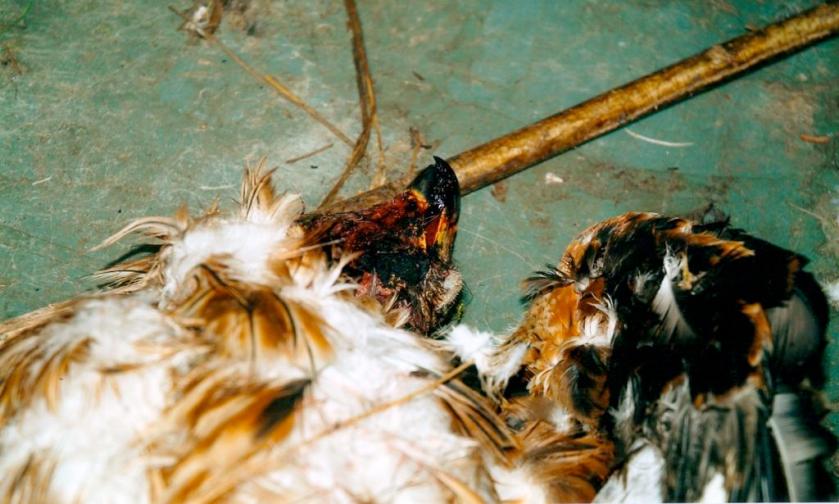
  • A dead red kite in the back of a gamekeeper’s vehicle. It had two broken legs and had died as a result of a blow to the head (see photo).
  • The remains of a further two dead red kites.
  • A red kite’s severed leg, along with wing tags that had been fitted to a sateliite-tracked red kite, hidden in holes covered with moss.
  • Six illegal baited spring traps set in the open.
  • A trapped hen harrier caught in an illegally set spring trap.
  • A poisoned bait.
  • Four leg rings previously fitted to golden eagle chicks found in the possession of a gamekeeper.

In May 2011, gamekeeper James Rolfe was convicted for possession of the dead red kite found in the back of his vehicle. He was fined £1,500. No charges were brought against anyone for any of the other offences.

If you’re heading to the Moy Game Fair, keep an eye out for ‘missing’ red kites. In May 2011, a satellite-tracked red kite ‘disappeared’ there. In August 2011, another red kite ‘disappeared’ there.

Ironically, representatives from the game-shooting industry will all be there, telling visitors how great their industry is for nature conservation. So much for strong leadership and zero tolerance (see here).

Talking of venue choice……..take a look at this! A government-approved GWCT training course being held at the one and only Glenogil Estate!

The photograph below shows the dead red kite with two broken legs and severe head injuries, lying in the back of a gamekeeper’s vehicle.

Moy kite 2a

3 peregrines shot: 2 dead, 1 severely injured

Three peregrines have been found shot in South Tipperary, Ireland over the last few weeks.

The first, a breeding female, was found shot dead under her church ruin nest site in mid-June.

The second, an adult male, was found injured a few days later near to another nest site close by. This bird is being treated at a rehabilitation centre but it is feared it will not recover well enough to be released.

The third, a breeding male, was found shot dead in July at the nest site where the adult female had been shot dead.

Full details on the BirdWatch Ireland website here.

The photograph shows the adult female found shot dead in June. Photo by Kevin Collins.

Dead_female_Peregrine_Falcon_(Kevin_Collins)_500

A Saga of Sea Eagles: new book published today

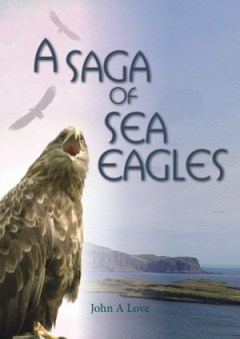
sea_eagle_cover_smallIn January we blogged about a forthcoming new book that tells the inside story of the reintroduction of sea eagles to Scotland. That book, A Saga of Sea Eagles written by John Love has been published today.

John Love’s name will always be synonymous with the reintroduction of white-tailed eagles to Scotland. He was the original Sea Eagle Reintroduction Project Officer back in 1975, living on the Isle of Rum in Western Scotland and releasing a total of 82 Norwegian sea eagles in what was at the time an ambitious and pioneering effort.

He wrote a highly acclaimed book about the project in 1983 (The Return of the Sea Eagle) and he has now updated the story with his latest book, A Saga of Sea Eagles.

So much has happened in the intervening 38 years. A second re-introduction phase took place between 1993-1998 with a further 56 sea eagles reintroduced in Wester Ross, and then more recently a third reintroduction phase began in 2007 with the East Scotland Reintroduction Project, the same year as the Irish Reintroduction Project began. Sea eagles are now firmly back where they belong, although unbelievably the persecution that originally wiped them out from these isles about 100 years ago is still a threat (cf the alleged felling of a sea eagle nest tree in Angus this year – see here) and still limits their potential spread to other parts of their former range.

A Saga of Sea Eagles  is published today as a 224-page softback, priced at £19.99. Full details available on the publisher’s website here.

This is the same publisher (Whittles Publishing) that produced A Life of Ospreys  by Roy Dennis in 2008, Kestrels for Company  by Gordon Riddle in 2011 and Wildlife Crime: The Making of an Investigations Officer  by Dave Dick in 2012.