In August this year, over 300 blog readers emailed Environment Minister Dr Aileen McLeod in response to the news that Langholm hen harrier ‘Annie’ had been found shot dead on a Scottish grouse moor (see here). Well done to all of you who took the time to write.
The Minister issued a press statement within a few hours. The response time was impressive, the content wasn’t (see here).
Now a month later, the Minister has been responding to the individual emails that she received (well, one of her civil servants has been responding on her behalf). We’ve been sent a number of these responses and they’re all identical. Here’s what the response says:
Thank you for your letter of 11 August 2015 to the Minister for Environment, Climate Change and Land Reform, Dr Aileen McLeod. I have been asked to respond on her behalf. Please accept my apologies for the delayed response.
Let me reassure you that the Scottish Government has been and remains committed to tackling wildlife crime. Since 2007 we have built a strong and broad-based Partnership for Action against Wildlife Crime in Scotland (PAW Scotland) involving conservationists, land managers and law enforcement.
We also have a group dedicated to tackling raptor persecution – the PAW Scotland Raptor Group – which is made up of representatives from law enforcement and government agencies, RSPB, Scottish Raptor Study Groups, Scottish Land & Estates, Scottish Gamekeepers Association, British Association for Shooting and Conservation, Game & Wildlife Conservation Trust and the Cairngorms National Park Authority.
We have pursued a number of initiatives since 2007, including for example
- the first restrictions on the use of General licences by those convicted of wildlife crimes
- tightening up of law relating to trapping and snaring, including the introduction of training and registration requirements for operators
- new provisions in the Wildlife and Countryside Act relating to the protection of the nests of birds such as white-tailed eagles and protection against harassment for birds such hen harrier
- the introduction of vicarious liability provisions for offences related to wild birds
Some of these initiatives were ground-breaking in the UK and have now also been adopted by England and Wales.
There are also a number of pieces of current work which are underway, which I will take this opportunity to update you on.
Pesticides Disposal Scheme – this Scottish Government funded scheme ran from 23 February to 29 May 2015. The scheme has removed over 720kg of highly dangerous toxic chemicals from Scotland’s environment and ensured they cannot be used to poison wild birds. Details about what was removed from Scotland’s environment were published on 9 September. There remains no good reason for people to retain these substances.
Wildlife Crime Penalties Review – this review has taken a comprehensive look at whether the penalties available to the courts in wildlife crime cases are adequate and appropriate. The review has been submitted to Ministers and will be published shortly.
Further restriction of General Licences – this new procedure which has been recently introduced will see restrictions being imposed on the use of general licences over land where it is believed the wildlife crime has taken place. A number of cases have been under consideration and I expect further news to be made public imminently. SNH will publish details of imposed restrictions when it is appropriate to do so.
Law enforcement obviously has a key role to play. Since being established, Police Scotland has ensured that there is a wildlife crime liaison officer (WCLO) in each police division and has also already delivered and made significant commitment to ongoing training not only for existing WCOs, but also to other officers force wide. Police Scotland aim to bring a consistent and professional approach to wildlife crime investigations, including the use of modern forensic techniques.
The Crown Office and Procurator Fiscal Service has a dedicated Wildlife and Environmental Crime Unit with four specialist Procurators Fiscal who have developed an extensive knowledge in this area, and have now secured the first prosecution in relation to vicarious liability. There has also been the first custodial sentence for a gamekeeper found guilty of killing wild birds.
The Scottish Government has previously stated that it would be prepared to consider the licensing of shooting businesses to further regulate this sector, however it is important that we are able to assess the impact of the measures that have been recently implemented, or are still to be fully implemented, before consideration is given to the introduction of any further regulatory measures. We do not consider it is appropriate to react to every instance of criminal activity with further changes to the law. Scotland already has some of the strongest laws to deal with wildlife crime. Appropriate action by the law enforcement agencies is the correct response to wildlife crime, as with any other criminal activity.
I hope that this response demonstrates the breadth of work that is ongoing in this area.
Yours faithfully,
Karen Hunter
Wildlife Crime Policy Officer
END
As you can see, it’s full of the usual guff about ‘commitment’ and ‘partnership-working’ yada yada. But there are a couple of things that particularly interested us –
First:
“We have pursued a number of initiatives since 2007, including for example
- the first restrictions on the use of General licences by those convicted of wildlife crimes
- tightening up of law relating to trapping and snaring, including the introduction of training and registration requirements for operators
- new provisions in the Wildlife and Countryside Act relating to the protection of the nests of birds such as white-tailed eagles and protection against harassment for birds such hen harrier
- the introduction of vicarious liability provisions for offences related to wild birds
Some of these initiatives were ground-breaking in the UK and have now also been adopted by England and Wales“.
Hmm. As far as we’re aware, only one of these “ground-breaking initiatives” has been adopted elsewhere, not “some of them”. The one that has been adopted is the restriction on the use of General Licences by those convicted of wildlife crimes. Although this can hardly be called a “ground-breaking initiative” when the person who is no longer permitted to use a General Licence on account of a relevant conviction can simply apply to the statutory agency (SNH or Natural England) for an individual licence to enable them to continue their trapping and killing activities as if they hadn’t been convicted at all!
The introduction of training and registration requirements for snare operators has not “also been adopted by England and Wales“. And how’s that going in Scotland, by the way? Ooops, looks like Police Scotland has cocked up big time by issuing duplicate tag numbers to 60 individuals, due to ‘an administrative error’ – see here. Brilliant.
The new provisions of the WCA relating to extra protection for white-tailed eagles and hen harriers has not “also been adopted by England and Wales” because the enabling legislation is Scotland-specific (see here).
The introduction of vicarious liability provisions for offences related to wild birds has not “also been adopted by England and Wales“. Indeed, the Westminster Government has thus far refused to consider it as a serious option (see here and here).
 The other statement in the Minister’s response that interests us greatly is this:
“The Scottish Government has previously stated that it would be prepared to consider the licensing of shooting businesses to further regulate this sector, however it is important that we are able to assess the impact of the measures that have been recently implemented, or are still to be fully implemented, before consideration is given to the introduction of any further regulatory measures. We do not consider it is appropriate to react to every instance of criminal activity with further changes to the law“.
In our opinion, the last sentence indicates that the Minister has completely missed the point. Nobody is asking, or expecting, further changes to the law in response to every instance of criminal activity. That would be ludicrous. The point that we, and everyone else who sends her emails is making, is that every criminal raptor persecution incident is yet further evidence that the current measures are clearly not working!
Since the latest ‘new measures’ were first announced by former Environment Minister Paul Wheelhouse in July 2013 (see here), many of which are still to be implemented over two years later, we have seen a continuous number of reported crimes (which undoubtedly will be the very tip of a very large iceberg). Here are some of them, all detailed on this blog, and we expect there to be many more that haven’t yet made it in to the public domain:
June 2013: Shot buzzard found close to a grouse moor in the Borders, later revealed to have also been poisoned.
July 2013: Buzzard shot in the throat in North Ayrshire.
August 2013: Red kite found shot close to a grouse moor in Leadhills.
September 2013: Poisoned buzzard found in Stirlingshire.
October 2013: Langholm hen harrier ‘Blue’ disappears.
October 2013: Half-made raptor trap discovered on a sporting estate in Angus.
December 2013: Buzzard died of ‘unnatural causes’ close to a grouse moor ‘near Tomatin’ [we now know it had been shot].
December 2013: Golden eagle ‘Fearnan’ found poisoned on Angus grouse moor.
January 2014: Man reported for hen harrier death in Aberdeenshire.
January 2014: Dead bird (species unknown) & suspected poisoned bait found in South Lanarkshire.
February 2014: Poisoned peregrine found close to a grouse moor in Leadhills.
March 2014: 22 poisoned raptors (16 red kites + 6 buzzards) found on farmland in Ross-shire.
April 2014: Man arrested for alleged attempted raptor trapping in Aberdeenshire.
April 2014: ‘Illegally-killed’ peregrine found near Stirling [we now know it had been shot].
April 2014: East Scotland sea eagle chick ‘disappears’ on Aberdeenshire grouse moor.
April 2014: Gamekeeper charged with allegedly bludgeoning & stamping on buzzard on a sporting estate in Dumfriesshire.
April 2014: Poisoned buzzard found in Fife.
May 2014: Masked gunmen caught on camera shooting at active goshawk nest in Cairngorms National Park.
June 2014: Allegations emerge of ‘coordinated hunt & shooting’ of a hen harrier on a grouse moor in Aberdeenshire last year.
June 2014: Hen harrier died on a grouse moor near Muirkirk “as result of criminal act”. We later discover it had been shot.
June 2014: Red kite found on railway line, shot in the head.
July 2014: Red kite found poisoned on a grouse moor in Stirlingshire.
September 2014: Red kite found poisoned on a grouse moor in Morayshire.
November 2014: Buzzard fatally injured after being shot & stamped on in the Borders.
December 2014: Tawny owl shot dead in East Lothian.
February 2015: Peregrine found poisoned on a grouse moor in Stirlingshire.
March 2015: Kitten found poisoned (Carbofuran) close to a grouse moor in the Borders.
March 2015: Hen Harrier ‘Annie’ found shot dead on a South Lanarkshire grouse moor.
May 2015: Red kite fatally injured after caught in illegal spring trap on a grouse moor in Stirlingshire.
July 2015: Buzzard fatally injured after found shot close to a grouse moor in the Borders.
August 2015: Buzzard shot dead in Loch Lomond & the Trossachs National Park.
August 2015: Red kite fatally injured close to a grouse moor ‘near Tomatin’ – cause of death “not due to natural causes”. [Was probably shot].
The Minister points to two recent notable successes – the vicarious liability conviction and the custodial sentence given to a raptor-killing gamekeeper. They were indeed huge results and were warmly welcomed at the time. However, they are still the exceptions to the rule and we have since seen a number of convictions this year that have resulted in the usual derisory sentences (e.g. Michael Johnston fined £400 for possession of banned poison Strychnine; Gamekeeper James O’Reilly given a 240 hours Community Payback Order for four offences including the use of a banned gin trap; Poultry farmer Michael Harrison fined £600 for shooting and stamping on a buzzard; Gamekeeper William Dick fined £2,000 for bludgeoning and stamping on a buzzard). We have only seen one vicarious liability conviction in three and half years since the new legislation was enacted.
We keep being told that ‘we need more time to assess the impact of the new measures’. Why do we? Isn’t it bleedin’ obvious that raptor persecution is continuing despite all the so-called partnership-working, new measures and deterrents? The Minister may well be irritated that her inbox gets bombarded after each raptor crime but she can expect more of the same each and every time we hear of yet another crime. And there will be more, mark our words.
She should also know that if and when she decides to make a stand with something forceful and tangible, she’ll be deluged with emails of appreciation and support.

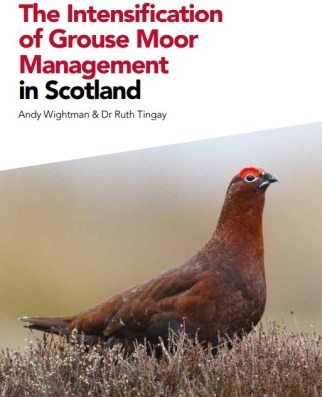 A new report has been published today entitled The Intensification of Grouse Moor Management in Scotland.
 Criminal proceedings continued yesterday against Scottish gamekeeper William Curr of Glenogil Estate in the Angus Glens.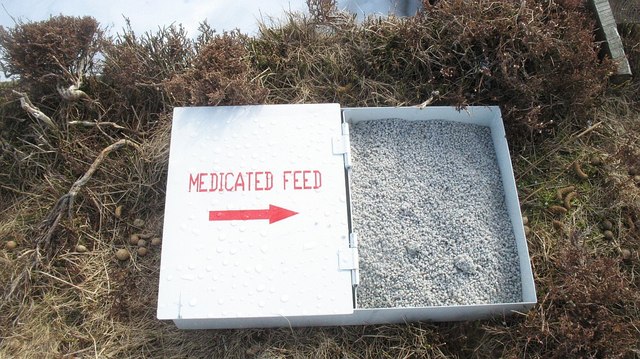
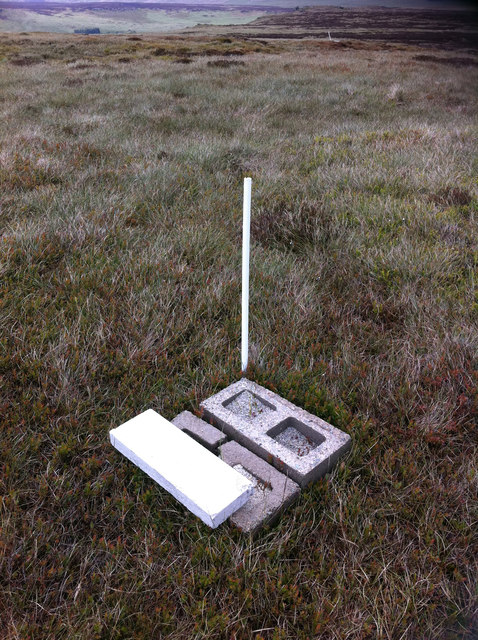

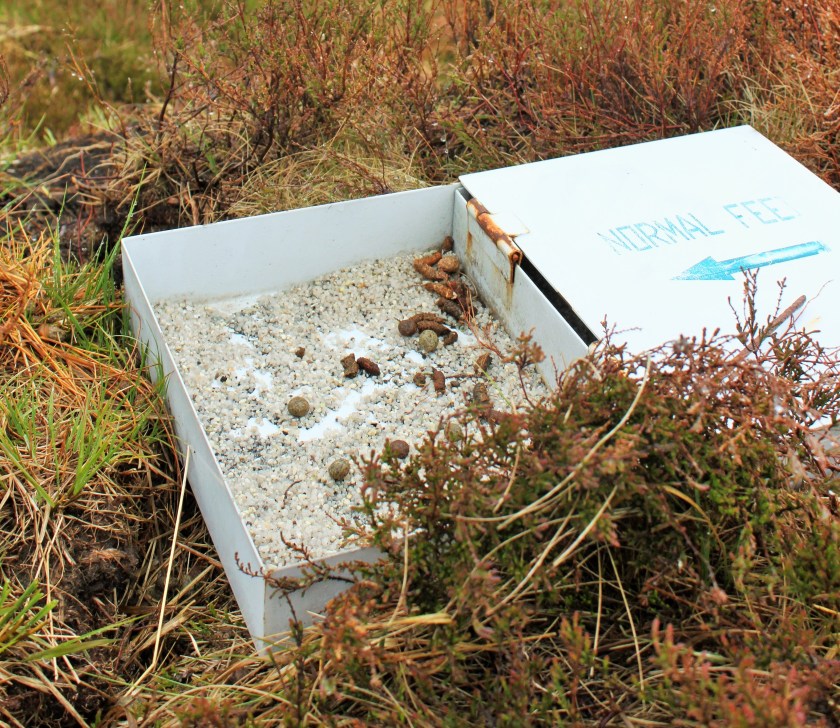
 We were fascinated by the idea of gamebirds being sent to “abattoirs” to be gutted and cleaned. We’d never heard of that, although we did know that some gamebirds are sent to game processing plants to be plucked etc. One such plant is Yorkshire Game, which we also knew processed red grouse. So another FoI was sent to the VMD to ask for a list of all “abattoirs” and processing facilities they had visited in the last five years to sample pheasant and partridge, as we were keen to see whether Yorkshire Game appeared on their list. Surely, if we, as ordinary members of the public, knew that Yorkshire Game processed red grouse, then the specialist team from the VMD would also know that….it’s kind of their job to know! We also asked why, if the legislation states that samples must be taken at the primary production point (“on farms or at abattoirs”) no samples had been taken at any red grouse ‘farms’ (grouse moors)?
 Yesterday the Scottish Government published its latest report on wildlife crime: ‘Wildlife Crime in Scotland: 2014 annual report’ (see
  We love it when the grouse shooting community produces its propaganda pieces to spoon-feed to the (sym)pathetic right wing elements of the national press. It’s usually a masterclass in foot-shooting and provides us with ample material for a good laugh.