Blog

Scottish gamekeeper fined £2000 for killing buzzard

A Scottish gamekeeper who was recently convicted of killing a buzzard has been sentenced this morning.

William (Billy) Dick, 25, was convicted on 4th August 2015 of illegally killing the buzzard on the Newlands Estate in Dumfriesshire (see here). Two witnesses, alerted to the scene by the sound of gunshot, had observed him throwing rocks at a buzzard which was flailing on the ground, and then they observed him repeatedly stamping on the bird. They observed Dick wrapping something inside a coat and placing it inside his vehicle and then driving away. The carcass was never recovered but a dead hare, feathers and a blood-stained rock were found at the scene. DNA evidence from the feathers confirmed they came from a buzzard.

At Dumfries Sheriff Court this morning the sheriff told Dick that he believed Dick had killed the buzzard “to further the interests of your employer“.

Dick was fined £1,500 for killing the buzzard and a further £500 for possession of the dead buzzard.

Dick’s firearms certificate had been revoked but we understand this is being appealed tomorrow.

So, a £2,000 fine for offences that merit a maximum £5,000 fine and/or a six month custodial sentence. Had Dick pleaded not guilty this fine would have been even smaller (a reward for an early plea). It’s about time the Scottish Government published its commissioned report on wildlife crime penalties, which is already nine months overdue.

Well done to the SSPCA and Police Scotland for an effective investigation and congratulations to Procurator Fiscal Kate Fleming for a successful prosecution. Particularly well done to the two witnesses who reported their observations and were prepared to testify in court.

There is an on-going vicarious liability case relating to this crime (see here) and it’ll be interesting to see what happens in light of the sheriff’s comments in court this morning.

When we blogged about Dick’s conviction in August we asked the SGA whether Dick was one of their members. They refused to answer at the time, saying it would be inappropriate to comment until the case had concluded. Well, now it has concluded so let’s ask them again.

Emails to SGA: info@scottishgamekeepers.co.uk

Dear SGA, Is/was convicted gamekeeper William (Billy) Dick one of your members?

We also asked Scottish Land & Estates whether the Newlands Estate was one of their members. They didn’t respond. Let’s ask them again: info@scottishlandandestates.co.uk

Dear SLE, Is/was the Newlands Estate one of your members?

UPDATE 12.30hrs: COPFS press release here, with disturbing details of Dick’s actions.

UPDATE 13.30hrs: RSPB statement here

UPDATE 13.35hrs: BBC news article here, which indicates Dick may appeal his conviction. There’s also a quote from the SGA, once again refusing to comment on the membership status of Dick “until the legal process has concluded”. Why so coy?

UPDATE 18.50hrs: Turns out the Newlands Estate is a member of Scottish Land & Estates and the Wildlife Estates Scotland initiative – see here for blog post

SSPCA consultation: get your act together, Scottish Government

sspca logoOne year ago today saw the closure of the Scottish Government’s public consultation on increasing the SSPCA’s investigatory powers in relation to wildlife crime investigations, and particularly in relation to raptor persecution.

We’ve been told, repeatedly, by successive Environment Ministers that tackling raptor persecution is a Scottish Government “key priority”. It’s now been four and a half years since the notion of a public consultation on increasing the SSPCA’s powers was first mooted. Four and a half years of dragging the Government kicking and screaming towards what should be an obvious and easy next step in the fight against the raptor killers. And yet, four and a half years on, still we wait for a decision.

Here’s how the Scottish Government has handled this particular ‘key priority’ –

February 2011: Increased powers for the SSPCA was first suggested by former MSP Peter Peacock as an amendment during the WANE Bill debates. The then Environment Minister Roseanna Cunningham rejected it as an amendment but suggested a public consultation was in order.

September 2011: Seven months later MSP Elaine Murray lodged a parliamentary motion that further powers for the SSPCA should be considered.

November 2011: Elaine Murray MSP formalised the question in a P&Q session and the next Environment Minister, Stewart Stevenson MSP, then promised that the consultation would happen ‘in the first half of 2012’.

September 2012: Nine months later and nothing had happened so we asked Paul Wheelhouse MSP, as the new Environment Minister, when the consultation would take place. The response, in October 2012, was:

The consultation has been delayed by resource pressures but will be brought forward in the near future”.

July 2013: Ten months later and still no sign so we asked the Environment Minister (still Wheelhouse) again. In August 2013, this was the response:

We regret that resource pressures did further delay the public consultation on the extension of SSPCA powers. However, I can confirm that the consultation document will be published later this year”.

September 2013: At a meeting of the PAW Executive Group, Wheelhouse said this:

The consultation on new powers for the SSPCA will be published in October 2013“.

January 2014: In response to one of our blog readers who wrote to the Minister (still Wheelhouse) to ask why the consultation had not yet been published:

We very much regret that resource pressures have caused further delays to the consultation to gain views on the extension of SSPCA powers. It will be published in the near future“.

31 March 2014: Public consultation launched.

1 September 2014: Consultation closed.

22 January 2015: Analysis of consultation responses published by Scottish Government. 233 responses (although 7,256 responses if online petition included – see here).

We were told a decision would come from the new Environment Minister, Dr Aileen Mcleod MSP, “in due course”.

1 September 2015: One year after the consultation closed  and we’re still waiting…

END

It’s interesting to compare the way the Government has handled the SSPCA consultation with their public consultation on Land Reform. Here’s the timeline for that one:

November 2014: First Minister Nicola Sturgeon announces her intention to introduce a Land Reform Bill to the Scottish Parliament in 2015.

2 December 2014: Public consultation on Land Reform launched.

10 February 2015: Consultation closed.

15 May 2015: Analysis of consultation responses published by Scottish Government. Over 1269 responses.

22 June 2015: Publication of the Land Reform (Scotland) Bill.

So in a little over six months the Government was able to launch a public consultation, analyse the results and produce draft legislation in the form of the Land Reform Bill. That’s quite impressive, isn’t it?

Who still thinks that tackling raptor persecution is a ‘key priority’ for the Scottish Government?

Who would like to know when we might expect a decision on whether the SSPCA will receive increased investigatory powers? Emails to Environment Minister Dr Aileen McLeod: ministerforenvironment@scotland.gsi.gov.uk

Two Red kites poisoned & shot in Highlands: get your act together, Police Scotland

RK Cawdor poisoned 2014RSPB Scotland has issued a press release about the discovery of two illegally killed red kites in the Highlands. One was found shot on a railway line and the other one was found poisoned on Cawdor Estate (see photo).

The press release is interesting (read it here) but what’s more interesting is what is revealed by reading in between the lines.

Both birds were discovered in 2014. The shot red kite was found near Beauly in June 2014 (probably this one we blogged about in October 2014) and the poisoned red kite was found in September 2014.

The RSPB statement says, “Both of these incidents took place in 2014 and are now being made public as the Police have concluded their enquiries”.

So it takes Police Scotland over a year to disclose an illegally shot red kite and almost a year to disclose an illegally poisoned red kite. They’ve now ‘concluded their enquiries’ without appealing for information from the public and without executing a search under warrant on Cawdor Estate. What exactly did their ‘enquiries’ entail? Sitting around a table, scratching their heads, before deciding to keep both crimes under wraps?

Of course, an investigation in to the circumstances of the shot red kite would be a hide in to nothing – the bird was most probably shot elsewhere and dumped on the railway line to make it look like it had collided with a train. That’s a very difficult crime to detect, although had the Police made an appeal for information at the time the bird was found, there was always a slim chance that someone might have seen something. But no, far easier just to keep quiet and not attract any more embarrassing media coverage so soon after the mass poisoning of 22 kites and buzzards at nearby Conon Bridge (which is still undetected….more on that soon).

However, the ‘investigation’ in to the circumstances of the poisoned red kite that was found on Cawdor Estate just beggars belief. Cawdor Estate is well known as it has been at the centre of alleged wildlife crimes for over two decades. Here are just some of the incidents recorded either on the estate or close to the estate (for which nobody has ever been prosecuted) –

1992: Dead buzzard, magpie and sheep (laced with Strychnine)

1993:  Dead buzzard (poisoned with Alphachloralose) found on Forestry Commission land 100 metres from the boundary of Cawdor Estate.

1994: Three dead buzzards (poisoned with Alphachloralose) and a poisoned rabbit bait

1996: Three poisoned baits found: a hare laced with Alphachloralose, a goat laced with Aldicarb and a widgeon laced with Strychnine.

1996: A hidden pit containing a suspected bird of prey poisoning kit uncovered by investigators three miles from the estate.

1999: A report sent to the Procurator Fiscal alleging that mountain hares were illegally persecuted in snares on the estate.

2000: A second report submitted to the Fiscal claiming mistreatment of hares on the estate.

2001: A dead golden eagle (poisoned with Carbofuran)

2004: A number of illegal gin traps found set around rabbit baits

2004: A dead buzzard (poisoned with Carbofuran)

2005: A dead red kite (poisoned with Carbofuran)

2007: A dead red kite (poisoned with Carbofuran)

2010: Two red kites found poisoned on neighbouring ground close to estate boundary

With a record like this, wouldn’t you expect Police Scotland, on discovery of the latest poisoned red kite, to request a search warrant and head straight for the estate? Wouldn’t that be a logical first step? Why didn’t that happen?

Did the Police actually talk to anybody on Cawdor Estate about this poisoned kite? If you read a quote attributed to Alex Hogg of the SGA (on the BBC news website here), you’d think not. Hogg says:

“This is the first we have heard of any such incidents….”.

Really? Cawdor Estate has very close links to the SGA. Cawdor’s former Head Gamekeeper and later Sporting Manager Roddy Forbes was the inaugural Chairman of the SGA. And further, the SGA’s 2010 Young Gamekeeper of the Year was an employee on Cawdor Estate. That’s indicative of pretty close ties between the estate and the SGA, and yet the SGA claim not to have heard about this crime?

As an aside, Hogg is further quoted: “….We do not know the possible causes [of the birds’ deaths] which makes it difficult to comment further”.

Eh? The causes of death have been established. One kite was shot, the other was poisoned. Why is it ‘difficult to comment further’? A little bit too embarrassing, Alex?

A Police Scotland spokesperson is also quoted in the BBC article:

“Investigating wildlife crime is challenging because of its nature, and the vast areas covered. Police Scotland works closely with partners including the RSPB to tackle wildlife crime, and brings to bear the full range of investigative techniques at its disposal. Our detection rate is increasing. Our aim is to reduce wildlife crime and earlier this year we launched a campaign raising awareness”.

Yes, of course investigating wildlife crime is challenging, nobody disputes that. But sitting on enquiries, hiding them from the public, and not undertaking searches on estates where poisoned birds are discovered is not ‘bringing to bear the full range of investigative techniques’ at their disposal. It’s anything but that.

And what’s this about ‘our detection rate is increasing’? Are there any data to support this claim or are we supposed to just accept the word of a police force under increasing pressure to get its act together?

So what now for Cawdor Estate, almost one year on from the discovery of this poisoned kite? Might it be too much to hope that SNH will issue a General Licence restriction order? Guess we’ll have to wait and see, although that might be a bit embarrassing for SNH given that they have chucked thousands of pounds (of our money!) at Cawdor Estate to help fund their ranger service.

Vicarious liability prosecution: Andrew Walter Bryce Duncan

A prosecution is underway against Andrew Walter Bryce Duncan, who is alleged to be vicariously liable for the criminal actions of gamekeeper William (Billy) Dick, who was recently convicted of killing a buzzard in April 2014 (see here).

Duncan, 71, of Kirkton, Dumfriesshire, is understood to manage the pheasant shoot on the Newlands Estate where Dick committed his crimes. Dick is due to be sentenced in September.

At a hearing in Dumfries Sheriff Court on Tuesday 18th August 2015, a trial date was set for Duncan (23rd November 2015) with an intermediate diet due to be heard on 20th October 2015.

Great to see the Crown Office pursuing this prosecution. We’ll follow proceedings with interest.

Vicarious liability in relation to the persecution of raptors in Scotland (where one person may potentially be legally responsible for the criminal actions of another person) came in to force on 1st January 2012. To date there has only been one conviction – landowner Ninian Robert Hathorn Johnston Stewart was convicted in December 2014 of being vicariously liable for the criminal actions of Glasserton & Physgill Estates gamekeeper Peter Bell (see here).

Buzzard shot & fatally injured in Borders

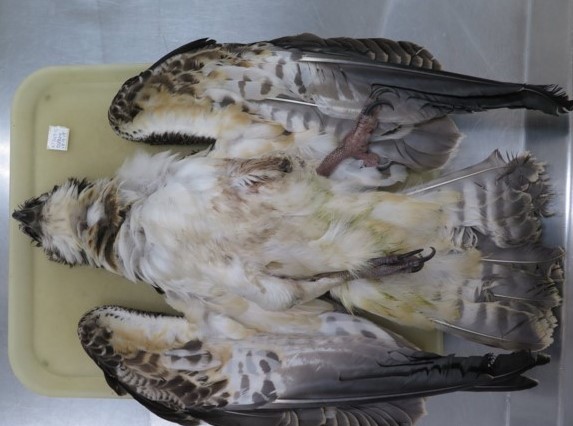
buzzard 3A buzzard that was found badly injured in the Borders in July had been hit by shotgun pellets in its head and wing. Its injuries were so severe the bird had to be euthanised.

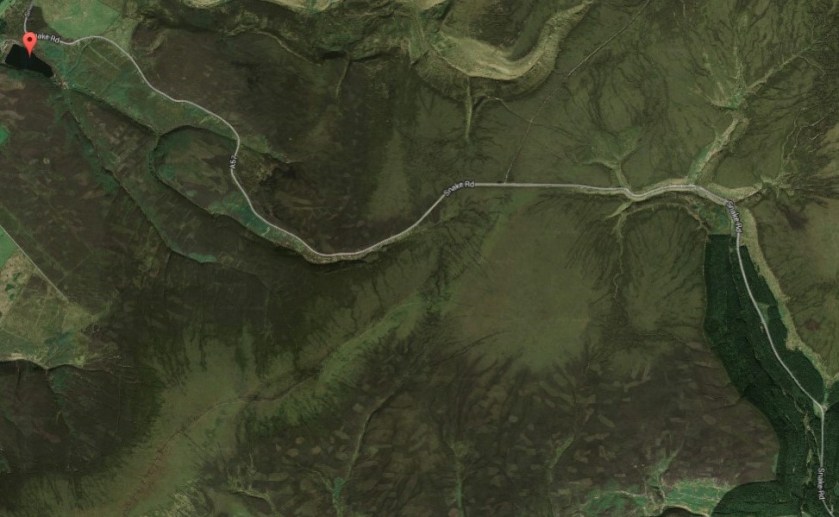
The bird was found by a member of the public on 24th July by the side of the road between Heriot and Innerleithen. This is driven grouse moor country and the area has a long history of raptor persecution – if you’re unfamiliar with the region, check out google maps.

The SSPCA is appealing for information.

SSPCA press statement here

BBC News article here

Environment Minister Dr Aileen McLeod has made the following statement:

The illegal persecution of birds of prey is always unacceptable, but this case – with the pain and suffering caused to the buzzard – is particularly abhorrent. Anyone with information on this incident should contact the relevant authorities as soon as possible.

 “I am resolute in my determination to do all I can to put a stop to crimes such as this, with the Scottish Government working with law enforcement and others through the Partnership Against Wildlife Crime in Scotland (PAWS). I expect all right-minded people involved in the countryside, including with shooting, to support our efforts.

 “The Scottish Government has already put in place new and strengthened measures to crack down on wildlife crime, including vicarious liability prosecutions and general licence restrictions, for example. But let me be absolutely clear – I will consider taking further action if necessary and the licencing of shooting businesses in Scotland remains an option.

How many more times are we going to hear this now seemingly empty threat about ‘taking further action if necessary’? What does ‘if necessary‘ actually mean if it doesn’t mean that this latest incident is worthy of further action? Each time we’re told about another raptor that has been illegally killed we ask the Government when further action will be taken. Each time, we’re fobbed off with this line: “I will consider taking further action if necessary“. In the last few days alone we’ve learned of a shot hen harrier and two shot buzzards. Are none of these crimes worthy of ‘taking further action’?

Don’t know about you but we’d be really interested to find out exactly how Dr McLeod defines ‘if necessary‘. Does she have a target number of raptor killings in mind that will trigger further action? If so, what is that figure? Let’s ask her. Emails to: ministerforenvironment@scotland.gsi.gov.uk

More wildlife crime police officers for Scotland

Police Scotland logoPolice Scotland has announced that more than 100 police officers will receive specialist training to tackle wildlife crime (see here).

The officers will attend a ‘new advanced training course’ next month which will result in the 100+ officers taking up Wildlife Crime Liaison Officer posts across all 14 Force divisions.

It’s not clear whether these positions will be full-time or part-time, but either way, it is a very welcome move.

In February, two reports published by Scottish Environment LINK highlighted the problem of wildlife crime enforcement in Scotland and one of the issues raised was a lack of trained police officers, resulting in as many as up to one third of reported wildlife crimes remaining un-investigated (see here and here).

Now, in addition to these extra trained police officers, what about an increase in investigatory powers for the SSPCA….still waiting for a decision almost one year after the public consultation ended.

Henry the Hen Harrier: video mash up

CLICK HERE FOR A VIDEO MASH UP OF HENRY’S TOUR: https://www.youtube.com/watch?v=qSc2faNGdJo&feature=youtu.be

IMG_5598 (2)

High risk plan to boost golden eagle population in southern Scotland

Peebles August 2007There’s an article on the BBC News website today about a proposal to take golden eagle chicks from the Highlands and release them in southern Scotland in an attempt to boost the tiny, depleted population currently clinging on by its talons (BBC report here).

The timing of this news is suspicious, especially when you learn that the project hasn’t yet been formally approved and thus may or may not happen. The cynical amongst us might view it as yet another piece of spin aimed at portraying the grouse-shooting industry in a favourable light so close to the start of the Inglorious 12th, especially when you see who is involved with the project – more on that later.

There’s no doubt that the southern Scotland golden eagle population is in serious trouble, and has been for many years. We’ve blogged about this previously (here, here). On the face of it then, any attempt to increase the population to its former status should be welcome news. But…..

A basic tenet of any restocking / translocation / restoration / reinforcement / reintroduction (whatever they choose to call this project) is that there should be strong evidence that the threat(s) that caused any previous decline has been identified and removed or sufficiently reduced. This is a standard guideline issued by the IUCN and is part of the criteria used to assess whether such projects can proceed.

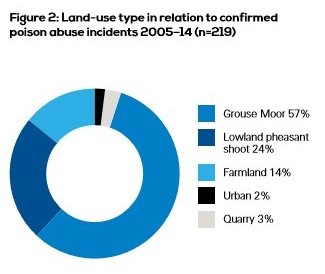
One of the biggest constraints on golden eagle population recovery in southern Scotland is persecution. Raptor persecution in southern Scotland has definitely not been removed, nor sufficiently reduced. In the last ten years alone there have been more than 150 confirmed persecution incidents (that figure doesn’t include the ‘probable’ or ‘possible’ cases, nor those that went undiscovered). Just three days ago we were given a sharp reminder of just how current this problem still is when it was announced that a young hen harrier had been found shot dead on a grouse moor in South Lanarkshire (see here). The 2014 SNH-commissioned report on the status of golden eagles in southern Scotland also identified several areas where persecution is an ongoing concern, including the Lowther Hills, the Lammermuirs and the Moorfoots (all driven grouse moor areas – what a surprise), and stated that persecution needed to be brought under control in those regions if golden eagles were to thrive in southern Scotland once again (see SNH report here).

Environment Minister Dr Aileen McLeod acknowledges the persecution issue and in an earlier version of the BBC article this morning she said she will “work hard” to ensure the project is a success. In the latest version of the article, this has been updated with her saying that the persecution of raptors would “not be tolerated under any circumstances“. We’re sure she has good intentions but to be frank, this is just more rhetoric. She (and her predecessors) has been unable to bring persecution under control in other parts of the golden eagle’s range (notably the driven grouse moor regions of central and eastern Scotland – see report here from 2011 and report here from 2014) so why should we think she’ll be able to bring it under control in southern Scotland without bringing in new sanctions?

Having said all that, other high risk projects of a similar nature have been very successful on the whole (think reintroduction of red kites and white-tailed eagles). It’s also abundantly clear that if we wait for the southern Scotland golden eagle population to rebound of its own accord (by natural recruitment of individuals from the more northerly populations) then we’re likely to see the demise of the southern Scotland golden eagle population within a few years. It’s a definite trade off situation.

The one big thing in the project’s favour is that, if it does go ahead, it is likely to be a high profile project. There will be plenty of public interest and, assuming the released birds will be satellite-tracked (and their movements made publicly available and not kept secret), the unlawful killing or ‘mysterious disappearance’ of any of those birds will cause public uproar. This will put a lot of pressure on landowners and their gamekeepers to behave themselves and leave those eagles alone. If they don’t, it may well be the final nail in the coffin for their industry. There have been two very high profile killings of golden eagles in southern Scotland in recent years: an adult female was poisoned in 2007 (see here) and an adult male was shot in 2012 (see here). Ironically, that shot golden eagle was found on Buccleuch Estate, one of the listed project supporters. This is also where hen harrier Annie’s corpse was found.

As well as Buccleuch Estates, another project supporter is Scottish Land and Estates. Their CEO Doug McAdam is quoted as follows in the BBC article:

Landowners value golden eagles, they are one of our most iconic birds and I think people will work hard with us to make this project a success. Often landowners are portrayed as the villain here and against golden eagles and nothing could be further from the truth“.

It’s actually very close to the truth. Yes, there are a handful of landowners who cherish having breeding golden eagles on their land (not least the landowner who provides a home for the one remaining pair in the Borders) but that handful is greatly outnumbered by the vast majority of driven grouse moor owners who employ a zero tolerance policy for golden eagles (and many other raptor species) on their ground. Why else does McAdam think there is a need for conservation intervention to rescue the southern Scotland golden eagle population? How else does McAdam explain the large number of vacant golden eagle territories on grouse moors in central and eastern Scotland? How else can McAdam explain the disproportionate number of satellite-tagged eagles that ‘vanish’ on driven grouse moors? How else does McAdam explain the disproportionate number of poisoned, shot and trapped golden eagles that are found on driven grouse moors?

Let’s hope this restoration project does go ahead and we see an increasingly viable golden eagle population in southern Scotland. We’ll be watching with interest and McAdam and his industry mates can rest assured that if any of those young eagles are illegally killed, we and others will go to town on exposing it to the public.

The image above is of the poisoned golden eagle found underneath her nest tree in the Borders in 2007. Nobody has ever been prosecuted for this.

The image below is of the shot golden eagle found on Buccleuch Estate in 2012. He didn’t survive. Nobody has ever been prosecuted for this.

 Wanlock Head GE Oct 2012

Buzzard found shot dead in Loch Lomond & Trossachs National Park

Police are appealing for information following the discovery of a shot dead buzzard in the Loch Lomond and the Trossachs National Park.

The corpse was discovered by a member of the public about half a kilometre east of Ward’s Cottage, Gartocharn at around 2.15pm on Wednesday 5th August. It was found with a bullet wound in its chest.

Anyone with information is asked to contact the police on 101.

Environment Minister responds to shooting of hen harrier ‘Annie’

Yesterday we blogged about the illegal shooting of Langholm hen harrier ‘Annie’, whose wretched corpse had been found, inevitably, on a Scottish grouse moor in South Lanarkshire (here).

Annie Langholm harrier shot April 2015

We asked blog readers to contact Environment Minister Dr Aileen McLeod to demand further action against the seemingly untouchable raptor killers. The response to that request was overwhelming – many thanks to all of you who took the time to email her and send her tweets. Within a few hours, an official statement was posted on the Scot Gov website: that’s testament to the bombardment of correspondence sent to the Minister: usually it’s met with silence for the maximum 20 working days in which the Gov has to respond.

So what did the Minister have to say? Here’s the statement in full:

Minister comments on bird of prey shooting.

Commenting on the shooting of a satellite tagged hen harrier, Minister for Environment, Climate Change and Land Reform Dr Aileen McLeod said:

“It is extremely disappointing to hear the news that Annie, one of the satellite tagged hen harriers from the Langholm Moor Demonstration Project, has been shot.

“The Scottish Government remains absolutely committed to working with law enforcement and others to bring an end to this outdated criminal activity. I expect all right minded people involved in the countryside, including with shooting, to agree that wildlife crime has no place in a modern Scotland. I would urge anyone with any information on the latest incident to contact Police Scotland as soon as possible.

“We have been taking action, including seeing the first successful vicarious liability prosecution, and the review of penalties will be reporting in the near future. We have committed to an examination of the regulation of the game shooting industry sector elsewhere and have made clear that, though it would be complex and require primary legislation, the licensing of shooting businesses in Scotland remains one of the options that could be adopted.

“The news about Annie is in stark contrast to recent examples of successful PAW Scotland partnership working to actively improve the chances of this magnificent bird which has been in decline in Scotland.”

END

Now, to those who are new to this game, her response might seem satisfactory. For those of us who are not so new to this game, it was anything but. Here’s why…..

Over two years ago (July 2013), the then Environment Minister, Paul Wheelhouse, announced a series of new measures to tackle raptor persecution (see here).

One of those measures was to conduct a review of wildlife crime penalties. Two years on, that review is yet to be completed.

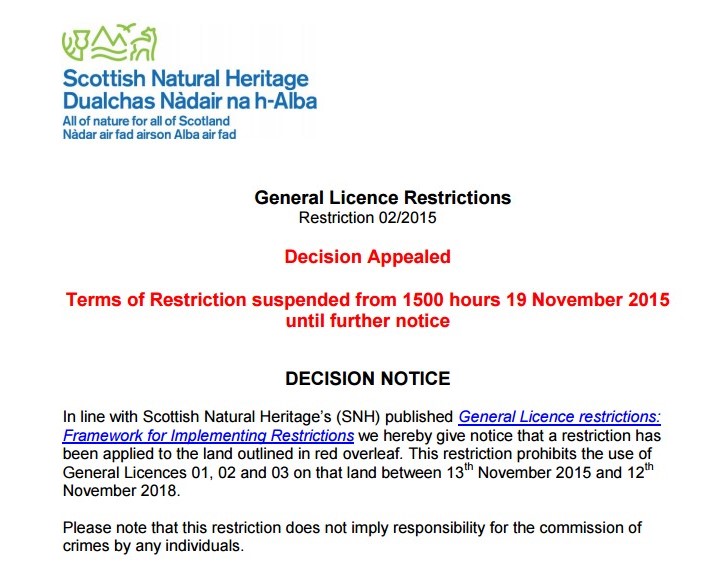
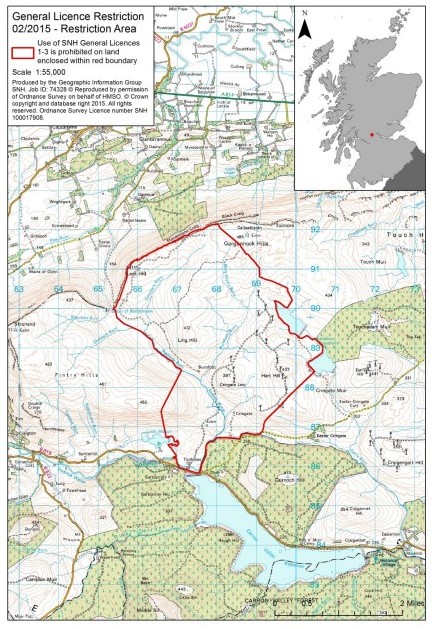
Another measure was to introduce a system of General Licence restriction orders on estates where raptor persecution was suspected (civil burden of proof as opposed to the more difficult-to-achieve criminal burden of proof). Two years on, SNH has yet to announce the implementation of any restriction order, despite there being a number of suitable candidate estates.

Three and a half years ago (1 January 2012), the new law on vicarious liability came in to force. Three and a half years later, there has only been one prosecution (although a second one is due to begin this month – even so, two prosecutions in 3.5 years is hardly impressive).

Four and a half years ago (February 2011), the now former MSP Peter Peacock suggested a public consultation on whether the SSPCA should be given increased investigatory powers. It took just over three years for the Government to actually launch the consultation (March 2014). The consultation closed on 1st September 2014. Almost one year later, we’re still waiting for the Environment Minister to comment, let alone implement any changes.

Meanwhile, the raptor killing continues.

So, sorry, Minister, if we’re not bowled over by your claim that you ‘have been taking action’. Yes, action is being taken, and that is most welcome, but it’s not nearly enough and it’s not being taken nearly fast enough. Yesterday’s news, of yet another illegally persecuted raptor, is clear testimony to that.

You’re the Environment Minister. It’s your job to deal with this issue. If you can’t handle it, then step aside and let someone else have a go.