The Hunt Saboteurs were out for a third day yesterday and stopped a grouse shoot on Barden Moor on the Bolton Abbey Estate.
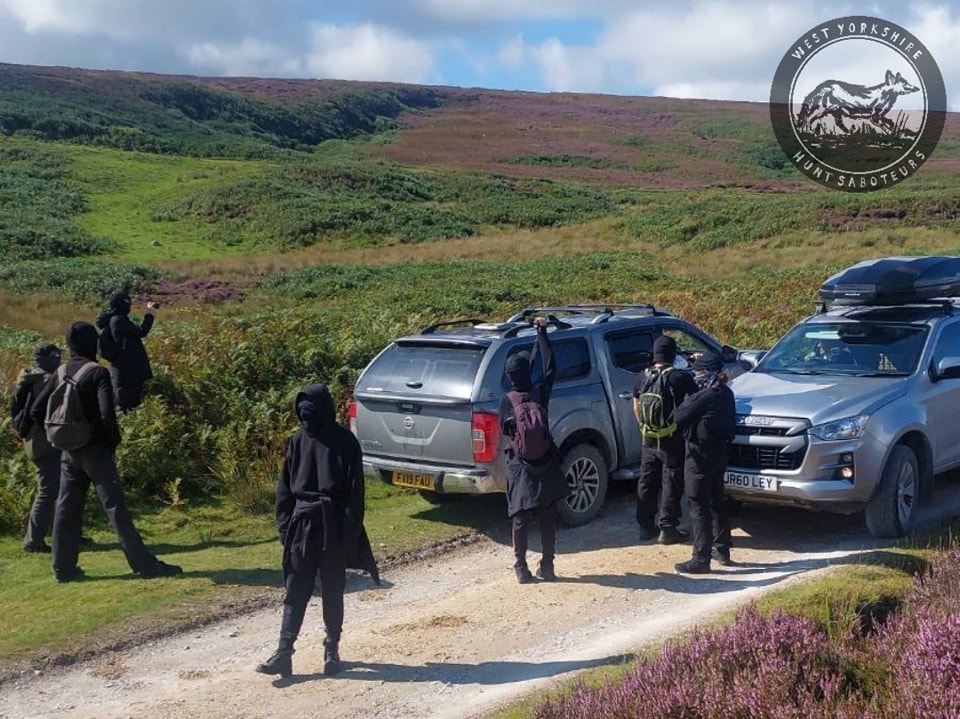
This follows their work stopping grouse shoots on Saturday 12th Aug (here) and Monday 13th (here), all in Yorkshire.

The Hunt Saboteurs were out for a third day yesterday and stopped a grouse shoot on Barden Moor on the Bolton Abbey Estate.
This follows their work stopping grouse shoots on Saturday 12th Aug (here) and Monday 13th (here), all in Yorkshire.
Well this is interesting, and I’d say pretty embarrassing for BASC (British Association for Shooting & Conservation).
Cast your mind back to April 2023 when I blogged (here) about how BASC’s CEO Ian Bell had written to the lead author of a scientific paper that had just been published by Cambridge University researchers, that had found that 94% of pheasants on sale in the UK for human consumption were killed using toxic lead ammunition.
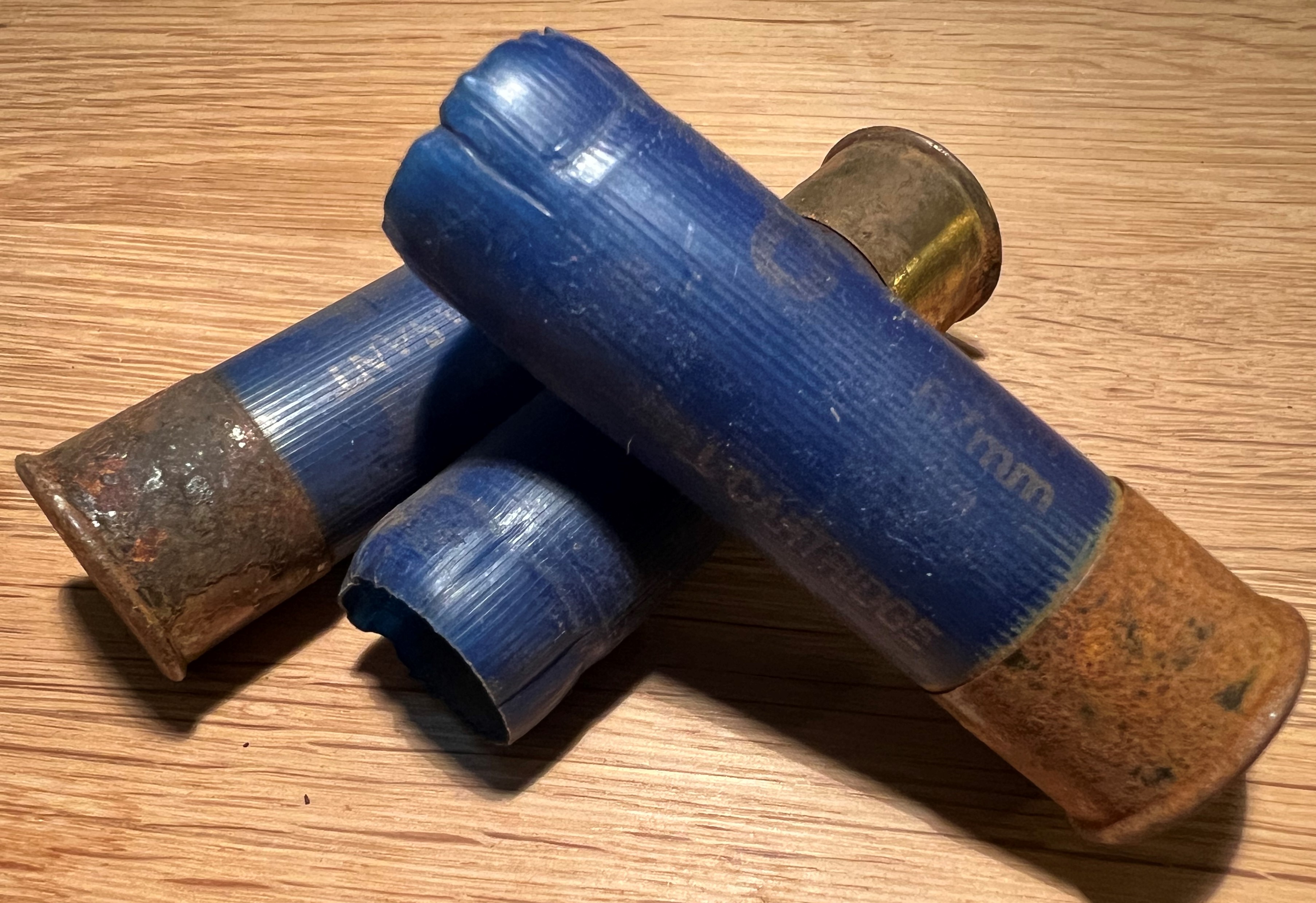
The paper in question was the third scientific paper published by the ‘SHOT-SWITCH‘ group, which was established in 2020 to monitor the shooting industry’s professed voluntary five-year transition from toxic lead to non-lead ammunition in the UK. The paper exposed the shooting industry’s appalling lack of progress on its much-heralded ‘voluntary transition’.
Mr Ian Bell wrote to Professor Rhys Green (Cambridge University) in March 2023 to express his “significant concerns” about the accuracy of the paper’s conclusions.
In addition, another BASC employee, Dr Conor O’Gorman, went further and wrote an unpleasant article published on BASC’s website where he slurred the SHOT-SWITCH research as “pseudoscience“.
You may recall that Professor Green wrote back to Ian Bell in April 2023 and responded, point by point, to BASC’s “significant concerns” and basically blew them all out of the water (no pun intended).
However, there’s since been a further response from Professor Green that’s been published on the SHOT-SWITCH project website (here). It turns out that after responding to Ian Bell, the SHOT-SWITCH team came across some additional research that they hadn’t included in their scientific paper because they’d previously been unaware of its existence.
Guess what that additional research was?
It was a study of what happens when you fire lead shot and steel shot into ballistic gel. The properties of ballistic gel mimic those of game tissue. This study was done by ballistics experts at Cranfield University and it showed that there was no difference between lead and steel in the extent to which they penetrate the gel, even when the gel block was covered by a pheasant skin to assess the effect of feathers/skin in reducing the depth of penetration.
This finding runs counter to the assertion by Ian Bell in his letter to Professor Green about his “significant concerns” that knowledgeable experts thought that steel shot were more likely to pass through pheasants than lead shot, which (he thought) would make the SHOT-SWITCH results wrong.
And guess who commissioned the Cranfield University study?
Yep, it was BASC.
And guess when that BASC-funded study was completed?
3rd August 2021.
That’s 20 months BEFORE Ian Bell wrote to Professor Green in March 2023, contesting the findings of the SHOT-SWITCH study.
Was Ian Bell ignorant of the findings of the BASC-funded study when he wrote to criticise the findings of the SHOT-SWITCH study? That would seem unlikely, given he’s the BASC CEO who presumably knows what studies BASC has commissioned/funded. Had he simply forgotten about the findings of the study that BASC funded? Or, was he well aware of the findings but just hopeful that the results would never see the light of day? Who knows. It may have been a genuine oversight but surely one of his team has since explained the BASC-funded findings to him, and how they actually support the findings of the SHOT-SWITCH study, and that BASC now owes the SHOT-SWITCH team an apology for slurring their work as “pseudoscience“?
You can read the latest response from the SHOT-SWITCH researchers to Ian Bell’s “significant concerns“, which provides more detail about how this recently-uncovered, BASC-funded research, further demonstrates that BASC’s criticisms are unfounded, and that’s being kind (see pages 3-5 below).
Many thanks to the blog reader who pointed out this latest update to me.
FORESTRY ENGLAND : WHITE-TAILED EAGLE REINTRODUCTION PROJECT
SALARY: £26,534
SIX MONTH CONTRACT
CLOSING DATE: 3rd September 2023
JOB SUMMARY:
South England Forest District manages some 46,000 hectares of the public forest estate across West Sussex, Surrey, Berkshire, Hampshire, Isle of Wight, Dorset & South Wiltshire. Much of the land is of high importance for nature conservation, supporting some 29,000 hectares (ha) deemed to be of national importance for wildlife of which approximately 28,000 ha are also designated as being of international importance for biodiversity as Special Areas of Conservation (SACs), Special Protection Areas (SPAs) and Ramsar sites. The majority of the land managed by the District is also within areas designated for their landscape value, including 4,000 ha within AONBs and 31,500 ha across two National Parks.
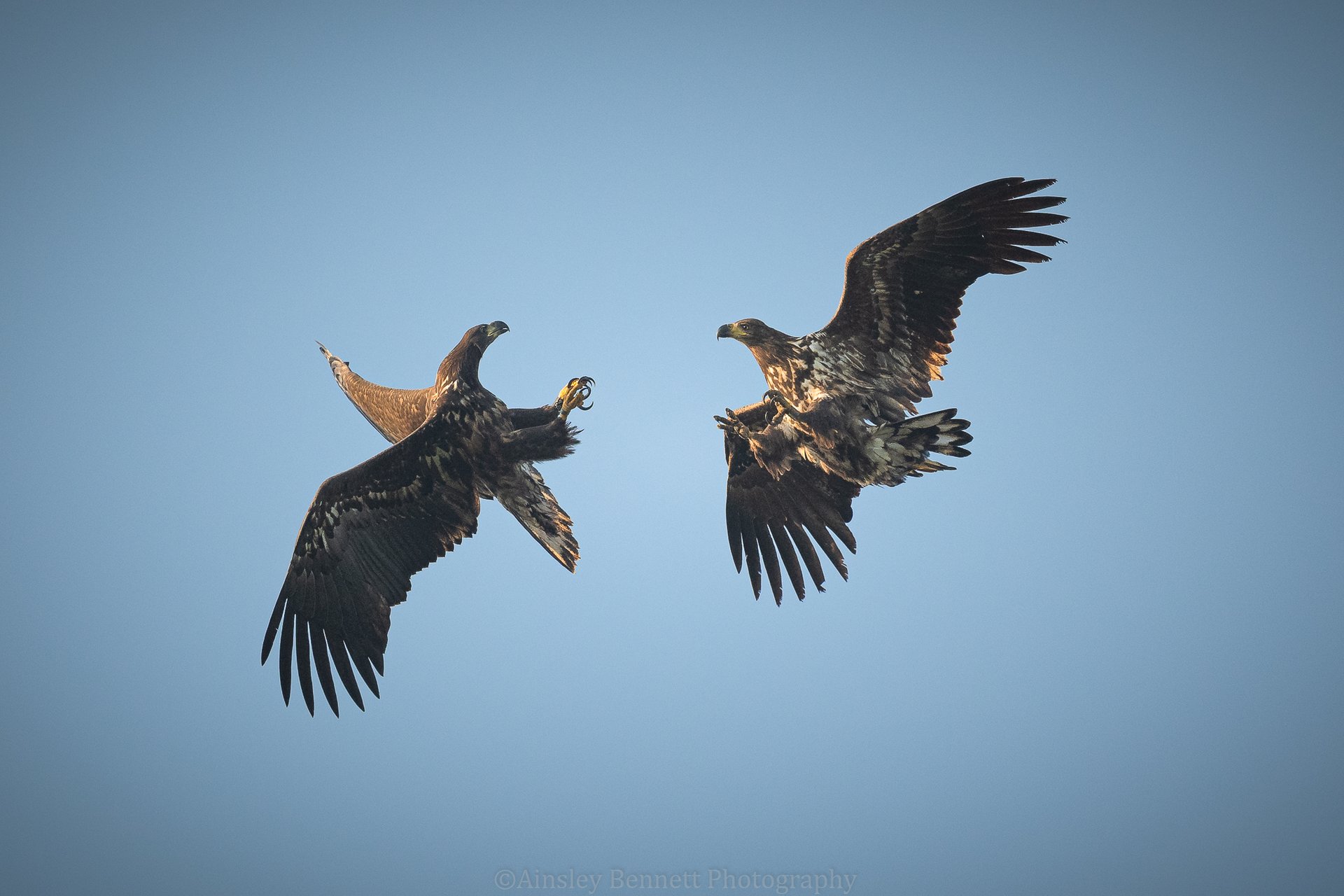
The White-tailed Eagle project is a partnership with the Roy Dennis Wildlife Foundation, to reintroduce this species back to the south coast of England. The project has a Natural England licence to release birds over a 5-year programme, which started in 2019.
The Assistant Ecologist will be assisting the Project Officer in all areas of their work, from engagement with groups and stakeholders about the project to management and care for the birds prior to release. They will also have a role to play in monitoring the birds that are already released. This is an exciting 6 month role to gain valuable experience in reintroductions.
JOB DESCRIPTION:
Key Work Areas
PERSON SPECIFICATION:
Essential
Desirable
As part of the application process we will assess you on the following behaviours:
Making Effective Decisions
Communicating and influencing
Working Together
Seeing the Big Picture
For further details and information on how to apply, please click here.
Episode two of the Guardian’s mini podcast series investigating the illegal killing of birds of prey on grouse moors has been released this morning.
For those who missed episode one, please click here.
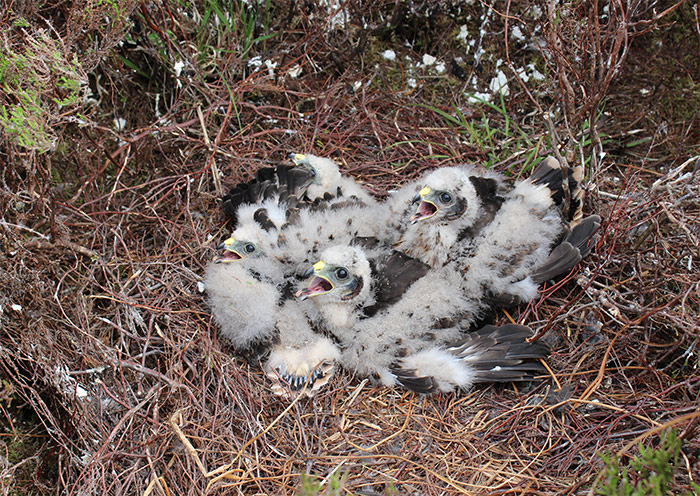
In episode two, journalist Phoebe travels to the Yorkshire Dales National Park in an effort to try and see the location of the nest where an entire brood of hen harrier chicks had been stamped to death the previous year.
She talks a lot about the great big wall of silence about the case, especially from Natural England – many of you will recognise the frustrating lack of accountability and transparency.
She interviews a couple of RSPB investigators and then finally gets an interview with Stephen Murphy from Natural England, who apparently had to be accompanied by a minder from DEFRA. Stephen apparently believes that there’s been “a reduction in the intensity of persecution and the hen harriers are prospering from that…”. Really, Stephen? Jesus Christ. 98 missing/dead hen harriers since 2018 suggests otherwise (here).
There’s also a report of a discussion Phoebe had with John Holmes, NE’s Director of Strategy, who apparently doesn’t see any conflict of interest in Natural England receiving an £85K ‘donation‘ from BASC, with an attached clause that prevents NE from saying anything untoward about BASC and hen harriers.
The episode ends with Phoebe chatting to a cafe owner named Alan, who happens to be a grouse shooter and seems unable to be able to contain his hatred of Chris Packham.
Listen to Episode two here.
UPDATE 17th August 2023: Link to third & final episode here.
REVIVE, the coalition for grouse moor reform is hosting its biggest ever national conference at the Perth Concert Hall on Sunday 12th November 2023.

The conference will be hosted once again by REVIVE supporter Chris Packham and there’ll be speakers from REVIVE’s member organisations (Common Weal, Friends of the Earth Scotland, League Against Cruel Sports, OneKind and Raptor Persecution UK) as well as significant guest speakers from across the political, conservation and land reform sector.
The full programme will be published shortly but booking is now open – please click here to secure your place!
To find out more about REVIVE, please visit the website here.
Further to the news on Saturday when Hunt Saboteurs from across the country gathered in Yorkshire to stop three grouse shoots on the Inglorious 12th (here), they’ve been back out again.
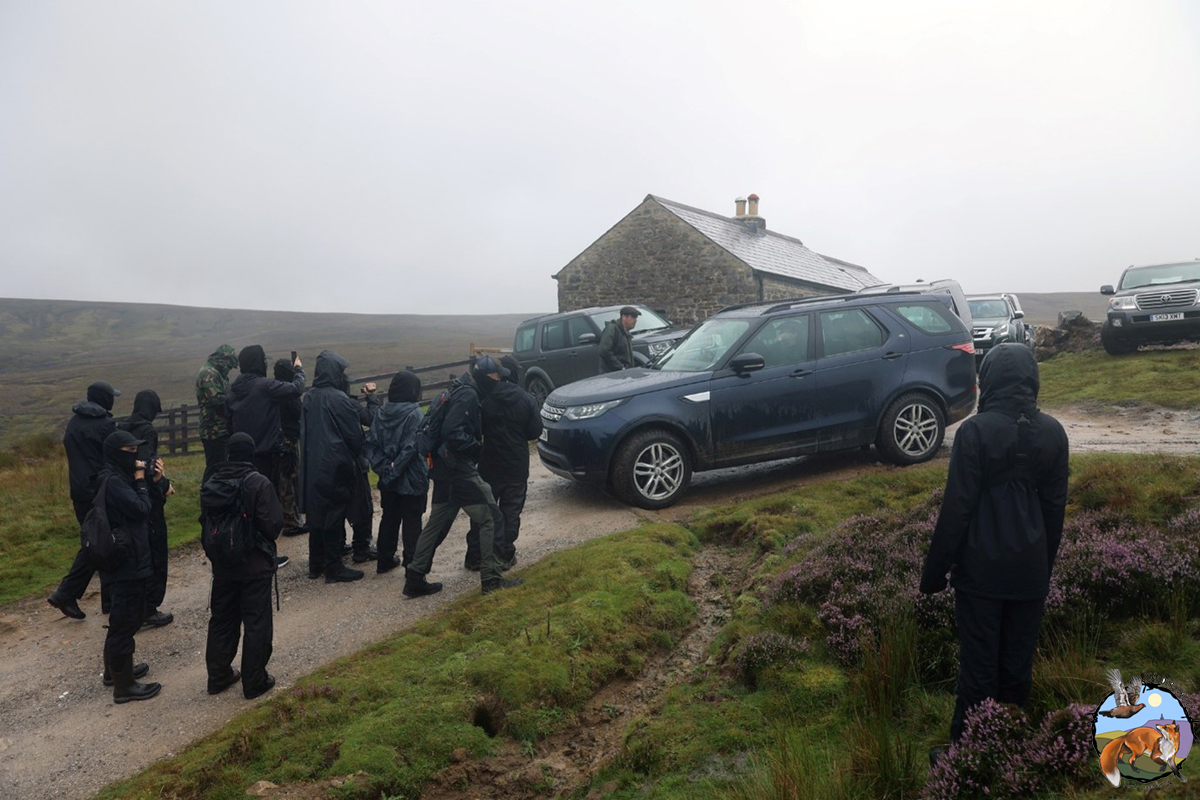
In atrocious weather conditions they went back to Nidderdale yesterday and disrupted one of the same shoots they’d visited on Saturday.
Further details available on the Hunt Sabs website here.
The Guardian has just released the first episode in a mini-series podcast it has produced called ‘Killing the Skydancer‘, which centres on the illegal killing of birds of prey on driven grouse moors.
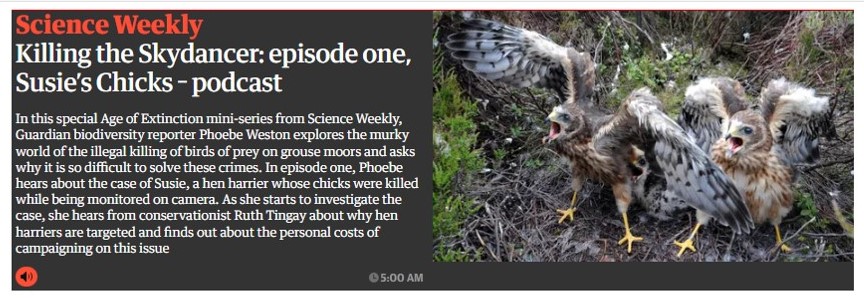
Episode one introduces Phoebe Weston (Guardian journalist) who read an article on this blog about how a brood of hen harrier chicks were stamped to death in their nest on a Whernside grouse moor in the Yorkshire Dales National Park last year (see here).
Phoebe was so horrified by the story she says she couldn’t stop thinking about it and it led her to want to find out more. This podcast series is the result of her investigation as she travelled to the Peak District and the Yorkshire Dales to look for hen harriers and to interview some people from both the conservation sector and the grouse shooting industry.
Episodes two and three will be out tomorrow and Thursday.
The link to listen to episode one (21 mins) is HERE
UPDATE 16th Aug 2023: Episode two is here.
Another opinion piece by a member of REVIVE, the coalition for grouse moor reform, was published over the weekend, this time in the Scotsman and written by Robbie Marsland, Director of League Against Cruel Sports Scotland.
It’s reproduced here:
Snares are used to legally kill an estimated 200,000 animals a year – including non-target species like badgers, dogs and cats – so that more grouse are there to be shot for so-called ‘sport’.
A thin loop of steel wire sits in an entrance to a mound of rotting animals. It’s a snare set to capture foxes drawn to the smell of what is known as a “stink pit”. Despite being cruel, primitive and indiscriminate, snares are currently legal in Scotland.
In theory, foxes are simply detained by the snares and wait peacefully for up to 24 hours for a gamekeeper to arrive and shoot them with a shotgun. In theory. In practice, foxes struggle and mutilate themselves as the wire cuts into their flesh.
Snares are laid on animal pathways as well as around stink pits. This means that any animal using the pathways or attracted by the smell of carrion can get caught by these indiscriminate devices. Badgers, which are protected species, are trapped in snares so often that there’s a name for the distinctive area of flattened ground around a snare made by their death throes. It’s called a “doughnut”. Cats and dogs are also common victims of these pernicious implements.
So why are snares still legal? For years, the League Against Cruel Sports and our friends at animal welfare charity OneKind have been calling for them to be consigned to history. Scotland has to some extent led the way in that it was the first part of the UK to regulate their use. But that lead has now gone with the Welsh Government recently announcing an outright ban on snares – the first UK nation to take this step.
The Scottish Government has the opportunity to catch up with the Welsh example. The Wildlife Management and Muirburn Bill currently approaching the end of its first stage in parliament provides the government with a vehicle to ban the use of snares. The government has acknowledged this and says that it will announce whether they intend to ban snares or not in the next couple of months.
One of the main reasons that foxes are targeted by these horrific devices is to make sure there are more grouse to be shot for sport. The ‘glorious’ 12th of August is the beginning of the grouse shooting season that goes on until December. But the killing of any animal that is thought to reduce the number of grouse goes on all year round.
A 14-month League Against Cruel Sports study of seven shooting estates in Scotland revealed the use of a massive array of traps and snares aimed at foxes, stoats, weasels and crows. Judging by what was found, we estimate more than 200,000 animals are killed on all Scottish shooting estates each year. The survey also revealed that just under 40 per cent of the dead animals found in traps were “non-target” species like badgers, cats and dogs, or even hedgehogs, that do no harm to grouse.
As the Wildlife Management and Muirburn Bill is debated in the Scottish Parliament over the coming months, the League Against Cruel Sports looks forward to snares being banned and questions being asked about the ethics of killing hundreds of thousands of animals killed each year to ensure there are more grouse to be shot for so-called “sport”.
Robbie Marsland is director of the League Against Cruel Sports Scotland
ENDS
I wrote an opinion piece for The National which was published yesterday (here) about the grouse shooting industry’s supposedly sincere claim of having ‘zero tolerance’ for the illegal killing of birds of prey.
It’s reproduced below:

It is widely acknowledged that the illegal killing of birds of prey has long been synonymous with driven grouse shooting in Scotland, even though raptors have had supposed legal protection for almost 70 years. Birds of prey such as buzzards, red kites, hen harriers and golden eagles are perceived to be a threat to red grouse and thus are ruthlessly shot, poisoned or trapped to protect the estates’ lucrative sporting interests.
Prosecutions are rare given the remoteness of the vast, privately-owned shooting estates where these crimes are committed; there are few witnesses and gamekeepers go to great lengths to hide the evidence, as demonstrated when a ‘missing’ golden eagle’s satellite tag was found wrapped in lead sheeting and dumped in a river, presumably in an attempt to block the transmitter.
The Scottish Government has tried various sanctions to address these crimes over the years, including the introduction in 2014 of General Licence restrictions, which are based on a civil burden of proof if there is insufficient evidence for a criminal prosecution. These restrictions don’t stop the sanctioned estates from shooting grouse but do partially limit their moorland management activities and were specifically designed to act as a ‘reputational driver’. Unfortunately they have been proven to be wholly ineffective.
In 2017 a scientific report into the fate of satellite-tracked golden eagles in Scotland highlighted the extent of the ongoing killing on some grouse moors (almost one third of 141 tracked eagles disappeared in suspicious circumstances, none of which resulted in a prosecution). In response, the Government commissioned a review (the Werritty Review) of the sustainability of grouse moor management, which led to the Government finally committing to introducing a full licensing scheme for grouse shooting in 2020. The threat of having an estate licence completely revoked if raptor persecution is detected may now act as a suitable deterrent, as long as the law is adequately enforced.
This long-awaited legislation is currently on passage through Parliament as the Wildlife Management and Muirburn (Scotland) Bill. Unsurprisingly, the grouse shooting lobby is working hard to influence proceedings and minimise the Bill’s impact, questioning its legality and proportionality, even making threats to take the Government to the European Court of Human Rights. Instead of welcoming legislation that should protect the innocent and rid the industry of those who continue to bring it into disrepute, industry representatives maintain that a voluntary approach is sufficient and deny that persecution is even an issue, despite the suspicious disappearance of at least 35 more satellite-tagged hen harriers and golden eagles since the 2017 report was published.
Grouse-shooting representatives maintain they have a ‘zero tolerance’ stance against illegal raptor persecution and argue that they can’t do anything more. But talk is cheap and this industry should be judged by its actions, not by superficial pronouncements from its leaders.
I would argue that there is much more the industry could, and should, be doing if it wants to be seen as a credible force for change.
For example, let’s look at the Moy Estate in Inverness-shire. Two estate gamekeepers have been convicted for raptor persecution offences here (one in 2011 and one in March this year) and the estate has been at the centre of multiple police investigations many times in between. Indeed, it is currently serving a three-year General Licence restriction imposed by NatureScot in 2022 on the basis of police evidence of wildlife crime against birds of prey, including the discovery of a poisoned red kite and various trapping offences.
Moy Estate is believed to be a member of the Scottish landowners’ lobby group, Scottish Land & Estates (SLE). Has SLE expelled the estate from its membership? If it hasn’t, why not? If it has, why hasn’t it done so publically?
Why are SLE, the Scottish Gamekeepers Association and others from the shooting industry, still attending the Moy Country Fair held annually on the Moy Estate? Why hasn’t this estate been boycotted and blacklisted by industry representatives? Surely that would send a strong message of ‘zero tolerance’ for raptor persecution?

It’s not just Moy Estate, either. There are a number of other grouse-shooting estates, some very high profile and often described as ‘prestigious’ in the shooting press, that are also either currently, or have previously, served three-year General Licence restrictions.
How many of those estates and/or their sporting agents have been blacklisted by industry organisations? None of them, as far as I can see.
Zero tolerance should mean exactly that. Anything less simply isn’t credible.
Dr Ruth Tingay writes the Raptor Persecution UK blog and is a founder member of REVIVE, the coalition for grouse moor reform.
ENDS
The Press & Journal published an excellent opinion piece by Bob Elliot yesterday, timed to coincide with the Inglorious 12th.
Bob is the former Head of Investigations at RSPB and currently is the Director of OneKind, a small yet effective animal welfare charity in Scotland that punches well above its weight. OneKind is also a member of REVIVE, the coalition for grouse moor reform, so Bob’s credentials to write this piece are second to none.
Most readers of this blog are, I would guess, very familiar with the consequences of illegally-set traps on grouse moors and their use to capture birds of prey which are then subsequently killed, but there’s less attention given to the legal use of these traps to target so-called legitimate ‘pest’ species.
This typically thoughtful piece from Bob covers the main welfare concerns. It’s reproduced below:

At this time of the year, my thoughts always turn to the start of the grouse shooting season, or the “Glorious Twelfth”, as it is known in the shooting community.
There really isn’t anything glorious about it at all, people shooting live birds for fun.
For the shooting groups to have enough grouse to kill, the grouse moors need to be heavily managed, and the killing of predators continues unrelentingly.
In the past, I spent many a day walking the hills of Scotland, investigating wildlife crime, and would regularly come across cage traps used by gamekeepers: structures of wood and wire, incongruous looking objects in the landscape. But, did you know that crows and magpies, intelligent and sensitive birds, are routinely trapped and killed in these cages?
There are several types of traps, and they fall into two main categories: large crow cage traps, big enough for a person to enter, which are designed to catch multiple birds, and the smaller, more portable Larsen traps, which are designed to catch one bird.
Whilst many wildlife crime incidents have been recorded for the “misuse” of crow cage traps, their use is cruel, even when used legally. The impact being caught in these traps has on crows and other corvids, such as magpies, should not be underestimated.
Sudden confinement is inevitably going to be frightening and stressful for any wild animal. On top of this, crows and magpies are territorial birds, so being forced to share space with others leads to additional stress and aggression. Birds will fly about, frantically trying to escape, and can injure themselves in the process.
It is legally permitted to leave birds in these traps for up to 24 hours. After a long confinement, possibly exposed to the elements and to predation, they are killed by the person who set the trap.
This is usually done with a blow to the head, but it is not always a humane death and may take repeated hits. I remember an incident where a gamekeeper was filmed trying for several minutes to catch and kill crows in a trap, while the others flew around, panicked.
Even worse, though, must be the use of “decoy” birds, used to lure other birds into the trap in a seemingly endless cycle of killing. I have seen birds enduring some of the worst Scottish weather.
On one occasion, I remember temperatures were very low, and the biting wind was blowing the rain sideways on the exposed hillside. The decoy bird in the trap remained hunched on the perch, with no shelter apart from a rudimentary box placed on the floor in the corner of the trap.
These decoy birds could be used repeatedly for weeks or months, after initially being caught themselves. They might be mutilated to cut their wing and tail feathers, so they are unable to fly.
Although there is a legal requirement to provide them with food, water, shelter and a perch, these provisions are often pitifully inadequate. Either way, they are ultimately doomed to death, and are confined so that others can meet the same fate.
All this killing so that an unnaturally high population of red grouse can be maintained for sport shooting. In my mind, it is unjustifiable.
The Wildlife Management and Muirburn (Scotland) Bill currently in parliament will bring greater regulations on the use of these traps, and we welcome that.
We would, of course, prefer to see an end to crow cage traps altogether, and will continue to campaign for the banning of their use. However, it is crucial that steps are taken now to regulate the trapping of crows and other wild animals in a way that prevents the worst suffering of wild animals on Scotland’s grouse moors.
ENDS
For anyone interested in reading more on this subject, I’d recommend Alick Simmons’ new book: Treated Like Animals – Improving the lives of the creatures we own, eat and use. (2023 Pelagic Publishing). Alick worked as the UK Government’s Deputy Chief Veterinary Officer for many years. In his book he devotes an entire chapter to ‘Snares, Guns and Poison: the ‘Management’ of wildlife. Well worth a read (see here).
 Raptor Persecution UK