Prominent falconer Andrew Knowles-Brown fined almost £14,000 for ‘shocking’ animal cruelty

Prominent falconer and eagle breeder, Andrew Knowles-Brown, 70, has been sentenced after investigators from the Scottish SSPCA found approximately 90 eagles and other birds were living in ‘unimaginable squalor’ at his breeding facility (the Scottish Eagle Centre) in Elvanfoot, Scotland.

Last October after a trial at Lanark Sheriff Court, Knowles-Brown was found to have caused unnecessary suffering to the eagles and parrots and to have failed to protect them from injury, suffering and disease between June and December 2019 (see here for details).

Photos via Crown Office & Procurator Fiscal Service (COPFS)

The Sheriff warned that she was considering disqualifying him from keeping birds but with so many, it was not known whether suitable, specialist homes could be found. Sentencing was deferred until 2025 as the court was told Knowles-Brown was ‘scaling down his facility’ and making improvements to the remaining aviaries (see here).

In June 2025 SSPCA inspectors returned to the Scottish Eagle Centre and noted some improvements.

Earlier this month, Knowles-Brown returned to court for sentencing and was fined a total of £13,437.50. He was also disqualified from keeping birds apart from 20 individuals (species unknown) – the rest of his collection has either been rehomed already, or will be rehomed.

Faye Cook from COPFS said:

This was a shocking case of animal cruelty. These birds were forced to survive in almost unimaginable squalor.

The public will be appalled. Andrew Knowles-Brown had established a reputation as an international bird breeder. But this was a betrayal of trust by someone who had some standing among breeders.

Animal welfare crime will be robustly prosecuted by the Crown Office and Procurator Fiscal Service when there is a strong presumption in favour of prosecution of the cases reported to us and where there is sufficient evidence to do so“.

A spokesperson from the SSPCA said:

We are satisfied with the outcome that Knowles-Brown has been disqualified from owning birds, with the exception of 20 birds, and the remaining birds who were in his care will now be transported to appropriate homes.

Knowles-Brown is a prominent figure in the falconry world, having served as the Chair of the Scottish Hawk Board and Vice-Chair of the UK Hawk Board.

The Hawk Board, which enjoys close ties with the Countryside Alliance, represents falconers, hawk-keepers and falconry clubs and provides welfare guidelines for those keeping raptors in captivity.

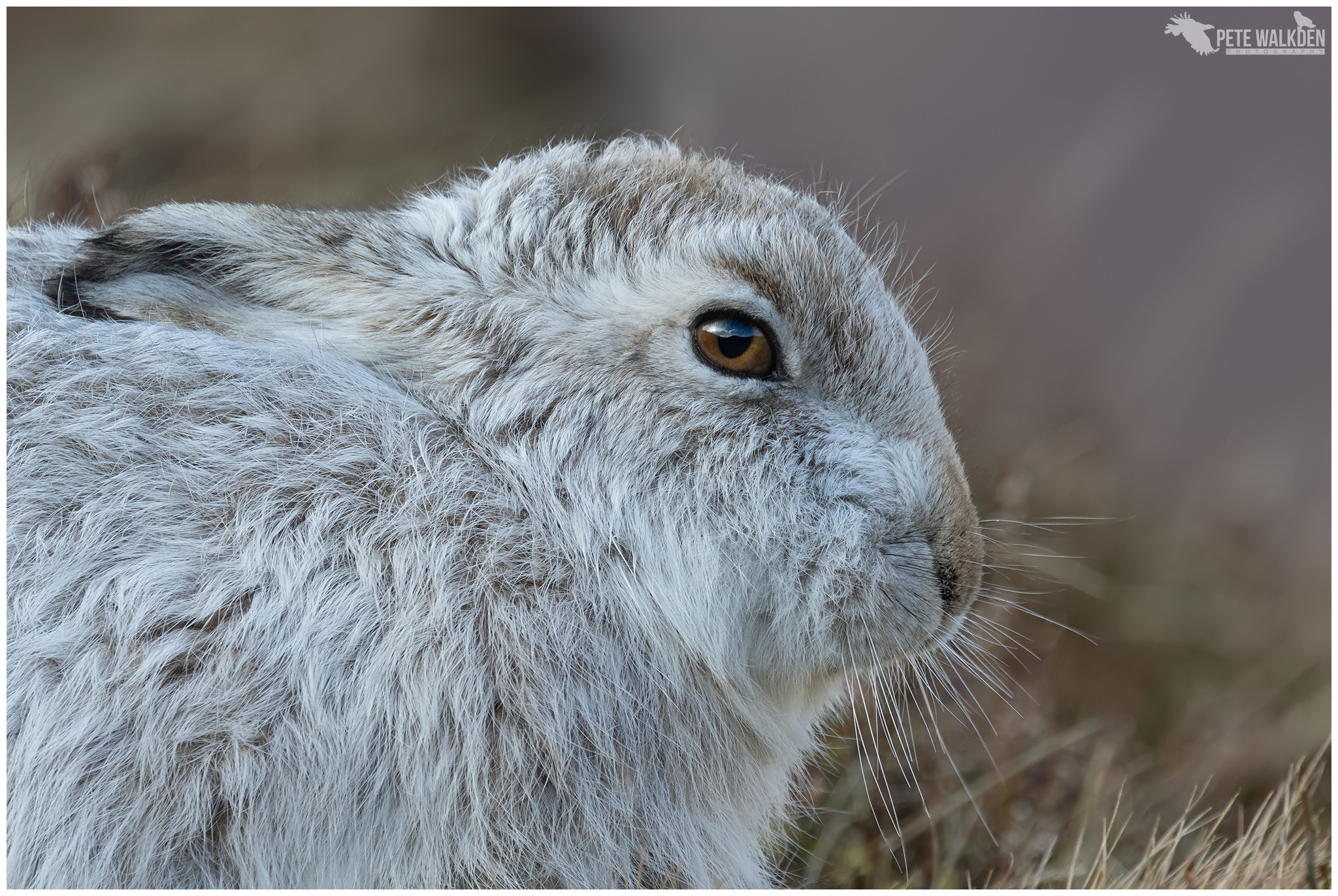
It also engages in political lobbying (e.g. it was against the Scottish Government’s decision to afford the Mountain Hare full legal protection) and Knowles-Brown himself has provided evidence to the Scottish Parliament’s Rural Affairs Committee when it was considering its draft Protection of Wild Mammals (Scotland) Bill.

Ongoing problems with grouse moor licensing, trap licensing & hunt licensing is ‘enabling’ rather than deterring wildlife crime in Scotland

The Herald has given more front page coverage in its series about Scottish land reform, this time focusing on recent legislation that was supposed to protect wildlife but instead is effectively ‘enabling’ wildlife crime.

The article includes quotes from three organisations from REVIVE, the coalition for grouse moor reform: Raptor Persecution UK, OneKind, and League Against Cruel Sports Scotland.

Here’s the article in full:

Scotland’s landmark wildlife laws are being “systematically weakened” by loopholes, delays and poor enforcement, campaigners have warned.

A year after the Scottish Government introduced grouse moor licensing to tackle raptor persecution, environmental groups say the scheme has already been undermined.

They argue the same pattern is emerging across other wildlife protection measures, with legislation that looks strong on paper but delivers little change on the ground.

The Wildlife Management and Muirburn (Scotland) Act 2024 was designed to allow NatureScot, the government’s statutory nature agency, to suspend or withdraw a licence to shoot grouse if there was evidence that birds of prey such as golden eagles, hen harriers and red kites were being killed.

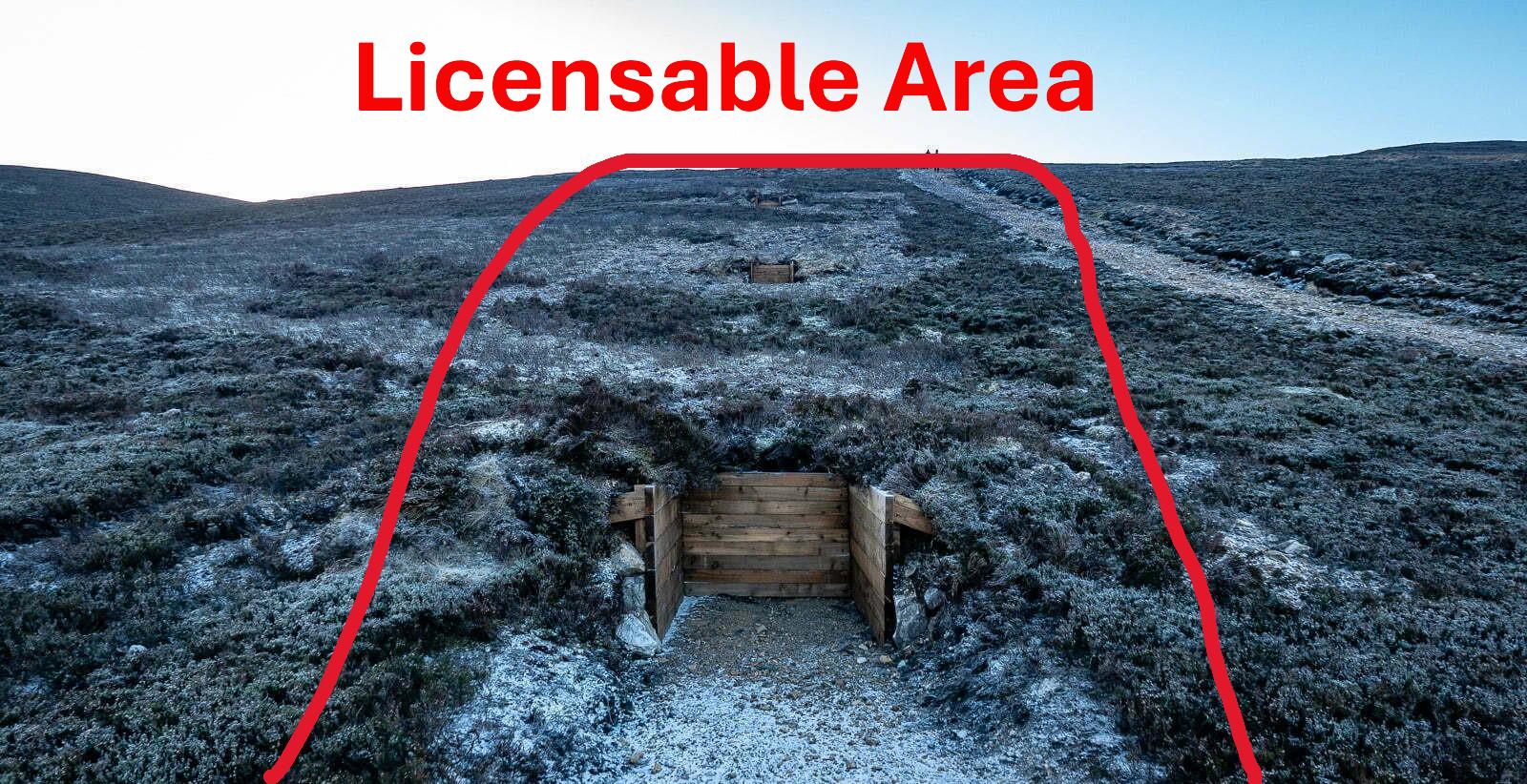
However, within months of the law being passed, NatureScot altered the scope of the licences so they applied only to areas where grouse were “taken and killed”, rather than to entire estates.

Conservationists say that effectively excludes the remote areas where raptor persecution is most likely to occur, such as crags or woodlands, rendering the measure “fatally flawed”.

Dr Ruth Tingay, of the Revive Coalition and author of the Raptor Persecution UK blog, said: “Grouse moor licensing was overwhelmingly passed by the Scottish Government as part of the Wildlife Management and Muirburn Act 2024 precisely because the landowning sector had literally been getting away with wildlife crime for decades.

Using its significant influence, that same lobby has effectively nullified the effect of the licences, allowing raptor persecution and other wildlife offences to continue with impunity. Surely, if landowners are committed to their claimed ‘zero tolerance policy’ towards raptor persecution, they will welcome the amendment to close the loophole. Why would they not?

Freedom of Information requests revealed the changes were made after pressure from landowner interests and without consultation with other stakeholders.

Green MSP Mark Ruskell has lodged an amendment to the Land Reform Bill, due to be debated later this month, to close what he called a “gaping loophole” in the system.

The same 2024 Act introduced a requirement for those using traps to capture wild birds or mammals to hold a licence and complete approved training. Ministers said it was intended both to prevent illegal use of traps against raptors and to improve animal welfare “even when those traps are used lawfully”.

However, the licensing scheme has yet to come into force. Officials have said it is unlikely to begin until autumn 2026, and campaigners say key details—including licence conditions and application processes—remain unknown.

Jason Rose, chief executive of the animal welfare charity OneKind, said: “The Wildlife Management and Muirburn (Scotland) Act brought in bans on the use of snares and glue traps, a monumental action to end some of the worst suffering of wild animals in Scotland. But the Scottish Government must not grow complacent.

Trap licensing and a code of practice, introduced by the Act, were supposed to address that, and we were assured those measures would drive up standards. Yet, a year and a half later, the trap licensing is not in force and its details are unknown, while the code of practice points to existing best practice guidance, which has no mention yet of such ‘predator control’.

This is not good enough. People expect laws to do what they say on the tin and Scotland’s animals deserve better.”

He said the lack of oversight meant “thousands of animals” continued to suffer unnecessarily in traps, often in the name of protecting grouse populations for sport shooting.

Campaigners also claim the same weaknesses are allowing illegal fox hunting to continue despite the introduction of the Hunting with Dogs (Scotland) Act 2023, which ministers said would finally end the practice.

Four of Scotland’s ten mounted hunts have closed since the Act came into force, but the League Against Cruel Sports says the remaining groups are using “increasingly sophisticated evasion tactics”.

Some hunts now claim to be “drag hunting”, where dogs follow an artificial scent, but the League says video evidence shows hounds being directed through dangerous terrain and dense gorse—areas unlikely to be used for legitimate drag hunts.

Others have obtained licences from NatureScot allowing them to use more than two dogs in “exceptional circumstances”, such as alleged serious fox predation.

The League says those licences have become the rule rather than the exception. NatureScot issued more than 60 during the 2024–25 season, and Police Scotland is investigating four hunts for alleged illegal activity, including two that operated under such licences.

Robbie Marsland, director for Scotland and Northern Ireland at the League Against Cruel Sports, said: “Scotland’s laws mean nothing if we lack the ability to enforce them. What we are seeing across fox hunting, grouse moor licensing and trap licensing is a troubling pattern of progressive legislation being passed, but then systematically weakened in implementation by those who consider themselves above the law.

The fox hunting saga offers a sobering case study in the gap between legislative intent and practical implementation. The Hunting with Dogs (Scotland) Act 2023 represented genuine achievement, a clear response to public will and evidence-based policymaking. But what value is even the most progressive legislation if it lacks resources and resolve for enforcement?

When NatureScot issues over 60 licences for fox hunting in a single season, supposedly for ‘exceptional circumstances’, but then gives 48 hours’ notice before compliance checks, we are not enforcing a ban, we are providing cover for its continuation.

When grouse moor licences are redrawn to exclude the very areas where wildlife crime occurs, we are not deterring raptor persecution, we are enabling it.

Campaigners say these cases point to a wider failure of implementation across rural and environmental policy. They argue that laws intended to promote ethical wildlife control and animal welfare are being hollowed out through regulatory design, political pressure and lack of enforcement resources.

A coalition of conservation and animal welfare groups, including Revive, OneKind and the League Against Cruel Sports, is urging ministers to ensure future legislation—including the Land Reform Bill—includes enforceable obligations, not just policy statements.

The Big Land Question consultation found that 84% of respondents strongly agreed that large landholdings should comply with principles for ethical wildlife control.

Mr Marsland said: “This pattern should concern anyone invested in Scotland’s land reform agenda. The Big Land Question found that 84% of people strongly agree that large landholdings should comply with ethical wildlife control principles. Yet we keep seeing the same dynamic whereby laws that look strong on paper are hollowed out by those with vested interests and the means to resist.

Scotland’s bold visions for community ownership, environmental stewardship and equitable land use will face similar resistance. The era of allowing privilege to trump principle must end.

A Scottish Government spokesperson said: “We continue to work with partners to manage Scotland’s wildlife and protect our natural resources.

We implemented a licensing scheme for grouse shooting last year to better protect birds of prey from illegal persecution. We are considering whether additional measures are needed to address concerns with the licensing scheme, and if so, we will set out details in due course.

The Hunting with Dogs Act closed the legal loopholes that have allowed illegal foxhunting to continue. In May, we welcomed a report by the League Against Cruel Sports which noted the progress that has been made.”

ENDS

That response from the Scottish Government is pretty thin. The Government has supposedly been considering whether additional measures are needed to close the loophole in the grouse shooting licences for almost a year after it was first sabotaged by the grouse shooting industry but so far, it’s done nothing.

And I have no idea what ‘progress’ the Government thinks has been made on closing the loopholes in the Hunting with Dogs Act. The League Against Cruel Sports’ report, referred to by the Govt spokesperson, reveals nothing of the sort:

Grouse moors: Scotland’s land crisis in plain sight (by Max Wiszniewski, featured in The Herald)

The Herald continues its feature on land reform today, with an article written by Max Wiszniewski, Campaign Manager for REVIVE, the coalition for grouse moor reform:

Scotland’s grouse moors are under fire—not just for environmental damage, but for symbolising a broken land system that benefits the few at the expense of the many. As public support for bold land reform grows, campaigners say it’s time to confront the invisible power protecting privilege and reshape the future of Scotland’s uplands, says Max Wiszniewski

When we asked Scots what they thought about land reform, focus group participants immediately raised concerns about large landowners. Concerns about their power, their lack of accountability and their failure to serve the communities around them.

If you want to understand why people know there was something wrong, look at a grouse moor.

Grouse moors represent everything that’s broken about Scotland’s land system, concentrated into one highly visible package.

They’re managed for the shooting pleasure of a tiny elite. They contribute pitifully to our economy while occupying vast tracts of land. They actively damage our environment through muirburn, holding moorland back from natural regeneration and increased biodiversity. They exclude local communities from having a meaningful say over land that shapes their futures, and they’ve been protected by what focus group participants called “invisible power” – the quiet influence of wealth and privilege that keeps land reform at bay.

The Big Land Question – the largest independent study of Scottish attitudes to land ownership ever conducted. More than double the number of people responded to Big Land Question’s public consultation compared to consultation for the Land Reform Bill currently going through parliament. Of those responses, 87% backed carbon emissions taxes on large landowner’s land. Focus groups wanted penalties for landowners who “don’t use their land properly.” And crucially, they saw environmental responsibility not as separate from land reform, but as an intrinsic part of it.

Grouse moors fail every test the public is setting.

Let’s start with the economics. Driven grouse shooting contributes trivial amounts to Scotland’s economy for the damage it does. Wildlife tourism, where wildlife is shot by cameras instead of guns, contributes far more. Forestry contributes twenty times the value of all sport shooting. Yet grouse moors occupy hundreds of thousands of hectares of Scotland’s uplands, locked into a land use that serves almost no one except the landowners and their paying guests.

Research commissioned by Scottish Land and Estates found that rural estates occupy 57% of Scotland’s rural land but account for less than 2% of our economy, a contribution their own commissioned report described as “trivial.” They provide just one in ten rural jobs and only 3% of rural homes. Grouse moors exemplify this pattern: massive landholdings delivering minimal public benefit.

Then there’s the environmental destruction. Eighty percent of Scotland’s peatlands are degraded, emitting carbon instead of storing it. For decades, landowners have been allowed to burn and overgraze these vital carbon sinks, for grouse shooting, through a practice called muirburn. Scotland is one of the most nature-depleted countries in the world, and driven grouse shooting is a significant contributor to that shameful status.

The Scottish Government has rightly restricted muirburn over deep peat because of peatlands’ importance as carbon sinks. Given the scale of degradation and our climate commitments, the 78% of Scots who want climate and nature targets for large landowners aren’t asking for the impossible, they’re asking for the obvious.

Grouse moors also epitomise how concentrated land ownership excludes communities. When a few individuals control vast landscapes, decisions about land use are made in shooting lodges and estate offices, not in village halls. Communities watch their surroundings managed for driven shooting while they struggle with housing shortages, limited employment opportunities, and depopulation. The scarcity of useful land stops communities flourishing.

Focus group participants in The Big Land Question articulated this clearly. They believed land used for large estates should be broken up. They wanted councils to have power to tax large landowners in their areas, feeding funds back into the communities surrounding estates. They understood that land reform isn’t about technical policy adjustments, it’s about power, and who gets to wield it.

The contrast with community ownership couldn’t be starker. Community-owned land allows management to be tailored to local needs and economic opportunities, such as community-owned rural housing, nature restoration, renewable energy, and sustainable tourism. This community-led approach unlocks what REVIVE calls a “circle of prosperity” in Scotland’s uplands, replacing the circle of destruction that surrounds grouse moors.

So why do land uses like grouse moors persist?

Because the current Land Reform Bill, despite its ambitions, is broken. It doesn’t go far enough to deliver meaningful change. Landowners have too many rights and too few responsibilities. The Bill fails to disincentivise a few people from owning most of our country, and it fails to obligate large landowners to act in the public interest.

Land Management Plans, if done well, could make a difference by compelling landowners to engage with communities, enhance biodiversity, and deliver public goods. They could require landowners to protect degraded peatlands, end unnecessary wildlife killing, and transition toward net-zero. But the current proposals lack detail and, critically, it lacks teeth.

Penalties for non-compliance of obligations by landowners should reflect the value of land and the seriousness of breaches, because land reform isn’t about making it easy on landowners. It’s about doing right by the country.

The Bill also misses opportunities to introduce fiscal measures that discourage land hoarding and speculation. Without land taxes, large landowners can sit on assets and watch values appreciate while making it harder for community and public purchases. The 67% of Scots who support land taxes for large landowners seem to understand this, perhaps better than policymakers.

Around eight in ten Scots want landowners to meet climate and nature targets, while seven in ten support taxing large landowners. Some will argue that strengthening requirements would deter investment in natural capital restoration, but this ignores evidence that diverse ownership patterns create more innovation and community wealth. It also ignores what Scots are telling us: they want bolder action, not excuses for inaction.

Grouse moors matter because they’re where Scotland’s land crisis becomes visible. They show us what happens when land is hoarded by a few, managed for private pleasure rather than public good, and protected by the invisible power that focus group participants identified as blocking reform.

A transition away from grouse shooting is urgently needed, and the sooner the better for our people, wildlife, and environment, because grouse moors are symbolic of a land system that serves the few at the expense of the many.

ENDS

Issues around ‘The Big Land Question’ will be explored at REVIVE’s annual conference, taking place at Perth Concert Hall on Saturday 8th November 2025. For more details and to book tickets, please click here.

‘The problem, which the Scottish Government is willfully ignoring, is that muirburn is responsible for a large number of wildfires’

For those of you following the muirburn licensing fiasco in Scotland, where the Scottish Government has announced its decision to delay the implementation of licences for a second time after aggressive lobbying by the grouse shooting industry, Nick Kempe’s most recent parkswatchscotland blog will be on interest.

Nick explores the known facts about the recent out-of-control muirburn on a grouse moor in Aberdeenshire that turned in to a wildfire that burned 5 hectares of the neighbouring Muir of Dinnet National Nature Reserve:

‘These facts clearly contradict Mr Fairlie’s claim that  the delay in introducing the muirburn licensing scheme will  “provide us with the time and opportunity to carefully consider the upcoming changes to muirburn and how these changes can be brought forward in a way which does not adversely affect our ability to prevent and respond to wildfires.” 

The problem, which the Scottish Government is willfully ignoring, is that muirburn is responsible for a large number of wildfires and adds significantly to the demands being made on the Scotland’s Fire and Rescue Service who have suffered cut after cut in funding’.

With his usual thoughtful and evidence-based approach, Nick goes on to explore the wider politics associated with muirburn licensing. His parkswatchscotland blog can be found here.

Shooting Times uses selective quote to shamelessly misrepresent my view on predator culls

A couple of weeks ago, on 24 September, the Shooting Times published a news item in which it was suggested that I support predator culls:

The Shooting Times article was supposedly a précis of an article that had appeared in The Guardian on 11 September, where it was reported that Mary Colwell, Director of Curlew Action, had told a farming conference that a “serious conversation” needs to be had about Fox culling. The full Guardian article can be read here.

I was asked by The Guardian journalist (Helena Horton) to comment on the proposition of widespread Fox and Crow culling for Curlew conservation and Helena duly included my quote, in full, in her article:

Lethal control of some generalist predatory species will not solve the long-term issue of their over-abundance, which is a direct result of the mismanagement of our countryside.

The three main long-term issues that need to be addressed include intensive agriculture, where silage-making increases feeding opportunities for Carrion Crows and reduces the breeding success of Curlews; the annual release of up to 60 million non-native Pheasants and Red-legged Partridges, which sustain artificially-high numbers of predators and scavengers; and the illegal killing of birds of prey, including species such as Goshawks, which would otherwise limit the populations of mesopredators and scavengers.

In the short-term there may be justification for targeted and limited predator control for specific nature conservation purposes, but this should be done only as a last resort and only where robust scientific evidence shows there to be a need”.

You’ll notice that the Shooting Times article published just 12 words from my 139-word quote, selectively chosen and presented out of context, to infer my supposed support for widespread predator culls.

This is either shameless misrepresentation or whoever wrote that piece for Shooting Times, presumably overseen by the editor, is clearly struggling to grasp the principles of basic English comprehension – you know, the stuff you learn at school when you’re eleven about context and drawing conclusions.

And just because a newspaper publishes an article about a controversial topic, including opposing views, doesn’t mean that the newspaper supports either side of the debate – it’s simply reporting a balanced argument for and against.

How can the Shooting Times interpret this as, ‘National press backs fox control for conservation‘?!

Muppets.

I guess the Shooting Times also missed Mary Colwell’s subsequent letter to The Guardian, published on 21 September, in which she clarified her position on predator control:

It’s not quite the message that Shooting Times wants to get across, is it?

Scots demand real land reform as research reveals overwhelming public support for change

Press release from REVIVE, the coalition for grouse moor reform (11 Oct 2025)

SCOTS DEMAND REAL LAND REFORM AS RESEARCH REVEALS OVERWHELMING PUBLIC SUPPORT FOR CHANGE

Largest ever public consultation on land reform shows 78% want climate targets for large landowners, 67% back a land tax, 80% demand more community ownership, as MSPs face final opportunity to amend Bill 

The Big Land Question, the most comprehensive exploration of Scottish attitudes to land ownership ever undertaken, reveals that Scotland’s public thinks the current system is failing, and the Scottish Government must act decisively to redistribute power over land. 

The new research featured on the front page of The Herald today (photo by REVIVE Coalition)

The research, published today, was commissioned by the REVIVE Coalition and independently conducted by the Diffley Partnership over eight months. It surveyed over 2,000 Scottish residents alongside focus groups, stakeholder roundtables and online public consultations. 

The Big Land Question research found that despite land reform being on the political agenda for more than 20 years, public awareness is low. Yet when informed about Scotland’s unusually concentrated pattern of land ownership, with just 421 people owning over half of Scotland’s private land, support for reform was overwhelming.  

The survey tested specific reform measures and found striking levels of support: 

  • 78% supported requiring large landowners to meet climate and nature targets 
  • 67% supported a land tax for large landowners 
  • 80% said the Scottish Government should do more to encourage community ownership 
  • 59% agreed Scotland would benefit from more diverse land ownership 
  • 50% supported government action to break up large landholdings 
  • 63% felt more should be done to help people own and manage land 

The findings come ahead of MSPs considering Stage 3 amendments to the Land Reform (Scotland) Bill before a final debate later this month. Parliamentarians have one last opportunity to align legislation with public expectations, or face calls to revisit land reform in the next parliament.  

Mark Diffley, Director of the Diffley Partnership, said: 

What’s remarkable about these findings is that high support exists despite low awareness. This isn’t a case of the public being divided or uncertain – once people understand the scale of land ownership concentration, the view of the Scottish public is clear across every methodology we used, and the consistency and strength of findings is striking.  

Whether in quantitative surveys, focus groups, or open consultations, Scottish people are telling us the same thing, that the current concentration of land ownership in Scotland is unacceptable, and they want their government to take meaningful action. The challenge for policymakers isn’t to convince Scots that reform is needed – the public is already there – it’s to match their legislation to the ambition the public is ready to support.” 

Max Wiszniewski, Campaign Manager for the REVIVE Coalition, said: 

We initiated The Big Land Question to provide robust, independent evidence of what Scottish people want from land reform.  

For too long, the debate around land reform has been dominated by vested interests who benefit from the status quo. This research has created a platform for the voice of the many, and what we’re hearing is unambiguous. Scottish people want fair rules, transparency about ownership, and genuine accountability for how land is managed. For example, grouse shooting contributes pitiful amounts to our economy for the damage it does – wildlife tourism, where wildlife is shot by cameras instead of guns, contributes much more.  

This research shows that policies which politicians claim are too radical, like land taxes, ethical wildlife control, and climate and nature targets for large landowners, alongside limits on ownership concentration, actually have strong public support. The current Bill has been widely criticised as lacking ambition. MSPs debating Stage 3 amendments later this month have the opportunity to change that.” 

The Big Land Question used a mixed-methods approach including: 

  • A nationally representative survey of 2,041 Scottish adults (October 2024) 
  • An open consultation receiving 1,390 responses spanning the political spectrum 
  • An online panel of 155 members, with surveys and three focus groups held between February and June 2025 
  • A stakeholder roundtable in June 2025 with community groups, environmental NGOs, landowners and sectoral experts 

The research was launched in November 2024 at the annual REVIVE conference in Perth. It was attended by 600 people and fronted by actor David Hayman, who presented the project’s online video survey. 

Across all research methodologies within The Big Land Question research, three interconnected priorities emerged consistently: community empowerment and local control, fairness and equity in ownership, and environmental responsibility aligned with climate action. 

Respondents expressed strong views that land should serve the public good and called for Scottish Government to take bolder actions towards real change, a direct challenge to the current Bill’s modest scope. 

The qualitative methodologies within The Big Land Question, through focus groups, roundtables and open consultation responses, also revealed how Scots understand the problem and envision solutions. 

Focus group participants raised concerns about large landowners unprompted, expressing strong views that these individuals must uphold social and environmental responsibilities. They identified the “invisible power” of large landowners as an underlying cause of government inaction, creating what they described as a “vicious circle” where those who benefit most from concentrated ownership have the greatest capacity to block reform. 

Participants pointed to the complexity of legal and financial frameworks, the prohibitive cost of land, and the hidden influence of concentrated wealth as key barriers preventing change. The research revealed a sophisticated public understanding that land reform’s slow progress is structural, rooted in power dynamics that current policy fails to challenge. 

This analysis was reinforced at the stakeholder roundtable in June 2025, where representatives from community groups, environmental NGOs, landowners and sectoral experts discussed reform priorities. Stakeholders identified strong alignment between their priorities and public support, particularly around transparency, taxation, and community control. 

However, they also highlighted the gap between public support and public understanding. Despite overwhelming backing for reform among those informed about the issues, awareness remains low across the general population. Bridging this gap through storytelling, political leadership, and inclusive policymaking was identified as essential. 

The REVIVE coalition has a stand at the SNP conference this weekend (photo by REVIVE Coalition)

Scale of the Problem 

Currently, just 421 landowners own 50% of Scotland’s privately-owned rural land, one of the most concentrated patterns of land ownership in the world. A 2019 review by SRUC, commissioned by the Scottish Land Commission, found this concentration was causing “significant and long-term damage to the communities affected.” 

The suffocating impact of Scotland’s concentrated land ownership was also evident in research by Biggar Economics, published in 2023 and commissioned by Scottish Land and Estates. The report identified that 1125 rural estates take up approximately 4.1 million hectares, and found that while this equates to around 57% of Scotland’s rural land, they: 

  • Account for less than 2% of the value of the Scottish economy, a level assessed as “trivial” by the report authors 
  • Account for just 1 in 10 rural jobs 
  • Provide only around 3% of rural homes and build around 1% of new homes built in rural areas each year 

A report on The Big Land Question is published today:

REVIVE will host a fringe meeting at the SNP Conference at 12.30 pm tomorrow (Sunday) at Conference Suite 3, TECA – The Event Complex Aberdeen, titled ‘What Scotland Wants: Real Land Reform’ to discuss the findings.  

The research will also be presented to delegates at the annual REVIVE coalition conference, taking place in Perth on 8th November 2025 (programme & tickets available here).

 ENDS 

The Herald has published an exclusive feature on this news today, including reactions to the research findings from Mairi Gougeon (Cabinet Secretary for Rural Affairs, Land Reform & Islands) and veteran land reform campaigner Andy Wightman. The article sits behind a paywall.

“SNP caves to shooting lobby” – reactions to Scottish Government’s decision to delay muirburn licensing (again)

As expected, the Scottish Government’s announcement on Thursday that it has delayed the implementation of muirburn licensing (for the second time) has been met with anger.

Scottish Greens MSP Ariane Burgess said the Scottish Government has ‘caved to the shooting lobby‘ and accused Ministers of putting the interests of wealthy landowners ahead of environmental protection and public safety.

She is calling for the immediate implementation of muirburn licensing, proper investment in emergency services, and a supported shift away from land management practices that fuel ecological degradation.

Ariane continued:

This is deeply disappointing. We have just had a summer of devastating wildfires across Scotland, and it is vital that we act rather than backtracking. Yet again, the SNP is bending to the demands of wealthy landowners.

During the scrutiny of the Wildlife Management and Muirburn Act we took detailed evidence on the role of muirburn in wildfire risk. There is very little credible evidence to support the hunting and shooting lobby’s ridiculous claim that these practices have any role in preventing wildfires“.

RSPB Scotland has also published a blog in reaction to the Government’s decision, saying ‘Scotland’s wildlife can’t afford any more delays to muirburn legislation’.

RSPB Senior Land Use Policy Officer Andrew Midgley said it was “a huge disappointment to those of us who wish to see this potentially damaging and often risky activity properly regulated. This is the second time it has been kicked down the road. 

On the very same day, in a sadly ironic twist, muirburn that was reported as being conducted on a grouse moor in Aberdeenshire got out of control and started a wildfire. The wildfire spread onto a neighbouring National Nature Reserve managed by the Government agency NatureScot, and burnt into woodland that is part of our network of internationally important nature conservation sites. That this occurred is no cause for gloating. It’s a tragic lesson in why regulation is needed without further delay. 

It’s now nearly six years since an independent group recommended that the regulation of burning in the hills be strengthened and it’s eighteen months since the legislation was passed in the Scottish Parliament. It was acknowledged that muirburn is a high-risk land management activity that should be carefully managed and that regulation would help. This latest delay is further evidence that the Government and NatureScot are failing to properly get a grasp of this issue“.    

The out-of-control muirburn that was started on a grouse moor in the Cairngorms National Park on Thursday, just a few hours after the Scottish Government’s announcement, is thought to have had a 3km wide front and has burned approximately 200ha.

Local sources have reported that the fire burned approximately 5ha of the Muir of Dinnet National Nature Reserve before the Scottish Fire & Rescue Service were able to get it under control.

A scene from the aftermath, from @kredp.bsky.social

Why on earth gamekeepers were lighting fires under conditions known to present a high risk factor remains to be answered. But in a masterclass of irony, SGA Committee member Ronnie Kippen posted this on the same day:

You’re dead right, Ronnie, it was only a matter of time (just a few hours, in fact) before another massive wildfire erupted in the Cairngorms National Park ‘due to mismanagement of habitat’.

Strangely, I haven’t seen any of the usual suspects shouting about the Dinnet wildfire – in complete contrast to the publicity they’ve given to other wildfires this year where grouse moor management wasn’t thought to be implicated.

Meanwhile, the Scottish Gamekeepers Association (SGA) has welcomed the Government’s decision to delay muirburn licensing, describing it as “common sense“.

No surprise really, this is the same organisation that thinks White-tailed Eagles could eat small children, that “strongly believe the goshawk never was indigenous to the United Kingdom and there is absolutely no hard evidence to suggest otherwise” (here), that think it’s “unfair to accuse gamekeepers of wildlife crime” (here) and plenty of other examples of assorted nonsense.

The SGA’s statement in response to the muirburn licensing delay concludes with this statement:

The SGA supports the Minister’s move and looks forward to making future changes more workable, drawing on our members’ centuries of knowledge in this area“.

“Making future changes more workable”? That suggests that the SGA is willing to accept the principle of muirburn licensing, albeit with “future changes“.

However, if you look closely at the list of amendments put forward to Stage 3 of the Land Reform Bill (due to be debated at the end of this month), you’ll see that Tim Eagle MSP (Scottish Conservative, Highlands & Islands) has lodged an amendment to repeal muirburn licensing altogether:

I doubt very much whether Mr Eagle has lodged this amendment without the lobbying, encouragement and support of the land management sector – I wonder whether the SGA has been part of that lobbying effort?

It’s good to see another amendment, lodged by Ariane Burgess MSP, calling for peatland to be redefined as that having 30cm depth instead of 40cm depth, which would bring it in line with the new definition in England.

UPDATE 13 October 2025: ‘The problem, which the Scottish Government is willfully ignoring, is that muirburn is responsible for a large number of wildfires’ (here)

UPDATE 30 October 2025: Scottish Govt fiddles while grouse moors burn (here)

Breaking news….’out of control muirburn’ on grouse moor in Cairngorms National Park

You couldn’t make this up if you tried…

Breaking News….on the day the Scottish Government announced it was delaying, for a second time, the implementation of muirburn licensing after aggressive lobbying from the grouse shooting industry, news is coming in of what locals have described as an ‘out-of-control muirburn’ on a grouse moor on the east side of the Cairngorms National Park that is now a rapidly spreading wildfire.

Cromar Community Council posted this on social media late this afternoon:

Police Scotland (North East) posted this:

The Scottish Fire & Rescue Service posted this:

A local blog reader has reported that this was a prescribed muirburn, started (legally) by gamekeepers on a grouse moor but that it got out of control and has now spread to the nearby Muir of Dinnet National Nature Reserve.

According to Andy Wightman’s Who Owns Scotland website, the location where the fire started appears to be the Dinnet & Kinord Estate.

Given that the out-of-control fire was first reported at 1.22pm and fire crews are still tackling it seven hours later, this is clearly a significant incident.

Slow handclap for the Scottish Government.

UPDATE 11 October 2025: “SNP caves to shooting lobby” – reactions to Scottish Government’s decision to delay muirburn licensing (again) (here)

UPDATE 13 October 2025: ‘The problem, which the Scottish Government is willfully ignoring, is that muirburn is responsible for a large number of wildfires’ (here)

UPDATE 30 October 2025: Scottish Govt fiddles while grouse moors burn (here)

Scottish Government delays start of muirburn licences (for the second time) after aggressive lobbying by grouse shooting industry

The Scottish Government has, for the second time, delayed the implementation of muirburn licensing after caving in to pressure from aggressive lobbying by the grouse shooting industry.

A quick re-cap for new blog readers:

In March 2024, the Scottish Parliament voted for the Wildlife Management and Muirburn (Scotland) Bill, which introduced, amongst other things, a requirement for all muirburn to be licensed (see here).

The Bill was enacted in May 2024 and became the Wildlife Management & Muirburn (Scotland) Act 2024 and since then we’ve seen the introduction of a grouse moor licensing scheme (although this still remains contentious as the licence has been significantly weakened after lobbying by the grouse shooting industry – an update on that is coming shortly) and the banning of the use of snares.

The introduction of the muirburn licence, also contentious because many conservationists didn’t believe it went far enough (e.g. see here), was due to be in place for the start of the 2025/26 muirburn season on 15 September 2025, some 18 months after the Scottish Parliament voted in favour of it.

Deliberately setting fire to vegetation on peatland carbon stores, to facilitate an artificially high number of Red Grouse for shooting, is both obscene and absurd. Photo by Ruth Tingay

However, in June 2025 the Scottish Government announced it was delaying implementation until 1 January 2026 because the grouse shooting industry had laughably argued that it wasn’t practical or fair for the licences to begin in September 2025 (see here).

Since then, the grouse shooting industry has continued its lobbying and wants the licences dropped altogether because of what it calls the ‘need’ for muirburn to ‘control the fuel load’ – the amount of combustible vegetation which could influence the intensity and spread of wildfires.

Although if you read these two fascinating recent articles written by Professor Douglas MacMillan for the ParkswatchScotland blog (here and here), you’ll see that within the Cairngorms National Park at least, a considerable number of wildfires are believed to have been caused by ‘muirburn gone wrong’.

Nevertheless, inevitably it seems the powerful lairds have applied sufficient pressure for the Scottish Government to capitulate once again, probably with an eye on the forthcoming election.

Yesterday, an obviously-planted written question appeared on the Scottish Parliament’s website:

Question reference: S6W-41119

Asked by Emma Harper MSP (SNP, South Scotland)

To ask the Scottish Government whether the muirburn licensing provisions in the Wildlife Management and Muirburn (Scotland) Act 2024 will be implemented on 1 January 2026, in light of the lessons learned following the wildfires in Dava and Carrbridge in summer 2025.

The question was answered this morning by Jim Fairlie MSP, Minister for Agriculture and Connectivity:

Following discussions with a number of stakeholders and experts over recent weeks, I have decided to delay implementation of the muirburn provisions until the start of the next muirburn season in Autumn 2026.

This decision will provide us with the time and opportunity to carefully consider the upcoming changes to muirburn and how these changes can be brought forward in a way which does not adversely affect our ability to prevent and respond to wildfires. Wildfires as I saw this summer, are very damaging to our precious peatland carbon stores and further discussions on this issue will take place with key stakeholders and at the Wildfire Summit on 14 October 2025.

I don’t know what the legal position is for the timing of when legislation must begin after being enacted, but as it currently stands, it’ll be well over two years between the Wildlife Management & Muirburn (Scotland) Act 2024 being enacted and muirburn licensing commencing, assuming, that is, that the Scottish Government doesn’t capitulate again before the start of the 2026 muirburn season on 15 September 2026.

Meanwhile, across the border in England, I see that the Moorland Association has written a Pre-Action Protocol (PAP) letter to Defra to challenge the lawfulness of the Heather & Grass Burning (England) (Amendment) Regulations 2025, announced in September 2025 to restrict the burning of vegetation on deep peat, redefined from the current 40cm to 30cm depth (see here). A PAP letter marks the start of potential legal action (judicial review).

To be honest, none of this political lobbying and legal action by the grouse shooting industry in both Scotland and England should come as any surprise. Intensive driven grouse shooting relies not only on wildlife crime (it’s not possible to have the grossly excessive number of Red Grouse available to shoot without killing off as many native predators as possible), but relies also on torching the uplands via muirburning to sustain an artificial environment for those excesses of Red Grouse.

If muirburning is banned, or restricted, the intensively managed grouse moors simply wouldn’t be commercially viable. And that’s why the grouse shooting industry is throwing everything in to challenging the new regulations north and south of the border.

I suspect there’ll be a significant and angry reaction to the Scottish Government’s decision to further delay the implementation of muirburning at the behest of the lairds- one to watch.

UPDATE 9 October 2025: Breaking news…’out-of-control’ muirburn on grouse moor in Cairngorms National Park (here)

UPDATE 11 October 2025: “SNP caves to shooting lobby” – reactions to Scottish Government’s decision to delay muirburn licensing (again) (here)

UPDATE 13 October 2025: ‘The problem, which the Scottish Government is willfully ignoring, is that muirburn is responsible for a large number of wildfires’ (here)

UPDATE 30 October 2025: Scottish Govt fiddles while grouse moors burn (here)

‘Eyes on the Skies’ – new campaign to raise awareness of raptor persecution in the Yorkshire Dales National Park

Following the recent collapse of the Yorkshire Dales National Park Bird of Prey Partnership (due to its failure to tackle crimes against birds of prey), and the news that since 2015, 29 Hen Harriers have gone ‘missing’ in suspicious circumstances and almost 40 other raptors have been found poisoned, trapped or shot in the Yorkshire Dales National Park since 2015, including Peregrines, Hen Harriers, Red Kites and Buzzards, there’s some welcome news from a local community who has had enough and has decided to do something about it. Bravo!

Press release from Friends of the Dales:

SPEAKING OUT FOR BIRDS OF PREY

Friends of the Dales, the environmental campaigning charity, is launching a powerful new campaign − Eyes on the Skies − calling for an end to criminal killing of birds of prey in the Yorkshire Dales. The campaign kicks off with a high-profile live webinar on Tuesday 21 October at 5.30pm, featuring leading conservation expert Kate Jennings, UK Head of Site Conservation & Species Policy at the RSPB.

Kate will highlight the long history of bird crime in the Yorkshire Dales, drawing on evidence and case studies from the RSPB’s Investigations Team which works in support of the police and statutory agencies to bring criminals before the courts.

We are delighted that Kate is joining us at the Eyes on the Skies launch event,” said Jonathan Riley, Chair of Trustees at Friends of the Dales. “She will shine a spotlight on Bird Crime in the Yorkshire Dales and the illegal and inhumane methods criminals use to trap, shoot and poison birds of prey − crimes that persist despite more than seventy years of legal protection.”

The Yorkshire Dales remains a blackspot for raptor persecution, with species such as hen harriers, short-eared owls, and red kites especially targeted. Just last week the RSPB issued a press release about the disappearance of Sita, a one-year-old female satellite-tagged Hen Harrier. The RSPB said that Sita is the 29th hen harrier “to suspiciously disappear in the national park since 2015” and that the bird “is likely to have been shot”.

It is appalling that the hen harrier, one of the UK’s rarest birds, continues to be shot, trapped, and poisoned in our National Park, which should be a sanctuary for wildlife,” added Jonathan.

Public concern for these crimes is growing. In early 2024, more than 1,000 people responded to the first consultation on the new Management Plan for the Yorkshire Dales National Park, with ending the illegal persecution of birds of prey emerging as one of the top priorities.

David Butterworth, Chief Executive of the Authority also confirmed: “The Yorkshire Dales National Park Authority is unwavering in its commitment to raptor conservation. We will continue to collaborate with landowners, managers and organisations sharing our vision. We applaud those whose efforts have helped some species recover. But we must also confront the grim reality that criminal persecution still occurs.”

Friends of the Dales Eyes on the Skies campaign supports one of the core objectives of the new management plan for the Yorkshire Dales National Park, as well as the vital work of other organisations such as the National Wildlife Crime Unit, RSPB and Hen Harrier Action. The campaign will amplify messages around the scale and nature of these appalling crimes, educate people in how to spot and report any suspicious or illegal activity they might see and also inspire people to learn more about the birds themselves and why they are vital to a healthy, biodiverse ecosystem.

David Butterworth added: “The uplands of the Yorkshire Dales National Park should be a stronghold for a diverse range of raptor species. As apex predators, their presence signals a healthy environment. Their absence, conversely, is a warning.”

Summing up Jonathan Riley said: “Our Eyes on the Skies campaign will incorporate many more events including further webinars from insider experts, outdoor educational events and even some more creatively focussed activities. So, on behalf of the charity, I would encourage anyone who is interested in learning more to register for the free launch event on Tuesday 21 October at 5:30 pm, and sign up to our monthly email newsletter so they can be kept updated.”

Register for the Eyes on the Skies launch event and learn how to take action at: https://friendsofthedales.org.uk/events

ENDS

UPDATE 5 November 2025: Video of launch now available on Friends of the Dales YouTube channel – here.