Some very welcome good news for a change –
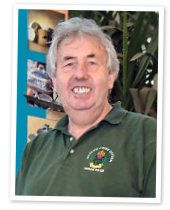
Michael and Claire Bruce, the forward-thinking owners of Glen Tanar Estate, near Aboyne on Royal Deeside, have this year demonstrated that there is no need to persecute hen harriers or golden eagles to accomodate driven grouse shooting.
Glen Tanar Estate forms a substantial part of the Cairngorms National Park, and the Estate includes several EU Natura 2000 sites as well as a National Nature Reserve. Golden eagles and hen harriers have bred successfully on the Estate for many years. However, shooting parties have been absent since the late 1990s when the local grouse population dropped below a sustainable level – partly due to predation by hen harriers but also partly due to land management practices.
In 2010, in addition to normal moor management, Michael started a hen harrier diversionary feeding experiment to try and discourage the harriers from taking too many grouse. Feeding started when there were three eggs in the harriers’ nest and continued until the chicks fledged. The supplementary food included chopped up white rats and poultry. Three chicks fledged successfully, and a satellite transmitter was attached to one male and one female chick so that the dispersal movements of these young birds can be monitored. In addition to the successful harrier breeding attempt, driven grouse shooting began on August 12th 2010 for the first time in over a decade.
Michael said: “Estates where shooting forms an important part of the economy have to find innovative ways of reducing conflict between raptors and red grouse. Supplementary feeding may be one way of doing this“.
He added that at Glen Tanar Estate, concerns over boosting the hen harrier population were mitigated by the presence of golden eagles. “Some estates fear that feeding hen harriers will simply increase the harrier population and increase predation on grouse, and there is a risk this may be true. However, feeding hen harriers has never been tried before in the presence of golden eagles, which themselves predate harriers. The hope in Glen Tanar is that eagles, harriers and grouse will all find a level that allows commercial shooting of driven grouse to take place“.
Golden eagles on the Glen Tanar Estate this year produced two of the heaviest chicks ever recorded. The resident adult eagles had been fed over the winter with thin, un-saleable deer carcasses. The food was given partly to attract the eagles to a regular winter-feeding site where it is hoped to provide a photographic hide in the future. However, Michael believes that winter feeding of golden eagles should also reduce predation on grouse.
Michael Bruce and his team on the Glen Tanar Estate deserve our full admiration for their efforts, and it is hoped other estate owners will follow his lead.
If you wish to show your support of Glen Tanar Estate, encourage your friends, family, colleagues, everyone, to visit them for holiday cottages, walking, wildlife safaris, fishing etc. More information can be found on the Glen Tanar website: http://www.glentanar.co.uk/


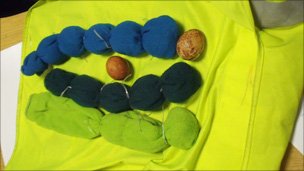 Today, convicted wildlife criminal Jeffrey Lendrum was sentenced to 2.5 years in prison by Judge Christopher Hodson at Warwick Crown Court, England. He had been arrested in May at Birmingham International Airport when he was found to have 14 peregrine eggs wrapped in socks and strapped to his body. The eggs had been stolen from four separate nests in South Wales. Investigators believe they were stolen to order for an Arab falconer in Dubai.
 The court was also told that Lendrum had previous convictions for similar offences in Zimbabwe and Canada. Of the 14 eggs stolen in this case, 12 chicks hatched and 11 survived. 7 of these were fostered into nests in southern Scotland and 4 were reared and released in England.
 Raptor Persecution UK