
A large pit containing dead Pheasants, Red-legged Partridges, Wood Pigeons, deer parts, and a lot of rubbish, including a burnt mattress, has been found on a shooting estate in the Cairngorms National Park.
Last October, a blog reader was walking on the Glenbanchor and Pitmain Estate, to the north of Kingussie when they saw what they described as “an estate vehicle” tipping dead birds in to an area at the side of a track that was concealed behind a spoil heap.
The walker returned to the site once the vehicle had left and took these photographs:
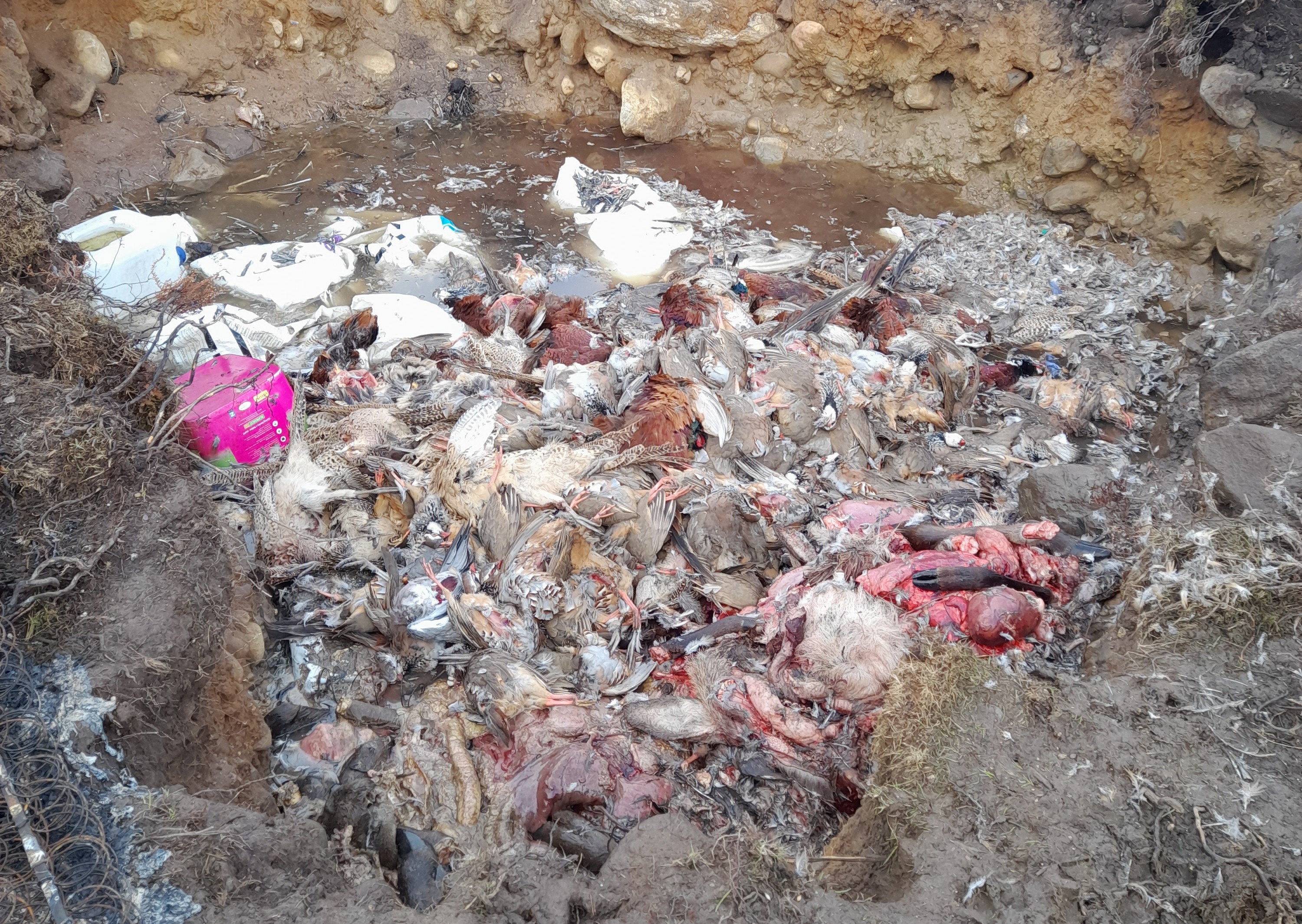
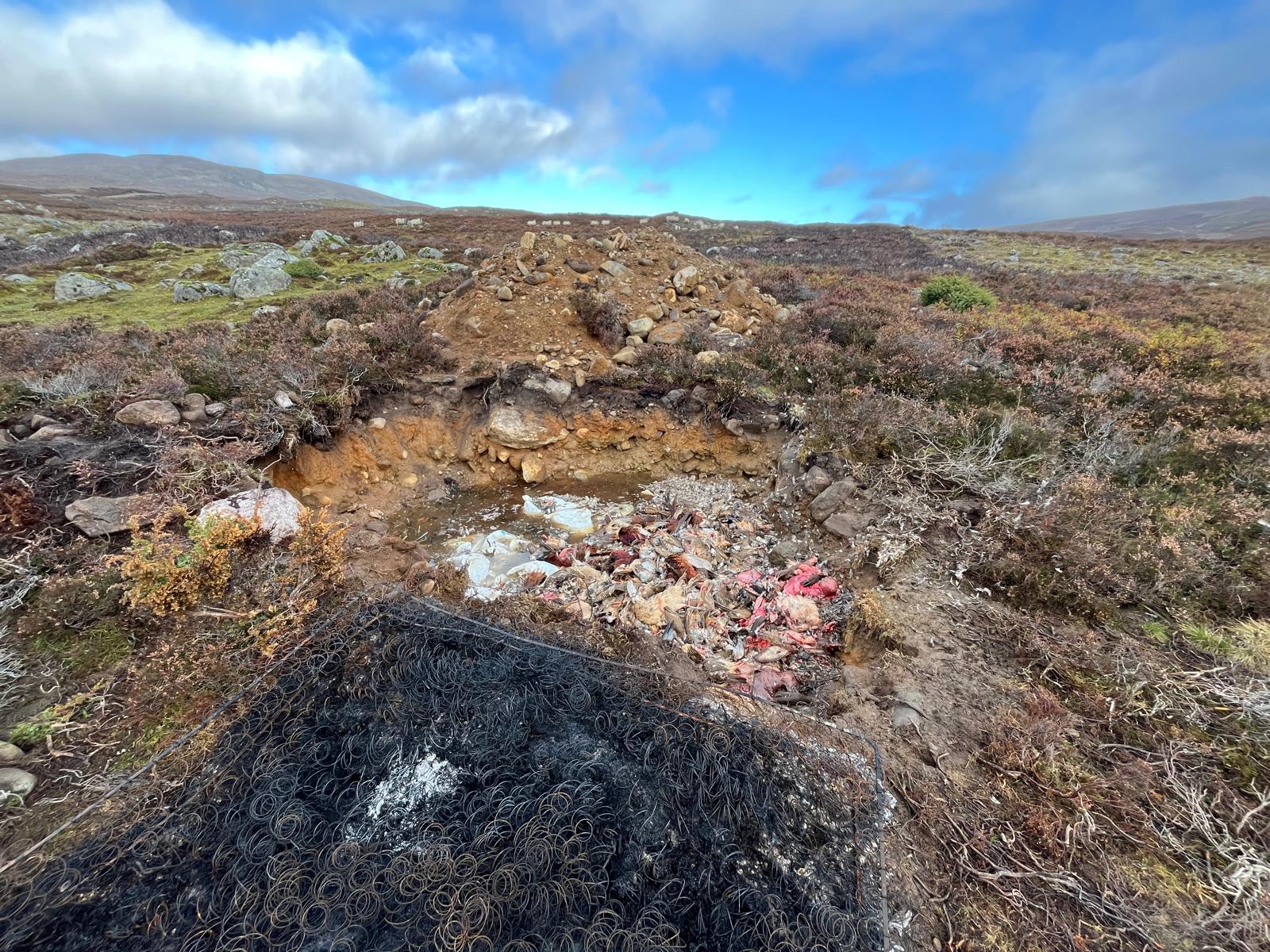

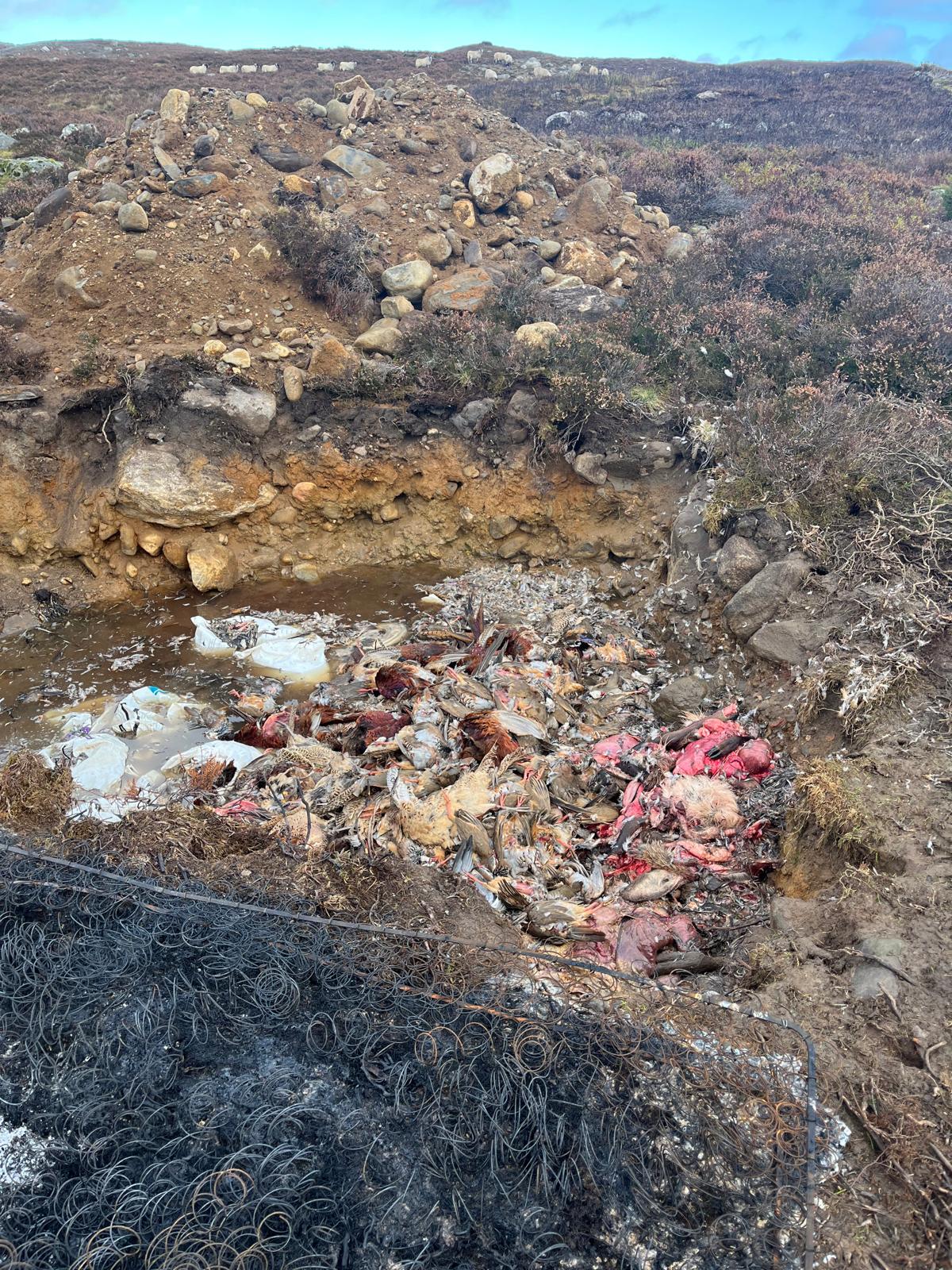
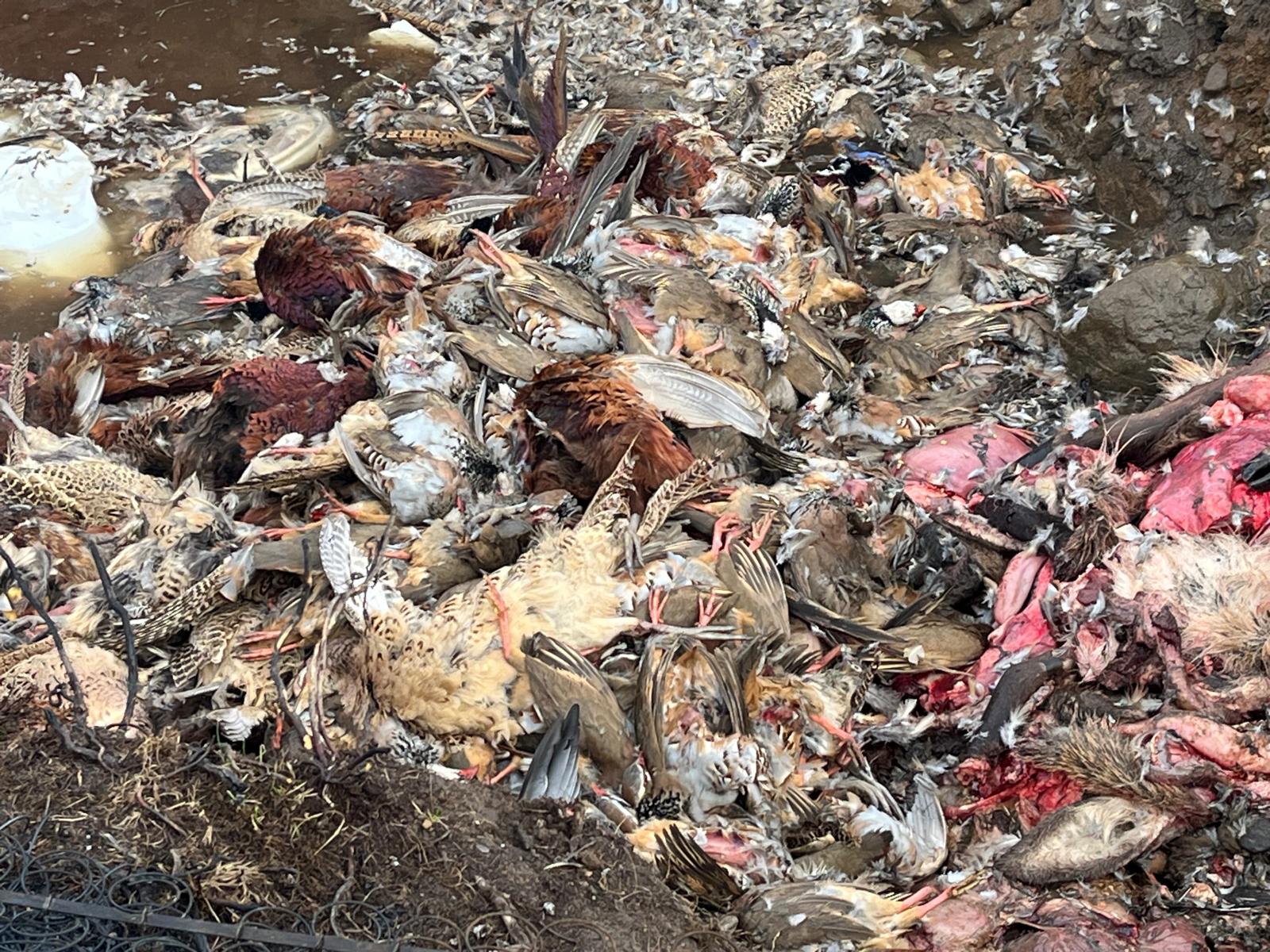
It appears that at least some of the gamebirds have been ‘breasted out’ – their breast meat removed, presumably for sale/consumption, and the carcasses then dumped in the pit.
Regular blog readers will know that the dumping of shot gamebirds is a common and widespread illegal practice that has been going on for years, despite the repeated denials by the shooting industry. Often they’re fly-tipped by the side of the road (e.g. see here).
In this case, the pile of rubble on site suggests that this is a burial pit, and perhaps the burnt mattress is used to cover the pit temporarily, in between dumping visits.
The blog reader reported this incident to SEPA (Scottish Environment Protection Agency) to see whether an offence had been committed but SEPA apparently thought ‘they’re subject to a waste disposal exemption’ and therefore this doesn’t constitute a crime.
It’s hard to believe that dumping gamebirds for burial is legal, especially when the country is in the grip of Highly Pathogenic Avian Influenza, but the regulations are very confusing.
I’ve done a bit of research on this but I’m still not sure which regulations apply and which don’t.
If the gamebird carcasses are classed as animal by-products (and there are questions around that – it’s complicated!) then disposing of them by burial is unlawful due to the risk of spreading disease through residues in the soil, groundwater or air pollution (Animal By-Products (Enforcement) (Scotland) Regulations 2013).
There are exemptions, in areas of Scotland classed as ‘remote areas’. However, the location of this particular pit lies outside the ‘remote area’ and so an exemption wouldn’t apply:
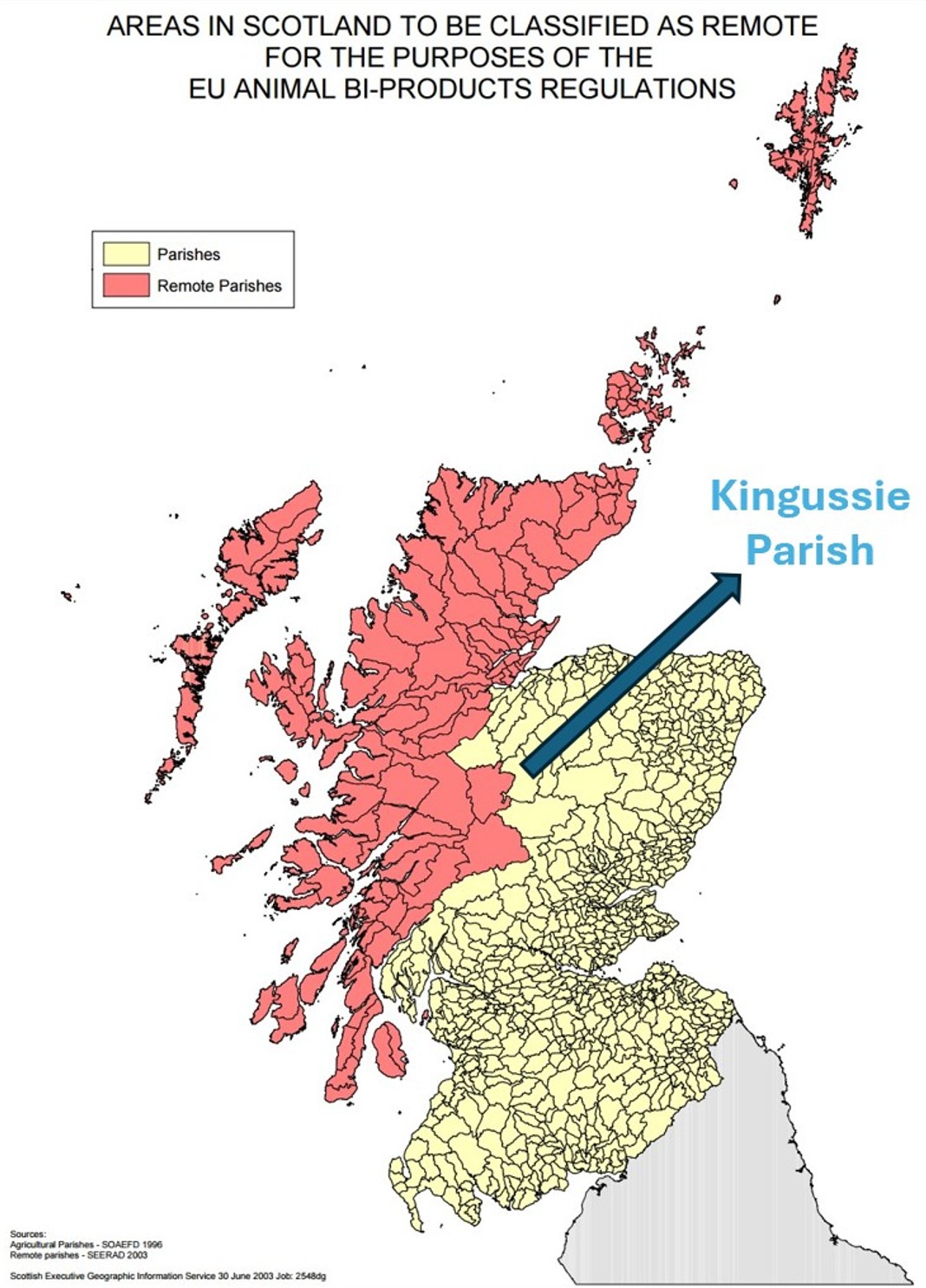
I need to do some more work on this, and talk to the local authority (Highland Council) who I believe would be responsible for enforcement of any breaches of the Animal By-Products legislation.
But whether this is legal or illegal, it’s ethically appalling.
And I dare say the Cairngorms National Park Authority will be taking note, given its stated intention to:
‘Ensure that all pheasant and partridge shoots adhere to best practice and that all gamebird releases are sustainable and do not negatively impact on native biodiversity‘
and
‘Depending on the evidence gathered, investigate the use of Park Authority powers to regulate gamebird releases and develop a regulatory approach if required‘ (see here).
For the benefit of the Cairngorms National Park Authority, and anyone else who wants to take a look, here are the location details of the pit (estate boundary sourced from Andy Wightman’s Who Owns Scotland website):
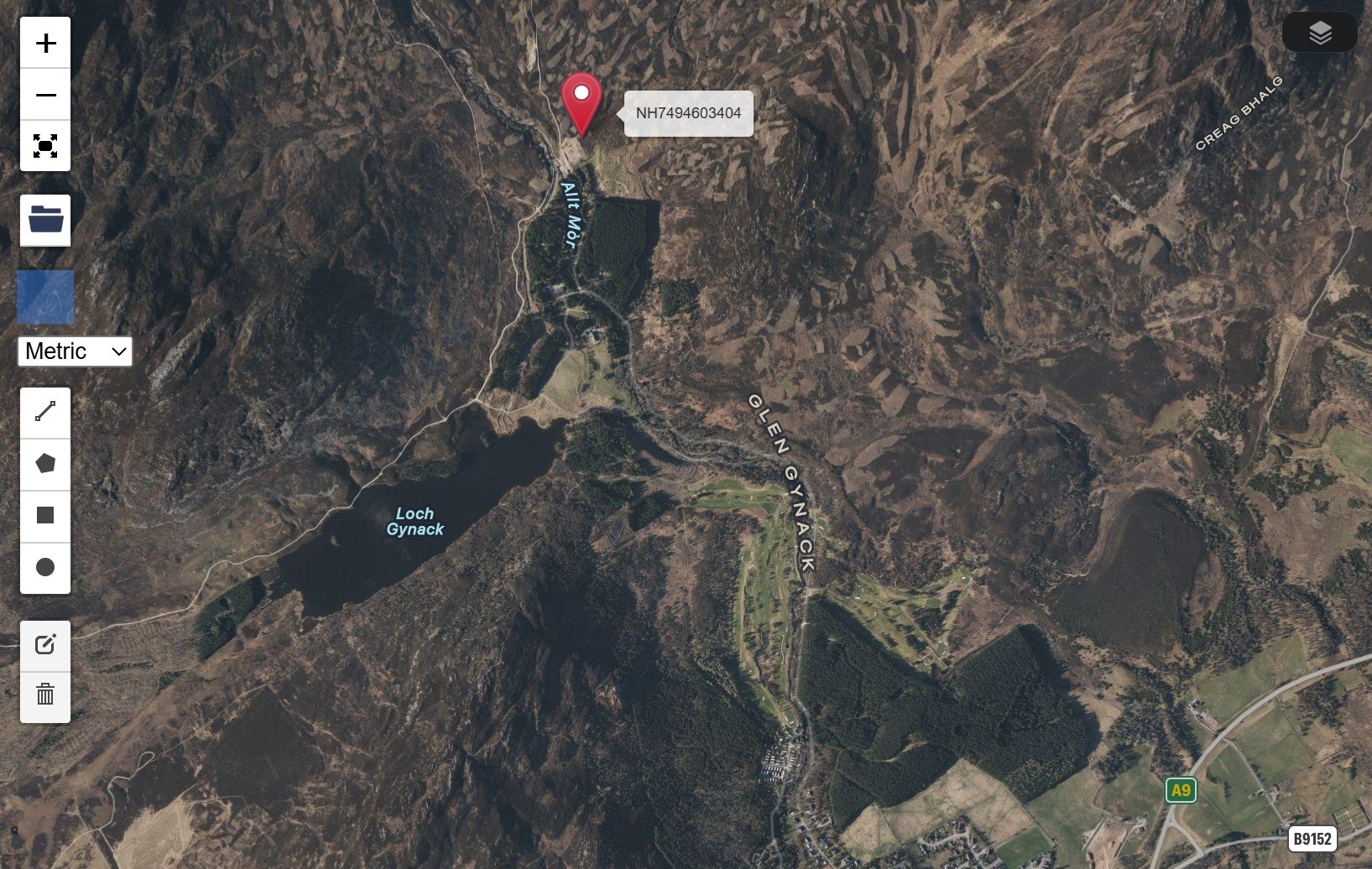
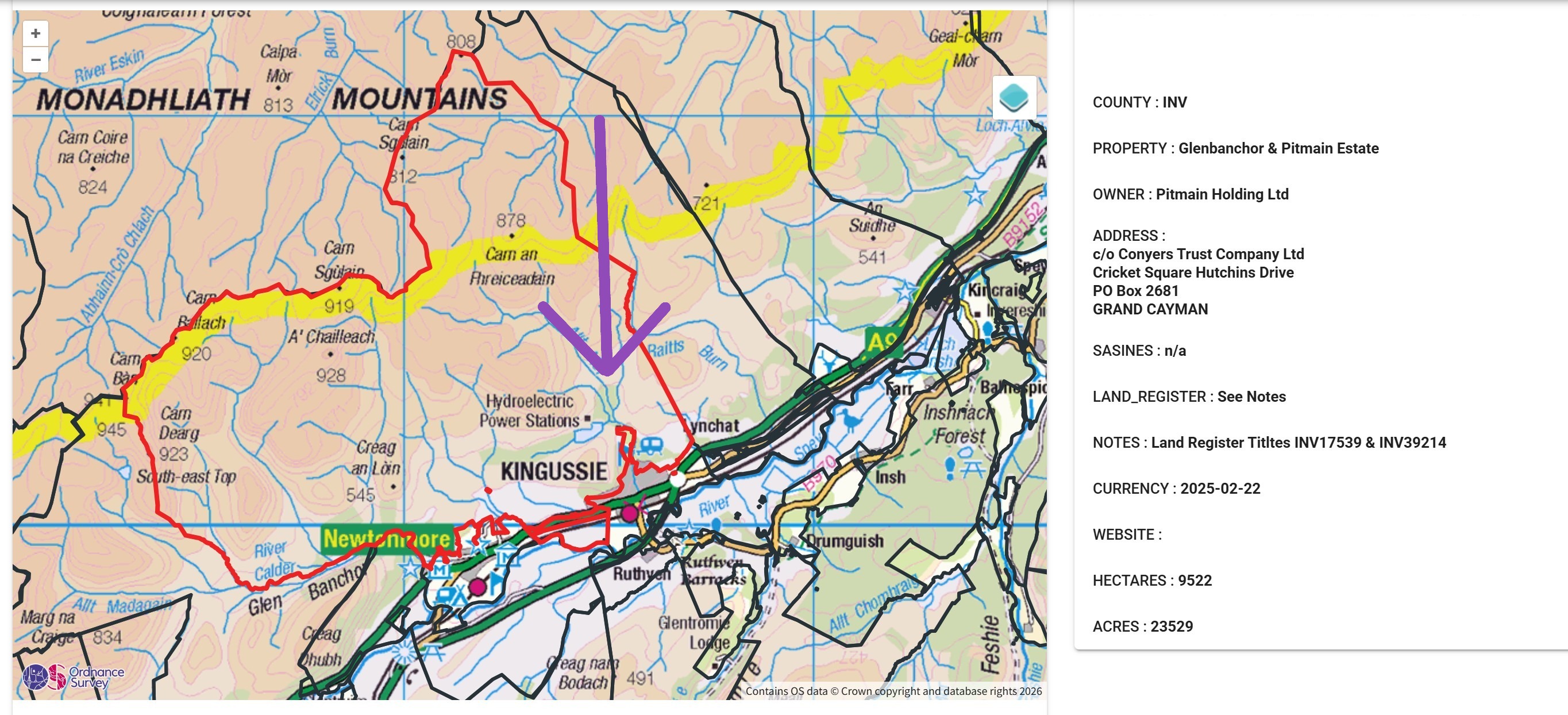
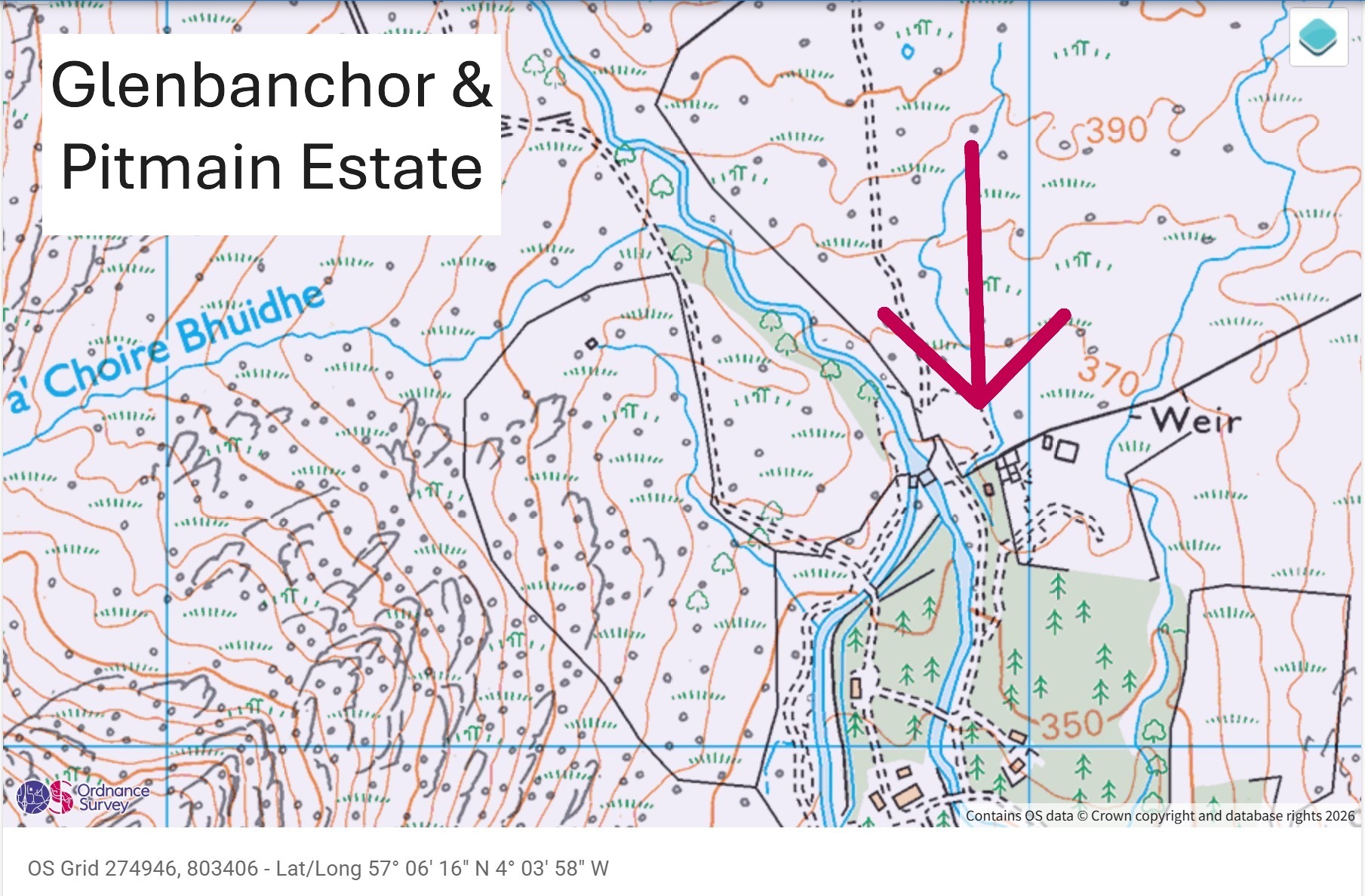
It’s my understanding that NatureScot is currently considering whether police evidence about an unrelated alleged wildlife crime on this estate is sufficient to impose a three-year General Licence restriction (see here).
You may also not be surprised to hear that this isn’t the only gamebird-dumping pit that’s been found on a sporting estate in Scotland….details to follow.
 Raptor Persecution UK
Pity the walker didn’t get a picture of the vehicle and registration
We know what happens to people who record number plates and faces don’t we, nasty people do nasty things. Burning a mattress produces toxic black smoke and fumes and is no doubt illegal too, like in England.
Do-gooders been out again have they? Noseying around on someones private land and making a fuss over a few bits of dead stuff? Not understanding shooting & the rural way of life. Townies, no doubt!
Well done to them, keep it up!
And a good reminder never drink out of a moorland stream however remote and “natural” the area might appear at first glance.
You had me fooled for a minute there! What a ghastly mess this is. Good point about the water.
My experiences relate to England but …
In correspondence I’ve had with the Environment Agency, they class stink pit carcasses as bait as long as they are removed and disposed of legally once their purpose as a bait is no longer functional. That is such a subjective assessment! Many stink pits contain putrid animal carcasses and even skeletal remains. Frankly, which gamekeeper is going to sift through the piles of dead bodies to remove bait that has become waste so he can dispose of it legally! We’ve only ever achieved repeated ‘words of advice’ to the same estates!
I’ve also reported stink pits with putrid carcasses in blue tubs with holes drilled in the base and sides which have been placed in boggy, waterlogged areas, where most of the dozens(?) of bodies are below water level and the paths leading to the pits have been dug out of the boggy landscape. The water was flowing into a stream. Apparently that is not a breach of S33(1)(c) Environnentsl Protection Act 1990 which states a person shall not “treat, keep or dispose of controlled waste or extractive waste in a manner likely to cause pollution of the environment or harm to human health.” I was advised the scale of the incident was insufficient to cause pollution and the actual designated mapped stream was not within range (I think 100ft?) of the pit – even though we videoed the water flowing from the pit into the stream!
I’d be very interested to see what you learn about waste exemption licences because I’ve been told about complaints to a Council from residents being ignored of stench in a stream perhaps 1/4 mile away from a massive dung heap next to the stream. I’ve checked – the farmer has a waste exemption license – whatever that means!
“My experiences relate to England but …
In correspondence I’ve had with the Environment Agency…”
The (English) Environment Agency has long been a lost cause for the ‘environment’:-(
Some call it Regulatory Capture…
I don’t know if you have watched the truly excellent Channel 4 ‘documentary’ Dirty Business (I really, deeply, recommend) but I have met the retired Detective Superintendent (Serious Crime Squad, Anti-Corruption Unit) from that programme who does not mince his words. He described the (English) Environment Agency as part of an organised crime group…
I have seen some of the evidence regarding the prolonged, deliberate, dumping of raw sewage into our water courses, while the Environment Agency were in receipt of money from the Water Companies….
And then there is also the scandal of prolonged turning of blind eyes to wide scale waste dumping…
We have such a lot to fight against when our regulatory bodies stand idly by.
The incident you are reporting on is not, of course s stink pit. It definitely looks like illegal waste disposal. Good luck to the refer in getting enforcement action taken. We’ll done in following up your suspicions.
Hi Lizzybusy, I’d be very surprised if the location wasn’t also doubling up as a hotspot for killing “vermin”. That pile cannot fail to draw in scavenger species of all types bird & mammal, and certainly from the nearby forestry. Let’s assume they have followed changes in the law and binned all their snares – but if they used fox cage traps set around it at certain times, or crow cages – would that affect it’s status? Or even if they regularly “sat out” at a vantage point nearby waiting to shoot the “vermin” drawn in to it? I don’t know, I admit I just cannot fathom the law on these things.
I can only speak on English law. I have had substantial correspondence on stink pit bait and the Env Agency is not at all clear when bait becomes an unsafe product and therefore waste. It’s a case by case basis but, honestly, most stink pits I’ve seen contain well rotted carcasses and, frankly, they just get left in situ.
I agree with you about the location being ideal to lure predators.
I have found bait in open land near ladder traps placed on the edges of woods so this looks, in theory, to be a good location to place bait. I’ve seen perches attached to crow traps near bait to enable them to land on the trap and become used to the trap before it’s set.
My understanding is that bait is allowed to lure predators to live traps but if they trap a non-target species that animal or bird must be released.
As for snares, I’m not sure. I can’t see any artificial tracks cut into the heather leading to the dead animals in the photo and, from the aerial view, it looks like the mound is next to a turning point. In my experience, gamekeepers usually create lots of tracks leading to the central stink pit and they usually place snares a minimum of say a hundred foot or more from human tracks (paths, vehicle tracks etc).
But I’m speaking here to one of the most knowledgeable experts on this site!
Personally, I think this is just unwanted shot birds dumped illegally.
I hope something can be done about it.
Thanks Lizzybusy. Me too. This is the type of thing that I (and maybe you ,and probably plenty others too who know how shooting estates really work) often think about when I see all the photos on the Regional Moorland Groups FB of kids & teachers having a fun day seeing the nice fluffy side of estate life – “Yeah, I think – go down the track another half mile, see the piles of dead stuff , the stinkpits, have a good look in woodland edge, see the corpses of crows & rooks, jackdaws bashed on the head and thrown aside from the crow cage. See the rotted stoat corpse in the DoC trap caught by the tip of its snout. Look beyond the banners and leaflets & touring taxidermy collection – and don’t think nice banter with nice young lads in tweeds means they’re angels, ” etc, etc.