
This is a guest blog written by Fred Rutter, a 57-year-old business consultant who lives in West London and visits the Scottish Highlands every year. Publication on the RPUK blog does not indicate endorsement of any of the claims made.
WINDFARMS vs WILDNERNESS – THE DESTRUCTION OF COIGNAFEARN
We need renewable energy, so we need windfarms. But wind turbine generators and electrical infrastructure have a significant impact on their local environment. So, what is the balance?
Windmills have sprouted up all over the highlands and now plans are in to install two massive new developments in the Monadhliaths, a magnificent area of pristine, high moorland wilderness and one of the last remaining. Windfarms are proven to have a seriously detrimental effect on local bird populations, (Drewitt & Langston, 2006; De Lucas, Janss, & Ferrer, 2007; Arnett & May, 2016) and the significant study by Duriez, Pilard, Saulnier, Boudarel and Besnard, published: 13 September 2022 on long term populations, showing that even strong, healthy populations go into decline due to collisions, lost of habitat and loss of prey species.
The Monadhliaths stand on the other side of the A9 to the Cairngorms, a place now ruined by too many visitors, mountain bike tracks and Leylandii hedges. As Wikipedia says – “The landscape of the Monadhliath is one of the most ancient in Britain.” It is intact, pristine and perfect. But perhaps not for long.
This is the place where, more than 15 years ago, I saw my first Golden Eagle in the wild, where I saw my first Peregrine in the wild, where I saw my first Hen Harrier. This is the place where Merlins streak across the heather after Pipits, where red deer and wild goats appear over the hillcrest. This is a truly inspirational place where, as a human, you feel small, a place where the silence and sheer magnificence of nature feed your soul!

This September, as I stood on the valley floor taking the pics above, a Golden Eagle floated into view over the top, immediately to be mobbed by a kestrel and then yo-yoed by a pair of Peregrines. It was spectacular. If the wind turbines had been installed, that eagle coming over the top, would have been chopped to pieces.
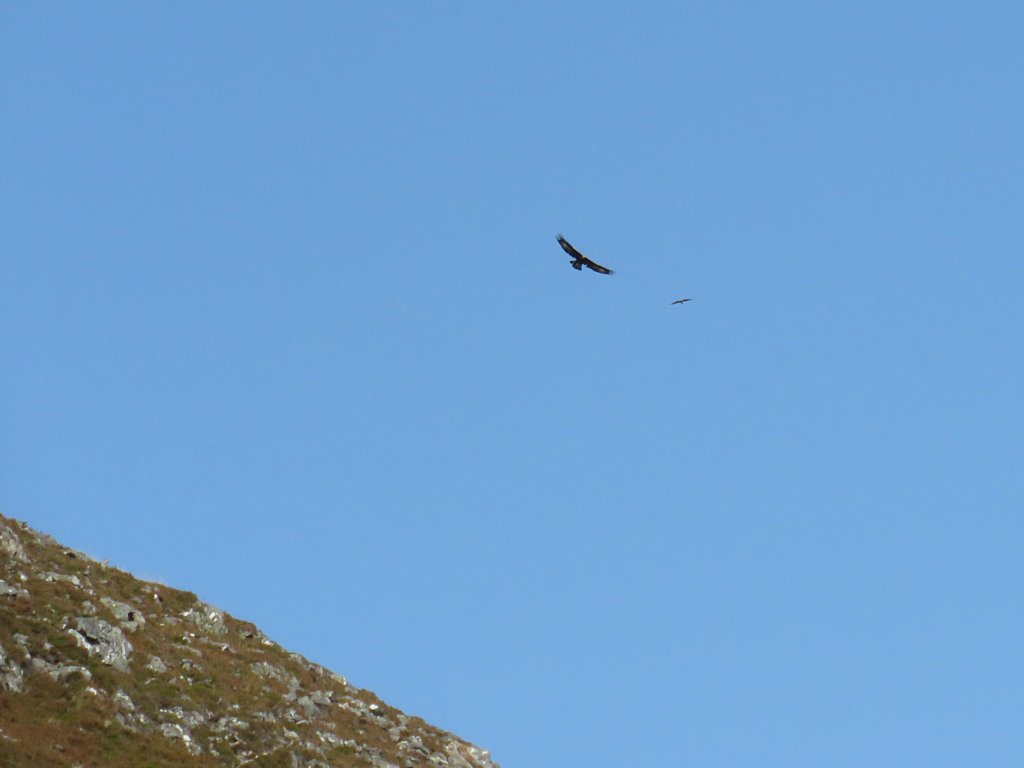
The Monadhliaths have lain undisturbed since the ice retreated. They are home to our wildest of wild, and now they propose to build service roads into the interior, plough through the peat and heather, install great chopping blades where I have watched eagles holding into the wind, install new pylons to carry the electricity and at night all this will be illuminated.

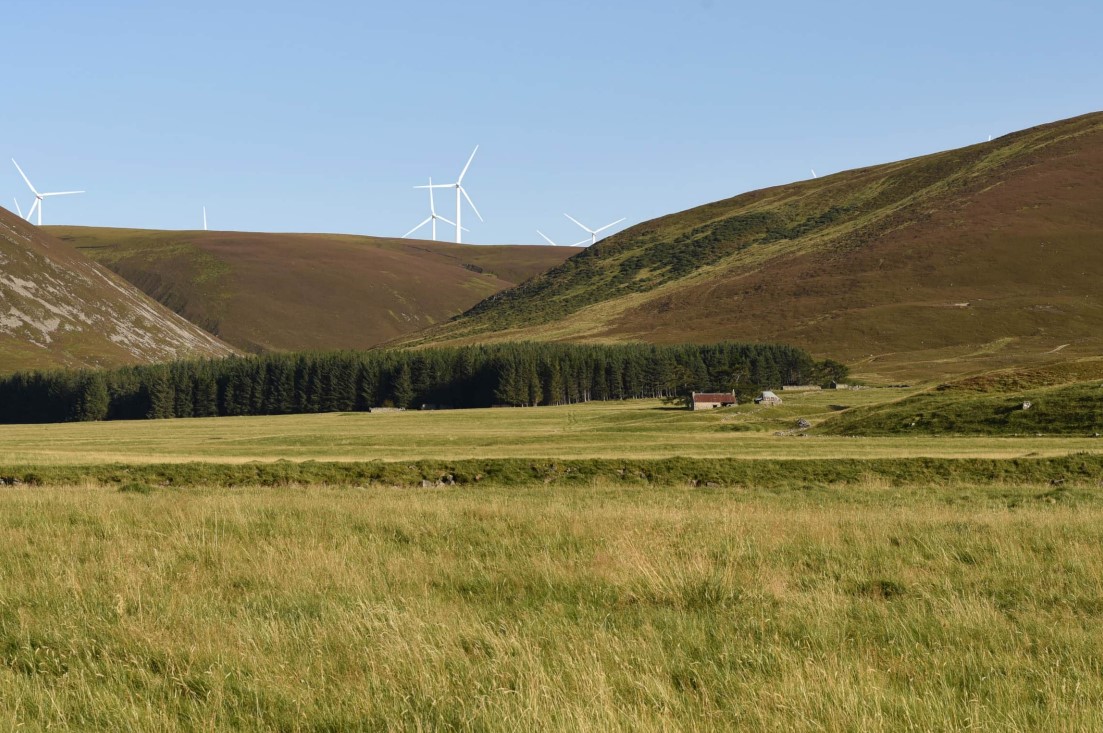
This proposal will complete destroy one of the most inspiring wild places in the UK. And there is no one really there to complain. This is more than a crying shame, this is an outrageous travesty. If this windfarm proposal goes ahead we will have lost one of our last true wildernesses forever. We must come together to protect this magical, magical place. We need wind farms, but this is completely out of balance.

You can help!
Please add your name and address to the letter (see download below) and send it to: Econsents_Admin@gov.scot and representations@gov.scot
Quoting the Reference: Highland Wind Farm ECU00005082
Here is the letter to download:
 Raptor Persecution UK
When we have millions of acres of farmland virtually devoid of wildlife one can only wonder how and why windfarms have to be put in wild landscapes or in forests for that matter – it is part of the continuing failure to think seriously about how we use land and for what.
If we are going to make comments about wind farms can we please make accurate statements. Including what is clearly false information does not strengthen the case against this development (NatureScot will be aware of the false claims). This is not an endorsement of this or any development just a plea for facts and not fantasy in (all) public debates. Wind farms are not neutral for golden eagles but being ‘chopped to pieces’ is not the most significant or likely negative impact.
All windfarm and net zero are a big expensive and unnecessary con and should be totally abolished. They didnt work for Holland they wont here. We have natural resources available which will not affect golden eagles or indeed decapitate wild birds at all. Get a proper government in power and start using it
Would it be possible for Alan Fielding to summerise the findings of the papers he listed please. This would be informative to those of us who either haven’t got time to read the papaers, or who haven’t got access to them.
I attempted to post this as a reply to Alan’s post but I wasn’t allowed to do so.
All but the Ibis paper are open access so are free to download from the links. Basically wind farms create a loss of habitat for golden eagles but this can be minimised by careful design. However, doing what is best for one species is unlikely to be universally beneficial for all species (birds, bats, mammals, flora…).
The link for the PloSOne paper is https://journals.plos.org/plosone/article/file?id=10.1371/journal.pone.0254159&type=printable
Looking at the map above, I wonder whether the data (which I assume to be peer-revieved) reflects or can be applied to such concentrations, perhaps as a result of territorial conflicts, with birds using the same corridors.
I recall a recent article about painting one blade black to reduce bird strikes. I guess that will make the things more intrusive.
The colour of the blades is not a real issue for eagles. The issue for eagles with wind farms is not so much collision, they actively avoid wind farms, but that they are an increasing loss of habitat for them.
Even before there were any wind farms on the Monadhliath it was not a pristine wilderness as the article implies.
However the Monadhliath have proved to be one of the most productive areas for golden eagles in Scotland.
We could do without yet another wind farm, hugely destructive to birds.
Vortex Bladeless are Spanish firm developing free standing column- like wind turbines. They have no blades and work through vibrations. Positive results so far, and should be on the market soon. Secondly, it has been conclusively proven that if the blades are painted black on the tips, the strike rate of birds drops conclusively. The latter has already been implemented, but not in this country obviously.
Thanks to Fred and Alan, especially, I have sent off my objection – quoting Alan’s papers.
On a strictly numerical basis, I consider the average Golden Eagle at least 41,000 times more important than the average person:-}
Having lived in an area where they put windfarms on most of the hills behind me, I can say for certain that these are not as green as their propaganda suggests. The hills were carved up to put access roads on them. These will remain for a long time. The turbines need a base station and it takes many hundreds of tonnes of concrete to keep them in the ground. The construction required huge numbers of large lorries to carry the materials needed up to them. These drove through narrow, country, lanes at high speeds, doing damage in the process. Some roads had to be widened to take the lorries, plus the blades and poles which had to be carried by road. The construction workers needed somewhere to rest and eat for which a large building for this purpose was put up on one of the hills. The whole activities represented the industrialisation of the countryside and destroyed a particularly beautiful area of unspoilt hills in the Southern Uplands. The main beneficiary appeared to be the landowner who was given massive grants for the use of his land. Needless to say, he was a titled gentleman who owned a huge amount of land in Scotland.
It would be interesting to hear an opinion from Ruth, given that she is an author on the two most recent papers cited by Alan Fielding.
Monadhliaths are not ‘wilderness’, they are, as everywhere else in Scotland, a landscape shaped by generations long, deliberate, human managment; if the heavily grazed character of it doesn’t make this obvious, the sitka plantation in the included photographs should. More so, wilderness is nothing more than a cultural aesthetic construct, and as such it is not only meaningless as an argument against changes in how land is managed, but it is contraproductive, because its inadeqaucy is blatantly obvious. If there is a good ecological argument for not siting wind trubines in the Monadhliaths, then make that argument. But this is the usual tacking of ecological concerns as a side issue on what is essentially ‘I don’t like the look of it’ statement, to make it look more compelling. It doesn’t, really doesn’t.
“But this is the usual tacking of ecological concerns as a side issue on what is essentially ‘I don’t like the look of it’ statement, to make it look more compelling. It doesn’t, really doesn’t.”
So you don’t care if Golden Eagles are driven away?