
This is a guest blog written by conservation campaigner and author Bob Berzins who has written previously on this blog here, here, here, here, here, here, here and here.
The recent changes to moorland burning regulations have been widely publicised as a ban on burning. But all that’s happened is the prohibition on burning vegetation where peat soils are 40cm or more has been changed to 30cm. This will reduce areas where burning can take place and is a welcome change, but as an illustration, around 50% of the grouse moors surrounding Sheffield can still be burnt. This guest blog takes a closer look at what that means and the effects that will continue.

Blanket biased reporting
Shame on the BBC for the prominence given to pro-shooting interests in the recent BBC News website article ‘Misinformation is creating a moorland tinderbox’, a result of the power and influence of grouse shooting lobbyists. In this piece, Tom Aspinall, RSPB Senior Policy Officer for Uplands, says peatlands are, or “should be”, inherently wet.
Something like this:

It’s important to remember the peat soils which support all the heather filled grouse moors, were formed in conditions as wet as this. Peat forms very slowly in the anaerobic heart of sphagnum mounds. This extremely wet ecosystem is the natural state of all our upland moors.
Yet we have University of York Associate Professor Andreas Heinemeyer telling us, “Re-wetting and restoring peatlands is good but it won’t necessarily make them resilient to wildfires, especially under climate-change scenarios, which clearly point out that lots of heather might still be there”.
Really?
It’s the repeated cycle of controlled burning that dries the peat, providing ideal conditions for yet more heather to grow.
Tom Aspinall tells us: “Peatland landscapes are the best means of mitigation against the risks of fire because they hold water.
“The problem with burning to try and reduce fire risk is that you put yourself in the perpetual cycle of increased fire risk, because the vegetation that grows after a burn is generally heather and heather is an oily plant, so it’s very volatile.
“When you re-wet or diversify, you’ve got a different range of plants so you break up that continuous fuel and you can affect the ability of fires to spread“.
Shooters drool over Andreas Heinemeyer’s study Protecting our Peatlands not only as justification for extensive moorland burning but as the only management tool that results in healthy moorland. But if I’ve understood his University of York report, the study actually found that land left untouched absorbed carbon whereas burnt or mown areas emitted carbon over the study period. But this data was apparently disregarded because heather beetle was present (see page 14 of the report).
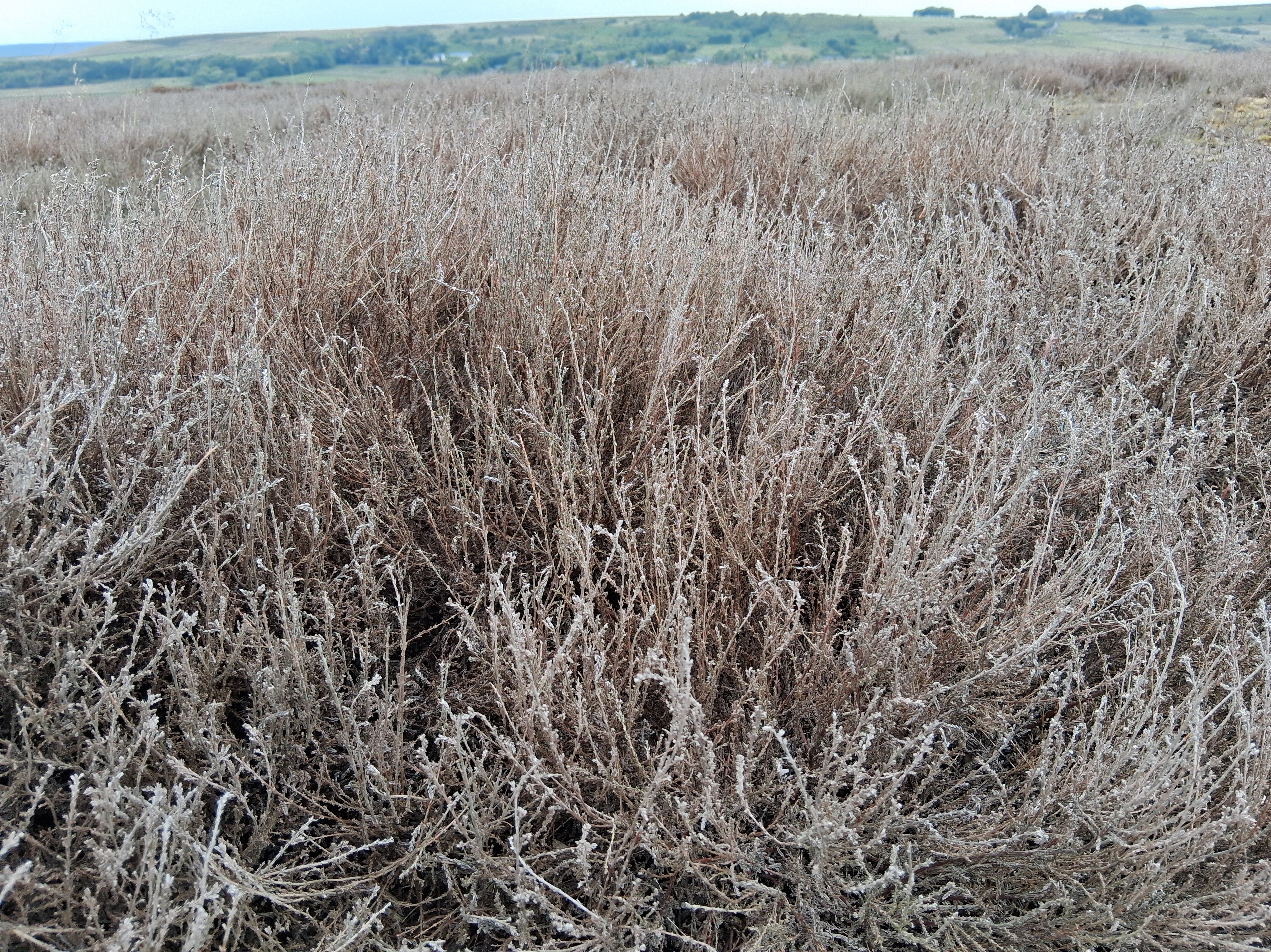
However, outbreaks of heather beetle are not just an inconvenience to be airbrushed out of a study, but a reality in our climate-changed world. Right now Peak District grouse moors have been severely affected by heather beetle. A walk over an intensively burnt and mown grouse moor reveals swathes of dead and dying heather with little or no insect or bird life.

According to Heinemeyer, these areas are emitting dangerous amounts of carbon adding to our climate emergency. But what Heinemeyer’s study has highlighted is the reality of intensive moorland management: a huge amount of burning leads to burnt areas being re-colonised by a monoculture of heather (handy for feeding grouse) but highly susceptible to devastating heather beetle attacks creating a toxic environment devoid of life. Whereas areas basically left alone are pretty much immune to heather beetle attacks.
In addition, the York University study received funding from the Moorland Association and British Association of Shooting and Conservation (BASC). The concept of ‘sponsorship bias’ in relation to studies on UK moorland burning has been examined by Professors Lee Brown and Joseph Holden of Leeds University and is well worth a read, here.
Smoke – Air pollution and Health
Shooting organisations and the media consistently fail to consider the instant consequence of moorland burning: huge amounts of acrid smoke settling over local communities resulting in levels of particulate air pollution with clear and dangerous effects on health.
Yet gamekeepers are desperate to continue this working practice.

Not so for members of the public, our local authorities and elected representatives. Green MPs are submitting these questions to Defra:
- Pursuant to UIN HL2512 tabled on 12 October 2022, does this Government plan to introduce monitoring of the air pollution and consequent health impacts of heather burning for grouse shooting on adjoining communities during the burning season, where the previous Government declined to do so?
- What consideration has been given to enhancing local authorities’ powers to monitor and act on the air pollution and consequent health impacts of heather burning for grouse shooting on adjoining communities during the burning season?
Smoke pollution from moorland burning is unregulated because Local Authorities have limited powers under the Environment Act 1990 related to nuisance burning. Moorland burning is licensed by Natural England and a land manager would merely have to argue they’d taken reasonable precautions for any enforcement action to be thrown out of court.
The burning that filled Sheffield with smoke in October 2023 occurred on peat soil as shallow as 8cm.
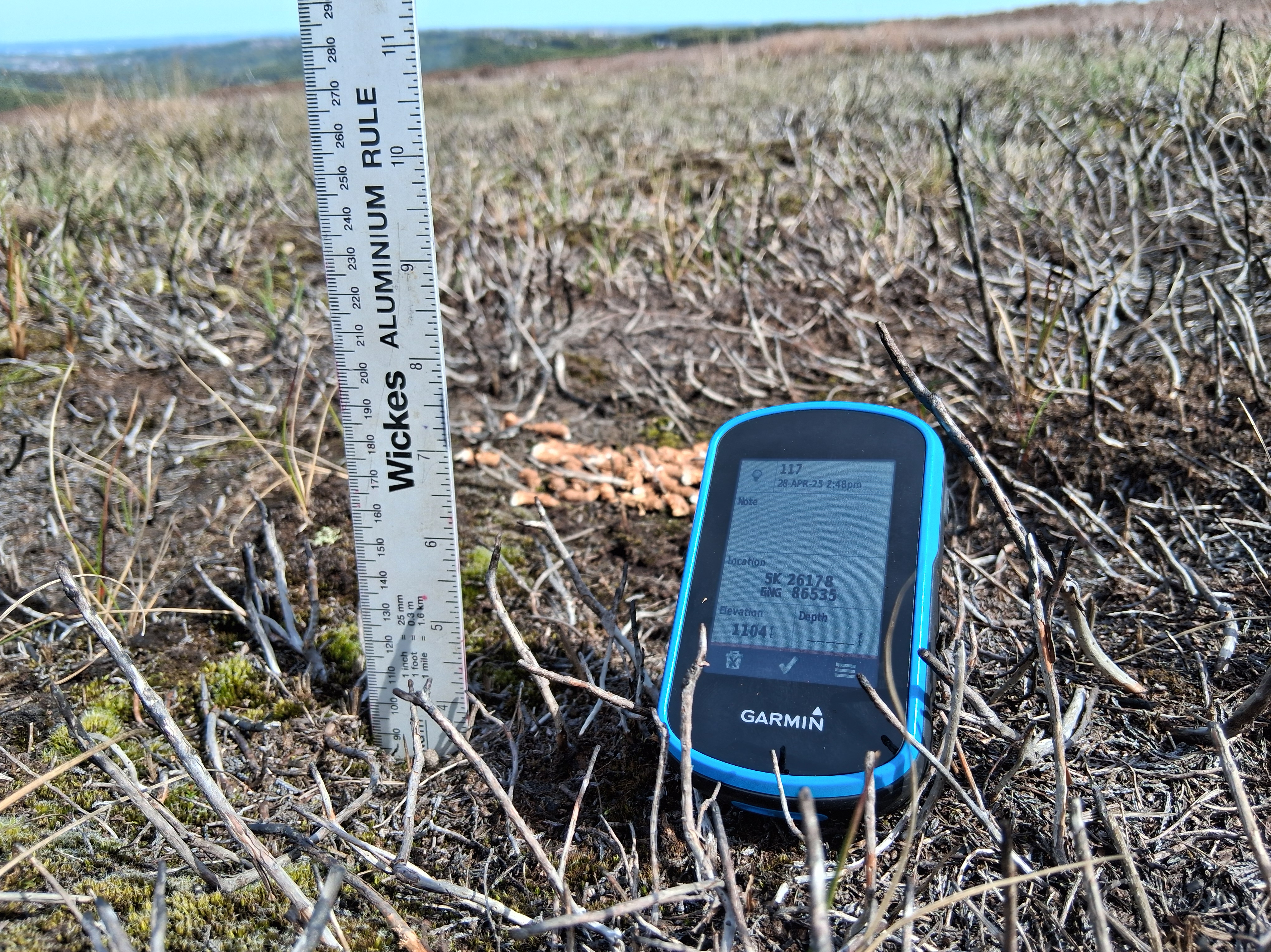
So the new 30cm regulations do not prevent a repeat of this devastating incident and Sheffield Council is powerless to take any action over the smoke pollution.
Enforcement of Heather & Grass Burning Code
We’ve had 4 years of a ban on burning over 40cm peat but only two prosecutions (here & here), despite a huge number of detailed reports of illegal burning such as this on Sheffield moorland in autumn 2024:

Law-makers have been made well aware of this lack of enforcement, so will a ban on burning 30cm peat be any different? I’m not hopeful. But you can play your part by reporting all moorland burning using the RSPB’s Report a Burn App here.
Summary
The current situation is pretty much this:
The latest regulations are a slap in the face for moorland owners. Peatland ecology and the damage caused by burning is no longer a niche academic interest and awareness extends way further.
Yet moorland owners continue to burn huge swathes of our uplands.
There’s no real enforcement of burning over 40cm+ peat and that’s unlikely to change for the new 30cm+ regulations.
Natural England don’t take enforcement action for damage to conservation sites as a result of illegal burning.
Local Authorities are powerless to prevent smoke pollution from moorland burning. The smoke produced from heather burning is unregulated.
Any reduction in the amount of burning is welcome but we need a complete ban.
ENDS
 Raptor Persecution UK
It will certainly be interesting to see whether reported instances of burning reduce under the new 30cm limit.
Having some years ago witnessed (and been involved in managing the aftermath of) a ‘wildfire’ in peat on a Surrey Heathland, where the peat was well under 30 cm, yet the burn kept cropping up for over 2 weeks, and obviously caused the release of much CO2 for that period (not to mention the loss of wildlife in an area particularly important for a range of scarce ladybirds) I don’t understand how a partial ban on the burning of areas still with an important peat resource is any better than the previous arrangement.
The burning of land has gone on for millenia, aboriginals, american indians, etc, etc. The prime issue is 8 billion people on a planet, that sustainably should hold no more than 2.5 billion. Scientists from around the globe, have constantly stated this. We are victims of our own greed, and the need to breed
“Whereas areas basically left alone are pretty much immune to heather beetle attacks”
what a load of tosh! Have you been for a look at Langholm? That has suffered from Heather beetle as much as anywhere else.
Anybody ever thought that all the re wetting that has been carried out and the planting of sphagnum plugs might have increased the areas favourable for heather beetles to lay their eggs and therefore massively increased the damage caused by them?
we have always had Heather beetle in patches surrounding the bogs or in the wetter gullies. Now them very areas have increased we have mass infestation of Heather beetle.
let’s be sensible Bob and not tell lies about areas being left alone being unaffected!!
Regarding the burning of peat:
““Whereas areas basically left alone are pretty much immune to heather beetle attacks”
what a load of tosh! Have you been for a look at Langholm? That has suffered from Heather beetle as much as anywhere else.”
The heather beetle needs about 50% heather cover to thrive, so re-wetting and then allowing the moor to develop its full range of flora and succession plants – thus ending the unnatural heather monoculture – will naturally limit the population of beetle.
How else do you explain that ancient moorland managed to survive for millennia without any human management and yet never succumbed to heather beetle?
Really? 50% to survive!
I could take you to lots of areas where the cover is predominantly bilberry with odd heather plants, roughly 5% coverage and it’s still been killed by beetle……
it’s ok reading, listening and taking in all this info but getting your boots on and getting out on the shows that there is no rule for all, every area of moorland is different, even on a within moor scale and should be managed differently
“Really? 50% to survive!“
Ah, well, I wrote “The heather beetle needs about 50% heather cover to thrive”, not just to ‘survive’. There is a difference there.
“it’s ok reading…”
If only you could:-)
“getting your boots on and getting out on the shows that there is no rule for all (sic)”
If only you could publish some peer-reviewed papers, then.