
Defra has announced increased biosecurity measures for gamebird releases amidst the heightened risk of Highly Pathogenic Avian Influenza (HPAI), also known as ‘Bird Flu’.
All of England is already in an Avian Influenza Prevention Zone (AIPZ) with mandatory biosecurity measures. Additional biosecurity measures were announced yesterday for gamebird rearers and gamebird shoot operators and will come in to force next Tuesday (26 August 2025).
These additional measures are apparently intended to minimise the risk of Avian Influenza spreading from gamebirds to wild birds and vice versa.
Defra made the announcement in a press release, as follows:
HEIGHTENED AVIAN INFLUENZA RISK WARNING ISSUED TO BIRD KEEPERS AND GAMEBIRD REARERS
Bird keepers are today being warned of a heightened avian influenza risk and are urged to tighten their biosecurity measures, particularly those involved in running a shoot or game bird rearing.
This includes commercial poultry keepers and game bird rearers and shoot operators. The risk from avian influenza continues to rise, particularly in coastal counties which are on bird migration routes and parts of the country with a significant gamebird industry
An Avian Influenza Prevention Zone (AIPZ) with mandatory biosecurity measures remains in force across Great Britain. It has been in England updated today to include additional biosecurity measures for game bird operations.
These measures reflect the specific disease risks associated with the game bird and shooting sector at this time of year and are intended to protect both wild and captive bird populations.
During outbreaks, there are also controls on the release of game birds in areas of known high risk which must be abided by. The release of game birds is not permitted in any avian influenza disease control zone.
UK Chief Veterinary Officer, Christine Middlemiss, said:
“We are seeing increasing outbreaks of avian influenza, particularly in coastal counties. Gamebird operations, alongside all other poultry keepers, must take action now to protect their birds and limit the risk of further outbreaks.
“Strong biosecurity remains our best defence, and we urge all keepers to take immediate steps to strengthen their measures. We will continue to monitor the situation closely“.
Changes for gamebird keepers include:
- Disinfecting any vehicles upon first entry to the site and each day they are in use;
- Providing one feeding station per 60 released game birds;
- Cleaning feeding and watering stations daily to remove faecal matter, feathers and spilled feed;
- Covering feeding and, where possible, watering stations to avoid contamination from wild bird droppings;
- Placed pheasants in release pens should not be fed within 50 metres of a water body frequented by ducks and other wildfowl;
- Placed game birds in release pens should not be fed within 500 metres of any poultry or other kept birds;
- During the open season, checking placed game birds in release pens daily for signs of avian influenza;
- Conducting a daily search of the area within and up to a 50 metre radius surrounding the perimeter of release pens for carcases of dead game birds and dead wild birds;
- Reporting dead wild birds to Defra using the dead wild bird reporting tool and disposing of carcases appropriately;
- Keeping detailed records of all visitors to the site (including deliveries and collections).
All bird keepers – whether of gamebirds, poultry, or other captive species – must remain vigilant for signs of disease, maintain high standards of hygiene and separation, and report any suspected cases immediately to the APHA. Avian influenza is a notifiable disease, and early action is vital to prevent wider spread.
Keepers are reminded that gatherings of poultry are banned. This includes birds from multiple locations brought onto a vehicle and then dropped off at other multiple locations.
Avian influenza is a notifiable disease. The risk to public health remains very low, and properly cooked poultry, game meat and eggs remain safe to eat.
ENDS
The UK Chief Veterinary Officer claims, “Strong biosecurity is our best defence“.
Really?
I’d argue our best defence is to ban the release of 60 million non-native gamebirds for shooting, along with the release of at least two and half million ducks, also for shooting, and for which the biosecurity measures don’t apply, as pointed out recently by Katie-Jo Luxton, Global Conservation Director at the RSPB.
Does Dr Middlemiss seriously believe that every game shoot is going to take the time and effort to clean every single feed and water station, every day? It’s hardly likely, given that some shoots are not even bothering to declare their gamebirds with APHA (there appear to be at least 20 million ‘ghost Pheasants’ unregistered according to research by Guy Shrubsole – here) so how on earth does Dr Middlemiss intend to monitor compliance with these latest regulations?

And even if they did comply with the biosecurity regulations, the massively high densities of gamebirds within these pens and in the surrounding area after release provides the perfect environment for the rapid transmission of disease through faeces and other secretions away from feed and water stations.
What if the gamebirds are already infected with subclinical Avian Influenza (acting as a reservoir for the disease but not yet showing outward signs of ill-health) and are subsequently released from a pen? What happens then?
It’s a disaster waiting to happen, not least for raptors that will feed on infected carcasses and succumb to the disease. There are already plenty of examples of this in the UK in recent years. But it needn’t happen if Defra suspended all gamebird shooting during this Bid Flu outbreak. It has the legal authority to do this, but doesn’t appear to have the backbone.
 Raptor Persecution UK
Should we all write to DEFRA or start a petition?
Far to little, and far too late.
Pheasants in this part of Exmoor were released nearly 3 weeks ago, once Avian flu was found in other penned ‘stock’.
Dozens of birds on the roads already, with perhaps 30 feeders visible on both sides of just one of the nearby lanes.
No, I can’t see these feeding stations being checked daily at all.
And a couple of bits of dry ‘disinfectant matting’ tossed half-heartedly over cattle grids to catch the odd car wheel and ‘stop the spread’.
The disaster has started already.
I am in S Devon next to an industrial shoot. I live here. I walked the valley on 26 August, saw 8 feeders and 2 or 3 thousand pheasants. No disinfection visible. Game vehicles driving on and off sites as usual. Alongside stream.
I observe farmers everyday. They speak with forked tongue.
Genuine question. How are pheasants released? Are releases phased over the shooting season or do they all get set free at once? Some very unwary young birds wandering the roads near us now are more likely to be hit by cars to provide food for kites and corvids.
The chances of these new rules being followed are zero. Oh and who is policing it as shoots have an appalling reputation when it comes to self policing.
lol.
get a grip you mad heads
B oddie
Rules are for other people when it comes to the Pheasant/Grouse botherers
It is utterly irresponsible of DEFRA to allow the release of millions of non-native pheasants into the UK countryside in the midst of a major outbreak of avian influenza. To make matters even worse, millions of ducks are also being bred and released into waterways to be shot, at the very same time this epidemic is sweeping across the country. Let’s not forget about the millions of partridge being prepared to be released or have already been released also, in reediness for shooting at the beginning of September.
This has to be one of the greatest conservation scandals of our time. We are facing one of the most devastating wildlife disease outbreaks in living memory, a virus that is transmitted by and affects birds across the whole of the UK, yet DEFRA continues to sanction the mass release of non-native birds directly into our countryside. There is no possible justification for this.
As RPUK have already highlighted, the evidence is overwhelming: the so-called “precautions” and “rules” will not be properly enforced or adhered to. In fact, it is impossible to talk about containment or management when millions of pheasants and ducks are being turned out of release pens into the wild, right now. These birds will only start spreading further once the shooting season begins, in desperate bid to get away from the area where they are being targeted.
One of DEFRA’s own rules states that pheasants in release pens should not be fed within 50 meters of a waterbody frequented by ducks and wildfowl. Yet with this scale of mass release, such a requirement is a meaningless gesture—it cannot realistically be monitored or enforced. In addition, what about the millions of ducks that, as I write this, are being reared in ponds up and down the UK, ready to be shot. These birds will inevitably be on an estate where pheasants are about or have already been released. How on earth will thousands of pheasant, and don’t forget the partridge, be prevented from making there way to the duck shooting sites or visa versa, particularly when shooting begins? Does DEFRA really not understand how shooting estates operate and that the very nature of game bird rearing and release mean that there cannot be any containment once these birds are released out into the wild.
To continue with these releases during such a catastrophic outbreak of avian influenza is reckless in the extreme. It not only undermines conservation, but also threatens the very survival of countless wild bird populations already on the brink.
We must only conclude by the staggeringly irresponsible decisions made thus far by DEFRA, that there has been major influence by the shooting industry in their decision making and they will know full well, no matter how many additional advice warnings are put out to the estates, that it will simply be business as usual resulting in the inevitable further spread of this disease. Shame on you DEFRA, shame on you.
Heather Hancock- https://www.gov.uk/government/news/heather-hancock-appointed-lead-of-defra-non-executive-boardhttps://www.gov.uk/government/news/heather-hancock-appointed-lead-of-defra-non-executive-board.
Her husband owns grouse moors in Upper Wharfedale.
https://www.gov.uk/government/news/heather-hancock-appointed-lead-of-defra-non-executive-board
https://www.gov.uk/government/news/heather-hancock-appointed-lead-of-defra-non-executive-board
https://www.gov.uk/government/news/heather-hancock-appointed-lead-of-defra-non-executive-board
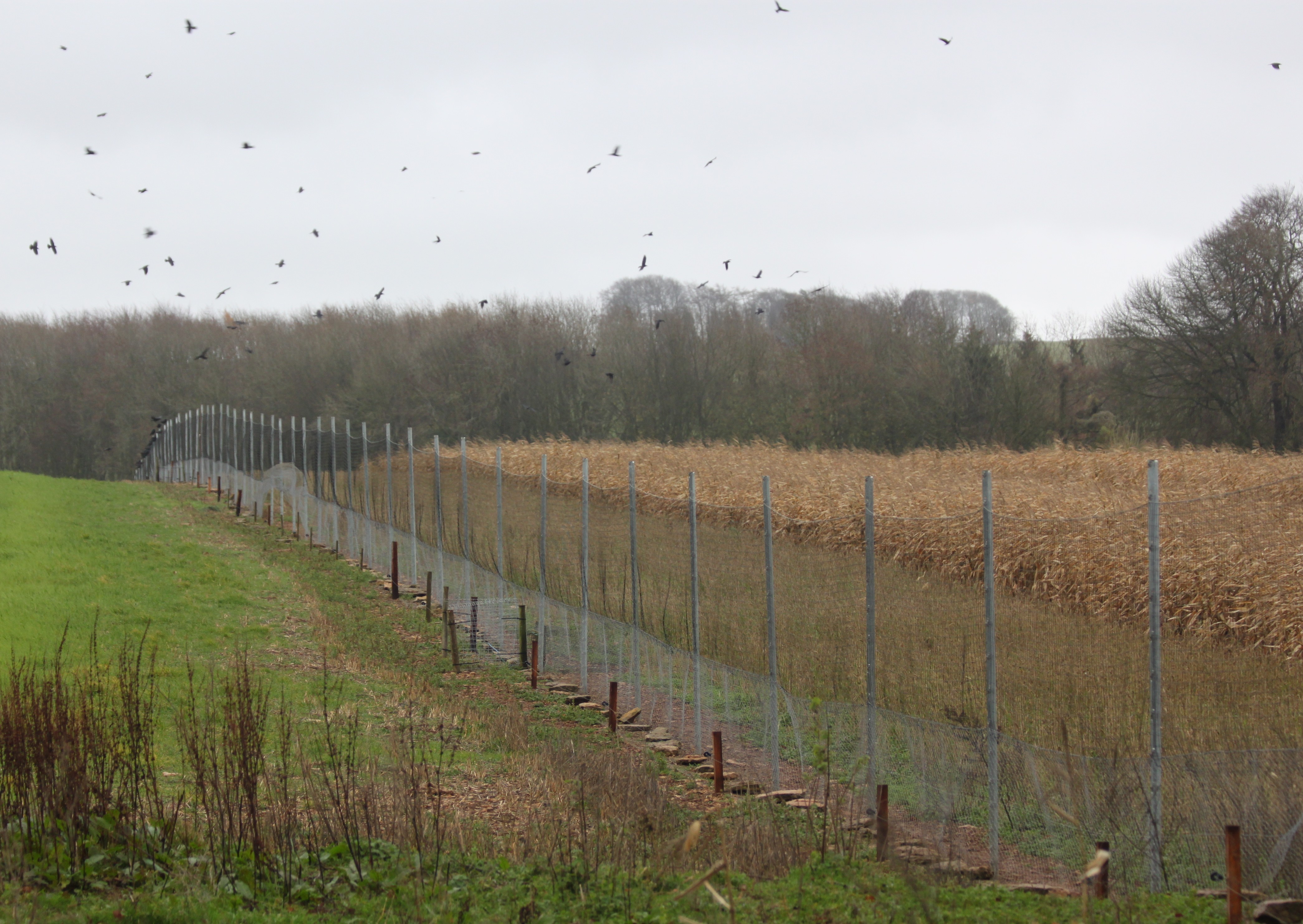
Having read the “news” (Aug21st) on BASC website, it would seem they feel strongly that farmed gamebirds in the release pen should be fine. BASC imply that there should not be an issue with NE while birds are still within “secure release pens”. But the security on all the pens I have known is concerned with the gamebirds staying in and keeping foxes and cats, etc out. Not the same by any imagination as being bio-secure i.e. at its most basic keeping out all the wild birds from robins and chaffinches to jackdaws and rooks, etc that are inevitably drawn in to scrub about around the feeders in close proximity with the gamebirds. The photo on this blog being a good example. I think they are clutching at straws to say the least.