
Press release from Exeter University (21 April 2025)
MORE TICKS CARRY LYME DISEASE BACTERIA IN PHEASANT-RELEASE AREAS
Ticks are more likely to carry the bacteria that can cause Lyme disease in areas where pheasants are released, new research shows.
Pheasants are not native to the UK, but about 47 million are released here each year for recreational shooting.
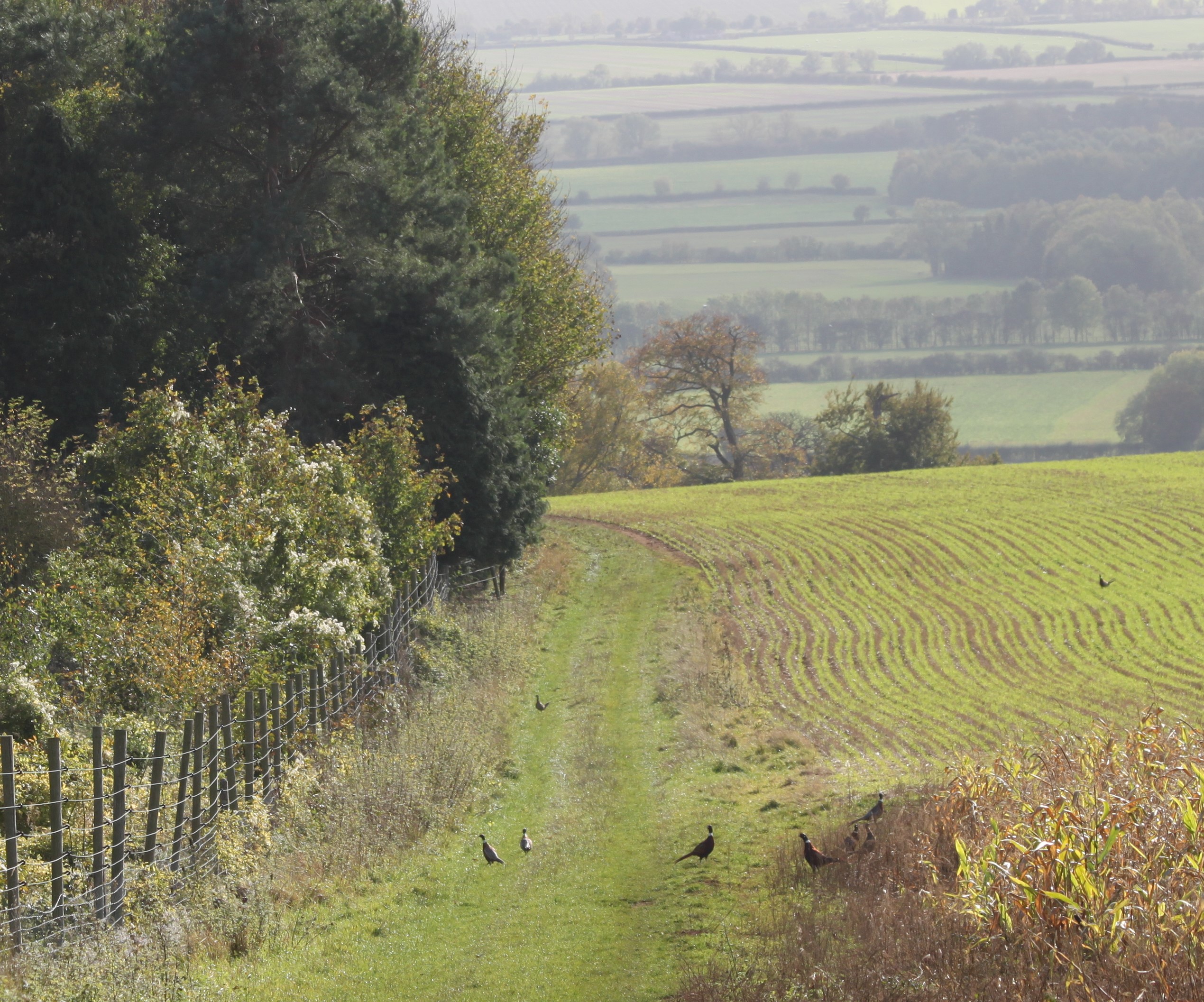
Researchers studied ticks in 25 woodland areas in South West England where pheasants are released – and 25 nearby control sites where no pheasants are released.
They found that Borrelia spp. – the bacteria that can cause Lyme disease – was almost 2.5 times more common in ticks in the pheasant-release areas.
The research was carried out by the University of Exeter and the UK Health Security Agency.
“Borrelia bacteria can live in a wide range of hosts, including pheasants, wild birds and mammals – and humans,” said Emile Michels, from the Centre for Ecology and Conservation on Exeter’s Penryn Campus in Cornwall.
“Pheasants are known to be ‘competent’ hosts of Borrelia – meaning they have a relatively high likelihood of contracting and retransmitting the bacteria.
“More research is needed, but our findings suggest there may be an increased risk of potential exposure to Borrelia-infected ticks for people – such as gamekeepers – who work in woodlands where pheasants are released in numbers.”
Researchers tested ticks at different life stages (nymphs and adults) and found that, overall, the proportion containing Borrelia was 7.8% in pheasant-release woodlands, and 3.2% where pheasants were not released.
Dr Barbara Tschirren, also from the University of Exeter, said: “Our findings are evidence of ‘spillback’ – where non-native species increase the prevalence of native pathogens.
“This can be an important route for the emergence of zoonoses (diseases that animals can give to humans).”
Dr Jolyon Medlock, head of the Medical Entomology and Zoonoses Ecology team at UKHSA, said:“While we have observed an increase in the bacteria that can cause Lyme disease in ticks, we do not have data on the resulting impact on human health, including evidence of Lyme infection.
“Following these findings, we continue to work with academic partners to better understand what drives Borrelia transmission, including the roles of climate and environmental change.”
The control sites in the study were one to two kilometres from the pheasant-release sites, so more research would be required to see if Borrelia in ticks declines further at greater distances.
Emile Michels’ PhD is funded by the NERC GW4+ DTP scheme.
The paper, published in the journal Ecology Letters, is entitled: “The release of non-native gamebirds is associated with amplified zoonotic disease risk.”
ENDS
The paper is open access and can be read/downloaded here:
 Raptor Persecution UK
I wonder whether they considered the occurence of TBE in imported birds?
“Dr Jolyon Medlock, head of the Medical Entomology and Zoonoses Ecology team at UKHSA, said: “While we have observed an increase in the bacteria that can cause Lyme disease in ticks, we do not have data on the resulting impact on human health, including evidence of Lyme infection.”
That is because Lyme Disease, itself, is NOT a notifiable disease, although – weirdly – laboratory-confirmed cases of Lyme Disease are required by law to be notified to the UKHSA. Barking.
“Lyme Disease is the most common vector-borne human infection in England and Wales.”
“It has been estimated that, in addition to the laboratory-confirmed cases, there are also between 1,000 and 2,000 additional cases of Lyme disease each year in England and Wales that are not laboratory-confirmed.”
See: https://www.gov.uk/government/publications/lyme-borreliosis-epidemiology/lyme-borreliosis-epidemiology-and-surveillance
detailed studies in Scandinavia show bird feeders for migratory bird are the biggest vector to all kind of vian born disease…getting rid of bird feeders is first step to reduce tick born desease and the spread of Lyme and TBE
“detailed studies in Scandinavia show bird feeders for migratory bird are the biggest vector to all kind of vian born disease…getting rid of bird feeders is first step to reduce tick born desease and the spread of Lyme and TBE”
I don’t believe you.
Ticks would find it extremely hard to transfer from one bird to another via any kind of hanging feeder or food table, because neither automatically provide the necessary mechanism for transfer.
Which is why deer are common hosts to ticks, yet seldom visit bird feeders.
The most prevalent communicable bird disease – all variants of avian influenza A viruses – effect aquatic species severely, yet you also seldom see such species on bird feeders.
Another widespread vector-borne bird disease called Usutu is spread by mosquitos and is usually fatal to Blackbirds, but not at all associated with bird feeders.
I notice you fail to provide a reference to these ‘detailed studies’.
Bird feeders are believed to be implicated in the transfer of trichomonosis (prevalent among finches) and the rarer bacterial/fungal pododermatitis.
The RSPB are currently trying to perform experiments to ascertain the truth of this and have already stopped their sale of flat platform feeders as a precaution (faecal matter contamination may transfer a host of diseases, such as salmonella, bird flu, camplylobacteria etc)
But, for trichomonosis in particular, communal water baths may be the more dangerous because, the causative parasite Trichomonas gallinae is highly vulnerable to desiccation. (The mechanism for transfer of trichomonosis implicating bird feeders is thought to be an infected host trying to feed, beak to beak, another bird, such as its young. But that would not spread the disease outside the family).
and yet, those whose who work with pheasants both rearing and dressing out for the table, will tell you they never see a tick on a pheasant.
funnily enough, I have dressed out thousands myself and never found a tick
“and yet, those whose who work with pheasants both rearing and dressing out for the table, will tell you they never see a tick on a pheasant.”
Big lie.
https://www.gwct.org.uk/blogs/news/2018/april/pheasants-and-ticks-our-letter-in-the-courier/
https://basc.org.uk/check-for-hidden-dangers-ticks/
https://www.thefield.co.uk/country-house/ticks-parasite-stealing-lyme-light-39698
https://www.facebook.com/GamekeepersWelfareTrust/photos/tickbitepreventionweek/1110756304430104/
https://www.moorlandassociation.org/post/ticks-understanding-the-rising-risks-and-how-to-stay-safe
Perhaps you are not in a “ticky” area of the country, or perhaps it’s because pheasants are shot in winter and ticks are a lot less active in cold conditions? I don’t know. I have seen ticks on the faces of shot grouse in August and September. This research has piqued my interest though, and out of curiosity I will be having a little look at the heads of a few fresh pheasant and red-leg roadkills this summer, particularly when I’m in areas long associated with ticks.
I live in a “ticky” area and have had up to 150 proper free range, egg laying hens per season over the years but have never found a tick on a chicken. Lots of ticks on my cattle (especially the udders), sheep and cats & dogs but none on hens or the few pheasants I have shot for the pot. I always put it down to the other hens pecking off the ticks from those who have them. I know little about pheasant behaviour but wouldn’t be surprised if it was similar.
Anyway, this does not mean any less Lymes disease around here. The way it spreads through infected ticks I think means it could still transmit through pheasants. Infected ticks are pecked off and consumed by other pheasants Does this mean they could then contract the disease?
My cattle and sheep are dosed regularly, my dogs & cats have spot on, but my hens never had treatment & never a tick have I seen.
Let us know whether you find any on the roadkill pheasants, I think this needs more investigation.
“Lots of ticks on my cattle (especially the udders), sheep and cats & dogs but none on hens or the few pheasants I have shot for the pot”
These people seem to have found them.
“Pheasants are competent reservoir hosts for the Lyme disease spirochaete, Borrelia burgdorferi s.l., and carry large, but highly over-dispersed, infestations of the vector ticks, Ixodes ricinus. “
The impact of ticks on pheasant territoriality
A. N. Hoodless, K. Kurtenbach and S. E. Randolph, Dept of Zoology, Univ. of Oxford, South Parks Road, Oxford, UK OX1 3PS (present address of ANH: The Game Conservancy Trust, The Gillett, Forest-in-Teesdale, Barnard Castle, County Durham, UK DL12 0HA [ahoodless@gct.org.uk]). – P. A. Nuttall, NERC, Centre for Ecology and Hydrology, Mansfield Road, Oxford, UK OX1 3SR.
https://doi.org/10.1034/j.1600-0706.2002.960206.x
“The UK’s most common tick-borne disease could be eradicated if pheasants were not reared in artificially high numbers for shooting, zoologists at Oxford University have said.”
Pheasants ‘source of tick disease’ Tuesday, 12 October, 1999
http://news.bbc.co.uk/1/hi/health/466809.stm
Yes it certainly does, I would say a centrally coordinated one across all UK / all NHS regions and not just looking at the role of pheasants, etc and wild mammals, but looking at the whole thing with a view to running regional / national control programmes as well as interventions testing & treating people who may well have Lymes but never get properly diagnosed. I’m reluctant to say that I truly despise any living creature (I accept everything has it’s place, etc) but with ticks, midgies & mosquitos and horseflies I’m sorry but I just can’t help it!