Shot gamebirds & geese dumped in Nottinghamshire

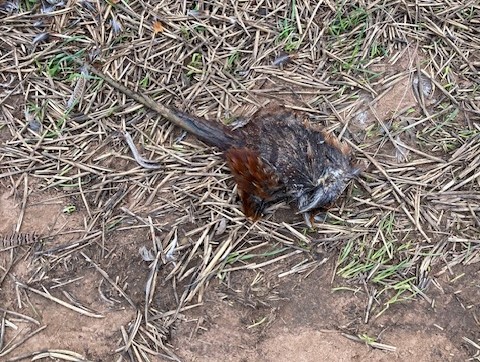
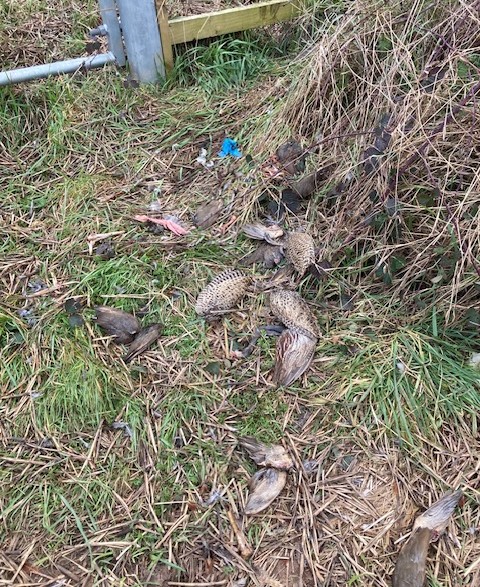
Here we go again. The remains of shot gamebirds and geese have been found dumped at the side of the road, this time in Nottinghamshire in early February 2025.

Many thanks to Helena M who has given permission for these photographs to be published. She writes:

Hi, yesterday in my village of Carlton in Lindrick Worksop Notts, I came across a very distressing sight of many dead birds at the side of the road.

Some of these birds were intact, others were in many pieces.

Please find attached photos of these poor birds remains.

This sad event has got to be the result of a barbaric act by humans, and if so can anything be done to try prevent it happening again? I think I know the answer but you can but hope that the needless suffering of animals at the hands of people may one day cease to exist.’

Regular blog readers will know that this is a common and widespread illegal practice that has been going on for years. The disposal of animal by-products (including shot gamebirds) is regulated and the dumping of these carcasses is an offence.

Previous reports include dumped birds found in Cheshire (here), Scottish borders (here), Norfolk (here), Perthshire (here), Berkshire (here), North York Moors National Park (here) and some more in North York Moors National Park (here) and even more in North Yorkshire (here), Co. Derry (here), West Yorkshire (here), and again in West Yorkshire (here), N Wales (here), mid-Wales (here), Leicestershire (here), Lincolnshire (here), Somerset (here), Derbyshire’s Peak District National Park (here), Suffolk (here), Leicestershire again (here), Somerset again (here), Liverpool (here), even more in North Wales (here) even more in Wales, again (here), in Wiltshire (here) in Angus (here), in Somerset again (here), once again in North Yorkshire (here), yet again in West Yorkshire (here), yet again in mid-Wales (here), even more in mid-Wales (here), more in Derbyshire (here), Gloucestershire (here) more in Cheshire (here), some in Cumbria (here), some more in the Scottish Borders (here) and again in Lincolnshire (here).

Unless someone was seen dumping these shot gamebirds (and geese) there’s no way of knowing who did it or from which gamebird shoot they originated. There’s no requirement for shoot managers to fit identifying markers to their livestock, which would make them traceable, because gamebird ‘livestock’ absurdly changes legal status to ‘wildlife’ as soon as the birds are released from the rearing pens for shooting (see Wild Justice’s blog on Schrodinger’s Pheasant for details).

Bizarrely, the legs/feet of the geese and one of the pheasants appear to have been cut off – you can see some of them scattered around in photo 4 – but they don’t appear to have been de-breasted (the meat removed for human consumption).

As ever, it’ll be the taxpayer who has to pay for these bird remains to be removed, not the senseless, arrogant moron who dumped them. And presumably the council workers tasked with the job will have to be wearing full protective clothing given the recent declaration of a nationwide Avian Influenza Prevention Zone (AIPZ).

Thanks, gamebird shooting industry, for yet another example of your magnificent custodianship of the countryside.

BBC rejects Scottish Gamekeepers Association’s complaint about programme that linked raptor persecution to land managed for gamebird shooting

Last November the BBC aired an episode of Highland Cops (Series 2, Episode 4) that featured a Police Scotland Wildlife Crime Officer, PC Dan Sutherland, investigating the suspicious disappearance of a satellite-tagged golden eagle on a grouse moor in the Highlands (available for next 9 months on iPlayer here, starts at 35.15 mins).

The programme followed PC Sutherland, along with an RSPB Investigations Officer, searching the moor for evidence of either the eagle or its tag.

PC Sutherland is an experienced WCO and he explained that this wasn’t the first time he’d been involved in an investigation into this type of incident and he gave a comprehensive commentary on the lengths that offenders will go to to hide the evidence of their crimes (e.g. tags being burned, tags being tied to rocks and dumped in lochs).

He also said: “So within Highlands & Islands, 100% of all birds of prey that are being killed happen on or near land that’s managed for gamebird shooting“.

The Scottish Gamekeepers Association (SGA) lodged a formal complaint to the BBC about what the SGA described in its quarterly members’ rag as having “caused unfair reputation [sic] damage” to the game-shooting industry and wanted the BBC to make “a prominent correction“.

Here’s the response from the BBC’s Executive Complaints Unit, published 13 February 2025:

It shouldn’t come as a surprise to anyone, not least the SGA, that this complaint was not upheld. The Scottish Parliament voted overwhelmingly last year to introduce new legislation (Wildlife Management & Muirburn (Scotland) Act 2024) precisely because raptor persecution, and particularly the illegal killing of golden eagles, persists on many driven grouse moors.

Well done PC Sutherland for saying it as it is, and well done to the BBC for not pandering to the histrionics of the SGA.

Petition to ban possession of dangerous, raptor-killing pesticides in Northern Ireland approaches deadline: please sign

Your help is needed to ensure a petition, calling for a ban on the possession of dangerous, raptor-killing pesticides in Northern Ireland, passes the target of 50,000 signatures before next week.

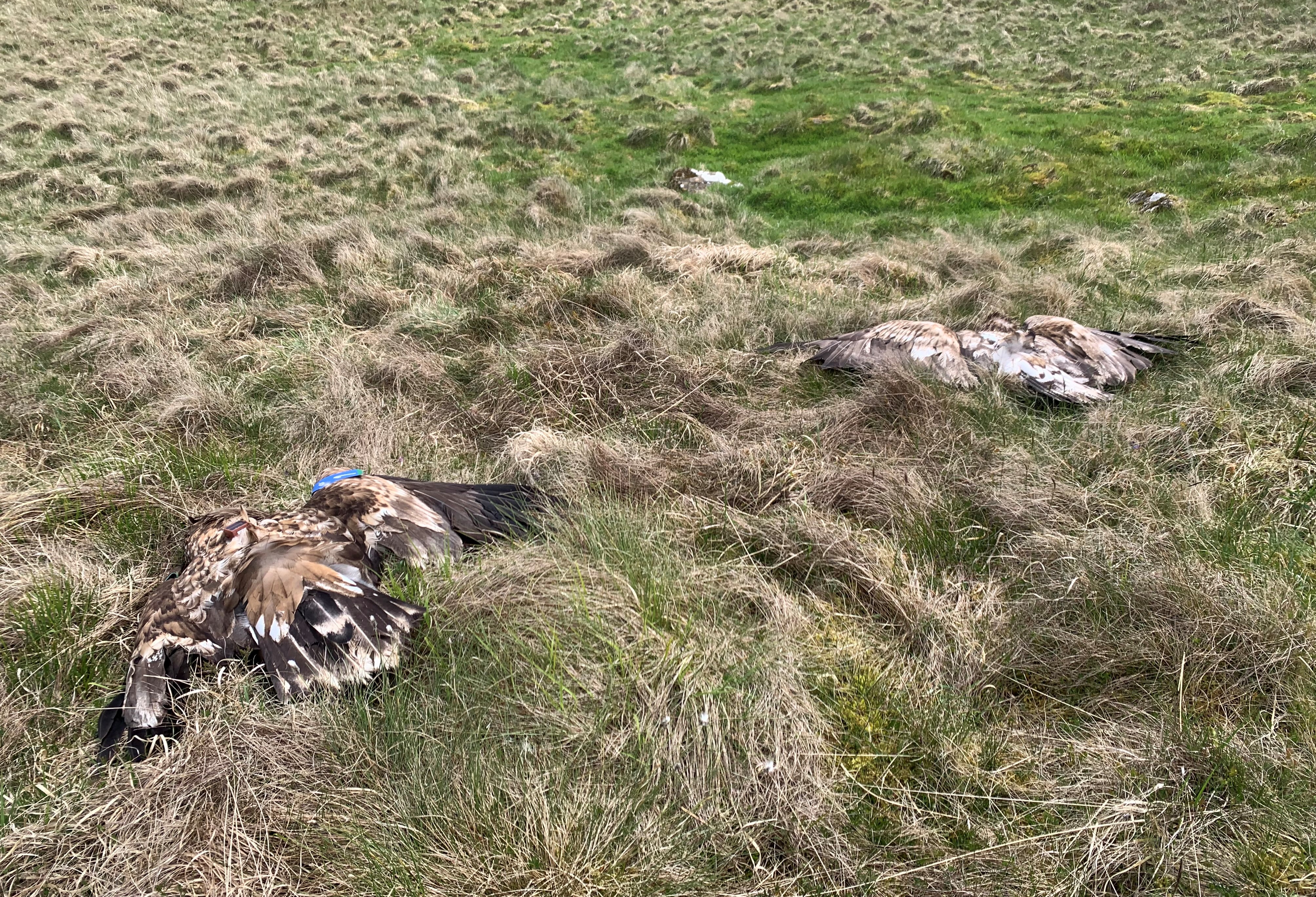
The petition was launched by the award-winning Northern Ireland Raptor Study Group (NIRSG) in July 2023 following the illegal poisoning of two young White-tailed Eagles that were found dead, side by side, on Northern Ireland’s only driven grouse moor at Glenwherry, in the Antrim Hills.

The two poisoned white-tailed eagles. Photo: Northern Ireland Raptor Study Group

The eagles had both ingested the highly toxic insecticide, Bendiocarb, which is currently only licensed for indoor use in Northern Ireland. This chemical is so dangerous that it’s an offence to even possess it in Scotland, let alone place it out in the open on a bait to attract any passing predators.

The petition calling for a ban on the possession of Bendiocarb and a range of other dangerous chemicals used to illegally target birds of prey currently has 46,206 signatures. The target is 50,000 signatures and ideally this target can be met before next week, when the NI Raptor Study Group will be announcing Phase 2 of its campaign to get these pesticides out of circulation. A petition with 50,000+ signatures will help get the attention of the politicians the NIRSG will be approaching.

You don’t need to be a NI resident to sign the petition; any decent human being with an interest in protecting birds of prey and other wildlife can sign it.

If you haven’t already signed, and want to help this important campaign, please sign the petition HERE.

Thank you.

Two job opportunities with award-winning charity Birds of Poole Harbour

The award-winning charity Birds of Poole Harbour (BOPH) is advertising two rare job opportunities.

The first one is for the role of maternity cover for the BOPH Manager, starting in spring 2025.

Salary: £36,500

Hours: 40 hours per week with occasional weekend work required. Primarily Poole and Wareham-based with occasional optional home-working.

Location: Primarily Poole and Wareham-based with occasional optional home-working.

Key Responsibilities:

  • Providing overall management of the charity, working closely with our Chair of Trustees to make sure that the charity’s operations are guided by the our core values, aims and strategy, while operating sustainably.
  • Overseeing the management of our team, providing support where required, including line management of 4-5 staff members and recruitment of new team members.
  • Ensuring the organisation fulfils its legal, statutory and regulatory responsibilities, with support from our trustee board.
  • Working with our Operations Manager to prepare and review the charity annual budget and annual report.
  • Maintaining effective communication with our Chair of Trustees, and regularly supply the board with charity updates and reports with support from the Operations Manager.
  • Providing management support for our conservation and engagement projects.
  • Identifying funding opportunities to diversify the charity’s income streams.
  • Maintaining and growing relationships with charity partners.
  • Working with our engagement team to develop our annual events calendar and providing support with the delivery of our events when required.
  • Ensuring a high standard of delivery for our outreach projects and events, overseeing feedback from the public to continue our growth.

Closing Date: 9am on Wednesday 26 February 2025.

For a job specification and details of how to apply, click here.

The second job opportunity is for a Part-time Osprey Engagement Officer from April to August 2025.

Salary: £12.60 per hour (Real Living Wage)

Hours: 15 hours per week, w/b 14th April – 31st August. Due to the nature of our events, this position will require working regular Saturdays and outside of regular working hours.

Location: Wareham and Poole based.

What you’ll be working on: You’ll be helping our team to deliver an ambitious events schedule through the spring and summer, including our Carey Osprey Tours led in partnership with Careys Secret Garden, as well as our Osprey Cruises during August.

During the spring and early summer you will primarily be responsible for delivering three 2-hour sessions per day to view and interpret the nesting Ospreys at Careys Secret Garden with groups of up to 12 people, informing them about the exciting Poole Harbour Osprey Translocation Project, the nesting pair, and engaging them with the other birdlife that can be found onsite. Later in the summer, you will provide support with spotting and commentary on our award-winning Osprey Cruises around Poole Harbour. This role will be well-suited to an aspiring and enthusiastic ornithologist with excellent communication skills and a good knowledge of British birds.

Closing Date: 9am on Monday 3 March 2025.

For a job specification and details of how to apply, click here.

“The Toxic Restaurant” – spoof video highlighting toxic lead ammunition sends BASC into meltdown

In the build up to a forthcoming decision by the DEFRA Secretary of State (and his counterparts in the devolved governments) whether to accept the HSE’s recommendations to ban the use of toxic lead ammunition (see here), the Wildfowl & Wetlands Trust (WWT) has today released a spoof video highlighting the dangers of poisonous lead shot to the environment, wildlife and human health.

The video is set in a fictional restaurant called the Duck and Cover and features Megan McCubbin ordering the toxic lead roast pheasant…

This is a welcome new campaigning approach by the WWT, using humour to get across an important message about toxic lead ammunition, an issue with which this organisation has long-standing interest and expertise.

The idea is not only to educate the public about the harm caused by toxic lead ammunition, but also to encourage people to join in with the wider campaign to send a strong message to DEFRA Environment Secretary Steve Reed MP urging him to make lead history (see here for how you can help).

Predictably, not everyone is happy with the campaign, and particularly the spoof video. The British Association for Shooting and Conservation (BASC) has published the following apoplectic statement on its website:

The BASC statement is actually funnier than the spoof video.

BASC considers the video to be damaging to the reputation of game shooting and food-related businesses linked to sustainable shooting“.

Really? I’d argue the damage being caused to the reputation of game shooting and food-related businesses lies firmly with the game shooting industry’s embarrassing failure to (a) comply with the legislation that forbids the use of toxic lead ammunition in sensitive wetland environments in England (e.g. see here) and in Scotland (e.g. see here), and (b) to meet its own commitment to a five-year voluntary transition away from toxic lead ammunition across the whole of the UK, as evidenced by the continued sale of lead-contaminated gamebirds in supermarkets and other stockists (e.g. see here and here).

BASC is also astounded that the video can be released by an organisation whose Chief Executive – Sarah Fowler – enjoyed an evening as a guest of the sector-leading Eat Game Awards in 2024‘.

Astounded‘? Why? Does BASC think that just because someone attended an industry event in a professional capacity that should prevent her organisation from ever criticising that industry’s ongoing criminality and dirty, dangerous practices? Just because Natural England signed up to such an agreement doesn’t mean that the silence of others in the conservation sector can also be bought so easily.

And by the way, the ‘sector-leading’ Eat Game Awards gave the prize of ‘Best Large Game Retailer‘ in 2024 to Waitrose, you know, the supermarket that has claimed for at least three years not to be selling game meat contaminated with toxic lead ammunition but has been caught with its pants down three times, leading to an official complaint being made to the Competition and Marketing Authority about Waitrose’s untruthful and inaccurate advertising.

Garry Doolan, BASC’s Deputy Director of Communications & Public Affairs said (amongst other things), “The inclusion of species such as pheasants and grouse – neither of which are wetland birds – further highlights the lack of focus and accuracy in their [WWT’s] messaging“.

That’s hilarious, Garry. An ex- tabloid hack from the Daily Mail telling a highly-respected conservation charity to stay in its lane and stick to ‘accuracy’! Besides, its perfectly legitimate for the WWT to focus on pheasants and grouse because the shooting of these species is a significant source of the dumping of 7,000 tonnes of toxic lead ammunition into the environment every year (not that the WWT needs the approval of BASC for its campaign output).

At least he didn’t attack Megan this time – perhaps he’s learned from his previous outburst of targeted, abusive and aggressive commentary.

Garry also claims that the video “has only served to diminish WWT’s reputation“. Actually, I’d argue it’s done the exact opposite. I applaud WWT’s willingness to put its head above the parapet and shine a big spotlight on the atrocities of the game-shooting industry and the charity has gone up in my estimation because of it.

This WWT video will likely reach a new audience who were previously blissfully unaware of the damage being caused by gamebird shooting and that’s probably what BASC is afraid of, hence it’s attack.

If you’ve enjoyed the spoof video and want to join over 10,000 others who have already sent an e-action to Steve Reed MP urging him to accept the HSE’s recommendation to ban the use of toxic lead ammunition, you can take action here.

Parliamentary questions lodged on grouse moor licensing shambles in Scotland

Regular blog readers will know that NatureScot made a sudden and controversial decision last autumn to change its approach and amend the brand new grouse moor licences that had been issued to sporting estates in Scotland under the new Wildlife Management & Muirburn (Scotland) Act 2024.

See previous blogs herehereherehere, and here for background details.

The changes made by NatureScot significantly weakened the licence by changing the extent of the licensable area from covering an entire estate to just the parts of the estate where red grouse are ‘taken or killed’, which on a driven grouse moor could effectively just mean a small area around a line of grouse butts. The licence was further weakened by NatureScot reducing the number of offences outside the licensable area that could trigger a licence revocation.

Photo of a line of grouse-shooting butts by Richard Cross, annotated by RPUK

Freedom of Information responses later revealed that NatureScot had capitulated on grouse moor licensing after receiving legal threats from the grouse shooting industry. Secret and extensive negotiations then took place between NatureScot and a number of grouse shooting organisations, excluding all other stakeholders. NatureScot refused to release the legal advice it had received and on which it had apparently based its changes to the licence.

Thanks to those of you who wrote to the Scottish Government’s Minister for Agriculture & Connectivity, Jim Fairlie MSP, last month to ask what the Scottish Government intended to do to fix the massive loophole that now exists in the amended licence. I’ve yet to see any substantial response from him.

Meanwhile, it seems other politicians have taken a keen interest in proceedings and Colin Smyth MSP (Scottish Labour) has now lodged the following parliamentary questions:

S6W-34517: To ask the Scottish Government whether it will publish the (a) legal and (b) other advice obtained by NatureScot regarding which areas of land should be covered by a 16AA licence under the Wildlife Management and Muirburn (Scotland) Act 2024.

S6W-34518: To ask the Scottish Government what its response is to the reported criticisms from members of the conservation sector regarding the changes made to grouse shooting licences by NatureScot and, in the light of this, what steps it plans to ensure that the operation of section 16AA licences fulfils the intentions of (a) it and (b) the Parliament.

S6W-34519: To ask the Scottish Government on what dates NatureScot met (a) Police Scotland and (b) the National Wildlife Crime Unit before seeking approval for a new grouse licensing condition regarding raptor persecution from land and estates.

S6W-34520: To ask the Scottish Government what its position is on (a) the comment by NatureScot on 19 July 2026 that “raptor persecution undertaken in connection with grouse moor management could take place anywhere on a property, not just on the grouse moor itself”, and (b) whether the Wildlife Management and Muirburn (Scotland) Act 2024 needs to be amended to ensure that the 16AA grouse shooting licence covers an applicant’s whole landholding and not the grouse moor only.

These questions were lodged on 6 February 2025 and answers are expected by 6 March 2025.

There’s more going on behind the scenes. Watch this space.

Osprey cruises run by Birds of Poole Harbour charity win gold in Dorset Tourism Awards

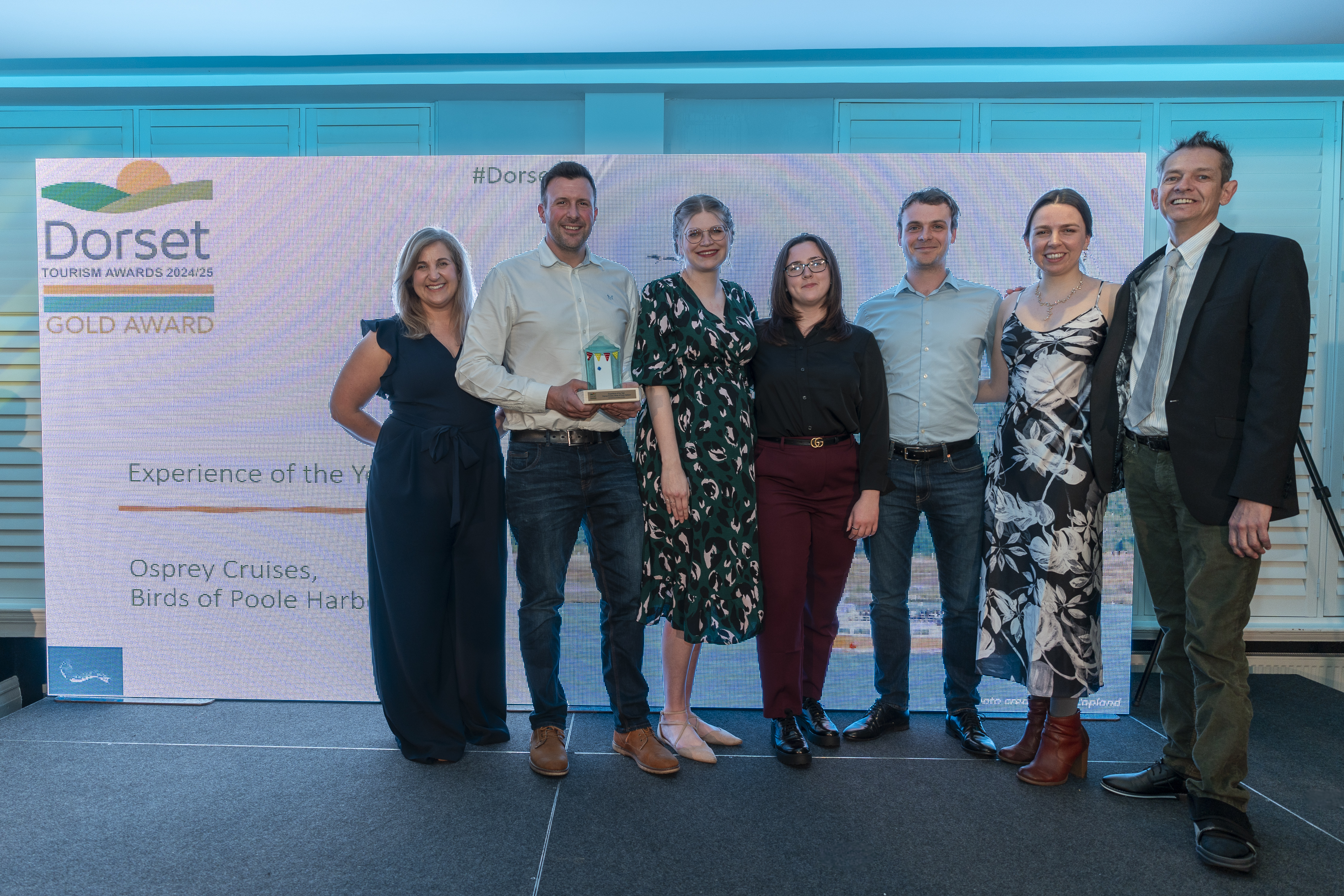
HUGE congratulations to the fantastic team behind the charity Birds of Poole Harbour whose Osprey Cruises have won GOLD in the 2024/25 Dorset Tourism Awards (Experience of the Year category)!

The Birds of Poole Harbour team collecting their gold award earlier this week. Photo by Ian Plested, IPVisuals, Dorset Tourism Awards 2024/25

If ever there was a well-deserved award, this is it, because the work of this small, passionate and knowledgeable team expands far, far beyond the popular Osprey Cruise boat trips that they run every summer.

In the world of UK raptor conservation, the charity is probably best known for successfully bringing back Ospreys to the south coast of England, working in close partnership with the Roy Dennis Wildlife Foundation. Ospreys were translocated from Scotland over a number of years, starting in 2017, and are now regularly breeding in Poole Harbour, with the first chicks hatching in southern England in almost 200 years.

The Osprey project is just one of several high impact conservation projects this team is involved with and they are currently working towards a Chough reintroduction on the Purbeck Coast. They are also heavily involved in various annual bird surveys and bird ringing projects around this important wetland site.

Public engagement and education has always been one of the core objectives of the Birds of Poole Harbour charity, and boy, do they deliver on that front!

They run a School Bird Boat Project during the winter and spring, offering local primary schools free two-hour harbour boat trips, including free coach travel to and from Poole Quay. There are free binoculars for the pupils to use and they’re encouraged to participate in identifying and recording different species whilst on board, as well as learning about natural history, conservation and their local environment. Imagine the impact those boat trips have on those kids.

In addition to the school boats, the charity delivers an extraordinary events calendar throughout the year which members of the public can pay to attend. They do guided walks and ID courses, talks and free pop-up events, but probably the most popular events are the various boat cruises which attract thousands of visitors a year, many of them selling out quickly and attracting visitors from far beyond Dorset.

I’m one of those visitors and I’ve been making the trip down to join these boat trips since 2017. Initially it was to see the Ospreys, but more recently the big draw for me is the resident pair of White-tailed Eagles that have set up home in Poole Harbour. There are plenty of other raptor species too, notably Marsh Harriers and Peregrines, and because of the diversity of habitats around the harbour there are many, many more bird species to see.

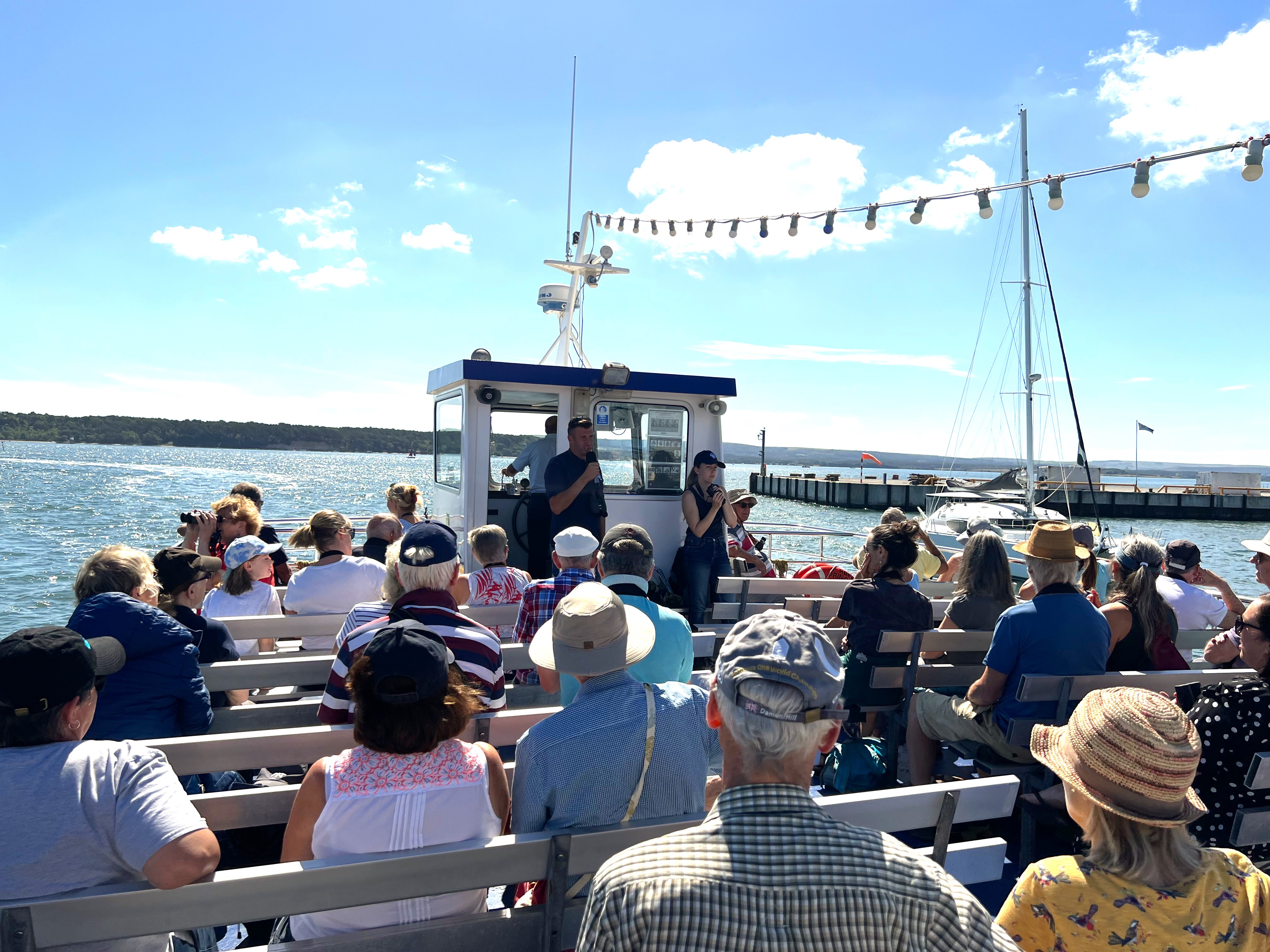
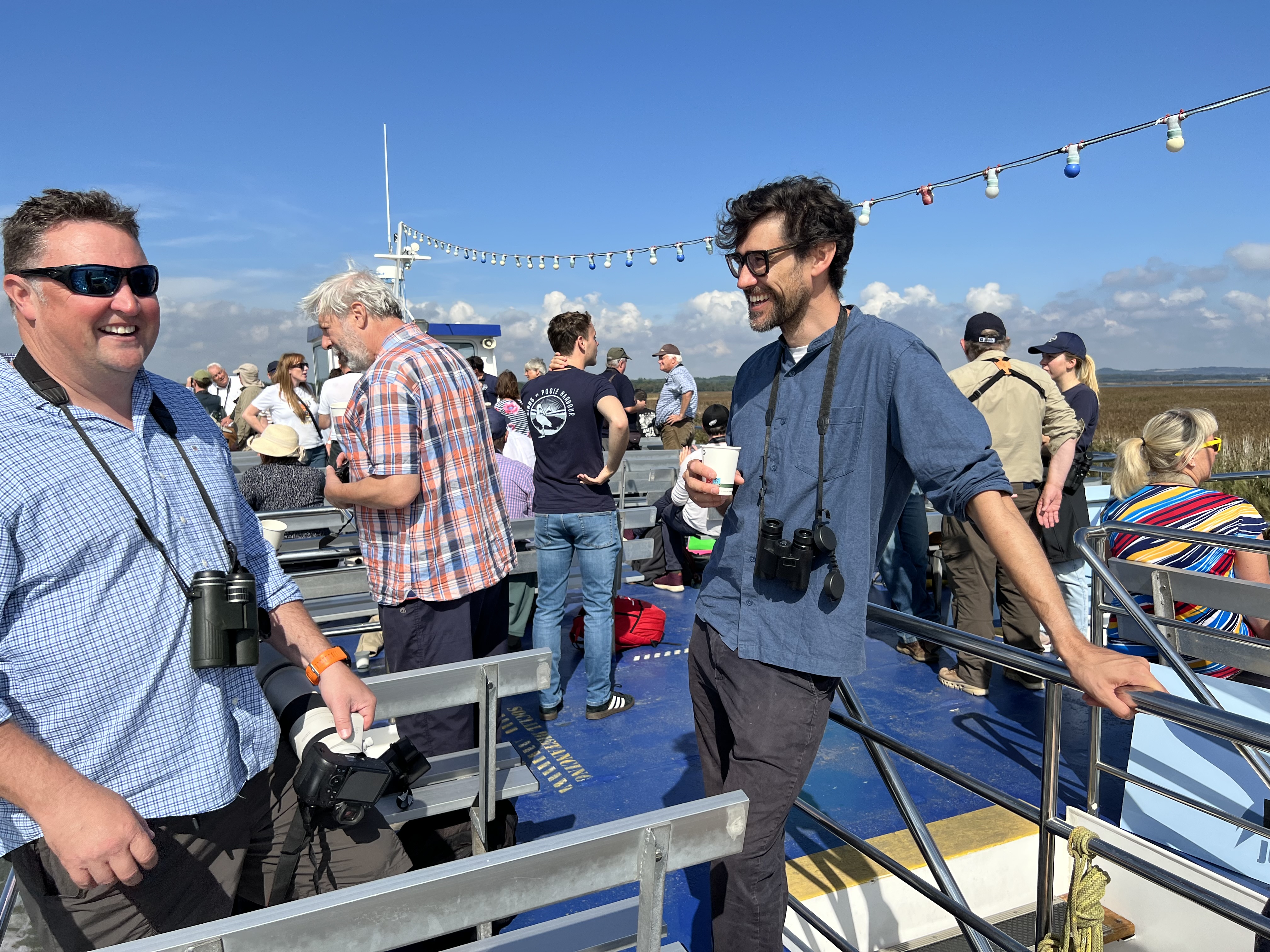
These boat trips usually last for three hours and members of the BOPH team are always on board to provide a running commentary (and they also know where the eagles like to hang out). The trips are hugely enjoyable and massively informative. You don’t need to be an expert birder to attend – the passengers are often an eclectic mix of backgrounds and experience, ranging from the expert to the novice and everything inbetween. If you want a brilliant, fun and engaging day out, look out for this year’s boat trip dates on the BOPH website (being announced shortly). You can also organise a private, bespoke boat trip, e.g. as a corporate event or as an event for supporters as Wild Justice did in 2023.

BOPH boat trips – photos by Ruth Tingay

For those who can’t visit the harbour in person, Birds of Poole Harbour provide a daily blog of bird sightings, a regularly-updated website with news from their various projects, and they provide live-streaming webcams so people from around the world can follow the fortunes of the Ospreys’ breeding seasons.

Another winner at the 2024/25 Dorset Tourism Awards was Careys Secret Garden, based on the western side of the harbour, who won GOLD in the Ethical, Responsible & Sustainable Tourism category, SILVER in the Small Visitor Attraction of the Year category, and took home the WINNER OF WINNERS award, too! Careys Secret Garden works in partnership with Birds of Poole Harbour and offers a wide range of events, courses and activities from March to October, including the Careys Osprey Tours where small groups can book to visit a viewing platform to watch the famous nest belonging to Ospreys CJ7 & 022. If you’re in the area for a BOPH boat trip, I’d highly recommend a visit to this special, secluded location.

Congratulations again to both organisations on winning the richly-deserved recognition these awards will bring.

I wonder if former Conservative MP Chris Loder was at the awards ceremony?

New scientific paper shows toxic lead ammunition still used to shoot red grouse – the industry’s so-called 5 yr ‘voluntary transition’ has spectacularly failed

A new scientific paper has been published today that demonstrates the shooting industry’s so-called 5-year ‘voluntary transition’ away from the use of toxic lead ammunition has spectacularly failed, at least in relation to the shooting of red grouse.

Mouth-watering poisonous red grouse, shot with toxic lead ammunition, being prepared for cooking. Photo by Ruth Tingay

Five years ago in February 2020, nine UK game-shooting organisations made a massive U-turn after years and years and years of defending the use of toxic lead ammunition, and said they wanted to drag the industry into the 21st Century by making a five-year voluntary transition away from lead ammunition (see here).

A lot of us were sceptical because (a) we rarely trust anything the industry tells us; (b) previous ‘voluntary bans’ by the industry on a number of issues have been infamously unsuccessful (e.g. see herehere and here); (c) the ongoing failure of the shooting industry to comply with current regulations on many issues, including the use of lead ammunition over wetlands in England (here) and in Scotland (here), means there should be absolutely zero confidence in its ability and/or willingness to stick to any notional voluntary ban; (d) the Scottish Gamekeepers Association refused to sign up to the proposed five-year transition period because they believe there is insufficient evidence to support the claim that lead can have damaging impacts on humans, wildlife and the environment (here); and (e) in the very same year that nine shooting organisations committed to the five-year voluntary transition, BASC announced it was set to fight a proposed EU ban on the use of lead ammunition on wetlands (see here).

We were right to be sceptical.

Regular blog readers will be familiar with the Cambridge University-led research project called ‘SHOT-SWITCH‘ that has been monitoring the progress (or not!) of this five-year voluntary transition by purchasing pheasants from supermarkets and other retailers across the UK each year and having them lab tested to determine whether they’ve been shot with toxic lead ammunition or with non-toxic ammunition.

The results of the SHOT-SWITCH project’s 2024/2025 sampling of pheasants are due to be published shortly (results from the previous four years can be read here).

However, the same team, led by Professor Rhys Green, Dr Mark Taggart and Dr Debbie Pain, has also sampled red grouse carcasses that were bought during the 2024 red grouse shooting season and it’s these carcasses that are the focus of this new scientific paper, published today in the Conservation Evidence Journal.

It’s worth reading past the summary if you have the time (the full paper can be read at the foot of this blog). It contains some hilarious commentary from the Moorland Association (grouse moor owners’ lobby group in England) who reportedly told the researchers on 21 January 2025 that ‘grouse moor owners have been at the forefront of the transition away from lead shotgun ammunition‘.

Hmm. Would that be in the same way that grouse moor owners have been at the forefront of hen harrier ‘conservation’?

The paper also cites an earlier published statement made by the Moorland Association in 2022: ‘That commitment [to the transition] is unwavering‘ and ‘There is growing evidence of shoots moving away from lead‘ and ‘Suggesting a ban [on the use of toxic lead ammunition]…, is not supported by our evidence of active transition underway‘.

The researchers dryly comment:

Based upon this strong statement, it might be expected that quantitative evidence of change in practice on moorland shoots had already been obtained and that it showed that the voluntary transition from lead to non-lead ammunition was progressing as rapidly or more rapidly for red grouse shooting than it has been for pheasants. We are not aware of any such evidence. The results reported in this paper indicate that almost all red grouse continue to be shot using lead ammunition, even as the end of the transition period approaches“.

I’m looking forward to reading the SHOT-SWITCH project’s forthcoming paper showing the results of its lead ammunition testing in pheasants from the 2024/25 shooting season, which will hopefully be published within the next few weeks.

Results are also expected soon from Wild Justice’s latest tests on the lead content of gamebird meat bought from various supermarkets during the 2024/25 shooting season, as they’ve done in previous years (e.g. see here and here).

This year Wild Justice also tested some of the pre-prepared ‘ready to cook’ food pouches that are distributed by the game-shooting industry and others to foodbanks and community projects for vulnerable members of the public suffering from food poverty. The laboratory tests analysing the lead content of those meal pouches will be fascinating.

All of these results, from the SHOT-SWITCH project and Wild Justice, will provide timely information for the Secretary of State at DEFRA and his colleagues in the devolved countries who are currently reviewing recommendations made by the Health & Safety Executive in December 2024 for restrictions to be placed on the continued use of toxic lead ammunition (see here). A response is due before 13 March 2025 (see here).

Here is the excellent paper by Green et al., published today in the Conservation Evidence Journal, demonstrating the continued use of toxic lead ammunition to shoot red grouse in the UK:

RSPB Geltsdale Reserve to become ‘Pennines Paradise’ for nature

Press release from RSPB (3rd Feb 2025)

RSPB Geltsdale to become a Pennines paradise for nature

A bold new restoration project is set to transform RSPB Geltsdale, an upland reserve in Northeast Cumbria, into a Pennines paradise for nature. Thanks to the purchase of a final piece of land at RSPB Geltsdale, we are now able to go bigger and better to fully restore and protect the area’s moorlands, wetlands and woodlands. 

Hen Harriers, one of England’s most endangered breeding birds of prey, are set to benefit, along with rare and iconic species including Curlews, Snipe, Willow Warblers, Red Squirrels and Black Grouse. Water Voles will be reintroduced, and it’s hoped the restoration will also see the return of Golden Eagles, and Ospreys nesting on the reserve in the near future.  

RSPB’s vision of the Pennines Paradise

An ambitious vision for nature 

RSPB Geltsdale Reserve Manager Ian Ryding said: “We want to create a landscape that sings with life. Our plans are ambitious and, in a nutshell, mean bringing this North Pennines landscape fully back to life. Working in partnership with the North Pennines National Landscape and Natural England, we’ve already achieved so much over the last thirty years, but now, with the purchase of the remaining land, we can do so much more

It will be such a thrill to see the amazing Golden Eagle re-colonising England in the near future and the pinnacle of success for me would be seeing them soaring across the moorlands of Geltsdale. From the bright carpets of wildflowers in the hay meadows to the gentle ripple of restored wetlands teeming with insects and birdlife, this vision is about bringing back the sounds, sights, and vitality of England’s truly wild Pennines.” 

Building on success 

Our new vision for RSPB Geltsdale builds on the ongoing success of conservation efforts on the nature reserve. Thanks to our supporters, we’ve restored areas of precious blanket bog and created large areas of meadowland. We’ve planted 110,000 native trees and a river, Howgill Beck, has been ‘re-naturalised’ to its original meandering course, helping to prevent flooding and benefiting birds such as Oystercatchers and Common Sandpipers. Nature-friendly farming is reaping dividends too, helping to increase Curlew numbers and improving biodiversity.   

Together these efforts are boosting wildlife populations. A survey in 2022 found 94 breeding bird species now call Geltsdale their home, including 73 Curlew territories, nine Merlin nests and 25 pairs of Short-eared Owl. In 2023 the first Nightjar was recorded and in 2024 eight Hen Harrier chicks fledged from two successful nests, the highest number for 20 years. Numbers of Adders have also dramatically increased over the last decade. 

RSPB Geltsdale Reserve Manager Ian Ryding said: “Conservation efforts over the last three decades are clearly paying off but now we are stepping up a gear to realise our bold new vision for the reserve.  Now is the time to take everything we’ve learned and go bigger, we’re talking more trees, more wetlands, more birds and more homes for our threatened wildlife.”  

Creating a Pennines paradise

Through this ambitious programme of work, RSPB Geltsdale will provide much-needed habitat for wildlife, as well as secure a healthier landscape that can better tackle and mitigate against climate change. For example, the restoration of peat bogs will create the ideal conditions for rare plants and will also serve to lock away climate-damaging carbon.  

Our plans for the next five years include: planting thousands more native trees; creating new wetlands to nurture wildlife, such as Snipe, Common Sandpipers and Brown Trout; re-introducing White-faced Darter dragonflies and Water Voles; encouraging Ospreys to breed on the reserve; and installing dams to stabilise and rejuvenate peatlands, to store carbon and retain water.  

RSPB Area Manager David Morris adds: “This work isn’t just about protecting wildlife – it’s about creating a more resilient landscape. Restored peatlands will lock away carbon, wetlands will reduce downstream flooding, and vibrant habitats will support species at every level of the food chain, from invertebrates to apex predators.”  

Key elements of the vision

The comprehensive plans set out the ambitions for RSPB Geltsdale. Highlights include: 

  • Revitalising moorlands and peatlands: Peat bogs will be restored by raising water levels, helping lock away climate-damaging carbon and creating ideal conditions for sphagnum mosses and rare plants like Bog Rosemary and Round-leaved Sundew. 
  • Expanding and regenerating woodlands: By planting native species like Aspen, Juniper and Downy Birch, and encouraging natural regeneration through grazing cattle, woodlands will grow to attract Cuckoos, Black Grouse, and Tree Pipits while linking valleys with vital wildlife corridors. 
  • Restoring wetlands: Streams and watercourses will be restored to meander naturally, slowing the flow of water and creating pools, and braided channels that support Otters, amphibians, and birds like Grasshopper Warblers. 
  • Creating wildflower hay meadows: Cuttings from one of the region’s most species-rich meadows will be spread on the newly acquired fields, bringing life to areas that will bloom with orchids, Lady’s Mantle, and Yellow Rattle, supporting pollinators and an abundance of wildlife. 
  • Protecting species: Conservation efforts will safeguard iconic birds like Hen Harriers, one of the most endangered breeding birds of prey in England, with hopes to welcome species like Golden Eagles and Ospreys in the future. 
  • Fenceless grazing: By using innovative solutions like Nofence technology to guide grazing cattle, we will create habitats for threatened ground-nesting wading birds such as Lapwings and Redshanks. 

ENDS

The RSPB has launched a fundraising appeal to help support this nature restoration work. If you’d like to find out more and contribute to the appeal please visit here.