
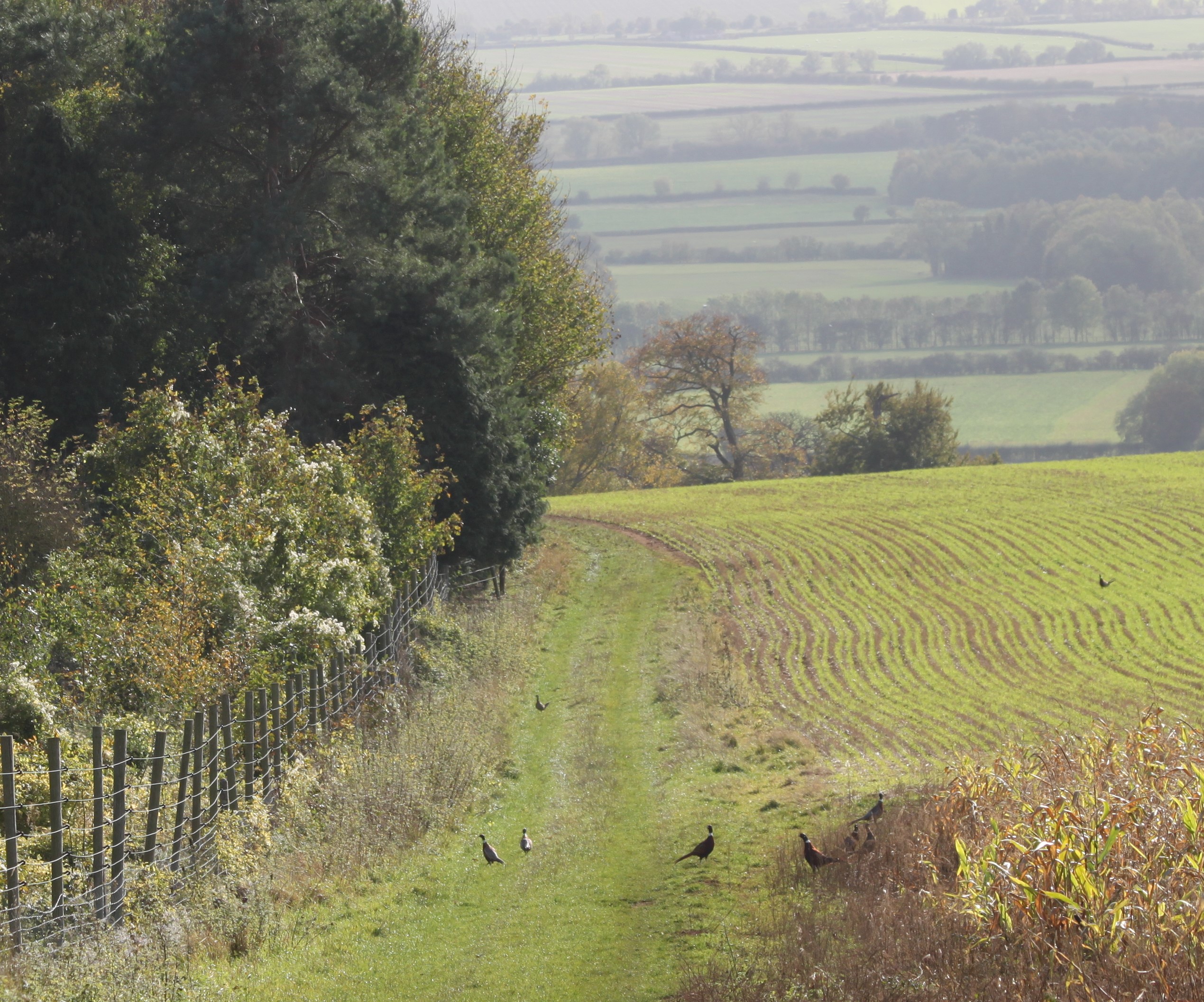
An outbreak of Highly Pathogenic Avian Influenza (H5N5, ‘Bird Flu’) has been detected in 20 released pheasants, according to the Animal and Plant Health Agency (APHA).
The outbreak was reported on APHA’s weekly updated database (here) and is recorded as being found in week 39, which was 23-29 September 2024, in the Wychavon District of Worcestershire.
The APHA database shows this is the most serious outbreak reported this year, with all the other reports showing that only between 1-5 birds (seabirds, waterfowl and raptors) have been affected at any one location since January 2024.
However, due to the idiotic legal status of pheasants, referred to as Shrodinger’s Pheasant by Wild Justice, it is understood that because these pheasants have been released and are thus currently considered ‘wild‘ (i.e. no longer dependent on a gamekeeper for food/water/shelter), no HPAI control zones have been put in place to help stop the disease from spreading.
Marvellous.

It’d be good to think that the shoot concerned has made the sensible decision to close the shoot for the rest of the season to help stop the disease from spreading via birds fleeing from the beaters and guns, via gundogs, via shooters’ boots and vehicle tyres etc. But given there’s no legal obligation, what’s the betting the shoot is continuing?
UPDATE 17 October 2024: This blog post inspired a feature in The Guardian today (here).
 Raptor Persecution UK
Oh, the shoot will go ahead.
They’re only interested in the profits to be made from the shoot.
They won’t be bothered about the disease spreading I’m sure
Yet another example of mismanagement of the countryside. No disease controls in place to halt the spread of H5N5, bird flu, due to the status of pheasants in the UK, read below to find out! Thanks again to Defra, Natural England and xxxxx xxxxx for their continued mis management. Imagine having organisations and people who don’t care about nature being in charge of nature in the UK!!
Millions of non-native birds just chucked out into the countryside. Are we surprised at this result? Utter nonsense. If someone proposed this anew it would be shot down (no pun intended).
Reminded of this story in which Dominic Boulton, from the Game Farmers Association, said: “Once you look at the scientific evidence, look at the history of what has happened in the past, the fact that there are no known cases of released game birds spreading infection in the countryside.”The risk is so small that it is hugely outweighed by the much greater risk to the countryside of shooting not happening.” https://www.itv.com/news/2022-09-01/does-the-release-of-game-birds-into-the-uk-countryside-risk-spreading-avian-flu
This is very concerning: the highest incident of H5N5 infections identified by the APHA so far in 2024.
How were these pheasants diagnosed, if already released and (partially, at least) dispersed?
We also have HPAI H5N1 circulating (waterfowl/seabirds/raptors).
In the United States HPAI H5N1 has been identified in 17 people during 2024 (see https://www.cdc.gov/media/releases/2024/s1009-human-case-bird-flu.html )
These are mostly workers coming into close contact with infected dairy cattle, where it is spread among the the herds via cow’s milk (95 herds in the last 30 days in California alone. The total outbreak up to October 2024 is stated as 305 herds across 14 States. One case involving alpaca.)
See https://www.aphis.usda.gov/livestock-poultry-disease/avian/avian-influenza/hpai-detections/hpai-confirmed-cases-livestock
There are reports some outbreaks, at least, were close/next to poultry farms.
The US Animal and Plant Health Inspection Service also say that HPAI H5N1 has been found in sheep and goats, again close to poultry farms (a close genotype – B3.6 – to the disease in diary cattle – B3.13)
See https://www.aphis.usda.gov/sites/default/files/small-ruminant-camelid-h5n1-info.pdf
In 2014 it was described thus “novel highly pathogenic avian influenza A H5N2, H5N5, H5N6, and H5N8 viruses caused outbreaks in Asia, Europe, and North America. The H5 genes of these viruses form a monophyletic group that evolved from a clade 2.3.4 H5N1 variant. This rapid emergence of new H5Nx combinations is unprecedented in the H5N1 evolutionary history.”
https://pmc.ncbi.nlm.nih.gov/articles/PMC4412238/
That highly pathogenic avian flu is now spreading via the milk of mammals shows how dangerous this virus family is.
This is the reply I received from Natural England in September to the following question:
Question: Please could you provide me with the following information:
The number of shooting estates that have reported sightings of dead birds during any part of the year 2023 where there are:
* 1 or more dead birds of prey (such as an owl, hawk or buzzard)
* 3 or more dead birds that include at least 1 gull, swan, goose or duck
* 5 or more dead wild birds of any species
(As is advised under GL33. “Avian influenza (bird flu) is a notifiable animal disease.”)
Answer: Reporting any dead wild birds found is a condition of wildlife licences issued by NEWLS. To date, it would appear Natural England has received 3 notifications. One was received from Blackpool Hospital, one from the Port of Dover and one related to a private residence. None were from shooting estates.
As noted on the GL33 page of the GOV.UK website, any individual wishing to report dead birds can do so using the online service. However, this service is administered by DEFRA and APHA, so it is not possible to confirm if any reports have been submitted by shooting estates using it. It would be necessary for the enquirer to contact DEFRA and/or APHA directly to request such information as NE does not have access to it.
Further guidance can be found on GOV.UK Report dead wild birds.