
Eight hen harrier chicks have fledged on the Tarras Valley Nature Reserve this year, continuing to buck the trend in south Scotland.
The results of last year’s national Hen Harrier Survey demonstrated a steep regional population decline of 32% across the Southern Uplands and of four Special Protection Areas (SPAs) designated for hen harriers in this region, they were only breeding successfully in one – Tarras Valley.
Three of this year’s eight chicks have been satellite tagged – two females (siblings) and a male – with funding provided by the RSPB and charity Hen Harrier Action.
The three were named Ceilidh, Gilda and Red by Langholm Academy’s Head Girl and Boy and members of the raptor group and were tagged by licensed fieldworkers from the RSPB.
Photos of Ceilidh, Gilda and Red, copyright RSPB Scotland:

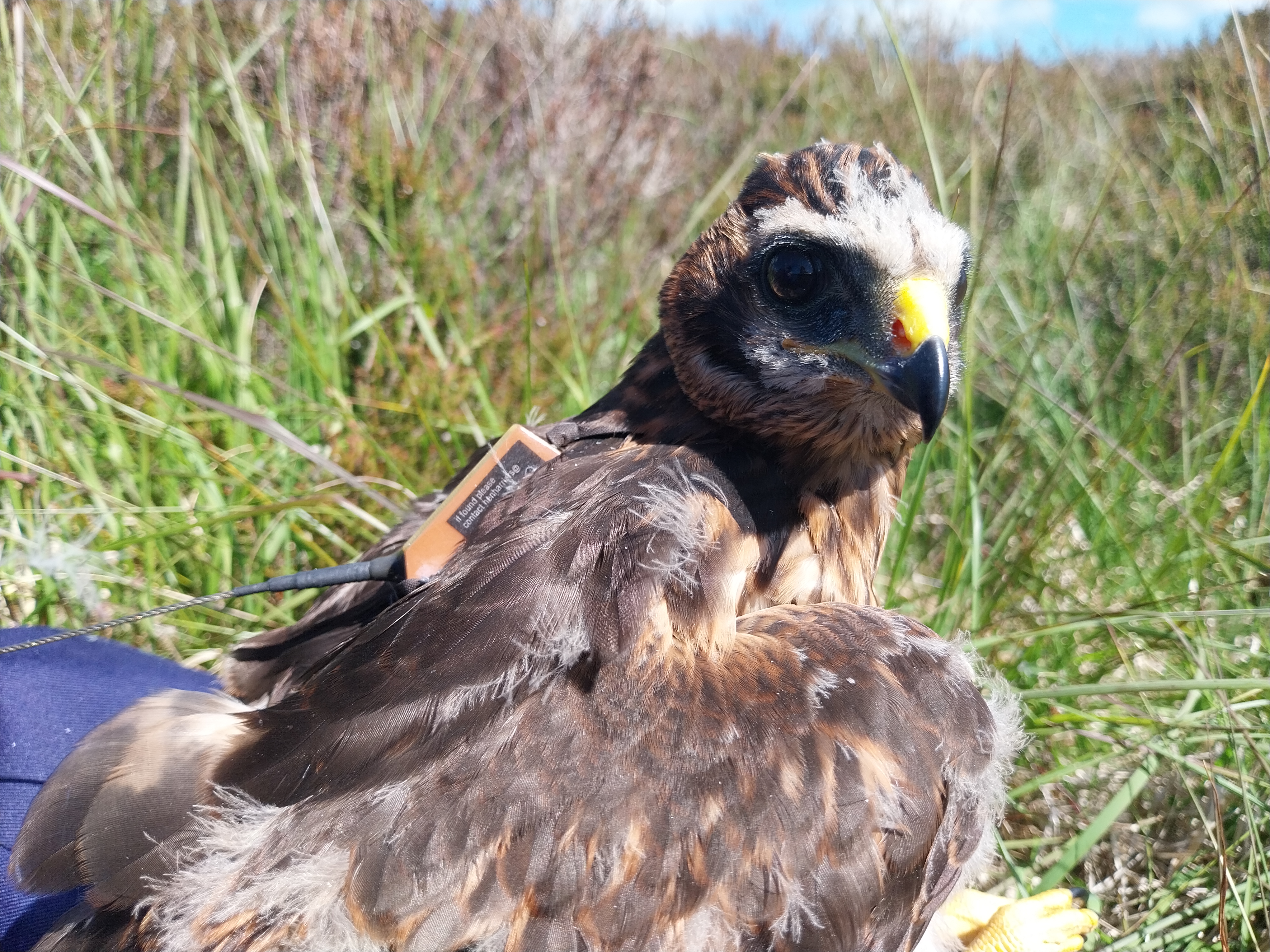
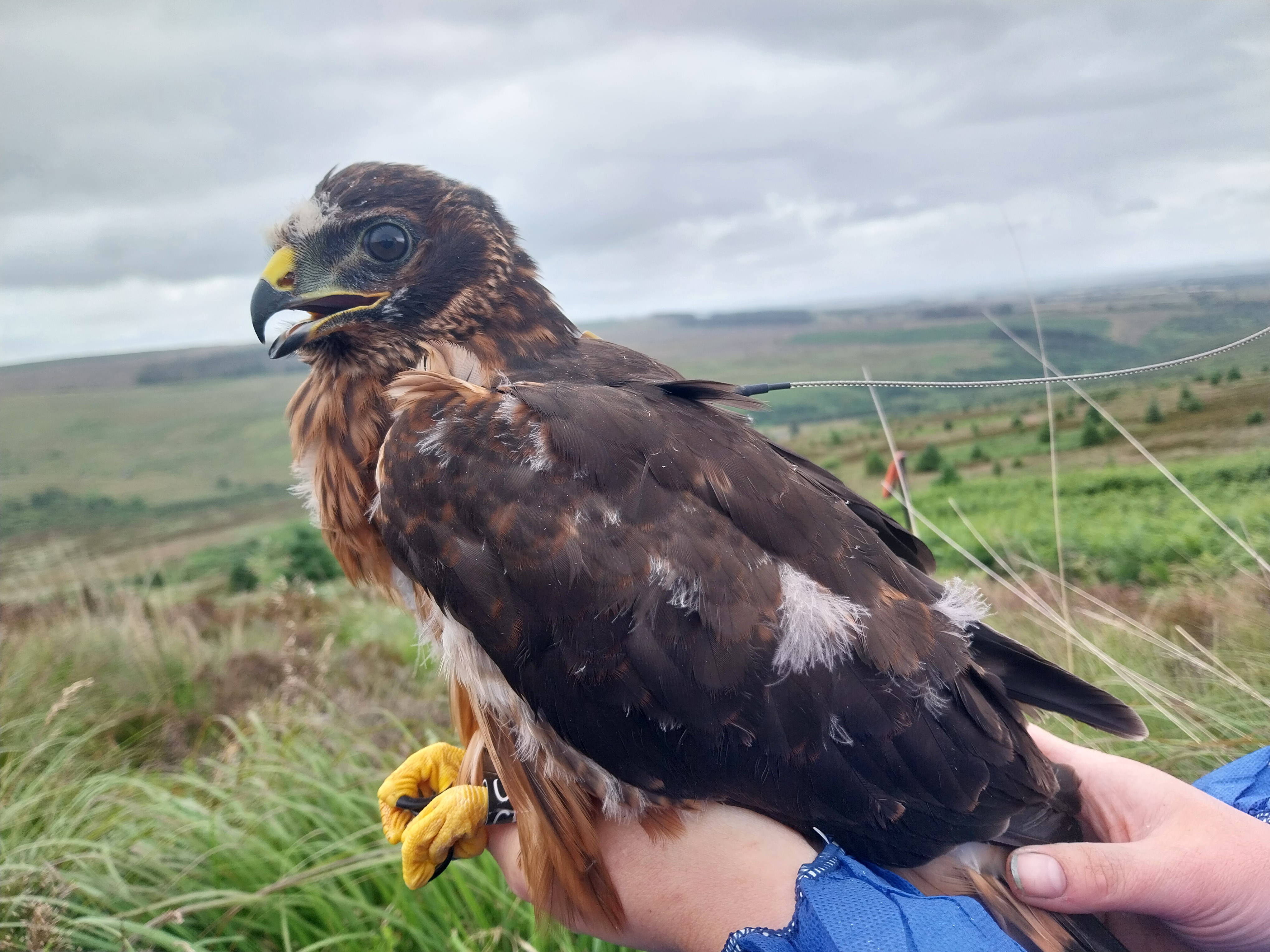
Tarras Valley was previously a driven grouse moor (known as Langholm Moor) but was bought from Buccleuch Estate a couple of years ago after an epic fundraising effort and is now a community-owned nature reserve, supported by the Langholm Initiative.
The Tarras Valley Nature Reserve team is working towards the development of a five-year action plan and many restoration projects are already underway – have a look around the TVNR website here to see what’s already been started and what else is planned.
Unsurprisingly, there are some in the grouse shooting industry who have been, and continue to be, critical of this community-owned project and seem desperate for it to fail, or at least for it to be perceived as a failure.
I mentioned last month that the Chairman of the Scottish Gamekeepers Association, Alex Hogg, recently told a Parliamentary Committee that the Tarras Valley Nature Reserve was a “species desert” and “there is nothing there at all” [now that it’s no longer being managed as a driven grouse moor].
His assessment seemed to be based not on any detailed surveys he’d undertaken, but on a single car journey he made recently over the moor. He obviously missed the hen harriers and all the other resident and visiting birds, not to mention all the other species that have been recorded on site in the last couple of years.
It’s a common theme, this slagging-off former grouse moors that are now part of a significant rewilding effort, because the gamebird shooting industry wants everyone to believe that managing a moor for grouse is the best and only suitable option for the land.
Some grouse moors do have big numbers of wader species, that’s without doubt, but it’s not a good indicator of wider biodiversity on the moor. The main reason those waders do well is because predators are ruthlessly and systematically destroyed, some legally, others illegally, for the benefit of producing an artificially-high population of red grouse for paying guests to shoot at. The benefit to the waders is simply a convenient by-product of that.
Well done to the team at Tarras Valley Nature Reserve and the army of volunteers who are helping to encourage a wide suite of habitats and species to re-establish and thrive here, including those hen harriers.
 Raptor Persecution UK
great news
.yes great news , glad we’ve got genuine loving people left on earth , our earth, for the good people. God bless the animals and protect them. X
Nowhere near as many as managed estates then
Martin, have a read of this regards the 2023 Hen Harrier survey –
https://www.rspb.org.uk/media-centre/hen-harrier-survey-gives-cause-for-optimism
Heres a quote from it-
“Sadly, the Southern Uplands saw a very steep 32 per cent decline. Four Special Protection Areas (SPAs) are designated by NatureScot for this species in the south of Scotland, and they now only breed on one, community-owned land at Langholm”
I wonder what is the problem for Harriers in the rest of the Southern Uplands, then?
You won’t get any significantly “better managed”* moors anywhere in the UK than in places like the Lammermuirs – it is one vast area of adjoining high-end grouse moors. The heather is meticulously kept short by burning and mowing, the place is carved up with Estate tracks to aid management, grit trays are everywhere, stoat traps and crow traps everywhere and hard-working keepers are out & about at all hours on their quads with their semi-automatic or pump shotguns & rifles – doing round the clock “management”. But alas, to no avail for the Harriers (and the Peregrines, etc).
*”better managed” only if (as I suspect you are meaning) they are managed for driven grouse shooting?
Can you read? That is just a by product of the persecution of ALL predators on the grouse moors!
Great stuff. The long period of cold, wet weather this Summer made it difficult fort many raptors to hunt and keep young warm, dry and fed. Reading about success like this shows the resilience of these birds if given a fighting chance. Well done TVNR.
Great news, well done to all involved
Great news story, well done to all involved.
That’s wonderful news.
I do hope you have sent Mr Hogg a copy of that report: I am sure he will happily provide a correction to the appropriate parliamentary commission.
Well done as said by everyone passionate caring people heart lifting. Good luck to all the beautiful birds .
wonderful news for a wonderful bird