
Further to yesterday’s blog which provided a broad overview of the status of the Hen Harrier in the UK and the Isle of Man after the 2022/2023 national survey, today’s blog focuses specifically on Scotland.
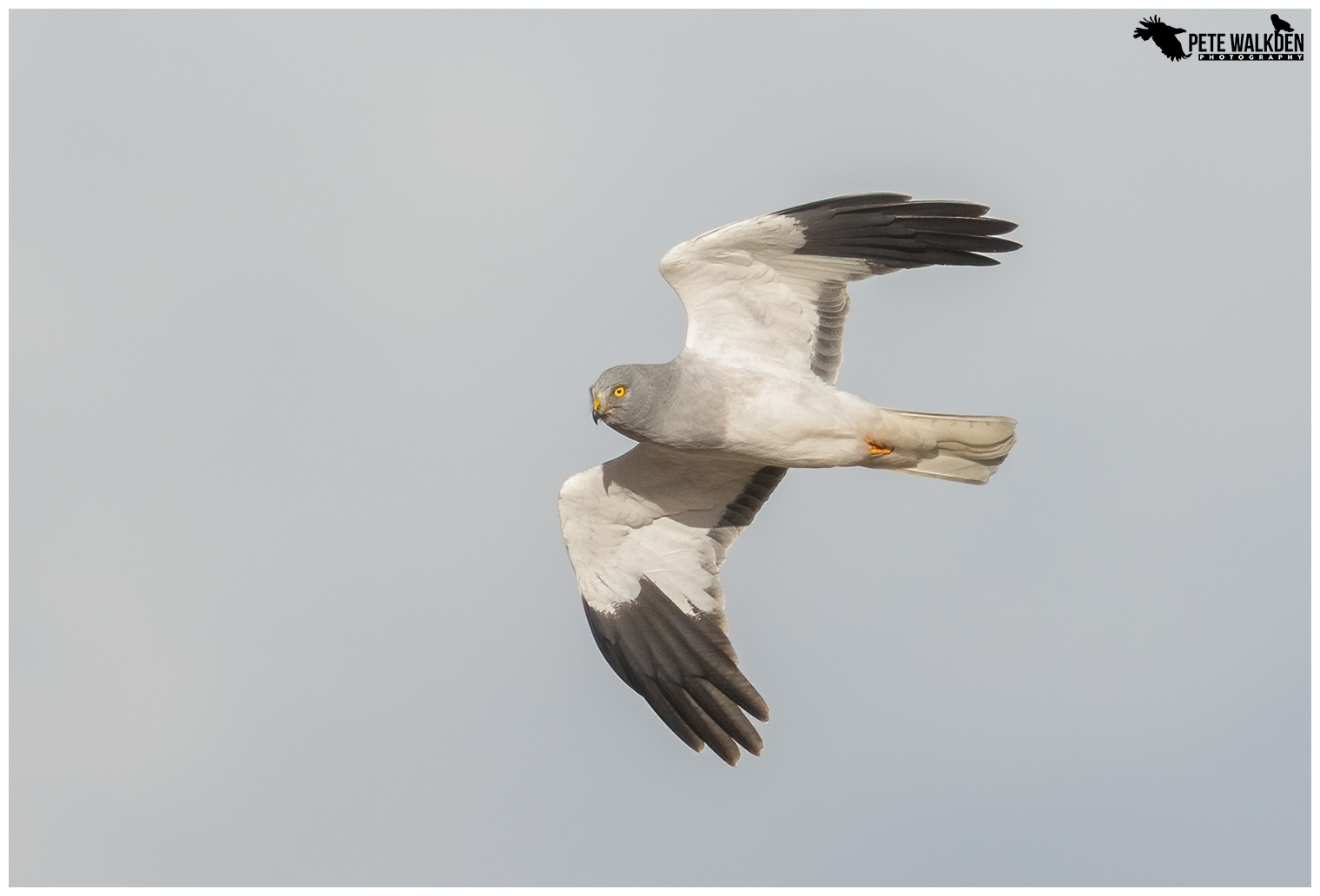
The RSPB published a Scotland-specific press release, as follows:
HEN HARRIER SURVEY GIVES CAUSE FOR OPTIMISM, BUT BIRD STILL FACING THREATS
Numbers of Hen Harrier, one of Scotland’s rarest birds of prey, are on the increase, but recovery still has some way to go according to a new survey.
Results of the 2023 Hen Harrier survey have been released, which show how populations of Hen Harriers are faring throughout the UK and Isle of Man, but it’s a mixed picture, with some populations doing better than in previous years, while others are in decline.
The results give some cause for optimism – the Scottish population is estimated to be 529 territorial pairs, up by 15 per cent since the last survey in 2016. Seventy-seven per cent of the UK and Isle of Man population of Hen Harriers breed in Scotland.
However, in 2023 Hen Harriers were still far less abundant or widespread than they should be. The population of Scottish Hen Harriers is currently less than a third of its potential, with 16 per cent fewer birds than twenty years ago, and numbers breeding on grouse moors continue to decline.
The west Highlands, Hebrides and Orkney continued to provide a home for the majority of Scotland’s breeding harriers. The population remains low on parts of the mainland, where human persecution continues to be a constraint on their numbers, as evidenced by satellite-tagged Hen Harriers continuing to disappear, mainly in areas managed for grouse shooting.
For the first time since national Hen Harrier surveys began, the Hebrides held the second largest population in Scotland, with an estimated 110 territorial pairs – a huge 125 per cent increase since 2016. Much of this is the result of an expanding population on Lewis since 2016.
There was also a significant increase of 69 per cent in the East Highlands, due to steady increases in two large areas where significant habitat restoration programmes are taking place and with benefits for all wildlife.
Orkney and the North Highlands showed increases of 15 per cent and 12 per cent respectively, while the West Highlands showed a modest decline of five per cent.
Sadly, the Southern Uplands saw a very steep 32 per cent decline. Four Special Protection Areas (SPAs) are designated by NatureScot for this species in the south of Scotland, and they now only breed on one, community-owned land at Langholm.
Duncan Orr-Ewing, Head of Species and Land Management for RSPB Scotland, said:
“The results of the latest Hen Harrier survey show there is cause for optimism, and some encouraging signs of population recovery in parts of Scotland, particularly the Western Isles, which we hope to see continue.
“Sadly, Hen Harrier persecution continues. Just last month, a satellite-tagged Hen Harrier disappeared in the Angus Glens. The illegal killing associated with intensive grouse moor management must stop. We are calling on Police Scotland to ensure all satellite tagged raptors disappearing in suspicious circumstances be recorded as a crime.
“With the passing of the Wildlife Management and Muirburn Bill by the Scottish Parliament, all grouse shooting in Scotland will require a licence, which can be revoked if there is evidence of raptor persecution and other forms of wildlife crime, that is linked to a particular landholding.
“In our view the passing of the Wildlife Management and Muirburn (Scotland) Bill should provide a significant deterrent to wildlife crime, and we should now expect now to see Hen Harrier populations on grouse moors increasing. The Bill also contains important changes to the law with regards burning on moorland which should improve nesting habitats for Hen Harriers.”
The Bill, which was recently passed by the Scottish Parliament, was the result of more than two decades of campaigning by RSPB Scotland and others to tackle wildlife crime.
Eileen Stuart, NatureScot’s Deputy Director of Nature and Climate Change, said:
“It is encouraging to see an overall increase in the population of one of our most spectacular raptors, however we need this recovery to be sustained in the long-term to meet biodiversity goals.
“We are pleased that Scotland remains a stronghold for Hen Harriers but persecution is still limiting populations in some areas and we anticipate that the Wildlife Management and Muirburn Bill recently passed by the Scottish Parliament will help address this.
“We must also not lose sight of other factors which can affect the species, including changes in forestry and agricultural management and potentially climate change as unpredictable weather can affect breeding performance.”
The Hen Harrier survey was carried out across the UK in 2023 as a nationwide partnership between the RSPB, NatureScot, Natural Resource Wales, Natural England, Department of Agriculture, Environment and Rural Affairs-Northern Ireland, the Scottish Raptor Study Group, the Northern Ireland Raptor Study Group, Northern England Raptor Forum and Manx BirdLife, with the support of many volunteers, landowners, land managers and farmers.
ENDS
Superficially, the overall moderate increase in Scotland’s Hen Harrier population looks encouraging, but just as with the earlier Golden Eagle national survey (here), the overall results mask significant regional differences indicating that illegal persecution is still a major constraint on population expansion in some areas.
It’s very telling that the most significant increases for Hen Harriers, just like Golden Eagles, are in regions that are not dominated by intensive driven grouse shooting, especially the Hebrides. And in the Eastern Highlands, which is partly a grouse-moor dominated landscape, the increase is largely down to the rewilding management being undertaken by Wildland and the Mar Lodge Estate.
Wildland is a collection of estates in the Cairngorms and Sutherland, many of them former grouse moors, bought by the Polvsen family and being managed with an impressive vision for conservation. Wildland is also a pivotal partner in the wider conservation project called Cairngorms Connect (see website here) which ambitiously aims to restore ecological processes, habitats and species across an enormous area of the Cairngorms National Park.
The Mar Lodge Estate is managed by the National Trust for Scotland who bought the estate in 1996 and subsequently decided to stop muirburning. Hen Harriers began recolonising the estate in 2016 (see here). This is now a significant location for breeding Hen Harriers in the eastern Cairngorms – I’ve got more to say about it in the context of the wider Eastern Cairngorms Moorland Partnership but that’ll have to be in a separate blog.
It’s also worth noting that the former grouse moor at Langholm, now the community-owned Tarras Valley Nature Reserve, is the only SPA (Special Protection Area) of four in the Southern Uplands designated for Hen Harriers where Hen Harriers are breeding successfully.
The continuing absence of breeding Hen Harriers on many Scottish grouse moors shouldn’t be a surprise to anyone (e.g. see here) and it’ll be interesting to see whether the new Wildlife Management & Muirburn (Scotland) Bill will have an effect. Monitoring of Hen Harriers (as well as Golden Eagles, Peregrines and Merlins) will be used to assess the efficacy of this new legislation at five-yearly intervals. Given that the current national population of Hen Harriers in Scotland is still under a third of the country’s expected carrying capacity for this species, there is much scope for expansion into these grouse moor areas and that should happen if the threat of an estate losing its grouse moor licence is sufficient deterrent for gamekeepers to stop killing these birds.
The next national Hen Harrier survey, in approx 6-7 years time, will be very telling indeed.
 Raptor Persecution UK
Ah, those killing fields in the Angus Glens getting press attention for all the wrong reasons. There can’t be that many gamekeepers in the area but at least one of them is a wildlife criminal as I can’t see why anyone else in the area would view hen harriers as a threat. I find it hard to believe that none of the law abiding keepers have their suspicions / have heard rumours about the offenders. As long as they don’t share that intel with the police they are all tarred with the same brush.
there is more grouse killed by cars than the raptor.
Eh?
I think he’s maybe meaning roadkill of grouse on moorland roads. There might be something in it. The numbers of grouse I see killed on busy B roads in north England are quite significant. I wouldn’t be too surprised at all if on those highly intensive estates (where there are next to no raptors because they have been wiped out) that also have roads through them, roadkill could well exceed predation by raptors. Situation is likely different in Scotland though as there is generally not the same B and C road networks through the best grouse moors.
Jackie , I can assure you that the five major glens in Angus are virtually wall to wall driven grouse shooting estates with a high number of keepers . I monitor these glens and although they look attractive to the eye , scratch the surface and you will see the truth . Riddled with traps , stinkpits , muirburn etc. and keepers with twitchy fingers and a dislike to birders , ramblers and anyone who tramps over these uplands . You can be guaranteed to have your car reg . noted wherever you park in these glens and if you are spotted deep in the wilderness they will just ” happen ” upon you and ask probing questions. Usually quite pleasantly , sometimes not , but in effect wanting to know your business and what you are up to . When this happens to me I wonder what they are up to and why so curious about my being there . Whether on a quad bike or 4 wheel drive I always casually check what they have in their vehicles . I have noted dead crows and jackdaws , firework type rockets and bangers on ropes . Perhaps I should be asking them questions !
Interesting times in prospect once Scotlands snare ban gets royal assent. Anyone looking in on their favourite local stinkpits to see if the snares and apparatus have all gone may well get the hairdryer treatment 😂
I think this shows that WHEN persecution ends and suitable habitat is NOT destroyed, the Hen Harrier is perfectly capable of expanding both its range and numbers all by itself (WITHOUT brood meddling!).
“It’s very telling that the most significant increases for Hen Harriers, just like Golden Eagles, are in regions that are not dominated by intensive driven grouse shooting, especially the Hebrides.”
My, my, if all the guff put out by the shooting industry and their apologists is to be believed the Hebrides must be absolutely broke without all that economic input from the shooting industry…
Mmmm, where is it I’m off to in 4 weeks? Oh, yes, Harris and North Uist. When did I have to book to make sure we had somewhere to stay? Oh, yes, June last year…
Someone hasn’t told the Outer Hebrides that they are broke without grouse shooting…
the land owners should be warned they will loose their gun licence and also a ban on shooting grouse.
Excellent post:-)
I don’t think anyone will be surprised that the two best grouse shooting regions made up of contiguous “high end” estates over a wide area (Angus Glens & Lammermuirs) are the worst for breeding harriers. On the wider theme of persecution in Scotland, I read an article the other day by BASC policy manager Conor O’Gorman, reflecting on the inbound new laws. He said among a few interesting things, “… the credibility of our arguments around self-regulation will be undermined if the raptor killing does not stop. And if we are looking for blame, let’s stop focusing on the antis and start condemning and exposing the raptor-killing criminals and those who aid and abet them.”. Strong words, but the same sorts of things have been said for years. In Scotland at least I think it’s the last chance saloon and those with brains and not so much self-interest realise it. So I’m looking forward to BASC promoting a dedicated tip off hotline, employing field workers to support the Police and RSPB Investigations, and a legal fund to fight against employer prejudice and unfair dismissal by agents, managers and owners, where keepers have either singly or collectively changed their ways and stopped breaking the law.
Oh yes please! And then can we have something similar in Englishland?
denial at all costs is a strategy adopted by industries that are unwilling to change….if the grouse industry is to cease to exist it will be a death by suicide.
….
I notice that there is no mention of the large increase in golden Eagle numbers on keepered estates where shooting takes place, an inconvenient truth for the biased rspb.
Huge if true, but any such ‘concessions’ by the ‘industry’ are now irrelevant. You are no longer at the centre of this. The target is no longer just individuals under the criminal law but the industry itself under civil law, a huge change. The ‘industry is founded on the abuse of habitats, species and welfare, and in the event of rigorous enforcement under the new law many will be going down the road.
The RSPB were writing about the harrier survey. Do you not wish to hear about harrier numbers across Scotland?
I would imagine this is despite the keepers, not because of(?)
The inconvenient truth is that within the game shooting industry are criminals who are responsible for the illegal persecution of raptors. Persecution which appears to take place because some sections in the game shooting industry are attempting to produce unnaturally high populations of game birds for a clientele who expect skies filled with game birds to shoot and unsustainable high bag numbers.
An increase in Golden Eagle numbers on some shooting estates doesn’t detract from the unacceptable persecution of Hen Harriers which is still taking place.
Hopefully the introduction of new legislation in Scotland will go some way to creating a level playing field, so that those estates not engaging in illegal persecution aren’t having to compete against those estates which boost game bird numbers through criminal activity.
That is just such a typical response from an apologist for the criminals in the shooting industry: a species specific report is criticised because it doesn’t report on other species. Why not wait until they produce a report on Golden Eagles? Then you can criticise that for not covering White-tailed Eagles, etc etc.
Seriously, if that is the level of your argument you really must give up eating lead contaminated meat and give your brain a chance to stabilise so it doesn’t deteriorate any further.
“I notice that there is no mention of the large increase in golden Eagle numbers on keepered estates where shooting takes place, an inconvenient truth for the biased rspb.”
So says the biased shooting industry (https://aimtosustain.org.uk/and-now-for-some-good-news/ )
but then the biased shooting industry also claim that all raptors are thriving on ‘managed moorland’ (https://www.giftofgrouse.com/2021/09/21/bird-of-prey-populations-thriving-on-managed-moorland/ )
Curiously, the GWCT say this: ”The illegal killing of several species of birds of prey, including GOLDEN EAGLE, peregrine and particularly hen harriers has repeatedly been shown to occur on grouse moors, especially those managed for driven shooting. The conflict is well researched but remains unresolved” (https://www.gwct.org.uk/policy/briefings/birds-of-prey-on-grouse-moors/ )
The GWCT supply references to support their claims, whereas Aim To Sustain and the Gift of Grouse do not.
Having looked at your links all I see is the usual unsupported, unreferenced claims made by the shooting industry. Not to mention that one of the supposed successful estates is a non-shooting estate.
Why am I not surprised? Nor that colin does not support his statements. This is all boringly familiar.
“Having looked at your links all I see is the usual unsupported, unreferenced claims made by the shooting industry.”Why do you think that I wrote “The GWCT supply references to support their claims, whereas Aim To Sustain and the Gift of Grouse do not” ?
For precisely that reason: I was trying to reinforce what you wrote. Sorry if that wasn’t as clear as I intended.
There is a long way to go but Scotland has taken its first few steps and is to be applauded, I think. It took courage and fortitude to pass this bill and I hope it is successful in ending grouse shooting
It could be the low numbers in the south of Scotland are due to the estates there which are getting vast amounts of money from the game shooting industry. These are owned by the “great and good” who appear to be above the law.
Great comments by the usual but I have just been to Scotland for 5 days with my new binoculars and tour round the west we never seen one bird of prey we sat everywhere. Home now seen buzzards red kites and a lovely peregrine all on farmland and Boltby Forrest nothing on the grouse moors so there you have it. Sad sorry state of affairs.