
This is a guest blog from Duncan Orr-Ewing, Convenor of the Scottish Environment LINK Deer Group.
LINK Deer Group comprises of RSPB Scotland, National Trust for Scotland, John Muir Trust, Scottish Wildlife Trust, Woodland Trust Scotland, Trees for Life, Ramblers Scotland, and Nature Foundation.
Duncan’s blog encourages readers to participate in the Scottish Government’s current consultation on Managing Deer for Climate and Nature (details at the foot of this blog). The consultation closes this Friday (29th March 2024).
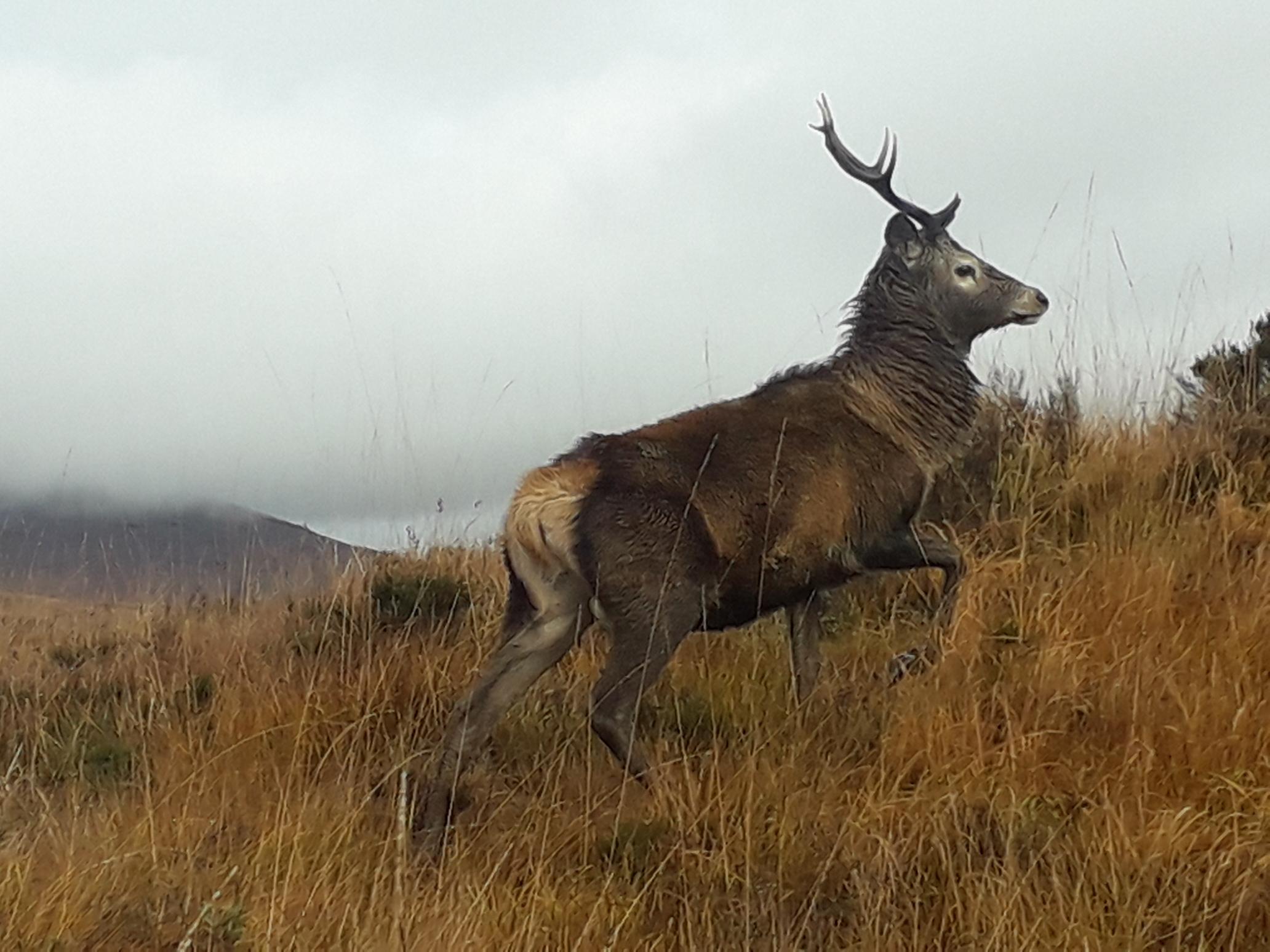
A POSITIVE FUTURE FOR SUSTAINABLE DEER MANAGEMENT IN SCOTLAND
Alongside the progress of the Wildlife Management and Muirburn Bill, which was approved by the Scottish Parliament last week, reforms to deer management in Scotland are also being considered by Scottish Government.
Measures to update the Deer (Scotland) Act 1996, and to bring it into line with modern day expectations around the need to restore nature and to combat climate change are making steady progress, and are now out to public consultation. New deer legislation will be included in a Natural Environment Bill expected to be laid before the Scottish Parliament in late 2024.
In the absence of natural predators, such as lynx or wolf – both exterminated in Scotland several centuries ago – deer populations are managed by humans to prevent damage to a wide variety of public interests. Damage can be caused by high deer populations to the natural heritage; to agriculture; to forestry; and also to human health and safety (road traffic accidents and Lyme disease).
Deer management is carried out to high humane standards by expert stalkers following Deer Management Best Practice, and of course most of the end product – venison- then goes into the human food-chain, and is widely regarded as a healthy alternative to farmed meats.
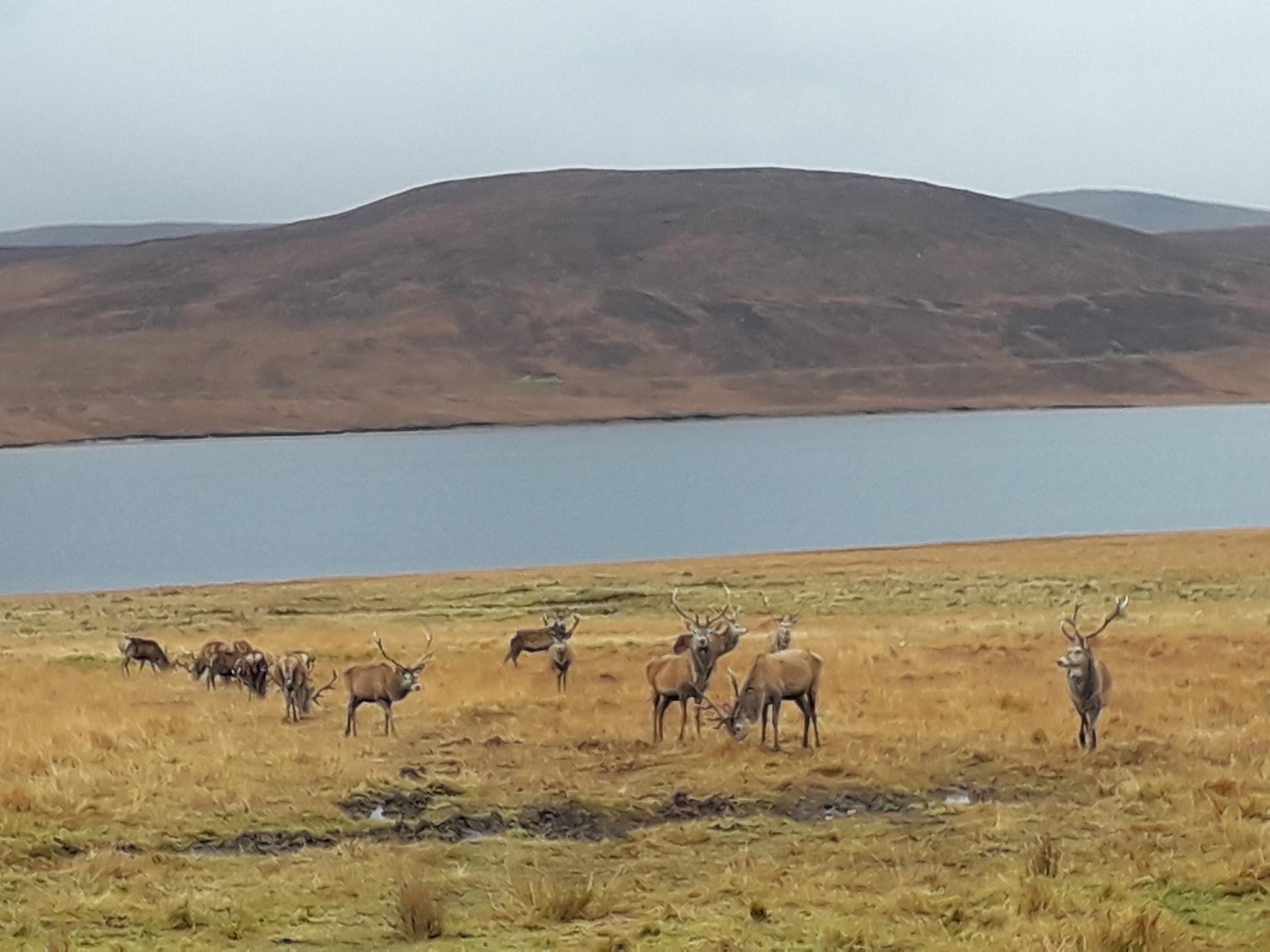
Most of Scotland’s uplands are managed either as grouse moor or as deer forest, and therefore along with grouse moor management, the land management practices which occur in deer forests are hugely important for protecting and enhancing our native wildlife and their habitats in the uplands.
The latest population estimate for the combined four species of deer (two native and two non-native) that occur here is over 1 million animals. This represents a doubling of the deer population in the last twenty years. For further background and deer timelines see here.
As with grouse moor management and the independent Grouse Moor Management Review Group (“Werritty Review”), the Scottish Government commissioned an independent review of deer management in 2017 and which reported in 2020, here. It came up with 100 recommendations for improvements to current systems and processes, and to foster better sustainable deer management practices in Scotland. These recommendations were largely accepted by Scottish Government – see here.
These recommendations of the independent Deer Working Group now form the backbone of the deer legislative proposals for the Natural Environment Bill.
However, in addition the Scottish Government is proposing a few further, and we think largely beneficial measures. These include provision for what are being called Deer Management Nature Restoration Order powers to NatureScot, the competent deer authority, to take compulsory action to reduce deer numbers to enhance habitats and species in targeted areas. This is intended to help deliver the outcomes of the Scottish Biodiversity Strategy.
We encourage individuals to respond to the current public consultation on new deer legislation in Scotland which closes on Friday 29th March. This a relatively straightforward exercise and can be done quite quickly – here.
See also the LINK Deer Group response for further advice and suggestions on how you might respond – here.
Duncan Orr-Ewing
Convener, LINK Deer Group
ENDS
Editor writes: Some of you may have seen the Scottish Gamekeepers Association’s hysteria in response to the Government consultation, refusing to engage with it and claiming that their members may suffer a ‘mental health toll’ if they have to cull heavily pregnant hinds due to the proposed changes in the deer hunting season- see here.
As usual, the SGA hasn’t provided proper context. There are proposed changes to female deer seasons to essentially make them all the same for all species. It is still entirely discretionary when deer are shot within the proposed new seasons.
If folk are worried they can take their cull earlier in season. It’s the same with the now abolished season for male deer. It does not mean stalkers have to cull male deer all year round and some people may stick to the old male deer season.
The bottom line for conservation though is more deer need to be culled, especially hinds, to reduce burgeoning deer populations. It is the female deer that are critical in that respect.
If you’re able to complete the consultation by Friday (no specific deadline has been given on Friday) that would be great, thanks. The link is here.
 Raptor Persecution UK
Having completed my response I find it difficult to understand how the SGA could find that the proposal might force members to kill heavily pregnant deer.
None of the proposals in the legislation could make an employer feel it necessary to instruct someone to cull such animals, even though it is unlawful at present.
Persons on the register would be likely to be able to find employment relatively easily, provided the register is a true reflection of competence.
I agreed with all of the legislation as envisaged by the consultation, and do not regard the legislation as flawed in any way.
Do you think that deer culling is easy have you ever had to deal with gralloching heavily pregnant hind or doe no of course you hadn’t ever got your hands dirty have you or spent days out on the hill in Bad weather dragging deer of no of course not you just talk the same old shit
I think you missed this bit…
“As usual, the SGA hasn’t provided proper context. There are proposed changes to female deer seasons to essentially make them all the same for all species. It is still entirely discretionary when deer are shot within the proposed new seasons.“
So it would be land owners or managers instructing keepers to shoot pregnant deer.
I am saddened to see the Raptor Persecution Site taking sides with the long ongoing argument regarding Deer in the Scottish Hills. The latest book by James Fenton “Landscape Change in the Scottish Highlands Imagination and Reality” published by Whittles of Dunbeath – would be a good starting point to for those who would like an unbiased view on the subject.
I have not read the book.
I recall reading about the landscape features named for now-absent tree species, which I recall was about the Cairngorm range. I would be interested to know if Mr Fenton addresses this.
Trees For Life and Woodland Trust are looking for remnant trees of ancient forests…
https://www.theguardian.com/environment/2024/apr/06/hunt-for-scotlands-ancient-wild-pinewoods-restoration
all I can say is that raptor persecution are a shower of misguided cruel idiots if they are supporting the culling of pregnant deer shame on you all
‘if’ doing a lot of heavy lifting there.
if 1 estate wants to rewild….for political Kudos then they almost completely wipe out deer, this is happening all across Scotland. This then pulls in deer from surrounding estates and effects their deer numbers. This puts jobs at risk.
lets be honest, most of you who follow this blog just hate the fact people like hunting. You even mention climate change lol. Anything to allow pointless people to push their morals on other groups. I’ve recently attended a funeral of a hunt terrierman who took his own life after loosing his job. You don’t give a damn about people or their lives
“lets be honest, most of you who follow this blog just hate the fact people like hunting.”Let’s be honest, most of you hunters just like killing.
Done, thanks for the heads up
I was responsible for deer policy for Forestry Commission GB from 1985-1988 and subsequently over various parts of England and heavily involved with the British Deer Society.
Please be clear that Deer management has little or nothing to do with sport. Deer are an important natural part of our environment and no deer manager is proposing elimination – even were it feasible. But deer numbers at present levels could be the single biggest threat to the ecology of the Scottish uplands. There are commercial interests – but if deer are grazing Sitka Spruce native broadleaves don’t stand a a chance.
Whilst in some cases the Government may have to rely on external advice in this case the Scottish Government ‘owns’ the biggest deer management organisation in Scotland in the form of the Forestry & Land Scotland Ranger force who are more than qualified to give al the advice Government could need.
private land managers do themselves no favours by always objecting to sensible change that eventually becomes generally accepted – tracking back through my career I identified 10 issues. On 8 of them the private sector objected. All are now accepted practise. It would be nice to see people like the SGA aiming to be ahead of the game rather than forever lagging.
Deer are not the biggest tick vectors by a long way, as research has shown, but deer usually get the blame. Migrating birds are the main source of ticks and tick-borne diseases. They bring in several different types of tick-borne infections, not just Lyme Disease, carried by all the different species of ticks that they pick up along the way during their marathon migration journeys.
As a victim of Lyme Disease, I would be interested to know more. Can you please suggest further reading. I fear TBE and babesia may be part of this.
Thank you.
that’s interesting Maria, do you have a source to back up that assertion?
from my own observations of crofting land with a perimeter deer fence and the ground outside, the tick number differential is huge. plenty of migratory birds on the crofting land.
What is important is that venison is one of the most nutritious and natural food stuff available. We must eat more of it. I do. And there are lots that could be made available if the public were to ignore the ridiculous Bambi syndrome.
However, I am not in support of culling pregnant deer. There are hunting seasons for a reason. You can get round this by concentrating efforts during the old legal hind season. But there is one exception. Muntjac are fertile all year and in East Anglia we are overrun with them; road verges are evidence. They are non-native, along with Sika and Chinese water deer.
“What is important is that venison is one of the most nutritious and natural food stuff available. We must eat more of it. I do.”
What do you do about any contamination with lead?
many of my stalking friends who load their own bullets no longer use lead. But that being said, there is a lot of uncontaminated meat on a clean killed deer.
The one control of deer numbers which I knew about, Fallows on an enclosed site, was done by head shots. So the carcasses should have been clear of lead.
Bovine TB caused the herd to be eliminated. Does bTB affect wild Red Deer, is it monitored by testing before venison is marketed?
i thought head shots for deer were not the done thing?
As I said, Fallow Deer on an enclosed site, culled to maintain a range of age, sex and colour, by professionals. Now gone because of widespread bTB. There was hope of re-intoduction. Just to complicate matters, I saw a Roe Deer clear a fence to enter.
Who on earth would support the killing of pregnant deer? This world is getting sicker. Why do humans think they have the right to control nature, rightly or not?