
Press release from Durrell Wildlife Conservation Trust (25 Oct 2023)
Durrell Reveals Major New Scottish Rewilding Project
An 18,500-acre estate in Perthshire is set to be the home of a 100-year rewilding project managed by Durrell.
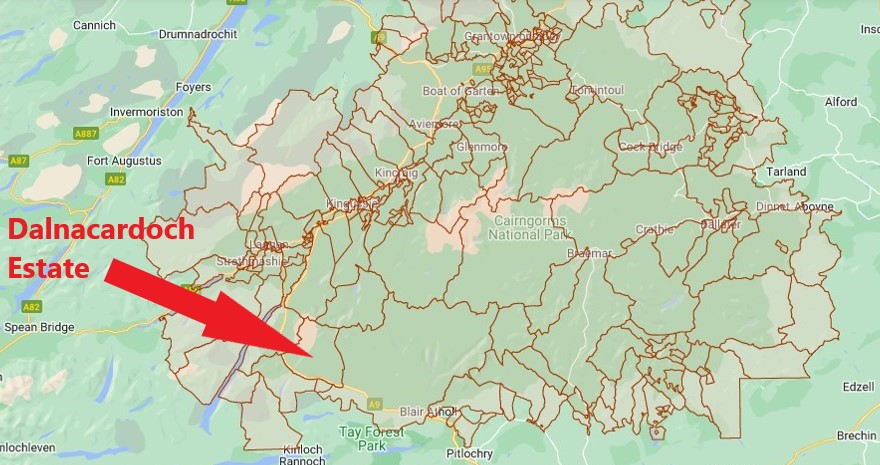
The Trust has secured the lease for Dalnacardoch Estate, which sits entirely within the Cairngorms National Park, halfway between Blair Atholl and Dalwhinnie.
This will be Durrell’s first project in Scotland.
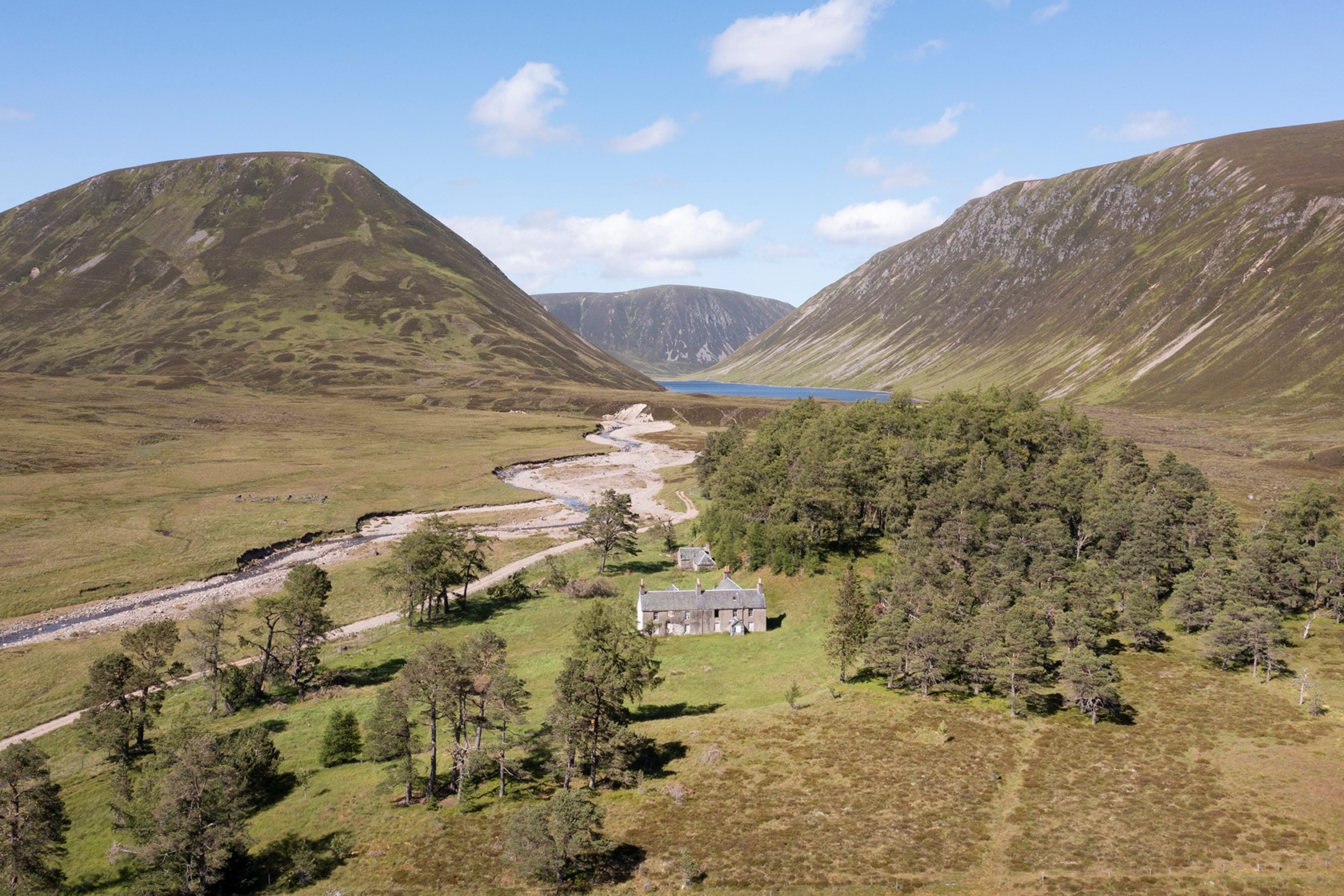
The team has a long-term vision to revive the estate by applying its proven techniques to restoring habitats and ecological processes, as well as recovering iconic missing species such as the capercaillie, which is currently facing extinction in Scotland.
Durrell’s scientific approach combines hands-on species management with habitat restoration while working alongside local communities and training conservationists.
Significant ecological audits of the site, to establish the geography, species and habitats, are already taking place. These surveys will be ongoing and continue to inform the long-term strategic vision for rewilding the estate in line with the interests of the wider community and the requirements of being in a national park.
Durrell’s CEO, Dr Lesley Dickie, said: “This is a transformational moment in the Durrell story. The UK is one of the most nature-depleted countries on Earth with a multitude of diminished species and missing ecological functions. We are proud to be a British charity and we have been looking for a landscape-scale restoration project in the UK for several years.
“Leasing the Dalnacardoch estate offers an incredible opportunity to demonstrate our approach to conservation and transition this estate to a nature-positive landscape that will benefit both local people and wildlife.”
Durrell’s intention is to have a managed transition away from Dalnacardoch’s historic use as a sporting estate. Instead moving towards a diversified range of activities that will provide economic, social and environmental benefits.
The team’s immediate focus is on engaging with neighbouring estates and potential partners.
Grant Moir, Chief Executive of the Cairngorms National Park Authority, said: “We’re delighted to be working with the Durrell Wildlife Conservation Trust on the long-term restoration of Dalnacardoch Estate. This collaboration will be vital in helping achieve our National Park Partnership Plan commitments, particularly around ecological restoration, net zero, woodland expansion, peatland restoration, and green skills and training.
“It’s also encouraging that Durrell plans to work so closely with neighbouring landowners and with the local community, developing a lasting vision that reflects the unique environmental and cultural heritage of the area.”
Professor Carl Jones MBE, Durrell’s Chief Scientist, said: “Durrell is excited to be working on a major restoration project in Britain, bringing six decades of experience in saving species from extinction and rebuilding ecosystems. In a world where we are seeing major environmental changes and the loss of wildlife, we passionately believe we can address these challenges and make the world a better place. We look forward to restoring the plant and animal communities of Dalnacardoch so that the glens and moors are vibrant with bird song and pulsing with life.”
The land was bought earlier this year by a family foundation with charitable aims, specifically with the intent to lease it to Durrell for a rewilding project.
ENDS
This is excellent news for wildlife conservation in Scotland, and especially for this south west corner of the Cairngorms National Park. Part of Dalnacardoch’s boundary is shared with Gaick Estate, managed by Wildland and part of the impressive Cairngorms Connect project, a multi-partner, long-term, landscape-scale rewilding effort.
However, Dalnacardoch, a former grouse-shooting estate, also shares its boundary with a number of other estates (Atholl, Dalnaspidal, North & South Drumochter, and Phones, Etterridge and Cuaick). Some of these estates are still managed (some of them I’d say quite intensively) for driven grouse shooting.
I’m delighted to see Durrell take on a wildlife conservation project in the UK – this is an organisation whose international conservation work is legendary, particularly on the islands of Mauritius and Madagascar in the Indian Ocean which is where I’ve seen their bold and innovative projects recover threatened species and transform and restore ecosystem functionality, at the same time as providing training for literally hundreds of young conservationists (30 years ago I was one of them!), many of whom have gone on to apply that training to their own successful careers in this field.
I really look forward to seeing what they can achieve at Dalnacardoch.
 Raptor Persecution UK
That’s really good news.
Wonderful news.
Let’s hope it’s the start to many more rewilding projects across the UK
It is fantastic news. It’s an amazing organisation and if your opinion is that they’ll do a good job, even better. Little by little
That is excellentl news! Thank you for letting us know.
What fantastic news, another nail in the coffin for intensively run grouse shooting.
Thank you for some really good news! So needing it! Hopefully this is very much the beginning of the end for ‘sporting’ shooting in Scotland, and maybe elsewhere. Lets hope there will be lots of jobs for youngsters coming through school right now, as well education programmes for schools.
Young people from rural backgrounds need to see how things are changing, where the future jobs will be and choose college/university courses or apprenticeships in conservation rather than gamekeeping. No doubt Durrell will provide opportunities for youngsters but ideally there should be local people taking them up.
Let’s hope that the rewinding is monitored and all the species and numbers are recorded now and each and every year after. To see the effects of this rewinding
Why?
“rewinding”?
Whilst shooting provides income and jobs, it leads to “mysterious’ deaths of wild birds across many estates PURELY for being wild and predatory…which is their nature.
Good on the trust, let’s hope that it will achieve success!!
Great news – real cause for optimism.
The New Lairds are unlikely to be any better than the old ones. Enjoy your version of the cleared playground. Durrell is based in Jersey. Aye.
I’ll just mention Glen Feshie here: anyone who wonders about the veracity of your comment can search for it.
You sound very pessimistic but initiatives such as this are the only hope for the salvation of nature. Durrell’s track record is exemplary so I can’t see how their HQ location makes any difference; their passion for nature conservation is what has driven them ever since Gerald Durrell’s wonderful books.
“The New Lairds are unlikely to be any better than the old ones”
They have already proved to be FAR superior, so tough shit.
A different version of the same strategy, but heading in the same direction if at a much slower pace. The present private owenrship of land is the base issue, and, in the long term, if you do not change that then the cycle will continue..
Most birds of prey need to kill and eat song birds to survive. When the RSPB bought the Invertromie Estate, the woods were alive with birdsong with many varieties of finch and other small birds continually fluttering between the birches. Within five yeara, the only sound was the mewing of buzzards, by then by far the most common species. Then, the buźzards started to disappear as there was no longer a ready supply of small birds and mammals to sustain them. When I was last there, admittedly ten years ago, the woods were silent.
I happen to find the song of song birds far more uplifting than the sight of a few feathers where one has been ripped apart by a raptor but I appreciate I may be a lone voice here.
I just ask that you manage Dalnacardoch with sensitivity towards all wildlife and remember that once all their prey has been killed, the rsptord will either move on or perish.
Lets look at the opening statement of this display of ecological ignorance…
“Most birds of prey need to kill and eat song birds to survive”.
Of the 15 UK breeding raptor species, only Sparrowhawk, Hobby and Merlin could be said to be dependent on small passerines (“songbirds” to you). If you’re going to post opinion masquerading as fact, it’s probably best to to undertake at least a modicum of research beforehand. After all, you wouldn’t want to appear stupid, would you?
“After all, you wouldn’t want to appear stupid, would you?”
Too late:-)
The place I’ve seen with the healthiest population of raptors is also the same one where I’ve seen the best population of songbirds – the land surrounding Hay on Wye in the Welsh Borders.
Well said Co-op what a load of crap just spouted we have sparrow hawk buzzard everything on our land and tons of songbirds small birds enormous amount of all the tit family on feeder gold finches everything!
Jack, what are you on about? Invertromie woodlands have excellent diversity of passerines. And buzzards don’t eat them – their main prey is rabbits and smaller mammals.
Don’t believe a word Jack Hyde says… He is just making it up as he goes along.
“An 18,500-acre estate in Perthshire is set to be the home of a 100-year rewilding project managed by Durrell”
Excellent! This is the future. Shooting is the death of any future.