
This is a strange case.
Last week, the Hunt Saboteurs Association (HSA) posted a video and accompanying commentary on its website about a police investigation into a gamekeeper alleged to have been caught on camera placing ‘poisoned-laced pheasant carcasses’ next to a pheasant release pen in Berrington, Shrewsbury in 2022 (see here).
The HSA reports that its fieldworkers collected some of the pheasant carcasses and sent them to the Wildlife Incident Investigation Scheme for toxicology analysis and the findings were reported to West Mercia Police for investigation.
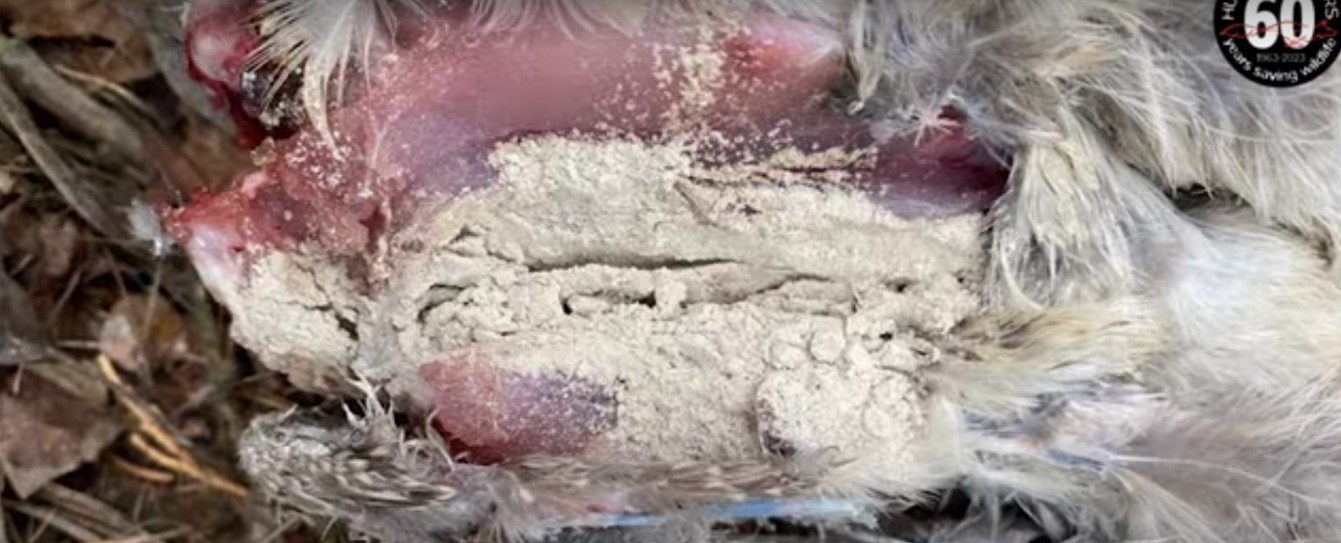
The report on the HSA website states:
‘The gamekeeper’s house was raided by the authorities, and despite poisonous substances being found, there was insufficient evidence to prove these were the same substances found on the bird carcasses. Sadly this meant there was no chance of a conviction in this case. This does mean that we are now able to share this footage with you to highlight the grim reality of the shooting industry‘.
The HSA report doesn’t identify what substance was found on the pheasant carcasses during the toxicology analysis, nor does it identify the ‘poisonous substances‘ alleged to have been found by West Mercia Police at the gamekeeper’s house, so it’s difficult to draw conclusions about any alleged criminality.
However, I did find an entry on the Wildlife Incident Investigation Scheme (WIIS) database referring to an incident involving ‘pheasant baits’ in Shropshire in 2022. This is likely to be the same incident as the HSA is reporting but beware, there is a small element of uncertainty because the WIIS database isn’t always kept up to date and some incidents are known to be held back from publication whilst investigations are still live.
Let’s assume the WIIS database entry refers to the HSA case. Here is what the WIIS entry says:
Ref: 107/367: Shropshire, September 2022, categorised as ‘abuse’, 2 x pheasant baits & 8 pesticide samples. The narrative is given as follows:
‘2 pheasant baits found with white/grey powder inside them. Residues of permethrin were found on the pheasant baits. Analysis confirmed a mixture of pesticides which were found during a visit to a pesticide store. This incident has been assigned to permethrin abuse. There were also failings in the storage of a range of pesticides, some of which are no longer approved‘.
That last sentence is key. If banned substances were found during the police raid AND there were ‘failings in the storage‘ of them, this would normally be sufficient evidence for a prosecution for failing to comply with the regulations relating to the possession and storage of various banned chemicals, and associated health & safety regulations, as we’ve seen in other recent cases (e.g. here), even if there was insufficient evidence to charge for placing poisoned baits.
Hmm. I’ll try and find out more detail…
 Raptor Persecution UK
Thanks for flagging this up and digging deeper. It does seem odd that charges weren’t brought for possession and storage of banned chemicals.
Puzzling out come so far. As I am aware the police record their actions to protect integrity, is it available through foi, one wonders. Could remove suspicions of poor police workings or heaven forbid something worse. Just a thought.
Are the judiciary/police/DEFRA
looking after their mates?
Are the people working in these government related bodies more likely to support these and participate in these archaic hunting practice.
The general public who they serve do not support hunting I would suggest.
Maybe a referendum on banning hunting altogether would be a good idea.It would be interesting to implement a study to find out which professions are most involved in hunting.
And the police wonder why they are so unpopular ? If they allow some people to get away with possession and unsafe storage not too mention the leaving out carcasses what do they expect ??
Sent from Yahoo Mail on Android
Send them this –
To recognise always that the power of the police to fulfil their functions and duties is dependent on public approval of their existence, actions and behaviour and on their ability to secure and maintain public respect.
Second of nine Peel’s Principles, named from Sir Robert Peel, founder of what is now The Met.
https://www.gov.uk/government/publications/policing-by-consent/definition-of-policing-by-consent
Perhaps Salop residents could raise this with the PCC?
This absolutely stinks.
Given the evidence available there are grounds for serious concern at the lack of action by various authorities.
Various hunt saboteurs have had so called “ evidence “ thrown out of court for highly edited video evidence and lies so not entirely trustworthy
Unlike Gamekeepers, who are entirely trustworthy, I suppose?? 🙄
You mean had evidence thrown out because the judiciary are protecting their mates. What about the incidents where the evidence is unequivocal, like the woman that deliberately xxxxx xxxxx xxxxx xxxx causing significant injury, and got a slap on the wrist? It is simple, with a very few exceptions, the police & judiciary in the UK are not prepared to do their jobs properly and effectively when it comes to wildlife crime. It is all down to forelock tugging at the bottom and shared interests at the top.
Not sure why you x’d that out: she was found guilty
[Ed: Thanks, Simon, I wasn’t aware and didn’t have time to go searching]
Russell, you feel that the footage was unfairly edited in a clever way that discounts an otherwise obvious and innocent explanation of what he was doing? Perhaps. But I can’t think of an innocent explanation myself. I can’t explain why (at around 50secs) for an (as yet unknown) innocent reason he would carry a supposedly useless dead pheasant (that if simply dead ought to be disposed of properly) in such a careful way and place it quite deliberately beside the feeder and leave it there. It’s puts me in mind of the perennial complaints heard from keepers who mutter about Buzzards sitting patiently on posts and branches watching pheasants at their feeders & in pens – usually lamenting that they are unable to do anything about it.
I am wandering along listening to our lovely local baby buzzards no where near a shooting area thank goodness lifts my heart unlike this country no justice it’s just ridiculous no law .
In my opinion, mixtures of chemicals would be analysed by HPLC and some form of tandem analysis device such as an MS. From this you can extract identity and quantity information from the mixture about it’s components, but for it to prove anything, that the poison on a carcass came from a jar of the poison, the mixture would have to be ubiquitous. It is probably the case that the sloppiness of the person who made the mixture worked in their favour in this case. It would be virtually impossible to collect evidence from such a mess proving a link between the jar found and the laced carcass.
In my opinion, I think the sloppiness of the gamekeeper with dangerous chemicals worked well in their favour, in this case. Analysis of mixtures tells you quantities and identities of the chemicals in it and can produce a fingerprint like trace with an instrument such as an HPLC/MS. The trace from the machine produces a series of bumps for each component of the mixture as it elutes from the column. So, you have a mixture and need to link a sample of it to a jar of the stuff found at the gamekeepers house, so what you need is two identical HPLC traces where all the sizes of the bumps are the same. But if the jar and the sample are not well mixed together, this is never going to happen, because the trace would depend on which part of the jar your samples were taken from.