Cyclist’s body found buried in stink pit on infamous Auch Estate

There was a pretty gruesome criminal case taking place at the High Court in Glasgow last week relating to the infamous Auch Estate at the Bridge of Orchy.

Long-term blog readers may well remember the Auch Estate – a deer-stalking and fishing sporting estate where a poisoned golden eagle was found in June 2009 along with a carbofuran-killed fox and a carbofuran-laced sheep carcass. The discovery led to a raid at the farm manager’s home where Carbofuran was discovered in a game bag and two illegal handguns were discovered in the loft.

Three years later after prolonged legal proceedings, farm manager Tom McKellar (then aged 50) was convicted for having possession of the banned pesticide Carbofuran, although he wasn’t charged with poisoning the golden eagle or placing the poisoned bait. He was given a pathetic £1,200 fine for possession of Carbofuran and a 300-hour community service order for possession of the two handguns, a crime which would normally have attracted a mandatory five year custodial sentence (see here and here for some background to that case).
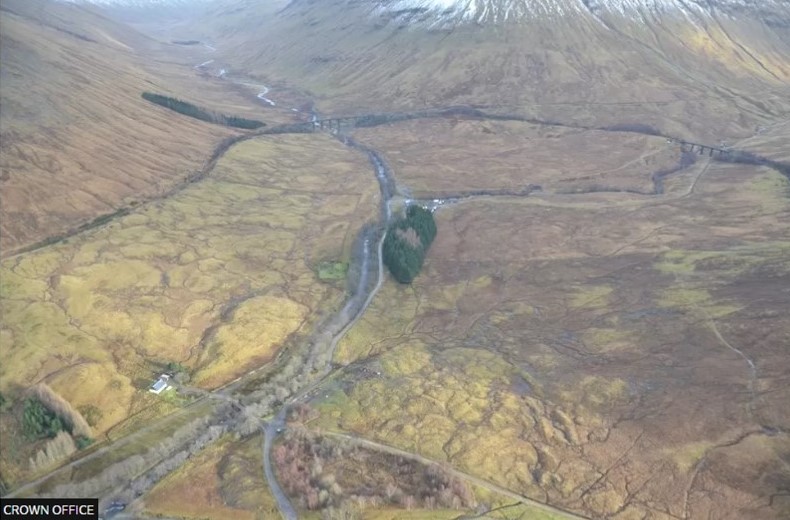
Aerial view of Auch Estate. Photo: Crown Office

The case heard last week at Glasgow High Court centred on twin brothers Alexander and Robert McKellar (now aged 31). In September 2017 after drinking with a German hunting party at a local hotel, Alexander McKellar’s vehicle hit a charity cyclist, Tony Parsons, who was cycling on the A82, causing him serious injury. Instead of helping him, the two brothers drove back to Auch Estate (where they were reportedly self employed farm workers living with their parents – Alexander McKellar was also reported to be a deer stalker), dumped their phones and changed vehicle and went back to pick up Tony Parson’s body, bike and possessions, and drove back to the estate and initially hid Mr Parsons in a wood.

They later removed him from the wood and took him to another location on the estate, reported in court as a location used for “the purposes of disposing dead animals”, in other words, a stink pit. There they dug a grave and buried Mr Parsons and burned his possessions.

Mr Parson’s remains were not discovered until January 2021 after a girlfriend of one of the McKellar brothers told police she’d been shown the grave site in 2020. Prior to her report, in 2018 the police had been tipped off to “pay attention” to the McKellar twins and had visited the estate in January 2019 but were apparently ‘asked to leave’.

Details of the case can be read here, here and here.

The McKellar brothers were due to stand trial for the murder of Mr Parsons but the court has accepted a not guilty plea from Robert McKellar and a guilty plea from Alexander McKellar to a lesser charge of culpable homicide. Both have pleaded guilty to attempting to defeat the ends of justice. They will be sentenced on 25th August at Glasgow High Court.

Let’s hope there’s some justice for Tony Parsons and his family.

UPDATE 4th August 2023: More detail emerges about McKellar twins who buried cyclist’s body in stink pit on Auch Estate (here)

UPDATE 25th August 2023: McKellar twins from Auch Estate sentenced for killing cyclist & burying his body in a stink pit (here)

United Utilities stands firm & explains its decision not to renew shooting licences

Many thanks to everyone who has taken the time to email north-west water company United Utilities (UU) in support of its decision not to renew grouse and pheasant/partridge shooting leases on its land after the current leases expire in 2027 (see here, here and here).

Multi-coloured moorland sphagnum bog mosses essential for holding water and helping to prevent downstream flooding & upstream wildfire. Photo: Ruth Tingay

In the face of a subsequent online attack from shooting organisations who are furious about this decision, UU has responded with a full statement to explain why the decision was made. This is the email that UU has been sending to those who are attacking the company:

Hello,

Thank you for contacting us to raise your concerns about the United Utilities’ updated land strategy. Building on decades of successful habitat restoration, we recently reviewed the way we manage our land to ensure we are fully focused on using our catchments to manage water quality, quantity and mitigate flooding, which are of strategic importance to us as we respond to the challenges of climate change.

Addressing these challenges requires a step change in our approach to help ensure a fully resilient ecosystem in which wet moorlands and biodiverse woodlands can improve catchment resilience by slowing the flow of water and improving water quality and retention – this is the primary reason we own this catchment land.

Following that review and to ensure we can focus on those areas, we will not be renewing shooting leases where we own the rights. This follows a decision made some time ago not to issue any such leases on a long-term basis. Stepping away from leasing our shooting rights, as those leases come to their natural expiry date over the next few years, provides an opportunity to work with stakeholders to change the land management approach and support the delivery of this long-term objective for increased catchment resilience.

We remain committed to working with others, to accelerate the restoration and rewetting of our peatlands and the biodiversity of our woodlands. We believe this will help unlock other opportunities to deliver a richer and more diverse approach to habitat management, conserving and improving biodiversity, including protected species, while also developing skills and jobs. We see this as an extension of our catchment management work which has been so successful in other parts of our region.

Our updated land strategy affects 24 licences where we have shooting rights within specific catchments. We are working through this transition with those who are affected by this change as the leases come to their natural end and we remain committed to working with others to help address climate change risks such as wildfires and droughts whilst improving biodiversity. Many current land management techniques will continue and these will form part of new plans, developed and delivered with stakeholders and partners, providing new jobs and economic benefits for those who work in our catchment communities.

© United Utilities Group PLC 2023

Emails of support for United Utilities’ decision not to renew shooting leases

Further to the news that north-west water company United Utilities (UU) has decided not to renew any more grouse-shooting and pheasant/partridge-shooting leases on its land once the current leases expire in 2027 (here), the shooting organisations have gone into meltdown, first making veiled threats towards UU in the media (see here) and then whipping up the shooting community into a frenzy with familiar hyperbole that UU’s decision is an ‘insult‘, a ‘disaster‘, a ‘travesty‘, ‘tragic‘ and ‘appalling‘.

You won’t be surprised to learn that I disagree with all of those claims and welcome UU’s vision to restore their land for the benefit of wildlife and wider ecosystem health, and thus people.

I’d much rather see this:

A non-grouse-shooting moor in the Peak District National Park (photo: Ruth Tingay)

Than this:

A driven grouse moor on UU land in the Peak District National Park (Photo: Ruth Tingay)

It’s still not clear (to me, anyway) just how many shoots will be affected by UU’s decision. BASC says on its website, ‘It’s estimated that more than 30 shoots will be shut down as a result‘ whereas the Countryside Alliance says on its website that UU’s decision ‘…will close seven grouse moors and three low ground shoots‘.

Whatever the number, the shooting organisations are predicting rural Armageddon, as they often do when there’s the slightest whiff of any threat to shooting, and they’re now running a campaign to urge their members to write letters of complaint to UU’s chief executive Louise Beardmore, I guess in the hope of piling on the pressure and persuading UU to reverse its decision.

They’re entitled to express their opinions, of course, so it would be good if counter views to this attack were also heard by UU, to commend their decision and encourage them to hold firm. Who knows, the support may also encourage them to sort out their terrible sewage dumping record.

Emails can be sent directly to Louise Beardmore: Louise.Beardmore@uuplc.co.uk

You might also want to cc your email to the UU press office, who I’m told are taking an interest: externalaffairs@uuplc.co.uk

UPDATE 30th July 2023: United Utilities stands firm & explains its decision not to renew shooting licences (here)

Yorkshire Dales grouse moor owner appointed to ‘key role’ at DEFRA

The owner of a Yorkshire Dales grouse moor has been appointed to a ‘key role’ at DEFRA by the Secretary of State for Environment, Food and Rural Affairs, Therese Coffey.

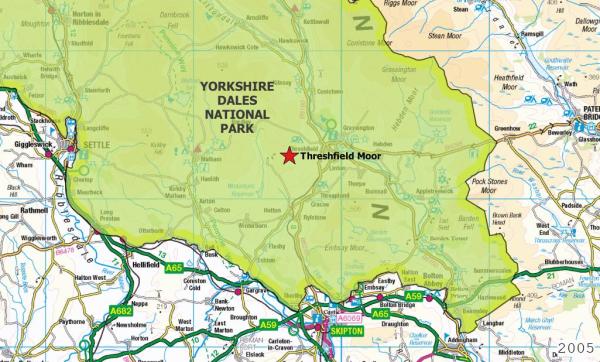
Heather Hancock, who according to her Wikipedia entry owns Threshfield Moor with her husband Mark Hancock, has been given the role of Lead Non-Executive Board Member, ‘appointed to provide challenge to Government departments’, according to this DEFRA press release (here).

Mark Avery has blogged about this appointment this morning (here) and he points out that Hancock’s co-ownership of a grouse moor has been conveniently excluded from the DEFRA press release.

It’s an interesting omission, as this particular grouse moor has been at the centre of two separate police investigations into suspected wildlife crime in recent years.

In October 2017, a young satellite-tagged hen harrier named ‘John’ ‘disappeared’ on Threshfield Moor in the Yorkshire Dales National Park and North Yorkshire Police issued an appeal for information (here).

Like so many other hen harriers that vanish in this hell-hole of a National Park, he’s never been seen again and of course, nobody was ever prosecuted.

In January 2020 Threshfield Moor was once again under investigation after two witnesses reported seeing the shooting of a hen harrier (here). That investigation did lead to an arrest of a gamekeeper but, as ever, there was insufficient evidence to bring charges against him and the investigation was dropped.

Threshfield Moor featured on this blog again just last month after a reader sent in photographs of two gas guns (bird scaring devices) that had been positioned on the grouse moor (see here) during the height of the breeding season.

I can’t imagine that Heather Hancock is going to ‘challenge’ the Government about anything in which she has a vested interest, can you?

Excerpt from Heather Hancock’s Wikipedia entry (27 July 2023)

Hawk & Owl Trust faces revolt over ‘poor management’

A fascinating article appeared on the BBC News website yesterday about a ‘protest’ that’s been staged against the Hawk & Owl Trust over what has been described as “poor management of resources and of people“.

The BBC article (here) reveals that a protest was held at the Trust’s Sculthorpe Reserve in Norfolk by former staff and volunteers, who are angry about “money being wasted“, “volunteers being used badly” and the “method of management that threatens the reserve“.

The BBC reports that some life members of the Hawk & Owl Trust have been banned from the site. The protesters told the BBC they’d made a complaint to the Charity Commission to express concerns about ‘leadership and the use of funds’.

The Hawk & Owl Trust’s Chief Operating Officer, Adrian Blumfield, issued the following statement in response:

The Hawk and Owl Trust is a respected national charity dedicated to conserving wild birds of prey and their habitats.

It has two well-managed nature reserves in Norfolk and Somerset. The trust is a well-run and governed organisation with an experienced trustee body.

We understand that a small number of people previously connected with the charity are resistant to the positive progress and changes that have been made.

Any criticism of the charity is completely unwarranted, misplaced and risks undermining the work being undertaken.

The Charity Commission said: “We carefully considered concerns raised with us about the governance of The Hawk and Owl Trust.

Based on the information provided, we determined that there is no regulatory role for us at this time.”

Many of you will remember the Hawk & Owl Trust’s shocking decision in 2014-2015 to get in to bed with the grouse shooting industry in support of hen harrier brood meddling (here). It not only got into bed with them, it pulled up the duvet and stuck in some heavy duty ear plugs, refusing to be budged.

It cost the Trust dearly, as their President (Chris Packham) resigned, a load of members cancelled their subscriptions, and the charity’s credibility has never recovered in conservation circles. Much of the Trust’s decisions seemed to be led by the then Chair, Philip Merricks, but Trust statements at the time claimed that the decisions had the full backing of the Board of Trustees (at least two of whom were directly involved with the brood meddling trial, which seemed a bit questionable).

The Trust claimed to have several ‘immoveable conditions’ attached to its participation in brood meddling, not least that it would pull out ‘if any member of the moorland management organisations were found to have illegally interfered with or persecuted a hen harrier on their moors’ (here). We later learned that the ‘immoveable conditions’ were actually very moveable indeed (see here) and weren’t worth the paper they’d been printed on.

Needless to say, persecution continued and even when one of the hen harriers (called Rowan), satellite-tagged by Natural England in association with the Hawk & Owl Trust, was found dead with clear shotgun injuries to its leg, the Trust did all it could to avoid admitting the bleedin’ obvious (e.g. see here, here, here).

Even when the shotgun injuries were proven on Rowan, the Hawk & Owl Trust continued its charade (see here, here and here).

I’m afraid I lost all respect for the Hawk & Owl Trust during that time and still feel the same today. Despite having some really decent on-the-ground staff and doing some excellent public engagement work with city peregrines, for an organisation that is supposedly focused on the conservation of the UK’s birds of prey and owls it’s deeply disappointing that it has not been at the forefront of raising merry hell about the ongoing illegal killing of birds of prey in this country. In fact it’s more than deeply disappointing, it’s a bloody shocker.

UPDATE 2nd August 2023: More on the revolt at Hawk & Owl Trust: statement from protesters (here)

New report by Wild Justice shows protected areas in England in worse state than previously thought

Press release from conservation campaign group Wild Justice (25th July 2023):

A SIGHT FOR SORE SSSIs: Protected areas in England are in a worse state than previously thought

A majority of English Sites of Special Scientific Interest haven’t been assessed by Natural England for over a decade, and are thought to be in a worse condition than currently reported.

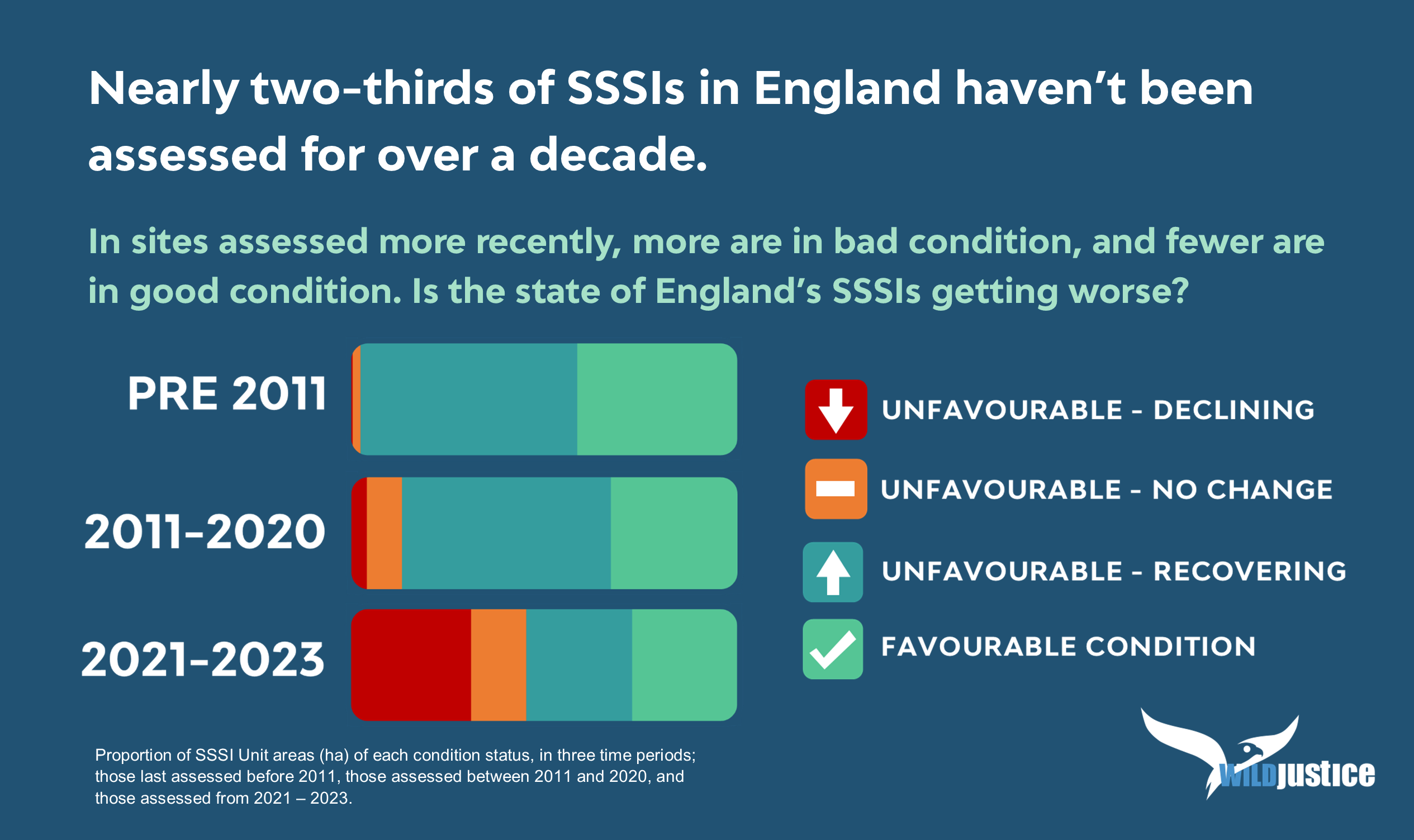
  1. An up-to-date analysis of Natural England’s data on SSSI condition shows that SSSI condition is worse than the latest Defra published figures. Sites assessed more recently have a lower percentage deemed to be in a good or improving condition, and a higher percentage deemed to be in a bad or worsening condition than those assessed longer ago.
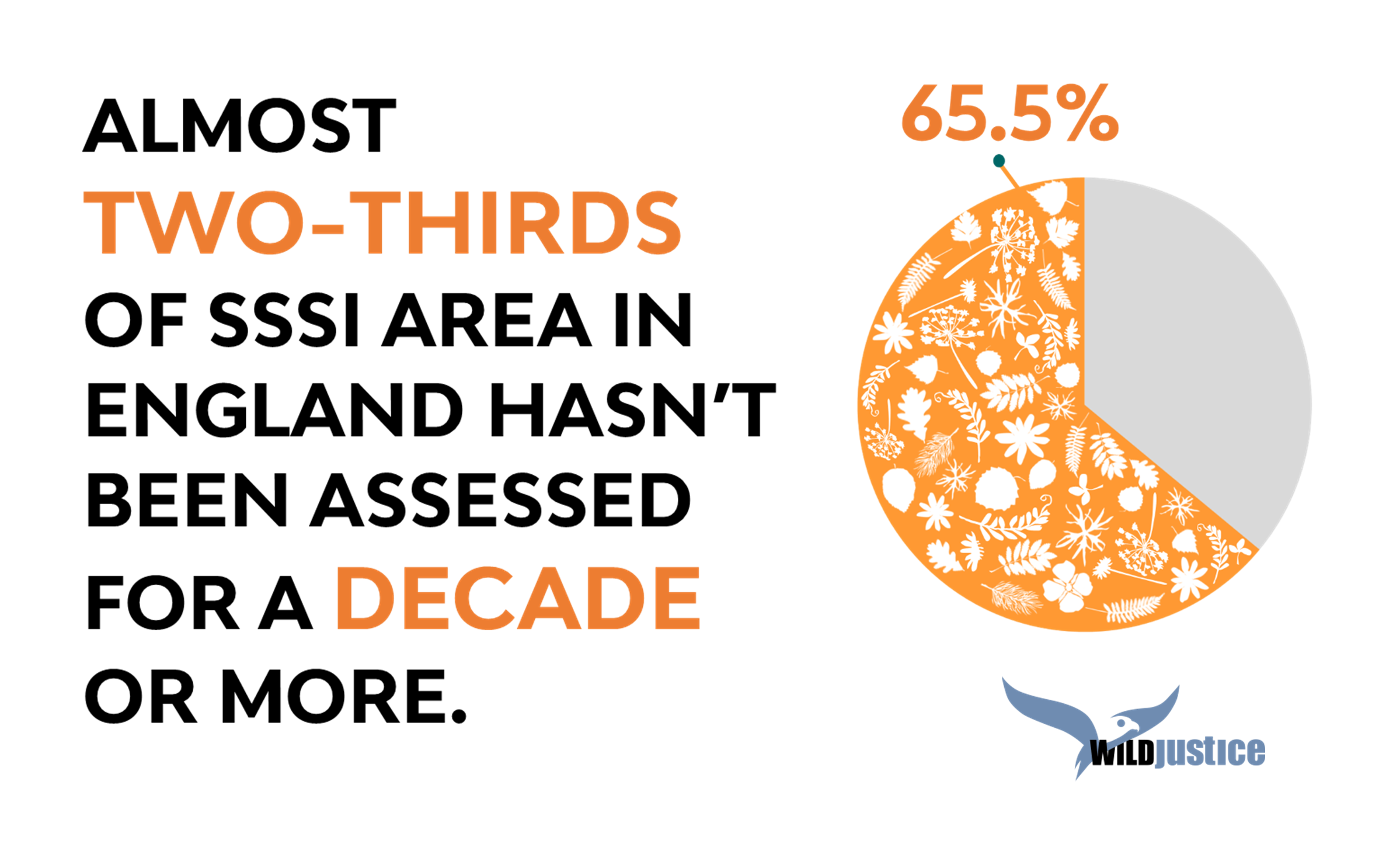
  2. Two-thirds of Sites of Special Scientific Interest in England haven’t been assessed in more than a decade. Over 80% of sites haven’t been assessed for five years or more.
  3. A report by Wild Justice predicts that if the backlog of condition assessments were to be rapidly updated, English SSSIs would be shown to be in a worse state than current estimates admit.

Some of England’s most protected areas are likely to be in a worse state than currently reported, according to up-to-date analysis carried out by Wild Justice. The ‘Sight for Sore SSSIs’ report [linked at foot of blog] looked at when Sites of Special Scientific Interest (SSSIs) in England were last assessed, and revealed that the majority haven’t been evaluated in over a decade. Analysis of the most recently assessed sites suggests the overall condition of SSSIs is likely to be worse than Defra’s current figures show.

SSSIs are areas of land designated for their wildlife and biological value. Over 4,000 of the UKs 7,000 SSSIs are found in England. These places often contain rare habitats and species, and are therefore protected from development or certain activities or management. Their condition, or ‘status’ should be regularly assessed by Natural England to determine any changes in land management that might be needed to maintain or improve a site. Each SSSI is made up of between 1 and dozens of Units, each of which has been assessed as to its condition at some point since it was designated. A Unit’s condition can be classified in one of six ways; Favourable, Unfavourable – Recovering, Unfavourable – No Change, Unfavourable – Declining, Part Destroyed and Destroyed.

According to data acquired by Wild Justice, an organisation campaigning on wildlife issues in the UK, current estimates of English SSSI condition are likely to be inaccurate. This is because the time elapsed since the last assessment of any particular site, and the potential for that site to have changed during that time, isn’t taken into account when the figures for SSSI condition are provided by Defra. Wild Justice argues that if a protected meadow hasn’t been monitored for ten years, it’s quite possible that management or environmental factors could have affected the site’s condition during that decade.

The figures analysed by Wild Justice seem to support this idea. In site units last assessed over a decade ago, the proportion of ‘Favourable’, or ‘Unfavourable – Recovering’ sites are higher than site units assessed in the past few years. A similar effect can be seen with ‘Unfavourable – No Change’, and ‘Unfavourable – Declining’ sites; with higher percentages of these statuses in more recently assessed site units. This implies that as site assessments are brought up to date, the proportion of higher quality sites is revealed to be less, and the proportion of lower quality sites is revealed to be higher than it appears at first glance.

Mark Avery, Co-Director of Wild Justice said:

“It seems that most of our English SSSIs have been neglected when it comes to monitoring their condition. The fact that two-thirds of these special places haven’t been looked at in over 10 years by Natural England is troubling and disappointing. Especially as it looks like our most special areas are being damaged, and the public are none-the-wiser. The system has fallen into disrepair and we can have little faith in the published Defra figures on some of our most protected areas.”

Off the back of this analysis, Wild Justice are calling for Defra and Natural England to publish annual updates on the condition of English SSSIs, as well as their date of last assessment. Wild Justice believes a rapid catch-up needs to be prioritised in the next few years, setting a new standard of 80% of English SSSI Units having had their condition assessed in the last 5 years. Natural England should carry out an urgent review of the resources needed to ensure that English SSSIs are in Favourable condition.

ENDS

Wild Justice’s report can be read/downloaded here:

Countryside Alliance furious about United Utilities’ decision to stop grouse shooting leases

Further to the recent news (here) that water utility company United Utilities has decided not to renew any more grouse-shooting leases on its land in northern England, the Countryside Alliance has responded with predictable fury.

The Telegraph published an appallingly unbalanced pro-grouse shooting article last night (see here) with extensive quotes from Tim Bonner, chief executive of the Countryside Alliance.

In this Telegraph puff piece for the grouse-shooting industry, Bonner is quoted as follows:

United Utilities seem to be panicking about its recent appalling media coverage over their pollution of our waterways.

The suggestion that it is banning shooting on its land has all the hallmarks of an ill thought-out distraction technique that will inevitably backfire.

If it is true they intend not to renew the leases for shooting, it will have irreversible damaging consequences for the conservation and biodiversity of our precious uplands as well as the livelihoods of rural people.

Additionally, it will create a new problem for United Utilities which should expect to find all its operations significantly more difficult, as a large part of the countryside will no longer want to cooperate with them in any way.

It would be a stupid move for any landowner and utility provider to pick a fight with the countryside, let alone one which relies so heavily on access on to other people’s land.

That half-veiled threat that “a large part of the countryside will no longer want to cooperate with them in any way” was put more forcibly in a tweet from the Countryside Alliance’s media account this morning, where the words “will no longer want to cooperate” were changed to, “will no longer cooperate“:

I’m not sure what he means by ‘cooperate‘ as water utility companies have statutory powers of entry on to private land, under the Water Industries Act 1991 – they don’t need a landowner’s ‘cooperation’ and United Utilities have an approved code of practice for such entry (see here) where a landowner’s rights are clearly laid out.

The Telegraph article does contain some useful information – it reports that the longest current grouse-shooting lease on UU-owned land is due to expire in 2027. At least now we have an idea when to expect grouse-shooting to end on UU-owned moorlands.

UPDATE 28th July 2023: Emails of support for United Utilities’ decision not to renew shooting leases (here)

UPDATE 30th July 2023: United Utilities stands firm & explains its decision not to renew shooting licences (here)

Grim reality of duck-shooting for ‘sport’ on UK shooting estates deserves greater scrutiny

If you asked your average member of the public what they thought a duck pond was, I’d wager that most of them would talk about an idyllic small pond on a leafy village green, where a handful of wild ducks live and breed with relatively little stress, sometimes visited by local adult humans with small toddlers who want to see/feed the ducks as part of a peaceful outing.

I used to live in a village with such a pond and the biggest threat to the ducks was being run over on the main lane through the village, but every year the village residents would erect hand-made ‘duck crossing’ signs urging drivers to slow down. On the whole, it worked.

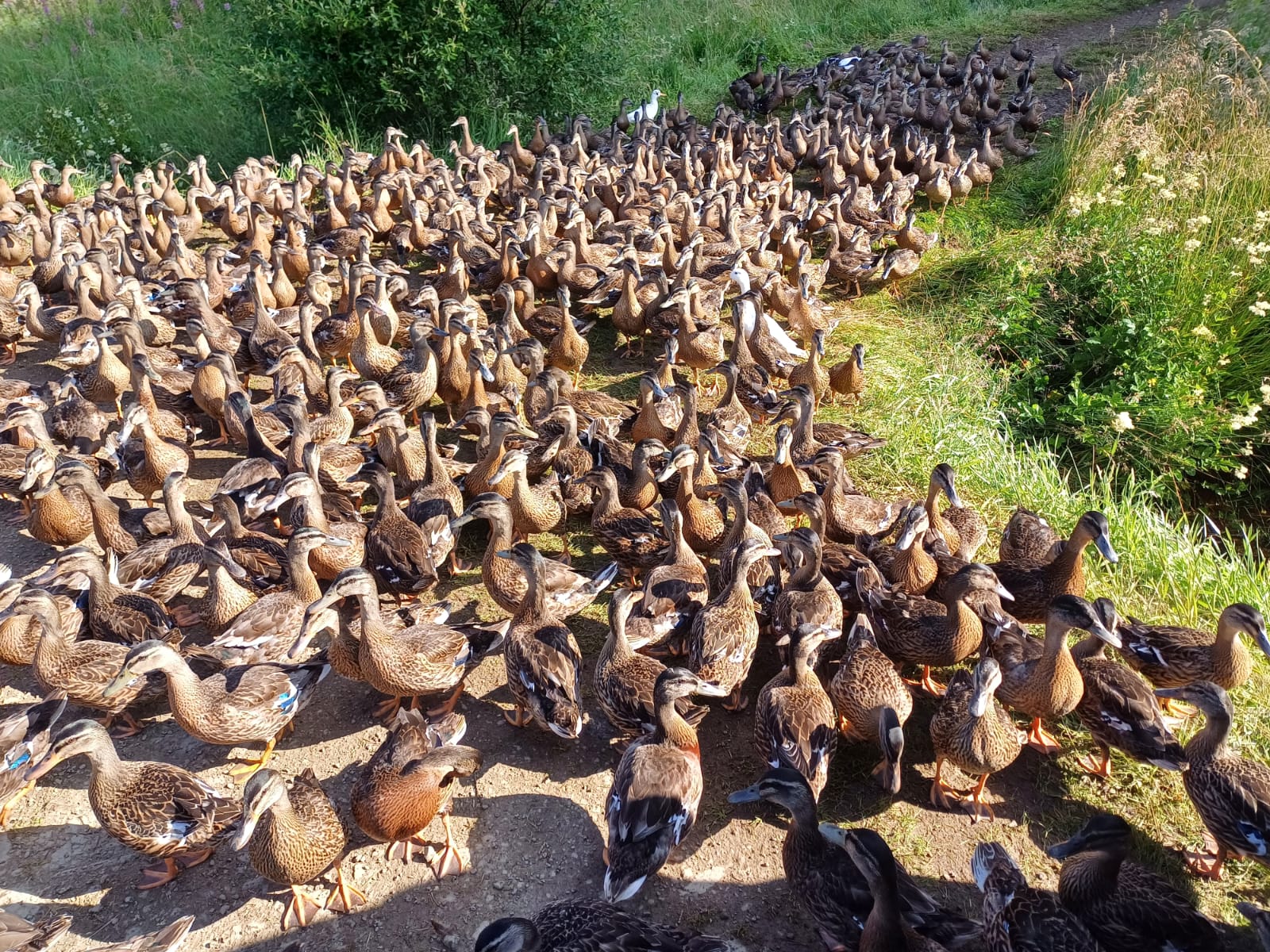
I doubt very much that the average member of the public would describe a duck pond as a massive vegetation-free mud pit, ridiculously over-stocked with semi-tame reared ducks that are fed with sack loads of barley to keep them at the pond so that paying clients can turn up in the shooting season in the autumn and blast them to smithereens for a bit of a laugh.

And yet that’s what’s happening on ‘sporting’ estates in the UK, with anecdotal reports of an increase in released ducks in recent years due to the shortage of pheasants and partridges available to be imported from abroad in the bird flu pandemic.

This grim image has been sent to me by a walker in Scotland. She told me it was one of two such ‘ponds’ on this shooting estate in the Scottish Borders, which also offers partridge and pheasant shooting. These ducks have been released here in the last few weeks, in readiness for the start of the shooting season on 1st September.

It would be fair to say that not every duck-shooting pond looks as bad as this – I’ve seen others that are not so blatantly over-stocked and have been created to provide a really good wildlife-enriched habitat, although there are still issues about the ethics of duck shooting in this way – there are plenty of reports on the internet of ducks circling round and round, trying to land on a pond whilst trying to dodge the guns. Each time they come around they fly higher and higher, resulting in many of them being ‘winged’ and maimed because they’re just out of range for the guns. It’s an appalling carnage.

Here are the same semi-tame ducks seen in the above photograph, in anticipation of being fed.

Although many sporting estates offer ‘mixed bag’ days that comprise pheasant, partridge and duck (typically mallard), it’s both alarming and ironic that the reported increases in duck shooting has been caused by the lack of pheasants/partridge poults due to the prevalence of highly pathogenic avian flu.

You might recall that the RSPB recently repeated its call for a moratorium on the release of gamebirds, and ducks, due to the risk of them spreading highly pathogenic avian flu to wild bird populations (see here). DEFRA ignored the call. Ducks and other water birds are especially susceptible to avian flu and I can’t imagine that over-stocking like that shown in these two photographs is going to minimise the risk.

The shooting of semi-tame ducks for ‘fun’ hasn’t attracted as much attention as pheasant and partridge shooting, probably due to the numbers (and thus environmental impact) involved (i.e. an estimated 60+ million non-native pheasants & partridges released annually in the UK compared with a vaguely estimated 3 million native mallards) but it definitely deserves more scrutiny, especially in this avian-flu era.

UPDATE 2nd September 2023: Minister admits DEFRA is clueless about over-stocked duck ponds for shooting (here)

Water utility company United Utilities not renewing grouse shoot leases across northern England

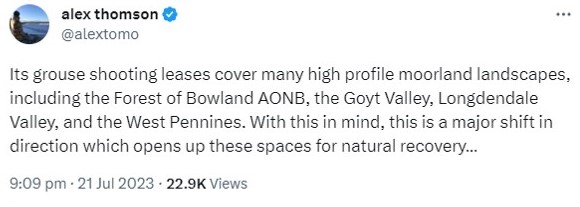
The water utility company United Utilities, which owns a number of moors across northern England where it leases grouse shooting to ‘sporting tenants’, has quietly announced it will not be renewing grouse shoot leases on its moors once the current leases come to an end, according to Channel 4 journalist Alex Thomson.

Alex posted a series of tweets last night following the news from United Utilities’ AGM held yesterday:

It’s not clear when the current grouse shooting leases will expire but my understanding is that they are relatively short, so I don’t think we’re looking at a commitment that won’t take effect for another 50 odd years or so, it’ll be relatively soon.

A United Utilities grouse moor in Goyt Valley, Peak District National Park. Photo: Ruth Tingay

It’s interesting that United Utilities hasn’t produced a press release about such a significant change of policy, especially when that change will be welcomed by the hundreds of thousands of people who want to see an end to driven grouse shooting (e.g. see here). I can’t help but be a little bit sceptical until the full details are revealed but for now, it seems an encouraging move and United Utilities should be applauded.

Let’s hope that UU’s commitment to improving water quality also extends to putting an end to its sewage dumping activities – according to the Good Law Project, UU was the ‘worst offender’ for dumping untreated sewage into rivers and coastal waters in 2022, whilst reporting operating profits of £610 million and paid out dividends of £296 million (see here).

UPDATE 24th July 2023: Countryside Alliance furious about United Utilities’ decision to stop grouse shooting leases (here)

UPDATE 28th July 2023: Emails of support for United Utilities’ decision not to renew shooting leases (here)

UPDATE 30th July 2023: United Utilities stands firm & explains its decision not to renew shooting licences (here)

White-tailed eagle fledges in England for first time in 240 years

Press release from Roy Dennis Wildlife Foundation (18th July 2023):

FIRST WHITE-TAILED EAGLE IN 240 YEARS FLEDGES IN ENGLAND

In a landmark moment for conservationists, the first white-tailed eagle for over 240 years has fledged from a nest in the wild in England. The chick is the first successful breeding attempt of the white-tailed eagles released by Forestry England and the Roy Dennis Wildlife Foundation’s project to return this lost species to England.

First WTE chick in England just prior to fledging. Photo: Roy Dennis Wildlife Foundation

White-tailed eagles are Britain’s largest birds of prey with a wingspan of up to 2.5 meters and were once widespread across England. Human persecution caused their extinction with the last pair breeding in southern England in 1780. In 2019, Forestry England and the Roy Dennis Wildlife Foundation began a reintroduction programme to restore these iconic birds to the English landscape.

Two of the birds released by the project in 2020 – female G405, originally translocated from the Outer Hebrides and male G471, from north-west Sutherland – reared the male chick earlier this summer. The location of the nest, on private land with no public access, is not being disclosed for the welfare of the birds and to prevent any disturbance to them or the landowner either this year or if the birds return to breed at the same location. 

The chick was ringed and fitted with a satellite tag by licensed ornithologists from the Roy Dennis Wildlife Foundation enabling the project team to track this historic bird’s daily progress through its life. 

The WTE chick being satellite-tagged. Photo by Forestry England

Roy Dennis MBE, Founder of the Roy Dennis Wildlife Foundation, said: 

This is a very special moment for everyone who has worked on, supported and followed this ground-breaking project. Restoring a breeding population in southern England, where the species was once widespread, has been our ultimate goal. Many thought it was impossible but we knew food for eagles – fresh and salt water fish, cuttlefish, rabbits, hares and wild birds – was plentiful. I visited the Isle of Wight as a young birdwatcher in the 1950s, saw the last breeding location at Culver Cliff and knew they should be restored. It is early days, but this is a very significant milestone and we are heartened by the enthusiastic support shown by so many people and that the sight of these huge eagles in the sky inspires hope for restoring nature. We still have a long way to go, but the feeling of seeing the first pair reach this stage is truly incredible.” 

The birds are one of three territorial pairs that have now become established in southern England and the first to breed. 

Steve Egerton-Read, White-Tailed Eagle Project Officer for Forestry England, said: 

We are thrilled that this moment has happened and at such an early stage in the project. At only three years old, it is remarkable that the pair have successfully bred, with most white-tailed eagles not attempting to do so until they are at least four or five. This pairs’ ability to breed and fledge their chick at this early age is extremely encouraging.”

It is really hard to put into words just what an incredible moment this is for the return of these iconic birds to England. It is evidence of just how well the eagles are starting to fit back into this landscape and how, with a little help, nature can begin to return and thrive. Although it has not been possible to set up a public viewing site at this location, we are hopeful that one of the other pairs that has become established in southern England will choose to nest in a location that we can share with the public in future years.”  

To date, 25 white-tailed eagles have been released by the reintroduction project with 16 still surviving. A further release of young white-tailed eagles is planned for later this summer from the project team’s base on the Isle of Wight. 

The reintroduction of white-tailed eagles is conducted under licence from Natural England, the Government’s wildlife licensing authority. All of the young birds involved in the project are collected under a NatureScot licence from the wild in Scotland and brought to the Isle of Wight.

ENDS

Huge congratulations to everyone involved in this project – what fantastic news! Although it’s telling that the nest location is being kept secret, and quite rightly so in my view, for fear of disturbance.

It’s not been plain sailing for this project, with a number of the translocated eagles inevitably becoming the victims of illegal persecution, most notably the poisoned eagle found dead on a shooting estate in Dorset last year that resulted in one of the biggest police wildlife crime fiascos witnessed in recent years (e.g. see here and here).

The poisoned WTE found dead on a shooting estate in Dorset in January 2022. Photo: Dorset Police

And then there’s the poisoned white-tailed eagle found dead on a shooting estate in West Sussex in October 2021. Toxicology results confirmed it had been killed by ingesting the banned pesticide Bendiocarb (see here). Strangely, Sussex Police have remained coy about publicising this case and nobody seems willing to provide an update on the status of the investigation ever since May last year when the Chief Constable assured conservationists that the investigation was “very much ongoing” (see here).

I’d hope, as we approach the two-year anniversary of this illegal poisoning, that Sussex Police will manage to provide an update. A lot of people care passionately about these eagles and their reintroduction to southern England and rightly expect to see the police do everything in their power to bring the eagle-poisoner(s) to justice. Two years of stubborn silence isn’t a good look and if this young, historic fledgling suffers the same fate there’ll be uproar.

For those who don’t want to poison white-tailed eagles and would much rather enjoy the thrilling experience of seeing one in the wild, one of the best opportunities to see them in southern England is still from one of the regular ‘bird boats’ run by the charity ‘Birds of Poole Harbour‘ throughout the summer (the same charity that has worked with the Roy Dennis Wildlife Foundation to reintroduce ospreys to Poole Harbour). A number of eagles seem to spend a lot of time foraging and just hanging out in the harbour. You’ll need to book quickly though as these boat tours are incredibly popular (for obvious reasons!). Boat tour details here.