
Guest blog written by conservation campaigner Bob Berzins, who has featured previously on this blog here, here, here and here.
The UK countryside is littered with thousands of animal traps and high concentrations are found around grouse moors and pheasant & partridge shoots, not surprising given the huge numbers of birds bred on moors or introduced in lowlands which inevitably attract predators.
Traps can be described in two categories: those that restrain and those that kill. This blog will examine lethal spring traps to see if they match up to claims of an instant humane kill.
WARNING: Graphic images of animals killed in traps and descriptions of animal testing
There’s no doubt the UK has been slow to improve animal welfare standards around the use of traps. The Agreement on International Humane Trapping Standards (AIHTS) was brokered in 1997 and it took over 20 years for improved standards to be partially implemented in the UK (here and here).
AIHTS is about fur trapping which is a huge industry in Canada and Russia but in the UK the only “fur” animal that can be killed without special licence is the stoat. You might have noticed all the ermine on display at the recent coronation.
Until recently grouse moors often had hundreds of Fenn traps set on logs across streams as run through or “rail” traps or in single entrance tunnels. GWCT provides the following information:
“Fenn traps, and all copycat designs such as those by Springer and Solway, were made illegal to catch stoats from 1 April 2020, because tests have shown that they fail to kill stoats reliably within the time-frame required by AIHTS (45 seconds). It remains legal to use them to catch other target species for which they are currently approved (e.g. weasels, rats, grey squirrels), even though they have not undergone humaneness testing for those species (because of cost constraints). But the AIHTS does not apply to those other species, and Defra is implementing AIHTS by means of the least possible change.”
So the UK has done the absolute minimum to implement humane standards of lethal trapping for the full range of UK mammals. Data shows Fenn traps kill stoats inhumanely but Fenn traps are still acceptable to kill grey squirrels which can be almost twice the weight of a stoat. More on this below.
I don’t know the current prevalence of Fenn trap use across the UK as a whole but they’ve been almost completely removed from the grouse moors where I live because stoats are found in these areas. Surely this must have resulted in improved animal welfare?
What I’ve actually seen is after a slow initial implementation of new approved spring traps from April 2020, there’s been increasing evidence that animals are suffering in the new traps. So I submitted an FOI to Defra (Animal & Plant Health Authority APHA) for detailed information about how the humaneness of traps has been determined.

This stoat appears to have tried to escape a head strike by the Tully trap or did the rear leg move by a death spasm or similar?
Data from laboratory tests on stoats and rats
The FOI revealed the AIHTS requirement is the trap induces irreversible removal of corneal and palpebral reflexes within 45 seconds (both these reflexes are tested by a stimulus to the eye). Removal of these reflexes indicates unconsciousness. APHA provided details of lethal tests on stoats and rats for DOC traps and tests on stoats for Tully traps. Overall the recorded time for cessation of heartbeat (death) ranged between 10 seconds and 7 minutes 35 seconds. So the humaneness standard is not for these traps to kill instantly but for these traps to induce unconsciousness within 45 seconds. This could provide plenty of time for the stoat above to try to escape from the trap.
When unconscious the brain is anything but silent
The rationale from APHA is that unconscious animals feel no pain so it doesn’t matter if an animal takes seven minutes to die – a trap is humane if the animal is unconscious within 45 seconds. We are not going to get any research or data on brain activity of unconscious animals and it’s important to note the brain of a stoat or rat is not as developed as a human brain. But it is worth considering what we know from human research, particularly that there are many levels of unconsciousness.
The NHS describes coma patients who can have awareness of what is happening around them and levels of unconsciousness can be measured using the Glasgow Coma Score (here). We don’t feel the pain of an operation when under general anaesthetic but anaesthetists aim to administer drugs to an optimal level, so we are neither too deeply nor too shallowly unconscious. And this paper (here) from the University of Basel shows synchronised activity of cells in the cerebral cortex (the part of the brain generally associated with consciousness) under general anaesthesia. All of this suggests unconsciousness has many factors and we simply don’t know under what circumstances an animal will feel pain.
APHA data showed successful laboratory tests on DOC traps always resulted in a strike to the head/neck and severe head trauma is most likely to result in rapid unconsciousness and death. But real life data shows a huge variation in which parts of the animal are crushed by these traps – that’s important because strikes away from the head introduce a lot of uncertainty about how long the animal remains alive, conscious and in pain.


Successful and Unsuccessful laboratory tests
Sample sizes for DOC 150, Doc 200, Doc 250 and Tully trap were all aimed at achieving 10 successful tests. However a number of trap/configuration/species test failures were recorded as follows:
DOC 150 single entrance configuration (stoat) – one failure due to stoat being struck on the abdomen
DOC 150 single entrance configuration (rat) – one failure due to strike on the nose
DOC 200 single entrance configuration (stoat) – one failure due to unconsciousness not achieved within 45 seconds
DOC 250 configuration not specified (rat) – one failure due to strike on the nose
Tully Trap – one failure no details provided.
Taken as a whole these results are shocking because they show a failure rate of around 1 test in ten or 10%. This implies that 1 in 10 animals would not be killed humanely by these traps. Yet this is deemed acceptable by Defra and AIHTS.
In the real world the sample size now runs into thousands given the widespread use of these traps. Canadian researchers have calculated, given these test results on small samples, the real life probability of these traps being successful in a large population is 71% (here) which implies even more animals will die a painful inhumane death.
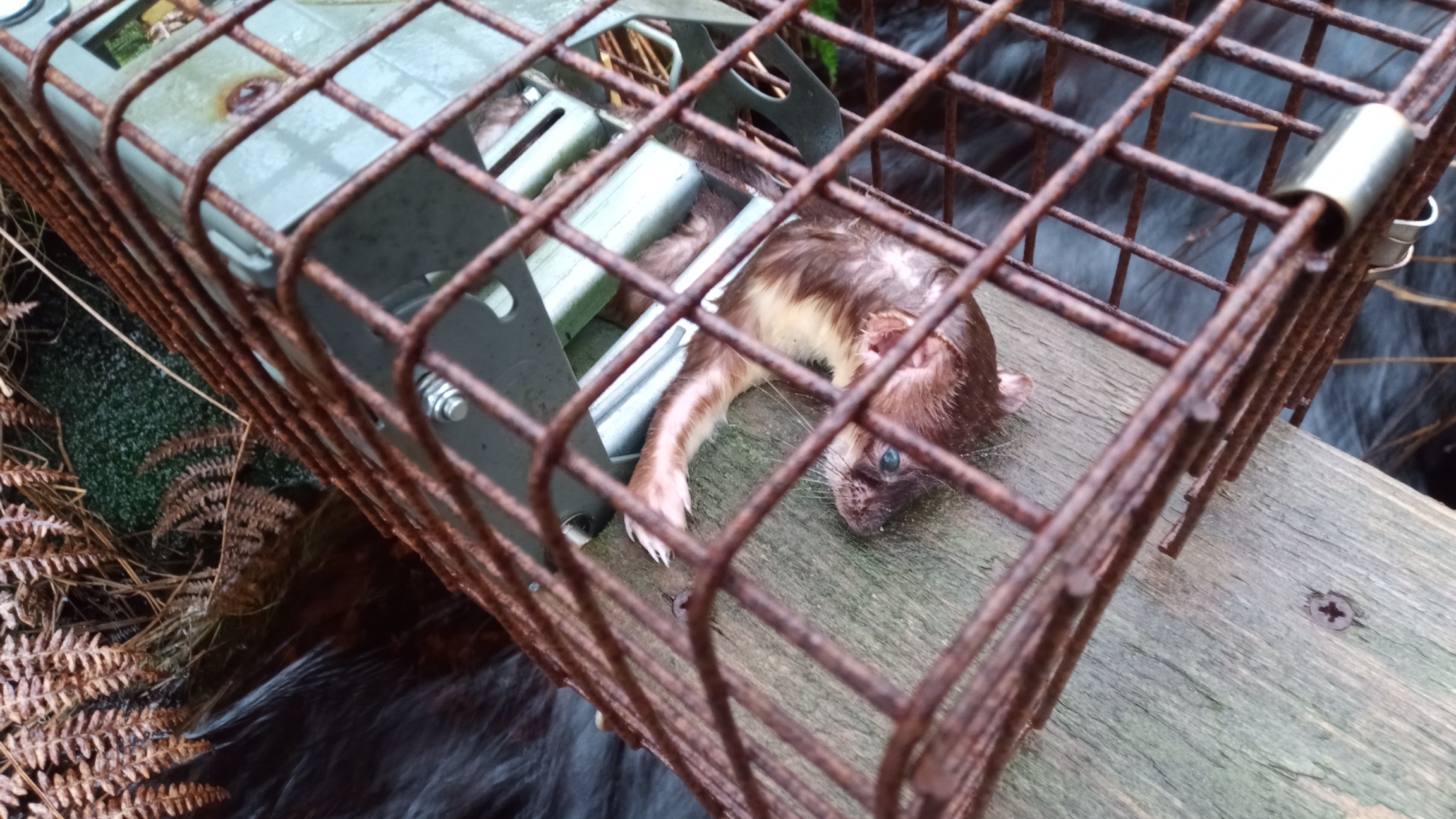
Tests using Tully traps recorded either head, neck, shoulder or chest strikes. The stoat in the photograph below was struck on the chest – a strike any further down the body would be regarded as a trap failure. Lab tests recorded stoats taking up to 3:04 minutes to die so it’s reasonable to question how much pain this animal suffered before dying?
Foul strikes
Police attended this trap and determined the (decomposed) stoat was caught by front paw only. This unfortunate animal must have suffered greatly before death:
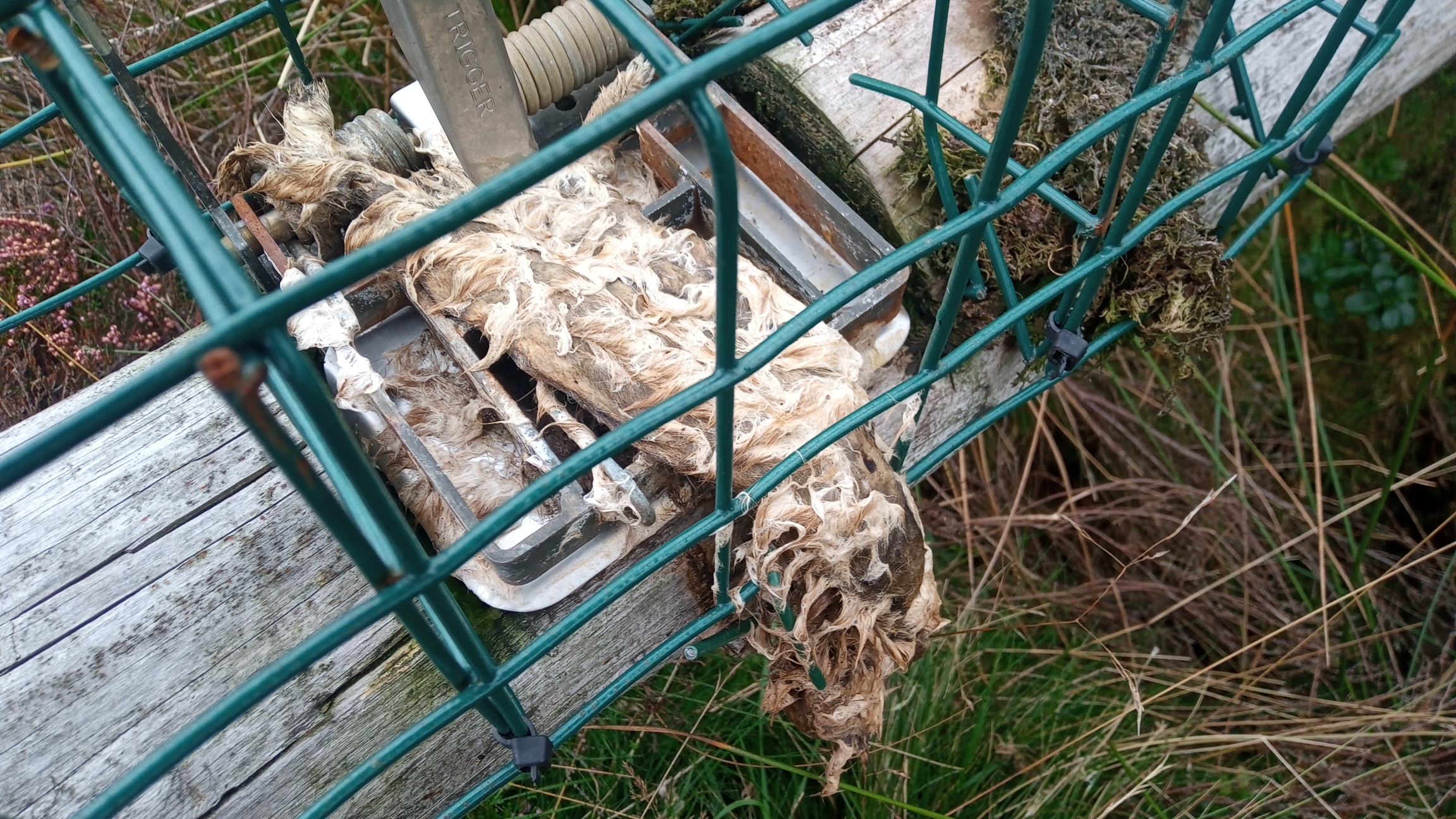
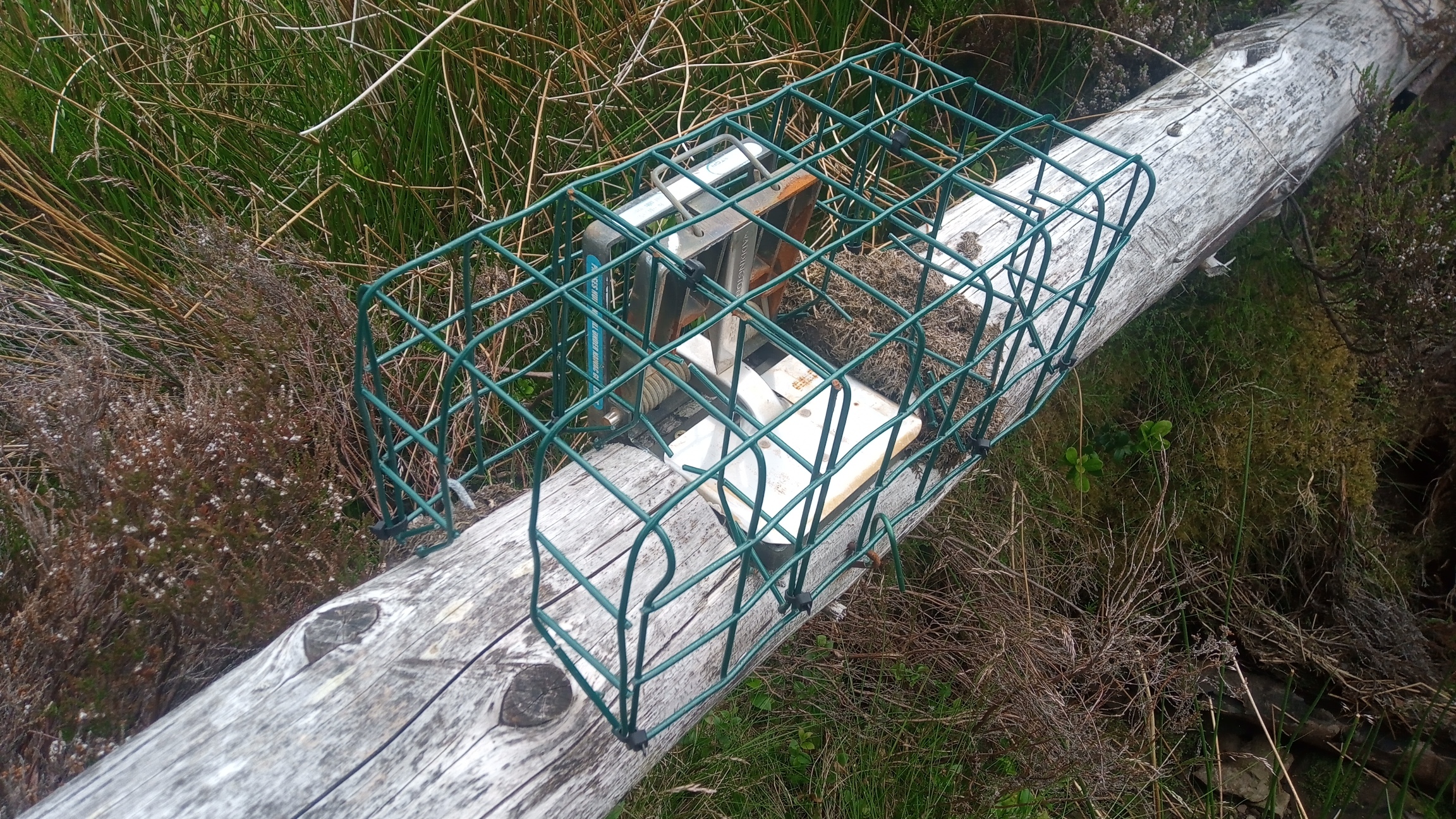
In practice this trap became a leghold trap which is illegal under the following legislation:
The Leghold Trap and Pelt Imports (Amendment etc.) (EU Exit) Regulations 2019 implement a prohibition on the use of leghold traps in the UK,
Section 8 of the Pests Act 1954 prohibits the approval of any leghold trap, defined as “a device designed to restrain or capture an animal by means of jaws which close tightly upon one or more of the animal’s limbs, thereby preventing withdrawal of the limb or limbs from the trap” for use in England.
DEFRA also provided me with the following:
“For traps which may occasionally produce a foul strike and restrain or pin animals in their mechanism without providing a quick and irreversible unconsciousness, the Animal Welfare Act (2006) requires users of traps to ensure animals do not endure prolonged suffering. This should include regularly checking traps and euthanizing any animals which continue to suffer. An example of best practice guidance can be found at Pest Management Codes of Best Practice | pest control standards (bpca.org.uk).
Defra, by implementing the Spring Traps Approval (England) Order 2018 requires users to deploy traps in appropriate enclosures, and where specified follow the manufacturer’s instructions closely. As both enclosure design and mode of use help minimise the chance of a foul strike, this requirement in regulation helps ensure the humane management of wildlife.”
The trap above was set using 50mm mesh for the tunnel/enclosure which allows the target species to enter the trap from above or from the side. Manufacturer’s instructions only have a vague specification the tunnel must be “suitable for the purpose”. So it’s virtually impossible to prosecute a trap operator for a tunnel/enclosure like the one above. In addition there’s no statutory requirement to check spring traps. And to gain a prosecution under the Animal Welfare Act: it’s necessary to establish that the defendant knew or ought reasonably to have known both that his or her act or failure would cause a protected animal to suffer and that the suffering was unnecessary. This is not going to be established if DEFRA- approved traps are used in a vaguely “suitable” tunnel.
I suspect DEFRA are fully aware of the unlikeliness of prosecution so I regard their comments above as disingenuous to say the least. In reality there is little or no protection to stop or prevent animal suffering in traps like the one above.

This Tully trap (photo above) has an enclosure of smaller gauge mesh but the stoat has still managed to end up on top of the bars of the trap with front paw only crushed in the trap. Once again this trap in reality has become an illegal leg hold trap.
Fenn Traps
As GWCT describe, killing a stoat in one of these traps is now unlawful because tests show it’s inhumane:

But killing a larger grey squirrel in a Fenn trap is still lawful:

I asked DEFRA what testing had taken place to determine the humaneness of Fenn traps used for this species and the reply was: “The Fenn Vermin Trap Mark IV does not appear to have undergone any testing for grey squirrels. The approval for this trap was granted via the Spring Traps Approval (Amendment) Order 1970, prior to the implementation of the AIHTS.”
I fail to see how Fenn traps could pass any AIHTS level testing for humanely killing grey squirrels.
DEFRA claims “The UK is a world leader on animal welfare” (here). Yet even the traps which are approved to international standards have a shocking failure rate, no effective statutory requirements for tunnels/enclosures and in real life conditions strike, crush and hold a range of animal body parts. These traps are not working as intended resulting in animal suffering which is not prevented by the Animal Welfare Act and legal requirements for trap use.
ENDS
 Raptor Persecution UK
It seems to me that one could argue about whether a trap is humane or not until the cows come home. If snares are not outlawed what’s the point after all they are 1 of the most inhumane things that exist and can catch just about anything by any part of the body including it’s leg. Quite how these releases of Scottish wildcat are going to survive is a mystery to me .When gamekeepers are publicly outed about the fact that their main job consists of killing all competition and exterminating all predators they deny it. I doubt that they are honest about any of their activities with anyone not directly involved so how do you expect them to set traps properly and act civilised they know they can do whatever they want with impunity ?
Snares just got banned in Wales tonight in the Agriculture (Wales) Act.
Same point as always. If this blog were an article in one of the main newspapers or on a main news channel there would be public uproar. As it is what the public don’t know the public won’t care about.
I’ve never liked these traps and know they hurt, having caught my thumb in one being set for a film demonstration. I’ve never understood why they need to be set around pheasant pens in profusion. Rats there can be dealt with using live catch traps, its what we use on our small holding for both rats and squirrels. The key to minimising cruelty if they “have” to be used on grouse moors ( and really do they?) would be a legal standard for the cages/tunnels. However are they necessary at all, surely the major predators on grouse moors are foxes and crows. Time both types of use were gone with the “sports” they are part of.
Paul. It’s a small thing perhaps, but wildlife crimes are to be given some attention on popular media, on The Archers soap opera on Radio 4. Detective Burns, one of the regular characters, has decided he wants a change of direction in his policing career. he is going to apply to be a Wildlife Crime Officer. On today’s episode, discussing this change with his wife, he listed crimes covered by this role. They included illegal raptor persecution. He will surely get the job. Apparently the series has become popular with some millennials. So, an opportunity for many more people to become aware of the prevalence of illegal countryside practices.
I hate the way we humans treat wildlife. In particular, killing any form of wildlife in the name of sport is totally unacceptable.
Once more it looks like enough loopholes have been left to make the implentation of the measures to reduce suffering from the poor creatures caught in a trap a cosmetic exercise only.
These verbal/linguistic loopholes appear to be the main tool used by shooting industry and any co-conspirators to continue to ravage and inflict prolonged suffering on our native predators — so a small minority of our population can enjoy killing non native bird species.
In my opinion, and it can only be an opinion, this strategy of leaving legislation open to interpretations that, in practical terms, make little or no effective change that would benefit the intended targets, and occurs so frequently in wildlife legislation that it is difficult for me to view it in any light but that of wilful intent.
The architects of these laws and guidelines are created by some of Britains most highly educated workforce and who have a myriad of historical precedents to draw on yet it is seemingly beyond them to identify and erradicate these areas that benefit a small minority of our citizens. i have little doubt that they have even more highly educated supervisors who monitor their work.
So why, with a large percentage of the UK population wishing to see real change, do they always seem to make errors that favours the Hunting Lobby and cocks a snoot at the will of the general public?
I have a hunch that you will get less “foul strikes” if you go the baited trap route rather than these “run-through” ones. i.e. a dead-end tunnel with one well designed point of entry, bait on the other side of the trigger plate. Why? Because the stoat wants to “get at something” and is walking in sniffing about, and the manner of baiting it can be done to improve the chances it will step on the plate exactly as you want it to, and not on the side while skipping through at speed as with a run-through. Baited traps have faded in popularity anyway (more effort), and are harder to find and monitor by the public (and nobody else eg Govt does it!) and I think by even lifting the covering stone / tunnel lid for a harmless peek in you could be said to be committing an offence, you’re certainly in the frame for an unpleasant confrontation with Mr Happy the Headkeeper. But all of the above said, the whole thing is a bit of a wild-west business with standards that vary widely – with some keepers that care a bit, others that couldn’t care less.
p.s. where are the Weasels these days in the grouse regions, or is it just me that never sees one either alive or dead ? Has the intensification of stoat trapping efforts this past 30yrs finished them off by happy coincidence? I don’t know, it is just a theory.
3 of the 5 Lab test failures I mention are for single entrance tunnel configuration. I generally see a lot of dead mammals in the run through (rail trap) configurations after heavy rain when animals are trying to find a way across a flooded stream.
Interesting stuff. I particularly dislike run-throughs / rail traps over streams mainly because they tempt a lot of non-target birds & mammals to cross via them, which is I believe less the case with a baited dead-end tunnel (which of course do still catch a lot of non-target stuff). But it is the sheer numbers (density per km²) of traps that is always the eye-opener – proven when you’re casually out walking / driving with someone a bit new to this, and you’re pointing and going “there’s one…there’s another ” etc every 200-300m. And they can’t believe it, or that they’d never noticed them before…and that’s just the conspicuous ones on streams and on wall-tops, never mind any hidden inside the walls / among the rocks. Thanks for this research & good luck with your work on this.
Really interesting blog post. I was dealing with a grey squirrel infestation in the attic. The usual deterrents failed and they started going through the wiring eventually. So after (what seemed like) extensive research – trying to find the most “humane” approach into dispatching the animals, both due to the illegality of releasing a captured grey squirrel in the UK and the notion that releasing it into an unfamiliar territory is certain death – I fell victim to raving reviews and advertising (“the humane trap”) and went with an “approved” Fenn Mark 4 trap with a Quill Vermin Tunnel .
Despite careful setup and baiting both were foul catches (grabbing both by the neck and body, reducing its force around the neck), almost identical to the photos included in this post. I could hear the trap snap each time so was able to quickly act but I imagine most people will set these up and visit after many hours or days without realising the suffering. To use the word “humane” in the context of any of these products is a misnomer and your article confirms my concerns. You really have to dig through www depths (or have the misfortune to use them) to realise the issue. Hopefully, with time, this entry will get indexed in searches / AI searches.
As a side note, I will add that I also discounted the good nature A18 traps accounts (the CO2 powered one) due to it not being 100% effective; people who used them in the garden witnessed the foul hits & those set up in the wild always assumed things went as per design.
If, as you say, your catches were similar to the photo of the squirrel in the Fenn 4 – then it was not a “foul catch” but a very standard, and in fact an almost “ideal” catch in terms of the principle behind the Fenn4. You simply made an innocent mistake of thinking the people who licence*, manufacture, wholesale and retail them have a similar definition of humane as you do. To sellers it’s just another item to make a few quid on. Fenn 4’s are not needed as there are now “better” traps out there for all target species. They should be banned 100%.
*people who licence them… that’s ultimately us the general public through the regulations our elected representatives & our experts come up with, I suppose!