A couple of weeks ago I launched a crowd funder to help support Chris Packham’s libel action in two separate cases.
As many of you will know, Chris is currently suing three individuals from Country Squire Magazine (CSM) for alleged defamation (see here), and has recently begun legal proceedings against Fieldsports Channel Ltd and one of its journalists, also for alleged defamation (see here).
The public’s response to the crowd funder has been phenomenal – quickly passing £100K in just ten days, and it has now passed £115K with another 12 days still to run.
If you were one of the 5,944 donors (so far), thank you so very much. The outpouring of support has been deeply appreciated by Chris and his team.
The case against Fieldsports Channel Ltd is still in its early stages but the case against the three individuals from CSM, that has been running for two years, is reaching conclusion with a trial set to start in a few weeks.
There have been numerous hearings in the CSM case already, mostly procedural.
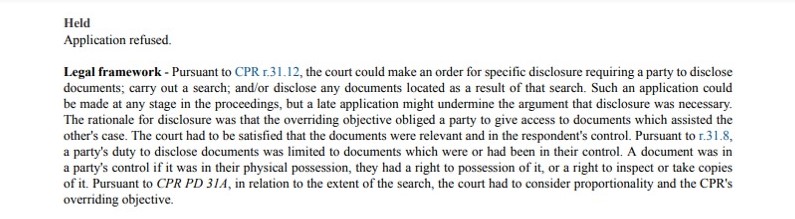
At the most recent hearing, held in the High Court of Justice King’s Bench Division on 30 March 2023, the Honourable Mrs Justice Heather Williams DBE heard an application from CSM Defendants 1 & 2 (Dominic Wightman & Nigel Bean, acting as litigants-in-person) who were seeking specific disclosure and/or inspection of a Schedule of 42 categories of documents.
In response, Chris’s lawyers argued that Chris had provided all disclosable documents not covered by legal professional privilege and that the further documents requested were either irrelevant to the defendant’s case as pleaded, had already been provided, or were not in his control.
The Honourable Mrs Justice Williams DBE considered the application in a two and a half hour hearing and in a lengthy and detailed judgment delivered afterwards she dealt with each of the requests in turn, refusing permission for all 42 of them after deeming the requests speculative and irrelevant.
Here is a copy of her judgement (which is a public document):
The Honourable Mrs Justice Williams DBE further ordered that the First and Second Defendants are to pay the Claimant’s (Chris’s) costs of the Specific Disclosure Application within 14 days. These costs were assessed at £17,500 plus VAT (= £21K).
For clarity, the Third CSM Defendant (Paul Read), who has legal representation, took no part in the Specific Disclosure Application or the associated hearing and is not liable for this particular costs order.
This blog passed another milestone a week or so ago, reaching nine million views.
Here’s the photograph that I publish every time a new milestone is reached. This is a golden eagle that was found dead on a grouse moor in the Cairngorms National Park in 2006. It had been illegally poisoned. It epitomises everything in its pitiful, poignant, senselessness.
What’s changed?
On the raptor-killing front, not much. Birds of prey in the UK are still being illegally trapped, shot and poisoned. In the last ten years, 72% of convictions for raptor persecution crimes were linked to gamebird shooting.
In Scotland last week, the 56th gamekeeper since 1990 was convicted for raptor persecution crime.
You might ask then, what’s the point of continuing to write this blog, if progress seems so discouragingly slow? Believe me, I’ve asked this question many times.
But the progress we’re seeing in Scotland is reason enough for me to continue.
It’s taken decades of campaigning, by many, many people who were involved long before I started, to convince the Scottish Government that raptor persecution is ‘a thing’, and is happening at such a scale as to impact on the distribution and abundance of several species at a population level. That’s not just one or two so-called ‘bad apples’ killing the odd bird of prey every once in a while; that’s the systematic killing of birds of prey by a lot of people working in an industry that has evaded accountability for way too long.
And no, I don’t believe they’re all at it, but enough of them are, and it’s often difficult to distinguish between them, especially when industry representatives continually refuse to call out the criminals. But that’s their problem, not mine.
My problem is that this blog has only reached nine million views. It needs many more.
Thank you to everybody who supports and contributes, including those who share the blog content on social media channels and in conversations with friends, family, colleagues and associates.
Nine million views is a lot, but it’s not enough. There’s still so much work to do.
Over the last few years the RSPB has been asking the public to report sightings of muirburn on grouse moors throughout the UK.
Muirburn is the intentional burning of heather and grass vegetation (usually to promote new growth) and is a land management practice typically associated with managing land for grouse-shooting, deer, and some agricultural purposes. It is currently ‘lightly regulated’ with some outdated statutory regulations supported by a voluntary code of best practice – the Muirburn Code.
The RSPB has developed an App to collect and report your sightings on the move, or you can report on this website when you get home.
This mapping information is crucial for the RSPB’s advocacy team to ensure that muirburn on deep peatland soils is banned.
Grouse moor set alight in Peak District National Park, Feb 2023. Photo: Ruth Tingay
The burning season runs to April 15th in England (and can be extended to April 30th in Scotland with landowner’s permission) so if you’re out and about enjoying the fine Easter weather, please keep an eye out and take a note of any moorland fires you see, or evidence of recent burning.
You can view the burning maps already produced by the RSPB here.
Deliberately setting fire to peat-rich moorland, in the midst of a climate emergency, is highly controversial (some would argue moronic), especially when it’s being done simply to help increase the number of red grouse available to be shot in the autumn. A recently published report commissioned by REVIVE, the coalition for grouse moor reform, entitled Muirburning for Grouse: Does it Increase or Decrease Net Carbon Emissions provides an excellent appraisal of the arguments and evidence. There’s also an excellent overview of the situation written by Dr Richard Dixon, the former Director of both Friends of the Earth Scotland and WWF Scotland, here.
The Scottish Government’s Wildlife Management and Muirburn (Scotland) Bill includes proposals to ban burning on deep peat (exact definition of ‘deep’ to be defined but currently proposed as 40cm) and to licence all other muirburn, thus restricting its use in some circumstances.
In response, the grouse-shooting industry has gone into meltdown (pun intended) in a desperate bid to protect its ability to set fire to grouse moors (because without it, the days of intensively-managed grouse moors are numbered). The industry has been heavily promoting some preliminary research results by Dr Andreas Heinemeyer from the University of York whose report suggests that burning may be beneficial and enhance carbon storage in the longer term. The RSPB has published a strong response urging caution over the interpretation of these results – see here.
In England, an investigation by Greenpeace last year revealed widespread burning on grouse moors despite a Westminster ban against burning on protected peatlands (see here).
As the arguments, and the fires, and the denials, rage on, it’s critical that evidence of intentionally-set moorland fires is collected to inform Government policy on both sides of the border. Please do submit your records to the RSPB (information page here) to help them argue the case.
The National Parks & Wildlife Service (NPWS) is planning to reintroduce ospreys to Ireland after a 200+ year absence.
A number of individual birds are regularly recorded there each year, generally passing through on migration. However, ospreys, previously a common breeding species in Ireland, haven’t bred there since persecution caused their extirpation in the late 18th century.
The NPWS is working with colleagues in Norway and plans to bring in up to 70 young ospreys over a five-year period for release in the south-east of Ireland, hopefully starting this summer.
At the end of March, Scotland’s new First Minister Humza Yousaf appointed a new Government Cabinet, which involved some reshuffling and the addition of some new faces.
Photo: Andrew Milligan
I’ve been waiting for the Government to announce the new responsibilities for each Cabinet Secretary and each junior Minister before I blogged about the changes. Those responsibilities have now been published on the Scottish Government’s website (here).
Bizarrely, the role of Environment Minister seems to have been dropped.
Up until Yousaf’s election in March, Mairi McAllan MSP had served as the Minister for Environment and Land Reform since 2021, and was responsible for introducing the Wildlife Management and Muirburn (Scotland) Bill in March.
Following Yousaf’s election and subsequent Cabinet reshuffle, Mairi McAllan was deservedly promoted and now serves as the Cabinet Secretary for Net Zero and Just Transition. Her new responsibilities, although aligned to her previous portfolio, are now quite different:
Cabinet Secretary McAllan will be supported by three junior Ministers:
*Minister for Transport – Kevin Stewart MSP
*Minister for Green Skills, Circular Economy & Biodiversity – Lorna Slater MSP
*Minister for Zero Carbon Buildings, Active Travel & Tenants’ Rights – Patrick Harvie MSP
The Land Reform portfolio appears to have been transferred to Mairi Gougeon. Prior to the reshuffle, Mairi Gougeon was the Cabinet Secretary for Rural Affairs and Islands. Her new title is Cabinet Secretary for Rural Affairs, Land Reform and Islands. Her new, expanded portfolio is listed as follows:
Surprisingly, she does not appear to be specifically supported by any junior Ministers, and hence the position of Environment Minister no longer exists.
What does this mean in real terms? Well that remains to be seen. The good news is that Mairi Gougeon is already highly experienced in the portfolio areas on which this blog focuses – indeed, as a former Environment Minister, it was Mairi Gougeon who announced in 2020 that the Scottish Government intended to introduce a licensing scheme for grouse shooting in response to the recommendations made in the Werritty Review (see here).
Mairi is well-versed on the issue of raptor persecution, having previously acted as the Scottish Parliament’s Species Champion for hen harriers, enthusiastically offering her support for this species by way of a parliamentary debate, speaking at Hen Harrier Day, and accompanying licensed members of the Scottish Raptor Study Group on field visits to hen harrier sites (here and here).
She is an accomplished and bright politician and I look forward to her engagement with the grouse moor licensing Bill as it progresses through Parliament.
UPDATE 13th June 2023: New Environment Minister appointed to Scottish Government (here)
Further to yesterday’s breaking news (here) that wildfowl collector Barry Nicolle had pleaded guilty to multiple wildlife crimes relating to the illegal poisoning of red kites in south west Scotland, Police Scotland has issued the following statement:
Man convicted of killing 15 birds, including five red kites, in Dumfries & Galloway Area
A 67-year-old man has been convicted of killing raptors and other wild birds in the Stewarty area of Dumfries and Galloway between 2019 and 2020.
Barry Nicolle admitted numerous charges at Dumfries Sheriff Court today (Wednesday, 5 April, 2023). He is due to be sentenced on Friday, 19 May, 2023.
The charges related to the reckless use of illegal poison resulting in the deaths of 15 birds, including five red kites. They were recovered within a mile radius of Nicolle’s address, some just a few hundred yards from his property.
A poisoned red kite. Photographer: unknown
Robust policing work in conjunction with forensic science found these birds had not died naturally and had in fact been poisoned with banned substances, including Aldicarb and Bendiocarb.
Wildlife Officer, Police Constable John Cowan, said: “Extensive policing work involving a number of partners, along with forensic science, enabled us to build a case against Nicolle who had been killing protected birds over a number of years.
“Not only was there a risk to the rural environment, but also to members of the public handling poisoned birds some of which were found near a primary school.
“Police Scotland and the partners we work with treat all types of wildlife crime very seriously and this conviction is a strong message that those who poison wild and protected birds will be robustly investigated.
“I would also like to thank the public who provided information that assisted our enquiries. This is vital to our work in combatting wildlife crime.
“I would encourage anyone who comes across a protected dead bird or animal to report it to us. Likewise if you have information about wildlife crime please get in touch via 101.”
ENDS
UPDATE 19th May 2023: Monumentally inadequate sentence for Barry Nicolle, serial red kite poisoner in Dumfries & Galloway (here).
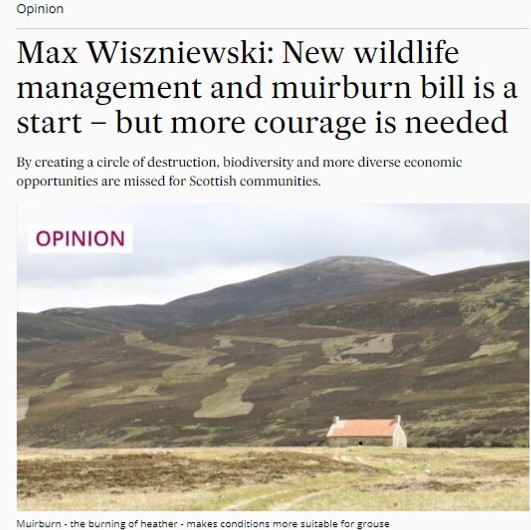
There’s a good opinion piece in the Press & Journal today by Max Wiszniewski, Campaign Manager for REVIVE, the coalition for grouse moor reform.
It’s reproduced below:
The systematic, illegal persecution of birds of prey has been a blight in Scotland’s countryside now for decades, so much so that it was described by former first minister, Donald Dewar, as a “national disgrace”.
Yet, on the same day that our new first minister was sworn into office, news broke that another bird of prey – this time a red kite – had been found dead on a grouse moor [Ed: see here]. The shooting industry is laughing in the face of the legislation it will be fighting tooth and nail to oppose.
The new bill proposes to licence the shooting of grouse. If the terms of that licence are broken – such as a licence holder indulging in wildlife crime – then it can be removed.
So far, it seems sensible. But, beyond the illegal destruction of our protected species, hundreds of thousands of foxes, stoats, weasels, crows and so-called “non-target species” like hedgehogs are killed on grouse estates every year, so more grouse can be shot for sport.
Will this unsustainable practice be addressed by the new bill? The answer is: somewhat.
All legal traps will require a “licence”, serial numbers and, presumably, regular checking. Scottish Government oversight of the monitoring of the many thousands of traps on grouse moors to ensure legality will be no easy feat, and it would be expensive to do effectively. Should we be jumping through hoops just so a few people can shoot more grouse for sport?
Bill is an important intervention that should go further
Some big changes in muirburn could be brought about, though. On grouse moors, burning heather shapes the landscape to make it more suitable for grouse – so more of them can be shot.
About 40% of muirburn for grouse has taken place on deep peat, which is an internationally important carbon sequestration resource. Much of it lies in a degraded state on grouse moors, and continued burning is stopping it from regenerating and from rewetting and, therefore, actually emits carbon.
The Wildlife Management and Muirburn Bill proposes an effective ban on peatland burning but, once again, effective monitoring of huge land areas will be difficult and expensive.
Muirburn may still continue under licence in areas with no deep-peat, but should we be dishing out licences when the purpose is increasing grouse numbers for sport shooting? Scotland shouldn’t be pandering to the needs of this cruel, unsustainable and intensively managed industry.
By creating a circle of destruction around huge areas of our land, biodiversity and more diverse economic opportunities are missed for Scottish people and communities.
Overall, this bill as it stands is an important intervention. With a bit more courage to take on large estates and landed interests, it could become the very intervention Scotland’s people, wildlife and environment desperately need.
Barry Nicolle, a wildfowl collector in south west Scotland, has pleaded guilty to 14 charges this morning at Dumfries Sheriff Court in relation to the illegal poisoning of red kites in the area.
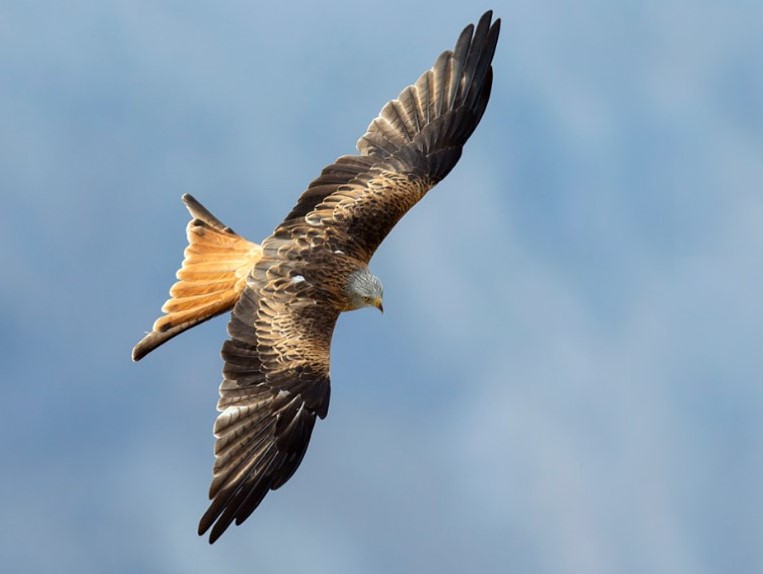
Red kite. Photo: Dick Forsman
Nicolle’s guilty pleas relate to the poisoning of four red kites, placing out poisoned baits, possession of illegal poisons and illegal trap use, according to Ian Thomson, Head of Investigations at RSPB Scotland.
Police Scotland led a multi-agency investigation, assisted by the RSPB, after a number of poisoned red kites were discovered in the area between 2018-2020 (see here, here, here and here for previous blogs).
Nicolle is due to be sentenced on 19th May 2023.
I expect full details of the case will be published post-sentencing.
UPDATE 6th April 2023: Police Scotland statement on conviction of red kite poisoner Barry Nicolle (here)
UPDATE 19th May 2023: Monumentally inadequate sentence for Barry Nicolle, serial red kite poisoner in Dumfries & Galloway (here).
Further to last week’s news that Scottish gamekeeper Rory Parker pleaded guilty to committing raptor persecution crime on a grouse moor on Moy Estate in September 2021 (see here), I’ve been looking to see how the game-shooting industry has responded to this conviction.
You’ll recall that this is the game-shooting industry whose organisations routinely state they have a ‘zero tolerance’ policy towards raptor persecution, in which case you’d think they’d be quick to condemn this latest crime and call on their members and the wider shooting public to distance themselves from Moy Estate, and especially as the estate is already serving a three-year General Licence restriction imposed in 2022 after Police Scotland found further evidence of wildlife crime (see here), namely a poisoned red kite and ‘incidents in relation to trapping offences’.
Four days on from Parker’s conviction, I haven’t found any statements of condemnation on the websites of the Scottish Gamekeepers Association, BASC, or the Countryside Alliance.
Their collective silence says a lot, I think. In my opinion it’s related to an ongoing, industry-wide damage limitation exercise as the Wildlife Management & Muirburn (Scotland) Bill begins its passage through the Scottish Parliament. Drawing attention to criminal activity on grouse moors at a time when MSPs are considering the extent of proposed regulation in the form of a grouse-shooting licence is not in their interests, although I’d argue that if they were as resolute about stamping out raptor persecution crimes as they claim to be, they should have been at the forefront of leading the condemnation.
The only game-shooting organisation that has responded to the news of Parker’s conviction is landowners’ lobby group, Scottish Land & Estates (SLE).
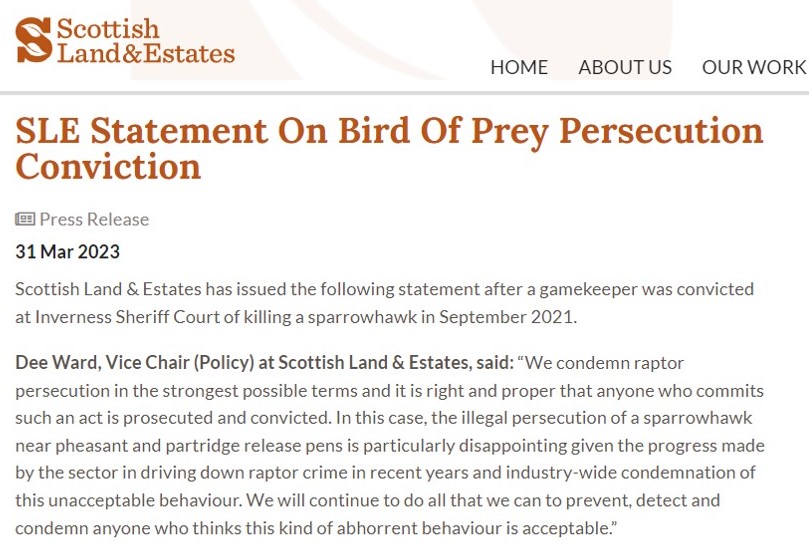
I’ve already written about a media quote attributed to grouse moor owner Dee Ward, who’s also Vice Chair (Policy) at SLE, who seemed keen to distance Parker’s crime from grouse moor management (see here), and this was repeated in a statement that SLE published on its website on the day of Parker’s conviction.
Credit to SLE for not shying away from the news, but its manipulation of the narrative is all too obvious:
I’m not sure what the ‘progress’ is to which Dee refers. I haven’t seen any evidence of ‘the sector driving down raptor crime in recent years‘. What I have seen is an increasing number of shooting estates having General Licence restrictions imposed after Police Scotland has confirmed evidence of continued raptor persecution crimes (there are currently six GL restrictions in place – Leadhills Estate (here), Lochan Estate (here), Leadhills Estate [again] (here), Invercauld Estate (here), Moy Estate (here) and Millden Estate (here)).
The Scottish Government doesn’t appear to have seen the evidence, either, given the Environment Minister’s statement in 2020 when she announced that there could be no further delay to the introduction of a grouse moor licensing scheme because:
“…despite our many attempts to address this issue, every year birds of prey continue to be killed or disappear in suspicious circumstances on or around grouse moors“.
Time will tell if SLE sticks with Dee’s claim that, “We will continue to do all that we can to prevent, detect and condemn anyone who thinks this kind of abhorrent behaviour is acceptable“.
Will that include boycotting the Highland Game Fair, held each year on the Moy Estate? This is an event that SLE, and the other shooting organisations, routinely attend, with apparently total disregard for sanctions imposed on the estate for wildlife crime (see here).
It’s actions, not mere words, that will determine whether the industry’s ‘zero tolerance’ policy is seen as credible, and as far as I’m concerned, the industry’s actions haven’t come close.
On Friday (31st March 2023), gamekeeper Rory Parker, 24, of Drumbain Cottage, Tomatin, pleaded guilty to shooting and killing a sparrowhawk on 16th September 2021 whilst employed on Moy Estate (see here).
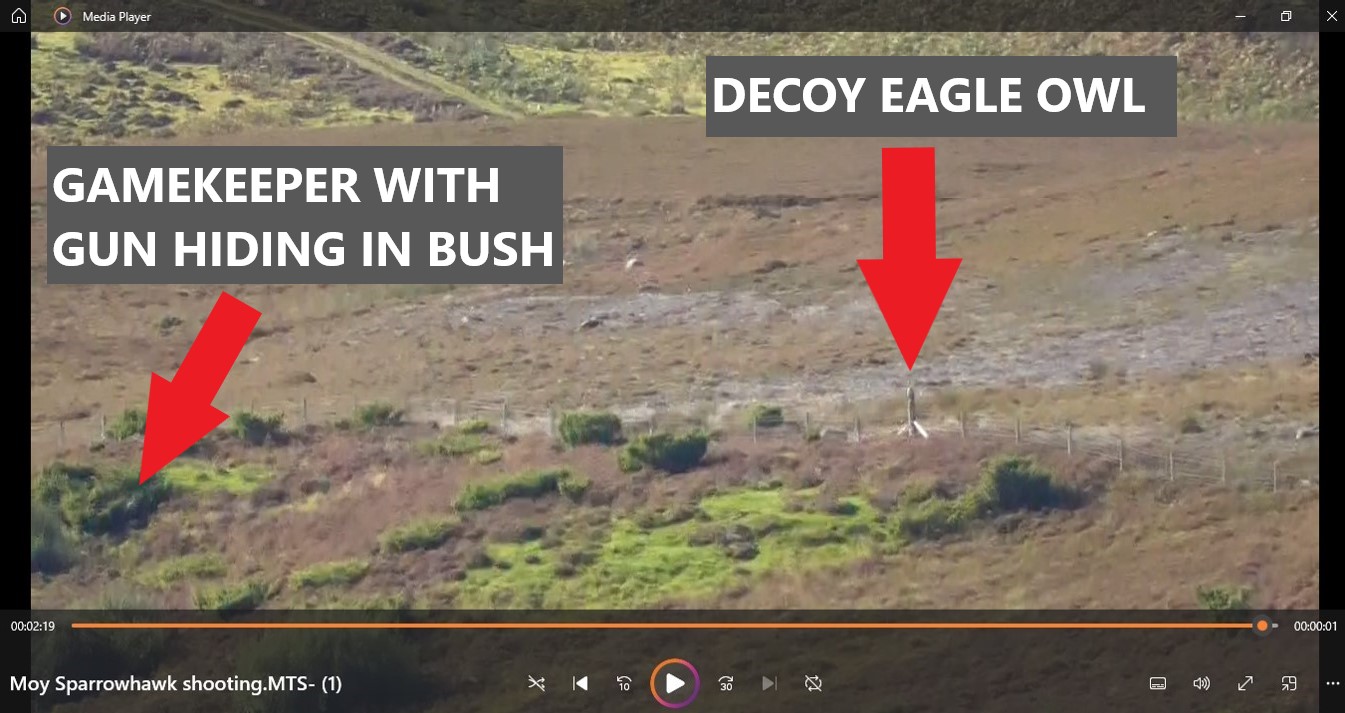
Parker was filmed by an RSPB Investigator as the (at the time 22-year-old) gamekeeper hid in a bush on the grouse moor, a few feet away from a large plastic owl that had been placed on a fencepost. It’s well-known that raptors will be drawn to an owl decoy and will try to mob / attack it. If someone sits quietly nearby with a gun they’ll have a good chance at shooting and killing the raptor whilst it’s distracted by the owl.
We’ve seen this technique deployed on grouse moors many times before, sometimes with plastic decoys, sometimes with live eagle owls (e.g. see here, here, here, here, here, here).
It looks like that’s what happened that September day in 2021. Here’s a screen grab from the RSPB’s video showing the position of Parker and the decoy owl:
If you haven’t yet seen the full video, there’s a copy of it embedded in this tweet below. I’d encourage you to watch it, and take note of Parker’s body language when he goes over to the sparrowhawk he’s just shot, as it’s flapping around, wounded, on the ground. He’s calm and proficient as he stamps his foot/knee on the bird to crush it, before casually picking it up and retuning to his hiding place in the bush. It appears to be quite routine and he does not look at all disturbed at having just committed a serious wildlife crime.
This video, provided by the RSPB, has led to a Scottish gamekeeper pleading guilty to shooting a protected bird of prey 🦅👇 pic.twitter.com/bHC8W5DYyg
In court, Parker was defended by Mark Moir KC. The KC stands for King’s Counsel and denotes an experienced, high-ranking lawyer considered to be of exceptional ability. I wonder who paid for his services? In mitigation for Parker’s offending, Mr Moir KC reportedly told Sheriff Sara Matheson that his client had been in his job since he left school.
“He is deeply shameful of what he has done. He has brought the estate into disrepute and has now resigned.
“His firearms certificate is likely to be revoked as a result of this conviction. He should have been shooting pigeons and crows that day. Feral pigeons are a problem on the estate.
“However, the sparrowhawk flew over and there was a rush of blood. He says it was a stupid thing to do.”
After watching the video, it didn’t look like ‘a rush of blood‘ to me. It looked entirely premeditated.
Apparently the RSPB video wasn’t shown in open court but I’m not sure whether Sheriff Matheson had an opportunity to see it behind closed doors. I suspect she didn’t, given the sentence she handed down to Parker – a pathetic £1,575 fine and three months in which to pay it.
This should have been a test case of the new Animals & Wildlife (Penalties, Protections & Powers) (Scotland) Act 2020; legislation that was introduced to increase the penalties available for certain wildlife crimes, including those under Section 1(1)(a) of the Wildlife & Countryside Act – ‘Intentionally, or recklessly, killing, injuring, or taking a wild bird‘. Parker committed his offence after the enactment of this new legislation.
Prior to the new legislation, the maximum penalty available for the type of offence Parker committed was up to six months imprisonment and/or a fine of up to £5,000.
The new legislation increased the maximum penalty available (on summary conviction, as in Parker’s case) to a maximum of 12 months imprisonment and/or a fine of up to £40,000.
So why was Rory Parker only given a £1,575 fine??*
The penalty increases in the new Act were introduced by the Scottish Government because the previous penalties were not considered sufficient to recognise the seriousness of wildlife crime(s) [and animal cruelty offences].
This view was supported by an independent review by Professor Poustie, published in 2015, which concluded that the then maximum penalties available to the courts may not have been serving as a sufficient deterrent to would-be offenders, nor reflecting the seriousness of the crime(s).
The Poustie Review was first commissioned in 2013 by then Environment Minister Paul Wheelhouse, and as part of a series of measures aimed at tackling the continued persecution of birds of prey (see here). It was his response to growing levels of public concern and a lack of confidence in the judiciary to deal with raptor-killing criminals. Criticisms of the system had often centred around perceived corruption, vested-interests and biased Sheriffs, and we had come to expect unduly lenient and inconsistent sentencing in most cases (e.g. see here).
The new legislation was supposed to address those concerns with a significant increase in the severity of penalties available for courts to hand down to offenders.
I don’t see any evidence of that in the sentencing of raptor-killing gamekeeper Rory Parker.
*UPDATE: Someone who was in court on Friday has just been in touch to provide further insight into sentencing. They told me:
‘When the defence KC was summing up he repeatedly suggested to the sheriff what penalty might be most appropriate, i.e. a fine and maybe a community payback order. He also told her Mr Parker had savings of £2,000. It was therefore no surprise at all she then issued a £1,800 fine (discounted to £1,500 because he wasn’t considered an adult when he committed the crime. Since when is a 22 year old not an adult?!!!) In my opinion, therefore, the Sheriff was basically spoon-fed the sentence by the KC‘.





 Raptor Persecution UK