Buzzard found shot dead in Peak District National Park – police appeal one year later

Press release from South Yorkshire Police & RSPB (4th March 2022)

Buzzard found shot dead in Peak District

South Yorkshire Police and the RSPB are appealing for information after a buzzard was found shot dead in the Peak District National Park.

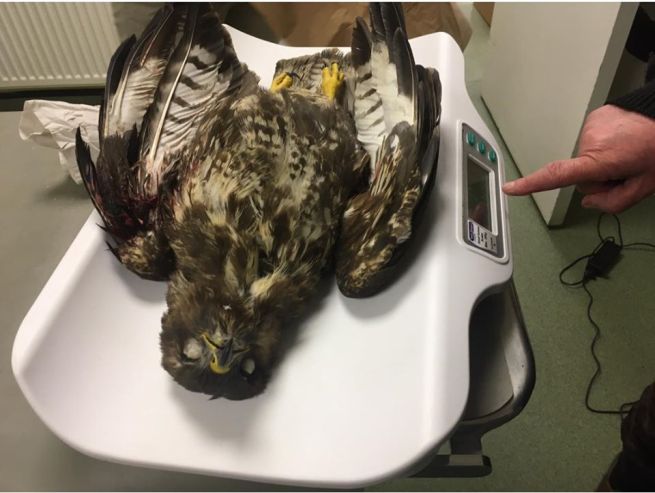
The body of the bird was discovered in woodland at Flouch, near the popular visitor hotspot of Langsett in the Peak District National Park, in March 2021. The finder, a volunteer for the Peak District Raptor Monitoring Group, reported it to the police. Post-mortem examination revealed that the bird had been shot by a shotgun.

[The shot buzzard found on land owned by Yorkshire Water. Photo by Peak District Raptor Monitoring Group]

[RPUK map showing woodland areas around Langsett Reservoir in the Peak District National Park and its proximity to land managed for driven grouse shooting. The woodland where the corpse was found is believed to be owned by Yorkshire Water]

There have been several incidents of raptor persecution in this area, including a raven poisoned with the banned substance Aldicarb found on a nearby grouse moor in 2018. And recently, in February 2022, South Yorkshire Police, the RSPB and the National Wildlife Crime Unit conducted a search for a missing hen harrier in the Stocksbridge area. An investigation is ongoing.

Buzzards and all other birds of prey are legally protected by the Wildlife and Countryside Act 1981. To intentionally kill or injure one is a criminal offence and could result in an unlimited fine or up to six months in jail.

Tom Grose, RSPB Investigations Officer said: “Here is yet another bird of prey which has been found shot dead within the National Park. This area of the Peak District is a place where people come to enjoy nature, yet it is one of the UK’s number one raptor crime hotspots. This simply cannot continue. Bringing persecution to an end inside and outside these landscapes will require government action, and we echo the recommendations found in the recently published UN wildlife crime report including the implementation of licences for driven grouse shooting, which can then be revoked if raptor persecution is found to have occurred“.

The RSPB’s most recent Birdcrime report showed that 2020 was the worst year in 30 years for the illegal killing of birds of prey, and that two-thirds of confirmed incidents were in connection with land managed for gamebird shooting.

In 2018, a paper published in the scientific journal British Birds proved a statistically significant association with land burnt for driven grouse shooting and persecution of birds of prey in the Peak District National Park. This, along with police intelligence and population studies of key raptor species, shines a bright light on the systematic killing of birds of prey in the Dark Peak.  

Police Wildlife Crime Officer Liz Wilson said:Raptor persecution is a national wildlife crime priority and we will endeavour to ensure that those responsible for such heinous crimes are brought before the courts.

We are lucky to have beautiful areas to enjoy, but these areas are home to wildlife and animals, and must be respected.

We are now appealing for information following the death of a buzzard near to Langsett Barn and urge anyone with information to come forward. If you can help please call 101“.

Steve Davies of the Peak District Raptor Monitoring Group added: “Here is yet another case of illegal raptor persecution tainting the image of the Peak District National Park. Wildlife Crime enforcement needs more teeth to enable it to be a successful deterrent. Licencing of shooting estates and the introduction and effective implementation of vicarious liability legislation, including suspension and clawback of any associated agricultural subsidies, would directly impact on the shooting estate landowners or shooting tenants and estate managers who are ultimately responsible and benefit directly from game shooting.”

If you find a wild bird of prey which you suspect has been illegally killed, phone the police on 101, email RSPB Investigations at crime@rspb.org.uk or fill in the online form: https://www.rspb.org.uk/our-work/our-positions-and-campaigns/positions/wildbirdslaw/reportform.aspx

Alternatively, if you have sensitive information about raptor persecution which you wish to tell us about in confidence, please ring our confidential raptor crime hotline on 0300 999 0101. This is for reporting information relating to birds of prey only.

ENDS

Once again we have a very late appeal for information, this time one year after the discovery of the shot buzzard. On this occasion it appears the delay is not the fault of South Yorkshire Police, who submitted the corpse for a post mortem soon after the discovery was made. The delay appears to be the result of an over-stretched and under-resourced laboratory, snowed under by the number of raptor corpses that require examination.

Sharp-eyed blog readers will note that the location of this wildlife crime is not a million miles from where a satellite-tagged hen harrier ‘disappeared’ in suspicious circumstances just a few weeks ago (see here).
Raptor Persecution UK blog is 12 years old

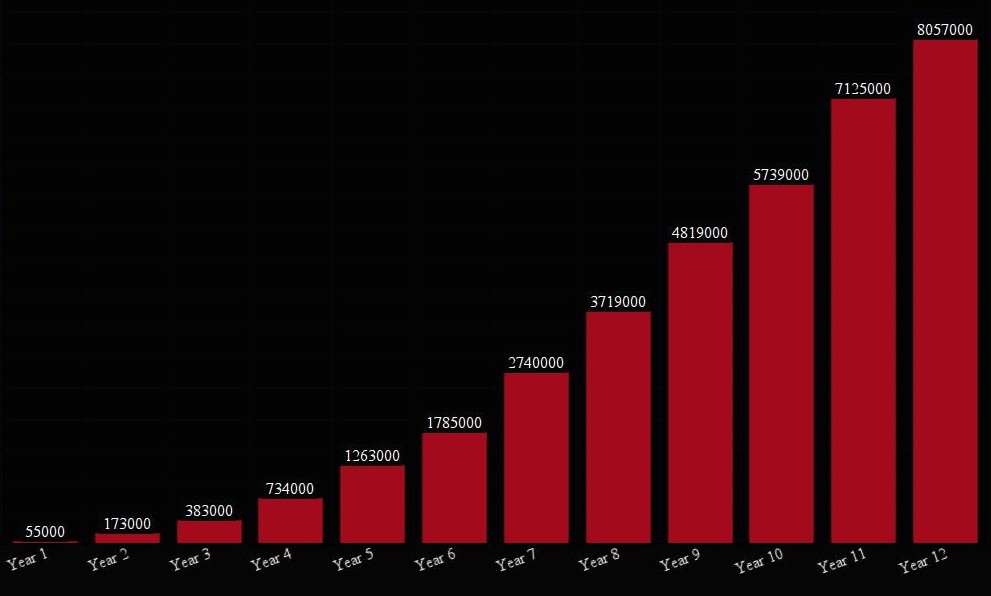
Today this blog reached its 12th year anniversary.

I didn’t imagine I’d still be writing it after all this time, but the blog stats show it’s still relevant and of interest, recently passing 8 million blog views.

As ever, huge thanks to those who help fund my time, those who work with me behind the scenes (you know who you are), to those who send me information, to those who take the time to comment here, and especially to those who share blog posts on social media channels – raising awareness of the illegal killing of birds of prey was the main driver behind setting up this blog and it continues to be one of its main objectives.

Thanks for your support.

Peak District National Park Authority & Derbyshire Constabulary in new agreement to tackle wildlife crime

Press release from Peak District National Park Authority (2nd March 2022)

National Park Authority and Derbyshire Constabulary in new agreement to tackle rural issues in the Peak District

The two organisations will work together to ‘support a safe home and welcoming place for people and wildlife in the Peak District National Park.

A new Memorandum of Understanding (MoU) between the Peak District National Park Authority and Derbyshire Constabulary will see both organisations come together to work on co-ordinated efforts to tackle rural and wildlife crime and other issues in the UK’s original national park.

Also working with Community Safety Partnerships (CSPs) and Police & Crime Commissioner for Derbyshire Angelique Foster, the new agreement recognises the distinct roles and responsibilities of the two bodies, but also how collaborative working can benefit both local communities and visitors to the area.

The National Park Authority holds regular ‘summit’ meetings with Derbyshire Constabulary and other forces represented across the Peak District, however the MoU is the first formal agreement of its kind with any of the regional forces working within the Peak District.

The Peak District has a range of complex policing challenges ranging from wildlife crime affecting some of the area’s rare species, through to addressing the balance of managing millions of annual visitors to often hugely popular locations along with over 38,000 residents and hundreds of local businesses.

The new agreement, along with the continuation of regular summits will identify activities where coordinated efforts can bring the most impact; such as engagement with campaigns like #PeakDistrictProud encouraging positive visiting across issues like litter, parking and wild fires. It will help address wildlife crimes such as bird of prey persecution, theft of birds eggs and young, hare coursing, badger persecution and poaching.

Joint communications to the public, incident reporting procedures and ongoing liaison with other police forces also underpin the memorandum. Operational and tactical crime matters will remain with Derbyshire Constabulary as the lead body, with the National Park Authority providing support where beneficial.

[The peak District National Park has long been identified as a hotspot for bird of prey persecution. This shot buzzard found in 2020 is just one of many, many victims discovered over the years]

Sarah Fowler, chief executive of Peak District National Park Authority said: “I’m delighted that after already working closely with Derbyshire police for a number of years on local campaigns and operations on the ground that we now have a formal agreement that sets out a clear aspiration and benchmark for collaborative working that will benefit all those who live within and visit the Peak District.

“This agreement has only been possible thanks to a clear vision shared by both the National Park Authority, Derbyshire police officers and Police & Crime Commissioner Angelique Foster’s office to deliver on the issues that matter in local communities and to our millions of visitors.

“Whether through protection of our much-loved natural and cultural heritage or ensuring that everyone always feel safe and welcome in the UK’s first national park, partnership working should be a cornerstone to how we take care of our protected landscapes.

“We look forward to developing similar partnerships with our other constituent police forces across Staffordshire, Cheshire, Greater Manchester and South Yorkshire and I’m delighted that many of these discussions are already underway.”

Derbyshire Police and Crime Commissioner Angelique Foster said: “Across Derbyshire, residents have told me that rural and wildlife crime is a concern to them. That is why I have prioritised tackling rural crime in my Police and Crime Plan.

“My plan also emphasises the importance of effective partnership working, drawing on the strengths of key organisations to provide a better service to local residents.

“The agreement we have signed today highlights how the different agencies with responsibility for tackling criminality, keeping people safe and, amongst others, those protecting our heritage and wildlife will work together to make the Peak District safer.

“I welcome the move and will continue to drive the Constabulary to provide a consistently strong local policing presence in all areas, however remote.”

Chief Superintendent Hayley Barnett, who is the Divisional Commander for the North that covers the Peak District, said: “Partnership working is key to providing a quality service to the communities of Derbyshire.

“By signing this agreement along with the Derbyshire Police and Crime Commissioner, it highlights our commitment to policing the Peak District and the issues that arise in the rural parts of the county.

“Both our Rural Crime Team and local Safer Neighbourhood Teams work closely with rangers and staff within the National Park Authority to ensure that joined up working is taking place and the Peak District remains a popular and safe place to live and visit.”

ENDS

I’m not sure that this ‘new agreement’ amounts to anything more than lip service when it comes to tackling raptor persecution inside the Peak District National Park.

History has shown us that the Park Authority doesn’t actually have any authority on this issue, or if it does it’s reluctant to impose it (e.g. see here).

Derbyshire Constabulary has a reputation for looking the other way when it suits them, usually when crime scenes are located on land used for gamebird shooting (e.g. see here and here) although when suspected incidents are not connected to gamebird shooting they can be impressively proactive (e.g. see here and here).

Still, I suppose the ‘new agreement’ can be used to apply pressure to the two organisations, and on the Derbyshire Police & Crime Commissioner, when the inevitable news of more raptor persecution crimes emerge and nobody is held to account.

South Scotland golden eagle population boosted by translocation of sub-adults from Western Isles

Press release, South Scotland Golden Eagle Project (3rd March 2022)

South of Scotland golden eagle population reaches new heights thanks to novel research technique

The pioneering South of Scotland Golden Eagle Project has become the first in the UK to successfully translocate free-flying young golden eagles (aged between 6 months and 3 years) to boost a low population of this iconic bird. These new additions bring the total number of golden eagles in the south of Scotland to around 33 – the highest number recorded in the area since the early nineteenth century.

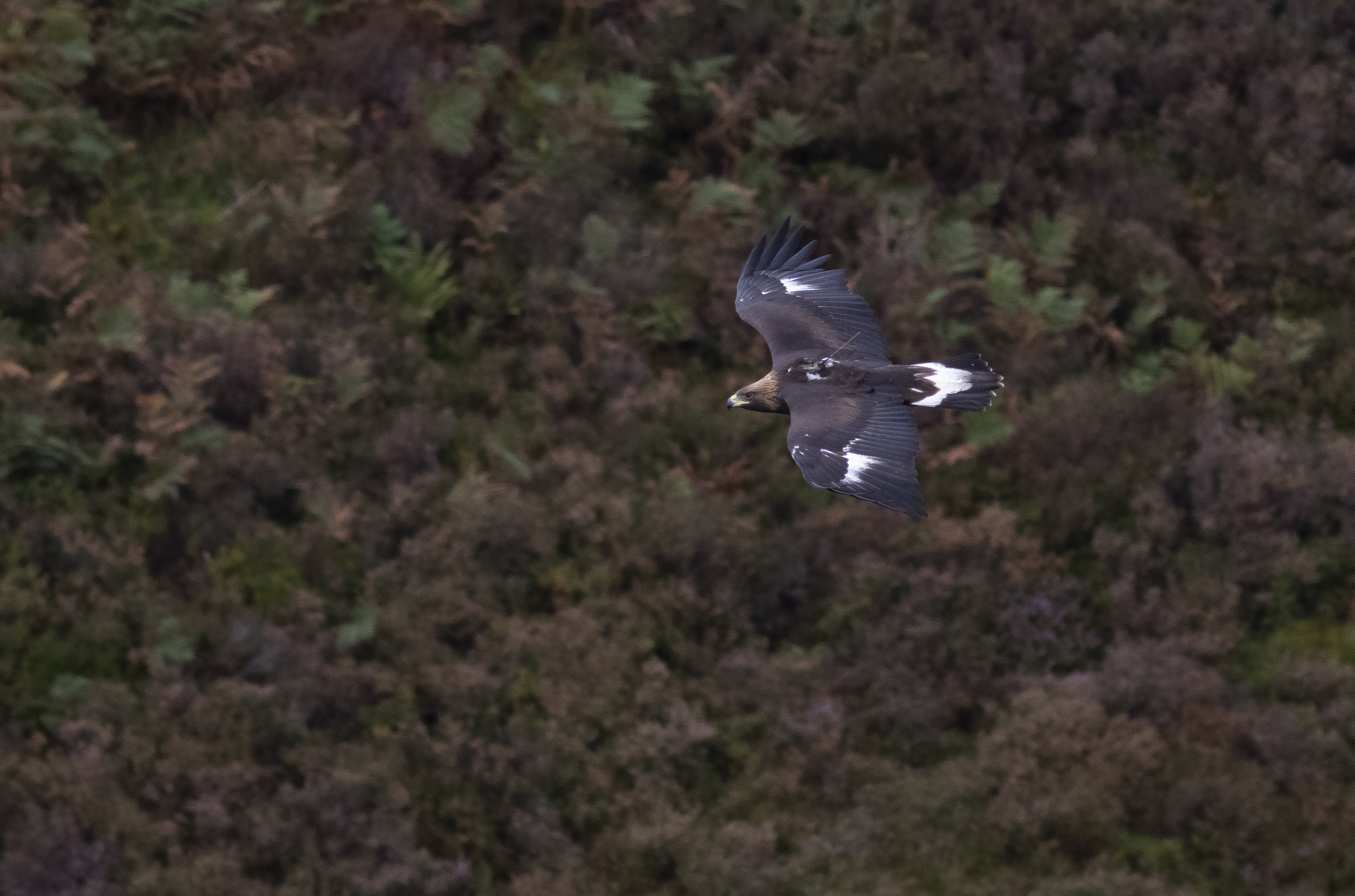
[A satellite-tagged sub adult golden eagle, photo by John Wright]

Taking a new research approach, under licence from NatureScot, the team leading the groundbreaking charity project revealed today (World Wildlife Day – Thursday 3 March) that they had successfully caught, transported and released seven golden eagles from the Outer Hebrides. The Outer Hebrides were selected as the source to boost the south of Scotland population because these Islands host one of the highest densities of golden eagles in Europe. The birds were released almost immediately on arrival in a secret location in the southern uplands of Scotland.

The project team is continuing to monitor the birds’ progress to see if they settle and breed in the area. If they do, this could be a ground-breaking for the project. 

Throughout the process, the project team followed NatureScot’s strict novel-research guidelines which were assessed by Scotland’s Nature Agency against the Scottish Code for Conservation Translocations. Only a small number of projects have used this technique. If successful it could be used further to support wider raptor conservation programmes.

The team has previously (from 2018 to 2021) successfully released 12 young eagles collected as chicks from nests in the Highlands and Islands. This is a process that is much more widely used for raptor conservation programmes. The released eagles have all settled in south of Scotland, with frequent sightings of interactions including with other native eagles.

Explaining the significance of the most recent translocation, Dr Cat Barlow, Project Manager for the Project said: “This new novel-research licence has provided a significant boost in our efforts to ensure golden eagles truly flourish in southern skies. Though it is still early days, this is the first in the UK to trial this approach as part of raptor reinforcement. This could be a ground-breaking technique for the global conservation management of golden eagles and other raptors. We will continue to monitor these birds to see if they settle, thrive and breed in the south of Scotland, which will be the real measure of success.

“Our work has only been possible due to the support of National Lottery Heritage Fund, our project staff and partners, NatureScot licensing team, raptor specialists, Advisory Panel members, estates, CalMac Ferries and of course the community in the south of Scotland. We’re incredibly grateful to them all.”

Scotland’s Environment Minister Mairi McAllan MSP added: “The success of this project can be traced back to 2007 – golden eagles faced extinction from southern Scotland for a number of different reasons and the Scottish Government made a commitment to achieve positive change.

“Thanks to the close partnership working between conservationists and land managers in the south of Scotland, the financial support from sponsors and the world-leading techniques employed by the project, there are now more golden eagles in southern Scotland than there has been for hundreds of years, with birds even being seen in northern England.

“Scotland was one of the first countries to recognise the twin crises of nature loss and climate change, and this project shows what we can achieve with determined efforts to restore our lost biodiversity.”

Francesca Osowska, NatureScot’s Chief Executive, said: “This ground-breaking project has accomplished so much over just a few years, bringing a viable population of golden eagles back to south Scotland and inspiring other similar initiatives around the world. Particularly during the twin crises of climate emergency and biodiversity loss, it’s wonderful to see a success like this.

“Golden eagles are a vital part of Scotland’s wildlife, and we’re passionate about returning them to places where they used to thrive.  This is brilliant partnership working, and a great support for the local green economy.”

In the past, the Project has focused on collecting much younger chicks (aged 6 to 8 weeks) directly from nest sites with twins, but the team has struggled to source a sufficient number of birds, particularly when Covid-19 restrictions were in place. After thorough research and consultation over welfare and ecological issues with an expert Scientific Advisory Panel, the Project identified a new research-based approach involving catching and moving free-flying young golden eagles from a naturally densely populated area.  At every stage, the welfare of the birds has been paramount.

An experienced team of expert raptor ecologists, Dave Anderson and Robin Reid, and Scottish Raptor Study Group member Graeme Anderson carefully caught the young (sub-adult) birds at bait sites in the Outer Hebrides. The team was careful not to select adult or breeding birds, and aged the birds based on their plumages. Five females and two males were housed in specially designed travel boxes and quickly transported by road and sea to the south of Scotland. The birds were satellite tagged by licensed individuals and swiftly released.

Andrew MacNair, Head of Marketing at CalMac Ferries, who supported the careful transportation of the birds, said: “We are truly honoured to have been able to support the South of Scotland Golden Eagle Project’s groundbreaking research. As well as global environmental and economical threats such as climate change, Scotland continues to face its own environmental challenges, and we all have a role to play in protecting it for future generations to enjoy.”

Caroline Clark, Director for Scotland, The National Lottery Heritage Fund, who have provided key funding for this work, said: “This translocation of seven eagle subadults is fantastic news for the biodiversity of the South of Scotland, and for the world as a whole. It is great to see the partnership successfully working, and the way communities across the South of Scotland have embraced and supported the new arrivals.

“Thanks to National Lottery players, the £1.5m funding we have provided to the South of Scotland Golden Eagle Project means they can play their part in protecting Scotland’s outstanding wildlife and landscapes.”

The seven new arrivals have been named by a range of individuals, school children and organisations. Sir E Scott School on Harris in the Outer Hebrides, where the eagles came from, named their eagle Rowan – the project is forging links between the school and Sciennes Primary School in Edinburgh.

Project partners RSPB Scotland, Scottish Land & Estates, Scottish Forestry, NatureScot and the Southern Uplands Partnership, had worked on the project together for more than 11 years before releasing the first eagle chicks in 2018.  Funded by The National Lottery Heritage Fund, project partners and the Scottish Government, the initiative is a key project under ‘Scotland’s Biodiversity. A Route Map to 2020’, supporting the Government’s ‘2020 Challenge for Scotland’s Biodiversity’.

For the latest project and festival news, or to donate to the charity initiative, visit: www.goldeneaglessouthofscotland.co.uk  

ENDS